Navigating the Canadian Healthcare System: A Newcomer’s Roadmap (2027)
Landing in Canada is an exhilarating experience, but the high of your arrival often hits a brick wall when you realize that "universal healthcare" isn't an automatic switch that flips the moment you clear customs. Many newcomers find themselves caught in a confusing web of provincial waiting periods, the desperate search for a family doctor, and the shock of out-of-pocket costs for things like dental and prescriptions. This guide is your tactical roadmap to navigating the Canadian healthcare system, ensuring you and your family stay protected from day one through your first few years of settlement.
Understanding the Foundation of Canadian Medicare
When you first hear about the Canadian healthcare system, it is often described as a single, monolithic entity. In reality, it is a decentralized mosaic of thirteen different provincial and territorial systems. The federal government sets the national standards through the Canada Health Act, but the actual delivery of care is the responsibility of the province where you reside. This means that your experience in Toronto will be fundamentally different from your experience in Vancouver or Montreal. For a deep dive into the mechanics, you should read How Canada's Health System Works: Provincial Plans Explained (2027).
The "universal" nature of the system refers to the fact that all residents have access to medically necessary hospital and physician services without paying at the point of use. However, the definition of "medically necessary" can be surprisingly narrow. For example, while a surgeon’s fee for a life-saving operation is covered, the crutches you need to walk out of the hospital or the pain medication you take at home are often not. This distinction is one of the most common sources of frustration for expats who expect a truly all-encompassing system.
I remember my own confusion during my first winter in Calgary. I had a persistent ear infection and assumed I could just walk into any clinic and show my passport. I quickly learned that without a provincial health card, I was looking at a bill just for the consultation. You must understand that the public system, often called Medicare, is funded through taxes, which is why your eligibility is tied to your residency status and your contribution to the tax base. To get the full picture of the financial side, check out The Cost of Healthcare in Canada: A Complete Breakdown for Newcomers (2026).
Navigating the Provincial Health Card Application
The single most important administrative task you face upon arrival—aside from getting your Social Insurance Number—is applying for your provincial health card. This little piece of plastic is your golden ticket to the system. Without it, you are effectively a "private patient," which means paying high fees for every interaction with a medical professional. The process is notorious for its bureaucratic hurdles, and you must be meticulous with your documentation.
Eligibility and the Application Process
Eligibility criteria vary significantly between provinces. Generally, if you are a Permanent Resident, a protected person, or certain types of work permit holders, you are eligible. However, the definition of a "resident" often requires you to be physically present in the province for at least 183 days a year. When I first helped a friend move to Ontario, we were surprised to find that work permit holders must have a contract for at least six months to qualify. You can find specific steps for each region in our guide on How to Apply for Your Provincial Health Card in Canada (2027).
The application itself usually requires a trip to a provincial service center, such as ServiceOntario or Service BC. Be prepared for long wait times and a very specific list of requirements. You cannot simply bring a photocopy of your documents; they must be original, physical copies. The staff are often overworked and stick strictly to the manual, so if your middle name is missing on one document but present on another, you might be sent home to start over. It is a test of patience that every newcomer must endure.
Documents You Must Have Ready
To prove your identity and your right to be in Canada, you will need your COPR (Confirmation of Permanent Residence), your passport, and your work or study permit. But the real challenge is often proving your residency in the province. Since you’ve just arrived, you might not have a utility bill or a driver's license yet. This is where the "catch-22" of Canadian bureaucracy hits: you need a health card to feel settled, but you need to be settled to get the health card.
Commonly accepted proofs of residency include a signed residential lease agreement, a bank statement with your current address, or a letter from an employer. If you are staying with family initially, this can get complicated. It is wise for newcomers to open a bank account on day one and change their address immediately so they can generate a statement as soon as possible. For more details on what to bring to the office, refer to What Documents Do I Need to See a Doctor in Canada.
Handling the Waiting Period
This is the most critical part of the roadmap: the waiting period. In provinces like British Columbia and Quebec, there is often a "month plus two" or a three-month waiting period before your coverage kicks in. This means if you land on July 15th, your coverage might not start until October 1st. During this time, you are essentially uninsured. If you have an accident or fall ill, the costs can be catastrophic, easily reaching tens of thousands of dollars for a hospital stay.
To bridge this gap, many savvy newcomers look into private insurance options. It’s a temporary but necessary expense. For example, SafetyWing provides flexible insurance that is often used by digital nomads and expats who are in between systems or waiting for their provincial residency to solidify. Having that safety net means you won't be ruined by a simple slip on the ice during your first Canadian winter. For more on this, look at Understanding the Three-Month Waiting Period for Health Coverage in Canada.
The Family Doctor Dilemma and Primary Care
Once you have your health card, your next hurdle is finding a family doctor, also known as a General Practitioner (GP). This is where the reality of the Canadian system often clashes with the "world-class" reputation. Canada is currently facing a significant shortage of family physicians, and in cities like Toronto or Vancouver, the waitlists can be years long. This is a genuine crisis that requires a proactive strategy on your part.
Why You Need a General Practitioner
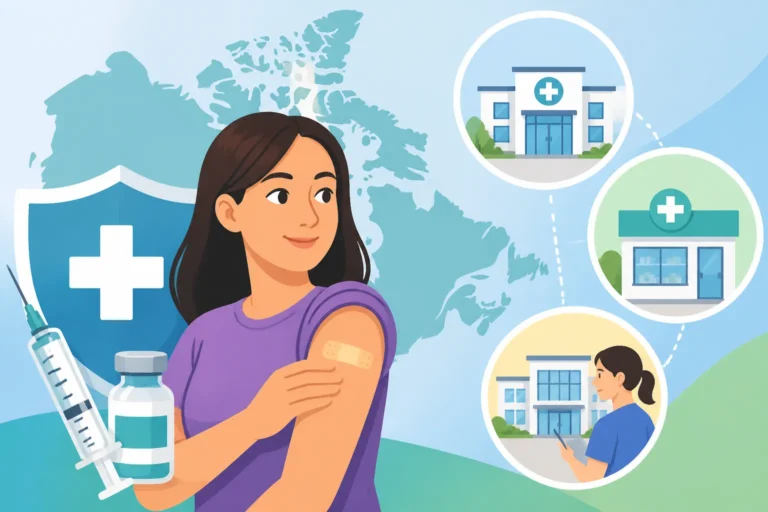
In Canada, the family doctor is the "gatekeeper" of the healthcare system. You cannot simply call up a cardiologist or a dermatologist and book an appointment. You must first see your GP, who will then assess you and provide a referral. Without a family doctor, your medical history is fragmented across various walk-in clinics, which can lead to gaps in your care. A GP manages your long-term health, handles your vaccinations, and monitors chronic conditions.
When I first arrived, I made the mistake of thinking I only needed a doctor when I was sick. I soon realized that having a doctor who knows your history is invaluable, especially when navigating complex issues like Understanding Maternity and Prenatal Care in Canada. A family doctor will coordinate your screenings, manage your prescriptions, and ensure you aren't just a number in a database. They are your primary advocate in a system that can often feel cold and institutional.
Effective Strategies for Finding a Doctor
Do not wait until you are sick to start looking. The moment your health card arrives, or even before, start your search. Every province has a "Find a Doctor" registry (like Health Care Connect in Ontario), but these are often slow. The most effective method is often word-of-mouth. Ask your colleagues, your neighbors, and even people in expat Facebook groups. Sometimes, a clinic will open up for new patients for just a few days, and if you aren't fast, you'll miss out.
Another tactic is to call clinics directly. Don't just rely on what the websites say. Many doctors don't update their "not accepting new patients" status online. If you are in a major hub, you might find more success by looking in the suburbs or less trendy neighborhoods. For a more detailed walkthrough of this process, check our specialized post: How to Find and Register with a Family Doctor in Canada. It takes persistence, but securing a spot with a good GP is one of the biggest wins you can have as a newcomer.
Using Walk-In Clinics and Urgent Care
While you are on a waitlist for a family doctor, walk-in clinics will be your lifeline. These clinics operate on a first-come, first-served basis. In busy areas, people often line up outside the door before the clinic opens. You show your health card, wait for an hour or two, and see a doctor for minor issues like infections, rashes, or basic prescriptions. It’s not ideal for long-term care, but it works for acute problems.
Urgent Care Centres are a middle ground between a walk-in clinic and an Emergency Room. They are equipped to handle things like stitches or minor fractures that aren't life-threatening but need immediate attention. Knowing the difference can save you eight hours of waiting in a hospital ER. If you are struggling to find local options, you might find Where Is the Nearest Walk-In Clinic in Toronto helpful if that’s your destination city.
Understanding What Is and Isn't Covered
One of the biggest culture shocks for newcomers from countries with truly socialized medicine (like the UK) or those coming from robust private systems is discovering the "gaps" in Canadian coverage. The provincial plans are very specific about what they pay for. If it’s not done in a hospital or by a physician, there’s a high chance you’re paying for it yourself.
The Public vs. Private Divide
Generally speaking, hospital stays, surgeries, and doctor visits are covered. However, "supplementary" services are almost entirely private. This includes dental care, vision care (exams and glasses), physiotherapy, chiropractic services, and even ambulance rides. Yes, even in a country with "free" healthcare, an ambulance can cost you several hundred dollars depending on the province. This is why many expats choose to maintain a policy like SafetyWing or a local private plan even after their provincial card arrives, especially if they travel frequently or have specific health needs not met by the base system.
Understanding this divide is crucial for your household budgeting. You can read more about these distinctions in Public vs Private Healthcare in Canada: What Newcomers Need to Know. For example, a routine dental cleaning in Toronto can easily cost $200-$300. Without insurance, these costs add up quickly. If you're wondering about the specific limitations of your new home province, take a look at Understanding What Provincial Health Plans Do and Don't Cover in Canada.
Employer-Provided Benefits
To manage these "gap" costs, most Canadians rely on extended health benefits provided by their employers. When you are negotiating a job offer, the "benefits package" is often just as important as the salary. These plans usually cover 70% to 100% of prescription drugs, dental work, and paramedical services like massage therapy or counseling. If you are self-employed, you will need to purchase an individual plan or pay these costs entirely out of pocket.
If you are a newcomer and haven't secured a job with benefits yet, the costs can be daunting. Some families delay necessary dental work because they weren't prepared for the prices. It’s worth investigating How to Use Private Health Insurance and Employer Benefits in Canada to understand how to maximize these plans. Always ask for the "booklet" from your HR department so you know exactly what your limits are for the year.
The Cost of Prescription Medications
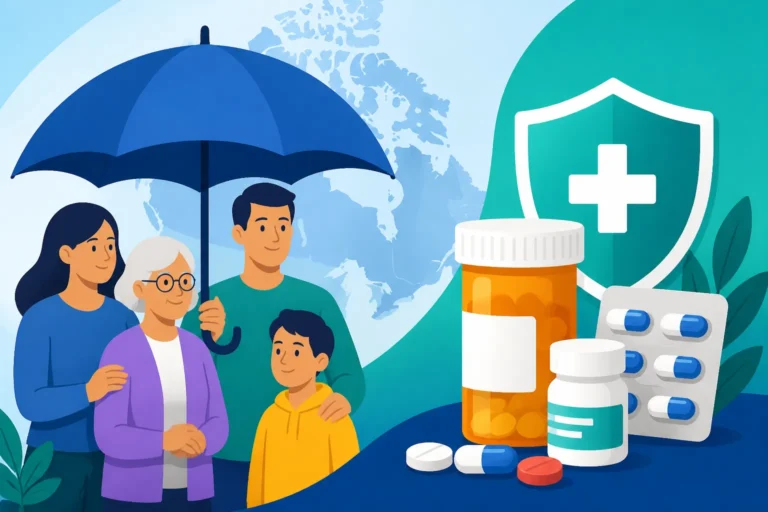
Unlike many other universal systems, Canada does not have a national "Pharmacare" program that covers medications for everyone. If a doctor writes you a prescription, you take it to a pharmacy and pay the retail price unless you have private insurance or qualify for a provincial low-income program. For seniors and those on social assistance, there is more support, but for the average working-age newcomer, drugs are a private expense.
For those with chronic conditions, this is a significant factor. Some specialty medications can cost thousands of dollars per month. You should research Understanding Prescription Drug Coverage and Pharmacare in Canada to see if your province offers any "catastrophic drug coverage" which kicks in if your medication costs exceed a certain percentage of your income. It’s a safety net, but one you hope you never have to use.
Managing Specialized Care and the Referral Process
If you have a complex medical issue, you will quickly encounter the "Specialist Referral" system. This is one of the areas where the Canadian system receives the most criticism, primarily due to wait times. It is a system of triage; those in immediate life-threatening danger are seen quickly, while those with chronic but stable issues may wait months or even over a year.
The Referral System Explained
As mentioned, your journey to a specialist always starts with your family doctor or a walk-in clinic physician. You cannot "self-refer." The GP will send your records to a specialist (like a cardiologist or gynecologist), whose office will then contact you with an appointment date. You are often at the mercy of their scheduling. If you want to understand the nuances of this process, read How Specialist Referrals Work in the Canadian Health System.
It is important to be your own advocate here. Newcomers are often advised to ask their GP which specialist they are being referred to and then follow up with that specialist's office themselves. Sometimes referrals get lost in the "fax machine" culture that still persists in Canadian medical offices. Staying on top of the paperwork can sometimes shave weeks off your wait time.
Managing Wait Times for Specialists
Wait times are a reality of the Canadian system. For elective surgeries, such as a knee replacement or a non-emergency cataract surgery, the wait can be significant. This is a trade-off for the lack of a bill at the end. However, if your condition worsens while you are waiting, you must return to your GP so they can update the specialist and potentially move you up the priority list.
For more on what to expect, you can browse How Long Are Wait Times to See a Specialist in Canada. Some people choose to seek care privately in other countries or even in other provinces if they have the means, but for the vast majority of residents, the public waitlist is the only path. It’s a test of endurance, and it’s one of the reasons many expats feel a sense of frustration compared to the "pay-for-access" systems they may have come from.
Accessing Diagnostic Services
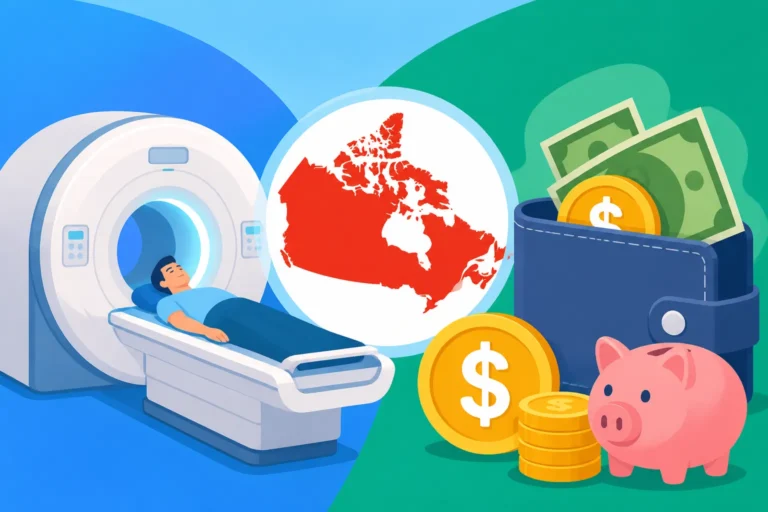
Diagnostic tests like MRIs, CT scans, and even basic blood work are also part of the referral and triage system. Blood tests are usually quick; you can often walk into a lab like LifeLabs or Dynacare with a requisition and be out in thirty minutes. However, an MRI for a non-urgent back issue might take several months.
If you are curious about the costs if you were to pay privately (which is only possible in certain provinces for certain tests), you might find How Much Does an MRI Scan Cost in Canada in 2026? informative. Generally, the system tries to prevent "queue-jumping" through private payment to maintain equity, but there are always nuances depending on where you live.
Comparison of Provincial Waiting Periods and Features
| Province | Waiting Period for Newcomers | Health Card Name | Key Coverage Feature |
|---|---|---|---|
| Ontario | None (as of 2026 rules) | OHIP | Strong coverage for children (OHIP+) |
| British Columbia | Month of arrival + 2 months | MSP | Monthly premiums based on income |
| Quebec | Up to 3 months | RAMQ | Mandatory prescription drug insurance |
| Alberta | None (if arriving with intent to stay) | AHCIP | No monthly premiums for residents |
| Nova Scotia | None (if PR status held) | MSI | Focus on primary care access |
Emergency Care and Hospital Realities
In a true emergency, the Canadian system is at its best. If you have a heart attack or a major accident, you will receive world-class care immediately, regardless of your ability to pay. However, the Emergency Room (ER) is also the "catch-all" for those who don't have a family doctor, which leads to significant overcrowding and long wait times for non-life-threatening issues.
When to Dial 911 vs. Visiting the ER
The emergency number in Canada is 911. You should call this for life-threatening situations where every second counts. If you can safely get yourself to the hospital, you should do so, as ambulance services are not free and are intended for those who need medical monitoring en route. For a breakdown of these costs, see How Much Does an Ambulance Cost in Canada?.
For issues that are urgent but not life-threatening (like a deep cut or a high fever in a child), look for an Urgent Care centre first. They have shorter wait times and the same level of expertise for those specific issues. If you do go to the ER, be prepared for "triage." A nurse will assess you, and if your issue is deemed "minor" compared to the person who just arrived in an ambulance, you will be waiting. It is not uncommon to wait 6 to 12 hours in a big-city ER on a Friday night.
Hospital Billing and Inpatient Services
If you are admitted to the hospital, your provincial health card covers your stay, your meals, your nursing care, and your medications while you are an inpatient. However, you will be asked if you want a "private" or "semi-private" room. The standard coverage usually only pays for a ward room (4 people). If you want a private room, your employer benefits or private insurance (like those offered by SafetyWing) will usually cover the extra cost.
If you don't have a health card yet, a single night in a Canadian hospital can cost between $3,000 and $10,000. This is why the advice to have insurance during your first 90 days is not just a suggestion; it is a financial necessity. For a deeper look at hospital logistics, see Understanding Hospital Visits and Billing for Newcomers in Canada.
Mental Health and Wellness Resources
Mental health is increasingly recognized as a vital part of the Canadian healthcare landscape, but the funding hasn't always kept pace with the demand. Accessing mental health support can be one of the most confusing parts of the roadmap because it is a mix of public and private services.
Publicly Funded vs. Private Therapy
If you see a psychiatrist (a medical doctor), their services are covered by your provincial health card. However, psychiatrists often focus on diagnosis and medication management. If you want "talk therapy" with a psychologist or a licensed counselor, you will almost certainly have to pay out of pocket or use your employer benefits.
There are community-based mental health clinics that offer free or "sliding scale" services, but they often have long waitlists. For many newcomers, the stress of moving can take a toll. Don't wait until you are in crisis to look for support. You can explore How to Access Mental Health Services in Canada as a Newcomer for a list of available resources.
Crisis Lines and Telehealth
Canada has excellent crisis resources, including the 9-8-8 Suicide and Crisis Helpline, which is free and available 24/7. Additionally, many provinces have introduced telehealth services (like Health811 in Ontario or 8-1-1 in BC) where you can speak to a registered nurse at any time to get medical advice. This is a fantastic resource for those "should I go to the ER?" moments at 2:00 AM. For a modern take on care, see Understanding Telehealth and Virtual Care Options in Canada.
In the end, navigating the Canadian healthcare system is a marathon, not a sprint. It requires patience, a bit of cynical realism about wait times, and a proactive approach to your own administrative tasks. Once you are "in" the system, it provides a tremendous sense of security, but getting there takes work. Keep your documents organized, secure your bridge insurance like SafetyWing for the gaps, and start your search for a family doctor the day you land. Welcome to the North—let's keep you healthy.
Disclaimer
This guide is provided for informational purposes only and does not constitute professional medical or legal advice. Healthcare regulations and provincial policies in Canada are subject to change; always consult official government sources or a qualified professional regarding your specific situation.