How to Apply for OHIP, MSP, RAMQ or AHCIP When You Arrive in Canada
Arriving in a new country is an overwhelming cocktail of excitement and administrative dread. One of the most stressful realizations for many newcomers is that Canada does not have one single national health card; instead, coverage is managed by individual provinces. This guide explains exactly how to navigate the complex application processes for OHIP, MSP, RAMQ, and AHCIP to ensure you are protected.
Understanding the Decentralized Nature of Canadian Healthcare
When you first land at Pearson in Toronto or YVR in Vancouver, you might assume that your immigration papers automatically grant you access to a doctor. Unfortunately, the Canadian healthcare system is decentralized. This means that the federal government sets standards, but the provinces and territories actually deliver the services and manage insurance plans. Because of this, the rules for moving to Ontario are vastly different from those for moving to Quebec or Alberta.
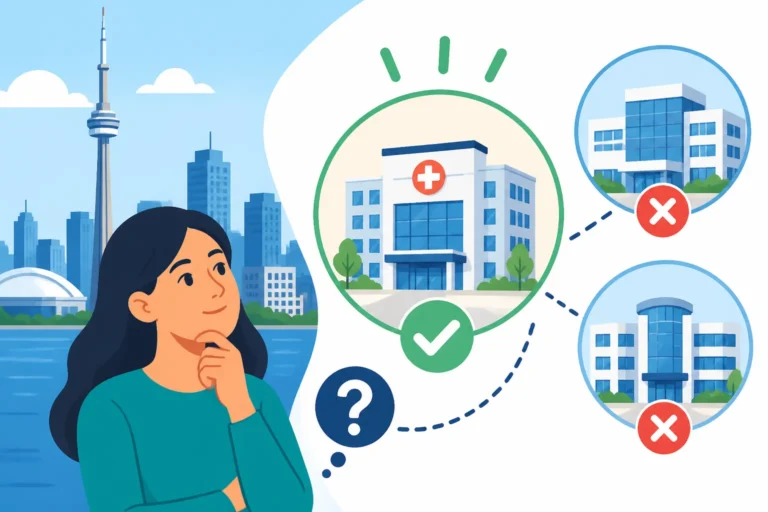
It is hard to overstate how important it is to treat your health card application with the same urgency as finding a place to sleep. Many newcomers delay this process, only to realize later that they have missed a critical window or are missing a specific document that takes weeks to procure. Each province has its own acronym, its own portal, and its own set of "gotchas" that can leave you paying out of pocket for a simple clinic visit.
Navigating this requires a clear understanding of the specific requirements for each region. Whether you are on a work permit, a study permit, or you have arrived as a Permanent Resident, the path to coverage varies. We will break down the "Big Four" provinces where the majority of newcomers settle: Ontario, British Columbia, Quebec, and Alberta. Knowing How to Apply for Your Provincial Health Card in Canada (2027) is the first step toward true peace of mind in your new home.
The Critical Newcomer Waiting Period
One of the most frustrating aspects of the Canadian system is the mandatory waiting period. In several provinces, including Ontario and British Columbia, you aren't actually eligible for public health coverage the second you land. Instead, there is often a three-month waiting period from the date you establish residency. This leaves a massive, risky gap where any medical emergency could result in a bill totaling thousands of dollars.
During this period, you are essentially a "self-pay" patient. Some expats have been hit with five-figure bills for appendicitis or unexpected injuries during their first month because they assumed "Canada has free healthcare." While the system is robust, it is not immediate. Understanding the Three-Month Waiting Period for Health Coverage in Canada is vital so you aren't caught off guard by a system that expects you to be self-sufficient for those first 90 days.
To bridge this gap, most savvy newcomers invest in private transitional insurance. Brands like SafetyWing are frequently used by the expat community because they offer flexible, month-to-month coverage that can be started even after you have left your home country. Having a policy from SafetyWing ensures that if you trip on an icy sidewalk or catch a severe respiratory infection while your provincial application is processing, you aren't draining your relocation savings on hospital fees.
Why the Waiting Period Exists
The waiting period is designed to ensure that the public system is being used by people who intend to reside in the province long-term. From a government perspective, it prevents "medical tourism" where individuals might fly in just for a procedure and leave. However, for a legitimate newcomer who is paying taxes and renting an apartment, this period feels like an unfair hurdle. It is a time when you are most vulnerable, often without a local support network or a family doctor.
Managing Risks During the Gap
While you wait for your card to arrive in the mail, you must be extremely cautious. This is not the time to engage in high-risk sports or skip out on travel insurance. If you are coming from a country with a reciprocal agreement, you might have some protection, but for the vast majority of expats, private coverage is the only shield. Utilizing a service like SafetyWing for the first three to six months provides a necessary safety net while you navigate the bureaucracy of your specific province.
Applying for OHIP in Ontario
Ontario is the most popular destination for newcomers, and its health plan, the Ontario Health Insurance Plan (OHIP), is comprehensive. However, the application process is strictly in-person. You cannot simply upload your documents to a website and wait; you must physically visit a ServiceOntario center. For a newcomer, this often means standing in a long line, so I always recommend arriving 30 minutes before they open.
To be eligible, you must be physically present in Ontario for 153 days in any 12-month period and make Ontario your primary home. The documentation requirements are very specific. You cannot just show a lease; you need a specific combination of identity, residency, and status documents. Many newcomers find themselves sent home because their "proof of address" wasn't on the approved list, such as a formal bank statement or a utility bill.
Documentation Checklist for ServiceOntario
When you walk into ServiceOntario, you need three distinct types of documents. First, you need proof of your legal status in Canada. This could be your Permanent Resident card, a valid work permit that is for at least six months, or your landing papers. Second, you need proof of residency in Ontario. This is where people struggle. A cell phone bill is often rejected. You are much better off using a signed lease agreement, a pay stub, or an Ontario Driver’s Licence. Finally, you need a document that supports your identity, like your foreign passport.
Common Pitfalls in the OHIP Process
One common mistake is not realizing that Am I Eligible for Provincial Health Coverage on a Work Permit in Canada? depends heavily on the duration of your permit. If your work permit is for less than six months, you generally cannot get OHIP. Additionally, if you move out of the province for an extended period shortly after arriving, you might lose your eligibility and have to restart the waiting period. Always keep your physical "Confirmation of Permanent Residence" (COPR) or work permit original handy, as photocopies are rarely accepted at the counter.
Navigating MSP in British Columbia
British Columbia’s Medical Services Plan (MSP) operates differently than Ontario's. In BC, enrollment is mandatory for all residents. Unlike Ontario, which is funded through general taxation, BC previously charged monthly premiums. While those premiums have been eliminated for most, there is still a "Health Fee" for international students. The application for MSP can be done online, which is a massive relief for those who want to avoid government offices.
The waiting period in BC is defined as the balance of the month you arrive plus two full months. For example, if you arrive on July 15th, your coverage would likely begin on October 1st. This is a long time to go without coverage, making it essential to have private insurance like SafetyWing active the moment you land at the airport. BC is also unique in that it issues a "BC Services Card," which often doubles as your photo ID or driver’s licence.
The Online Application Process
The BC government has streamlined the process through an online portal. You will need to upload digital copies of your immigration documents. If you are a student, be prepared to pay the monthly International Student Health Fee, which is currently $75 CAD per month. This fee is often a surprise to newcomers who expect "free" healthcare, but it is a legal requirement to maintain your status in the province.
Adding Dependents to MSP
If you are moving with a spouse or children, you can include them on a single MSP application. This is much simpler than in some other provinces. However, each member must meet the residency requirements. If your spouse arrives a month after you, their coverage will start a month after yours. This staggered coverage is another reason why comprehensive plans like SafetyWing are useful, as they can cover family members on different timelines.
Securing AHCIP in Alberta
Alberta is often touted as the most newcomer-friendly province regarding healthcare. In many cases, if you move to Alberta from outside Canada with the intent to stay for at least 12 months, your coverage under the Alberta Health Care Insurance Plan (AHCIP) begins on the day you arrive. This is a significant advantage over Ontario or BC, where the three-month wait is standard.
However, "immediate" does not mean "automatic." You still have to apply. In Alberta, you don't go to a dedicated government building; instead, you visit an authorized registry agent. These are the same private businesses that handle vehicle registrations and driver’s licences. This makes the process much faster and more accessible, as there are registry offices in almost every neighborhood in cities like Calgary and Edmonton.
Where and How to Apply
To apply for AHCIP, you should find a registry office near your new home. You will need to bring your passport, your entry documents (PR card or work permit), and proof of Alberta residency. A unique feature in Alberta is that if you are a worker, your work permit must be valid for at least six months to qualify. If you apply within 90 days of arrival, your coverage is backdated to your arrival date. If you wait longer, you might face delays or gaps.
Alberta's Unique Benefits
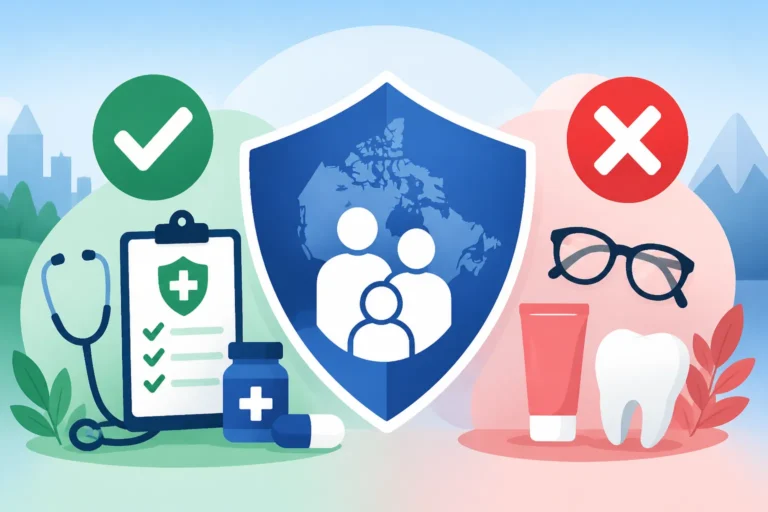
AHCIP covers a wide range of services, but like all provinces, it does not cover everything. Understanding What Provincial Health Plans Do and Don't Cover in Canada is important because dental, vision, and prescription drugs are largely private in Alberta. Many employers offer supplemental insurance, but if you are self-employed or looking for work, you will need to budget for these costs separately.
Understanding RAMQ in Quebec
Quebec operates quite differently from the rest of Canada. The Régie de l'assurance maladie du Québec (RAMQ) manages the system, and the province has its own set of social security agreements with countries like France, Belgium, and Greece. If you are from one of these countries, you might be able to waive the waiting period by providing a specific form from your home country's health authority.
For everyone else, there is a waiting period of up to three months. Quebec is also very strict about its prescription drug insurance. By law, everyone in Quebec must be covered by a prescription drug insurance plan—either through RAMQ or through a private employer plan. If your employer doesn't offer one, you must register for the RAMQ public drug plan and pay an annual premium when you file your taxes.
The Registration Interview
In Quebec, you often start the process by calling RAMQ to request a registration form. They will ask you several questions over the phone to determine your eligibility. After receiving the form, you may need to visit a RAMQ office or a CLSC (local community service center) to provide your photo and signature. This added step of a "registration interview" can make the process feel more formal and daunting than in other provinces, especially if you are still working on your French language skills.
Prescription Drug Coverage Requirements
Quebec is the only province that mandates drug insurance. When you apply for RAMQ, you are automatically evaluated for the Public Prescription Drug Insurance Plan. This is a crucial distinction. In other provinces, if you don't have drug coverage, you simply pay the full price at the pharmacy. In Quebec, if you are eligible for the public plan but don't sign up, you could face penalties. This makes Understanding the Difference Between Provincial Plans Across Canada even more vital for those settling in Montreal or Quebec City.
Comparative Overview of Provincial Health Plans
To help you visualize the differences, the following table summarizes the key aspects of the most common provincial plans for newcomers.
| Province | Plan Name | Waiting Period | Primary Application Method | Key Requirement |
|---|---|---|---|---|
| Ontario | OHIP | 3 Months | In-person (ServiceOntario) | Physical presence for 153 days |
| British Columbia | MSP | ~3 Months | Online or Mail | Mandatory for all residents |
| Alberta | AHCIP | None (usually) | Authorized Registry Agent | Intent to stay for 12 months |
| Quebec | RAMQ | Up to 3 Months | Phone / In-person | Mandatory drug insurance |
Universal Tips for All Newcomers
Regardless of where you land, certain strategies will make your life easier. First, always apply for your Social Insurance Number (SIN) immediately. You cannot get health coverage without it. How to Apply for a Social Insurance Number (SIN) in Canada is usually the very first task on any newcomer's list, often completed at the airport or a Service Canada office within the first 48 hours.
Second, start a "residency file." This should be a physical folder where you keep every piece of mail you receive. In Canada, a utility bill or a bank statement addressed to you is worth its weight in gold. Government agencies are extremely picky about what constitutes "proof of residence." I recommend opening a bank account on day one and requesting a printed, stamped statement as soon as your first deposit clears.
Finally, don't wait to find a doctor until you are sick. Once you have your card, you should immediately begin How to Find and Register with a Family Doctor in Canada. Many provinces have severe shortages of family physicians, and waitlists can be months or even years long. In the meantime, you will need to learn Understanding the Role of Walk-In Clinics in Canada, as these will be your primary source of care while you are on a waitlist.
Dealing with Medical Emergencies Without a Card
If you have a medical emergency before your card arrives, the situation can be stressful. Most hospitals will treat you, but you will be billed as an "uninsured resident" or a "tourist." The rates for these visits are significantly higher than the standard rates paid by the government. A single night in a Canadian hospital can cost between $3,000 and $5,000 CAD for uninsured patients.
This is why readers should have their SafetyWing policy active for those first few months. It turns a potential financial catastrophe into a simple insurance claim. If you do end up with a bill, keep every single receipt and piece of paperwork. If your provincial coverage is backdated (like in Alberta), you might be able to seek reimbursement, though this is never guaranteed and often involves mountains of paperwork. Understanding Hospital Visits and Billing for Newcomers in Canada can help you prepare for these costs.
Moving Between Provinces
If you decide that your first province isn't the right fit and you move elsewhere, you must start the process over. Your old province will usually cover you for the duration of the new province's waiting period (usually three months). This is part of the Inter-Provincial Agreement on Eligibility and Portability. However, you must inform your old health authority that you are leaving and register with the new one as soon as you arrive.
Failure to do this can result in a "coverage gap" where neither province wants to pay your bills. For example, if you move from Toronto to Vancouver, OHIP will cover you for your first three months in BC, but only if you have officially notified them of your move. If you simply disappear and try to use your Ontario card in a BC hospital six months later, you will likely be billed as an uninsured patient.
Final Steps After Receiving Your Card
Once that plastic card finally arrives in your mailbox, take a photo of it and keep it on your phone. You will need to present it at every pharmacy, clinic, and hospital visit. You should also check if your employer provides supplemental health benefits. These private plans often cover the things the provincial plans don't, such as dental cleanings, eyeglasses, and physiotherapy.
If you are confused about your coverage limits, read Understanding What Provincial Health Plans Do and Don't Cover in Canada. Many newcomers are shocked to find that the "free" system doesn't cover the $100 bottle of antibiotics they need for a sinus infection. If you have to pay for expensive medications, look into How to Claim Health Expenses Through Insurance in Canada to see if you can recoup any of those costs through your company's benefits or a private plan.
Disclaimer
This guide is for informational purposes only and does not constitute legal or medical advice. Health regulations and application processes in Canada are subject to change by provincial governments. Always verify the latest requirements on the official websites of OHIP, MSP, RAMQ, or AHCIP before submitting your application. The author is an expat blogger sharing personal experiences and research, not a government official or insurance broker.