The Cost of Healthcare in Canada: A Complete Breakdown for Newcomers (2026)
Many newcomers arrive in Canada expecting zero medical bills, only to be hit with a $500 invoice for an ambulance ride or a $150 charge for a routine dental check-up. Navigating the Canadian healthcare system is confusing, especially when "free" care doesn't actually cover prescriptions or vision. This guide breaks down the actual costs you will face as a newcomer in 2026.
Understanding Canada's Universal Healthcare System
When I first moved here, I thought my provincial health card was a magic wand that made every medical expense disappear. It wasn't until I tried to fill a prescription for a basic antibiotic that I realized "universal" has some very specific boundaries. Canada operates under a system called Medicare, but it isn't one single national plan. Instead, it is a collection of thirteen provincial and territorial insurance plans. This decentralized nature means that what is covered in Toronto might not be covered exactly the same way in Vancouver or Montreal.
The federal government sets the standards through the Canada Health Act, but the provinces hold the purse strings. For you, the newcomer, this means your financial experience depends entirely on where you land. If you want to dive deeper into the mechanics, you should read How Canada's Health System Works: Provincial Plans Explained (2027) to see how these jurisdictions divide their responsibilities. The core philosophy is that "medically necessary" services provided by doctors or in hospitals are covered at the point of use. This means you don't pay to see a family doctor, and you won't get a bill for a life-saving surgery.
However, the definition of "medically necessary" is narrower than most people expect. It generally excludes anything that happens outside a hospital or a doctor's office. If you need a cast for a broken arm, the doctor's time is free, but in some provinces, you might actually be charged for the specific materials used for the fiberglass cast. It’s these small, unexpected invoices that often frustrate expats who were promised a completely free ride. Understanding these nuances is the first step to avoiding a financial shock during your first year.
The hidden costs of "free" care often manifest in the form of time. While you may not pay with your wallet for a specialist visit, you often pay with months of waiting. This has led to a growing conversation about Public vs Private Healthcare in Canada: What Newcomers Need to Know, as some people choose to pay for private diagnostic tests just to speed up the process. For a newcomer, managing your expectations about what the government will pay for is just as important as managing your actual budget.
Provincial Differences and Eligibility
One of the biggest hurdles I faced was realizing that my eligibility for healthcare wasn't immediate. Depending on where you settle, there is often a "waiting period" of up to three months before your provincial coverage kicks in. During this time, you are essentially an uninsured visitor in the eyes of the province. This is a critical period where a single trip to the emergency room could cost you thousands of dollars out of pocket. Many expats use private options like SafetyWing to cover this gap because the provincial government simply will not reimburse you for costs incurred before your start date.
In Ontario, for example, the Ontario Health Insurance Plan (OHIP) used to have a mandatory three-month wait, but rules have fluctuated recently. In British Columbia, the Medical Services Plan (MSP) still maintains a waiting period consisting of the balance of the month you arrive plus two full months. If you arrive on July 15th, your coverage wouldn't start until October 1st. During those weeks, you are financially vulnerable. You can find a detailed breakdown of these timelines in Understanding the Three-Month Waiting Period for Health Coverage in Canada.
Quebec’s RAMQ also has a waiting period, though they have bilateral agreements with certain countries (like France or Belgium) that might waive it. If you aren't from one of those lucky countries, you need to budget for private insurance. I remember a friend who moved to Montreal and developed a severe sinus infection in his second week; without a health card, he had to pay $200 just to speak to a doctor at a private clinic. It’s a stressful way to start your new life. To avoid this, make sure you know How to Apply for Your Provincial Health Card in Canada (2027) as soon as you land.
Beyond the waiting period, each province has different "supplementary" requirements. In BC, residents actually used to pay a monthly premium for their healthcare, though that has been replaced by a payroll tax. In other provinces, you might find that certain "extrapolated" services, like ambulance fees, vary wildly. In some places, an ambulance is $45 if it's deemed an emergency, but in others, it could be $500 or more if the hospital decides it wasn't a life-and-death situation.
The Financial Reality of Prescription Drugs and Dental Care
This is where the "free healthcare" myth really falls apart for newcomers. In Canada, prescription drugs, dental care, and vision care are almost entirely private. Unless you are hospitalized, you are responsible for the cost of your medication. If you have a chronic condition, like asthma or diabetes, these monthly costs can eat into your savings quickly. In 2026, the cost of brand-name medications remains high, though Canada does have a robust market for generic drugs which can save you 25% to 50%.
Dental care is another significant expense. A standard cleaning and check-up in a city like Toronto or Vancouver will typically run you between $200 and $400. If you need a filling, expect to pay $150 to $300 per tooth. If you require a root canal or a crown, you are looking at $1,000 to $2,500. For many newcomers, this is a massive shock. The government has recently introduced the Canadian Dental Care Plan (CDCP), but it is primarily aimed at lower-income residents and seniors. You should check Understanding Dental Care Costs and the Canadian Dental Care Plan to see if you qualify, but most working-age expats will still need private insurance.
Vision care follows a similar private model. In most provinces, eye exams for adults aged 20 to 64 are not covered by the provincial plan. You will likely pay $80 to $150 for an eye exam, and glasses or contact lenses are entirely out-of-pocket. Many expats wait until they visit their home country to get dental work or new glasses because the costs here are so steep. It’s a valid strategy, but not always practical if you have a dental emergency in the middle of a Canadian winter.
Because these costs are so high, most Canadians rely on "extended health benefits" through their employers. If your job doesn't offer benefits, or if you are self-employed, you will have to pay these costs yourself. This is why many people ask Is Healthcare Free in Canada for Newcomers?—the answer is a "yes" for the big stuff and a resounding "no" for the everyday stuff. Budgeting an extra $100–$200 a month for these miscellaneous health costs is a realistic move for a newcomer family.
Out-of-Pocket Expenses for Newcomers Without Coverage
If you find yourself in the "waiting period" or if you are here on a visa that doesn't qualify for provincial care, you need to be prepared for the actual price list of Canadian medicine. Without a health card, every interaction with the medical system has a price tag. A visit to a walk-in clinic—the most common way to see a doctor for non-emergencies—usually costs between $100 and $250 just for the consultation. This doesn't include any tests or medications the doctor might prescribe.
Emergency room visits are where the costs become truly astronomical for the uninsured. If you walk into a hospital in Ontario or BC without a health card, you will likely be asked for a "base fee" or deposit of $500 to $1,000 before you are even triaged. If you are admitted for an overnight stay, the cost can easily exceed $3,000 to $5,000 per day. This is why services like SafetyWing are so popular among digital nomads and new arrivals; they provide a safety net so that a simple accident doesn't result in five-figure debt.
Diagnostic imaging and lab work are also billed separately for the uninsured. If you need an X-ray, expect to pay $50 to $150. If your condition is more complex and requires an MRI or a CT scan, the private cost in 2026 can range from $800 to $2,500. You can see a more localized breakdown in How Much Does a Walk-In Clinic Visit Cost in Vancouver? or similar city-specific guides.
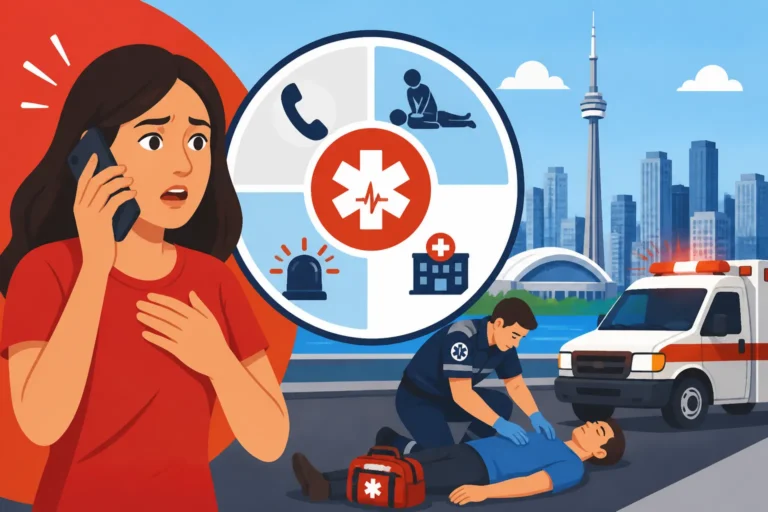
Ambulance fees are the "gotcha" of the Canadian system. Even with a provincial health card, most people still pay a portion of the bill. However, for the uninsured, an ambulance ride can cost upwards of $1,000 depending on the distance and the level of care provided. It is a common misconception that 911 services are free. While the call is free, the vehicle and the paramedics are not. For more details on these specific charges, read How Much Does an Ambulance Cost in Canada?.
| Service Category | Estimated Cost (Uninsured/Out-of-Pocket) | Estimated Cost (With Provincial Card) |
|---|---|---|
| Walk-In Clinic Visit | $100 – $250 | $0 |
| Emergency Room Visit | $500 – $1,500+ | $0 |
| Hospital Stay (Per Day) | $3,000 – $5,000 | $0 |
| Specialist Consultation | $200 – $500 | $0 (with referral) |
| Dental Cleaning/Exam | $200 – $400 | $200 – $400 |
| Prescription Antibiotics | $20 – $80 | $20 – $80 |
| Ambulance Ride | $500 – $1,200 | $45 – $500 |
| Eye Exam | $80 – $150 | $80 – $150 |
Private Health Insurance: Why You Might Need It
Given the gaps in the public system, private insurance isn't just a luxury in Canada; for many, it's a necessity. There are three main ways you’ll encounter private insurance: "bridge" insurance for newcomers, employer-provided benefits, and individual supplementary plans. If you are just arriving, "bridge" insurance is your top priority. You need a plan that covers emergencies and accidents during that first 90-day window. SafetyWing is a solid choice here because it’s designed for people between home and a new permanent residence, and it handles the high costs of Canadian hospitalizations.
Once you have your provincial card, you’ll likely want to look into supplementary insurance to cover drugs and dental. Most professional jobs in Canada include a "benefits package." This is a private plan paid for (at least partially) by your employer. These plans typically cover 70% to 100% of prescription costs and 50% to 80% of dental costs. When you are negotiating a job offer, the quality of the health benefits is often just as important as the salary. For more on this, check out How Much Does Private Health Insurance Cost in Canada in 2026?.
If you are a freelancer or working in a job without benefits, you can purchase an individual health and dental plan from companies like Sun Life, Manulife, or Blue Cross. These plans usually cost between $80 and $250 per month, depending on the level of coverage. While it feels like an extra tax, the first time you need a $1,500 root canal, you will be glad you have it. Some expats opt for high-deductible plans that only cover catastrophic events, while others prefer "comprehensive" plans that pay for every tooth cleaning and massage therapy session.
Finally, there is the question of specialized care. While Canada's public system is great for emergencies, it can be slow for "elective" things like physiotherapy or mental health support. Private insurance often provides a yearly "bucket" of money (e.g., $500 for physio, $1,000 for psychology) that allows you to bypass the public waitlists and see a private practitioner immediately. This is a key part of maintaining your quality of life in a new country.
Real-World Scenarios: Managing Healthcare Costs
To make this practical, let's look at a few scenarios. Scenario one: You just arrived in Toronto on a work permit. You haven't received your OHIP card yet. You slip on some ice and think you've broken your ankle. Without insurance, your ER visit, X-ray, and cast could easily cost you $2,000. If you have a plan like SafetyWing, you’d likely only be responsible for a small deductible. This is the "newcomer's nightmare" that is actually quite common. Knowing How Much Does an MRI Scan Cost in Canada in 2026? can help you understand why these hospital bills climb so quickly.
Scenario two: You are a family of four with a provincial health card, but no employer benefits. Your child needs a prescription for an ear infection ($40), you need a dental cleaning ($300), and your spouse needs new glasses ($400). In one month, you could be looking at $740 in health costs that the government doesn't touch. This is why many families prioritize finding "benefit-heavy" jobs or purchasing their own supplementary plans. It’s about smoothing out those spikes in spending so a single bad month doesn't ruin your budget.
Scenario three: Pregnancy and childbirth. If you have your provincial health card, having a baby in Canada is virtually free. From prenatal check-ups to the hospital delivery and postpartum care, the government covers it all. However, if you are not yet covered by provincial insurance, the cost of a standard hospital birth can range from $5,000 to $10,000, and a C-section can be double that. Newcomers planning to start a family should be extremely diligent about their insurance timelines.
It is also worth noting that many provinces require "Doctor's Notes" for sick leave at work. Even if you have a provincial health card, many doctors charge a "private" fee for writing these notes, usually between $20 and $40. It’s a small thing, but it’s another example of how the system isn't 100% free. You can read more about this in How Do I Get a Doctor's Note for Sick Leave in Canada?.
Navigating the System to Save Money
While the costs can be daunting, there are ways to navigate the Canadian system like a pro to keep your expenses down. First, avoid the Emergency Room unless it is a true emergency. If you have a minor ailment and don't have a family doctor yet, go to a walk-in clinic. The fee for an uninsured visit is much lower than the "facility fee" charged by hospitals. Additionally, many cities now have "Urgent Care Centres" which are a middle ground—faster than an ER but more equipped than a walk-in clinic.
When it comes to prescriptions, always ask for the generic version of a drug. Pharmacists are often allowed to substitute generic equivalents automatically unless the doctor specifies otherwise, but it never hurts to double-check. Also, pharmacy dispensing fees (the cost the pharmacy charges to process your order) vary. Big-box stores like Costco often have significantly lower dispensing fees than smaller boutique pharmacies or 24-hour drugstores. Over the course of a year, these $5 to $10 differences add up.
Don't forget about the "Medical Expense Tax Credit." If your out-of-pocket medical expenses exceed a certain percentage of your income, you can claim them on your annual Canadian tax return to get a portion of the money back. Keep every single receipt—dentist, prescriptions, travel insurance, and even those doctor's note fees. Many newcomers miss out on hundreds of dollars in tax refunds because they didn't realize these private costs were tax-deductible.
Finally, be proactive about finding a family doctor. While it can take a long time, having a doctor who knows your history can prevent small issues from becoming expensive emergencies. Some clinics specialize in newcomers and can help you navigate your initial health screenings at no cost once your card arrives. It’s about building a foundation so that you spend less time in expensive, reactive care and more time in free, preventative care.
Disclaimer
The information provided in this guide is for informational purposes only and does not constitute professional medical, legal, or financial advice. Healthcare laws, provincial coverage rules, and medical costs in Canada are subject to change and vary significantly by province and individual immigration status. Always consult with official provincial health authorities (such as OHIP, MSP, or RAMQ) and a qualified insurance professional or tax advisor regarding your specific situation and coverage needs.