Understanding What Provincial Health Plans Do and Don’t Cover in Canada
Many newcomers arrive in Canada with the comforting belief that healthcare is entirely free, only to face a rude awakening at the pharmacy counter or the dentist’s office. Navigating the divide between what the government pays for and what comes out of your own pocket is one of the steepest learning curves for any expat. This guide demystifies provincial coverage gaps so you can protect your health and your wallet from day one.
The Foundations of Provincial Healthcare Coverage
When you first hear about "Medicare" in Canada, it refers to the publicly funded healthcare system that ensures all residents have access to "medically necessary" services. This sounds straightforward, but the definition of what is medically necessary is often narrower than you might expect. Essentially, if you are treated inside a hospital or by a primary care physician, the province usually picks up the tab. This covers your standard visits to a GP, emergency room treatments, and necessary surgeries.
However, the system is decentralized. There is no single "Canadian Health Card." Instead, you will have a card specific to your province, such as OHIP in Ontario or MSP in British Columbia. Because each province manages its own budget and priorities, the nuances of coverage can shift as you cross provincial borders. Understanding these differences is crucial, especially if you are considering moving between provinces for work or study.
To get a better grasp of the structural side of things, it is helpful to read up on How Canada's Health System Works: Provincial Plans Explained (2027). While the core principles remain the same, the administrative hurdles—like how long you have to wait for your card to become active—can vary significantly. Paperwork is often the most stressful part of the first 90 days.
What is Universally Covered Across Canada
Despite the provincial differences, certain services are standard across the country. If you are admitted to a hospital for an emergency, your room (usually a ward room with multiple beds), nursing care, diagnostic tests like X-rays or MRIs, and the medications administered while you are an inpatient are fully covered. You won’t see a bill for the surgery itself or the anesthesiologist’s time. This is the "crown jewel" of the Canadian system that provides peace of mind during major life crises.
Beyond the hospital walls, visits to a family doctor or a walk-in clinic for a specific medical issue are also covered. If you have a persistent cough, a strange mole, or need a routine physical, you present your provincial health card and walk out without paying a cent. This also extends to standard prenatal care and childbirth, which are pillars of the public system. For a deeper dive into the specifics of what happens when you land, you might want to look at How to Apply for OHIP, MSP, RAMQ or AHCIP When You Arrive in Canada.
Provincial Variations and the Postcode Lottery
The "postcode lottery" is a term expats often use to describe how your level of care changes based on where you live. For example, some provinces provide better coverage for certain types of cancer drugs that are taken at home, while others might offer more robust mental health support through community clinics. Some provinces have also begun experimenting with limited coverage for eye exams or dental care for specific age groups, such as children or seniors, while others remain strictly "hands-off" for these services.
The most significant variation for a newcomer, however, is the eligibility timeline. Some provinces, like Alberta, offer coverage the day you arrive, provided you have the right visa status. Others, like British Columbia and Ontario, have historically imposed a waiting period. This is a critical gap where many expats find themselves vulnerable. It is vital to understand The Newcomer Waiting Period for Provincial Health Coverage in Canada (2027) before you book your flight, as a single trip to the ER during this window could cost thousands of dollars.
The Gray Areas What Provincial Plans Typically Dont Cover
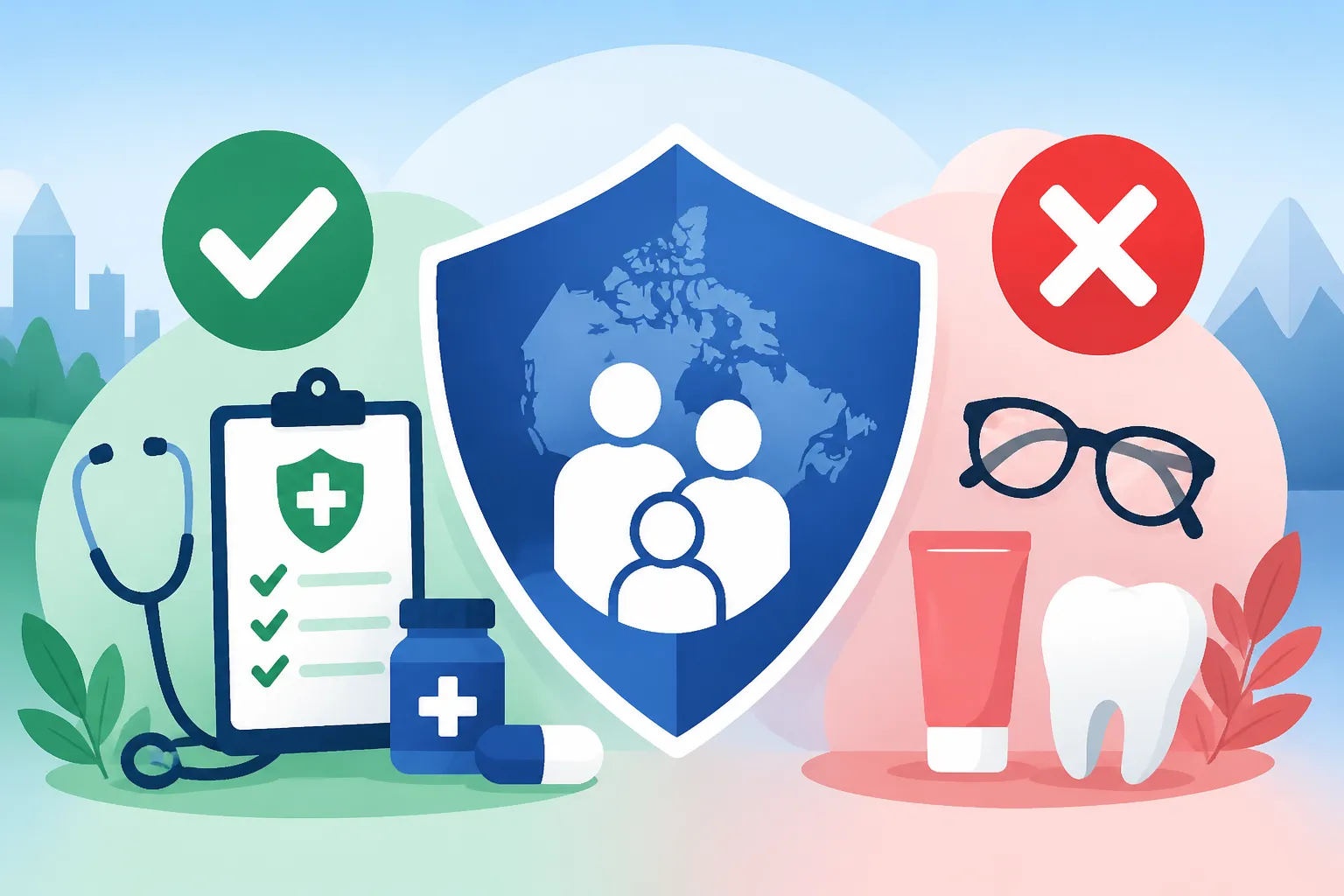
This is where the "free healthcare" narrative starts to crumble for the average resident. In Canada, the public system is often described as "deep but narrow." It covers the big stuff—heart attacks, broken legs, and chronic disease management—but leaves many daily health needs to the private sector. If you are used to a system where everything is bundled together, the fragmented nature of Canadian healthcare can be frustrating.
For most expats, the realization that they need a separate insurance plan or an employer-sponsored benefits package comes after their first trip to the dentist or when they try to fill a prescription for a basic antibiotic. These "gray areas" are not just minor inconveniences; they represent a significant portion of your annual health spending. Without a plan, you are "self-insuring," which is a risky gamble in a high-cost country like Canada.
Prescription Medications and Out of Hospital Drugs
Perhaps the most shocking exclusion for many is prescription medication. Unless you are treated inside a hospital, the cost of drugs is generally your responsibility. This includes everything from life-saving insulin to a simple course of antibiotics for an ear infection. While there are some provincial "safety net" programs for low-income individuals or those with extremely high drug costs relative to their income, most working-age expats are expected to pay out of pocket or through private insurance.
When you go to a pharmacy, you will be asked for your "benefits card." If you don’t have one, you will pay the full retail price plus a "dispensing fee," which can range from $10 to $15 per prescription. This is why many newcomers prioritize finding an employer that offers a robust health package. If you’re self-employed, the costs can add up quickly. Understanding the landscape of Prescription Medications and Pharmacies in Canada: The Complete Guide is essential for budgeting your monthly expenses.
Dental and Vision Care
In Canada, your teeth and your eyes are treated as if they are separate from the rest of your body’s health. Standard dental care—cleanings, fillings, extractions, and root canals—is almost entirely private. The same applies to vision care for adults. Unless you have a specific medical condition like glaucoma or a traumatic eye injury, you will pay for your own eye exams, glasses, and contact lenses.
The costs are not negligible. A standard check-up and cleaning in a major city can easily run $200 to $300, and a single crown can cost upwards of $1,500. This is a massive pain point for families moving with children. While the federal government has recently introduced the Canadian Dental Care Plan for certain demographics, many expats will not qualify initially. For more details on these costs, check out Understanding Supplementary Health Insurance (Dental, Vision, Drugs) in Canada.
Paramedical Services and Therapy
If you need a physiotherapist to help with a sports injury, a massage therapist for chronic back pain, or a psychologist for mental health support, the provincial plan usually won’t help you. These are considered "paramedical services." While highly effective and often recommended by doctors, they are part of the private healthcare market in Canada.
Wait times for public mental health services can be incredibly long, leading many to seek private therapy, which can cost $150 to $250 per hour. Similarly, if you need specialized equipment like crutches, a wheelchair, or a hearing aid, you will likely be footing the bill yourself. This gap makes it even more important to understand How to Use Private Health Insurance and Employer Benefits in Canada to offset these recurring costs.
Emergency Situations and the Cost of Getting Help
Emergency care is technically covered, but the "logistics" of an emergency often aren't. This is a nuanced distinction that trips up a lot of people. While the doctor who treats your emergency is paid by the province, the way you get to the hospital and what happens if you are in a different province at the time can lead to unexpected invoices in your mailbox weeks later.
I remember an expat friend who called an ambulance for what turned out to be a severe panic attack. He was treated and released, but a month later, he received a bill for $400. He was furious because he thought healthcare was "free." The reality is that the "transportation" aspect of emergency care is rarely fully subsidized.
Ambulance Fees and Emergency Transport
Ambulance services are not fully covered by provincial health plans. Each province has its own fee structure. In Ontario, if a doctor deems the ambulance medically necessary, you might only pay a nominal co-pay of $45. However, if it’s deemed unnecessary, or if you are in a province like Alberta or British Columbia, the bill can range from $385 to over $800.
Air ambulances and specialized transport are even more expensive. If you are hiking in the Rockies and need a helicopter rescue, the costs can be astronomical if you aren't properly insured. This is one of the most critical reasons to have a backup plan. For a breakdown of these costs, see Understanding Emergency Numbers (911) and Ambulance Fees in Canada.
Out of Province Medical Emergencies
Canada is a massive country, and many expats love to travel from the Atlantic to the Pacific. However, your provincial health card is most effective in your "home" province. While there are reciprocal agreements between provinces (except Quebec for certain services), they often only cover the "physician" and "hospital" portion of the bill at your home province's rates.
If you are from Ontario and get sick in British Columbia, BC might charge more for a service than Ontario is willing to reimburse. You could be left to pay the difference. Furthermore, things like ambulance fees or specialized treatments are almost never covered when you are out of your home province. This is a situation where having a travel-ready policy, like those offered by SafetyWing, can be a lifesaver, as it provides a layer of protection that bridges the gap between provincial jurisdictions.
Filling the Gaps Private Insurance and Employer Benefits
Because of the extensive gaps in provincial coverage, the majority of Canadians (about 60-70%) have some form of private supplemental insurance. For most, this comes through their employer as a "benefits package." These packages typically cover 70% to 100% of dental, vision, and prescription drug costs, along with a set amount for paramedical services like physiotherapy.
If you are a freelancer, a digital nomad, or waiting for your work permit to be processed, you don't have the luxury of an employer plan. In these cases, you must be proactive. You can't just wait until you have a toothache to look for coverage; most private plans have "waiting periods" for major dental work to prevent people from signing up only when they need expensive surgery.
Why Supplemental Insurance is Necessary for Expats
As an expat, your risk profile is different from someone who has lived in Canada their whole life. You might not have a local support network to help you if you’re hit with a $5,000 medical bill. Supplemental insurance isn't just about "perks" like a private hospital room; it's about predictable budgeting. Knowing that your monthly premium covers your expensive daily medications allows you to manage your finances without fear.
When choosing a plan, you need to look at the "co-insurance" (the percentage the insurer pays) and the "deductible" (the amount you pay before they chip in). Some newcomers opt for high-deductible plans to keep monthly costs low while protecting themselves against "catastrophic" costs. You can find more information on this in How to Choose Private Health Insurance That Covers the Waiting Period in Canada.
Bridging the Waiting Period with SafetyWing
One of the most dangerous times for a newcomer is the period between landing in Canada and the day their provincial health card becomes active. This "waiting period" can last up to three months in some provinces. During this time, you have zero public coverage. If you end up in the hospital, you are billed as a "non-resident," and the costs are staggering—think $3,000 to $5,000 per day for a hospital bed alone.
This is exactly where a flexible option like SafetyWing becomes indispensable. Since SafetyWing is designed for nomads and people in transition, it provides a crucial safety net for that initial 90-day gap. It covers unexpected illnesses and injuries, ensuring that your Canadian dream doesn't end in bankruptcy before it even begins. Using SafetyWing during this transition is a common "pro-tip" among veteran expats who know how slowly the provincial bureaucracy moves.
| Feature | Provincial Plan (Medicare) | Private/Supplemental Insurance |
|---|---|---|
| Hospital Stay (Ward) | Fully Covered | Covered (usually upgrades to private) |
| Doctor Visits | Fully Covered | Not Applicable |
| Prescription Drugs | Not Covered (mostly) | Covered (70-100%) |
| Dental Care | Not Covered | Covered (Basic to Major) |
| Vision Care | Not Covered (for adults) | Covered (Exams/Hardware) |
| Ambulance | Partially Covered (varies) | Often Fully Covered |
| Physiotherapy | Not Covered | Covered (usually with a cap) |
Special Considerations for Newcomers and Temporary Residents
Your immigration status significantly dictates your access to healthcare. This is a point of confusion for many who assume that "residency" is a simple concept. In the eyes of the healthcare system, a resident is someone who is legally authorized to be in Canada and intends to make it their permanent home. This includes permanent residents, but also many temporary residents on work permits.
If you are here on a study permit or a visitor visa, your access is much more restricted. International students are usually required to buy a specific plan through their university. Visitors, on the other hand, are almost never covered by provincial plans and must carry private insurance for the duration of their stay.
Wait Periods and Initial Eligibility
As mentioned earlier, the "three-month wait" is a hurdle in provinces like BC and Ontario. It is not three months from when you apply; it is usually three months from the date you established residency. This means you need to keep your boarding pass and your lease agreement as proof of when you arrived.
During this time, you are effectively in a "black hole" of coverage. Even if you have a job, your employer's benefits might also have a three-month probation period. This overlap of waiting periods is why many expats rely on SafetyWing to cover the gap. It's a small price to pay for the security of knowing a slip on an icy sidewalk won't cost you your entire savings. For more specifics, read Understanding the Three-Month Waiting Period for Health Coverage in Canada.
Coverage for Dependents and Family Members
If you are moving with a spouse and children, you need to ensure everyone is registered. Coverage is not "automatic" for family members; each person needs their own health card. In most cases, if the primary applicant (the one with the work permit) is eligible, their dependents are also eligible.
However, there are quirks. For instance, if your spouse is on an open work permit but hasn't found a job yet, some provinces might require proof of your employment to grant them coverage. It’s a bureaucratic maze that requires patience. You can find a step-by-step guide on this at How to Add Dependents to Your Provincial Health Plan in Canada.
Navigating the System Like a Local Veteran
Once you have your card and your supplemental insurance, the real work begins: actually getting care. The Canadian system is built on the "Gatekeeper" model. You cannot simply call a dermatologist or a cardiologist and book an appointment. You must see a family doctor first, who then decides if your case warrants a specialist.
This can be a source of immense frustration for expats coming from countries where you can go straight to a specialist. In Canada, the wait times for specialists can be months, or even over a year for non-urgent surgeries. Learning how to navigate this—by being your own advocate and knowing when to use walk-in clinics—is a vital survival skill.
Getting Referrals and Managing Wait Times
The family doctor is your most important ally. Unfortunately, Canada is currently facing a shortage of family physicians, and "orphan patients" (those without a doctor) are becoming more common. If you can’t find a family doctor, you will have to use walk-in clinics for your referrals.
When you get a referral, don't just wait for the phone to ring. Sometimes referrals get lost in the "fax machine" culture of Canadian medicine. It's perfectly acceptable to call the specialist's office a week after your referral to confirm they received it and to ask about the current wait time. For more tips on this process, see How Specialist Referrals Work in the Canadian Health System.
Finding Community Health Resources
If you find yourself struggling to access care, look for Community Health Centres (CHCs). These are organizations that provide primary care, often with a focus on newcomers and those without health insurance. They often have salaried doctors and a team of social workers and nurse practitioners who understand the specific administrative hurdles expats face.
They can also help you find lower-cost options for dental or vision care if you are between plans. Using these resources is not "charity"; it's a smart way to bridge gaps while you are getting settled. For those in major cities, Understanding the Role of Walk-In Clinics in Canada can also provide a faster alternative for non-emergency issues.
Understanding the Role of Private Health Insurance and Employer Benefits in Canada
While the public system is the baseline, private insurance is the "upgrade" that makes life in Canada comfortable. Most employer plans are "tiered." A basic plan might cover 80% of drugs, while a premium plan might cover 100% and include "orthodontics" for your kids. When negotiating a job offer, always ask to see the "benefits booklet." A higher salary might not be worth it if the health benefits are poor and you have a family with high medical needs.
If you are self-employed, look into "Association Plans" or "Individual Plans" from major carriers like Sun Life, Manulife, or Blue Cross. These plans are designed to mimic employer benefits. They are an added monthly expense, but they provide the "peace of mind" that defines the Canadian lifestyle. You can compare the costs of these options in How Much Does Private Health Insurance Cost in Canada in 2026?.
Lastly, never underestimate the value of a flexible travel and transition policy. Whether you are using SafetyWing to cover your initial move or using it for trips back home or to the US, having that extra layer of international-standard protection is a hallmark of a savvy expat. Canada’s system is great, but it was designed for people who never leave their province. As a global citizen, you need a plan that moves with you.
Disclaimer
This article is for informational purposes only and does not constitute medical, legal, or financial advice. Healthcare regulations and provincial policies in Canada are subject to change. Always consult with the official Ministry of Health website in your province or a licensed insurance professional to confirm your eligibility and coverage details. Be sure to review your specific insurance policy documents for exact terms and conditions.