The Newcomer Waiting Period for Provincial Health Coverage in Canada (2027)
Imagine landing at Pearson International or Vancouver International, exhausted but exhilarated, only to realize that a simple slip on an icy sidewalk or a sudden fever for your toddler could result in a multi-thousand-dollar medical bill. Many newcomers arrive believing Canada’s healthcare is universally free from day one, but the reality is a complex patchwork of provincial waiting periods that can leave you dangerously exposed. This guide provides a comprehensive roadmap to navigating these gaps, ensuring you aren't caught off guard during your first 90 days.
Understanding the Reality of the Provincial Waiting Period
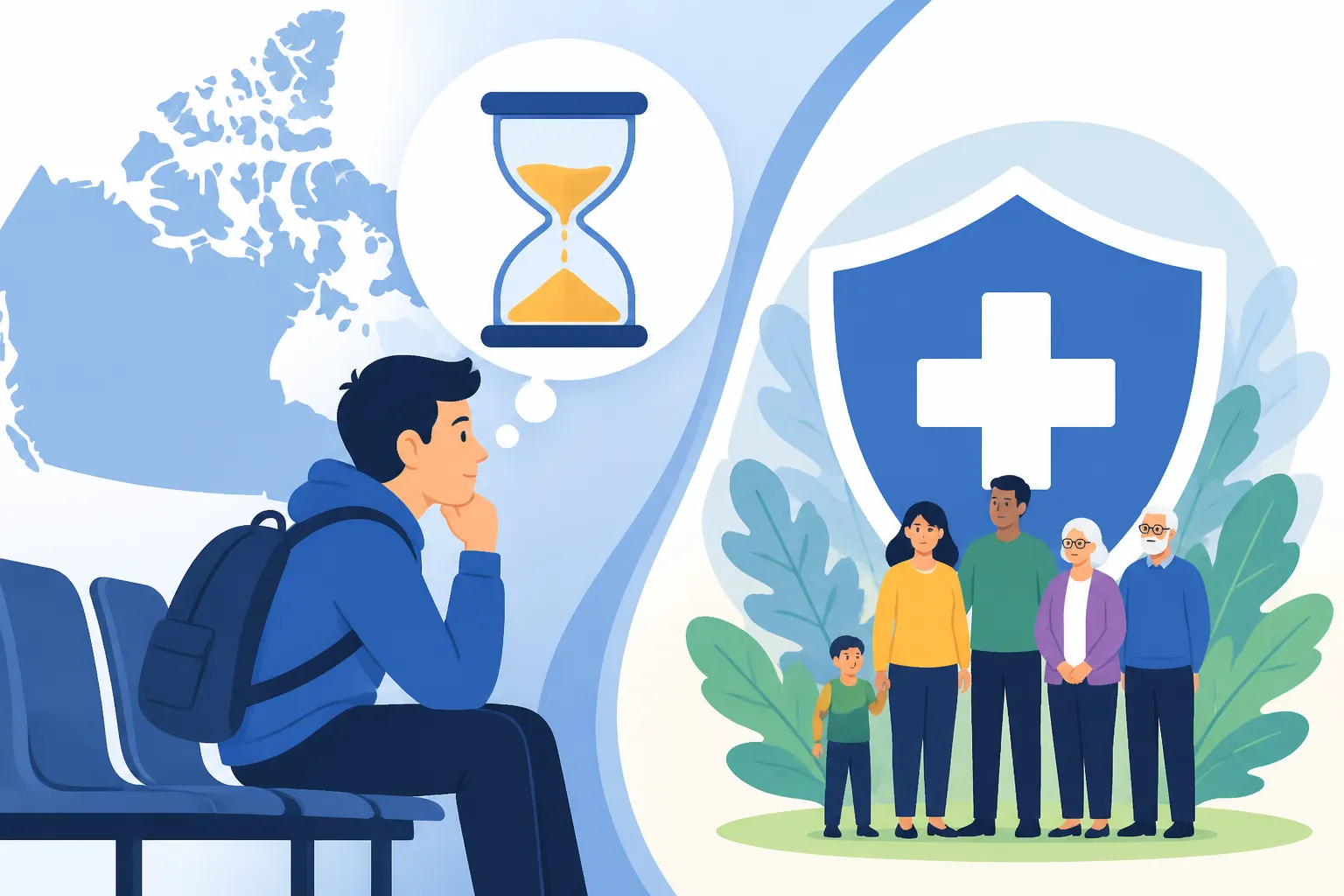
When I first moved to Canada, I remember the overwhelming sense of relief that I was finally in a country with "free healthcare." However, that relief quickly turned into anxiety when I discovered the "three-month rule." In several Canadian provinces, your eligibility for public health insurance does not begin the moment you land. Instead, there is a statutory waiting period designed to ensure that only "committed residents" access the system. This period is often misunderstood by newcomers who assume their work permit or permanent residency status grants immediate protection.
The logic behind the waiting period is rooted in provincial legislation. Each province manages its own healthcare budget, and they want to ensure that people aren't just "medical tourists" popping in for a surgery and then leaving. While this makes sense from a bureaucratic perspective, it is a massive hurdle for an expat who is trying to set up a new life. During this time, you are effectively a private patient. If you need to visit a walk-in clinic or, heaven forbid, an emergency room, you will be billed as a non-resident. These costs are not small; a single night in a Canadian hospital for an uninsured patient can easily exceed $3,000, excluding doctor fees, diagnostic tests, and medications.
It is also vital to distinguish between being "eligible" and being "covered." You might be eligible for coverage the day you arrive in terms of your immigration status, but the coverage itself won't "kick in" until the waiting period has elapsed. This is a critical distinction that leads many to delay their application. You should always apply for your health card immediately upon arrival, even if you know the waiting period applies to you. For a deeper look at the logistical side of this, I recommend reading How to Apply for Your Provincial Health Card in Canada (2027) to understand the timeline from landing to receiving your physical card.
Lastly, you must consider the mental load of being uninsured. Moving to a new country is stressful enough without the constant "what if" looming over your head. If you are coming from a country with a different medical system, the Canadian way of doing things—where you can't just pay a small fee to see a private specialist—can be jarring. You are trapped in a zone where you have neither the public safety net nor the familiar private infrastructure of your home country. This is why Understanding the Three-Month Waiting Period for Health Coverage in Canada is perhaps the most important administrative hurdle you will clear in your first year.
A Provincial Breakdown of the Waiting Period
Not every province treats newcomers the same way. This is one of the most confusing aspects of moving to Canada; your experience in Toronto will be vastly different from your experience in Montreal or Calgary. Currently, the most notable waiting periods exist in British Columbia and Quebec. Ontario, famously, removed its three-month waiting period during the COVID-19 pandemic, but there are always ongoing debates in the provincial legislature about reinstating it or modifying eligibility for certain permit holders. You must stay updated on the specific rules for your destination.
In British Columbia, the Medical Services Plan (MSP) waiting period is defined as the balance of the month in which you establish residency, plus two full months. For example, if you arrive on August 15th, your waiting period consists of the rest of August, plus all of September and October. Your coverage would officially begin on November 1st. This "plus the remainder of the month" rule catches many people off guard. If you arrive on the 1st of the month, your wait is essentially three months. If you arrive on the 31st, you’ve effectively "saved" a month of waiting. It’s a quirk of the system that underscores why you need to understand How Canada's Health System Works: Provincial Plans Explained (2027) before you book your flights.
Quebec has a similar 90-day waiting period for the RAMQ (Régie de l'assurance maladie du Québec). There are some exceptions for people coming from countries that have social security agreements with Quebec (like France, Belgium, or Greece), but for the vast majority of expats from the UK, the US, or India, the 90-day wait is non-negotiable. During this time, RAMQ will not reimburse any healthcare costs. This creates a significant financial risk, especially in a province where the cost of living is rising and medical fees for non-residents are strictly enforced. You can learn more about the specifics of these differences in our guide on Understanding the Difference Between Provincial Plans Across Canada.
Provinces like Alberta and Manitoba generally offer coverage from the date you establish residency, provided you have the correct documentation. However, "establishing residency" is a legal term that requires proof, such as a long-term lease or a utility bill. If you are staying in an Airbnb for your first month, you might find it difficult to prove residency, effectively creating a "de facto" waiting period while you hunt for a permanent home. If you're heading to the mountains, make sure to check How to Apply for OHIP, MSP, RAMQ or AHCIP When You Arrive in Canada for the specific document checklists required in the West.
Detailed Comparison of Waiting Periods by Province (2026 Estimates)
| Province | Waiting Period Duration | Coverage Start Date | Recommended Action |
|---|---|---|---|
| Ontario | None (currently waived) | Date of arrival | Apply at ServiceOntario immediately. |
| British Columbia | 2 months + remainder of arrival month | 1st day of the 3rd month | Purchase private insurance like SafetyWing. |
| Quebec | Up to 3 months | After 90 days of residency | Check for bilateral country agreements. |
| Alberta | None (for eligible residents) | Date of arrival | Register for AHCIP within 90 days. |
| Saskatchewan | None (for eligible residents) | Date of arrival | Provide proof of residency immediately. |
The Financial Risk of Being Uninsured
The cost of Canadian healthcare for those without a provincial health card is astronomical. Newcomers have been presented with bills for $1,500 just for a series of blood tests and an X-ray at a local clinic. Because the system is "public," there is no "market competition" to keep prices down for private payers. Hospitals have set rates for "uninsured residents" and "non-residents," and these rates are designed to recover the full cost of the specialized staff and equipment. You aren't just paying for the doctor's time; you're paying for the infrastructure of the entire hospital.
Consider a hypothetical scenario: you develop a severe case of appendicitis in your second month in Vancouver. Without MSP coverage, the surgery, the anesthesia, the recovery room, and the two-night hospital stay could easily total $15,000 to $25,000. For most newcomers, this is more than their entire "settlement fund" required by IRCC. It is a debt that can follow you for years and even impact your ability to get a mortgage or other credit in Canada. To understand the scale of these potential costs, take a look at The Cost of Healthcare in Canada: A Complete Breakdown for Newcomers (2026).
Even "minor" issues are expensive. A simple visit to a walk-in clinic in a major city can cost between $100 and $250 just to talk to the doctor for ten minutes. If they prescribe antibiotics, you'll be paying the full retail price at the pharmacy, as you won't have an employer-sponsored drug plan yet. Many expats are shocked to find that Prescription Medications and Pharmacies in Canada: The Complete Guide explains a system where drugs can be quite costly without the right coverage. When you add it all up—the clinic fee, the diagnostic tests, and the medicine—a basic chest infection can cost you $500.
This is why the "it won't happen to me" mindset is so dangerous. Accidents don't schedule themselves around your 90-day residency anniversary. Whether it's a car accident, a slip on the ice, or a sudden illness, the Canadian medical system is not designed to be "charitable" to those who are supposed to have private coverage. If you end up in the ER, the first thing they will ask for is your health card. If you don't have one, they will ask for a credit card. For more on handling these high-stress situations, read Emergency Medical Care in Canada: What Every Newcomer Needs to Know.
Why Private Insurance is Non-Negotiable
Given the risks outlined above, private medical insurance is the only logical solution for the waiting period. Many newcomers try to rely on the "travel insurance" they bought for their flight, but these policies often have strict "trip duration" limits or exclude "residency" activities. You need a policy specifically designed for people moving to a new country. This is where a provider like SafetyWing becomes a literal lifesaver. Their Nomad Insurance is built for the gaps in traditional systems, offering flexible, month-to-month coverage that fits the exact window of the Canadian waiting period.
One of the biggest advantages of SafetyWing is the simplicity. When you are busy trying to find an apartment, get a SIN, and open a bank account, the last thing you want is a 50-page insurance application. SafetyWing allows you to sign up in minutes, and because it functions like a subscription, you can cancel it the moment your provincial card arrives. This flexibility is key because, as we've seen, the exact date your provincial coverage starts can be a moving target depending on when you submit your paperwork and how fast the provincial government processes it.
Another factor to consider is what these private plans cover. You aren't just looking for "catastrophic" coverage for plane crashes; you need coverage for the mundane things that happen in those first 90 days. If you get a sinus infection from the dry Canadian winter air, you want to know that your insurance will reimburse that $150 clinic visit. SafetyWing is designed with this global lifestyle in mind, providing a safety net that feels much more like the "comprehensive" care you’ll eventually get from the province. For more comparisons on this, you can check out How to Get Private Health Insurance to Cover the Waiting Period in Canada.
It’s also important to remember that your employer’s "extended health benefits" usually won't help you if you don't have a provincial health card first. Most Canadian employer plans are "supplementary," meaning they cover things like dental, vision, and massage, but they assume the province is paying for your doctor and hospital visits. If you don't have the underlying provincial coverage, your employer's plan may be useless for major medical events. Relying on SafetyWing during that gap ensures you have the foundational medical coverage that your employer's plan lacks. You can read more about this interaction in Understanding the Role of Walk-In Clinics in Canada.
Navigating the Application Process During the Wait
The moment you have a permanent address (or even a semi-permanent one), you must start the application for your provincial health card. Do not wait for the 90 days to pass before applying. In provinces like BC, the waiting period is calculated from the day you establish residency, but you still need to get your application into the system so that your card arrives by the time the wait is over. If you wait until day 91 to apply, you might find yourself waiting another 30 days for the bureaucracy to catch up, leaving you uninsured for four months instead of three.
The documentation required can be quite extensive. Usually, you will need your passport, your work permit or COPR (Confirmation of Permanent Residence), and proof of residency in the province. Proof of residency is often the hardest part for new arrivals. A lease agreement is the "gold standard," but if you're staying with family, you might need a notarized letter or a utility bill in your name. If you're struggling to figure out which papers to bring to the office, What Documents Do I Need to See a Doctor in Canada? provides a great checklist of the essentials.
Be prepared for the "Service" center experience. Whether it's ServiceOntario or a ServiceBC office, these places can be crowded. My advice is to go as early as possible on a Tuesday or Wednesday. Bring physical copies of everything; do not rely on showing a PDF on your phone. The agents are generally helpful, but they are bound by strict provincial rules. If your work permit doesn't have at least six months of validity remaining, for example, they may deny your application on the spot. This is a common pain point for people on shorter contracts, and it’s explored in detail in Am I Eligible for Provincial Health Coverage on a Work Permit in Canada?.
Once you’ve submitted your application, keep the "Confirmation of Application" or any receipt they give you. While this isn't a health card, some walk-in clinics may be more lenient if they see you are "in the system," though you will still likely have to pay upfront and seek reimbursement later. During this limbo phase, having a plan like SafetyWing gives you a place to send those receipts. It turns a potential financial disaster into a mere administrative task. To see how this fits into your overall first few months, check Navigating the Canadian Healthcare System: A Newcomer's Roadmap (2027).
Common Misconceptions About the Waiting Period
A frequent myth I hear in expat circles is that "emergency care is always free for everyone." This is patently false. While a Canadian hospital will never turn you away in a life-threatening emergency (they will stabilize you regardless of your ability to pay), they will absolutely send you a bill afterward. The "Canada Health Act" ensures care is provided, but it doesn't mean the province pays for it if you aren't a registered resident with a valid card. This misunderstanding has led many newcomers to financial ruin. For a reality check on this, read Understanding Hospital Visits and Billing for Newcomers in Canada.
Another misconception is that the waiting period only applies to "immigrants" and not "returning Canadians." If you are a Canadian citizen who has lived abroad for several years, you may be surprised to find that you are also subject to the waiting period when you move back. You are essentially "re-establishing" residency. The rules treat a returning citizen much like a new PR holder in terms of the 90-day clock. This can be a huge shock for those who feel their passport should grant them immediate access to the system they grew up in.
Some people also believe that they can "buy into" the provincial system early. There is no "fast-track" fee or premium you can pay to the government to skip the 90 days. The waiting period is a matter of law, not a service tier. This is why private options like SafetyWing are so essential; they are the only "fast-track" available, albeit through a private provider rather than the government itself. If you want to understand more about why you can't just pay the province directly, Public vs Private Healthcare in Canada: What Newcomers Need to Know breaks down the two-tier reality of the system.
Lastly, don't assume that your "private" insurance from back home will be easily accepted at a Canadian hospital. Many Canadian medical providers struggle with foreign insurance forms and may insist that you pay the full amount upfront and then "fight it out" with your insurance company in your home country later. SafetyWing, being a modern, internationally-recognized provider, often has much smoother processes for these types of claims, but always be prepared to pay a "deposit" at the hospital if you don't have a provincial card. You can learn more about this in How to Claim Health Expenses Through Insurance in Canada.
Strategies for Managing Your Health in the First 90 Days
Beyond just having insurance, there are practical steps you can take to minimize your risk during the waiting period. First, if you have chronic conditions, try to bring a 90-day supply of your medications from your home country, along with a copy of your prescriptions. This prevents you from having to visit a Canadian doctor just to get a refill, which would be an out-of-pocket expense. Understanding Prescription Drug Coverage and Pharmacare in Canada can help you plan the costs if you do need to buy meds locally.
Second, familiarize yourself with "Telehealth" options. Many provinces have free or low-cost nurse helplines (like 811) where you can get medical advice over the phone. While they can't prescribe medication or perform surgery, they can tell you if your symptoms warrant a trip to the ER or if you can wait until morning to visit a clinic. This can save you hundreds of dollars in unnecessary facility fees. Check out Understanding Telehealth and Virtual Care Options in Canada for a list of available services in your province.
Third, look for "Community Health Centres" (CHCs). In some cities, these centers are designed to serve marginalized or uninsured populations and may offer sliding-scale fees based on your income. They are often much more affordable than corporate walk-in clinics for newcomers who are still waiting for their health cards. However, these centers are often in high demand and have long wait times, so they are better for non-urgent issues. You can find more about these resources in How to Find and Register with a Family Doctor in Canada.
Finally, stay safe. It sounds simple, but the first 90 days is not the time to take up extreme winter sports or start a dangerous DIY home renovation. Be mindful of the "newcomer's learning curve"—everything from driving in the snow to navigating a new city involves risks you might not have considered. If you do find yourself in a pinch, knowing the right numbers is vital; Understanding Emergency Numbers (911) and Ambulance Fees in Canada is essential reading for your first week.
Final Checklist for Your First 3 Months
- Apply Immediately: Go to the provincial health office within your first 7 days.
- Secure Private Coverage: Use a flexible plan like SafetyWing to cover exactly the 90-day gap.
- Gather Proof of Residency: Get your name on a lease or utility bill as soon as possible.
- Locate Your Nearest Clinic: Find a walk-in clinic near your home and check their "uninsured" rates.
- Keep Every Receipt: If you have to pay for care, keep the itemized bill for your insurance claim.
- Stay Informed: Keep an eye on provincial news for any changes to health coverage laws.
Disclaimer
The information provided in this guide is for educational and informational purposes only and does not constitute legal or professional medical advice. Healthcare regulations in Canada are subject to change at the provincial level. Always consult the official website of your provincial health ministry or a qualified immigration professional for the most current rules and eligibility requirements. The author is not responsible for any financial or health-related consequences resulting from the use of this information.