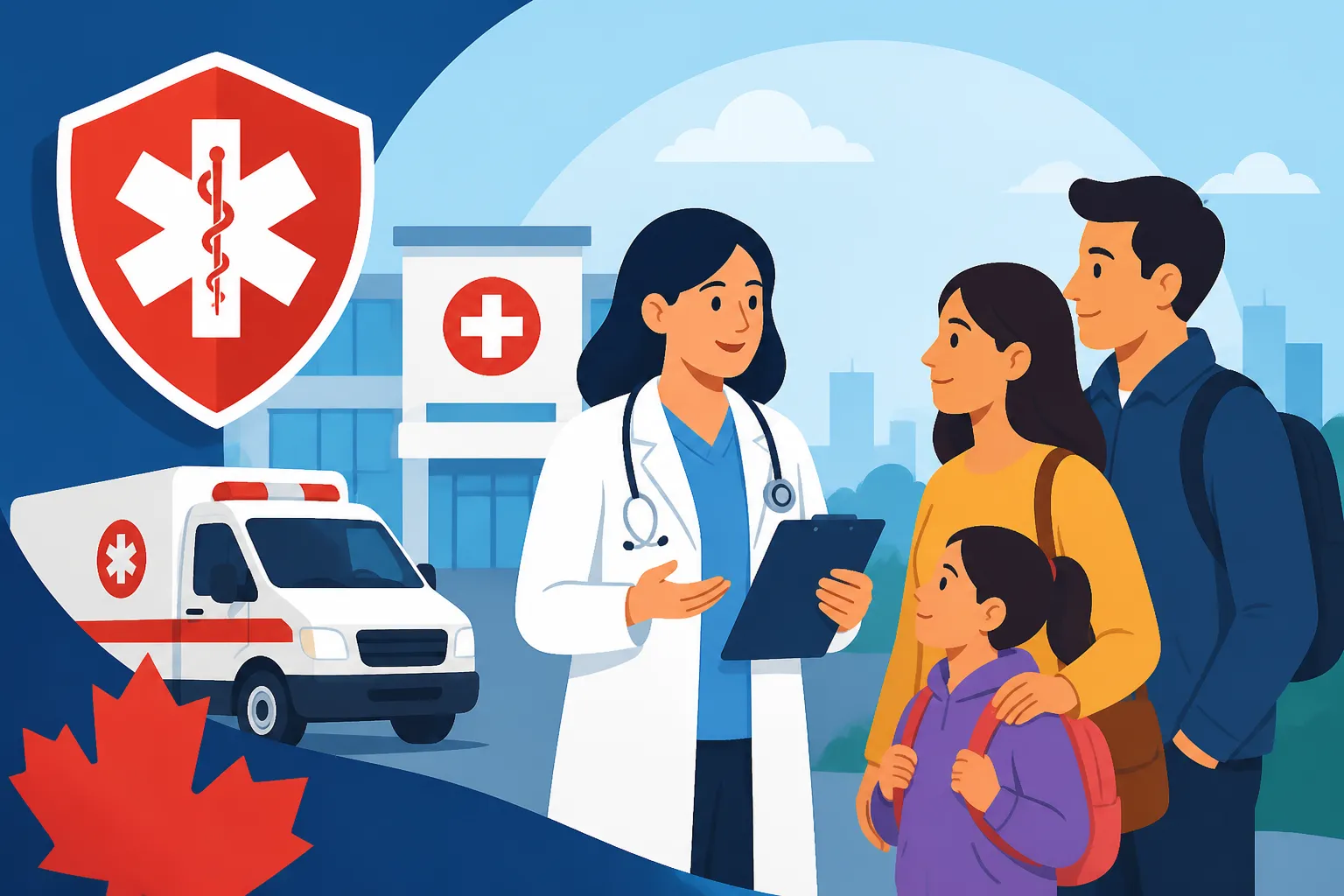
Emergency Medical Care in Canada: What Every Newcomer Needs to Know
Moving to a new country involves a massive checklist, but nothing feels more urgent—or more terrifying—than facing a medical crisis before you have even figured out where the local grocery store is. In Canada, the healthcare system is a point of national pride, but for a newcomer, the reality of emergency rooms and ambulance bills can be a confusing, high-stakes maze. This guide explains exactly how to handle medical emergencies in Canada, ensuring you are never caught off guard when every second counts.
The Triage Reality: Understanding How Canadian Emergency Rooms Work
One of the first things I noticed after moving here was that the "free" aspect of Canadian healthcare comes with a trade-off that many newcomers find jarring: the wait. When you walk into an Emergency Department (ED) in a city like Toronto or Vancouver, you are not seen on a first-come, first-served basis. Instead, you enter the triage system. A triage nurse will assess your condition based on the Canadian Triage and Acuity Scale (CTAS), which ranks patients from Level 1 (resuscitations and life-threatening) to Level 5 (non-urgent).
If you show up with a minor fracture or a deep cut that needs stitches but isn't life-threatening, you might find yourself sitting in a plastic chair for six, eight, or even twelve hours. It is frustrating, especially when you see people who arrived after you being rushed inside. However, it is important to understand that those people are likely facing critical issues like heart attacks or severe trauma. Validating your frustration is part of the process; the system is strained, and wait times are a frequent topic of local news. To understand the broader context, you should look into How Canada's Health System Works: Provincial Plans Explained (2027) to see how resources are managed.
The 911 System and Emergency Response
In Canada, 911 is the universal number for all life-threatening emergencies, including medical, fire, and police. When you call, an operator will ask which service you require. If you request an ambulance, you will be transferred to an emergency medical dispatcher. It is vital to stay calm and provide your exact location. In many Canadian cities, the dispatcher can provide life-saving instructions over the phone, such as how to perform CPR or use an Automated External Defibrillator (AED), while the paramedics are en route.
I remember the first time I had to call for a neighbor; the level of detail the dispatcher wanted was intense. They need to know if the person is conscious, breathing, and what the specific symptoms are. Do not hang up until they tell you to. Paramedics in Canada are highly trained professionals who can begin treatment the moment they arrive. However, remember that calling an ambulance does not necessarily mean you will be seen faster once you reach the hospital. You will still go through the triage process once you arrive at the ED.
Emergency Rooms vs. Walk-in Clinics
One mistake many newcomers make is heading straight to the hospital for issues that could be handled elsewhere. If your situation is not life-threatening—think ear infections, minor rashes, or a persistent cough—a walk-in clinic or an Urgent Care Centre is a much better choice. These facilities are designed to take the pressure off emergency rooms and often have much shorter wait times. Learning Understanding the Role of Walk-In Clinics in Canada can save you a whole day of sitting in a hospital waiting room.
Urgent Care Centres are a middle ground. They handle things like sprains, minor burns, and simple fractures that need an X-ray but aren't "emergency" level. They usually have doctors on-site and more diagnostic equipment than a standard walk-in clinic. If you are unsure where to go, many provinces offer a 24/7 telehealth line where a registered nurse can give you advice on whether you need the ER or if you can wait until a clinic opens in the morning.
The Psychology of the Waiting Room
Staying patient in a Canadian waiting room is a skill in itself. The environment can be loud, crowded, and stressful. Newcomers are often advised to bring a portable phone charger, a bottle of water, and some snacks if they are heading to the ER for a non-critical issue. You will see people from all walks of life, and the staff are often doing their best under immense pressure. It is okay to feel overwhelmed, but being polite to the triage staff goes a long way.
If your condition worsens while you are waiting—for example, if you start feeling dizzy or your pain increases significantly—do not hesitate to go back to the triage desk and inform the nurse. They can re-evaluate your priority level. It is your right to be reassessed if your symptoms change. For more on what to expect, you can read Emergency Medical Care in Canada: What Every Newcomer Needs to Know for a deeper dive into hospital etiquette.
Who Pays for Emergency Care? The Financial Side
The most common myth about Canada is that healthcare is "free" for everyone the moment they step off the plane. This is simply not true. While the care itself is world-class, the billing process depends entirely on your residency status and the province you live in. If you are a permanent resident or a work permit holder, you will eventually be covered by a provincial plan like OHIP in Ontario or MSP in British Columbia. However, there is often a gap that can lead to massive bills if you aren't careful.
During the first few months, many newcomers fall into a coverage gap. This is why having a plan like SafetyWing is so critical for those initial 90 days. Without provincial coverage or private insurance, a single visit to the ER can cost upwards of $1,000 just for the registration fee, not including tests, physician fees, or medications. Families have been hit with five-figure bills because they assumed their "in-progress" PR application meant they were already covered.
The Newcomer Waiting Period
Depending on where you land, you might face a three-month waiting period before your provincial health insurance kicks in. Provinces like British Columbia and Ontario have historically had these wait periods, though they are sometimes waived during public health crises. It is your responsibility to check the current status of The Newcomer Waiting Period for Provincial Health Coverage in Canada (2027) before you arrive.
If you get into a car accident or have a sudden appendicitis during this period, the hospital will treat you—they never refuse emergency care—but they will send the bill to your home address later. These bills are legally binding and can impact your credit score if left unpaid. Using SafetyWing during this transition period provides a safety net that allows you to seek care without the fear of financial ruin. It’s a small price to pay for the peace of mind that you won't be starting your new life in Canada with a mountain of medical debt.
Billing for Non-Residents and Visitors
If you have family visiting you in Canada, or if you are here on a visitor visa, you are considered a "non-resident" for healthcare purposes. Hospitals in Canada have two different price lists: one for residents with a health card and one for everyone else. The non-resident rates are significantly higher. For example, a standard ward room in a hospital can cost $3,000 to $5,000 per night for a non-resident.
When you go to the hospital as a non-resident, the business office will ask for your insurance information upfront. If you don't have insurance, they may ask for a deposit via credit card before you are fully admitted to a room. It is a cold reality of the system, but it is how they manage the costs of providing care to those outside the tax system. Ensuring your visitors have adequate travel insurance is just as important as your own coverage. You can find more details in The Cost of Healthcare in Canada: A Complete Breakdown for Newcomers (2026).
Understanding Out-of-Pocket Expenses
Even if you have a provincial health card, not everything in an emergency is covered. While the doctor's time and the surgery might be "free," things like crutches, casts, or specific braces often come with a fee. Furthermore, prescription drugs administered inside the hospital are covered, but the ones you are sent home with are not.
Ambulance fees are another surprise for many. Even with a health card, most provinces charge a co-pay for ambulance services to discourage misuse. In Ontario, for example, if a doctor deems the ambulance was "medically necessary," you might only pay around $45, but if it wasn't, the bill could be $240 or more. For a newcomer, these small costs add up quickly. This is where Understanding Supplementary Health Insurance (Dental, Vision, Drugs) in Canada becomes relevant for your long-term planning.
| Service Category | Estimated Cost (No Insurance) | Provincial Coverage (With Health Card) |
|---|---|---|
| ER Registration Fee | $600 – $1,200 | $0 |
| Standard Hospital Room (Per Night) | $3,000 – $5,000 | $0 |
| Ambulance (Base Rate) | $300 – $800 | $45 – $100 (Co-pay) |
| Specialist Consultation | $200 – $500 | $0 |
| X-Ray / Basic Imaging | $150 – $400 | $0 |
Navigating the Hospital Visit: Step-by-Step
When you arrive at the ER, the first person you see is the triage nurse, as we discussed. But what happens after that? Once you are assigned a priority level, you will move to the registration desk. This is where the administrative work happens. If you are in severe pain, this part feels like a nuisance, but it is necessary for the hospital to track your care and ensure you are correctly billed or covered.
The clerk will ask for your provincial health card. If you don't have one yet, they will ask for your passport and any private insurance details you have. This is a good time to mention your SafetyWing policy if you are still in your waiting period. They will also ask for your "address of record" in Canada. If you are staying in temporary accommodation like an Airbnb, give them that address, but make sure to update it once you move permanently so you don't miss any follow-up correspondence or bills.
The Medical Examination and Testing
Once you are called into the treatment area, you will likely see a nurse first, followed by a resident (a doctor in training) or an emergency physician. In Canadian teaching hospitals, which are very common in major cities, you might be seen by multiple levels of medical staff. Be prepared to repeat your story several times. While it feels redundant, it is a safety check to ensure no details are missed.
Diagnostic tests like blood work, urine samples, or imaging (CT scans/X-rays) are common in the ER. Depending on the hospital's capacity, you might wait several hours for the results. In Canada, doctors tend to be thorough but conservative; they won't order a test unless they believe it's necessary. If you are used to a system where you can "demand" an MRI, you might find the Canadian approach a bit different. They follow strict clinical guidelines to manage the high volume of patients. For a broader look at this process, check Navigating the Canadian Healthcare System: A Newcomer's Roadmap (2027).
Consent and Patient Rights
As a patient in Canada, you have the right to be informed about your treatment. Doctors must explain the risks and benefits of any procedure they propose. You also have the right to refuse treatment, though the medical staff will explain the consequences of doing so. If you don't understand something because of the medical jargon, ask them to "explain it like I'm five." They are used to this and generally happy to clarify.
Privacy is also taken very seriously. Your medical information is protected by provincial laws (like PHIPA in Ontario). This means the hospital cannot share your health status with your employer or even your family members without your explicit consent, unless you are unable to speak for yourself. Understanding your rights is a huge part of feeling empowered in a new country. You can learn more about the documentation needed in What Documents Do I Need to See a Doctor in Canada?.
Discharge and Follow-up Care
When you are discharged, the doctor will give you "discharge instructions." These are vital. They explain what symptoms to watch for that would require you to come back and how to care for yourself at home. If you need a prescription, they will give you a paper script or fax it to a pharmacy of your choice. Remember, you have to pay for these medications out-of-pocket or through private insurance.
Most ER visits require a follow-up with a family doctor. This is the "catch-22" for many newcomers: the ER doctor will tell you to see your family physician in three days, but you likely don't have one yet. In this case, you should return to a walk-in clinic for the follow-up. Keep all the paperwork the hospital gives you, as the walk-in clinic doctor will need to see the results of your ER tests. Finding a permanent doctor is a long-term project, so read How to Find and Register with a Family Doctor in Canada to start that process as soon as possible.
Ambulance Services and Specialized Transport
In many countries, an ambulance is seen as a public service that is "always free." In Canada, that is a misconception that can lead to a $500 bill you didn't expect. Ambulances are managed provincially and often operated by regional municipalities. The cost structure is designed to ensure that ambulances are available for those who truly need them. If you call an ambulance because you have a cold and don't want to take a taxi, you will likely be charged the full "uninsured" rate, even if you have a health card.
However, if you are in a serious accident or experiencing a life-threatening event, do not let the cost deter you. The priority is your life. The paramedics provide "pre-hospital" care that is essentially a mobile ER. They can stabilize a heart rhythm, provide oxygen, and administer life-saving drugs before you even reach the hospital doors. For newcomers, Understanding Emergency Numbers (911) and Ambulance Fees in Canada is essential knowledge for your household.
When to Call an Ambulance
A good rule of thumb is to call 911 if moving the person could cause further injury, if the person’s condition is life-threatening (like a stroke or severe allergic reaction), or if the person needs the equipment or skills of a paramedic. For example, if someone is having a severe asthma attack and their inhaler isn't working, that is a 911 call. If you have a broken arm but you are otherwise stable and have a friend who can drive you, it is often better to go by car.
Many expats feel guilty calling 911 for "minor" things, and others who waited too long. If you are ever in doubt, call. The dispatcher will help you decide if an ambulance is necessary. They are trained to triage over the phone. Just be aware that once you arrive at the hospital, you might still wait in the triage area if your condition is stable. You do not "skip the line" just because you arrived in a vehicle with flashing lights.
Ambulance Fees and Billing
Billing for ambulances is a bit of a bureaucratic oddity. Even if you have a provincial health card, the bill usually comes in the mail a few weeks later. In provinces like Alberta or Ontario, the fee is subsidized for residents, but it is rarely zero. If you are a newcomer without a health card, your SafetyWing insurance can often cover these costs, provided the emergency is covered under your policy.
If you receive a bill you cannot pay, most ambulance services have a financial office where you can set up a payment plan. They are generally more flexible than credit card companies, but ignoring the bill is never a good idea. For those living in more remote areas, you should also be aware of the Understanding Hospital Visits and Billing for Newcomers in Canada as it applies to different regions of the country.
Air Ambulances and Remote Care
Canada is a massive country, and if you are living in or visiting a remote area—such as a national park or a small mining town—specialized transport like a helicopter (Ornge in Ontario or STARS in the Prairies) might be required. The cost of an air ambulance is astronomical, often exceeding $10,000.
While these costs are usually covered for residents under provincial plans, they are a massive risk for newcomers and tourists. This is another reason why comprehensive travel insurance like SafetyWing is non-negotiable if you plan on exploring the Canadian wilderness. Being rescued from a hiking trail shouldn't result in a debt that lasts a decade.
Pediatric and Specialized Emergencies
If you have children, a medical emergency feels ten times more stressful. The good news is that Canada has world-renowned children's hospitals, such as SickKids in Toronto, BC Children's in Vancouver, and CHEO in Ottawa. If you live in a city with a dedicated pediatric ER, always take your child there instead of a general hospital. The staff are specialists in dealing with kids, and the equipment is sized appropriately for infants and children.
The triage system in pediatric hospitals is just as strict. A child with a high fever who is otherwise alert might wait longer than a child who is having difficulty breathing. I have spent many nights in pediatric waiting rooms, and while the wait is hard, the level of care once you are inside is exceptional. For more on how to manage your child's health in Canada, see Understanding Childhood Vaccination Schedules in Canada.
Dental Emergencies in Canada
One of the biggest shocks for newcomers is that dental care is not covered by provincial health plans. If you chip a tooth or have a severe abscess, the regular ER will only help you if the infection is so bad that it is threatening your airway or causing a systemic fever. For the actual dental work, you must see a dentist.
Emergency dentists exist in every major city and offer after-hours care. These visits are expensive and must be paid for upfront. If you have employer-provided benefits, they will usually cover a portion of this, but as a newcomer, you may not have these benefits yet. It is wise to have a "dental emergency fund" or look into Understanding Dental Care Costs and the Canadian Dental Care Plan to see if you qualify for any new federal supports.
Mental Health Crises
If you or a loved one is experiencing a mental health crisis, you can go to any emergency room. Many large hospitals have a psychiatric emergency department or "crisis teams" that can provide immediate intervention. Canada takes mental health very seriously, and you will not be judged for seeking help.
There are also 24/7 crisis lines and mobile crisis teams in many cities that can come to your home. This is often a better first step than the ER if the situation is not immediately life-threatening. Learning How to Access Mental Health Services in Canada as a Newcomer can provide you with the resources you need before a crisis occurs.
Communicating in a Crisis
Language barriers can be terrifying during a medical emergency. Most Canadian hospitals have access to interpretation services, either in-person or via a phone/video link. Do not be afraid to ask for an interpreter. It is vital that you understand the doctor and that they understand you.
Even if you speak English well, the stress of an emergency can make it hard to find the right words. I suggest keeping a small "emergency card" in your wallet with your name, any allergies, your current medications, and your insurance details (like your SafetyWing policy number). This ensures that even if you can't speak, the medical team has the essential facts. For further help with local specifics, check What Should I Pack in a Home Medical Kit for Canada?.
Practical Preparation: The Newcomer's Emergency Kit
The best way to handle an emergency is to prepare for it before it happens. Many long-term expats find that having a "folder of truth" is the best way to stay calm. This folder should contain copies of your passport, your work or study permit, your provincial health card (once you have it), and your private insurance policy details.
When a crisis hits at 2:00 AM, you won't be searching through boxes for your policy number. Keep this folder in a designated spot near your front door. You should also have the address and phone number of the nearest ER and the nearest 24-hour pharmacy written down. Google Maps is great, but in a moment of panic, a physical note is sometimes more reliable.
Compiling Your Medical History
Canadian doctors will ask about your medical history, previous surgeries, and any family history of heart disease or cancer. If your medical records are in another language, try to get a summarized translation of the most important parts before you arrive in Canada. Knowing the generic names of your medications is also crucial, as brand names vary by country.
If you have a chronic condition, consider wearing a MedicAlert bracelet. This is common in Canada and is the first thing paramedics look for if you are unconscious. It’s a simple way to communicate life-saving information when you can't. You can also look into How to Access My Medical Records in Canada to understand how your data will be stored locally.
Financial Backups and Insurance
As we have emphasized, the transition period is the highest risk time for a newcomer. Until your provincial card arrives in the mail, you are financially vulnerable. A plan like SafetyWing is designed for this exact scenario. It covers unexpected illnesses and injuries, including hospital stays and emergency transport, which can save you from a financial disaster before your Canadian journey even truly begins.
A common saying goes: "Hope for the best, but insure for the worst." Canada is a safe and welcoming place, but it isn't a magical bubble where accidents don't happen. Being proactive about your insurance coverage is the mark of a savvy newcomer. Once you are settled, you can transition to employer-based benefits or supplementary plans, but don't leave those first 90 days to chance.
Creating a Local Support Network
Finally, try to make a connection with a neighbor or a local friend as soon as possible. In an emergency, having someone who can watch your kids, feed your pet, or simply drive you to the hospital is invaluable. Many communities in Canada have "Newcomer Welcome" groups where you can meet people in the same boat.
The administrative side of moving is hard, but the social side is what gets you through the emergencies. Don't be afraid to ask for help; Canadians are generally very helpful and understand how difficult it is to navigate a new system. For more tips on the first few months, check The Complete Guide to Moving to Canada: Your First 90 Days (2027).
Disclaimer
The information provided in this guide is for informational purposes only and does not constitute medical or legal advice. Healthcare policies, wait times, and billing practices in Canada can change frequently and vary significantly by province and territory. Always consult with a qualified medical professional for health concerns and refer to official provincial health ministry websites for the most up-to-date information regarding coverage and eligibility. The mention of specific insurance providers is based on general newcomer needs and does not replace your responsibility to review policy terms and conditions.