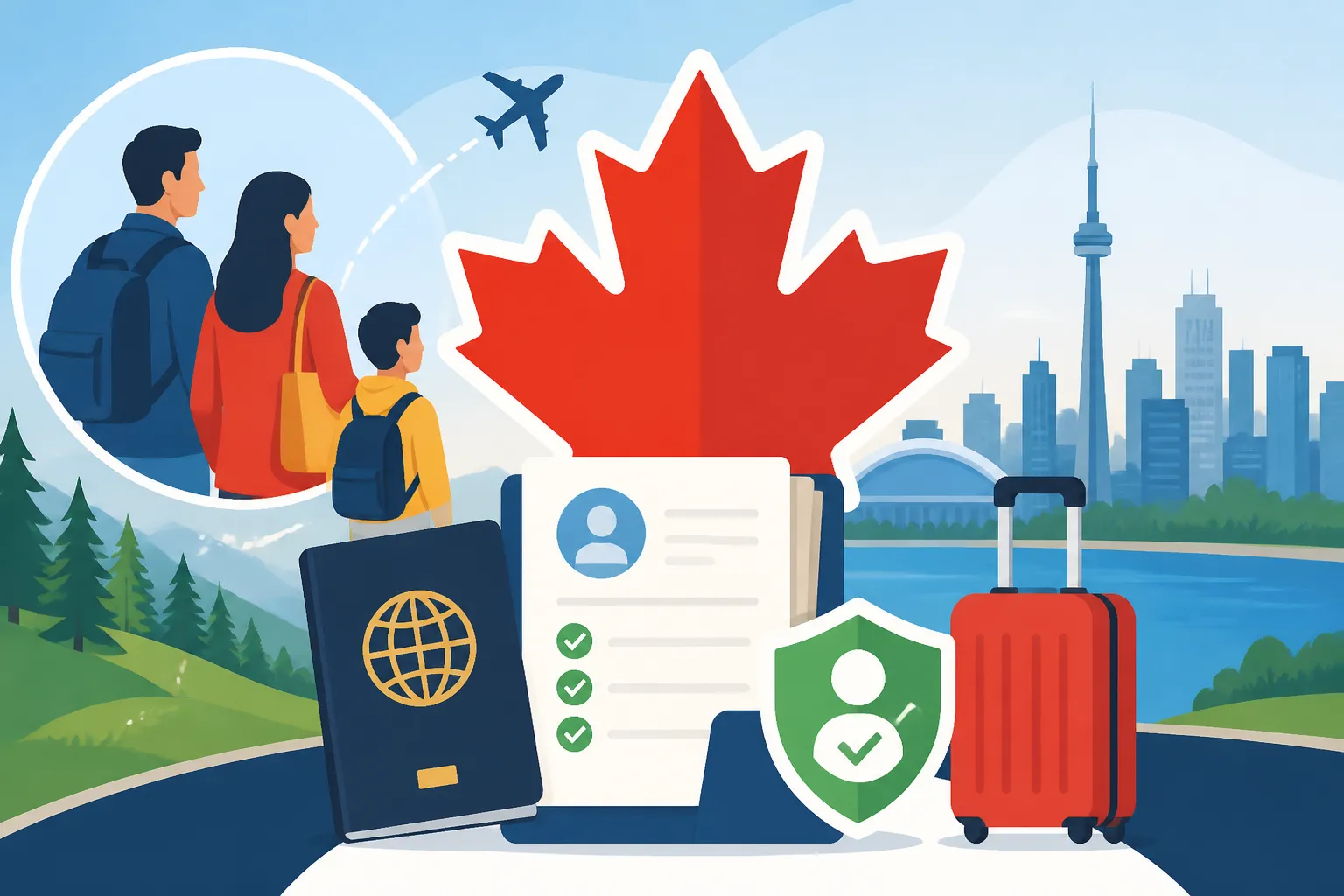
The Complete Visa and Immigration Guide for Moving to Canada (2027)
Deciphering Canada's immigration landscape can feel like trying to navigate a dense fog – confusing forms, overwhelming requirements, and constant updates leave many newcomers feeling lost and frustrated. Believe me, I've been there, staring blankly at documents, wondering if I'd ever get it right. This comprehensive guide is here to cut through that fog, offering you a clear, empathetic roadmap through the labyrinthine world of Canadian visas and immigration, tailored specifically for those looking to make Canada their new home and beyond.
Understanding Canada's Immigration Philosophy and Goals
Canada isn't just opening its doors; it's actively inviting the world to come and build a future here. This isn't some fleeting trend; it's a deeply ingrained part of the national identity and a strategic economic imperative. As a newcomer, understanding why Canada does this can help frame your entire immigration journey, giving you a sense of purpose beyond just filling out forms. It’s not just about what you can offer, but also about the mutual benefits.
Why Canada Welcomes Newcomers So Eagerly
The truth is, Canada needs people. This vast, geographically stunning country has a relatively small, aging population and a low birth rate. To maintain its robust economy, support its social programs, and continue innovating, Canada relies heavily on immigration. Newcomers bring fresh perspectives, diverse skills, and an entrepreneurial spirit that fuels growth. When you arrive, you're not just a number; you're contributing to the social fabric and economic engine of a nation that values your presence. Think about the bustling markets in Toronto's Kensington Market, the vibrant tech scene in Vancouver, or the diverse culinary landscape in Montreal – these are all testaments to the continuous infusion of cultures and talents brought by immigrants. Without new blood, these dynamic elements would simply fade.
Furthermore, Canada has a long-standing commitment to humanitarianism and family reunification. It’s a country that believes in giving people a chance at a better life, whether they’re fleeing conflict, seeking asylum, or simply wanting to join family members already established here. This compassionate approach sets Canada apart on the global stage, making it a beacon of hope for many. This isn't just policy; it's reflected in the everyday kindness you'll encounter, from neighbours helping you shovel snow to community organizations offering language support. This welcoming spirit, however, doesn't mean the process is always easy, but knowing the underlying intention can make the challenging bits feel more worthwhile.
The Core Principles of Canadian Immigration Policy
Canadian immigration policy is built on a few key pillars: economic growth, family reunification, humanitarian compassion, and the promotion of Francophone communities outside Quebec. These aren't just buzzwords; they are the filters through which every application is assessed. For example, economic programs like Express Entry prioritize skilled workers who can fill labour shortages and contribute to specific sectors, like healthcare or technology. The points system within Express Entry directly reflects Canada's needs, awarding points for factors like education, language proficiency, and Canadian work experience.
Family sponsorship, on the other hand, upholds the value of keeping families together, allowing Canadian citizens and permanent residents to bring their spouses, children, parents, and grandparents to Canada. This shows a holistic view of immigration, recognizing that a stable family unit is crucial for successful integration. Lastly, Canada has a strong commitment to refugees and those in need of protection, offering pathways to safety and a new beginning. These principles guide everything from legislative changes to the resources allocated for settlement services, painting a picture of a nation that sees immigration not as a burden, but as a fundamental strength.
Debunking Common Myths About Immigrating to Canada
Let's be real, the internet is rife with misinformation, and it's easy to get caught up in rumors. One pervasive myth is that you need a huge amount of money to immigrate. While you do need to prove you have sufficient funds for settlement, especially for economic programs, it's not an exorbitant sum designed to deter you. The exact amount varies depending on your family size and is clearly outlined by IRCC (Immigration, Refugees and Citizenship Canada) requirements. It's about demonstrating financial stability, not extreme wealth.
Another common misconception is that the process is impossibly fast or impossibly slow. The reality lies somewhere in between. Processing times can vary wildly depending on the program, the volume of applications, and your individual circumstances. Expecting a six-month turnaround for a complex application might lead to disappointment, but assuming it will take five years for a straightforward one isn't accurate either. Patience is truly a virtue here. Finally, many believe that without a job offer, you stand no chance. While a job offer certainly helps, especially in programs like Express Entry, it’s not always a mandatory requirement. Many programs, including certain streams within Express Entry, allow skilled workers to apply without a pre-arranged job, provided they meet other criteria. It's about understanding the specific program requirements, not relying on hearsay.
Navigating the Major Immigration Pathways to Canada
Canada offers a smorgasbord of immigration programs, each designed to meet specific needs and attract different types of newcomers. It can feel like being in a massive, delicious buffet line – so many choices, but which one is right for you? Let's break down the main courses.
Express Entry: Your Digital Gateway to Permanent Residence
For many skilled workers, Express Entry is the fastest and most popular route to permanent residency. It's a system designed to manage applications for three key economic immigration programs: the Federal Skilled Worker Program, the Federal Skilled Trades Program, and the Canadian Experience Class. Think of it as a sophisticated online portal that ranks candidates based on a Comprehensive Ranking System (CRS) score. Factors like your age, education, language proficiency (English and/or French), work experience, and connections to Canada (like a job offer or provincial nomination) all contribute to your score. The higher your score, the better your chances of receiving an Invitation to Apply (ITA) for permanent residence.
The beauty of Express Entry is its speed and transparency. Once you receive an ITA, you typically have 60 days to submit a complete application, and IRCC aims to process these within six months. However, the catch is getting that ITA. The CRS cut-off scores fluctuate with each draw, reflecting Canada's changing economic needs and the pool of candidates. This means constant monitoring and strategic planning are key. Many hopefuls spend months, if not years, working on improving their scores, perhaps by boosting their language test results or gaining more skilled work experience. It's a competitive game, but one with clear rules. You can learn more about How Express Entry Works for Permanent Residence in Canada (2027) by diving into our detailed guide on the topic. For practical steps, consider our article on How to Create an Express Entry Profile in Canada.
Provincial Nominee Programs PNPs: Regional Opportunities
While Express Entry is federal, Canada is also a mosaic of provinces and territories, each with its own unique economic needs and demographic challenges. This is where the Provincial Nominee Programs (PNPs) come into play. Every province and territory (except Quebec, which has its own system) has agreements with the federal government allowing them to nominate individuals who wish to settle in that specific province and contribute to its economy. This is a fantastic option if you have a strong connection or desire to live in a particular region.
PNPs often target specific occupations or industries facing labour shortages in their respective regions. For example, Saskatchewan might prioritize agricultural workers, while British Columbia might focus on tech professionals. Being nominated by a province gives you a significant boost in the Express Entry system (an additional 600 CRS points!), virtually guaranteeing an ITA. Alternatively, some PNP streams are base programs, meaning you apply directly to the province and then, if nominated, apply to IRCC for permanent residence outside of Express Entry. The sheer variety of PNPs means there's likely a program tailored to a niche skill or circumstance, so it's worth researching each province's offerings carefully. Our guide on The Newcomer Guide to Provincial Nominee Programs (PNP) in Canada (2027) provides an excellent starting point, and for specific application steps, check out How to Apply Through a Provincial Nominee Program in Canada.
Family Sponsorship: Reuniting Loved Ones
Canada holds family values in high regard, and the family sponsorship program is a testament to this commitment. If you are a Canadian citizen or permanent resident, you can sponsor eligible family members to come to Canada and become permanent residents themselves. This pathway is deeply personal and often brings immense joy and relief to families separated by borders. The most common forms of family sponsorship involve spouses, common-law partners, and dependent children, but it also extends to parents and grandparents through specific programs that often have limited intake periods.
Sponsoring a family member means you, as the sponsor, commit to providing financial support for their basic needs once they arrive in Canada. This commitment, called an Undertaking, ensures that the sponsored person doesn't become a burden on the Canadian social assistance system. It’s a serious responsibility, but one that many are more than willing to undertake to have their loved ones close. The process involves submitting detailed applications for both the sponsor and the sponsored person, along with various supporting documents to prove the genuine nature of your relationship. For a comprehensive overview, our article on Family Sponsorship in Canada: Spouse, Children and Parents Explained (2027) breaks down all the nuances.
Quebec-Specific Immigration Programs: A Unique Path
Ah, Quebec! The largest province by area, and culturally distinct with its strong French heritage, Quebec operates its own immigration system entirely. If you have your heart set on settling in La Belle Province, you'll need to navigate their unique set of programs. This autonomy allows Quebec to select immigrants who align with its specific linguistic, economic, and cultural needs. The most prominent program is the Quebec Skilled Worker Program (QSWP), which assesses candidates based on a points grid that includes factors like education, work experience, age, and crucially, French language proficiency.
Beyond skilled workers, Quebec also has programs for entrepreneurs, investors, and international students who have graduated from Quebec institutions. The process typically involves obtaining a Certificat de sélection du Québec (CSQ) – Quebec Selection Certificate – from the provincial government first. Once you have your CSQ, you then apply to IRCC for permanent residence, where federal admissibility checks (criminality and medical) are performed. It's a two-stage process, and strong French language skills can be a significant advantage, often a requirement, for many Quebec programs. If Quebec is your dream, start practicing your bonjours and mercis now!
Temporary Stays: Work, Study, and Visit Visas
Sometimes, the full dive into permanent residency isn't the immediate goal. Many newcomers begin their Canadian journey with a temporary stay, either to work, study, or simply explore the country. These temporary pathways can often lay the groundwork for a future permanent residence application, offering invaluable Canadian experience.
Work Permits: Gaining Canadian Experience
If your plan is to come to Canada and work, a work permit is your golden ticket. There are several types, but they generally fall into two broad categories: those that require a Labour Market Impact Assessment (LMIA) and those that are LMIA-exempt. An LMIA is a document that an employer in Canada needs to obtain from Employment and Social Development Canada (ESDC) before they can hire a foreign worker. It essentially proves that there is no Canadian citizen or permanent resident available to do the job, thus justifying the hiring of an international candidate. This can be a significant hurdle for employers, so many prefer to explore LMIA-exempt options.
LMIA-exempt work permits are typically granted under international agreements (like NAFTA/USMCA or GATS), or for specific programs that benefit Canada, such as intra-company transfers, post-graduation work permits for international students, or open work permits for spouses of certain workers or students. These permits are crucial for gaining Canadian work experience, which is a massive advantage if you later apply for permanent residence through programs like the Canadian Experience Class within Express Entry. Understanding the nuances of these permits is vital, and our detailed article on Understanding Canadian Work Permits: LMIA and Exempt Explained (2027) provides an in-depth look.
Study Permits: Education as a Pathway
Canada's education system is world-renowned, and for many, a study permit is the first step towards a long-term future here. International students bring cultural diversity and economic benefits, and Canada actively encourages them. To get a study permit, you must first be accepted into a Designated Learning Institution (DLI) in Canada. Once you have your acceptance letter, you apply for the study permit, demonstrating that you have enough funds to cover your tuition, living expenses, and return transportation, and that you intend to leave Canada at the end of your authorized stay (unless you transition to another status).
One of the biggest advantages of studying in Canada is the potential pathway to permanent residence through the Post-Graduation Work Permit (PGWP) program. Many international students, after completing their studies at an eligible DLI, can apply for a PGWP, which allows them to gain valuable Canadian work experience. This experience, especially in skilled occupations, can then be used to qualify for permanent residence programs, particularly the Canadian Experience Class. It’s a clear and often successful two-step process for many. Dive deeper into the application process with our guide on How to Get a Study Permit for Canada: The Full Guide (2027).
Visitor Visas and eTAs: Short-Term Exploration
Perhaps you just want to check Canada out first, visit family, or attend a conference. For short-term stays, you’ll be looking at either a Visitor Visa (Temporary Resident Visa, TRV) or an Electronic Travel Authorization (eTA). The requirement depends on your country of citizenship. Many countries are visa-exempt, meaning their citizens only need an eTA to fly to or transit through Canada, provided they hold a valid passport. This includes countries like the United Kingdom, most EU nations, Australia, and New Zealand.
For citizens of countries that are not visa-exempt, a Visitor Visa is required. This involves a more extensive application process, requiring you to prove your ties to your home country, sufficient funds for your stay, and a clear intention to leave Canada before your authorized period expires. It's crucial not to confuse a visitor visa with an immigration visa; it's strictly for temporary stays and generally doesn't allow you to work or study (unless you apply for specific permits after arrival, which is a complex process in itself). If you’re unsure which one you need, check out our article: Do I Need a Visa or eTA to Visit Canada in 2027?. It's better to be sure than to arrive at the airport and be denied boarding!
Essential Steps Before and During Your Application
Embarking on the immigration journey is akin to preparing for a marathon – it requires meticulous planning, endurance, and an understanding of each stage. Neglecting any of these initial steps can lead to frustrating delays or even outright refusal.
Gathering Your Documentation: The Paperwork Mountain
This is often where the real headache begins. Canadian immigration applications are notorious for their extensive document requirements. We're talking birth certificates, marriage certificates, police certificates from every country you’ve lived in for more than six months since turning 18, educational diplomas and transcripts, work experience letters, language test results, and often, more specific documents depending on your chosen program. It’s a veritable mountain of paperwork, and every single document needs to be precise, legible, and often translated by a certified translator.
My own experience involved countless trips to various government offices, tracking down old records, and getting official stamps. It felt endless! The key here is organization and starting early. Don't wait until the last minute to gather these documents, especially those that require external processing (like police checks from previous countries). Keep digital copies and physical originals meticulously organized. A single missing or incorrectly formatted document can derail your entire application and send you back to square one, eating up precious time and money. Our guide on How to Get Your Documents Ready for an IRCC Application offers crucial advice to help you manage this monumental task.
Language Proficiency and Educational Credential Assessment
Unless you're applying through a very specific, limited stream, demonstrating your language proficiency in English or French (or both!) is almost always a non-negotiable requirement. Canada uses standardized tests like IELTS or CELPIP for English, and TEF Canada or TCF Canada for French. Your scores directly impact your eligibility and, for economic programs, your CRS score. Don't underestimate these tests; they are designed to assess your ability to communicate effectively in a Canadian context, not just rote memorization. Many people spend months preparing for these exams, as even a small improvement in a band score can make a huge difference in their overall application.
Equally important for most skilled worker programs is an Educational Credential Assessment (ECA). This report verifies that your foreign degree, diploma, or certificate is valid and equivalent to a Canadian one. Organizations like World Education Services (WES) are designated by IRCC to provide these assessments. The ECA ensures that your qualifications are properly understood and valued within the Canadian system, which is crucial for determining your eligibility and points for education. Without a valid ECA, your foreign education simply won't count. For more on getting your qualifications recognized, see our article How to Get Your Foreign Credentials Recognised in Canada.
Medical Exams and Police Certificates: The Mandatory Checks
As part of Canada's commitment to public safety and health, all permanent residence applicants and many temporary resident applicants must undergo a medical examination and provide police certificates. The medical exam is conducted by IRCC-approved panel physicians and assesses your general health to ensure you don't pose a public health risk or place excessive demand on Canada's healthcare system. It's a standard check, not meant to be a barrier unless there's a significant health issue.
Similarly, police certificates are required from every country or territory where you've lived for six months or more in a row since the age of 18. This is to ensure that applicants are not inadmissible to Canada on grounds of criminality. While these might seem like invasive checks, they are standard procedure for immigration to most developed countries. The key is to be completely honest and transparent throughout the process. Any attempt to conceal information will almost certainly lead to refusal and could impact future applications. Our guide, Understanding Medical Exams and Police Certificates for Canadian Immigration, offers more specific details on how to navigate these requirements.
Common Challenges and How to Overcome Them
Let's not sugarcoat it: the Canadian immigration journey, while rewarding, is not without its bumps and roadblocks. From agonizing waiting periods to financial strains, it's a process that tests your patience and resilience.
Dealing with Application Delays and IRCC Communications
One of the most common refrains among immigration hopefuls is the sheer frustration of delays. You submit your application, you wait… and wait… and then you wait some more. Posted processing times are often just estimates, and real-world timelines can stretch far beyond them. This can be incredibly stressful, especially if your life plans are on hold, your work permit is expiring, or your family is separated. It's easy to fall into a spiral of checking your application status multiple times a day.
The best way to combat this anxiety is to manage your expectations from the outset. Assume it will take longer than you hope, and plan accordingly. Keep all your communication with IRCC organized, including application numbers, dates, and any correspondence. If you truly believe there's an undue delay, or if you need to inform IRCC of a significant change in your circumstances (like a new job or the birth of a child), you can contact them through their web form. Remember, bombarding them with identical inquiries won't speed things up. It’s a process that demands patience and fortitude.
Financial Planning for the Immigration Journey
Moving to a new country is expensive, full stop. Beyond application fees, you’ll need to account for language test fees, ECA costs, medical exam fees, travel expenses, and the proof of funds required for settlement. This proof of funds isn't just a formality; it's a requirement to demonstrate you can support yourself and your family without relying on government assistance for your initial months. For 2026, these amounts are updated regularly, so always check the official IRCC website for the most current figures.
Beyond the initial requirements, you also need to budget for practicalities. What about temporary accommodation when you first arrive? What if you face a waiting period for provincial health coverage, as many newcomers do? This is where strategic financial planning comes in. Consider short-term private health insurance options to cover you during any provincial health plan waiting periods. Companies like Cigna Global offer comprehensive plans designed for expatriates, which could be a lifesaver if you or a family member needs unexpected medical care before your provincial coverage kicks in. Don’t forget about the cost of living while you search for a job, which could take a few months, and setting up utilities. Every dollar saved and planned for reduces stress significantly.
Pre-Arrival Planning: Logistics and Support
Your immigration journey doesn't end when your visa is approved; it merely shifts gears. Pre-arrival planning is crucial for a smooth transition. This includes researching housing options, understanding the job market in your target city, and getting a head start on practicalities. Thinking about how you’ll ship your belongings? Moving internationally can be a massive undertaking, and reputable moving services can make a huge difference. Companies like Sirelo can help you compare quotes from various international movers, ensuring your cherished possessions arrive safely and within budget.
Many organizations, both governmental and non-governmental, offer free pre-arrival services to help newcomers prepare. These services can include employment counseling, information sessions on Canadian life, and connections to settlement services. Taking advantage of these resources can provide invaluable insights and reduce culture shock. Landing in Canada is exciting, but having a solid plan for your first few weeks and months—where you'll stay, how you'll get around, and what your priorities are—will make all the difference.
Life After Arrival: Maintaining Status and Future Pathways
You’ve made it! You’ve landed in Canada, cleared immigration, and perhaps even started to settle in. But the journey isn’t over. Understanding how to maintain your status and what pathways lie ahead for citizenship is key to solidifying your new life.
Understanding and Maintaining Your Permanent Resident Status
Becoming a permanent resident is a monumental achievement, but it comes with responsibilities. To maintain your PR status, you generally need to be physically present in Canada for at least 730 days (two years) within every five-year period. This is known as the residency obligation. It’s designed to ensure that those who are granted permanent residence are genuinely living in and contributing to Canada. There are some exceptions, such as if you’re accompanying a Canadian citizen spouse abroad or working for a Canadian business outside the country, but generally, the 730-day rule is firm.
Falling short of this obligation could mean losing your PR status, which can be a devastating outcome after all the effort you’ve put in. It's important to keep track of your days outside Canada and understand the implications of extended absences. Your Permanent Resident Card (PR Card) is proof of your status, and you’ll need it to re-enter Canada by commercial carrier. Make sure you understand the nuances of this crucial stage by reading Understanding Permanent Resident Status and the PR Card in Canada.
The Path to Canadian Citizenship
For many permanent residents, the ultimate goal is Canadian citizenship. Becoming a citizen means gaining full political rights, including the right to vote and hold a Canadian passport, and it removes the residency obligation of permanent residency. The path to citizenship typically involves meeting specific residency requirements, demonstrating sufficient knowledge of Canada (history, geography, political system), and proving language proficiency in English or French. As of 2026, the general requirement is to have been physically present in Canada for at least 1,095 days (three years) during the five years immediately before applying.
You'll also need to have filed your income taxes in Canada for at least three taxation years within that five-year period. After you apply, you might be required to take a citizenship test and attend a citizenship ceremony. It's a formal process, but also a deeply symbolic one, signifying your full integration into Canadian society. Our guide, Canadian Citizenship: How to Apply After Permanent Residence (2027), delves into all the details you’ll need to know for this final step.
Renewing Your PR Card and Other Post-Arrival Needs
Your PR Card is usually valid for five years. As it approaches its expiry date, you’ll need to apply to renew it if you plan to travel outside Canada and return by commercial vehicle. The renewal process involves proving you've met your residency obligations and submitting a new application with updated photos and documents. It's crucial not to let your card expire if you anticipate international travel, as attempting to return to Canada without a valid PR Card can cause significant headaches and delays at the border.
Beyond your PR Card, life in Canada will involve a host of other administrative tasks: getting your provincial health card, exchanging your driver’s license, registering for a family doctor, and perhaps enrolling your children in school. These are the day-to-day realities of settling in, and while they might seem minor compared to the immigration application, they are essential for integrating smoothly. For specific information on renewing your PR card and other status-related needs, check out How to Renew Your PR Card or Maintain Status in Canada. Remember, every step you take, big or small, helps solidify your place in this incredible country.
Here's a quick comparison of the main immigration pathways:
| Pathway | Primary Target | Key Requirement(s) | Processing Time (Estimate) | Path to PR |
|---|---|---|---|---|
| Express Entry | Skilled Workers | High CRS Score (age, education, language, work experience) | ~6 months after ITA | Direct |
| PNP | Skilled Workers (Regional) | Provincial nomination (specific skills/job offers for a province) | Varies by province/stream | Direct |
| Family Sponsorship | Family Reunification | Canadian citizen/PR sponsor, genuine relationship, sponsor's financial undertaking | ~12-24 months | Direct |
| Quebec Skilled Worker | Skilled Workers (Quebec) | Quebec Selection Certificate (CSQ), French language often key, points system | Varies | Direct |
| Work Permit | Temporary Workers | Job offer & LMIA (or LMIA exempt category), specific skills | Varies | Indirect |
| Study Permit | International Students | DLI acceptance letter, proof of funds, intent to leave (or transition) | Varies | Indirect |
| Visitor Visa/eTA | Tourists, Business | Ties to home country, proof of funds, intent to leave | Days to months | No |
Disclaimer
The information provided in this guide is intended for general informational purposes only and does not constitute legal advice. Immigration policies and requirements for Canada are subject to change by Immigration, Refugees and Citizenship Canada (IRCC) and provincial authorities. While we strive to keep our content accurate and up-to-date for 2026, it is essential to consult the official IRCC website or a qualified Canadian immigration lawyer or consultant for personalized advice regarding your specific situation. Reliance on any information in this guide is solely at your own risk.