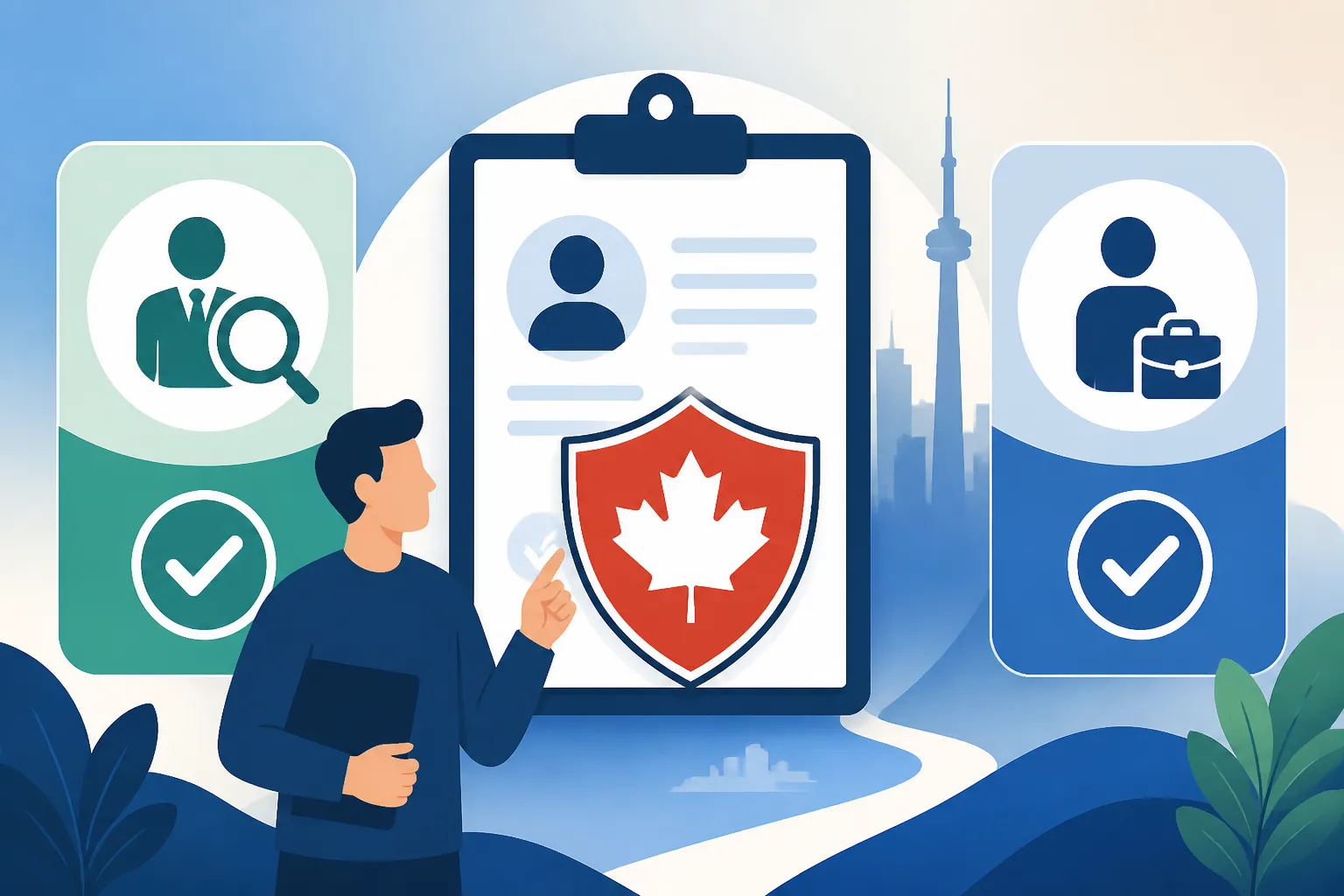
Understanding Canadian Work Permits: LMIA and Exempt Explained (2027)
Oh, the infamous Canadian work permit! If you’re feeling a bit lost in the maze of acronyms like LMIA, IEC, and PGWP, trust me, you are absolutely not alone. So many newcomers arrive here with dreams of a new life and a good job, only to hit a wall of paperwork and regulations that can feel utterly overwhelming. This comprehensive guide is here to untangle the complexities of Canadian work permits, breaking down everything you need to know about Labour Market Impact Assessment (LMIA) backed permits and the various LMIA-exempt pathways, helping you confidently navigate your journey to working in Canada and beyond.
The Labyrinth of Canadian Work Permits: An Overview
Moving to a new country like Canada is exhilarating, but the administrative side of things can often feel like a bureaucratic jungle. One of the biggest hurdles for many aspiring expats is understanding how to legally work here. It’s not just about finding a job; it's about getting the right kind of authorization to do that job, and that almost always means securing a work permit. Canada’s system, while robust, can be a head-scratcher, leaving many feeling frustrated and confused about where they even begin.
Why Work Permits Are So Crucial for Your Canadian Journey
Think of a work permit as your golden ticket to legitimate employment in Canada. Without one, working here is generally not allowed, and attempting to do so can lead to serious consequences, including deportation and future bans from entering the country. It’s not just a piece of paper; it’s proof that the Canadian government acknowledges your right to contribute to the economy and society. Beyond the legal necessity, having a work permit often unlocks access to other essential services and opportunities. For instance, you’ll need one to apply for a Social Insurance Number (SIN), which is crucial for employment, taxes, and accessing government benefits.
Moreover, working legally allows you to gain invaluable Canadian work experience, which is often a significant factor in transitioning to permanent residency. Many of Canada’s immigration pathways, such as the Canadian Experience Class under Express Entry, heavily prioritize applicants with local work experience. So, while getting a work permit might seem like just another step in a long process, it's actually a foundational element that underpins much of your long-term success and integration into Canadian life. It’s the first real step towards building a career and a future here, rather than just visiting.
Navigating the General Requirements for All Work Permits
Regardless of whether you're aiming for an LMIA-backed or an LMIA-exempt permit, there are some fundamental requirements that almost every applicant must meet. It’s like a checklist of essentials that IRCC (Immigration, Refugees and Citizenship Canada) insists upon to ensure you’re a suitable candidate for working in the country. Missing even one of these can cause significant delays or even outright refusal, which is incredibly disheartening after all the effort you put in.
Firstly, and perhaps most obviously, you must satisfy an immigration officer that you will leave Canada once your work permit expires. This means demonstrating strong ties to your home country or proving that you intend to pursue permanent residency through legitimate channels. Secondly, you need to prove you have enough money to support yourself and any family members accompanying you during your stay, and to cover your return transportation. This isn't just about showing a bank statement; it's about convincing them you won't become a burden on Canadian social services. Thirdly, you must be law-abiding – no criminal record, please – and be in good health, often requiring a medical examination from a panel physician. Finally, you can't be planning to work for an employer listed as ineligible by the government, or in an occupation that raises security concerns. Always check the official IRCC website for the most current and detailed requirements before you even think about submitting your application.
Understanding the Labour Market Impact Assessment (LMIA) Work Permit
When people talk about the traditional path to getting a Canadian work permit, they’re often referring to an LMIA-backed permit. This is the route that usually comes to mind when you think of a foreign worker filling a job that a Canadian citizen or permanent resident couldn't be found for. It's a system designed to protect the Canadian labour market, but for newcomers, it can feel like a formidable gatekeeper. This pathway, while often more complex, is a very real way for many to enter the Canadian workforce.
What Exactly is an LMIA and Why Does it Matter?
An LMIA, or Labour Market Impact Assessment, is a document that an employer in Canada may need to obtain before hiring a foreign worker. Essentially, it's proof that there is a genuine need for a foreign worker to fill a job, and that no Canadian citizen or permanent resident is available to do the job. Service Canada, a branch of Employment and Social Development Canada (ESDC), issues these documents. The "impact" part is crucial: an LMIA assesses the impact of a foreign worker on the Canadian labour market. A positive LMIA indicates that hiring a foreign worker will likely have a neutral or positive effect, meaning it won't take a job away from a Canadian.
This document is absolutely critical because it directly influences your ability to get a work permit. If your prospective employer secures a positive LMIA for your position, it significantly strengthens your work permit application. Without a positive LMIA (unless your situation qualifies for an exemption, which we'll discuss), your application for a work permit based on that specific job offer will likely be refused. It also matters for your future prospects; a valid LMIA can award you significant points under the Comprehensive Ranking System (CRS) for Express Entry, giving you a considerable boost toward permanent residency. You can read more about How a Work Permit and the LMIA Process Work in Canada to delve deeper into this critical aspect of Canadian immigration.
The Employer's Burden: The LMIA Application Process
The LMIA process is primarily the employer's responsibility, and frankly, it's a significant undertaking for them. It involves demonstrating to the government that they’ve made genuine efforts to recruit Canadians for the role. This usually means advertising the position widely, for a specific period, on various platforms, including the national Job Bank and other popular job boards. They need to provide proof of these recruitment efforts, including how many Canadians applied, how many were interviewed, and the legitimate reasons why those Canadian applicants were not hired.
Employers also need to submit detailed information about the job itself, the wages offered (which must meet or exceed the provincial median wage for that occupation), working conditions, and their business operations. There are also processing fees associated with LMIA applications, currently set at C$1,000 per application. The entire process is designed to be rigorous, ensuring that foreign workers are hired only when truly necessary. This can be a daunting process for Canadian businesses, and sometimes, the time and cost involved deter them, even if they genuinely need a foreign worker.
Your Role as the Applicant in an LMIA-Backed Permit
While the LMIA application is handled by your employer, you, the foreign worker, aren't entirely off the hook. Once your employer receives a positive LMIA, they will provide you with a copy, along with a job offer letter. These documents are absolutely vital for your work permit application. You'll need to submit them to IRCC as part of your application package, proving that you have a valid job offer supported by a government assessment.
Your role then shifts to proving your eligibility for the work permit itself. This involves demonstrating that you meet the general requirements we discussed earlier – health, character, financial stability, and intent to leave Canada at the end of your authorized stay (or pursue PR). You’ll also need to show that you possess the skills, education, and experience required for the job offered. It’s a dual process where both your employer and you need to meet specific criteria for the work permit to be issued successfully. Remember, a positive LMIA is a fantastic step, but it’s not the end of the road; you still need to present a strong individual application.
LMIA-Exempt Work Permits: Pathways for Specific Circumstances
Not every foreign worker needs an LMIA to get a work permit. Canada has a wide array of LMIA-exempt categories, designed to facilitate the entry of certain types of workers whose presence is deemed beneficial or necessary for the country, or whose employment aligns with international agreements. This can often be a quicker and less burdensome route for both the employer and the applicant. Understanding these exemptions is key, as they open up different avenues for working in Canada. For more detailed information, you can always check out Understanding LMIA-Exempt and Open Work Permits in Canada.
International Agreements and Trade Deals
Canada is part of several international agreements that allow citizens of certain countries to work in Canada without an LMIA, provided they meet specific criteria. These agreements are designed to foster economic ties, facilitate trade, and promote cultural exchange. One of the most prominent examples is the Canada-United States-Mexico Agreement (CUSMA), formerly NAFTA. Under CUSMA, professionals from the U.S. and Mexico in specific occupations can obtain work permits relatively easily, as long as they have a pre-arranged job offer in their field.
Similarly, the General Agreement on Trade in Services (GATS) and other free trade agreements (FTAs) Canada has with countries like Chile, Korea, and the European Union (CETA), allow certain categories of business visitors, professionals, and intra-company transferees to work without an LMIA. The rationale is that these individuals contribute to Canada's economy through international trade and investment, and the benefits are clear without needing a labour market assessment. If your background and the job offer align with one of these agreements, it's definitely a pathway worth exploring, as it streamlines the application process considerably.
Significant Benefit to Canada
Another broad category of LMIA exemptions falls under the "significant benefit to Canada" criterion. This is where IRCC believes that your work will bring substantial economic, social, or cultural advantages to the country. It’s a bit more subjective than trade agreements but allows for flexibility in attracting top talent. A classic example here is the Intra-Company Transferee program. If you work for a multinational company with a branch or affiliate in Canada and your employer wants to transfer you to their Canadian operations, you might be eligible for an LMIA-exempt work permit. This is particularly common in large corporations where employees are moved globally to leverage their expertise and maintain business continuity.
Other examples include workers identified by a Canadian province or territory to support local economic development, often under specific agreements like the Francophone Mobility program, which aims to increase the number of French-speaking immigrants outside Quebec. Highly skilled workers, experts in their fields, or individuals whose work is deemed to be of "national interest" can also fall under this exemption. The key is proving that your skills or the nature of your work are so unique or beneficial that requiring an LMIA would hinder Canada's interests.
Reciprocal Employment and Youth Programs
Reciprocal employment refers to situations where international agreements or programs allow workers to gain experience in Canada, and in return, Canadians can gain similar experience abroad. The most popular program under this category is International Experience Canada (IEC). This program offers young adults (usually aged 18-35, though age limits vary by country) from eligible countries the opportunity to travel and work in Canada for a temporary period. It includes categories like Working Holiday, Young Professionals, and International Co-op (Internship).
IEC is immensely popular because it often doesn't require a specific job offer upfront (for Working Holiday participants), offering incredible flexibility. It's a fantastic way for young people to explore Canada, gain international work experience, and immerse themselves in Canadian culture. The eligibility is based on nationality and age, and spots are often competitive. Beyond IEC, there are other lesser-known reciprocal exchange programs and certain artistic and performing arts occupations that also fall under LMIA exemptions, promoting cultural exchange and international collaboration.
Open Work Permits: Flexibility for Certain Newcomers
Unlike employer-specific work permits (whether LMIA-backed or LMIA-exempt), an open work permit doesn't tie you to a single employer or location. This means you can work for almost any employer in Canada, in almost any job, with some very limited exceptions (e.g., employers who fail to comply with conditions or jobs involving adult entertainment). This flexibility is incredibly valuable for newcomers who might still be exploring their career options or need to find work quickly upon arrival. It's truly a game-changer for many.
Who is Eligible for an Open Work Permit?
Open work permits are not universally available; they are granted under specific circumstances to certain categories of applicants. Eligibility often revolves around an existing connection to Canada or a particular immigration pathway. For instance, international students who have graduated from a Designated Learning Institution (DLI) in Canada may be eligible for a Post-Graduation Work Permit (PGWP), allowing them to gain valuable Canadian work experience after their studies. This is a very common route for those looking to transition from student to permanent resident.
Another significant group includes spouses or common-law partners of certain foreign workers or international students in Canada. If your partner has a valid work or study permit, you might be eligible for an open work permit, enabling you to work and support your family while they pursue their primary purpose in Canada. Asylum seekers, temporary resident permit holders, and those who have applied for permanent residence within Canada and are awaiting a decision (known as a Bridging Open Work Permit) also frequently qualify. The key takeaway is that open work permits are usually tied to a specific status or relationship within Canada.
The Freedom and Limitations of an Open Work Permit
The primary advantage of an open work permit is, undoubtedly, its flexibility. Imagine arriving in a new city like Toronto or Vancouver and not being restricted to a single job. You can take temporary roles, explore different industries, or even work part-time while you settle in. This freedom allows you to adapt to the Canadian job market at your own pace, build local connections, and gain diverse experience. For instance, with an open work permit, you could try working in customer service while simultaneously looking for a role in your professional field, or you could simply pick up any job that helps you cover the Cost of Living in Canada for Newcomers.
However, there are still some limitations. As mentioned, you cannot work for employers who are on a list of ineligible employers for failing to comply with conditions or in specific jobs like exotic dancing or escort services. These restrictions are in place to protect vulnerable workers and ensure compliance with labour laws. Beyond these, the biggest "limitation" is often the duration of the permit itself. While immensely useful, it’s still temporary, and you'll eventually need a strategy to transition to a more permanent status if you plan to stay long-term.
Specific Categories: Spousal, Post-Graduation, and Bridging Open Work Permits
Let's dive a little deeper into some of the most common types of open work permits, as these are often pathways many newcomers utilize.
Spousal Open Work Permits: If your spouse or common-law partner is in Canada on a study permit (for a degree-granting program at a DLI) or a work permit (in a high-skill occupation, usually NOC 0, A, or B), you may be eligible to apply for an open work permit. This is a fantastic way for families to stay together and for both partners to contribute financially to their new life in Canada. It acknowledges the importance of family unity and allows partners to seek employment without being tied to a specific employer or LMIA. Learning How to Apply for an Open Work Permit for My Spouse in Canada is often a top priority for families arriving together.
Post-Graduation Work Permits (PGWP): This is one of the most sought-after permits for international students. After successfully completing a program of study at an eligible Canadian DLI, graduates can apply for a PGWP, which allows them to gain valuable Canadian work experience. The length of the PGWP usually matches the length of your study program, up to a maximum of three years. This experience is often crucial for meeting the eligibility criteria for permanent residency programs like the Canadian Experience Class. It's a clear bridge from education to career.
Bridging Open Work Permits (BOWP): This permit is a lifeline for many applicants who are already in Canada and have applied for permanent residence under specific economic immigration programs (like Express Entry, Provincial Nominee Programs, or certain caregiver programs). If their current work permit is about to expire, a BOWP allows them to continue working while they await a decision on their permanent residency application. This prevents a gap in employment and income, which can be incredibly stressful for individuals and families who are deeply rooted in Canada but still waiting for that final PR approval. It's a testament to Canada's commitment to retaining skilled immigrants.
Common Challenges and Pitfalls for Work Permit Applicants
While Canada's work permit system offers numerous opportunities, it's far from a walk in the park. Newcomers often encounter frustrating roadblocks and unexpected challenges that can test their patience and resolve. It’s crucial to be aware of these potential pitfalls so you can prepare, mitigate, or simply understand that you're not alone in feeling exasperated.
The Frustration of Processing Times and Application Backlogs
One of the most frequently cited frustrations by applicants is the notoriously long and unpredictable processing times. You've done all your homework, submitted your application with meticulous care, and then… you wait. And wait. And sometimes, you wait some more. IRCC processing times vary wildly depending on the type of permit, the country you're applying from, and the current volume of applications. It can feel like your life is on hold, making it difficult to plan your move, start a new job, or even book flights.
Backlogs, often exacerbated by global events or surges in applications, mean that advertised processing times can sometimes be optimistic. This uncertainty can lead to immense stress, especially if your current visa or permit is about to expire, or if a job offer is conditional on a swift permit approval. My advice? Apply early, be patient, and avoid making irreversible plans until you have your permit in hand. Always keep an eye on the official IRCC website for the most up-to-date processing times and any new policy announcements. For those wondering, Can I Work in Canada While Waiting for My Work Permit? is a common question, and the answer is usually no, unless you already hold another valid permit or an interim authorization.
Keeping Your Status Valid: Renewals and Extensions
Your work permit is not forever. It comes with a specific expiry date, and it is your responsibility to keep track of it and apply for an extension or a new permit before it expires. Letting your status expire can have severe consequences, including losing your legal right to work and potentially being asked to leave Canada. The process for renewing or extending a work permit can be almost as involved as the initial application, requiring new job offers, new LMIAs (if applicable), or continued eligibility under an open work permit category.
It's common for newcomers to get caught up in the excitement of a new job or life in Canada and let these critical dates slip. Set reminders, keep all your documents organized, and start the renewal process well in advance – ideally, at least 3-4 months before your current permit expires. If you apply for an extension before your current permit expires, you typically receive "implied status," meaning you can continue working under the same conditions until a decision is made on your new application. However, if your permit expires before you apply, you'll need to apply for restoration of status, which is more complex, takes longer, and may restrict your ability to work in the interim.
Navigating Changes: Employer, Job, or Location
Life happens, and sometimes, your circumstances change after you get your work permit. Perhaps you found a better job opportunity, your employer changed their business structure, or you want to move to a different province. If you hold an employer-specific work permit, changing employers or even significantly changing your job duties with the same employer usually requires a new work permit application or an amendment. This is because your permit is explicitly tied to a particular job with a particular employer.
Moving to a different province might also require a re-evaluation of your permit, especially if it was issued under a Provincial Nominee Program (PNP) that requires you to reside and work in that specific province. This can be incredibly frustrating if you've settled in, only to find you're essentially back at square one for a new job. For those with open work permits, this flexibility is much greater, as you're not tied to a specific employer. However, even with an open permit, you still need to ensure you meet any provincial-specific licensing requirements for certain professions. Always consult IRCC or a qualified immigration professional before making any significant changes to your employment or living situation that might impact your work permit status.
From Work Permit to Permanent Residence: A Stepping Stone
For many newcomers, a temporary work permit is not the final destination but a vital stepping stone towards becoming a permanent resident of Canada. The Canadian government actively encourages temporary foreign workers to transition to permanent residency, recognizing the valuable skills and experience they bring to the country. Understanding how your work permit fits into this broader immigration strategy is crucial for long-term planning. You might be interested in knowing How to Move from a Work Permit to Permanent Residence in Canada for a complete picture.
How a Work Permit Can Boost Your CRS Score for Express Entry
Canada’s Express Entry system is the primary pathway for skilled workers to gain permanent residency. It uses a Comprehensive Ranking System (CRS) to assign points based on factors like age, education, language proficiency, and work experience. Holding a work permit and gaining Canadian work experience can significantly boost your CRS score. For instance, having at least one year of full-time Canadian work experience in a skilled occupation can add a substantial number of points to your profile.
If your work permit was issued based on a positive LMIA, that LMIA-backed job offer itself can provide a significant number of additional points (50 or 200 points, depending on the job's National Occupational Classification, or NOC, code). This can often be the crucial difference that pushes an applicant's score above the minimum cut-off for an Invitation to Apply (ITA) for permanent residence. Even without an LMIA, simply gaining Canadian work experience under programs like the PGWP or IEC positions you much more competitively for Express Entry.
Leveraging Canadian Work Experience for PR Pathways
Beyond the CRS score, Canadian work experience gained through a work permit is a cornerstone for several key permanent residency programs. The most prominent example is the Canadian Experience Class (CEC), which is part of Express Entry. CEC is specifically designed for individuals who have at least one year of skilled work experience in Canada, making it an ideal pathway for former international students or temporary foreign workers. This program values the fact that you’ve already adapted to the Canadian workplace, demonstrated your skills, and integrated into the economy.
Many Provincial Nominee Programs (PNPs) also have streams specifically for international graduates or skilled workers with Canadian work experience. Provinces are eager to retain individuals who are already contributing to their local economies, and having a provincial nomination can add an incredible 600 points to your Express Entry CRS score, virtually guaranteeing an ITA. The value of Canadian work experience cannot be overstated; it often demonstrates to immigration officials that you are a proven contributor and a good fit for life in Canada.
Strategies for a Smooth Transition
Planning your transition from a temporary work permit holder to a permanent resident requires foresight and strategic thinking. Don't wait until your work permit is about to expire to start thinking about PR! Begin exploring your options as soon as you arrive, or even before. Familiarize yourself with the various permanent residency programs, understand their eligibility criteria, and work towards meeting those requirements. This might involve improving your English or French language scores, pursuing further education, or gaining specific types of work experience.
A good strategy often involves monitoring Express Entry draw results, researching provincial nominee programs relevant to your occupation and preferred province, and ensuring your profile is always up-to-date. If you're on an employer-specific permit, discuss your PR aspirations with your employer early on. They might be willing to support your LMIA application for Express Entry or even help you explore provincial nomination. Maintaining meticulous records of your employment, pay stubs, and tax documents is also critical, as these will be essential for any PR application. Think of your work permit not as a temporary stay, but as an investment in your Canadian future.
Essential Tips for Work Permit Holders in Canada
Alright, you've got your work permit – congratulations! That's a huge step. But the journey doesn't end there. Settling into life and work in Canada involves understanding your rights, managing practical logistics, and setting yourself up for long-term success. Being well-informed and proactive matters a great deal for expats.
Understanding Your Rights and Responsibilities as a Worker
When you work in Canada, you're protected by robust labour laws, just like Canadian citizens and permanent residents. It's incredibly important that you know these rights. These include minimum wage standards (which vary by province), limits on working hours, entitlements to breaks, vacation pay, and statutory holidays. You also have the right to a safe workplace, free from harassment and discrimination. Don't be afraid to speak up if you feel your rights are being violated; there are provincial labour boards and employment standards offices that can assist you.
Your responsibilities include adhering to the terms and conditions of your work permit – working only for the employer and in the occupation specified if it's an employer-specific permit, or abiding by general restrictions if it's an open permit. You are also responsible for paying your taxes, contributing to the Canada Pension Plan (CPP), and Employment Insurance (EI). Understanding these deductions and benefits is crucial for managing your finances. Check out Understanding CPP, EI and Payroll Deductions for Employees in Canada for more on this. These aren't just rules; they're the framework that ensures fair treatment and contributions from everyone in the Canadian workforce.
Preparing for Your Move: Logistics and Healthcare
The logistics of moving to Canada can be substantial, from shipping your belongings to setting up utilities. If you're planning a big move, consider using reputable international moving services. Companies like Sirelo can help you compare quotes and manage the complexities of getting your life packed up and shipped across borders, easing some of the physical burden of relocation. They specialize in helping expats, so they know the drill.
Once you arrive, securing healthcare is paramount. Canada has a publicly funded healthcare system, but there’s often a waiting period for provincial health coverage for newcomers, which can be up to three months in some provinces. This is a critical period where you are vulnerable if you have a medical emergency. Seriously consider getting private health insurance to cover this waiting period. Providers like Cigna Global offer comprehensive plans specifically designed for expats, ensuring you have peace of mind until your provincial plan kicks in. You can explore topics like The Newcomer Waiting Period for Provincial Health Coverage in Canada (2027) and How to Apply for Your Provincial Health Card in Canada (2027) to be fully prepared for this essential aspect of your new life. Don't skip this step – an unexpected medical bill can derail your entire financial plan.
Financial Planning and Building a Canadian Life
One of the biggest adjustments for newcomers is understanding Canadian finances. Beyond your salary, you'll need to open a bank account, start building your credit history, and understand the tax system. Open a bank account as soon as possible, ideally with a bank that has specific newcomer programs, like RBC or CIBC. Building credit is crucial for everything from renting an apartment to getting a mobile phone plan, and it starts with small steps like getting a secured credit card or a credit-builder loan. You'll want to dive into How to Build a Credit Score as a Newcomer in Canada to ensure you're on the right track.
| Work Permit Type | Requires LMIA? | Employer Specific? | Typical Eligibility | Flexibility | Primary Benefit |
|---|---|---|---|---|---|
| LMIA-Backed | Yes | Yes | Employer proves no Canadian available | Low | Fills specific labour shortages, high PR points for job offer |
| LMIA-Exempt (e.g., CUSMA) | No | Yes | Specific international agreements, significant benefit to Canada | Low | Faster processing, leverages international ties |
| Open Work Permit (PGWP) | No | No | Graduated from DLI, spouse of skilled worker/student, PR applicant | High | Freedom to work for almost any employer, diverse experience |
| Open Work Permit (Spousal) | No | No | Spouse/common-law partner of eligible worker/student | High | Enables family unit to work, supports family financially |
| Open Work Permit (BOWP) | No | No | Awaiting PR decision, current permit expiring | High | Prevents gap in employment while waiting for PR |
Finally, integrate yourself into Canadian society. Join local groups, volunteer, and get to know your community. The more you immerse yourself, the more Canada will feel like home. It’s not just about the work permit; it’s about building a fulfilling life.
Disclaimer
The information provided in this guide is intended for general informational purposes only and does not constitute legal or professional advice. Immigration laws and policies in Canada are complex and subject to change. While we strive to provide accurate and up-to-date information, it is essential to consult with an authorized immigration consultant or lawyer for advice tailored to your specific situation. The author and publisher are not responsible for any errors or omissions, or for any actions taken based on the information provided herein. Always verify information with official government sources (IRCC, ESDC, provincial authorities) before making any decisions.