Understanding Medical Exams and Police Certificates for Canadian Immigration
Oh, the sheer mountain of paperwork and requirements when you're trying to make a life in Canada! It can feel like you're constantly jumping through hoops, especially when it comes to intensely personal things like your health history and criminal record. Don't worry, you're not alone in feeling overwhelmed. This guide is here to shed some much-needed light on two absolutely crucial, and often anxiety-inducing, parts of your immigration journey: the medical examination and the police certificate. We'll walk through what they are, why Canada asks for them, exactly how you go about getting them, and what to expect, helping you prepare thoroughly for a smoother path to your new Canadian home.
Understanding the Cornerstone of Canadian Immigration Checks
When you apply to immigrate to Canada, it's not just about proving your skills or your family ties; it's also about demonstrating that you'll be a contributing member of society, both healthy and law-abiding. These aren't just arbitrary requests from some faceless government department; they're integral to Canada's national policies on public health and safety.
Why These Documents Are Non-Negotiable
Let's talk about the why. Canada, much like any country, has a fundamental responsibility to protect its existing residents. This means ensuring that newcomers won't pose a significant burden on the public healthcare system or present a risk to public safety. The medical examination, for instance, serves as Canada's way of assessing your health status. They're looking for any conditions that could be a public health risk, like certain communicable diseases, or conditions that might place what they term "excessive demand" on Canada's social or health services. It's not about denying entry to anyone with an illness, but about a careful and fair assessment.
On the flip side, police certificates are all about community safety and national security. They're Canada's way of verifying your criminal history, or lack thereof. The goal is to ensure that individuals entering the country do not have a history of serious criminal activity that could endanger Canadians or compromise national security. It’s a due diligence process, plain and simple, and it applies to almost everyone.
Who Needs to Go Through These Checks
Now, who exactly has to jump through these hoops? Generally, most individuals applying for permanent residence in Canada, including all family members, will need to undergo a medical exam. This often extends to those applying for long-term temporary visas, such as work permits or study permits, especially if your stay is anticipated to be for more than six months. If you're coming for a shorter period, or from certain "low-risk" countries, you might be exempt, but it's always best to check the specific requirements for your immigration program.
For police certificates, the requirement is equally broad and arguably even more extensive. It typically applies to all applicants and their dependants aged 18 and older. The kicker? You'll need a certificate from every country where you've lived for six months or more, consecutively, since you turned 18. Yes, that means if you did a six-month exchange program in Spain after university, you’ll likely need a police certificate from Spain, even if it was years ago and you’re now living somewhere else entirely. This thoroughness ensures a comprehensive background check on everyone intending to build a life in Canada.
Navigating Your Canadian Immigration Medical Examination IME
The Immigration Medical Examination, or IME, is a specific process that can't be done by just any doctor. It requires careful planning and a clear understanding of what's involved to avoid unnecessary delays.
The IME Process Step-by-Step
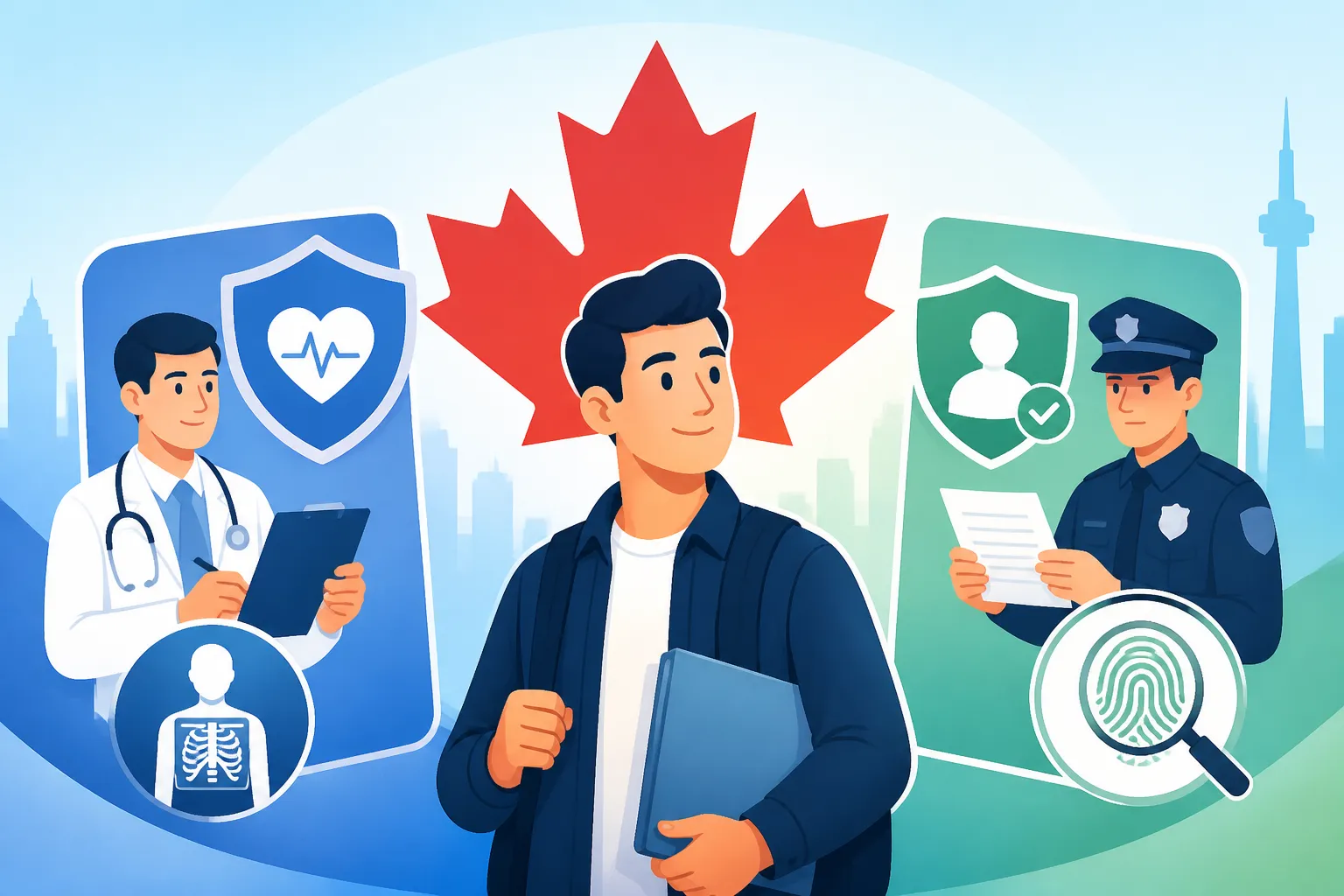
The IME is a specialized medical evaluation, not your routine annual physical. Once you've submitted your immigration application, Immigration, Refugees and Citizenship Canada (IRCC) will typically send you instructions on how to arrange your IME. You usually have a limited timeframe to complete this, so don't drag your feet! The process involves a thorough physical examination by a physician, which includes checking your vision, hearing, and basic neurological functions. You'll also likely undergo urine tests to check kidney function and for certain diseases, and blood tests to screen for conditions like syphilis and HIV. A crucial component for most adult applicants is a chest X-ray, which screens for tuberculosis.
The Panel Physician—and remember, it must be an IRCC-approved physician—will then compile all these results and submit them directly to IRCC. You won't get a copy of the full report yourself, though you can usually request a copy of your test results for your own records from the clinic. The purpose of this examination is to ensure you meet Canada's health requirements for immigration, which, as mentioned earlier, focus on public health risks and potential excessive demand on the Canadian healthcare system. For a broader look at how healthcare works here, take a peek at The Complete Guide to Healthcare in Canada for Newcomers (2027).
Finding and Booking with a Panel Physician
This is where many newcomers hit their first snag. You absolutely cannot just walk into any clinic or see your family doctor for this. IRCC maintains a strict list of approved Panel Physicians in countries around the world. These are medical professionals who have been vetted and trained to conduct IMEs according to Canadian standards. You can find the most up-to-date list directly on the IRCC website using their "Find a Panel Physician" tool. It’s a lifesaver, trust me.
Once you have the list for your region, contact several clinics to inquire about availability and fees. Panel Physicians, especially in popular immigration source countries, can have extremely long waiting lists, sometimes stretching for months. It's not uncommon to hear stories of people having to travel to a different city or even a neighbouring country to find an earlier appointment. Be sure to bring all required identification documents, like your passport, and any specific forms or reference numbers provided by IRCC. And here's a crucial budgeting tip: the fees for the IME are your responsibility. They are not covered by provincial health plans, and most standard private insurance policies won't cover them either, unless you have specialized international coverage like some plans from Cigna Global that explicitly cater to immigration-related medical exams. This is a private service, and costs can range anywhere from CAD $200 to $500 per person, varying by country and clinic. Understanding Public vs Private Healthcare in Canada: What Newcomers Need to Know might offer more context on why these costs are out-of-pocket.
Understanding Potential Health Concerns and Outcomes
It’s completely normal to feel a pang of anxiety if you have an existing health condition. Will it impact your application? The key here is absolute honesty with your Panel Physician. Minor, well-managed, or non-communicable conditions typically aren't an issue. Canada’s system is designed to be fair, not to exclude people arbitrarily. However, if the examination reveals a condition that is deemed a public health risk (like active, untreated tuberculosis) or that could place an "excessive demand" on Canada's health or social services, it could lead to complications.
"Excessive demand" is a specific legal term. It refers to a condition whose treatment or care would likely exceed average per capita health and social service costs in Canada, or that would adversely affect existing waiting lists for health or social services. If the Panel Physician flags such a concern, IRCC might request further medical information, or in some cases, you might be offered a "medical inadmissibility waiver." This waiver requires you to outline how you or your family could mitigate the excessive demand, perhaps through private insurance or other arrangements. It’s a complex area, and transparency is always your best policy. Trying to hide a condition will only make things worse down the line.
Demystifying Police Certificates and Criminality Checks
While the medical exam focuses on your physical well-being, police certificates delve into your past actions, ensuring you meet Canada's standards for safety and good conduct.
The Scope of Police Certificates for Immigration
Police certificates are official documents issued by law enforcement agencies, typically showing any criminal convictions you might have on your record. They are sometimes called "certificates of good conduct" or "criminal record checks," but the core purpose is the same: to verify your past behaviour against legal standards. The requirement here is quite extensive, which often catches newcomers by surprise. You'll need a police certificate from your current country of residence and from any country where you’ve lived for six months or more, consecutively, since you turned 18.
Yes, that means if you spent a year abroad backpacking in your early twenties, even if you never had a run-in with the law, you'll still need to obtain a police certificate from that country. Even if you are absolutely certain you have a squeaky-clean record, Canada still requires the official document. This ensures that IRCC has a comprehensive and verifiable record of your behaviour in all relevant jurisdictions before granting you permanent residence or certain long-term temporary statuses.
How to Obtain Certificates from Various Countries
This part can frankly be a nightmare. There is no single, universal way to get a police certificate. Each country, and sometimes even different regions within a country, has its own unique process. Some are remarkably straightforward: you might fill out an online form, pay a fee, and receive a digital or mailed certificate within a few weeks. Others are an exercise in bureaucracy: requiring you to visit an embassy, submit fingerprints (sometimes even multiple sets), or have a local contact physically apply on your behalf.
For example, obtaining an FBI Identity History Summary in the United States typically requires you to submit fingerprints and other identification. In the United Kingdom, you can apply for a certificate online through the ACRO Criminal Records Office. If you lived in a country with less developed administrative systems, it can be a prolonged, frustrating, and sometimes expensive endeavour. My best advice? Start this process immediately once you know you need to immigrate. International requests can take weeks or even months to process, and delays here are a common cause of overall application holdups. Always refer to the specific country-by-country instructions on the IRCC website for the most accurate and up-to-date guidance, as these requirements can and do change. Gathering all your How to Get Your Documents Ready for an IRCC Application well in advance is essential.
Addressing Past Infractions and Misdemeanors
If you have a criminal record, no matter how minor you perceive it to be, it is absolutely critical to be honest and upfront about it. Canada has very strict rules regarding criminal inadmissibility. Your eligibility to enter or remain in Canada can be significantly impacted by past criminal activity, whether it occurred inside or outside Canada. The type of crime, its severity, and how long ago it occurred are all factors. Even a DUI or a minor assault could potentially make you inadmissible.
However, having a record doesn't automatically mean your Canadian dream is over. Options might be available depending on your specific situation. For example, if the offence occurred outside Canada and would be considered an indictable offence under Canadian law, you might be eligible to apply for "criminal rehabilitation" after a certain period. For less serious offences, or if you need to enter Canada temporarily despite inadmissibility, a "Temporary Resident Permit" might be an option. These processes are complex and often require legal expertise. My strong recommendation is to consult with a qualified Canadian immigration lawyer if you have any criminal history. Never, ever attempt to hide a criminal record, as this constitutes misrepresentation and can lead to a multi-year ban from Canada, jeopardizing any future immigration attempts.
Navigating Common Roadblocks and Preparing Effectively
Even with all the information in the world, the immigration process is rarely without its bumps. Being prepared for common hurdles can save you a lot of stress and potential delays.
Anticipating and Managing Delays
The Canadian immigration system, while robust, isn't known for its lightning-fast processing speeds, and certain components like medical exams and police certificates are frequent culprits for delays. As I mentioned, securing a Panel Physician appointment can take ages in some parts of the world. Imagine submitting your application only to find the soonest medical exam is six months away, pushing back your entire timeline! Similarly, obtaining police certificates from certain countries can get bogged down in bureaucratic limbo, leaving you anxiously waiting for official documents to arrive.
The absolute best advice I can give you is this: be proactive and start early. As soon as you decide to pursue Canadian immigration and have a general idea of the requirements, research the processes for obtaining both your IME and all necessary police certificates. Don't wait for IRCC to send you an official request; if you can proactively gather these documents (while keeping their validity periods in mind), do so. This proactive approach isn't just a suggestion; it can genuinely shave weeks, or even months, off your overall processing time. Being stuck waiting for a document is incredibly frustrating, so mitigate that risk wherever you can. You can find more insights on this in guides like Understanding the Cost and Timeline of the Immigration Process in Canada.
The Costs Involved and How to Budget
Let's not sugarcoat it: immigration isn't cheap, and medical exams and police certificates are additional expenses you need to factor in. These checks are not free, and the costs can add up, particularly if you're applying as a family or need multiple police certificates from various countries. As we discussed, medical exam fees vary significantly by country and specific Panel Physician clinic, but you should budget anywhere from CAD $200 to $500 per person. For a family of four, that's already a significant outlay before you've even packed a single box.
Police certificates generally have lower individual fees, often under $100 per country. However, some countries might charge more, or you might incur additional costs for fingerprinting services, notarization, or expedited processing if available. These are all out-of-pocket expenses that you need to budget for, separate from application fees, legal fees, and the overall costs of relocating. While companies like Sirelo can help you estimate the costs of moving your belongings across continents, these specific document fees are purely administrative. When thinking about the grand total, it's worth considering resources like How Much Does It Cost to Apply for PR in Canada? to get a full financial picture.
Ensuring Accuracy and Completeness
IRCC is notoriously particular about documentation. This isn't because they're trying to make your life harder; it's because they handle thousands upon thousands of applications, and consistency and accuracy are paramount. Any missing information, discrepancies between documents (like a slight difference in how your name is spelled on a police certificate versus your passport), or uncertified translations of non-English documents can cause significant delays or even outright refusal of your application.
For police certificates, ensure that the names, dates of birth, and other identifying details precisely match your passport and other immigration documents. Even minor inconsistencies can raise red flags. For medical exams, be completely honest and transparent with the Panel Physician about your medical history. Don't omit anything you think might be problematic; they're professionals, and their job is to report the facts. Providing accurate and complete information from the outset, precisely as requested, is the strongest and frankly, only way to avoid unnecessary headaches and setbacks in what is already a stressful process.
Life After Submission: What Happens Next
You've done the exams, gathered the certificates, and finally hit 'submit'. Now what? The waiting game begins, but understanding the post-submission phase can help manage expectations.
Processing Times and Follow-Up Requests
Once your medical exam results are submitted by the Panel Physician and your police certificates have arrived at IRCC from the relevant authorities, they are integrated into your overall application. It's important to remember that you won't typically see these documents directly yourself unless you requested a personal copy of your police certificate. IRCC's processing times vary wildly depending on the specific immigration program you've applied under, the volume of applications, and the complexity of your individual case. Some Express Entry applications, for instance, are processed much faster than others.
During this waiting period, IRCC might reach out if they need clarification on your medical results, if a police certificate is missing, or if any information appears unclear or inconsistent. It is absolutely vital that you monitor your application portal regularly and respond promptly to any requests for additional information or documents. Ignoring these requests can lead to significant delays, or even the closure of your application. To get a better sense of general timelines, consider checking out articles like How Long Does Express Entry Take in Canada?.
The Validity Period of Your Documents
This is a critical detail that many newcomers overlook, often to their detriment. Medical exams are generally valid for 12 months from the date of the examination. This means that your permanent resident visa must be issued before this 12-month period expires. Police certificates also have a validity period, typically 12 months from the date of issue, although some countries may issue them for shorter periods.
If your application processing extends beyond these validity periods, IRCC may, frustratingly, request updated documents. This means you might have to repeat the entire process for one or both – including finding another Panel Physician appointment and navigating international police certificate requests all over again. This is yet another compelling reason to start gathering these documents early and to monitor your application status diligently. The sooner your application is fully processed, the less likely you are to need to refresh these time-sensitive requirements. For more on health coverage specific to your status, you might want to read How Your Immigration Status Affects Health Coverage in Canada.
Preparing for Your Final Move
Finally, receiving that coveted approval after successfully navigating all the medical and criminality checks is an incredible milestone and a huge relief! But the journey isn't quite over yet. You'll need to start actively preparing for your final move to Canada, which involves a whole new set of logistics. From finding a place to live to arranging your transport, there’s a lot to consider.
Organizations and online platforms like Sirelo can be invaluable resources during this phase, helping you plan your international relocation, find reputable moving companies, and understand customs regulations for bringing your belongings into Canada. It’s also incredibly wise to ensure you have temporary private health insurance for yourself and your family. Even if you've cleared your IME and are officially approved, provincial health coverage in Canada often has a waiting period once you arrive, which can range from a few weeks to up to three months depending on the province. Having a plan from a provider like Cigna Global that covers this initial gap can provide immense peace of mind. For a full breakdown of what to expect in your first few months, check out The Complete Guide to Moving to Canada: Your First 90 Days (2027) and understand The Newcomer Waiting Period for Provincial Health Coverage in Canada (2027).
Comparing Medical Exams and Police Certificates
To give you a clearer picture, here’s a quick overview of the two critical documents:
| Feature | Immigration Medical Examination (IME) | Police Certificate (PCC) |
|---|---|---|
| Purpose | Assess public health risk and potential "excessive demand" on healthcare | Verify criminal history for public safety and national security concerns |
| Who Needs It | Most applicants for PR and long-term TRVs, all family members | All applicants and dependants 18+ for every country lived in > 6 months since turning 18 |
| Provider | IRCC-approved Panel Physician only | Official law enforcement agency of the relevant country |
| Components | Physical exam, urine/blood tests, chest X-ray | Official record of criminal convictions (or lack thereof) |
| Cost | Out-of-pocket (CAD $200-500+ per person) | Out-of-pocket (CAD $20-100+ per certificate) |
| Validity | Typically 12 months from exam date | Typically 12 months from issue date (country-dependent) |
| Submission | Panel Physician submits directly to IRCC | Applicant typically obtains and submits to IRCC |
| Key Challenge | Finding appointments, managing costs if health conditions exist | Varies widely by country, potential long processing times, honesty about past records |
Disclaimer
The information provided in this article is intended for general guidance only and does not constitute legal or professional advice. Immigration policies and procedures are subject to change. For specific advice tailored to your individual circumstances, please consult with a Regulated Canadian Immigration Consultant (RCIC) or an immigration lawyer.