How to Get Your Documents Ready for an IRCC Application
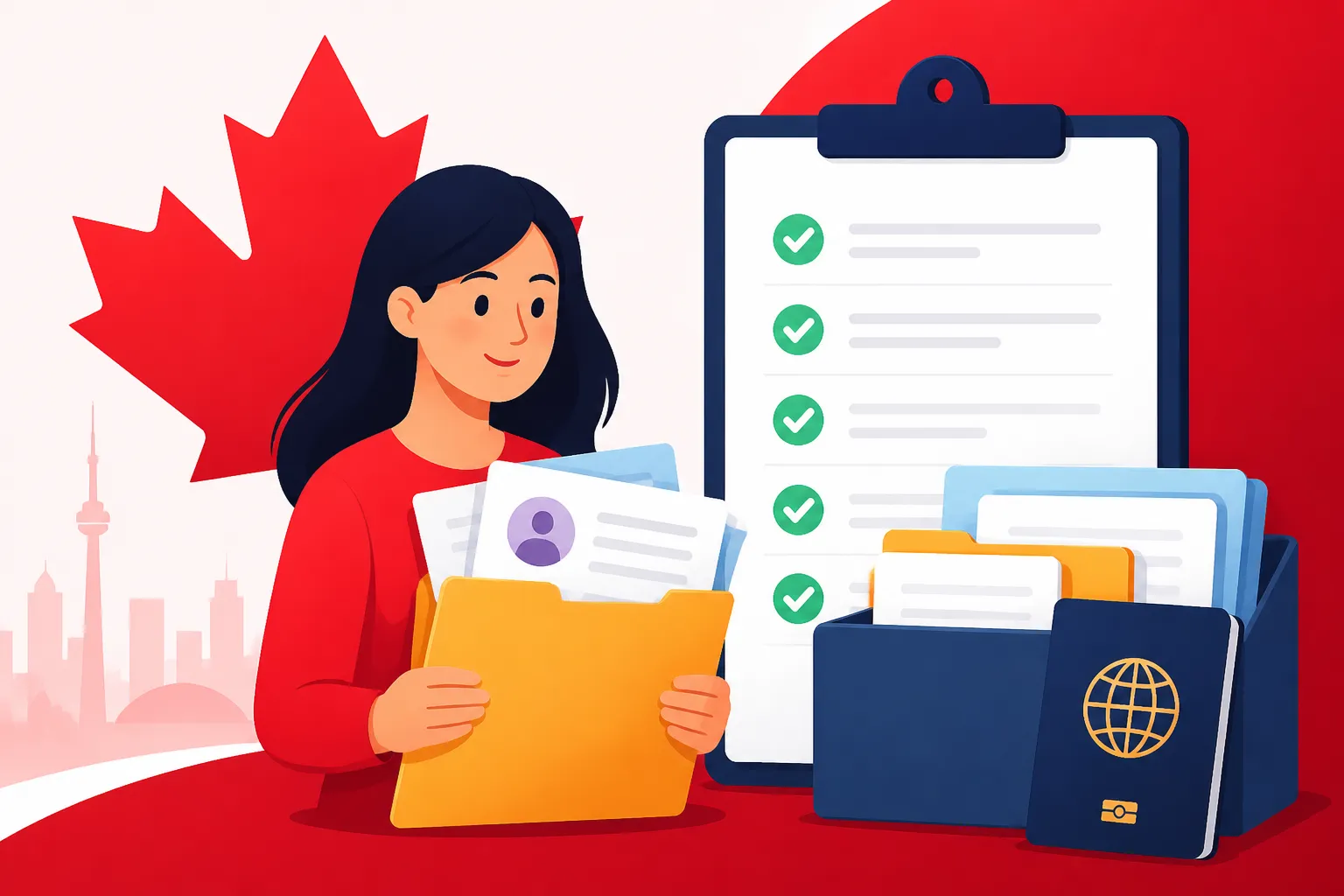
Getting your documents ready for an IRCC application can sometimes feel like trying to assemble a 10,000-piece jigsaw puzzle with half the instructions missing and a timer ticking. It’s a painstaking process that can often feel overwhelming, but trust me, it’s one of the most critical steps in making your Canadian dream a reality. This guide is here to walk you through the labyrinth of what Canada’s immigration department (IRCC) needs, helping you understand the 'why' behind each document, how to get them in perfect order, and what to do if you hit a snag, ensuring you're well-prepared for your journey to Canada.
Understanding the IRCC Document Jigsaw Puzzle
The Canadian immigration process is famously thorough, and for good reason. Every document you provide serves a specific purpose, contributing to the overall integrity and security of the system. It’s not about making things difficult; it’s about ensuring that every applicant is who they say they are and meets the strict eligibility criteria. This foundational understanding is crucial before you even start gathering your papers.
Why Documents Are So Crucial for Your Application
At its heart, an IRCC application is about trust and verification. Canada operates on a system where applicants provide information, but that information must be rigorously verified with tangible proof. Documents are the backbone of this verification process. They allow immigration officers to confirm your identity, your civil status, your educational qualifications, your work experience, your financial capacity, and your overall eligibility for the program you're applying under. Without proper documentation, your application is simply a collection of claims without substantiation.
Imagine you're trying to prove you worked for a specific company for several years. Without official letters on company letterhead, detailed job descriptions, pay stubs, and perhaps even tax documents to back up your claim, your word alone simply won't cut it. IRCC needs concrete evidence to support every assertion you make on your application form. They’re not trying to make your life difficult; they're ensuring fairness and security for everyone. It's their way of building a complete picture of who you are and why you qualify under their strict criteria. This isn't just about ticking boxes; it's about establishing your credibility and meeting the legal requirements set out in the immigration regulations. Every single piece of paper, every digital upload, serves as a crucial piece of evidence that contributes to the overall strength and veracity of your application. Think of your application as a legal submission, where every piece of information needs a citation or proof. For a broader overview of the entire process, you might want to consult The Complete Guide to Canadian Visas and Immigration for Newcomers (2027).
Common Pitfalls: The Devil is in the Details
Many hopeful applicants get tripped up by simple things that could have been easily avoided. One of the most common pitfalls is submitting outdated documents when current ones are required. For instance, an old police certificate from five years ago won't cut it if IRCC specifically asks for one issued within the last six months. Another frequent error is missing signatures on forms, or providing scans of such low quality that they're practically unreadable. IRCC officers process thousands of applications, and a blurry document or a missing page means immediate frustration and often, a request for more information, which causes massive delays.
Then there's the critical mistake of not following specific formatting instructions. Some documents need to be converted to PDF, others might have specific naming conventions for digital uploads, and there are often strict file size limits. Beyond these technicalities, applicants sometimes use a generic checklist they found online instead of the one tailor-made for their specific Express Entry or Provincial Nominee Program application. This can lead to submitting documents that aren't asked for, or worse, missing essential ones. This is why paying excruciating attention to your specific document checklist, down to the last detail, is absolutely non-negotiable. Even small discrepancies, like a different spelling of your name across two official documents, can flag your application for closer scrutiny and lead to unnecessary delays.
Essential Categories of Documents You'll Need
While every IRCC application is unique, requiring a tailored set of documents, there are several overarching categories that almost everyone will need to address. Understanding these broad types will help you get a head start on your collection efforts.
Personal Identification and Civil Status Documents
These are the fundamental documents that establish who you are and your familial relationships. Your passport is your primary identification, and IRCC needs to see every page, not just the biodata page. They want to see your travel history, any previous visas, and stamps to corroborate your declared history. Ensure your passport is valid for at least six months, if not longer, beyond your intended entry date to Canada, as some programs have specific validity requirements.
Birth certificates are universally required for all applicants and any accompanying family members, verifying age and parentage. For civil status, if you’re married, your marriage certificate isn't just a formality; it verifies your relationship with your spouse, especially if they’re included in your application. If you’ve ever been divorced, the divorce decree is essential to prove the legal termination of a previous marriage. Similarly, death certificates of former spouses, if applicable, are necessary. Even birth certificates for all family members, including non-accompanying dependents, are crucial for proving familial ties and ages. These documents form the bedrock of your personal profile and are used to cross-reference information across your entire application package, so ensure they are consistent and complete.
Educational and Professional Qualifications
If you’re claiming points for your education or applying under a skilled worker stream, your academic documents are paramount. This means not just your university degree or diploma, but also the detailed transcripts showing all courses and grades. For many programs, especially those under How Express Entry Works for Permanent Residence in Canada (2027), you’ll need an Educational Credential Assessment (ECA) from an approved organization like World Education Services (WES) or International Credential Assessment Service of Canada (ICAS) to prove your foreign education is equivalent to a Canadian one. This isn't just a suggestion; it's often a mandatory requirement. You can delve deeper into this process by checking out How to Get Your Foreign Credentials Recognised in Canada.
Similarly, for your professional life, official letters from previous employers are vital. These letters must be on company letterhead, detailing your job title, duties, employment period (exact start and end dates), and annual salary. They should also include the full name and title of your supervisor or HR manager, along with their contact information. It’s crucial that these letters accurately reflect the National Occupational Classification (NOC) code you're claiming for your skilled work. To strengthen your case, always provide supplementary evidence like copies of your employment contracts, two or three recent pay stubs, and even tax documents that show your income for those employment periods. For those applying through specific pathways, like a [Provincial Nominee Program in Canada], or seeking a Understanding Canadian Work Permits: LMIA and Exempt Explained (2027), the details of your professional qualifications will be scrutinized. Even if you're coming on a How to Get a Study Permit for Canada: The Full Guide (2027), academic records are fundamental.
Financial Proof and Settlement Funds
Canada wants to know you won't be a burden on their social safety net, at least initially. That's where proof of settlement funds comes in. This isn't just about having money; it's about proving you have readily available funds, not assets locked up in real estate back home that you can't access quickly. IRCC typically wants to see at least six months of bank statements from your personal accounts, showing a consistent balance above the Low Income Cut-Off (LICO) for your family size. These funds must be unencumbered, meaning no debts or liens against them, and ideally from a stable, easily transferable source.
You might also include investment statements or proof of property sale, but the key is demonstrating liquidity and availability. If you are selling assets to fund your move, you will need documentation of the sale and the transfer of funds. Always ensure the funds have been consistently in your account for the required period, as sudden large deposits might raise questions. For those wondering how to bring these funds over, or set up banking once you arrive, looking into services for How to Transfer Money Into and Out of Canada as a Newcomer is a good first step, especially as you prepare for the logistical aspects of your move.
Here's a quick overview of common document requirements:
| Document Category | Examples | Key Requirements |
|---|---|---|
| Identity & Civil Status | Passport, Birth Certificate, Marriage Certificate, National ID | Valid, clear copies of all pages (including blank ones for passports), official translations if not in English/French. |
| Education | Degrees, Diplomas, Transcripts, ECA Report | Educational Credential Assessment (ECA) from a designated organization (e.g., WES), official seals, translations, academic records. |
| Employment | Reference Letters, Payslips, Tax Documents | Employer letter with job title, duties, dates, salary, contact info; supplementary evidence like contracts or tax records. |
| Financial | Bank Statements, Investment Portfolios | Minimum 6 months of statements, showing sufficient settlement funds as per LICO, liquidity proof. |
| Health & Criminality | Medical Exam Confirmation, Police Certificates | Must be current, from designated panel physicians/police authorities; covering all countries of residence. |
| Language | IELTS, CELPIP, TEF, TCF Test Results | Valid test results demonstrating proficiency in English or French, as required by your program. |
Navigating Translations, Certifications, and Notarizations
This is an area where many newcomers face challenges due to specific IRCC requirements. Simply translating a document yourself, or having a friend do it, will almost certainly lead to your application being rejected.
The Absolute Musts for Non-English/French Documents
If your original documents are not in English or French, they must be translated. But it’s not just any translation; IRCC demands a certified translation. This means the translation must be done by a certified translator, and accompanied by an affidavit from the translator attesting to the accuracy of the translation and their language proficiency. The translator must also include a copy of their accreditation or certification. In some cases, a certified copy of the original document must also be attached to the translation.
Do not underestimate this step. A wrongly translated or non-certified document can lead to an outright refusal. For example, if your birth certificate is in, say, Arabic, you can’t just translate it yourself and submit it. You need a translator who is a member in good standing of a provincial or territorial organization of translators and interpreters in Canada. If you're outside Canada, the translator must be recognized by a relevant professional body in your country. Always ensure they provide their official seal, signature, and contact information. This ensures the translation is accurate and officially recognized, minimizing any doubts for the immigration officer.
When and Where to Get Documents Certified
Not all documents need to be certified true copies, but for those that do, it’s not something you can do at home. A certified true copy means a lawyer, notary public, or commissioner of oaths has compared the photocopy to the original document and declared it a true and accurate reproduction. They will sign, date, and stamp the copy with their official seal. This is often required for identity documents or certain legal papers where IRCC needs absolute assurance that the copy matches the original.
It’s important to understand the nuance here: a "notarized copy" typically means a notary public has verified your signature on a document, but not necessarily the accuracy of the document's content itself. For IRCC purposes, what's usually needed is a "certified true copy" where the certifier verifies the copy against the original. Always refer to your specific IRCC document checklist to see if a document requires a certified true copy versus just a plain scan of the original. Getting this wrong can mean wasting time and money, or worse, jeopardizing your application. Look for legal professionals in your current country or, if already in Canada, check with a lawyer or notary public.
Gathering Supporting Documents: The Nuances
Beyond the standard identification and academic records, there's a whole category of "supporting documents" that add weight and credibility to your application. These are often where applicants can truly differentiate themselves and mitigate potential concerns.
Employment and Work Experience References
When it comes to proving your work experience, IRCC doesn't just want a brief letter saying you worked somewhere. They want the nitty-gritty: the official company letterhead, the full name and title of your supervisor or HR manager, their contact information, a clear breakdown of your job duties, the exact start and end dates of your employment, and your annual salary and benefits. It’s crucial that these letters accurately reflect the National Occupational Classification (NOC) code you're claiming for your skilled work, as this directly impacts your eligibility for many programs. The duties listed should align with the lead statement and main duties for your chosen NOC.
To strengthen your case, always provide supplementary evidence like copies of your employment contracts, two or three recent pay stubs from each employer, and even tax documents (like T4s in Canada or their equivalent in your home country) that show your income for those employment periods. If you were self-employed, you'll need business registration documents, invoices, client testimonials, and tax filings to prove your income and work. Remember, IRCC is looking for a comprehensive, consistent story across all your submissions. Think about how these documents would align with your updated How to Adapt Your Resume for the Canadian Job Market as you prepare for your new life in Canada.
Police Certificates and Medical Exam Results
Security and health are paramount for Canada. You’ll need a police certificate from every country or territory where you've lived for six months or more (continuously or cumulatively) since turning 18 years old. This includes your home country and any other places you've resided. The process for obtaining these varies wildly from country to country, so start early! Some countries provide them quickly, others can take months. Ensure they are current, as IRCC usually specifies a validity period (e.g., issued within the last six to twelve months).
For your medical exam, you can only get it done by an IRCC-approved "panel physician." These doctors know exactly what tests to run and what forms to fill out. You can’t just go to your family doctor. The results are typically sent directly to IRCC by the physician, who will provide you with a confirmation document. It’s a thorough check to ensure you don’t pose a public health risk or place excessive demand on Canada’s healthcare services. This entire process is detailed in Understanding Medical Exams and Police Certificates for Canadian Immigration, which is an invaluable resource to consult. If you have any pre-existing health conditions, this is where they will be assessed, and having a good private health insurance plan, perhaps from a provider like Cigna Global, can be a lifesaver, especially during any The Newcomer Waiting Period for Provincial Health Coverage in Canada (2027) after you arrive. Understanding How Much Does Private Health Insurance Cost in Canada in 2026? is also key during this interim period.
Organizing and Submitting Your Document Package
Once you’ve painstakingly gathered and prepared all your documents, the next critical step is to organize and submit them correctly. A well-organized application can significantly ease the review process for immigration officers, while a disorganized one can lead to frustration and potential delays.
Best Practices for Digital and Physical Submission
Whether you're uploading documents online (which is the most common method now) or sending a physical package, organization is key. For online applications, IRCC often has specific file naming conventions (e.g., "Passport_FirstName_LastName.pdf" or "ProofOfFunds_BankStatements.pdf") and strict file size limits for individual documents and the total application. Always convert everything to PDF unless another format is explicitly requested. Avoid low-resolution scans and ensure every page is oriented correctly (not sideways or upside down). Use clear, concise file names that accurately describe the document.
If you're submitting a paper application (which is becoming less common but still exists for some programs), imagine being the officer reviewing hundreds of pages. Use clear coversheets for each section (e.g., "Section 1: Identity Documents," "Section 2: Educational Credentials"), secure binders or clips for each section, and ensure everything is in the exact order requested by the checklist. This isn't just about neatness; it dramatically reduces the chances of an officer missing a crucial document. For the general logistics of moving and organizing your life, including all your paperwork, resources like Sirelo can offer helpful insights into efficient planning. Their focus on organized transitions can be a good mindset to adopt for your document preparation too.
Keeping a Copy and Tracking Your Application
This might sound like a minor detail, but it’s absolutely critical: before you click "submit" or seal that envelope, make a full, identical copy of your entire application package. Every form, every supporting document, every receipt, every payment confirmation. Save it digitally and print a physical copy. This way, if IRCC ever asks for clarification, claims something is missing, or there’s an issue later down the line, you have your own proof of exactly what you sent. It provides an invaluable sense of security and a reference point for any future correspondence.
For tracking, online applications will have a dedicated portal where you can monitor your status and view messages from IRCC. Make sure to check this portal regularly. For paper applications, once they are processed, you'll usually receive an Acknowledgment of Receipt (AOR) with a unique application number. Use this number to link your paper application to an online IRCC account if possible. Check your status regularly through the IRCC website's client application status tool. While it's important to stay informed, avoid bombarding IRCC with calls or emails unless a significant processing time has passed beyond the published estimates on their website. Being prepared means having your own backup and knowing how to follow up effectively without causing unnecessary disruptions. Staying informed about Understanding the Cost and Timeline of the Immigration Process in Canada can also help manage expectations regarding processing times.
What to Do If a Document Is Missing or Unavailable
Despite your best efforts, there might be a legitimate reason why you cannot obtain a specific document. IRCC understands that circumstances vary globally, but they require applicants to demonstrate genuine effort and provide clear explanations. This is not an excuse to be lazy; it's a pathway for truly exceptional situations.
Proving Unavailability: The Burden of Proof
Let's say your birth certificate was destroyed in a natural disaster, or your home country’s civil registry has been defunct for decades. You can’t just say "it's unavailable" and leave it at that. IRCC requires you to demonstrate that you've made every reasonable attempt to obtain the document. This might involve obtaining a letter from the relevant government authority stating they cannot issue the document, explaining why. If getting such a letter is impossible, you may need to submit a sworn affidavit or statutory declaration from someone who can attest to the facts (like an elder family member, community leader, or former official) and explain the situation in detail. This needs to be extremely well-documented and convincing, often including a timeline of your attempts to obtain the document and why those attempts failed.
The burden of proof is entirely on you to show legitimate, unavoidable reasons for the absence of a required document. Don't simply leave a blank in your application or hope they won't notice; address it head-on with a clear explanation and supporting evidence of your efforts. A comprehensive explanation, backed by whatever evidence you can muster, shows transparency and diligence on your part.
Requesting Extensions or Submitting Explanations
Sometimes, you genuinely can't get a document by the initial deadline, or IRCC might later request something you didn't anticipate. If IRCC sends a "request for information" (RFI), they will usually give you a specific deadline to provide the additional documents. If you need more time, you must formally request an extension before the deadline passes. This request should be accompanied by a clear explanation of why you need more time and when you realistically expect to provide the document. Do not just let the deadline pass; an ignored RFI can lead to refusal.
If you're submitting your initial application and foresee an issue with a minor (not core identity or eligibility-determining) document, it's wise to include a detailed Letter of Explanation (LOE) within your submission. This LOE should clearly state which document is missing, why it’s missing, what steps you’ve already taken to get it, and when you expect to be able to submit it. Remember, this is for genuine, unavoidable situations, not just because you procrastinated. Consistently demonstrating good faith and proactivity can make a big difference in how your case is perceived by the immigration officer, showing that you are serious about your application despite the temporary hurdle.
Disclaimer
Please remember that I am an expat blogger and not a licensed immigration consultant or lawyer. The information provided in this article is for general guidance and informational purposes only, and does not constitute legal advice. Immigration policies and requirements for Canada can change frequently. You should always refer to the official IRCC website for the most up-to-date and accurate information, or consult with a regulated Canadian immigration consultant (RCIC) or an immigration lawyer for personalized advice regarding your specific situation. Relying solely on general information without professional consultation may not be appropriate for your individual circumstances.