Can I Get Canadian Citizenship Through Descent?
It's a wonderful feeling, isn't it? That flicker of hope that your connection to Canada, passed down through your family, might actually mean you can become Canadian. For many of us expats, our heritage is a deep source of identity, and the idea of claiming Canadian citizenship through descent can feel like completing a circle. But let me tell you, navigating the Canadian immigration system, even for something seemingly straightforward like citizenship by descent, can feel like trying to solve a Rubik's Cube blindfolded. This guide is here to walk you through the nuances of whether you can indeed get Canadian citizenship through your lineage, cutting through the bureaucratic fog and explaining the crucial "first-generation limit rule" that trips up so many hopeful applicants.
Understanding Citizenship by Descent: The First-Generation Limit Rule
Before 2009, the rules around Canadian citizenship by descent were a bit more fluid. You could, theoretically, inherit citizenship through multiple generations born outside Canada, provided the proper steps were taken. However, everything changed with amendments to the Citizenship Act, specifically with Bill C-37, which introduced what's commonly known as the "first-generation limit rule." This rule is the single most important factor you need to understand, as it dictates who can and cannot claim citizenship through a parent born or naturalized in Canada. This is where many people's hopes either soar or, unfortunately, come crashing down.
What is the "First Generation" Limit?
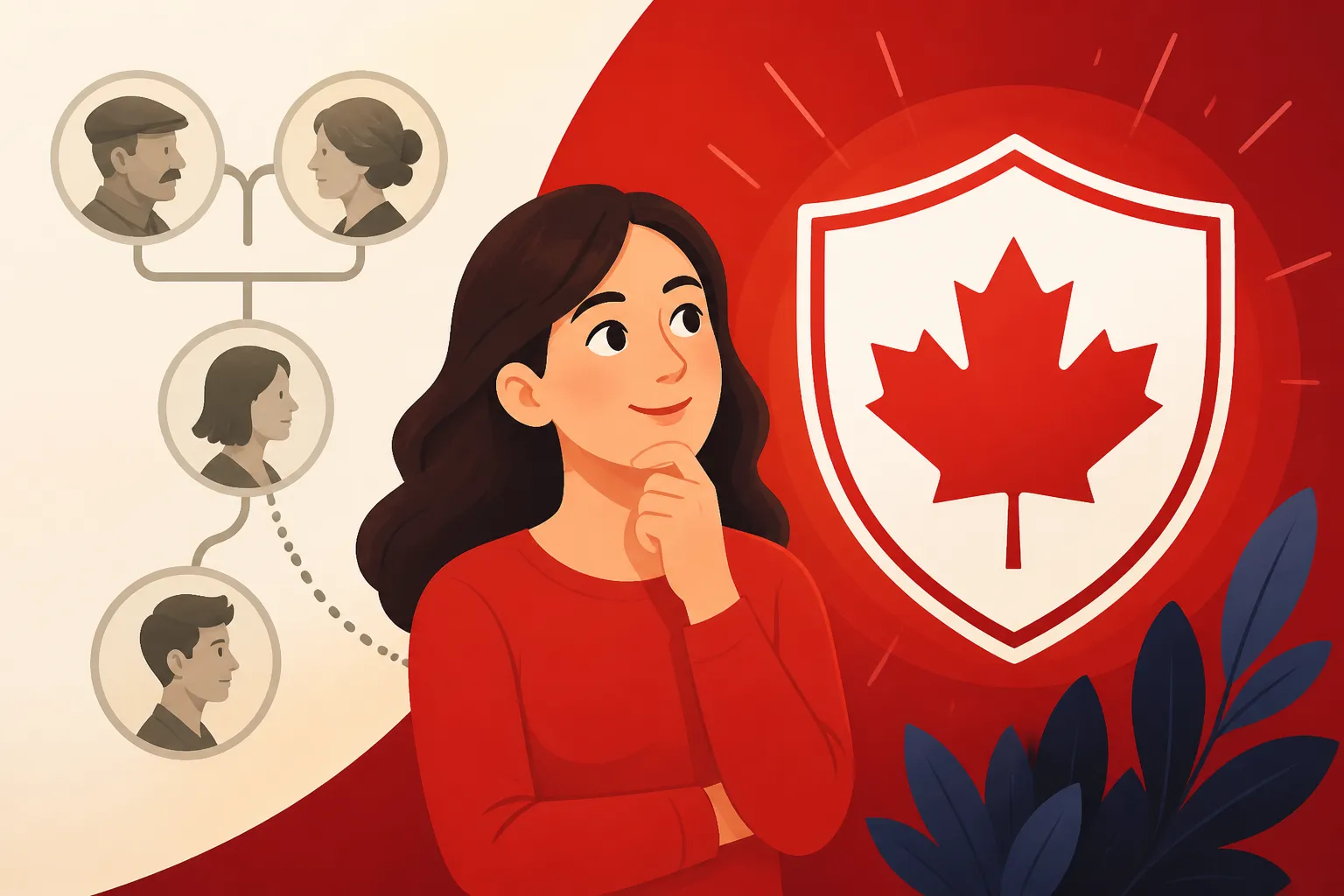
In a nutshell, the first-generation limit rule states that Canadian citizenship can generally only be passed down one generation if that generation was born outside Canada. This means if you were born outside Canada to a Canadian parent, you are considered the "first generation" born abroad, and you can generally claim citizenship. However, if your Canadian parent was also born outside Canada to their Canadian parent, then you are considered the "second generation" born abroad, and you typically cannot claim Canadian citizenship by descent.
Think of it like this:
- Scenario 1 (Eligible): Your grandparent was born in Canada. Your parent was born outside Canada to that Canadian grandparent. You were born outside Canada to that Canadian parent. In this case, your parent is the first generation born outside Canada. You are the second generation. Under the current rules, your parent would likely be eligible for Canadian citizenship, but you, as the second generation born abroad, generally would not be.
- Scenario 2 (Eligible): Your parent was born in Canada (or naturalized in Canada before your birth). You were born outside Canada to that parent. You are the first generation born outside Canada. In this scenario, you are eligible for Canadian citizenship by descent.
It's a distinction that often causes a lot of heartache, especially for those whose families have maintained ties to Canada for generations but were simply born abroad. Immigration, Refugees and Citizenship Canada (IRCC) introduced this rule to ensure a stronger connection to Canada for those acquiring citizenship, and to limit the potential for "citizenship by accident" through an ever-expanding lineage.
Exemptions to the First-Generation Limit
While the first-generation limit rule is strict, there are a few narrow exemptions designed to cover specific situations, often involving Canadian government employees or military personnel serving abroad. These are not broad exceptions, so it's crucial to see if your specific circumstances truly fit.
One key exemption applies to individuals who were born outside Canada to a Canadian parent who was employed in the Canadian armed forces or was a federal or provincial public servant at the time of the child's birth. In these cases, even if the Canadian parent was themselves born outside Canada, the citizenship can still be passed down. This essentially treats children born to such parents as if they were born in Canada for citizenship purposes. However, if your parent was, say, a private business owner or simply living abroad for personal reasons, this exemption unfortunately won't apply. It’s important to gather detailed evidence if you believe this exemption pertains to your situation, as IRCC will scrutinize these claims carefully.
Another less common scenario involves children adopted by Canadian citizens abroad. If a Canadian citizen adopts a child in another country, that child might be eligible for citizenship, often through a specific adoption grant process, rather than straightforward descent. This is a complex area with its own set of rules and requirements, so if this is your situation, you'll need to delve deeply into the specifics of the adoption laws and citizenship provisions. For most people hoping to claim citizenship through a long-lost great-grandparent, these exemptions are unlikely to be relevant.
The "Born or Naturalized in Canada" Requirement
The cornerstone of passing on Canadian citizenship is that the parent through whom you're claiming must have been either born in Canada or naturalized as a Canadian citizen before your birth. If your Canadian parent obtained their Canadian citizenship after you were born, you cannot claim citizenship by descent through them. This is a crucial timeline detail that often gets overlooked.
Let's imagine your mother was born in Canada. She then moved abroad and had you. You would be the first generation born abroad and would likely be eligible. Now, consider a different scenario: your mother was born in another country, then moved to Canada as an adult and became a naturalized Canadian citizen. If you were born after she became a Canadian citizen, you could be eligible for citizenship by descent. However, if you were born before she became a Canadian citizen, even if she later became one, you would not be eligible to claim citizenship through her by descent. It all comes down to the parent's citizenship status at the time of your birth. This is where keeping meticulous records of dates, particularly birth dates and naturalization dates, becomes absolutely paramount.
Eligibility Criteria: Who Can (and Cannot) Claim Citizenship Through Descent?
The specifics of eligibility often come down to when you were born and your parent's citizenship status at that exact moment. It's not just about having a Canadian ancestor; it's about the direct line of descent and the legal status at the right time.
Born to a Canadian Parent Abroad
This is the most common scenario for citizenship by descent. If you were born outside Canada on or after February 15, 1977, and at the time of your birth, one of your parents was a Canadian citizen who was either born in Canada or naturalized in Canada, then you are generally a Canadian citizen by descent. You don't "apply" for citizenship in the traditional sense; you apply for a "proof of citizenship" certificate, as you are already considered a citizen by law.
The key here, again, is that "first-generation limit." If your Canadian parent also acquired their citizenship by descent (i.e., they were born outside Canada to a Canadian parent), then you, as the second generation born abroad, are generally not eligible. This is where the frustration often boils over for many. You have a Canadian parent, but because they were also born abroad, the chain of descent for you is broken under current law. It's a tough pill to swallow, especially when you've grown up with strong Canadian ties, perhaps visiting family regularly or even considering Canada home. This rule was intended to simplify the definition of Canadian citizenship and strengthen the link to Canada, but for those impacted, it can feel incredibly unfair.
Adopted by a Canadian Citizen Parent
For adopted children, the situation has specific pathways. If you were adopted by a Canadian citizen parent, you might be eligible for Canadian citizenship. The rules depend heavily on when the adoption occurred and the legal process involved. Generally, for adoptions finalized on or after January 1, 1947, if at least one adoptive parent was a Canadian citizen at the time of the adoption (or became a citizen before January 1, 1947, if adopted before that date), the adopted child might be eligible. The important distinction is that the adoption must be legally recognized and complete according to the laws of the place where it occurred, and also according to Canadian law.
IRCC has a specific process for "citizenship by adoption," which is distinct from regular citizenship by descent. It often requires submitting the adoption orders, birth certificates, and proof of the adoptive parent's citizenship. This process aims to ensure that children adopted by Canadians abroad are able to fully integrate into their new Canadian families with citizenship status, without the complexities of the first-generation limit applying in the same way. It's a compassionate measure, but one that still requires diligent paperwork and adherence to strict guidelines.
Special Considerations for Births Before 2009
The year 2009 is a watershed moment for Canadian citizenship by descent. Before April 17, 2009, there were different rules. If you were born outside Canada before April 17, 2009, to a Canadian parent, you might be a citizen, even if that parent was also born outside Canada, as the first-generation limit did not exist in the same restrictive way. This is particularly relevant for those with deeper generational ties. Many people who were previously denied citizenship under earlier, more restrictive interpretations of the law (e.g., if their mother was Canadian but their father was not, and they were born before 1977) might also have had their citizenship retroactively recognized by subsequent legislative changes.
If your claim to citizenship hinges on events prior to 2009, you absolutely need to research the specific legislation in place at the time of your birth and the various amendments that followed. IRCC has published extensive guidelines on these historical changes, often referring to them as "lost Canadians" provisions. These changes aimed to restore citizenship to individuals who, through no fault of their own, were stripped of or never recognized as Canadian citizens due to outdated laws. This could include scenarios where citizenship was automatically lost upon marriage to a non-Canadian, or specific rules for war brides. It’s a complex area, but for those who fall into these categories, it could be the key to unlocking their Canadian heritage.
The Application Process: Step-by-Step for Citizenship by Descent
If, after understanding the first-generation limit, you believe you are indeed eligible, the next step is to apply for your "Proof of Canadian Citizenship" certificate. This isn't an application for citizenship in the sense of asking permission; it's an application to officially recognize and document the citizenship you already possess by law.
Gathering Your Documents
This is perhaps the most crucial and, frankly, often the most frustrating part of the entire process. IRCC is notoriously thorough, and you'll need to provide original documents or certified true copies to prove every link in the chain of citizenship. This usually includes:
- Your Birth Certificate: Proving your date and place of birth, and identifying your parents. If you were adopted, you'll need your adoption order.
- Your Parent's Birth Certificate: Proving their date and place of birth. If your parent was born in Canada, this is key.
- Your Parent's Proof of Canadian Citizenship: If they were naturalized, you'll need their Canadian citizenship certificate. If they were born in Canada, their Canadian birth certificate suffices.
- Marriage Certificates: If names have changed through marriage, or to establish the parental link (e.g., if you were born after your parents married).
- Identity Documents: Copies of your current passports, driver's licenses, or other government-issued IDs.
- Any Previous Canadian Documents: If you ever had a Canadian passport or birth registration from an older system, include it.
It's not uncommon to hit roadblocks here, especially if you're dealing with older documents, or records from different countries. Vital statistics offices in various provinces or countries can be slow, and securing official certified copies can take months. Be patient, be persistent, and keep clear records of every request and interaction. This is where many hopefuls often feel overwhelmed, but remember, every hurdle cleared brings you closer.
Completing the Application Forms
The main form you'll need to complete is the "Application for a Citizenship Certificate (Proof of Citizenship)." This form requires detailed personal information about you and your Canadian parent, including dates, places of birth, and how your parent obtained their Canadian citizenship. You'll also need to pay a fee. As of early 2026, the fee for a citizenship certificate is typically around CAD$75. You'll need to pay this fee online through IRCC's portal, and include the receipt with your application.
Make sure to fill out every single field completely and accurately. Any missing information or inconsistencies can lead to delays or even a refusal, forcing you to start over. It's a tedious process, but attention to detail is your best friend here. Consider carefully reviewing your application with a trusted friend or even a certified immigration consultant if you feel unsure. While the application seems straightforward for descent, the devil is always in the details with IRCC.
Submitting Your Application and Fees
Once you have all your documents and completed forms, you'll submit your application package to IRCC. The submission method can vary depending on whether you are applying from inside or outside Canada, but often involves mailing the physical package to a designated processing centre. Always double-check the latest instructions on the IRCC website, as these can change.
Remember that you are sending original documents, or certified true copies, so ensure your package is sent via a secure, trackable method. Losing a birth certificate that took months to obtain would be a nightmare! Also, ensure your fee payment receipt is clearly attached. Applications are often bounced because of a simple oversight like that. If you're planning a big move to Canada once your citizenship is confirmed, you might start looking into companies like Sirelo, a moving comparison platform, to help you plan the logistics of packing up and transporting your life. Having that Canadian citizenship can really smooth the transition when it comes to long-term residency.
What to Expect After Applying
After submission, it's a waiting game. Processing times for citizenship certificates can vary significantly, often ranging from several months to over a year, depending on IRCC's current workload and the complexity of your case. You can check estimated processing times on the IRCC website, but remember these are just estimates.
During this period, IRCC may contact you for additional information or clarification. Respond promptly and provide any requested documents. If everything goes smoothly, you'll eventually receive your Canadian citizenship certificate in the mail. This certificate is your official proof that you are a Canadian citizen. It allows you to apply for a Canadian passport, which is the ultimate travel document demonstrating your citizenship. Once you have that, you can truly start enjoying the benefits of being Canadian, whether that's visiting family freely or even making a permanent move to Canada, a journey that might involve understanding things like the nuances of How the Canadian Tax System (CRA) Works: Federal and Provincial Explained (2027) or The Complete Guide to Healthcare in Canada for Newcomers (2027).
Common Challenges and How to Overcome Them
It's rare for an IRCC application to go perfectly smoothly, and citizenship by descent is no exception. Be prepared for some common hurdles.
Proof of Parent's Citizenship
One of the biggest challenges is unequivocally proving your parent's Canadian citizenship at the time of your birth. If your parent was born in Canada, a Canadian long-form birth certificate is usually sufficient. However, if they were naturalized, you need their official citizenship certificate, which some people may have misplaced or never applied for. Tracking down these historical documents can be a monumental task, especially if your parents have passed away or records are lost. You might need to contact provincial vital statistics offices or IRCC directly to request copies of old records, which can be a slow bureaucratic dance.
Missing Birth Records
Another frequent issue is missing or incomplete birth records, particularly for older generations or those born in countries with less robust record-keeping systems. If a birth certificate is unavailable, IRCC may accept other forms of evidence, such as baptismal records, school records, or census records, but these must be accompanied by sworn affidavits from individuals with personal knowledge of the birth. This adds layers of complexity and can significantly prolong the application process. Patience and persistence are key here.
Navigating Complex Family Trees
Modern families aren't always straightforward. Divorces, adoptions (both formal and informal), step-parents, and varying legal names can make it incredibly difficult to draw a clear line of descent. Each link in the chain needs to be legally proven. For example, if your mother changed her name after marriage, you need her marriage certificate to link her birth certificate to her name at the time of your birth. If your Canadian parent was a stepfather, and you were not legally adopted by him, then you generally cannot claim citizenship through him. Every relationship needs legal documentation, and any gaps will lead to questions and delays.
Dealing with IRCC Processing Times
Let's be realistic: IRCC processing times can be a test of endurance. While the official estimates give you a ballpark, unforeseen backlogs, staffing issues, or the sheer volume of applications can stretch these timelines out significantly. This can be incredibly frustrating, especially if you're waiting for your citizenship to make other life plans, like moving to Canada or applying for a job that requires Canadian citizenship. There's little you can do to speed up the process once your application is in, other than ensuring your initial submission was perfect and responding quickly to any requests for further information. Remember to factor in these potential delays when making any major life decisions related to your Canadian citizenship. While you're waiting, you might want to consider How to Buy Private Health Insurance as a Newcomer in Canada, or even Cigna Global, especially if you're living abroad and need robust international health coverage while you wait for your Canadian papers.
Benefits and Implications of Canadian Citizenship by Descent
Becoming a Canadian citizen, whether by birth, naturalization, or descent, comes with a host of benefits and responsibilities. It's not just a passport; it's a fundamental shift in your legal status and relationship with Canada.
Rights and Responsibilities
As a Canadian citizen, you gain full political rights, including the right to vote in federal, provincial, and municipal elections, and the right to run for office. You have the right to enter, remain in, and leave Canada freely. You're protected by Canadian law and have access to Canadian consular services when traveling abroad.
However, citizenship also comes with responsibilities. You are expected to obey Canadian laws, contribute to Canadian society, and understand your role in a democratic society. While there's no mandatory military service, you are expected to respect Canada's values, including equality, diversity, and peace. It’s more than just a piece of paper; it’s an identity. If you're considering a move, knowing about The Complete Guide to Moving to Canada: Your First 90 Days (2027) can be incredibly useful.
Living in Canada
With Canadian citizenship, the world of living and working in Canada opens up completely. You don't need work permits, study permits, or any other temporary visa. You can live anywhere in the country, access public services, and enjoy the freedoms that come with being a permanent member of the Canadian family. This is a stark contrast to the complexities faced by those on temporary visas or even permanent residents. For example, Understanding Canadian Work Permits: LMIA and Exempt Explained (2027) becomes irrelevant once you're a citizen.
You'll be able to apply for a Social Insurance Number (SIN) without issue, which is critical for employment and accessing government programs. You can also easily How to Choose the Best Bank for Newcomers in Canada and set up your finances. Planning to move and rent an apartment? You won't face the same hurdles as newcomers without citizenship. You can simply proceed with your plans, perhaps looking into The Complete Guide to Renting an Apartment in Canada (2027) without the added layer of immigration status proving your right to reside. And for those planning a complete relocation, services like Sirelo can again be invaluable for comparing international moving quotes and making the transition smoother.
Healthcare and Other Benefits
As a Canadian citizen residing in Canada, you become eligible for provincial healthcare plans, like OHIP in Ontario or MSP in British Columbia. While there's typically a waiting period for new residents to become eligible for provincial health coverage, as a citizen, once you establish residency in a province, you'll eventually access these benefits. For more information, you can read Public vs Private Healthcare in Canada: What Newcomers Need to Know and How to Apply for Your Provincial Health Card in Canada (2027). Before that provincial health coverage kicks in, or if you plan to travel extensively, having private health insurance, like Cigna Global, can provide peace of mind.
Citizens also gain access to a range of other social benefits and government programs, should they qualify, such as educational grants, retirement pensions (CPP), and employment insurance (EI). You also won't have to worry about The Newcomer Waiting Period for Provincial Health Coverage in Canada (2027) as you transition from private insurance or while waiting for eligibility, because as a citizen, your right to these services is enshrined, unlike temporary residents. Your status significantly eases many of the administrative burdens that plague other newcomers. Understanding the general Understanding the Cost of Living in Canada for Newcomers (2026) also becomes more predictable once you have stable access to services.
Disclaimer
Please remember that I am an expat blogger sharing personal experiences and general information. While I strive for accuracy and use current information from reliable sources like the official IRCC website, immigration laws and policies in Canada are complex and can change without notice. This article is not a substitute for legal advice. Always consult with an authorized immigration representative or lawyer for advice tailored to your specific situation before making any decisions related to your immigration or citizenship status in Canada.