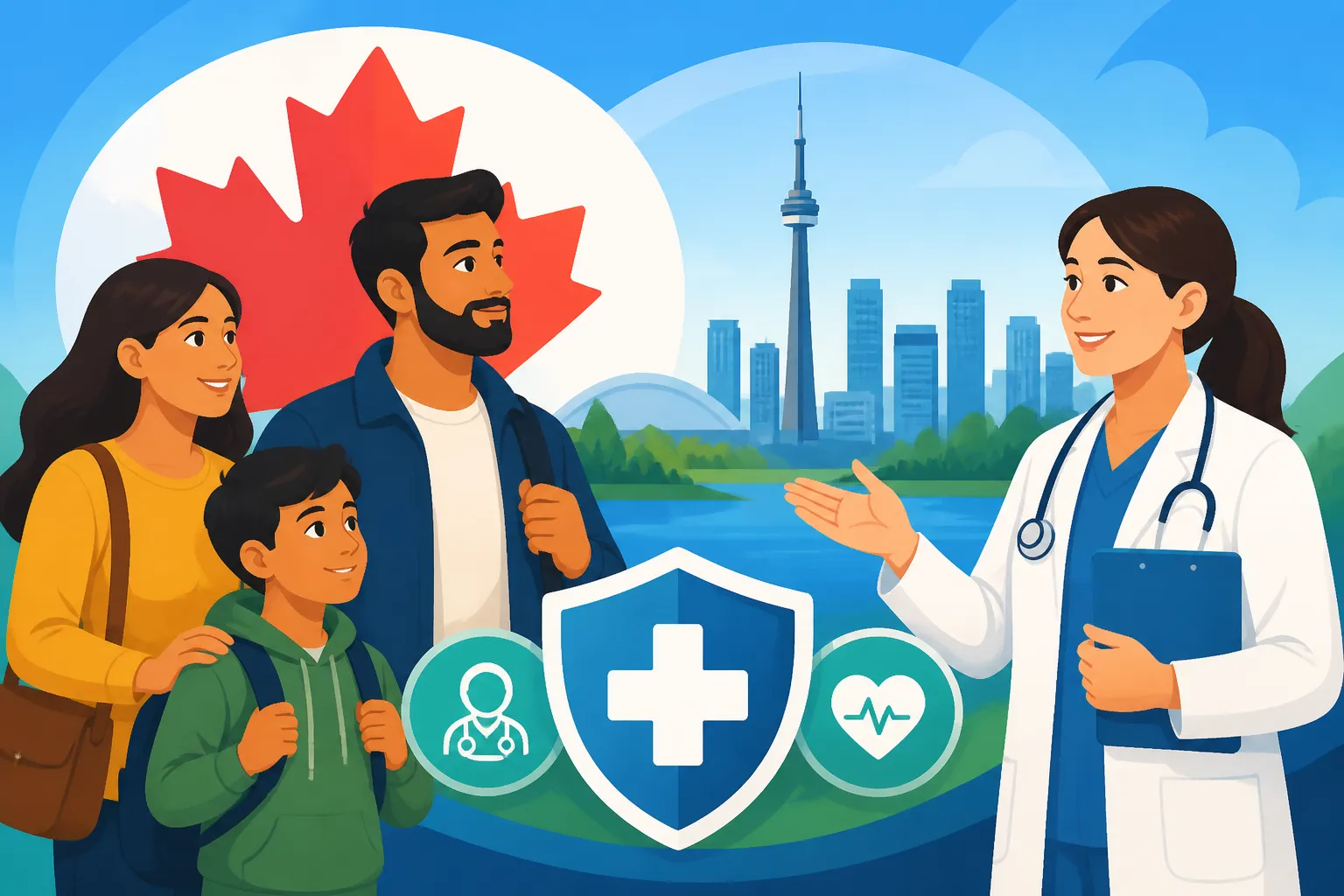
The Complete Guide to Healthcare in Canada for Newcomers (2027)
Moving to a new country involves a mountain of paperwork, but few things are as vital—or as confusing—as ensuring your family is medically protected. Many newcomers arrive in Canada under the impression that healthcare is instantly free for everyone, only to face the harsh reality of "waiting periods" and uncovered costs like prescriptions or dental work. This guide provides a comprehensive roadmap through the Canadian medical system, helping you bridge coverage gaps and navigate provincial rules so you never face a medical emergency alone or unprotected.
Understanding the Foundation of the Canadian Healthcare System
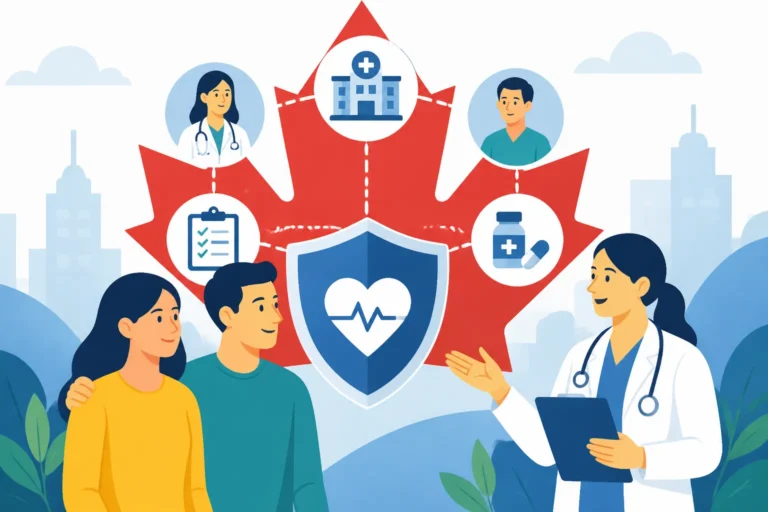
When you first land in Canada, the term "universal healthcare" is thrown around constantly, but it is rarely explained in a way that helps a newcomer on day one. Canada’s system, known as Medicare, is not a single national plan. Instead, it is a collection of thirteen provincial and territorial insurance plans. While the federal government sets certain standards via the Canada Health Act, the actual delivery of care and the specific rules for eligibility are determined by the province where you reside. This means that your experience with How Canada's Health System Works: Provincial Plans Explained (2027) will differ significantly depending on whether you are settling in the high-rises of Toronto or the mountain valleys of British Columbia.
The public system is built on the principle of "need, not ability to pay." This sounds wonderful in theory, and for many life-threatening situations, it is a godsend. If you have a heart attack or a car accident, you will be treated in a world-class facility without ever seeing a bill for the surgery or the hospital stay. However, the system is strictly divided into "medically necessary" hospital and physician services. Anything outside that narrow definition—such as the medication you take home from the hospital, the physical therapy you need to recover, or the dental check-up for your children—falls into the private sector or requires supplemental insurance.
The most jarring part of the system is widely considered to be the "gatekeeper" model. You cannot simply call up a dermatologist or a cardiologist because you have a concern. You must first see a primary care provider, usually a family doctor, who then decides if your case warrants a referral. This creates a multi-tiered journey where patience is just as important as your health card. Understanding this hierarchy is the first step toward reducing the frustration that many newcomers feel when they realize they can't just "buy their way" to the front of a public specialist queue.
The Public vs Private Divide
The Canadian system is often described as "publicly funded but privately delivered." Most doctors do not work for the government; they are independent contractors who bill the provincial government for the services they provide to you. This is why you will see private clinics everywhere, but as long as they are providing "insured services," you don't pay out of pocket—you simply show your provincial health card. The "private" side of the system refers to services not covered by the government, which is a much larger list than most immigrants realize.
For example, routine eye exams for adults, cosmetic surgeries, and most forms of alternative medicine like massage therapy or acupuncture are entirely private. Newcomers often get their first "sticker shock" when they go to a pharmacy. Unless you are in a specific low-income bracket or over a certain age, the government generally does not pay for your outpatient prescription drugs. This is why having a clear understanding of Public vs Private Healthcare in Canada: What Newcomers Need to Know is essential before you find yourself standing at a pharmacy counter with a three-hundred-dollar bill.
Provincial Responsibility and Your First 90 Days
Because healthcare is provincial, your first task upon arrival is to identify the specific rules of your new home. If you move from Calgary to Montreal, you are essentially changing insurance companies. Each province has its own application process, its own physical card, and its own list of "extras" that might be covered, such as certain vaccinations or screenings. This decentralized approach can lead to administrative headaches if you aren't prepared.
The most critical factor for a newcomer is the residency requirement. Most provinces require you to be physically present in the province for a certain number of days per year to maintain your coverage. If you travel back to your home country for six months to wrap up your affairs, you might find your health coverage has been suspended. Always keep your provincial health card as safe as your passport; it is your golden ticket to the medical system.
The Principles of the Canada Health Act
The Canada Health Act mandates that provincial plans must be universal, comprehensive, accessible, portable, and publicly administered. "Portability" is particularly important for newcomers. It means that if you have a valid health card from Ontario but you are visiting Vancouver and have an emergency, the British Columbia system will treat you and bill Ontario behind the scenes. However, this only applies to emergency care. You cannot use your Ontario card to go for a routine check-up in another province.
For a newcomer, the "accessibility" principle can feel like a bit of a stretch. While the law says care should be accessible, the reality of long wait times for non-emergency surgeries and the difficulty of finding a family doctor often tells a different story. Being a "veteran" in this system means learning how to advocate for yourself within these five principles, ensuring that your rights as a resident are respected even when the system feels bogged down by bureaucracy.
Navigating the Infamous Waiting Period
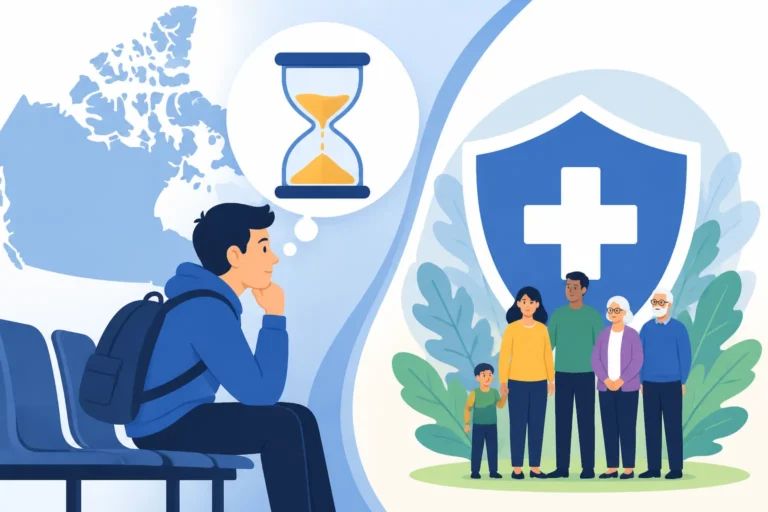
One of the most stressful experiences for a new immigrant is discovering The Newcomer Waiting Period for Provincial Health Coverage in Canada (2027). In several provinces, including British Columbia and (historically/periodically) Ontario and Quebec, you are not covered the day you arrive. There is often a three-month waiting period before your provincial insurance kicks in. I remember the anxiety of my first month in Canada, terrified that a simple slip on the ice or a bout of food poisoning would result in a five-figure hospital bill.
This gap in coverage is not something to take lightly. Canadian hospitals are world-class, but for those without insurance, they are incredibly expensive. A single night in a standard ward can cost upwards of $3,000 to $5,000 for a non-resident. If you require intensive care or surgery, that number can easily spiral into the hundreds of thousands. This is the "danger zone" for newcomers, and it is where many families make the mistake of "hoping for the best" rather than securing a bridge.
Why the Waiting Period Exists
The waiting period is designed to prevent "medical tourism"—people flying to Canada just to receive expensive surgeries and then leaving. While this makes sense from a policy perspective, it puts legitimate residents and workers in a vulnerable position. During these first few months, you are a resident for tax purposes and a resident for your lease, but you are a "non-entity" for healthcare. You are expected to provide your own private coverage during this window.
It is also important to note that the three-month clock usually starts on the day you establish residency, not necessarily the day you land if you were initially on a visitor visa. Keeping meticulous records of your arrival date, your lease start date, and your utility bills is vital because the provincial health authority will ask for proof of when your "wait" began. If you cannot prove your residency date, they may push your coverage start date back even further.
Bridging the Gap with SafetyWing
To manage this risk, most savvy expats look for international health insurance that is specifically designed for nomads and people in transition. This is where a brand like SafetyWing becomes incredibly useful. Unlike traditional local "travel insurance" which can be clunky and often requires you to have a return ticket, SafetyWing offers a flexible, subscription-based model that can cover you for the exact duration of your provincial waiting period.
We often recommend SafetyWing to newcomers because it handles the "unexpected" while you are waiting for your provincial card. If you develop an ear infection or need an urgent X-ray, having that backup ensures you aren't paying the "uninsured" rates at a walk-in clinic. It provides a safety net that allows you to focus on finding a job and a home without the looming fear of a medical debt. In a country where a simple ambulance ride can cost hundreds of dollars for the uninsured, having a reliable bridge like SafetyWing is a basic requirement of a successful move.
Exceptions and Provincial Variances
Not every province has a waiting period, and the rules are constantly shifting. For example, Alberta typically provides coverage from day one, provided you have the right visa status. Ontario has fluctuated its rules, sometimes waiving the period during public health crises and then reinstating it. It is your responsibility to check the current status of Understanding the Three-Month Waiting Period for Health Coverage in Canada for your specific province at the exact time of your arrival.
There are also exceptions for certain groups. In many cases, newborns born in Canada are covered immediately, even if the parents are still in their waiting period. Some provinces also waive the wait for refugees or those under specific protected statuses. However, for the average skilled worker or sponsored spouse, the three-month rule is the standard you should prepare for.
| Province | Waiting Period | Coverage Start Date | Key Documentation |
|---|---|---|---|
| Ontario (OHIP) | Varies (Check current status) | After 3 months of residence | 3 proofs of residence, ID, Work Permit/PR |
| British Columbia (MSP) | 3 Months | Balance of the month of arrival plus 2 months | Study/Work Permit (6+ months valid), PR |
| Quebec (RAMQ) | Up to 3 Months | After waiting period ends | CSQ (for some), Proof of residence, Passport |
| Alberta (AHCIP) | None (usually) | From date of arrival/establishment | Proof of Alberta residence, Intent to stay |
The Administrative Gauntlet: Applying for Your Health Card
Once you have landed and have your initial documents in order, you need to run the gauntlet of applying for your physical card. This isn't just a "fill out a form online" situation in many provinces. In Ontario, for example, you often have to go to a ServiceOntario location in person. You will need to bring "the big three": proof of identity, proof of your immigration status (Work Permit, Study Permit, or COPR), and proof of residency (a utility bill or a signed lease).
Many newcomers get turned away because their utility bill was digital and they didn't have a printed copy, or because their lease didn't have the landlord's specific contact details. The system is pedantic. My advice is to over-prepare. Bring more documents than you think you need. If you have a Social Insurance Number (SIN), bring that too. If you have your original landing papers, keep them in a folder. The more "official" you look, the smoother the process tends to be.
Applying in Ontario (OHIP) vs British Columbia (MSP)
The application for How to Apply for Your Provincial Health Card in Canada (2027) varies wildly by province. In Ontario, the process for OHIP is very much an "in-person" affair where they take your photo on the spot. Your card will then arrive in the mail a few weeks later. In British Columbia, the Medical Services Plan (MSP) is often integrated with your BC Services Card (your driver's licence). You can often start the application online, but you will still need to visit an ICBC office to verify your identity and get your photo taken.
A major difference to watch out for is that British Columbia used to charge monthly premiums for healthcare, while Ontario funds it entirely through general taxation. While BC has eliminated those premiums for individuals, there is still a "Health Fee" for international students. Always check if there are monthly costs associated with your provincial plan, as missing a payment can sometimes complicate your status, though it rarely results in a total loss of emergency coverage.
Maintaining Your Coverage Eligibility
Getting the card is only half the battle; keeping it is the other half. If you are on a work permit, your health coverage is usually tied to the expiry date of that permit. If your permit expires and you are on "maintained status" (waiting for a renewal), you might find your health card is technically "expired" in the system. This can be a nightmare if you need to see a doctor.
To avoid this, as soon as you apply for your permit renewal, keep the "submission confirmation" from IRCC. Most provinces will allow you to extend your health coverage temporarily if you show proof that you have applied for a new permit. Do not wait until the day your card expires to do this. Expats often get stuck in administrative limbo for months because they didn't proactively update their provincial health office about their visa status.
Adding Dependents to Your Plan
If you have moved with a spouse and children, you will generally apply as a family unit or at least link your files. Each family member, including infants, will receive their own individual health card with a unique number. It is vital to ensure your children are registered immediately. For newborns born in Canada, the hospital usually provides the forms, but for children arriving from abroad, you must include them in your initial application.
If you are a worker and your spouse is on an open work permit, they are eligible for their own card. If they are here on a visitor record while waiting for sponsorship, the rules become much trickier. In some provinces, a visitor cannot get provincial health insurance at all. This is another scenario where SafetyWing is a life-saver, providing coverage for a spouse who doesn't yet have the "status" required for the public system.
Accessing Primary Care: Family Doctors and Alternatives
The biggest shock for most newcomers is the difficulty of finding a family doctor. In cities like Toronto, Vancouver, or Ottawa, the shortage is acute. You might see headlines about millions of Canadians without a primary care provider, and as a newcomer, you are at the bottom of the list. You cannot just walk into a family practice and ask to be seen. Most doctors have "closed" books, meaning they are not taking new patients.
This is where you need to be strategic. You should immediately sign up for provincial registries like "Health Care Connect" in Ontario or the "Health Connect Registry" in BC. These are centralized lists that match patients with doctors. However, these lists can take months or even years. In the meantime, you will become very familiar with "Walk-In Clinics." These are clinics where you can show up without an appointment to see a doctor for minor ailments, prescriptions, or referrals.
The Family Doctor Shortage Reality
Because you don't have a family doctor right away, your medical history becomes fragmented. Every time you go to a different walk-in clinic, a new doctor has to learn about your allergies, your chronic conditions, and your past surgeries. I highly recommend keeping a digital folder or a physical notebook of your own medical records. When you finally do find a doctor through How to Find and Register with a Family Doctor in Canada, you can hand them this history to ensure continuity of care.
How do you find a doctor faster? Ask your colleagues and neighbors. Often, a doctor might not be "officially" taking patients on the provincial website, but they might take a "referral" from an existing patient. Also, look for "Family Health Teams" or "Community Health Centres." These are larger organizations with multiple doctors and nurses, and they often have more capacity than a solo practitioner in a small office.
Walk-In Clinics and Urgent Care
Until you have a family doctor, walk-in clinics are your primary point of contact. Be prepared to wait. In major cities, if a clinic opens at 9:00 AM, there is often a line at the door by 8:15 AM. By 10:30 AM, they may have reached their capacity for the day and will stop taking new patients. It is a frustrating system, but it is the reality of Understanding the Role of Walk-In Clinics in Canada.
There is also a middle ground between a walk-in clinic and an Emergency Room called an "Urgent Care Centre." These are for things that aren't life-threatening but can't wait until tomorrow—like a deep cut that needs stitches or a suspected broken bone. They usually have X-ray machines on-site, which most walk-in clinics do not. Knowing the difference can save you six hours of waiting in a hospital ER.
Specialist Referrals: The Gatekeeper Model
In Canada, you cannot "self-refer" to a specialist. If you want to see a dermatologist for your acne or a cardiologist for palpitations, you must first convince a walk-in doctor or your family doctor that it is necessary. The doctor will then send a fax (yes, the Canadian medical system still runs on faxes) to the specialist's office.
The specialist’s office then "triages" the referral. If your issue is deemed non-urgent, you might wait three to six months for an appointment. If it’s urgent, it might be a few weeks. This can be incredibly frustrating if you are coming from a country where you can simply pay to see a specialist tomorrow. In Canada, everyone waits in the same line based on medical urgency, not based on wealth.
Beyond the Basics: Prescription Drugs and Specialized Services
Perhaps the biggest misconception about Canadian healthcare is that everything is free. As a newcomer, you must quickly learn Understanding What Provincial Health Plans Do and Don't Cover in Canada. The public system is great for "fixing" you when you're broken, but it's not great at "maintaining" you. Routine dental cleanings, glasses, and the insulin or blood pressure medication you take every day are generally your financial responsibility.
Most Canadians handle these costs through "Employer Benefits." When you are looking for a job, the "benefits package" is often just as important as the salary. A good package will cover 80% to 100% of your prescription drugs, dental work, and even things like massage therapy or counseling. If you are self-employed or your employer doesn't offer benefits, you will need to purchase Understanding Supplementary Health Insurance (Dental, Vision, Drugs) in Canada independently.
Prescription Drugs and Pharmacies
When a doctor gives you a prescription, you take it to a pharmacy (like Shoppers Drug Mart, Rexall, or a local independent). You will be asked if you have "third-party insurance." If you don't, you will pay the full retail price. For some common antibiotics, this might be $20. For specialized biologics or chronic medications, it can be thousands of dollars a month.
Canada does have some safety nets, like the Trillium Drug Program in Ontario, which helps people with high drug costs relative to their income. However, these programs often have deductibles based on your tax returns. As a newcomer without a Canadian tax history, these can be complicated to navigate. Always ask your doctor if there is a "generic" version of a medication, as these are significantly cheaper than brand-name drugs.
Dental and Vision Care
Dental care in Canada is entirely private and notoriously expensive. A simple check-up and cleaning can easily cost $200 to $300. If you need a root canal or a crown, you are looking at $1,500 to $2,500. For many newcomers, this is a massive shock. There is a new federal program called the Canadian Dental Care Plan (CDCP) being rolled out, but it is currently targeted at seniors, children, and people with disabilities who have low household incomes.
Vision care is similar. Most provinces do not cover eye exams for healthy adults between 18 and 64. You will pay around $80 to $120 for an eye exam, and glasses or contacts are also out of pocket. Many newcomers find it cheaper to get a full dental and eye check-up in their home country before they move, or during their first trip back home.
Paramedical Services: Physio, RMT, and Psychology
If you have a back injury and need physiotherapy, or if you are struggling with the mental toll of a trans-continental move and need a psychologist, the public system provides very limited support. While some hospitals have outpatient physio, it is usually reserved for post-surgery patients. For everyone else, you go to a private clinic and pay roughly $100 to $150 per session.
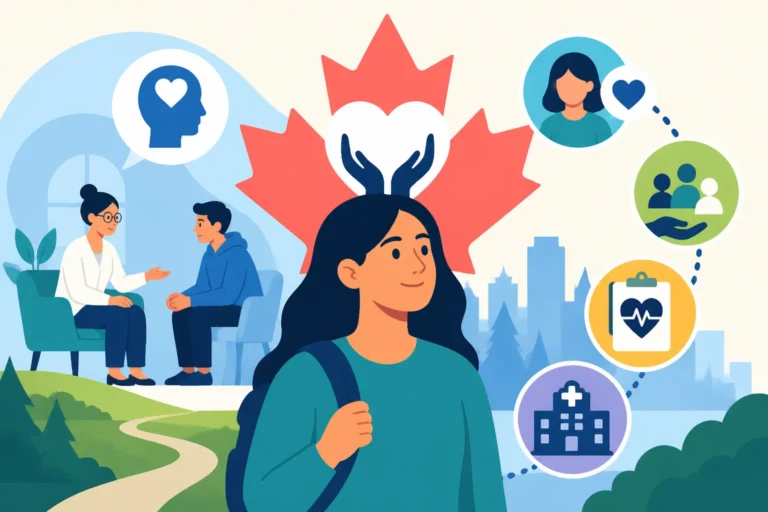
Mental health support is a particularly challenging area. While a psychiatrist (who can prescribe medication) is covered by provincial health because they are a medical doctor, a psychologist or a licensed therapist is usually not. Wait times for a psychiatrist can be six months to a year. This is why How Do I Access Mental Health Support in Canada is such a common search term for newcomers—finding affordable, timely support often requires looking into community non-profits or using employer-provided Employee Assistance Programs (EAPs).
Emergencies and Hospitalization
If you find yourself in a true emergency, the Canadian system is at its best. Whether it's a major bone break, a high fever in an infant, or chest pains, you head to the Emergency Department (ED) of the nearest hospital. You do not need an appointment, and you do not need to call ahead. You will be seen regardless of whether you have your health card with you, though they will ask for it eventually.
The most important thing to understand is "Triage." Hospital waiting rooms are not "first come, first served." They are "sickest person first." If you go to the ER with a sprained ankle, you might sit in the waiting room for eight to twelve hours while people with breathing difficulties or heart issues are rushed ahead of you. This isn't the hospital being mean; it's the system working as intended to save lives.
When to Call 911 vs Driving to the ER
In a life-threatening emergency, call 911. The paramedics are highly trained and can begin treatment in your living room or in the ambulance. However, newcomers are often surprised to learn that Understanding Emergency Numbers (911) and Ambulance Fees in Canada involves a bill. Even with a provincial health card, most provinces charge a "co-pay" for an ambulance, usually between $45 and $80. If you are deemed to have used an ambulance for a non-emergency, that bill can jump to $240 or more.
If you are stable and have a ride, it is often better to have a friend or family member drive you to the ER. This keeps the ambulances free for those who truly need them and saves you the administrative hassle of the ambulance bill. However, never hesitate to call 911 if you are in doubt; your life is worth more than a $45 fee.
The Cost of Ambulances and Hospital Perks
If you do not have a provincial health card (for example, during your waiting period), an ambulance ride can cost $500 to $1,000 depending on the province and the distance. This is another reason why having bridge insurance like SafetyWing is so critical. They can reimburse these high emergency transport costs that would otherwise take a massive bite out of your "new life" savings.
Once you are admitted to the hospital, the room, the food, the nursing care, and the surgery are all free for residents. However, you will be in a "ward" room, which usually means three or four people to a room. If you want a semi-private (two people) or private room, you or your private insurance will have to pay an extra daily fee, often between $200 and $400 a day. Most employer benefits packages cover semi-private rooms, so check your policy!
Triage and Wait Times: What to Expect
I cannot stress this enough: Canadian ER wait times are legendary. On a Friday night in a major city, the wait can be grueling. My tip for newcomers is to check "ER Wait Time" websites. Many cities now have real-time dashboards that tell you the estimated wait at different hospitals in the area. Sometimes driving an extra 20 minutes to a hospital on the outskirts of town can save you four hours of waiting in a downtown core hospital.
When you are in the ER, bring a phone charger, some snacks (if the nurse says it's okay to eat), and a lot of patience. Once you are "in the system" and have seen a doctor, things move quickly, but the initial hurdle of the waiting room is the biggest test of a newcomer's resolve.
Support Systems for Families and Mental Wellness
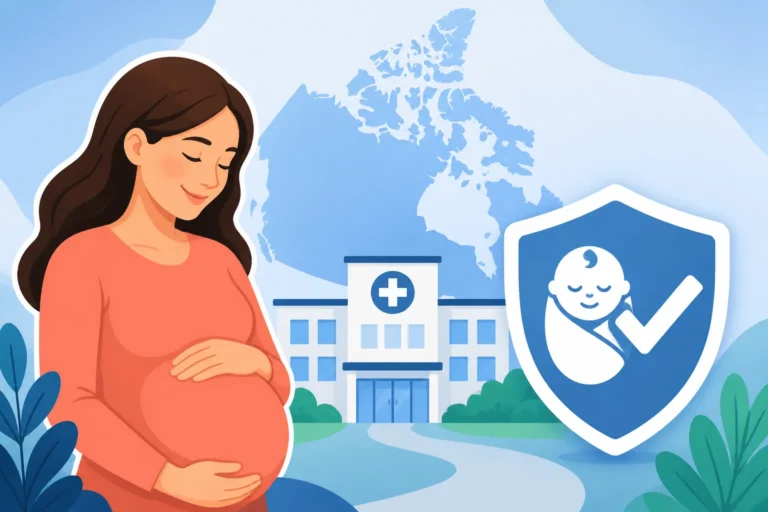
Canada is a very family-friendly country, and this is reflected in the healthcare available for children and expecting parents. If you are pregnant, your care is fully covered. You have a choice between a Family Doctor, an OB-GYN (Obstetrician-Gynecologist), or a Midwife. Midwives are extremely popular in Canada and are fully integrated into the public system, meaning their services are free. They provide a more "holistic" approach and can even assist with home births if that is your preference.
For children, the system focuses heavily on preventative care. You will be given a "Yellow Card" (or a digital equivalent) to track vaccinations. These vaccinations are free and are often required for children to attend public school. If you are coming from a country with a different vaccination schedule, you should take your child's records to a local public health clinic to see what "catch-up" shots they might need.
Prenatal Care and Delivery
Choosing How to Choose a Doctor or Midwife for Maternity Care in Canada is one of the first things you should do if you are expecting. Midwives are often booked up months in advance, so as soon as that pregnancy test is positive, start calling. If you prefer an OB-GYN, you will likely need a referral from a walk-in clinic first.
Most births in Canada happen in hospitals, which are equipped with specialized birthing suites. The care is exceptional, but again, the post-birth rooming is usually in a ward unless you have private insurance or pay for an upgrade. The hospital will also help you with the paperwork to get your baby’s birth certificate and their own provincial health card.
Accessing Mental Health Support
The "settlement" process is emotionally draining. It is very common for newcomers to experience "immigrant depression" or intense anxiety in the first year. While the public system is strained, there are resources. Many provinces offer free "Telehealth" counseling or short-term crisis support.
If you are looking for long-term therapy, you will likely be looking at the private sector. Look for "Sliding Scale" clinics—these are practices where the hourly rate is based on your income. This can make a $150 session much more affordable for someone who is still job-hunting. Also, many universities with psychology programs have "Training Clinics" where you can see a supervised student therapist for a very low cost.
Pediatric Care and Vaccinations
Unlike some countries where you see a Pediatrician for everything, in Canada, most children are seen by a general Family Doctor. Pediatricians are often treated as "specialists" who require a referral if your child has a specific developmental or medical issue. This can be a surprise to parents who are used to having a dedicated "Baby Doctor."
Public health units also play a massive role. They run clinics for breastfeeding support, developmental screening, and dental screening for toddlers. These are fantastic places to meet other parents and get professional advice without needing an appointment at a busy doctor's office.
Financial Planning for Your Health in Canada
At the end of the day, healthcare in Canada is a mix of "free" and "hidden costs." Successful newcomers are those who plan for the hidden parts. This means setting aside a "health emergency fund" of a few thousand dollars to cover things like an emergency root canal, a set of expensive prescriptions, or the deductible on an insurance claim.
If you are working, take the time to sit down with your HR representative and truly understand your benefits. Does it cover 100% of drugs or only 80%? Is there a cap on how much they will pay for a psychologist each year? Understanding these details before you get sick will save you a world of stress. And if you are still in that first 90 days, don't play "Russian Roulette" with your health; get a subscription to something like SafetyWing to ensure your Canadian dream doesn't turn into a financial nightmare.
Employer Benefits Packages
Most medium-to-large employers in Canada offer a "group benefits" plan. This usually starts after a three-month probationary period. These plans are gold. They often include "Life Insurance," "Disability Insurance" (which pays your salary if you are too sick to work), and the "Extended Health" coverage that pays for your dentist and your drugs.
Some employers even offer a "Health Spending Account" (HSA), which is a pot of money you can spend on anything health-related, from new glasses to a gym membership. If you have a choice between two jobs and one pays $5,000 more but has no benefits, the job with the benefits might actually be the better financial move.
Tax Deductions for Medical Expenses
The Canada Revenue Agency (CRA) allows you to claim medical expenses on your annual tax return. If you spent a significant amount on dental work, prescriptions, or even travel for medical care, you can use these receipts to reduce the amount of income tax you owe. Keep every single receipt from the pharmacy and the dentist in a dedicated folder.
You can only claim expenses that exceed a certain percentage of your income, so it’s mostly helpful if you’ve had a "high-cost" year. However, for a newcomer who might have paid for private insurance or out-of-pocket care during their first few months, these deductions can result in a much-needed tax refund.
Choosing Private Supplemental Insurance
If you are a freelancer or your job doesn't provide benefits, you can buy "Individual Health and Dental" plans from companies like Sun Life, Manulife, or Blue Cross. These plans usually cost between $80 and $200 a month depending on your age and the level of coverage.
For many, the cost of the premium is higher than what they would spend on a few cleanings and prescriptions. However, insurance isn't for the "known" costs; it's for the "unknown" costs. If you are diagnosed with a chronic condition that requires a $2,000-a-month medication, that $100-a-month insurance plan suddenly becomes the best investment you ever made.
Disclaimer
This guide is for informational purposes only and does not constitute professional medical or legal advice. Healthcare regulations, provincial wait periods, and insurance policies in Canada are subject to frequent change. Always consult with the official website of your specific provincial health authority (such as OHIP, MSP, or RAMQ) and your insurance provider for the most current and accurate information regarding your coverage and eligibility.