Can I Open a Canadian Bank Account as a Newcomer?
Arriving in Canada as a newcomer is a whirlwind, isn't it? Among all the excitement and endless to-do lists, one of the most fundamental tasks often feels like a giant hurdle: simply opening a bank account. It’s not just about finding a branch; it’s about navigating a new financial system while juggling unfamiliar documents and requirements. This comprehensive guide is here to demystify the process, offer practical steps, and share some insider tips from an expat who’s been there and navigated the Canadian banking waters.
Why Banking in Canada is Different and Sometimes Frustrating for Newcomers
When you first arrive, everything feels new and a little bit off-kilter. You're trying to set up your life, but so many essential services—like getting a phone plan, renting an apartment, or even signing up for utilities—depend on having a local bank account. It can feel like you're stuck in a financial purgatory, and trust me, you're not alone in feeling this way. I remember vividly the circular logic I encountered: "You need proof of address to open an account," but "you need a bank account to pay for utilities to get proof of address." It’s enough to make you want to pull your hair out!
The "Catch-22" of Canadian Banking for Expats
The core of this frustration lies in a bureaucratic "Catch-22." Canadian financial institutions are highly regulated, and for good reason: they need to prevent fraud and comply with international anti-money laundering laws. This means they require solid identification and proof of your residential ties to Canada before they'll open an account for you. However, as a newcomer, your "ties" are often still in the making.
For instance, you might have your passport and your shiny new work permit, but what about a utility bill with your name on it? Or a Canadian driver's license? These are things you're probably still trying to acquire! Many banks will ask for two pieces of government-issued ID, one of which needs to be photo ID, plus proof of your Canadian address. If you've just landed and are staying in temporary accommodation, or haven't received your first utility bill yet, this can become a major headache. The lack of a local credit history also adds another layer of complexity, often limiting your options for certain financial products. This initial barrier can be incredibly disheartening, but with a bit of preparation and the right approach, it's definitely surmountable.
Understanding Canadian Bank Account Types
Before you even step into a bank, it's helpful to understand the basic types of accounts you'll be offered. Canadian banking isn't overly complex, but knowing the terminology will save you some confusion.
Chequing Accounts: These are your day-to-day transaction accounts. You'll use them for receiving your salary, paying bills, withdrawing cash, and making debit card purchases. Most chequing accounts come with monthly fees, though these can often be waived if you maintain a minimum balance or qualify for a special newcomer package. They typically don't earn much, if any, interest, as their primary purpose is transactional convenience. When I first arrived, I found myself scrutinizing every transaction fee, so understanding the fee structure is paramount.
Savings Accounts: As the name suggests, these accounts are for saving money. They generally offer a higher interest rate than chequing accounts, but often come with limitations on the number of free transactions you can make per month. If you plan to transfer funds frequently from your savings, you might incur fees. Many newcomers use a savings account to hold money they don't immediately need, perhaps for a down payment on a rental or future expenses, while keeping their chequing account lean for daily use.
Newcomer Banking Packages: This is where you, as an expat, have a distinct advantage. Most major Canadian banks recognize the challenges newcomers face and offer specialized "newcomer packages." These packages often include fee waivers on chequing accounts for the first 6-12 months, free inter-branch transactions, and sometimes even a no-fee credit card (often a secured one, but it’s a start!). These bundles are designed to help you get established without being nickel-and-dimed right from the start. They can be a real lifeline when you’re trying to budget in a new currency. Take a look at Understanding Newcomer Banking Packages and Free Accounts in Canada to get a better sense of what's out there.
Step-by-Step Guide to Opening Your First Canadian Bank Account
Okay, enough commiserating about the hurdles; let's talk solutions! Opening your first bank account in Canada might seem daunting, but by breaking it down into manageable steps and knowing exactly what you need, you can navigate it successfully.
Essential Documents You'll Need and Why They're Tricky
This is arguably the most critical part of the process, and often the trickiest for newcomers. You need to present sufficient identification and proof of address. Don't show up with just your passport and expect a seamless process. Preparation is key!
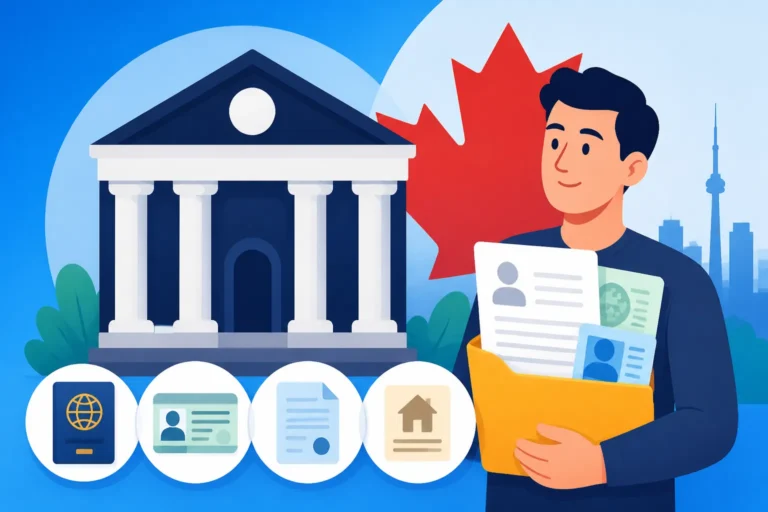
Here’s a breakdown of what banks typically ask for:
- Primary Identification (Government-Issued Photo ID): This is usually your passport. Make sure it's valid and unexpired. If you have a Canadian Permanent Resident (PR) card, study permit, or work permit, these are excellent secondary pieces of ID and can often serve as your primary if it has your photo.
- Secondary Identification (Government-Issued ID without photo, or with photo if primary is non-photo): This could be your Social Insurance Number (SIN) card or confirmation letter, or a Canadian driver's license (if you've managed to get one already!). For those who haven't secured a SIN yet, remember that you need one for employment and taxes. You can find out more by reading How to Apply for a Social Insurance Number (SIN) in Canada.
- Proof of Address in Canada: Ah, the infamous proof of address. This is often where newcomers hit a wall. Banks usually want to see a utility bill (hydro, gas, internet), a rental agreement (lease), or a pay stub with your address. If you're fresh off the plane, you likely won't have these.
Don't panic! Here are some workaround solutions for proof of address:
- Letter from Employer or School: If you have a job offer or enrollment letter from a Canadian educational institution, ask them to provide a letter confirming your current Canadian address. Banks often accept these.
- Rental Agreement: Even if it's a temporary rental agreement, a formal lease can sometimes be accepted.
- Official Correspondence: Sometimes, a letter from a government agency (like your SIN confirmation letter) mailed to your Canadian address can work.
Always bring the originals of all your documents. Photocopies generally won't cut it. It’s also wise to bring more documents than you think you need – better safe than sorry, as bank policies can vary slightly. For a detailed list, you might find What Documents Do I Need to Open a Bank Account in Canada? useful, though we've got the essentials covered here too!
Here’s a quick overview of typical document requirements:
| Document Type | Examples for Newcomers | Importance |
|---|---|---|
| Primary Photo ID | Valid Passport, Permanent Resident (PR) Card, Canadian Driver's License | Essential for verifying your identity. Must be original and unexpired. |
| Secondary ID | Work Permit, Study Permit, Social Insurance Number (SIN) Letter/Card | Supports primary ID, proves legal status to reside/work in Canada. |
| Proof of Address | Rental Agreement (Lease), Utility Bill (Hydro, Internet, Gas), Letter from Employer/School, Bank Account Statement (from home country showing new address) | Crucial for confirming your residential ties in Canada. This is often the hardest to get for new arrivals. |
| Immigration Document | Confirmation of Permanent Residence (COPR), Work Permit, Study Permit | Proves your legal status in Canada, essential for eligibility. |
Choosing the Right Bank for Newcomers
Canada has a robust banking sector, dominated by the "Big Five" banks: Royal Bank of Canada (RBC), Toronto-Dominion Bank (TD), Scotiabank, Bank of Montreal (BMO), and Canadian Imperial Bank of Commerce (CIBC). There's also the National Bank of Canada, which is particularly strong in Quebec, and numerous credit unions and online-only banks.
When choosing, consider:
- Newcomer Programs: As mentioned, the Big Five almost all have dedicated programs for newcomers, often including special account packages with reduced or waived fees for the first year, and easier access to credit products to help you start building your Canadian credit history. They understand the "Catch-22" and try to ease the transition.
- Branch Network and ATMs: If you prefer in-person banking or need access to ATMs frequently, a large bank with many branches might be a better fit. TD Canada Trust, for example, is known for its extensive branch hours.
- Online and Mobile Banking: Most banks offer excellent digital services, but check reviews for user-friendliness. You'll likely be doing most of your banking online, so a seamless experience is a huge plus. Setting up features like Interac e-Transfer and direct debits for bills is crucial; check out How to Set Up Online and Mobile Banking in Canada for more on that.
- Fees: Beyond newcomer package waivers, look at ongoing monthly fees, transaction limits, and fees for things like sending international wire transfers.
- Credit Unions: These are member-owned financial institutions. They often offer more personalized service and sometimes better rates, but their branch networks are usually smaller. They can be a great option, especially in smaller communities.
- Online-Only Banks: Banks like Simplii Financial (a division of CIBC) or EQ Bank offer excellent interest rates and low fees, as they don't have physical branches. While great for savings, it can be trickier to open your first account with them as they typically require initial identity verification that might be harder without an existing Canadian banking presence.
My advice? Call or visit a few branches of the major banks (RBC, TD, Scotiabank, CIBC, BMO) to compare their newcomer packages. Don't be afraid to ask questions about fees, services, and what documents they specifically require. It's your money, so be thorough! For more comparisons, check out How to Choose the Best Bank for Newcomers in Canada.
The Actual Application Process What to Expect
Once you've chosen a bank and gathered your documents, it's time to open that account!
- Make an Appointment: While some banks allow walk-ins, making an appointment ensures you get dedicated time with a banking advisor who can properly explain all the options and help you navigate the paperwork. Just call their general number or visit their website.
- Head to the Branch: Bring all your original documents, including your passport, immigration documents, SIN letter, and any proof of address you have. Dress neatly, as it helps create a good impression – not that it's required, but it never hurts!
- The Meeting: The advisor will ask about your financial needs: what kind of transactions you expect to make, if you'll be receiving salary, and if you plan to send money abroad. Be open and honest. They’re trying to set you up with the best products for your situation. They'll verify your identity and documents. This is also your chance to ask any questions you have about fees, online banking, or how to get a debit card.
- Signing Documents: You'll sign a fair bit of paperwork, agreeing to the terms and conditions of your new account. Read through it, and don't hesitate to ask for clarification if anything is unclear.
- Initial Deposit: You'll usually be asked to make an initial deposit to activate your account. This can be as little as $25-$100, depending on the bank and account type. If you're transferring money from abroad, you might need to coordinate this.
- Getting Your Debit Card and PIN: In most cases, you'll receive a temporary debit card immediately, or your permanent card will be mailed to you within a week. Your Personal Identification Number (PIN) will usually be mailed separately for security reasons, or you might be able to set it up at the branch or an ATM.
- Setting Up Online Banking: The advisor will likely help you register for online banking and set up your password. This is crucial for managing your money, paying bills (like your hydro and utility bills via How Do I Pay My Hydro and Utility Bills by Pre-Authorized Debit in Canada?), and monitoring your transactions.
The entire process usually takes about an hour if you're well-prepared. Once done, congratulations! You’ve officially got a Canadian bank account. You can learn more about this process in How to Open a Bank Account at a Canadian Bank as a Newcomer.
Managing Your Money as a Newcomer: Beyond the First Account
Opening your first bank account is a huge step, but it’s just the beginning of your financial journey in Canada. Managing your money effectively, especially across borders, and establishing a financial footprint here requires a bit more savvy.
Transferring Funds and Avoiding Fees with International Transfers
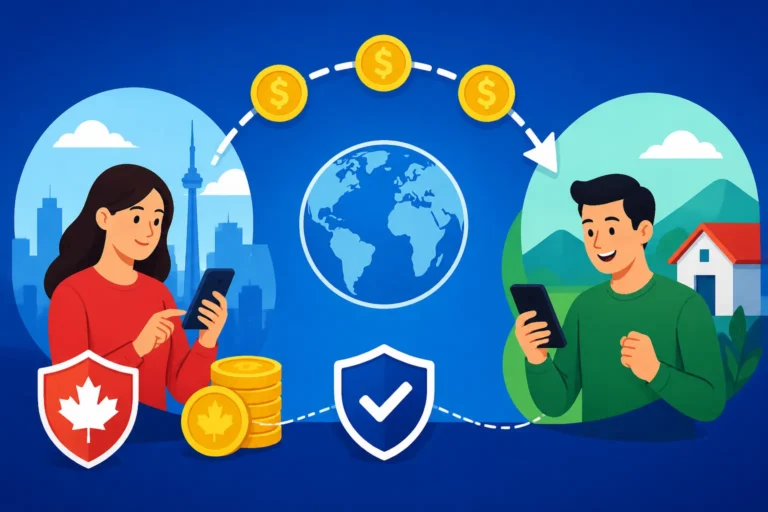
One of the first things many newcomers need to do is transfer funds from their home country to their new Canadian account. Banks are notorious for high exchange rates and hidden fees for international wire transfers. It's a painful lesson many of us learn the hard way.
Instead of traditional bank wires, I highly recommend using specialized money transfer services. Companies like Wise (formerly TransferWise) have revolutionized international transfers. They offer much more competitive exchange rates and transparent, low fees, often saving you a significant amount compared to what the traditional banks charge. You simply link your bank accounts (foreign and Canadian) and initiate the transfer online. The funds usually arrive within a few business days. This isn't a minor point; over time, the savings can really add up, especially if you're bringing over a substantial amount or making regular transfers. Explore options for sending and receiving money by looking at How to Transfer Money Into and Out of Canada as a Newcomer.
Building Credit and Financial Stability in Canada
This is a big one, and often overlooked by newcomers. Your credit history from your home country generally doesn't transfer to Canada. This means that even if you had excellent credit back home, you're starting from scratch here. A good Canadian credit score is essential for almost everything: renting an apartment, getting a phone contract, securing a mortgage, or even buying a car.
Here’s how you can start building that crucial credit history:
- Secured Credit Cards: Many banks offer secured credit cards to newcomers. You provide a deposit (e.g., $500), which becomes your credit limit. This de-risks it for the bank. Use it responsibly and pay off your balance in full every month, and your credit score will slowly build.
- Newcomer Credit Card Offers: Some newcomer banking packages include access to a no-fee credit card without requiring a deposit, based on your immigration status and income potential. Always ask about this when you open your account.
- Apply for a Small Loan: Once you have some stable income, consider applying for a small, easily repayable loan (e.g., $1,000). Paying it off consistently demonstrates reliability.
- Utility Payments: While utilities don't always build credit directly, paying them on time prevents negative marks that can harm your score.
- Rent Reporting: Some services allow you to report your rent payments to credit bureaus, which can help build your score. Check with your landlord or a credit counseling agency.
Building credit takes time and discipline, so start early. Read How to Build a Credit Score as a Newcomer in Canada and How Do I Apply for a Credit Card as a Newcomer in Canada? for more in-depth advice.
Common Banking Hurdles and How to Overcome Them
Even after your account is open, you might encounter some common bumps in the road.
- Understanding Fees: Always read the fine print. Are there fees for exceeding transaction limits? For e-Transfers? For specific types of withdrawals? If your newcomer package offers fee waivers, know when they expire and what the fees will be afterward. Don't be afraid to switch to a different account type if your needs change or if you find a better deal elsewhere.
- Navigating Online Bill Payments: Canada relies heavily on online bill payments through your bank. You’ll need to add payees (e.g., your landlord, utility companies) to your online banking portal. Make sure you have the correct account numbers for these services.
- Taxes and Financial Planning: As a newcomer, your tax situation can be more complex, especially if you have foreign income or assets. Understanding your tax residency is paramount, as it dictates what income you need to report to the Canada Revenue Agency (CRA). While this guide focuses on banking, remember that your financial decisions are interconnected. Services like Taxes for Expats specialize in helping individuals with cross-border tax issues, which can be invaluable for ensuring you're compliant with both Canadian and your home country's tax laws. It's a good idea to understand Tax Residency in Canada: A Definitive Guide for Newcomers (2027) and Filing Your Tax Return with the CRA in Canada: The Complete Walkthrough (2027) as you settle in. Even knowing How Much Income Tax Will I Pay in Canada in 2026? can help you plan your finances more effectively.
- Customer Service: Don't hesitate to call your bank's customer service or visit a branch if you have questions or encounter issues. They are there to help, and it's always better to clarify than to make an assumption that could cost you money.
Remember, the Canadian financial system can feel like a maze at first, but with patience, preparation, and by leveraging the resources available, you'll soon be navigating it like a pro.
Disclaimer
The information provided in this guide is intended for general informational purposes only and does not constitute financial, legal, or professional advice. While we strive to keep the information up-to-date and accurate, policies and regulations in Canada, particularly those related to banking and immigration, can change frequently. It is always recommended to consult with a qualified financial advisor, banking professional, or immigration consultant for advice tailored to your specific situation. We cannot be held responsible for any losses or damages incurred as a result of relying on this information.