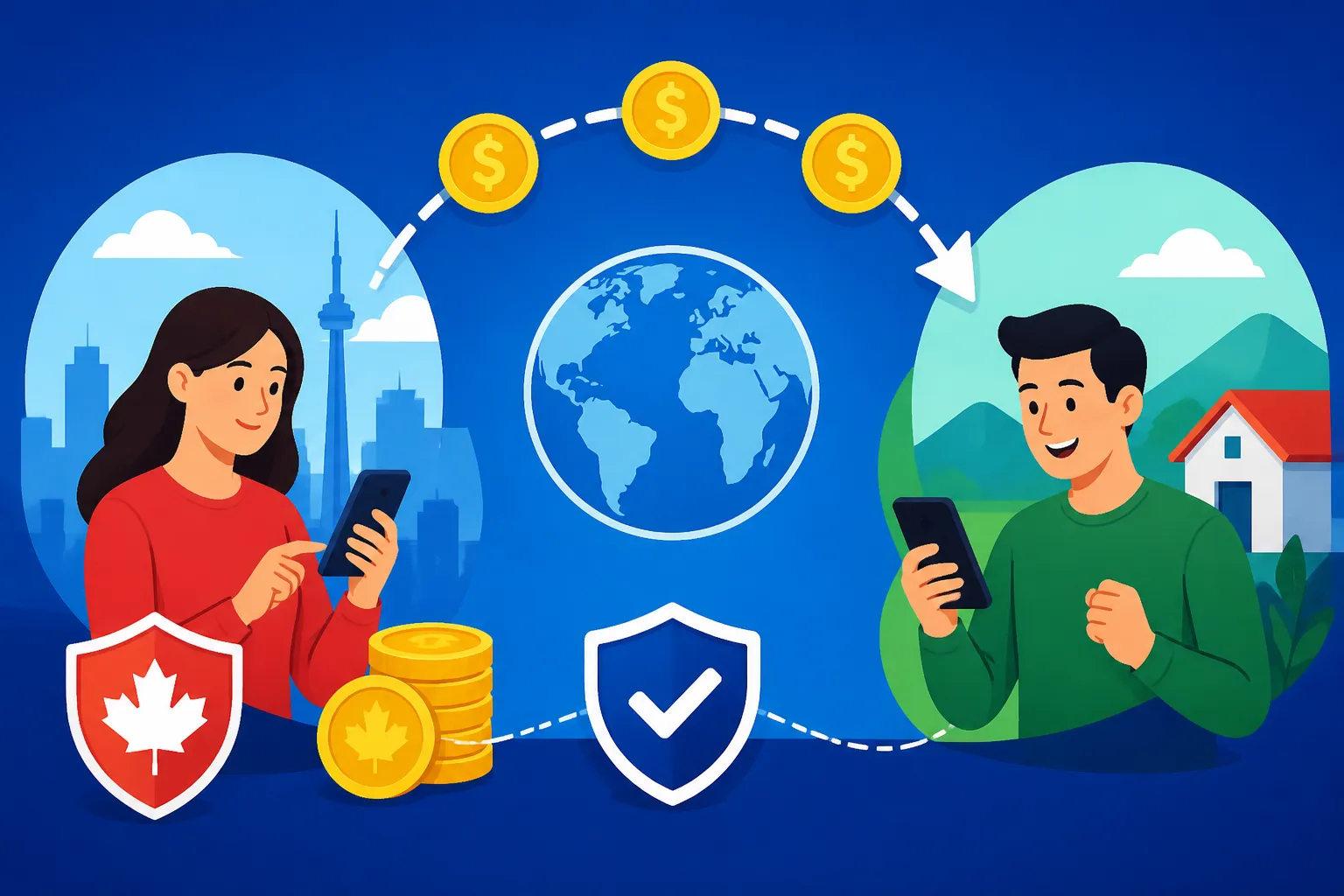
What Is the Best Way to Send Money Abroad from Canada?
Sending money home from Canada can feel like navigating a maze blindfolded, especially when you're just trying to support family, pay bills, or manage investments back in your home country. You're probably already dealing with the complexities of Canadian life, and adding opaque exchange rates, hidden fees, and confusing transfer methods to the mix is the last thing you need. This comprehensive guide is here to cut through the confusion, break down the various options, and help you find the absolute best, most cost-effective way to get your hard-earned Canadian dollars where they need to go, with minimal fuss and maximum transparency.
Understanding the Financial Landscape for Overseas Transfers from Canada
When you first arrive in Canada, setting up your local finances is usually the immediate priority. You open a bank account, get your SIN, and start earning. But eventually, the need arises to send funds back home, and that's when many newcomers hit their first wall of frustration. It's not as simple as clicking a button sometimes, and the sheer number of options can be overwhelming, each with its own quirks and costs.
Why Sending Money from Canada Can Be Tricky for Expats
As an expat, you're not just sending money; you're often bridging two different financial systems, dealing with varying regulations, and trying to predict fluctuating exchange rates. Canadian banks, while reliable for domestic transactions, might not always offer the most competitive rates or the lowest fees for international transfers. You might find yourself comparing a dizzying array of percentages, flat fees, and mysterious "conversion rate markups" that eat into your send amount.
The primary challenge often boils down to transparency. Many traditional institutions might not show you the exact amount your recipient will receive until the very last step, or they bury the true cost within a less-than-ffavourable exchange rate. This lack of clarity can be particularly vexing when every dollar counts, and you want to ensure your family gets as much of it as possible. Moreover, the speed of transfer can also be a critical factor, especially in emergencies, and not all methods are created equal in this regard.
The Impact of Exchange Rates and Hidden Fees
Exchange rates are the silent killers of international money transfers. A seemingly small difference of a few cents per dollar can add up to a significant loss when you're sending larger sums. Banks often use their own "retail" exchange rates, which are typically less favourable than the mid-market rate you'd see on Google. This difference, though often not explicitly labelled as a fee, is revenue for them and a cost to you.
Beyond the exchange rate, you'll encounter various explicit fees: transfer fees, intermediary bank fees, and sometimes even receiving bank fees. These can range from a few dollars for smaller transfers to upwards of $50 or more for larger wire transfers. It's crucial to understand that sometimes, even if your Canadian bank charges a low sending fee, an intermediary bank along the way, or the recipient's bank, might impose additional charges, further eroding the amount that actually arrives. This is a common pain point for expats who just want a straightforward, predictable transaction.
Traditional Banking Methods for International Transfers
Before the rise of specialized online services, traditional banks were often the go-to for sending money abroad. They still offer these services, and for some, the familiarity and perceived security of their own bank might be a comfort, despite the potential drawbacks.
Wire Transfers through Canadian Banks
A wire transfer, often referred to as a SWIFT transfer, is a long-standing method for sending money internationally through your bank. Major Canadian banks like RBC, TD, CIBC, Scotiabank, and BMO all offer this service. It's essentially an electronic transfer of funds from your bank account to an overseas bank account, facilitated by a global network.
The process typically involves providing your bank with the recipient's full banking details, including their bank name, address, account number, and the all-important SWIFT/BIC code. You'll also need their full name and address. Wire transfers are generally reliable and secure, making them suitable for larger sums where peace of mind is paramount. However, this convenience often comes at a cost. Fees can range from $30 to $50 per transfer, and as mentioned earlier, intermediary banks can add their own charges, meaning the final amount received might be less than anticipated. The exchange rate offered will also be the bank's own rate, which, more often than not, won't be the most competitive on the market. Furthermore, the transfer speed can vary, usually taking 2-5 business days, sometimes longer for less common corridors or specific banking systems.
International Money Orders and Bank Drafts
For those who prefer a more "physical" method, international money orders and bank drafts (also known as cashier's cheques) are still options provided by Canadian banks and Canada Post. These are essentially pre-paid cheques issued by your bank, denominated in Canadian dollars or sometimes a foreign currency, that the recipient can then cash or deposit in their local bank.
While they offer a tangible form of payment, they are significantly slower than electronic methods. Mailing a bank draft overseas can take weeks, and there's always a risk of loss in transit, though they can often be cancelled and reissued if lost. The fees for issuing these can be less than a wire transfer, usually in the $10-$20 range, but the exchange rate conversion will again be at the bank's discretion, and the recipient's bank might charge a fee to cash or deposit it. For expats looking for quick, efficient, and cost-effective ways to send money regularly, these methods are generally not recommended due to their slowness, potential for loss, and often unfavourable exchange rates.
Specialized Online Money Transfer Services
This is where the magic really happens for most expats. In recent years, a whole industry has bloomed around making international money transfers faster, cheaper, and more transparent. These services often leverage technology to cut down on overheads and offer better exchange rates than traditional banks.
The Rise of Digital Platforms and Their Advantages
Online money transfer services have fundamentally changed the game, particularly for those of us living abroad. Platforms like Wise (formerly TransferWise), Remitly, Xoom (a PayPal service), and WorldRemit are designed specifically for international remittances, focusing on lower fees and more competitive exchange rates. Their business model is often built on moving money smartly across borders, sometimes using local bank accounts in both the sending and receiving countries, which helps to bypass costly international SWIFT networks.
The main advantages are clear: transparency, speed, and cost-effectiveness. These platforms typically show you the exact exchange rate they're using (often very close to the mid-market rate), all fees upfront, and the precise amount your recipient will receive. Transfers can often be completed within minutes or hours, depending on the destination and the method chosen (e.g., bank deposit, mobile wallet, cash pickup). For anyone looking to reliably and affordably send funds home, understanding How to Transfer Money Into and Out of Canada as a Newcomer is essential, and these digital platforms are often the answer.
Key Players in the Online Transfer Market
Let's dive into some of the more prominent names you'll encounter:
-
Wise (formerly TransferWise): This service is a perennial favourite among expats, and for good reason. Wise is known for its commitment to transparency, showing you the real mid-market exchange rate and a small, upfront fee. They often boast some of the most competitive rates on the market, meaning more money reaches your recipient. They offer transfers to bank accounts in a vast number of countries, often with very fast delivery times, sometimes even instant. Many expats rely on their multi-currency accounts and debit cards as well, making managing international finances much simpler. If you're looking to minimize costs and maximize transparency, Wise is an excellent option to consider.
-
Remitly: Specializing in remittances to specific countries, often developing nations, Remitly offers competitive rates and various delivery options, including bank deposit, cash pickup, and mobile money. They often have promotional rates for first-time transfers, which can be very attractive. Their fee structure can vary based on the amount and delivery speed you choose.
-
Xoom (a PayPal service): If you're already familiar with PayPal, Xoom offers a similar ease of use for international transfers. They provide options for bank deposits, cash pickups, and even home delivery in some regions. While generally reliable, their exchange rates and fees can sometimes be slightly less competitive than other dedicated services, so it's always worth comparing.
-
WorldRemit: This platform focuses on offering a wide range of payout options globally, including bank transfers, cash pickup, mobile money, and airtime top-ups. They are popular for sending money to Africa, Asia, and Latin America, often offering competitive rates and low fees.
Each service has its strengths, and the "best" one often depends on the specific country you're sending money to, the amount, the desired speed, and the current exchange rates they're offering. It's wise to compare a few options before each transfer, especially for larger sums.
Alternative Methods and Niche Cases
While traditional banks and online transfer services cover the vast majority of needs, there are a few other methods and considerations, particularly for specialized situations.
Cryptocurrency and Blockchain Transfers
For the more tech-savvy expat, cryptocurrency offers an intriguing, albeit more complex, alternative. By converting Canadian dollars into a stablecoin (like USDC or USDT) or a major cryptocurrency (like Bitcoin or Ethereum), transferring it across borders, and then converting it back into local currency, it's theoretically possible to send money internationally with very low transaction fees and high speed.
However, this method comes with significant caveats. The volatility of cryptocurrencies themselves can be a major risk, as the value could fluctuate wildly during the transfer process. It also requires both the sender and receiver to be comfortable with cryptocurrency wallets and exchanges, which isn't always feasible. Furthermore, the regulatory landscape for crypto is still evolving, and in Canada, specific reporting requirements apply to cryptocurrency transactions. For most expats, the complexity and risk associated with crypto transfers outweigh the benefits for regular remittances. It's definitely a niche option for now, not a mainstream solution.
Peer-to-Peer Platforms and Cash Pick-Up Services
Some services operate on a peer-to-peer (P2P) model or focus heavily on cash pick-up options, which can be vital for recipients who don't have easy access to bank accounts. Services like Western Union and MoneyGram, for example, have extensive agent networks worldwide where recipients can collect cash shortly after it's sent.
While incredibly convenient for cash collection, these services often come with higher fees and less favourable exchange rates compared to bank-to-bank transfers offered by online platforms. The convenience for the receiver often means a higher cost for the sender. Peer-to-peer platforms can also refer to apps like Interac e-Transfer for domestic Canadian transfers, but for international P2P, the options usually integrate with online services. For example, some platforms might allow you to send money to a mobile wallet in another country, directly to someone's phone, which is a form of P2P. For everyday international transfers, most expats find the digital bank-to-bank solutions more economical.
Large Sum Transfers and Tax Implications
When sending substantial amounts of money abroad, the considerations shift. While online services like Wise can handle large transfers, it's crucial to be aware of potential reporting requirements in both Canada and the receiving country. For instance, in Canada, financial institutions are required to report transactions over a certain threshold (e.g., $10,000 CAD) to FINTRAC (Financial Transactions and Reports Analysis Centre of Canada) as part of anti-money laundering efforts. This is a routine reporting measure and not necessarily an indication of suspicion, but it’s something to be aware of.
More importantly, you should consider any tax implications of sending large sums, both for yourself and your recipient. While simply moving your own money internationally usually doesn't trigger income tax for you, if the funds are considered a gift or inheritance in the receiving country, or if they are related to business income, there could be tax consequences for the recipient. It's always wise for expats to have a clear understanding of their Tax Residency in Canada: A Definitive Guide for Newcomers (2027) and how their international financial activities intersect with Canadian tax laws. Services like Taxes for Expats specialize in helping individuals navigate the complexities of cross-border taxation, ensuring you're compliant and avoid any unwelcome surprises. For truly massive transfers, a bank wire might still be preferred by some for the direct institutional oversight, but again, the fees and rates should be carefully scrutinized.
Key Considerations Before You Send Money Abroad
Navigating the world of international money transfers requires a bit of homework each time. The landscape can change, and what was the best option last month might not be today. Here's what you should always keep in mind.
Exchange Rates and Fees: The Real Cost
Never just look at the upfront transfer fee. The exchange rate is often where the real cost is hidden. Always compare the rate offered by your bank or service against the mid-market rate (the one you see on Google or Reuters). The closer the offered rate is to the mid-market rate, the better deal you're getting. Many online services pride themselves on offering very close to the mid-market rate, charging a small, transparent fee instead.
Let's say you want to send $1,000 CAD home.
- Bank A might charge a $25 fee but give you an exchange rate of 1 CAD = 0.72 EUR.
- Service B (e.g., Wise) might charge a $10 fee but give you an exchange rate of 1 CAD = 0.74 EUR.
In this scenario, even with a slightly higher fee, Service B is likely to deliver significantly more Euros to your recipient due to the better exchange rate. Always use an online calculator provided by the service to see the exact amount your recipient will get. This is the only way to truly compare "apples to apples." If you're pondering How Much Does Private Health Insurance Cost in Canada in 2026?, you'd compare costs directly, and the same principle applies to money transfers.
Transfer Limits, Speed, and Delivery Options
Different services have different limits on how much you can send in a single transaction or over a certain period. Some services might have lower limits for cash pickup options versus bank transfers. Make sure the service you choose can accommodate the amount you intend to send.
Speed is another critical factor. If you're in a hurry, look for services that offer "instant" or "same-day" transfers, though these might sometimes come with slightly higher fees. Bank wires can take several days, while many online platforms can complete transfers within hours, or even minutes, depending on the destination and method.
Also, consider the delivery options available to your recipient. Do they need cash? A bank deposit? Or can they receive money directly into a mobile wallet? The best service for you will be one that offers convenient and accessible delivery methods for your family or contacts abroad.
Security and Reliability of the Service
When your hard-earned money is on the line, security is non-negotiable. Ensure that any service you use is properly regulated and licensed in Canada. Look for information on their website about how they protect your funds and data. Most reputable online transfer services employ bank-level security measures, including encryption and two-factor authentication.
Check customer reviews and ratings on independent platforms like Trustpilot. A history of reliable service and responsive customer support is a good indicator. While traditional banks offer inherent reliability, the newer online services have built their reputations on secure, fast, and transparent transactions. You should also ensure you're familiar with how to protect yourself against scams, which unfortunately target international money transfers. When you're managing your finances as an expat, even something as simple as How to Open a Bank Account at a Canadian Bank as a Newcomer is a step toward secure financial footing.
Here's a quick comparison of common money transfer methods:
| Method | Typical Exchange Rate | Typical Fees (CAD) | Speed (Estimated) | Convenience | Best For |
|---|---|---|---|---|---|
| Canadian Bank Wire Transfer | Retail (less favorable) | $30 – $50 (plus hidden) | 2-5 Business Days | Low | Large, infrequent transfers where security is paramount, despite cost |
| International Bank Draft | Retail (less favorable) | $10 – $20 | 1-3 Weeks (Mailing) | Very Low | Small, non-urgent physical payments |
| Online Transfer Services (e.g., Wise) | Near Mid-Market (favorable) | 0.5% – 2% (transparent) | Minutes – 1 Business Day | High | Regular remittances, cost-conscious transfers, managing What Is the Best Multi-Currency Account in Canada? |
| Cash Pickup Services (e.g., Western Union) | Varies (often less favorable) | Higher flat fees | Minutes – Hours | High (for recipient) | Urgent cash needs where recipient lacks a bank account |
| Cryptocurrency | Highly Volatile | Variable (low network fees) | Minutes | Very Low (complex) | Highly tech-savvy users for experimental/niche transfers |
Ultimately, the best way to send money abroad from Canada will depend on your specific needs, the destination, the amount, and how quickly it needs to arrive. Take the time to compare your options, and you'll find a solution that works best for you and your recipients.
Disclaimer
The information provided in this guide is for general informational purposes only and does not constitute financial, legal, or tax advice. While we strive to keep the information up-to-date and accurate, regulations, fees, and exchange rates can change rapidly. Always consult with a qualified professional for advice tailored to your specific situation and verify current rates and terms directly with service providers before making any transactions.