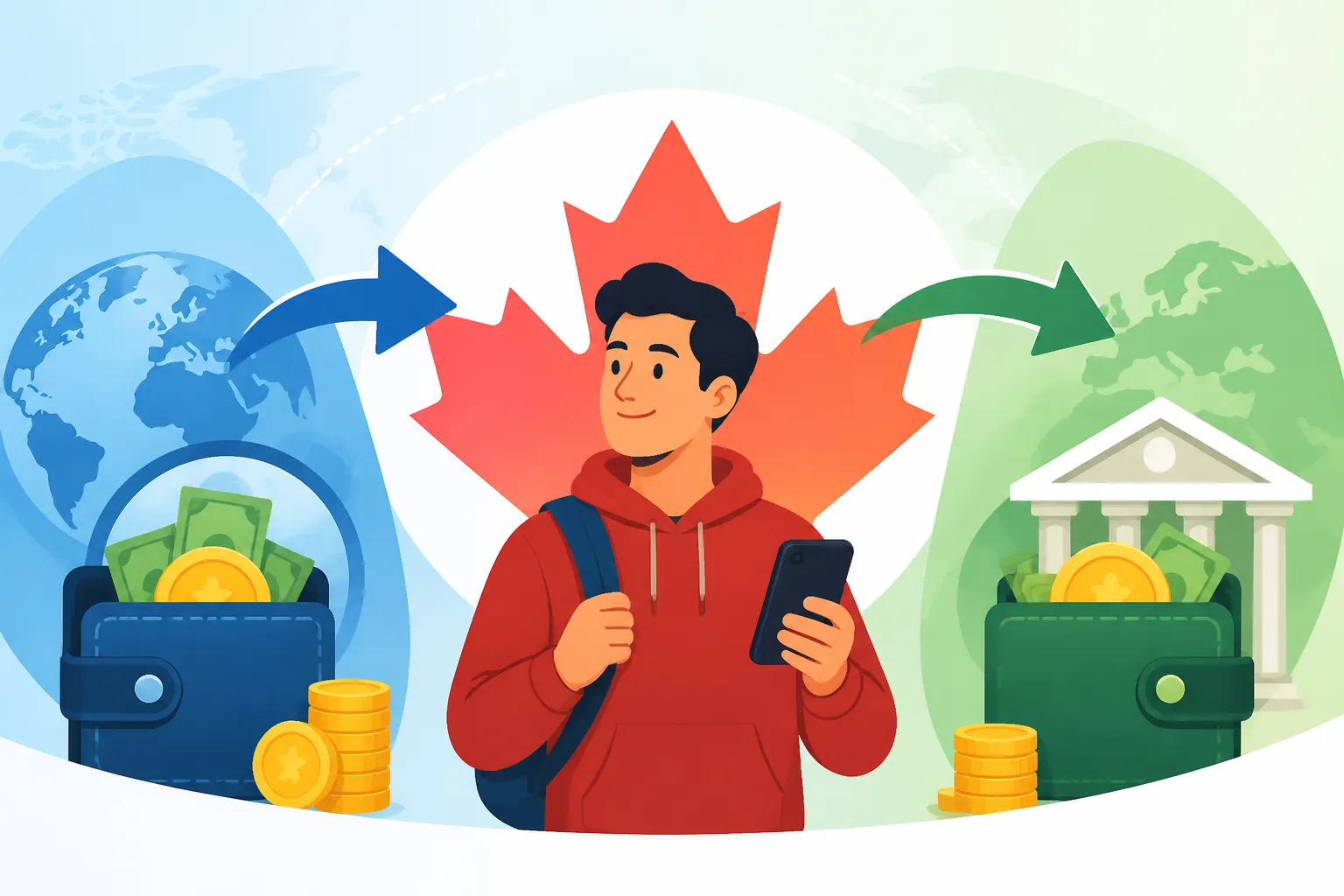
How to Transfer Money Into and Out of Canada as a Newcomer
Moving to a new country like Canada is exciting, but let's be honest, the logistics can be a real headache. One of the biggest stressors for newcomers often revolves around money – specifically, how to transfer your hard-earned funds into Canada and, just as crucially, how to send money back home to family or for other commitments without losing a fortune in fees and terrible exchange rates. This guide will walk you through the labyrinthine world of international money transfers, offering realistic advice and practical strategies to make your money move efficiently and affordably.
The Initial Hurdle: Why International Money Transfers Feel Like a Maze
When you first arrive in Canada, everything feels new, and dealing with your finances across borders can feel like an extra layer of complexity you really don't need. It’s not just about moving numbers from one account to another; it's about navigating different currencies, understanding banking systems, and grappling with fees that seem to pop up out of nowhere. Many newcomers find themselves losing significant portions of their money to unfavorable exchange rates or unexpected charges, simply because they weren't aware of the better options available.
Understanding the "Newcomer Penalty"
It’s an unspoken truth that newcomers often face what I like to call the "newcomer penalty" when it comes to financial services. You're trying to establish yourself, often without a local credit history, and that can sometimes mean limited options or less favorable terms with traditional institutions. Banks might offer you standard, often less competitive, exchange rates and fixed fees for international transfers, simply because they know you might not have explored alternatives yet. The fear of hidden fees, slow processing times, and stringent bank requirements can be genuinely anxiety-inducing, especially when you're dealing with significant sums of money.
Imagine you've just landed, secured your first apartment, and now you need to transfer your life savings from your home country to your new Canadian bank account. You go to your bank, initiate a wire transfer, and days later, the amount that lands in your Canadian account is noticeably less than you expected. You then try to send some money back home to your parents, only to find the bank charges another hefty fee, and the exchange rate they give you is far from what you saw online. This isn't an uncommon scenario, and it's precisely why understanding your options from the get-go is so vital. It’s about empowering yourself with knowledge to make informed decisions and keep more of your money where it belongs – with you.
Common Scenarios for Newcomers
Your reasons for transferring money might vary, but some situations are almost universal among newcomers to Canada. Perhaps the most immediate need is bringing your initial settlement funds. This is the money you need to cover your first few months of rent, groceries, transportation, and other essential setup costs before your Canadian income starts flowing in consistently. Getting this right can set a positive financial tone for your entire Canadian journey.
Beyond the initial move, many expats find themselves needing to send money back home regularly. This could be to support family members, pay off debts in your home country, or manage investments you still hold abroad. For instance, you might be sending funds to your parents for their medical expenses or to help your siblings with their education. Then there are other less frequent but equally important transfers, such as paying tuition fees for international education if you have family studying abroad, or even repatriating funds if you decide to move assets back to your home country after a period in Canada. Each of these scenarios presents its own set of challenges and requires a thoughtful approach to ensure efficiency and cost-effectiveness.
Traditional Banking: Familiar but Often Costly
For many, the first thought for international money transfers is to simply use their existing bank. It feels safe and familiar, which is a huge comfort when you’re navigating so much newness. You probably already have an account with one of the "Big Five" Canadian banks – RBC, TD, Scotiabank, CIBC, or BMO – after following steps like those outlined in How to Open a Bank Account at a Canadian Bank as a Newcomer. While these institutions offer international transfer services, it’s crucial to understand their mechanisms and potential drawbacks before committing.
Wire Transfers Through Canadian Banks
Wire transfers, specifically SWIFT (Society for Worldwide Interbank Financial Telecommunication) transfers, are the most common method offered by traditional banks. To initiate one, you’ll need a fair bit of information: the recipient’s full name and address, their bank’s name and address, their account number, and crucially, the bank’s SWIFT/BIC (Bank Identifier Code). If you’re sending money within Canada, you'll need the institution number, transit number, and account number.
The process typically involves filling out a form, either online or in person at a branch. Fees for sending a wire transfer from a Canadian bank can range from $30 to $50 CAD per transaction. What often catches people off guard are the receiving fees, which can also be charged by the recipient's bank, sometimes another $10 to $20. Plus, if the transfer goes through multiple intermediary banks, each might take a cut, further reducing the amount that ultimately reaches your loved one. The speed isn’t always instant either; expect transfers to take anywhere from 2 to 5 business days, sometimes longer, depending on the countries involved and the number of banks in the chain. During this time, the funds are in transit, and you often have little visibility into their exact location.
Bank Drafts and Money Orders
For larger, less frequent transfers, especially when you're bringing your initial funds into Canada or making a significant payment like a property purchase, bank drafts (also known as cashier's cheques) or money orders can be an option. A bank draft is essentially a cheque issued by a bank, guaranteeing the funds. You purchase it from your bank, and it’s drawn on the bank’s own funds, making it highly secure. You can then physically carry it with you or send it via secure mail.
The main advantage here is security and the fact that the funds are guaranteed. This method is often preferred for things like a down payment on a house or a large investment, where you need absolute assurance that the payment won't bounce. However, they come with their own set of inconveniences. They are inherently slower than electronic transfers, as they require physical delivery and then a clearing period once deposited. The fees can also be substantial, often $10 to $20 per draft, not including any courier costs. And if it's lost or stolen, cancelling and reissuing can be a lengthy and complicated process. This isn't a method you'd use for regular remittances or urgent payments, but it certainly has its niche for significant, planned transfers.
The Hidden Costs of Bank Transfers
The explicit fees for wire transfers and drafts are just the tip of the iceberg. The real "hidden cost" often lies in the exchange rate. When you send money internationally through a traditional bank, they rarely give you the true mid-market rate – the rate you see on Google or Reuters. Instead, they apply a "spread" or a markup, which is the difference between the mid-market rate and the rate they offer you. This spread can easily be 2-5% on top of the stated transfer fee.
For example, if the mid-market rate between CAD and your home currency is 1.00, your bank might offer you 0.98 or 0.97. This seemingly small difference can add up significantly on larger transfers. For a transfer of $10,000 CAD, a 2% spread means you're effectively losing $200 before any explicit fees are even applied. This profit margin for the bank can be a major drain on your funds over time. Additionally, as mentioned, correspondent bank fees can unexpectedly eat into the transferred amount. These are charges levied by intermediary banks that facilitate the transfer between your bank and the recipient's bank, especially when direct relationships aren't in place. You initiate a transfer for X amount, pay your bank a fee, and then the recipient gets X minus the intermediary bank’s fees, leaving both you and your recipient feeling a bit short-changed.
Modern Solutions: Faster, Cheaper, and More Transparent
Thankfully, the financial landscape has evolved, and there are now many excellent alternatives to traditional bank transfers that offer better rates, lower fees, and much greater transparency. These modern online money transfer services have become a lifeline for expats and anyone needing to move money across borders frequently or in significant amounts.
Online Money Transfer Services: The Game Changers
These digital platforms have revolutionized how we send and receive money internationally. Their core appeal lies in offering exchange rates that are much closer to the true mid-market rate, combined with transparent, often lower, fees. Unlike traditional banks that rely on the SWIFT network, many of these services use a different model. They have local bank accounts in multiple countries. When you send money from Canada, you transfer funds to their Canadian account, and then they pay out the equivalent amount from their local account in the recipient's country. This bypasses the complex, costly, and slow SWIFT network, making transfers faster and cheaper.
One of the most prominent and widely trusted services in this space is Wise (formerly TransferWise). Wise has built its reputation on transparency, showing you exactly how much you'll pay in fees and the precise exchange rate you'll receive upfront. There are no hidden markups on the exchange rate; they use the real mid-market rate and charge a small, upfront fee that's clearly displayed. This approach has resonated deeply with expats because it eliminates the uncertainty and frustration often associated with bank transfers. For a newcomer juggling multiple financial tasks, like setting up utilities or understanding The Complete Guide to Taxes in Canada for Newcomers (2027), having a straightforward money transfer option is a huge relief.
Other Popular Online Platforms
While Wise is certainly a leader, several other online platforms cater to various needs and destinations, each with its own strengths. Remitly, for example, is often favored for sending remittances to specific developing countries, offering competitive rates and quick transfers, sometimes even enabling cash pickup options for recipients. Xoom, a PayPal service, offers fast transfers to bank accounts, debit cards, and cash pickup locations globally, making it a convenient choice if you already have a PayPal account. OFX is a strong contender for larger transfers, often waiving transfer fees for amounts over a certain threshold and providing excellent customer service, including dedicated account managers who can help lock in rates. WorldRemit also offers a wide range of payout options, including bank deposits, cash pickup, mobile money, and airtime top-up, which can be incredibly useful depending on your recipient's location and access to banking infrastructure.
When choosing a service, it’s always a good idea to compare a few options for your specific transfer needs, considering the recipient country, the amount, and the desired speed. What works best for sending a small amount to one country might not be the most economical for a large transfer to another. Many of these services also offer mobile apps, making it incredibly convenient to send money on the go, a feature that traditional banks are slowly catching up to but often lack the seamless user experience of the dedicated money transfer platforms.
Setting Up Your Account: What You'll Need
Getting started with an online money transfer service is generally straightforward, but it does require some initial setup and verification, especially given financial regulations designed to prevent fraud and money laundering. You'll typically need to provide proof of identity, which could be your Canadian permanent resident card, work permit, or even your international passport and visa. This is a standard Know Your Customer (KYC) process, similar to what you'd go through when you How to Open a Bank Account at a Canadian Bank as a Newcomer.
After identity verification, you'll need to link a funding method. This usually involves connecting your Canadian bank account (using your institution and transit numbers, along with your account number), a debit card, or sometimes a credit card (though credit card payments often incur higher fees). The service will guide you through this, usually with clear instructions. Most platforms also have daily, weekly, or monthly transfer limits, which might be lower when you first start but can be increased once you establish a transaction history and potentially provide additional verification. Understanding these limits is crucial, particularly if you’re planning to transfer a large sum like your initial settlement funds. Always check the specific requirements and limits of your chosen provider to avoid any surprises.
Exchange Rates, Fees, and Hidden Traps: What to Watch For
Navigating international money transfers successfully boils down to understanding the two main components: the exchange rate and the fees. Banks and transfer services make money on both, but their transparency and generosity vary wildly. Knowing what to look for can save you a significant amount.
Demystifying Exchange Rates
The exchange rate is arguably the most critical factor in international money transfers. When you look up a currency conversion on Google or Reuters, you're seeing the mid-market rate. This is the true rate, the midpoint between the buying and selling prices of two currencies on the global market. It’s the rate banks use when trading among themselves. For you, the customer, however, banks and many traditional transfer services rarely offer this rate. Instead, they add a spread or a hidden markup to their rates.
This is where services like Wise truly shine. They pride themselves on providing the mid-market rate and charging a separate, explicit fee. This transparency allows you to see exactly how much your money is worth and how much you're paying for the service. For instance, if you’re converting Canadian Dollars to Euros, Wise will show you the exact interbank rate at that moment, then calculate a small fee based on the amount. Compare this to a bank that might show "no fees" but offer you a rate that's 2-3% less favourable than the mid-market, effectively charging you more in a less obvious way. The impact of exchange rate volatility is also something to consider. Currency markets fluctuate constantly. If you don't need to make an urgent transfer, monitoring the rates and waiting for a favorable movement can result in substantial savings, especially for larger amounts.
Understanding Different Fee Structures
Beyond the exchange rate, fees come in various forms, and understanding them is key to choosing the most cost-effective method.
- Fixed Fees: Many banks and some online services charge a flat fee per transaction, regardless of the amount. For instance, a bank might charge $35 for any wire transfer, whether it's $100 or $10,000. This structure can be expensive for small transfers but might become more economical for very large transfers compared to percentage-based fees.
- Percentage-Based Fees: Most online money transfer services, including Wise, charge a percentage of the amount being sent, often with a small minimum fixed component. This means the fee scales with the amount, making it generally fairer for various transfer sizes. For example, a service might charge 0.5% of the amount, plus a small fixed fee.
- No-Fee Services (with a catch): Be wary of services that advertise "zero fees." While tempting, this usually means they are making their profit by baking a larger spread into their exchange rate. You're still paying a fee; it's just hidden from plain sight, often resulting in a worse overall deal than transparent, low-fee options.
Let's illustrate with an example. Suppose you need to send $1,000 CAD to your family.
- Bank A (Fixed Fee + Spread): Charges $30 fee + 2% exchange rate spread. You pay $30, and $20 is lost in the rate, totaling $50 in costs.
- Online Service B (Percentage Fee, Mid-Market Rate): Charges 0.8% fee, uses mid-market rate. You pay $8 in fees, with no hidden exchange rate costs.
Clearly, comparing these structures is crucial. For small, frequent transfers, percentage-based fees with transparent rates are usually better. For very large, one-off transfers, sometimes a fixed-fee service with a reasonable spread might compete, but it's rare.
Avoiding Hidden Traps and Scams
Unfortunately, where money flows, scammers often lurk. As a newcomer, you might be particularly vulnerable if you’re unfamiliar with local practices or feeling overwhelmed. Always be vigilant.
- Unsolicited Offers: Be extremely cautious of emails, texts, or calls promising unusually high returns or asking you to transfer money to an unknown recipient, especially if they create a sense of urgency. Genuine financial institutions will never ask you for your full banking password or PIN via email or phone.
- Phishing Attempts: Always double-check the sender's email address and the URL of any financial website before logging in. Scammers often create fake websites that look identical to legitimate ones to steal your credentials.
- Double-Check Recipient Details: This might seem obvious, but a simple typo in an account number or name can lead to your money going to the wrong person – and recovering it can be incredibly difficult, if not impossible. Always verify the recipient’s bank account details directly with them through a separate, secure communication channel (e.g., a phone call).
- Legitimacy of Services: Stick to well-known, regulated money transfer services. In Canada, financial institutions are regulated, and reputable online services comply with these regulations. A quick search for reviews and regulatory information can often reveal if a service is legitimate or a potential risk. Protect your personal and financial information at all costs.
Transferring Large Sums: Special Considerations
Moving a substantial amount of money, like your life savings, across international borders comes with its own set of rules and important considerations, particularly around reporting and potential tax implications. It’s not just about finding the cheapest way to send it; it’s about doing it correctly and compliantly.
Bringing Your Initial Settlement Funds to Canada
For many newcomers, a significant challenge is getting their initial settlement funds from their home country into Canada. You need this money to establish yourself, pay for housing deposits (like those mentioned in How to Sign a Lease and Pay a Deposit in Canada), purchase essentials, and generally get on your feet before your first Canadian paycheck arrives.
The most common methods for transferring large sums include wire transfers through banks or online money transfer services, and bank drafts. While traditional wire transfers can be costly, they offer a direct route for large amounts. Online services like Wise or OFX can offer more competitive exchange rates and lower overall fees for large transfers, often making them the preferred choice. For example, if you're bringing $50,000 CAD, the difference in the exchange rate spread between a bank and an online service could mean hundreds of dollars in your pocket.
It’s also important to remember the rules around bringing physical cash into Canada. If you arrive in Canada carrying cash or monetary instruments (like cheques, money orders, or bank drafts) worth $10,000 CAD or more, you must declare it to the Canada Border Services Agency (CBSA) upon entry. This isn't a tax; it’s a reporting requirement designed to prevent money laundering and terrorist financing. Failing to declare it can lead to seizure of the funds and potential penalties. So, while carrying a small amount of cash for immediate needs is fine, large sums are best moved electronically or via declared bank drafts.
Tax Implications for Large Transfers
Here's a crucial point that often causes confusion: generally, transferring money from one bank account to another, even internationally, is not a taxable event in itself in Canada. The Canadian government doesn't tax the act of moving your own money. However, the source of those funds, or any income generated from those funds, might have tax implications. This is where newcomers often need to pay close attention to The Complete Guide to Taxes in Canada for Newcomers (2027).
For example, if you transfer your savings that you accumulated and paid taxes on in your home country, Canada won't tax that capital again. However, if those funds were, say, the proceeds from the sale of a property abroad, there could be capital gains implications in Canada depending on your tax residency status at the time of the sale and whether it was your principal residence. Similarly, if you bring over a large sum and then invest it in Canada, any interest, dividends, or capital gains earned on those investments after you become a Canadian tax resident would be taxable in Canada. This is a complex area, and Understanding Tax Residency Rules and Residential Ties in Canada is vital.
For those with significant assets or complex financial situations abroad, especially those with foreign property, it’s highly advisable to consult with a tax professional specializing in international taxation for expats. Services like Taxes for Expats can provide invaluable guidance on how to navigate the intricacies of Canadian tax law concerning foreign assets and income, ensuring you comply with reporting requirements like the T1135 form for Understanding Reporting Foreign Property (T1135) in Canada without incurring unnecessary tax liabilities or penalties. Remember, while bringing your own money into Canada isn't taxed, mismanaging the reporting or failing to understand the tax implications of the source of those funds could lead to headaches down the line when you Filing Your Tax Return with the CRA in Canada: The Complete Walkthrough (2027).
Practical Steps for a Smooth Transfer
Making international money transfers might seem like a daunting task, but with a clear understanding of the process and a few practical steps, you can ensure your funds move efficiently and securely. It’s all about preparation and attention to detail.
Gathering Necessary Information
Before you even think about hitting that "send" button, compile all the required information for your recipient. Accuracy here is paramount, as even a small error can cause delays or, worse, send your money to the wrong account. For international transfers (especially bank wires), you'll typically need:
- Recipient's Full Legal Name and Address: This must match their bank records exactly.
- Recipient's Bank Name and Full Address: Ensure you have the branch address, not just the head office.
- Recipient's Account Number: Double-check every digit.
- SWIFT/BIC Code: This is an international code that identifies banks worldwide.
- IBAN (International Bank Account Number): Required for transfers to many European countries.
- Purpose of Transfer: Some services and banks require you to state the reason for the transfer (e.g., family support, gift, payment for services).
For sending money within Canada, you'll generally need the recipient's bank’s 3-digit institution number, their 5-digit transit number, and their account number. Always ask your recipient to confirm these details, perhaps by sending you a void cheque or a screenshot of their online banking details. Never rely solely on information from a third party or an old document. If you're receiving money into your Canadian account, make sure you know your own details accurately for the sender. You can easily find these on your bank's website or through your online banking portal after you've opened your account, as detailed in Banking in Canada: A Complete Guide for Newcomers (2027) and The Newcomer Guide to Opening a Bank Account in Canada.
The First Small Transfer Test
This is a piece of advice I always give to fellow expats, and it’s especially pertinent for larger or first-time transfers: perform a small "test transfer" first. Instead of sending $10,000 right off the bat, send a nominal amount, say $50 or $100, to a trusted recipient or even back to your own account in your home country if that’s an option.
This small transfer serves several vital purposes:
- Verifies Details: It confirms that all the recipient’s bank details are correct and that the money successfully reaches its intended destination.
- Confirms Process: It allows you to become familiar with the online platform or bank's process, understand the steps involved, and see how long it truly takes.
- Builds Confidence: Successfully completing a small transfer alleviates anxiety and builds confidence before you send a much larger sum.
- Reveals Hidden Costs: Even with transparent services, a test transfer helps you see the actual amount received after all fees and exchange rate conversions, confirming the cost-effectiveness.
Think of it as a dress rehearsal for your funds. It’s a small investment that can prevent much larger headaches and potential losses down the line.
Timing Your Transfers
The timing of your international money transfer can have a tangible impact on the amount your recipient ultimately receives, primarily due to fluctuating exchange rates. Currency markets are dynamic, influenced by global economic news, political events, and market sentiment. While you can't predict market movements with absolute certainty, being aware of trends can be beneficial.
If you don't have an urgent deadline for your transfer, consider monitoring exchange rates over a few days or weeks using online tools or dedicated apps from providers like Wise. You might notice patterns or periods when the exchange rate is more favourable. For instance, sometimes major economic announcements or central bank meetings can cause significant shifts in currency values. Waiting for a slight dip in the CAD or a rise in your recipient's currency can put more money in their pocket. Conversely, if you notice the rate moving unfavorably, and you can afford to wait, holding off might be prudent. Avoiding urgent, last-minute transfers gives you the flexibility to shop around for the best rate and timing, which is a luxury often afforded by planned financial decisions. This strategic approach, alongside choosing a service from How to Choose the Best Bank for Newcomers in Canada, can help maximize the value of your transfers.
| Feature | Traditional Bank Wire Transfer | Online Money Transfer Service (e.g., Wise, OFX) | Bringing Physical Cash (>$10,000 CAD) |
|---|---|---|---|
| Fees | High fixed fees ($30-$50 CAD send, $10-$20 receive), hidden exchange rate markups. | Low transparent fees (percentage-based, often <1%), near mid-market rates. | No direct transfer fees, but potential for large sums to be stolen/lost. |
| Exchange Rate | Marked up (less favorable than mid-market). | Close to mid-market rate, transparent. | Depends on where/how you exchange locally after arrival. |
| Speed | 2-5 business days (can be longer). | Often same-day or within 1-2 business days. | Instant (upon arrival), but clearing if it's a bank draft. |
| Transparency | Low (hidden spreads, potential intermediary bank fees). | High (all fees and rates shown upfront). | N/A (requires local exchange). |
| Convenience | In-branch or online (can be clunky). | User-friendly apps/websites, 24/7 access. | Inconvenient and risky for large amounts. |
| Best For | Very infrequent, highly secure corporate payments. | Regular remittances, initial settlement funds, salary transfers. | Small immediate expenses on arrival. Not recommended for large sums. |
| Declaration (Canada) | Automatically tracked by banks. | Automatically tracked by service. | Mandatory declaration to CBSA if >$10,000 CAD. Failure to declare can result in seizure. |
Disclaimer
The information provided in this guide is for general informational purposes only and does not constitute financial, legal, or tax advice. While we strive to provide accurate and up-to-date information, regulations and policies can change. It is always recommended to consult with a qualified financial advisor, tax professional, or immigration consultant for advice tailored to your specific situation, especially regarding tax implications and large sum transfers. The mention of specific brands is for illustrative purposes and does not constitute an endorsement.