How Specialist Referrals Work in the Canadian Health System
One of the most jarring experiences for newcomers arriving in cities like Toronto, Vancouver, or Calgary is discovering that you cannot simply pick up the phone and book an appointment with a cardiologist, dermatologist, or any other medical specialist. In many countries, direct access is the norm, but in Canada, the system operates on a "gatekeeper" model that can feel frustratingly slow and bureaucratic. This guide explains exactly how specialist referrals work, how to navigate the wait times, and what to do if you find yourself stuck in the administrative gap between your primary doctor and the care you actually need.
The Role of the Family Doctor as the Gatekeeper
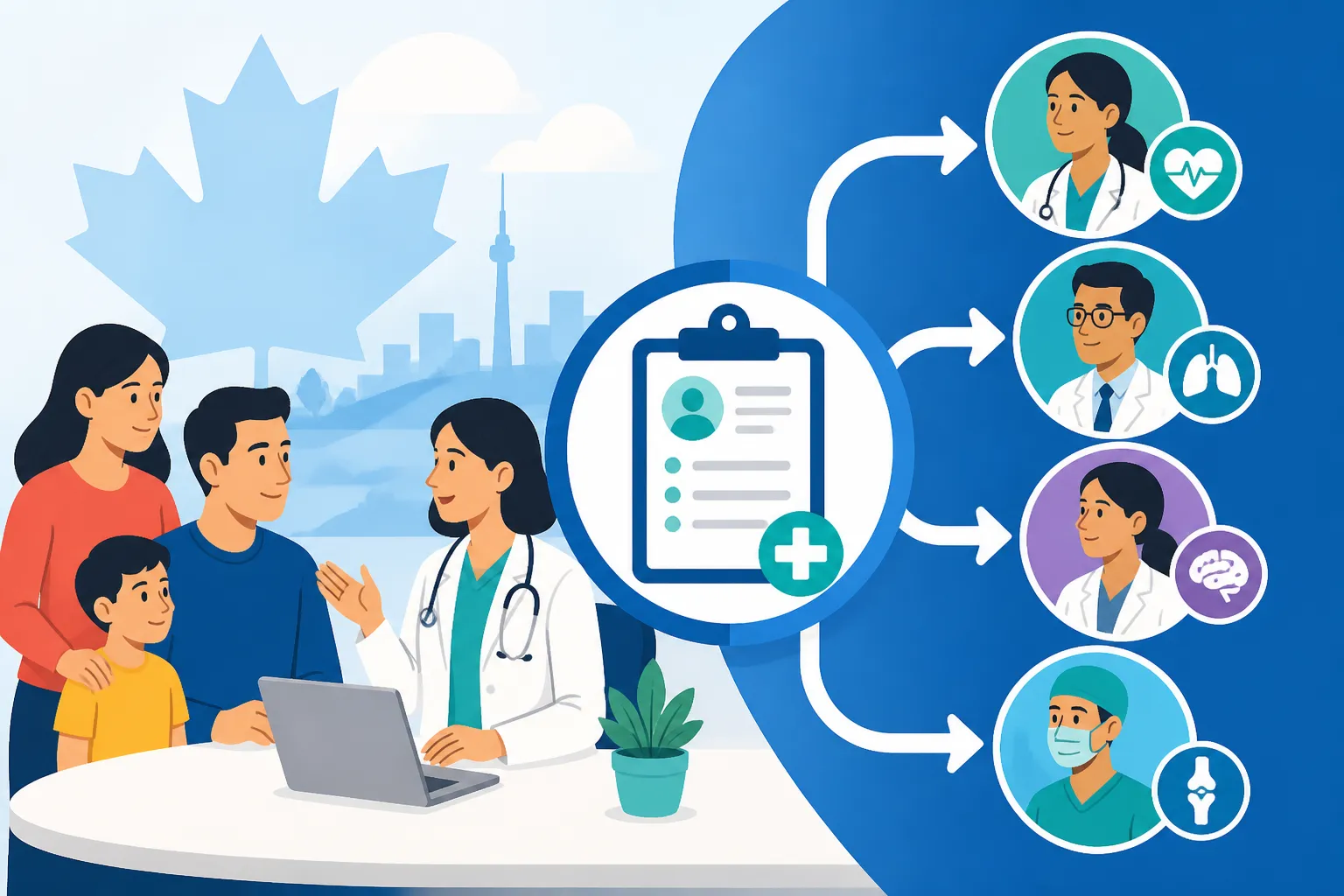
If you have recently moved to Canada, the first thing you need to understand is that the healthcare system is built around the family physician, often referred to as a General Practitioner or GP. This doctor is your primary point of contact for every health concern you have, from a minor skin rash to chronic heart palpitations. Unlike systems where you might self-diagnose and head straight to a specialist's office, the Canadian system requires a GP to validate the necessity of that visit first. This is the essence of the "gatekeeper" role: ensuring that specialist resources, which are often stretched thin, are reserved for those who truly require focused expertise.
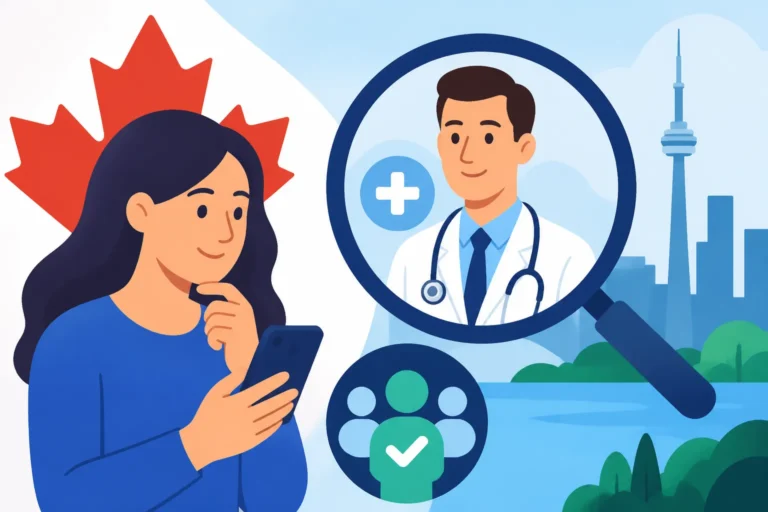
For many of us who have lived through this, the process starts with a persistent health issue. You visit your family doctor, and if they determine the problem is beyond their scope of primary care, they will issue a formal referral. This referral is essentially a medical "ticket" that allows you to enter the queue for a specialist. Without it, the specialist’s office will literally not see you, and provincial health plans like OHIP in Ontario or MSP in British Columbia will not cover the cost of the visit. This is why How to Find and Register with a Family Doctor in Canada is often the very first administrative hurdle you should tackle after landing.
Why You Can't Just Call a Specialist Yourself
The administrative logic behind this can be hard to swallow when you are in pain or anxious about a diagnosis. The reason you cannot self-refer is largely due to the way provincial funding works. Specialists are compensated at a higher rate than general practitioners, and the government uses the GP referral system to manage costs and prevent the specialist's office from being overwhelmed by cases that could have been handled at the primary care level. If you were to find a specialist's phone number online and call them, the receptionist would immediately ask, "Who is your referring physician?" and "Has the referral been faxed over?"
This reliance on "the referral" can lead to significant delays if your family doctor isn't proactive. There are cases where a referral was "sent" but never "received" because of a simple typo in a fax number. Because the system is so decentralized, there is no master database where you can see your status in real-time. This is why it is vital to understand How to Access Specialist Care Through the Public System in Canada and to keep your own records of when a referral was supposedly sent and to which specific clinic it was directed.
The Significance of the Primary Care Relationship
Because the GP holds the keys to the rest of the medical kingdom, your relationship with them is paramount. A good GP doesn't just write a note; they advocate for you. When they send a referral to a surgeon or a neurologist, they include notes on the severity of your symptoms. If your GP is convinced your situation is urgent, they can mark the referral as "Stat" or "Urgent," which significantly moves you up the triage list. However, if you don't have a regular doctor yet, you might find yourself using walk-in clinics for these referrals.
While walk-in clinics can provide referrals, they are often less effective advocates because they don't have your full medical history. A doctor who has seen you three times for the same worsening back pain is much more likely to push a specialist for a faster appointment than a walk-in doctor who is seeing you for five minutes. This is one of the many reasons why How to Find a Doctor Taking New Patients in Canada is a top priority for any newcomer who has chronic health concerns or expects to need specialized care in the near future.
Navigating the Referral Process Step-by-Step
Once your doctor agrees that you need a specialist, the "waiting game" officially begins. It’s not as simple as getting a piece of paper and walking across the street. The process is largely digital or fax-based, occurring between the two medical offices while you sit at home waiting for a phone call. Understanding the mechanics of this exchange can help you identify where things might be going wrong if you haven't heard back in several weeks.
First, your GP’s office will draft a referral letter. This document outlines your symptoms, any relevant test results (like blood work or X-rays), and the specific question they want the specialist to answer. This is then sent to the specialist's office. At this point, the specialist’s administrative team reviews the referral to ensure it falls within their area of expertise and to determine how "urgent" you are compared to the hundreds of other people in their queue.
The Initial Consultation and Diagnostic Phase
Before a referral is even sent, your family doctor will almost always order preliminary tests. If you have a heart issue, they will order an ECG or a Holter monitor test. If you have joint pain, they will order an X-ray. The reason for this is efficiency: the specialist doesn't want to see you just to tell you to go get an X-ray; they want to see you with the results already in hand so they can make a treatment plan immediately.
For newcomers, this can feel like you're being "brushed off" or delayed. You might think, "I just want to see the cardiologist," but the system is designed so that the specialist’s time is used for high-level decision-making, not basic diagnostics. You should expect to spend a few weeks getting these initial tests done at a local lab like LifeLabs or Dynacare before your referral is even processed. This is a core part of How Canada's Health System Works: Provincial Plans Explained (2027), where the integration of labs and primary care forms the foundation of the diagnostic process.
Waiting for the Call: What Happens Behind the Scenes
After the tests are done and the referral is sent, your file enters the specialist’s "triage" pile. This is where the specialist or their senior nurse looks at all the incoming requests and categorizes them. Category 1 might be "Immediate/Life-threatening," Category 2 might be "Urgent/Severe Pain," and Category 3 might be "Routine." If you are Category 3, your file might sit in a drawer for three to six months before a clerk even calls you to schedule an appointment.
This lack of communication is the hardest part for people used to more responsive systems. You often don't even get a confirmation that the specialist received your file. This is why many veteran expats recommend calling your family doctor's office about ten days after the referral was sent to ask, "Did the specialist’s office confirm receipt of my referral?" If they haven't, it’s possible it got lost in the shuffle. If you are still in your first few months in the country, you should also be aware of The Newcomer Waiting Period for Provincial Health Coverage in Canada (2027), as getting a specialist appointment during this time can be complicated if you aren't yet fully covered.
Managing Your Own Referral (The Proactive Approach)
Advisers often tell new arrivals: do not be a passive patient in the Canadian system. If you haven't heard anything for three weeks, call the specialist’s office directly. Be polite but firm. Ask if they have received the referral from Dr. [Your Doctor's Name] and if you have been triaged yet. Sometimes, simply being on their radar can help.
Furthermore, ask if they have a "cancellation list." Specialists often have patients who cancel at the last minute, leaving a hole in their schedule for the next day. If you tell the receptionist you are willing to come in on two hours' notice, you might jump from a six-month wait to a six-day wait. This is a common "hack" used by those who understand Navigating the Canadian Healthcare System: A Newcomer's Roadmap (2027). Being proactive doesn't mean being rude; it means ensuring that your file doesn't literally fall behind a desk.
| Feature | Family Doctor (GP) | Specialist (e.g., Cardiologist, Surgeon) |
|---|---|---|
| Access | Direct (via appointment) | Indirect (requires referral) |
| Focus | General health, preventative care, initial diagnosis | Specific organ systems or surgical procedures |
| Wait Time | Usually days to a week | Weeks to months (depending on triage) |
| Referral Needed? | No | Yes |
| Follow-up | Manages long-term health and coordinates care | Usually focused on the specific referred issue |
Understanding Wait Times and Priority Levels
It is no secret that wait times for specialists are a major talking point in Canadian politics and a genuine pain point for residents. Depending on the province and the specific specialty, you could be looking at anything from a few weeks to over a year. For example, seeing an ophthalmologist for a routine eye check might take months, whereas seeing an oncologist for suspected cancer will happen within days. The system is designed to prioritize the sickest patients first, which is great if you are in a crisis, but frustrating if you are living with chronic, non-life-threatening pain.
Wait times are often published by provincial health ministries, so you can actually look up the average wait for a knee replacement or a gastrointestinal consult in your specific region. In Ontario, the Ministry of Health provides a "Wait Times" website where you can see which hospitals or clinics have the shortest queues. Sometimes, if you are willing to drive two hours to a smaller town outside the Greater Toronto Area, you can see a specialist much faster than you could in the downtown core.
How Triage Works in the Canadian System
Triage is the process by which medical professionals decide the order of treatment based on the severity of the patient's condition. When your referral arrives at a specialist's office, it is "triaged" by a clinician. They look for "red flags." If a dermatologist sees a referral for a changing mole that looks like melanoma, that patient is seen immediately. If the referral is for adult acne, that patient goes to the bottom of the list.
The frustration for many newcomers is that "quality of life" issues are often triaged as low priority. If you have a sports injury that prevents you from running but doesn't prevent you from working a desk job, you might be waiting a long time for an orthopedic consult. Understanding How Specialist Referrals Work in the Canadian Health System means accepting that the system is built for medical necessity, not necessarily for convenience or lifestyle optimization. This is where having private coverage can be a lifesaver for non-emergency issues.
Provincial Differences in Specialist Access
Healthcare in Canada is managed provincially, meaning the experience in Montreal will be different from the experience in Halifax. Quebec's system, for instance, has a more integrated "centralized intake" for some specialties, where your referral goes into a provincial pot and you are assigned the first available specialist in your region. In contrast, in provinces like Ontario, your GP usually chooses a specific specialist to refer you to.
If you find that the wait times in your city are unbearable, talk to your GP about referring you to a specialist in a neighboring health region. For instance, someone living in Vancouver might find shorter wait times for certain procedures in the Fraser Valley. This flexibility is part of Understanding the Difference Between Provincial Plans Across Canada, and a savvy GP who knows the "lay of the land" can be an incredible asset in getting you seen faster.
Private Options and Supplementary Coverage
Because the public system can be slow, many expats look for private alternatives. It is important to clarify that in Canada, you generally cannot "pay your way to the front of the line" for medically necessary surgeries that are covered by the public system. However, for diagnostic imaging (like private MRIs) and certain types of specialist consultations, private options do exist.
For newcomers who are still in their provincial waiting period, having private insurance is not just a luxury; it’s a necessity. If you haven't lived in Canada for three months yet, you are often not covered by the public plan. During this gap, companies like SafetyWing provide essential coverage that can help you manage the costs of medical consultations. SafetyWing is particularly popular among digital nomads and new immigrants because it offers flexible, month-to-month coverage that can bridge the gap until your provincial health card arrives. Without this, a single specialist visit could cost you hundreds of dollars out of pocket.
When Private Health Insurance Fills the Gaps
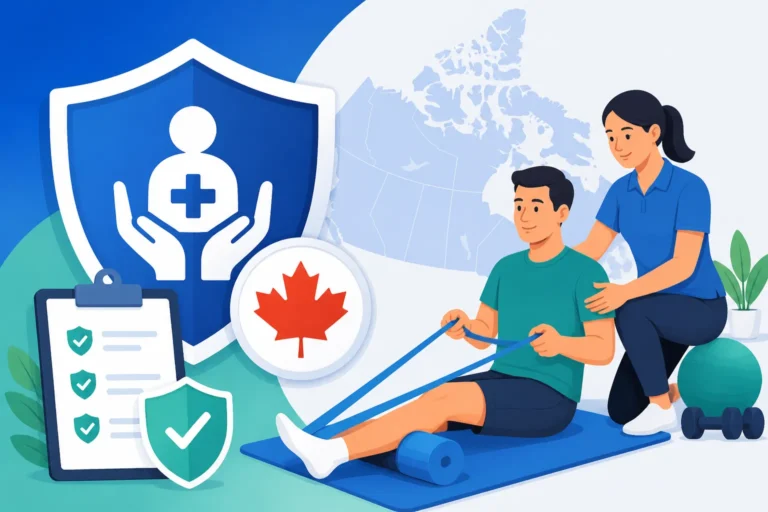
Even after you have your provincial health card, you will find that many things are not covered. This includes prescription drugs, dental care, and many paramedical services like physiotherapy or massage therapy. Often, a specialist like an orthopedic surgeon will recommend six months of physiotherapy instead of surgery. Since the public system doesn't cover physio for most adults, you will need private insurance to pay for it.
Many employers in Canada offer "extended health benefits" that cover these gaps. If you are self-employed or still looking for work, you'll need to look into Understanding Supplementary Health Insurance (Dental, Vision, Drugs) in Canada. Having this coverage means that when a specialist says, "I want you to see a physiotherapist twice a week," you don't have to worry about the $100-per-session cost. Again, for those just arriving and not yet employed, SafetyWing can be a great temporary solution to ensure you aren't hit with massive bills for non-provincial services.
Accessing Specialists During the Waiting Period
The first 90 days in Canada are high-risk because of the Understanding the Three-Month Waiting Period for Health Coverage in Canada. If you have a pre-existing condition that requires specialist monitoring, you need to have a plan before you land. You cannot simply wait three months for your health card and then start the referral process, as that could mean six months or more without seeing a doctor.
In these cases, you might choose to see a specialist privately and pay the "uninsured" rate. Many specialists will see patients without a health card if they are willing to pay upfront. However, even in the private sector, you usually still need that referral from a GP. If you're using SafetyWing to cover your initial months, make sure you understand which specialist services they reimburse, as this can vary. Using private insurance like SafetyWing during this transition period allows you to seek care at walk-in clinics and get those initial referrals started without fearing the financial fallout.
Practical Tips for Newcomers Dealing with Specialists
When you finally get that call for an appointment, you need to be prepared. Specialist appointments in Canada are often quite short—sometimes only 10 to 15 minutes. The specialist expects you to be ready with your history, your symptoms, and your questions. If you aren't prepared, you might leave the office feeling like your concerns weren't fully addressed, and getting a follow-up appointment could take another three months.
Another tip: always bring a list of your current medications and any records you have from your home country. While Canada is slowly moving toward digital health records, the systems between provinces (and even between different hospitals in the same city) often don't talk to each other. If you had an MRI in London or a heart scan in Dubai, bring the actual disc or a digital copy with the report. Don't assume the specialist can "just look it up."
Preparing for Your Specialist Appointment
To make the most of your time, write down a timeline of your symptoms. When did the pain start? What makes it better? What makes it worse? Specialists love data. If you have a blood pressure issue, bring a log of your readings from the last two weeks. This preparation helps the specialist move past the "information gathering" phase and into the "treatment phase" much faster.
If you are struggling with the wait, you can also ask your GP for a "referral to a clinic" rather than a "referral to a specific doctor." Many hospitals have "Rapid Access Clinics" for things like hip and knee pain or lower back issues. These clinics are staffed by advanced-practice physiotherapists or nurse practitioners who can assess you much faster than a surgeon. They can order the necessary scans and determine if you actually need to see the surgeon or if a different treatment would work better. This is a key strategy for How to Use Private Health Insurance and Employer Benefits in Canada to speed up your recovery.
Language Services and Cultural Support
Canada is a multicultural country, and most major hospitals in cities like Toronto, Vancouver, and Montreal offer translation services. If you or a family member are not comfortable discussing complex medical issues in English or French, you have a right to request an interpreter. You should mention this when the specialist’s office calls to book your appointment so they can arrange for a translator to be present or available via phone.
Furthermore, if you find the Canadian "gatekeeper" model confusing, don't be afraid to ask your GP's office to explain it again. Many newcomers feel they are being "blocked" from care, but understanding that this is the standard path for every Canadian can help lower your stress levels. Remember, the system is designed to provide The Complete Guide to Healthcare in Canada for Newcomers (2027) with equitable access, but equity sometimes comes at the cost of speed. Staying informed and having a backup plan like SafetyWing during your initial move will give you the peace of mind to navigate these hurdles successfully.
Disclaimer
The information provided in this guide is for educational and informational purposes only and does not constitute professional medical or legal advice. Healthcare regulations, wait times, and insurance policies in Canada are subject to change and vary significantly by province. Always consult with a qualified healthcare provider or a licensed insurance professional regarding your specific medical needs and coverage options. While we strive to keep this information up to date for 2026, you should verify all provincial health requirements and wait time data through official government channels.