How Long Does a Work Permit Last in Canada?
One of the biggest anxieties I remember facing when I first moved to Canada was the ticking clock on my work permit. You get here, you settle in, you start building a life, and then suddenly, you realize your permit has an expiry date looming over your head. It’s a very real stress, wondering what exactly that date means for your future here. This guide is all about demystifying work permit durations in Canada, helping you understand how long you can expect to stay, what determines that length, and what steps you need to take as that expiry date approaches.
Understanding the Fundamentals of Your Canadian Work Permit's Lifespan
When you're granted a work permit to Canada, it’s not just a general pass to work indefinitely. Each permit comes with very specific conditions, and one of the most crucial is its validity period. This isn't just a bureaucratic detail; it dictates your legal right to work and even stay in Canada. Overlooking this date can lead to a world of trouble, from losing your status to having to leave the country.
What Dictates Your Work Permit's Expiry Date?
The duration of your work permit isn't arbitrary; it's typically tied to a few key factors that are assessed during your application. Understanding these can help you anticipate how long your initial permit might be valid for.
Firstly, and most commonly, your permit's expiry date is directly linked to the length of your job offer or contract. If your employer offered you a two-year contract, your work permit will likely reflect that. If it's a one-year project, expect a one-year permit. This makes sense, as the permit is granted specifically for that employment. For those coming via an LMIA process, the Labour Market Impact Assessment itself will often specify the duration of the approved employment, which then sets the ceiling for your permit.
Secondly, a major, often overlooked factor is the expiry date of your passport. Immigration, Refugees and Citizenship Canada (IRCC) will almost never issue a work permit that is valid beyond your passport's expiry date. Why? Because your passport is your primary identification document, and they need to ensure you always have a valid travel document. So, if you have a five-year job offer but your passport expires in two years, don't be surprised if your work permit is only issued for two years. This is a common pitfall, so always check your passport's validity before applying!
Lastly, depending on your permit type, other factors like the duration of a specific program (for Post-Graduation Work Permits) or the expiry of a provincial nomination might influence the length. It's a complex puzzle, and every piece needs to align for your permit to be issued for the maximum possible duration.
"Closed" vs. "Open" Work Permits and Their Duration Implications
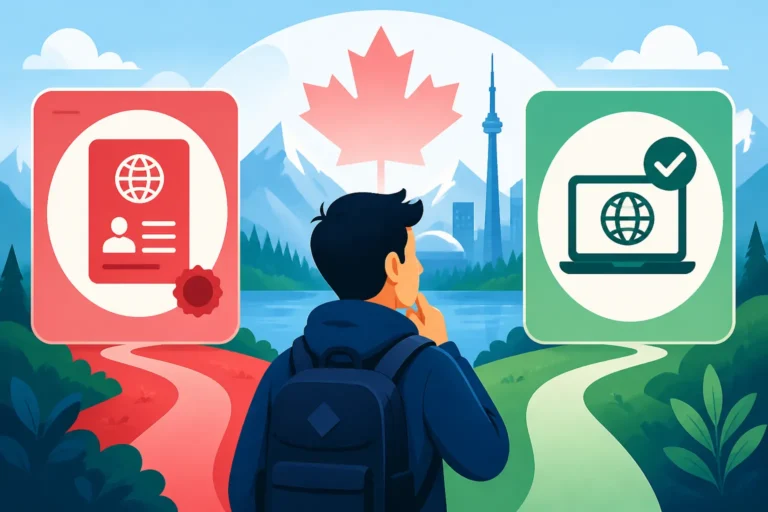
You'll often hear about "closed" and "open" work permits, and this distinction isn't just about who you can work for, but also how long you can generally expect your permit to last.
Closed work permits, also known as employer-specific work permits, are by far the most common. These permits explicitly state the name of your employer, the location of your work, and the duration of your employment. Because they are tied to a specific job offer, their validity is usually directly proportional to the length of that offer, as discussed above. If your job contract is for three years, your permit will likely be for three years (or less, if your passport expires sooner). The key here is that if that job ends, your permit effectively becomes invalid, even if the expiry date printed on it hasn't arrived yet. This can be a source of significant stress, as it means your legal status to work is precariously tied to one employer.
Open work permits, on the other hand, offer much more flexibility. These permits don't specify an employer, allowing you to work for almost any employer in Canada (with a few exceptions, like employers who are non-compliant with Canadian immigration rules or offer adult entertainment). Common types include spousal open work permits (for spouses of international students or skilled workers), Post-Graduation Work Permits (PGWP), and Bridging Open Work Permits (BOWP) for those applying for permanent residence. The duration of open work permits varies significantly based on the program:
- Spousal Open Work Permits are typically issued for the same length as the main applicant's study or work permit, or until the passport expires.
- Post-Graduation Work Permits can be issued for a minimum of 8 months up to a maximum of 3 years, depending on the length of your study program in Canada. If you completed a program that was two years or longer, you're usually eligible for the full three years, which is a massive relief for many graduates aiming for permanent residence.
- Bridging Open Work Permits are issued for one year at a time, allowing you to continue working while your permanent residence application is being processed. This is a crucial lifeline for many who are transitioning from temporary to permanent status.
The flexibility of an open work permit often comes with its own set of rules regarding duration, but the freedom to change jobs without needing a new permit is a huge advantage.
Exploring Typical Durations for Different Canadian Work Permit Types
Canada offers a plethora of work permit categories, each with its own criteria and, consequently, its own typical duration. It’s important to know which category you fall under, as this will heavily influence how long you can realistically expect your permit to last.
Employer-Specific Work Permits: The Standard Arrangement
For most skilled workers coming to Canada, an employer-specific work permit is the entry point. As mentioned, these are directly tied to a confirmed job offer and an employer who often has an approved Labour Market Impact Assessment (LMIA), or is otherwise exempt under an International Mobility Program stream.
The typical duration for these permits aligns with the job offer itself. If you've been offered a two-year contract with a company in Calgary, your work permit will usually be for two years. This period can sometimes be extended if your employment contract is renewed, but you'll need to apply for a work permit extension before your current one expires. It’s not uncommon for permits to be issued for up to four years, especially for highly skilled positions or those identified as being in high demand. However, permits can also be for shorter periods, like one year, if the job is project-based or for a fixed term. The key is that this permit limits you to that specific employer and often, a specific location. If you were to, say, move to Toronto and find a new job, you would need to apply for a new work permit with the new employer, not just extend the old one.
Open Work Permits: Flexibility and Varying Timelines
Open work permits, while offering unparalleled flexibility, also come with their own duration specifics. These permits are a godsend for many newcomers, allowing them to explore the Canadian job market without being tied to a single employer.
-
Spousal Open Work Permits: If your spouse is in Canada on a study permit or an employer-specific work permit for a skilled occupation (NOC 0, A, or B), you might be eligible for a Spousal Open Work Permit. These permits are typically issued for the same duration as your spouse's permit, or until your passport expires, whichever comes first. This means if your spouse has two years left on their permit, yours will also be valid for up to two years. It’s an amazing way for families to stay together and for spouses to contribute to the household income without needing their own job offer.
-
Post-Graduation Work Permits (PGWP): This is one of the most popular pathways for international students to gain valuable Canadian work experience after completing their studies. The duration of a PGWP is directly linked to the length of your study program.
- If your program was less than 8 months, you generally aren't eligible.
- If your program was between 8 months and less than 2 years, your PGWP will usually be valid for the same length as your study program (e.g., a 10-month program gets a 10-month PGWP).
- If your program was 2 years or longer, you are typically eligible for a 3-year PGWP. This three-year period is a golden opportunity for many to accumulate enough skilled work experience to qualify for permanent residence through programs like Express Entry. For more on navigating the post-study phase, read our guide on Understanding the Post-Graduation Work Permit PGWP in Canada.
-
Bridging Open Work Permits (BOWP): This permit is a true lifesaver for many who have applied for permanent residence (under certain economic class programs like Express Entry or PNPs) and whose current temporary status (work permit) is about to expire. A BOWP allows you to continue working while IRCC processes your PR application. These permits are generally issued for one year, and you must meet specific eligibility criteria to apply. It ensures that you don't lose your ability to work and earn an income during what can sometimes be a lengthy processing period for permanent residence.
International Mobility Program (IMP) Permits: Special Cases
Beyond the standard employer-specific and general open work permits, many newcomers arrive under various streams of the International Mobility Program. These permits are generally exempt from the LMIA requirement, meaning the employer doesn't need to prove they couldn't find a Canadian citizen or permanent resident to do the job.
-
International Experience Canada (IEC) Permits: This popular program allows young adults from participating countries to travel and work in Canada. The duration varies depending on your country of citizenship and the specific stream (e.g., Working Holiday, Young Professionals, International Co-op). Many IEC permits are issued for 12 or 24 months. For example, citizens of Australia, Ireland, and the UK can often get up to 24-month permits under the Working Holiday category. These permits are open work permits, giving you flexibility, but they are generally non-renewable for the same stream, although you might be eligible for a different stream or a different type of work permit afterwards.
-
CUSMA (formerly NAFTA) and other Free Trade Agreement Permits: Professionals from the United States, Mexico, and other countries with which Canada has free trade agreements (like Chile, Peru, Colombia, South Korea, etc.) can often obtain work permits more easily. These permits are typically issued for a maximum of three years at a time but can be renewed indefinitely as long as you continue to meet the eligibility criteria for the specific profession. This provides a long-term pathway for certain professionals.
-
Intra-Company Transfer Permits: For employees of multinational companies who are being transferred to a Canadian branch, these permits allow them to work in Canada. They are usually issued for an initial period of one to two years, with possibilities for extension up to a maximum cumulative period (e.g., seven years for executives/senior managers, five years for specialized knowledge workers).
Here’s a quick overview of some common work permit types and their typical durations:
| Work Permit Type | Typical Duration | Key Conditions |
|---|---|---|
| Employer-Specific (LMIA-based) | 1-4 years | Tied to specific employer, job, and location; based on job offer/LMIA duration. |
| Spousal Open Work Permit | Up to spouse's permit | Same duration as the main applicant's (student/worker) permit. |
| Post-Graduation Work Permit (PGWP) | 8 months to 3 years | Depends on length of study program in Canada. |
| Bridging Open Work Permit (BOWP) | 1 year | Issued while PR application is in process; requires specific PR program application. |
| IEC (Working Holiday) | 12 or 24 months | Country-specific; open work permit, usually non-renewable for the same stream. |
| CUSMA/Free Trade Agreement (Professional) | Up to 3 years (renewable) | Specific professions; can be renewed as long as criteria met. |
| Intra-Company Transfer | 1-2 years (initial) | For employees transferred within a multinational company; cumulative maximums apply. |
Proactively Managing Your Work Permit's Expiry in Canada
The moment you receive your work permit, you should circle its expiry date on your calendar, set multiple reminders, and start thinking about your next steps. The Canadian immigration system, while robust, isn't known for its lightning-fast processing times. Waiting until the last minute is a recipe for immense stress and potential complications.
Applying for an Extension or a New Permit: Navigating the Process
If you intend to continue working in Canada beyond your current permit's expiry, you must apply for an extension or a new work permit before your current one expires. This is critically important because of a concept called "implied status."
Implied Status: When you apply to extend your work permit (or apply for a different type of work permit) before your current one expires, you are generally allowed to stay and continue working under the conditions of your expired permit until a decision is made on your new application. This is huge! It means you don't have to stop working or leave Canada just because the date on your current document passes. However, if you leave Canada while on implied status, you lose it and might face difficulties re-entering or requiring a new permit upon re-entry. Always consult official IRCC guidelines or an immigration lawyer if you plan to travel.
The process for applying for an extension or a new permit involves submitting a new application through the IRCC online portal. You'll need to provide updated documents, such as a new job offer (if it's an employer-specific permit), proof of financial support, and potentially a new LMIA, depending on the stream. Remember that your passport's validity will again play a crucial role in how long your new permit will be issued for. Start gathering your documents and reviewing the requirements several months in advance. Many people recommend starting the application process at least 3 to 4 months before your current permit expires.
The Critical Importance of Planning Ahead
Seriously, planning ahead is not just good advice; it's essential for peace of mind and avoiding major disruptions to your life. The immigration journey can be taxing enough, so don't add last-minute panic to the mix.
-
Document Review: Regularly check the expiry dates of all your crucial documents: passport, work permit, and any provincial health cards. For example, your provincial health coverage might also be tied to your immigration status. Losing that coverage, even for a short period, can be financially devastating. Speaking of health, if you're between permits or awaiting a new one, consider having private health insurance to cover any gaps. Companies like Cigna Global offer comprehensive plans that can fill those interim periods, ensuring you're not caught off-guard by medical emergencies during the Newcomer Waiting Period for Provincial Health Coverage in Canada. Don't assume you're covered automatically if your status changes or expires. It's truly better to be safe than sorry when it comes to health.
-
Gathering Information: Keep abreast of current immigration policies and processing times on the IRCC website. These can change, and what was true last year might be different this year. Also, if you’re considering moving provinces or changing employers, understand how that affects your permit and if you'll need a new one.
-
Financial Preparedness: Applying for extensions and new permits comes with fees. Factor these into your financial planning. Also, consider that if there's a processing delay and you don't have implied status (e.g., you applied late), you might temporarily lose your ability to work, which means no income. Having an emergency fund is always a smart move.
What Happens If Your Work Permit Expires and You Haven't Applied?
This is the scenario you absolutely want to avoid. If your work permit expires and you haven't applied for an extension or a new permit, you effectively lose your temporary resident status in Canada. This means you are no longer legally allowed to work or even stay in the country.
However, IRCC does offer a lifeline for those who have lost their status: restoration of status. You might be able to apply to restore your status within 90 days of losing it. This is a complex and often costly process, and there's no guarantee of approval. During the restoration period, you cannot work or study until your status is restored, and if it's denied, you'll be required to leave Canada. It’s a very stressful situation, so again, the best advice is to plan well in advance and apply before your permit expires.
Beyond Temporary: The Journey to Permanent Residence
For many, a work permit is just the first step on a longer journey toward making Canada their permanent home. Understanding how your work permit duration fits into that larger picture is crucial for strategic planning.
Leveraging Work Experience for Permanent Residency
The Canadian immigration system places significant value on Canadian work experience. Many economic immigration programs, such as those under Express Entry (like the Canadian Experience Class) or Provincial Nominee Programs (PNPs), award points or require a certain amount of skilled work experience gained in Canada. A longer work permit, especially an open one like the Post-Graduation Work Permit, gives you more time to accumulate this valuable experience. For instance, the Canadian Experience Class often requires at least one year of full-time skilled work experience in Canada. If your initial work permit is only for one year, you have a very narrow window to gain that experience, file your taxes (which can be a new experience in itself, see Filing Your Tax Return with the CRA in Canada: The Complete Walkthrough), and apply for PR.
Many newcomers strategically plan their education and early career to maximize their chances of obtaining a long PGWP or securing an employer who can support a work permit extension, all with the ultimate goal of qualifying for permanent residence. Our guide on How to Move from a Work Permit to Permanent Residence in Canada offers more in-depth insights into this transition.
Thinking Long-Term: Moving Your Life (and Your Stuff)
When you're dealing with work permit durations, it's easy to get caught up in the immediate future. But if your goal is permanent residence, it's worth taking a step back and looking at the bigger picture. This might involve setting down roots, buying property, or even bringing more of your belongings from back home.
If you're making the leap from temporary resident to permanent resident, you might find yourself needing to move more of your life across continents. This is where services that specialize in international relocations become invaluable. Companies like Sirelo can help you compare quotes from various movers, ensuring that whether you're bringing over sentimental items or an entire household, it's done efficiently and without unnecessary stress. They understand the complexities of international moves, which can be a huge relief when you're already juggling immigration paperwork and career aspirations. Planning your move, even if it's just the final stage of bringing all your worldly possessions, is part of the comprehensive "settling in" experience. For more on this, check out our Complete Guide to Moving to Canada: Your First 90 Days.
Ultimately, while the duration of your work permit might feel like a limitation, it's often a stepping stone. By understanding its intricacies and planning proactively, you can navigate your journey in Canada with greater confidence and less stress, setting yourself up for long-term success.
Disclaimer
The information provided in this article is intended for general guidance and informational purposes only, and does not constitute legal, financial, or immigration advice. Immigration policies and regulations in Canada are subject to change without notice. It is essential to consult with a qualified and regulated Canadian immigration professional or refer to the official website of Immigration, Refugees and Citizenship Canada (IRCC) for the most accurate and up-to-date information pertaining to your specific situation. Reliance on any information provided in this article is solely at your own risk.