Understanding Provider Networks and Health Benefits Plans in Canada
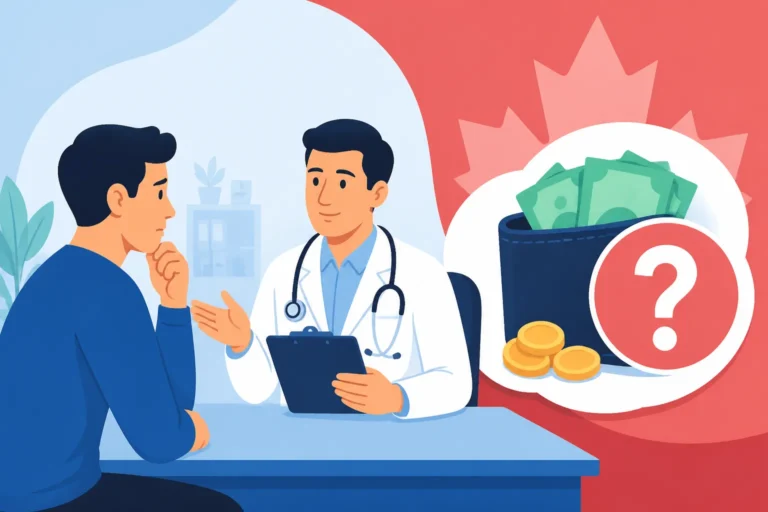
When you first land in Canada, the general consensus you hear from everyone back home is that healthcare is "free." It is a lovely sentiment, but the reality hits hard the first time you walk into a pharmacy to pick up antibiotics or realize that a standard dental cleaning costs upwards of $200. This guide dismantles the confusion surrounding how provincial coverage interacts with private health benefits and explains the complex provider networks that dictate how much you actually pay out of pocket.
The Reality of Canadian Healthcare: Beyond the Free Surface
The most common shock for newcomers is realizing that "universal healthcare" in Canada is more like a patchwork quilt than a solid blanket. While your provincial health card covers most visits to a doctor or a hospital stay, it leaves massive gaps in areas like prescription drugs, dental care, vision, and mental health services. This is where understanding provider networks becomes essential. Most Canadians rely on a secondary layer of coverage, usually through an employer or a private plan, to handle the expenses that the government does not.
Provincial Coverage vs. The Gap
Every province has its own system—think OHIP in Ontario or MSP in British Columbia. These plans are designed to cover "medically necessary" services. If you break your arm or need heart surgery, the provincial plan is your hero. However, if you need a pair of glasses or a bottle of insulin, you are often on your own unless you have a supplementary plan. This distinction creates a two-tiered experience where you navigate the public system for emergencies and the private system for daily wellness. You can read more about this in our guide on Public vs Private Healthcare in Canada: What Newcomers Need to Know.
I remember my first month in Toronto, thinking I was fully protected because my health card application was in progress. I didn't realize that things like ambulance rides or even certain diagnostic tests might come with a bill. It is vital to understand that the provincial plan is the foundation, but the "walls and roof" of your healthcare house are almost always private. For a deeper look at these foundational plans, see Understanding the Difference Between Provincial Plans Across Canada.
The Waiting Period Trap
In several provinces, there is a notorious "three-month waiting period" before your public coverage even kicks in. During this time, you are effectively uninsured for both major and minor medical issues. This is a terrifying gap for a family with young children or anyone with a chronic condition. Many veterans of the expat life suggest getting a bridge plan. For instance, SafetyWing offers Nomad Insurance that can act as a crucial safety net during those first 90 days while you wait for your provincial card to arrive.
Without this bridge, a simple trip to a walk-in clinic could cost you $100 to $150 just for the consultation, plus the cost of any tests or medication. If a serious emergency happens during this window, the costs can escalate into the tens of thousands. Understanding how to navigate this gap is arguably the most important administrative task you will face in your first week. You should check out Understanding the Three-Month Waiting Period for Health Coverage in Canada to see if your destination province enforces this rule.
Decoding Provider Networks in Canada
A "provider network" is essentially a pre-approved list of doctors, dentists, pharmacies, and specialists that have an agreement with an insurance company. In the public system, the network is technically "everywhere," but in the private sector, staying within a specific network can be the difference between paying nothing and paying the full price upfront and waiting weeks for a refund.
Public System Networks: Hospitals and Family Doctors
In the public realm, your network consists of any practitioner who "bills" the province. Most family doctors and specialists fall into this category. The catch is that finding a doctor who is actually taking new patients can feel like winning the lottery. You aren't restricted by a private network here, but you are restricted by availability. When you finally find a clinic, you'll need to know What Documents Do I Need to See a Doctor in Canada to ensure your visit is billed correctly to the government.
Hospitals also function within this public network. You don't "choose" a hospital based on your insurance; you go to the one closest to you or the one your specialist is affiliated with. However, even within a public hospital, private networks might come into play if you want a private room instead of a ward, which is something a secondary insurance plan would cover. We break this down further in Understanding Hospital Visits and Billing for Newcomers in Canada.
Private Practitioner Networks: Paramedical Services
When we talk about "paramedical" services—physiotherapy, massage therapy, chiropractic care, and psychology—we enter the world of private provider networks. Many insurance companies, such as Sun Life or Canada Life, have "Preferred Provider" lists. These are clinics that have been vetted for quality and, more importantly, have the technology to bill your insurance company directly.
If you choose a physiotherapist who is "out of network," you might still be covered, but you will likely have to pay the $120 fee out of your own pocket first. Then, you’ll have to snap a photo of the receipt, upload it to an app, and wait for the money to hit your bank account. For a newcomer, having $500 tied up in medical claims while waiting for reimbursement is a financial stress you don't need. This is why Understanding Supplementary Health Insurance (Dental, Vision, Drugs) in Canada is so beneficial for long-term planning.
How Insurance Companies Manage Networks
Insurance companies in Canada manage their networks to control costs. They might partner with a specific pharmacy chain, like Rexall or Shoppers Drug Mart, to offer lower co-pays. If you have an employer-sponsored plan, look closely at your benefits booklet. It might say you are covered 80% for drugs at most pharmacies, but 90% if you use their "preferred" network. Over a year, that 10% difference on chronic medication adds up significantly.
Using a company like SafetyWing for your initial move or if you are working as a digital nomad provides a different kind of network flexibility, often allowing you to see providers globally, which is a stark contrast to the very localized provincial plans. This global perspective is often more empathetic to the mobile lifestyle of an expat who hasn't quite settled into a permanent Canadian "home base" yet.
Navigating Employer-Sponsored Health Benefits Plans
If you are lucky enough to have a job that offers "extended health benefits," you have a powerful tool at your disposal. However, these plans are not all created equal. Some are "gold-plated," covering everything at 100%, while others are "core" plans that only cover the basics after you pay a deductible.
Understanding Plan Design: Deductibles and Co-insurance
Most Canadian benefit plans involve "co-insurance." This means the insurance company pays a percentage (usually 70% to 90%) and you pay the "co-pay" (the remainder). Some plans also have an annual deductible—a flat fee, perhaps $50 or $100, that you must pay out of pocket each year before the insurance kicks in.
Let's look at a scenario: You go to the dentist for a filling that costs $300. If your plan has 80% coverage and no deductible, the insurance pays $240 and you pay $60 at the front desk. If you don't understand these numbers beforehand, you might be shocked when the receptionist asks for your credit card after you thought you were "covered." This is a key part of Understanding Dental Care Costs and the Canadian Dental Care Plan.
Preferred Provider Networks (PPNs) for Prescriptions
For high-cost specialty drugs—those used for conditions like rheumatoid arthritis or MS—insurers often use a Restricted Provider Network. They might require you to order these through a specific mail-order pharmacy to ensure the lowest price. If you try to fill that same prescription at a local boutique pharmacy, the insurance company might deny the claim entirely or only pay a fraction of the cost.
This is where the "realistic" side of Canadian living comes in: you have to be your own advocate. Always ask your pharmacist, "Is this the lowest cost generic version?" and "Does my plan have a preferred network for this?" Being proactive can save you hundreds of dollars. For more on this, read Understanding Prescription Drug Coverage and Pharmacare in Canada.
Coordination of Benefits (COB) for Couples
If both you and your spouse are working and both have health benefits, you are in a fantastic position called "Coordination of Benefits." Canada allows you to "stack" your plans. If your plan covers 80% of a dental visit, you can submit the remaining 20% to your spouse's plan. This often results in 100% of the cost being covered.
There is a specific order to this: you must always submit to your own employer's plan first. Any leftover amount goes to the "secondary" plan. If you have children, their primary insurer is usually determined by whichever parent's birthday falls earlier in the calendar year. It’s a quirky rule, but knowing it prevents your claims from being bounced back and forth between companies. We discuss this further in How to Use Private Health Insurance and Employer Benefits in Canada.
Supplementary Health Insurance: Filling the Void
For freelancers, contractors, or those working in the "gig economy," there is no employer to provide a health plan. In this case, you are responsible for purchasing your own supplementary insurance. This is a common hurdle for newcomers who are Self-Employment in Canada: Registering a Business and Going Independent (2027).
Dental and Vision Care Networks
Individual private plans are often heavy on dental and vision because these are the most predictable costs. When shopping for a plan, look at the "Dental Fee Guide" the insurer uses. Each province has a standard fee guide that dentists follow. If your insurance plan uses the 2024 guide but your dentist is charging 2026 prices, you will be paying the difference out of pocket.
Many people don't realize that vision care (eye exams and glasses) is almost entirely private for adults in most provinces. If you are a digital nomad or still in your first few months of relocation, SafetyWing can be an excellent way to maintain a level of coverage while you figure out which local private insurer offers the best dental/vision network for your specific city.
| Feature | Provincial Plan (e.g., OHIP/MSP) | Private/Employer Plan |
|---|---|---|
| Doctor Visits | Covered (100%) | N/A |
| Hospital Stays | Covered (Ward) | Covered (Semi/Private) |
| Prescription Drugs | Not covered (mostly) | Covered (70% – 100%) |
| Dental Care | Not covered | Covered (Major & Basic) |
| Vision Care | Not covered | Covered (Glasses/Exams) |
| Physiotherapy | Very Limited | Covered (Network clinics) |
Mental Health and Wellness Coverage
One of the most significant shifts in Canadian provider networks recently has been the expansion of mental health coverage. Many plans now include "Registered Psychotherapists" or "Social Workers" in their networks. However, the "cap" or limit is often quite low—sometimes only $500 per year. Given that a single therapy session in Vancouver or Toronto can cost $180, your "network" coverage might only last for three sessions.
When choosing a plan or a therapist, always check if they are part of an "Employee Assistance Program" (EAP). Many Canadian companies offer EAPs that provide 4 to 6 sessions of counseling entirely for free, separate from your main health insurance. This is a lifesaver for newcomers dealing with the stress of relocation. You can find more resources in How to Access Mental Health Services in Canada as a Newcomer.
Choosing Private Insurance as a Freelancer or Newcomer
If you are not covered by an employer, you need to decide if paying a monthly premium of $100-$200 is worth it compared to just paying out of pocket. For a healthy single person, the math doesn't always add up—until you have an emergency.
For many, the best strategy is a "catastrophic" plan that has a high deductible but covers you if something truly terrible happens, combined with a flexible travel-medical hybrid like SafetyWing for those who are still moving between countries or waiting for their permanent status. You can find more pricing details in How Much Does Private Health Insurance Cost in Canada in 2026?.
Critical Logistics: Direct Billing and Claims
The difference between a "good" healthcare experience and a "stressful" one in Canada often comes down to the logistics of the payment. Nobody wants to be the person at the pharmacy counter realizing their insurance card isn't working while a line of people waits behind them.
The Magic of Direct Billing
Direct billing (sometimes called "assignment of benefits") is when the healthcare provider sends the bill directly to the insurance company. You only pay your portion. Most pharmacies, dentists, and large physiotherapy clinics in Canada do this. To make this work, you need your "Policy Number" and "Member ID," which are usually on a wallet card or a mobile app provided by your insurer.
When you call to book an appointment, your first question should be: "Do you offer direct billing to [Insurance Company Name]?" If they say yes, your life becomes 100% easier. This is especially important for high-cost services. For example, if you need a specialized scan, you’ll want to know How Much Does an MRI Scan Cost in Canada in 2026? if you are forced to go outside the public network.
Manual Reimbursement: The Paperwork Struggle
If a provider does not offer direct billing, you enter the world of manual claims. You pay the full amount, get a "duplicate receipt" (it must show the provider’s registration number), and submit it. Most modern Canadian insurers have apps that allow you to take a photo of the receipt. If you are organized, you’ll get your money back in 3 to 5 business days.
The trap here is the "Ineligible Expense." If your doctor prescribes a massage but your insurance requires a "referral note" from a physician before they will pay for massage therapy, they will reject your claim. Always check the "requirements" section of your benefits portal before you spend the money. It's a small administrative hurdle that avoids a lot of heartbreak later. This is part of the learning curve we discuss in Navigating the Canadian Healthcare System: A Newcomer's Roadmap (2027).
Comparing Provincial and Private Options
To wrap your head around this, think of the provincial system as your "Life Support" and the private/employer system as your "Quality of Life" support. You need both to thrive in Canada. The provider networks are the "roads" you use to access these services.
The provincial network is vast but slow. The private network is fast but expensive. Knowing how to jump between the two—using your provincial card for the GP visit to get a referral, and then using your private insurance to see a specialist or therapist in a "Preferred Provider Network"—is the secret to "winning" at the Canadian healthcare game.
If you are just arriving, don't let the complexity overwhelm you. Start with the basics: get your provincial card, find a bridge like SafetyWing for the initial gap, and then meticulously read your employer's benefits booklet. Once you understand the "Who, What, and Where" of your specific network, the system becomes much less intimidating. For your first steps, see How Do I Apply for a Health Card in Canada?.
Disclaimer
The information provided in this guide is for educational and informational purposes only and does not constitute professional medical, financial, or legal advice. Healthcare regulations and insurance policies in Canada change frequently. Always consult with the official provincial health ministry or a licensed insurance professional regarding your specific situation and coverage needs. Plans like SafetyWing are travel medical insurance and may not fulfill all the legal requirements for residency-based health coverage in all provinces.