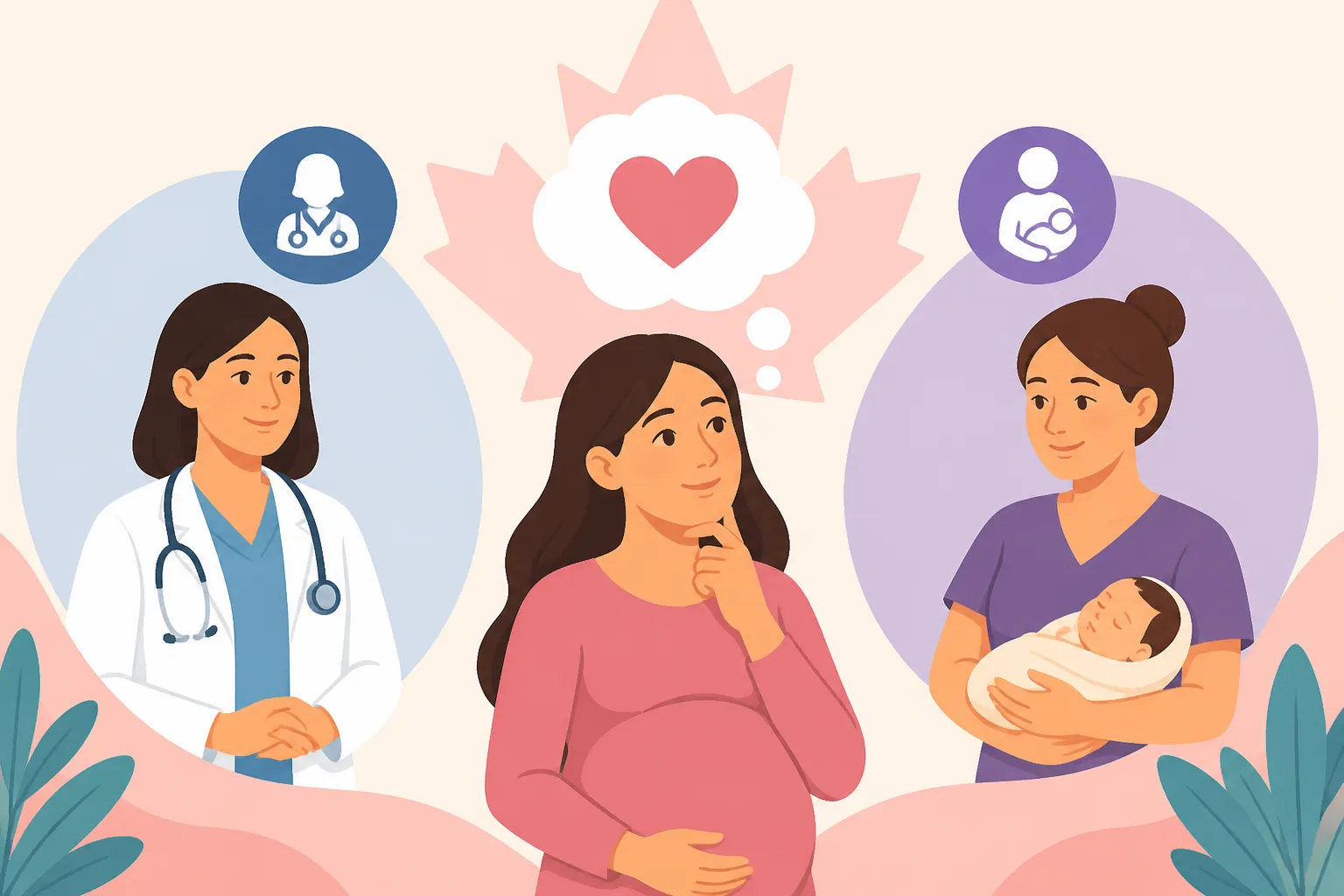
How to Choose a Doctor or Midwife for Maternity Care in Canada
Finding out you are pregnant is a whirlwind of emotion, but when you are a newcomer in Canada, that joy is often immediately followed by a sharp spike of anxiety. Navigating a foreign medical system while your body is changing rapidly is daunting, especially when you realize that "getting a doctor" isn't as simple as picking up the phone. This guide simplifies the process, helping you choose between an obstetrician, a family doctor, or a midwife while managing the administrative hurdles of provincial healthcare.
Understanding the Primary Care Models for Maternity in Canada
When you first start looking for prenatal care in Canada, you will quickly realize that the system is built on choice, yet that choice is often dictated by availability and your specific health needs. Unlike some countries where you might see a different doctor at every visit, Canada emphasizes a continuity of care model. You will generally choose one primary provider who follows you through the entire journey, from those first blood tests to the actual delivery and the weeks that follow.
The Obstetrician Gynaecologist Route
In many urban centres like Toronto, Vancouver, or Montreal, the default for many women is the Obstetrician Gynaecologist (OB-GYN). These are specialized surgeons who focus exclusively on pregnancy, reproductive health, and childbirth. If you have a high-risk pregnancy—perhaps due to a pre-existing condition, multiple births (twins), or a history of complications—an OB-GYN is typically the recommended choice. They are equipped to handle surgical interventions like C-sections and utilize high-tech monitoring.
However, the experience of seeing an OB-GYN can feel a bit more "clinical" to some. Because they are specialists, their offices are often very busy. You might find that your appointments are efficient but brief. In a city like Montreal, you might find yourself searching for how to find an OB-GYN in Montreal? only to find that many have long waitlists. Most OBs in Canada only take patients through a referral from a walk-in clinic or a family doctor, so you cannot always just call their office directly and book an intake.
The hospital where your OB-GYN has "privileges" is where you will give birth. If you have your heart set on a specific hospital, such as Mount Sinai in Toronto or BC Women's Hospital in Vancouver, you must find an OB who is affiliated with that specific institution. This is a crucial detail many newcomers miss; you don't just show up at the "best" hospital when you go into labour; you go where your doctor is allowed to practice.
The Family Doctor Approach
A significant number of low-risk pregnancies in Canada are managed by family physicians who have a special interest in maternity care. This is a fantastic option for those who prefer a more holistic, all-in-one approach. Your family doctor already knows your medical history, your allergies, and perhaps even your partner. They can manage your pregnancy and then continue on as the primary physician for your newborn, which simplifies paperwork and records significantly.
If you are currently looking for a GP, you might want to read our guide on how to find and register with a family doctor in Canada. Not all family doctors deliver babies, however. Many will provide "shared care," where they look after you for the first 20 to 28 weeks and then transfer your file to an OB-GYN or a dedicated maternity clinic for the final stretch and the birth itself.
The benefit of the family doctor route is the familiarity and the often-shorter wait times in the waiting room compared to a busy specialist’s office. They are excellent at screening for common issues and ensuring your mental health is supported throughout the transition to parenthood. If complications arise, they have a direct line to specialists to ensure you get the higher level of care required.
The Midwifery Model of Care
Midwifery is an incredibly popular and fully integrated part of the Canadian healthcare system, though its availability varies by province. Midwives in Canada are highly trained professionals who view pregnancy as a healthy, natural life event rather than a medical condition to be managed. They provide comprehensive prenatal care, attend the birth (whether at home, in a birth centre, or in a hospital), and offer extensive postpartum support.
One of the biggest draws of a midwife is the length of the appointments. While an OB might spend 10 to 15 minutes with you, a midwife often schedules 30 to 45 minutes. This allows for deep discussions about your birth plan, your fears, and your physical changes. Furthermore, midwives are the only providers in Canada who routinely offer home visits in the first week after the baby is born. This is a godsend when you are exhausted and healing and don't want to drag a three-day-old infant to a clinic.
The catch? Midwives are in extremely high demand. In provinces like Ontario or British Columbia, midwifery groups often fill up the moment a person gets a positive pregnancy test. If you want a midwife, you should apply the day you find out you are pregnant. You do not need a referral for a midwife; you simply call their clinic or fill out a form on their website. If you are worried about the cost, remember that midwives are fully covered by provincial health plans.
How to Find and Register with Maternity Care Providers
The "how" of finding a doctor is where many newcomers get stuck in the weeds of Canadian bureaucracy. Because each province manages its own health system, the rules change the moment you cross a provincial border. Whether you are in Alberta or Nova Scotia, the first step is always the same: confirming your pregnancy and establishing your eligibility for care.
Navigating Provincial Registries and Waitlists
In many provinces, there are centralized systems to help you find care. For example, in British Columbia, you might use the "Find a Midwife" search tool provided by the Midwives Association of BC. In Ontario, you can search for a provider through the College of Physicians and Surgeons of Ontario (CPSO) database, filtering for doctors who are accepting new patients for maternity care.
If you are a newcomer, your priority should be understanding maternity and prenatal care in Canada as it pertains to your specific province. In some areas, "Maternity Clinics" exist where a group of doctors or midwives share the care of a large pool of patients. This ensures that someone is always on call for your delivery, even if your specific doctor is off-duty. These clinics are often located within or very near major hospitals, making the transition to the delivery room seamless.
Do not be afraid to advocate for yourself. If one clinic says they are full, ask if they have a waitlist or if they can recommend another provider. The "secret" to getting into a good practice often involves calling around the moment you have a positive test result, rather than waiting for your provincial health card to arrive in the mail. Most clinics will see you if you can prove you have applied for your coverage.
Interviewing Potential Providers
You have the right to "shop around" for a provider who aligns with your values. Pregnancy is an intimate journey, and you want someone who respects your cultural background and your preferences for pain management or birthing positions. When you have your first "meet and greet" or intake appointment, go prepared with questions.
Consider asking:
- What is your philosophy on medical interventions like induction or epidurals?
- Which hospital are you affiliated with, and what are the facilities like there?
- How do you handle after-hours concerns or emergencies?
- What is the typical wait time for appointments in your clinic?
- Do you offer support for breastfeeding or chestfeeding postpartum?
These questions help you gauge whether the provider is a "fit." If you are someone who wants a very natural, low-intervention birth, a midwife or a family doctor might be a better match than a high-volume OB-GYN who treats every birth with a strictly medical protocol. Conversely, if you know you want an elective C-section or a highly managed birth, an OB-GYN is your best ally.
Key Differences: Midwives vs. Doctors
Choosing between a doctor and a midwife is often the biggest decision you will make in your first trimester. While both are safe and regulated, the "vibe" and the logistics of your care will differ significantly. It is important to look at these differences through a practical lens, especially when you don't have a local family network to lean on for support.
Philosophy of Care and Appointment Length
Doctors, particularly OB-GYNs, operate within a medical model. They are experts at identifying pathology—what is going wrong. Their job is to ensure you and the baby are physically safe and to intervene when nature needs a hand. This is reassuring for many, but it can feel impersonal. You are one of many patients in a day, and the focus is primarily on clinical markers: blood pressure, fetal heart rate, and fundal height.
Midwives operate within a social and wellness model. They certainly do all the clinical checks—they can order the same blood tests and ultrasounds as a doctor—but they also spend a significant amount of time on your emotional well-being. For a newcomer who might be feeling isolated, having a 45-minute appointment where you can talk about your transition to life in Canada can be life-changing. Midwives are also generally more supportive of non-traditional birthing positions and "gentle" birthing techniques.
Postpartum Support and Home Visits
This is the area where the two paths diverge most sharply. If you see a doctor, your first postpartum check-up is typically six weeks after you give birth. Between the day you leave the hospital and that six-week mark, you are largely on your own, save for a brief visit to a pediatrician for the baby. For a newcomer without a mother or sister nearby to help, those six weeks can be incredibly lonely and physically challenging.
Midwives, however, provide intense postpartum care. They will typically visit you at your home on day one, day three, and day seven after the birth. They check the baby’s weight, help with feeding issues, and check your physical healing in the comfort of your own bed. They continue to see you for six weeks before discharging you back to your family doctor. This level of "in-home" care is a massive advantage of the midwifery system in Canada and is often the deciding factor for people moving here from abroad.
| Feature | Obstetrician (OB-GYN) | Midwife | Family Doctor |
|---|---|---|---|
| Risk Level | High & Low Risk | Low Risk Only | Low Risk |
| Primary Focus | Medical/Surgical | Holistic/Natural | General Health |
| Appt Length | 10-15 Minutes | 30-45 Minutes | 15-20 Minutes |
| Birth Location | Hospital | Home, Birth Centre, or Hospital | Hospital |
| Postpartum | Clinic visit at 6 weeks | Home visits in week 1 | Clinic visits |
| Referral | Usually required | Not required | Not required |
Costs, Coverage, and Insurance Considerations for Newcomers
One of the greatest shocks for newcomers is realizing that while "healthcare is free" in Canada, there are often waiting periods and gaps that can cost you thousands of dollars if you aren't prepared. Pregnancy doesn't wait for your paperwork to be processed, so you need a financial strategy from day one.
Provincial Health Plan Coverage
If you have a valid Work Permit or Permanent Residency, you are eventually entitled to provincial health coverage. This covers all your prenatal visits, standard ultrasounds, blood work, and the hospital stay for the birth itself. However, you must first navigate how to apply for your provincial health card in Canada (2027) to ensure your "Health Card" is active. In some provinces, coverage begins the day you arrive, while others, like British Columbia or Ontario, have historically had "waiting periods."
Even with a health card, there are out-of-pocket costs. You will pay for prenatal vitamins, certain optional genetic screening tests (like NIPT, which can cost $500+), and perhaps a private or semi-private hospital room if your insurance doesn't cover the upgrade. If you do not have provincial coverage yet, a single prenatal visit to a walk-in clinic can cost $100-$200, and a hospital birth can run between $5,000 and $15,000 depending on the complexity.
Dealing with the Waiting Period
If you arrive in Canada already pregnant and find yourself in a province with a three-month waiting period, you are in a vulnerable position. Provincial plans will not retroactively pay for the care you received before your start date. This is where understanding the three-month waiting period for health coverage in Canada becomes vital. You cannot simply skip prenatal care; it is essential for the safety of your child.
Many savvy expats use private solutions like SafetyWing to bridge this gap. While most travel insurances do not cover pregnancy as a standard "event," having a robust global health policy can protect you from other medical emergencies that might arise while you wait for your provincial card. SafetyWing is often a go-to for digital nomads and newcomers because of its flexibility. However, you must read the fine print; standard "Nomad Insurance" rarely covers routine maternity. You would need to look into their comprehensive "Remote Health" plans which are designed for long-term residents and can include maternity modules.
Using a plan from SafetyWing during your transition ensures that if you have a non-pregnancy related emergency—like a broken leg or a severe infection—you aren't drained financially before the baby even arrives. It allows you to save your cash for the specific prenatal out-of-pocket costs while the "big stuff" is insured. Always check how to get private health insurance to cover the waiting period in Canada to see which specific plans allow for maternity riders or coverage.
Choosing Your Birth Location
In Canada, your choice of provider often dictates where you will give birth. While the majority of births happen in hospitals, the "experience" of those hospitals can vary wildly depending on whether you are in a major metropolitan area or a smaller town.
Hospital Births in Major Cities
If you are seeing an OB-GYN or a family doctor, you will almost certainly give birth in a hospital. Canadian hospitals are generally excellent, with high standards of care. In cities like Toronto, hospitals like Sunnybrook or St. Joseph’s offer state-of-the-art labour and delivery wards. You will typically have a private labour room, but you may be moved to a shared "ward" room after the birth unless you pay for an upgrade.
When choosing a hospital, consider the commute. Labour can be long, but you don't want to be stuck in an hour of Vancouver traffic while having contractions. Also, check if the hospital is a "Teaching Hospital." This means residents and medical students may be involved in your care. While this ensures you have many eyes on you, it can feel less private. If you have questions about the financial side of a hospital stay, refer to our guide on the cost of healthcare in Canada: a complete breakdown for newcomers (2026).
Birth Centres and Home Births
If you are under the care of a midwife, you have the option of a home birth or a birth centre. A birth centre is a "middle ground"—it feels like a home, with large tubs and a relaxed atmosphere, but it is staffed by midwives and is usually located very close to a hospital in case a transfer is needed. Home births are also a safe, regulated option for low-risk individuals in Canada. Your midwife brings all the necessary medical equipment (oxygen, resuscitation gear, etc.) to your house.
Many newcomers are surprised to learn that is childbirth free in Canada? applies even to home births and birth centres, provided you have your provincial health card. The cost of the midwife’s time and the supplies are covered. Choosing a home birth can be a beautiful way to welcome a child in a familiar environment, especially if you find the clinical nature of Canadian hospitals a bit intimidating or "cold."
Practical Steps for Your First Trimester
The first 12 weeks are a blur of fatigue and morning sickness, but this is the most critical time for administrative setup. If you delay, you may find that the best providers are already fully booked.
Confirming Pregnancy and Initial Bloodwork
Your first step is not necessarily finding your long-term doctor, but getting a "confirmation of pregnancy." You can do this at any walk-in clinic. They will give you a lab requisition for blood work to check your HCG levels, your iron, and your immunity to things like Rubella. This piece of paper is your "ticket" into the maternity system.
Once you have these results, you can start applying to midwifery groups or asking for a referral to an OB-GYN. If you are still waiting for your health card, be prepared to pay for these initial lab tests out of pocket. It's also a good time to ensure your overall health is stable; if you are worried about the expenses of these initial hurdles, check how to apply for your provincial health card in Canada (2027) to speed up the process.
Building Your Support Team (Doulas and Beyond)
Because many newcomers don't have family nearby, I highly recommend looking into hiring a Doula. A Doula is not a medical professional, but a birth coach. They stay with you through the entire labour, providing emotional support, physical comfort measures, and advocacy. Unlike a doctor or nurse who may be juggling three other patients, a Doula is there only for you.
You might also want to look into prenatal classes. These are a fantastic way to meet other "expecting" couples who are in the same boat as you. Building a "community" is just as important as finding a doctor. Many local community centres or hospitals offer these classes. While they aren't covered by provincial health plans, they are worth every penny for the confidence they provide and the friendships you will build with other local parents.
Important Disclaimer
The information provided in this guide is for educational and informational purposes only and does not constitute medical or legal advice. Healthcare policies, provincial insurance rules, and provider availability in Canada are subject to change. Always consult with a qualified healthcare professional regarding your pregnancy and medical care, and verify your insurance coverage and residency status with the relevant provincial health authorities or your insurance provider. Regardless of your insurance status, if you experience a medical emergency, please call 911 or proceed to the nearest emergency room immediately.