How Much Does It Cost to Run a Car in Canada per Month?
Alright, my fellow expats and soon-to-be Canucks, let's talk cars. You’ve probably heard whispers about Canada’s incredible public healthcare and stunning natural beauty, but nobody really warns you about the true cost of car ownership here. It’s not just the purchase price; it’s the relentless monthly drain on your wallet that catches so many newcomers off guard. This isn't just a list of numbers; it's a realistic look at what you’ll actually be paying to keep your wheels rolling each month in this vast, beautiful, and sometimes bewildering country.
The Sticker Shock Isn't Just for the Car Itself: Initial Thoughts on Car Ownership
When you first arrive in Canada, especially if you’re coming from a country with robust public transit or where car costs are lower, the idea of owning a car can be both liberating and daunting. On one hand, Canada is huge, and public transport doesn't cover everything. On the other, the financial commitment is significant, and it's not always obvious where all your money is going.
Why Your Friends Back Home Don't Get It
Trust me, I’ve had this conversation countless times with friends and family still living abroad. They hear "Canada" and think pristine wilderness, not exorbitant insurance premiums. What they don't always understand is the sheer scale of the country, the often-harsh weather conditions, and the unique provincial regulations that heavily influence costs. For instance, the vast distances between cities mean more driving, which means more fuel consumption. Then there's winter – a season that demands special tires, extra maintenance, and can lead to more wear and tear, all contributing to your monthly expenses. It's a different beast entirely when you're navigating Canadian roads year-round.
Beyond the Price Tag: The Hidden Costs That Add Up
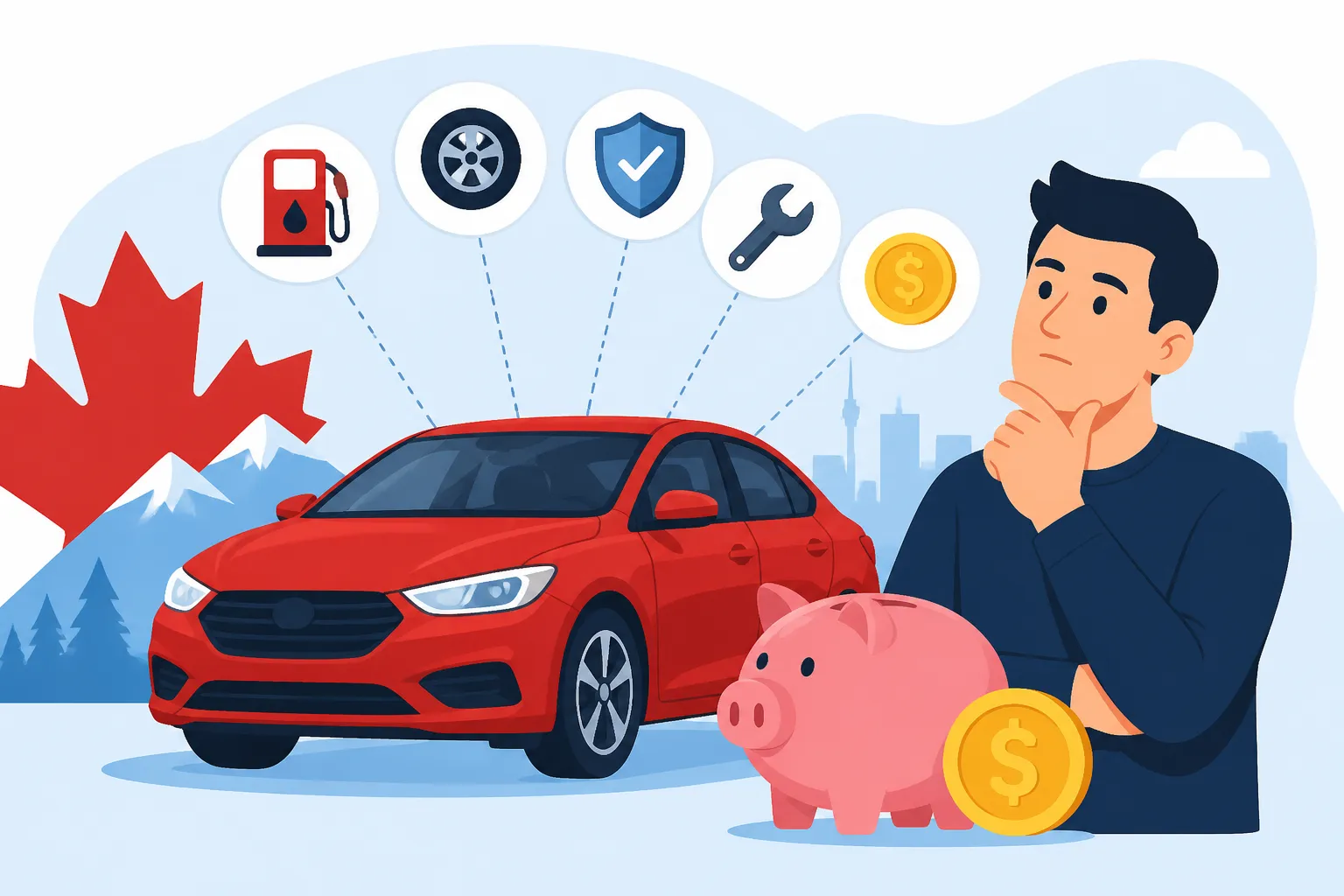
When you're budgeting for a car, it's easy to focus on the upfront cost or the monthly financing payment. But that's just the tip of the iceberg, my friends. The actual monthly cost to run a car in Canada encompasses a whole host of other expenses that quietly chip away at your savings. We're talking about everything from eye-watering insurance premiums and constantly fluctuating fuel prices to unexpected repairs and routine maintenance that you absolutely cannot skimp on. If you're pondering whether to ship your current vehicle or buy one when you arrive, services like Sirelo can help you calculate the moving logistics, but they can't predict the ongoing costs we're about to dive into. These hidden costs are often the most frustrating because they can be unpredictable and vary wildly depending on where you live and what you drive.
The Big Ticket Item: Car Insurance in Canada
Ah, car insurance. For many newcomers, this is where the real monthly shock sets in. You might be a seasoned driver with decades of experience from your home country, a perfect record, and never a claim, only to be quoted premiums that make your jaw drop.
Why Newcomers Get the Short End of the Stick
It's a frustrating reality: Canadian insurance companies often don't fully recognize your driving history from abroad. They see you as a "new driver" in the Canadian system, regardless of your actual experience. This translates directly into significantly higher premiums, sometimes for the first few years, until you establish a Canadian driving record. It's a bureaucratic hurdle that feels deeply unfair, but it's the system we're in. For example, a driver with 10+ years of experience from the UK might pay upwards of $300-$500 a month in Ontario for basic coverage simply because they lack Canadian history.
Moreover, the insurance landscape varies significantly by province. In British Columbia, Saskatchewan, and Manitoba, public auto insurance providers (like ICBC in BC or SGI in Saskatchewan) largely control the market, meaning less competition but often more standardized, sometimes higher rates for basic coverage. In provinces like Ontario and Alberta, it's a private market, which can lead to more competitive pricing, but also greater variability and, often, higher rates for perceived high-risk drivers, which newcomers unfortunately often are. You’ll want to look into How Much Is Car Insurance in Canada? specifically for your province, as the numbers can be vastly different.
Factors That Drive Your Monthly Premiums Sky-High
Beyond your newcomer status, several other factors contribute to those steep monthly premiums. Your age plays a role, with younger drivers generally paying more. The type of car you drive is huge – a flashy sports car will cost more to insure than a modest sedan, and older cars might have different risk profiles. Where you live within a province is also critical; urban centres like Toronto, Vancouver, or Montreal tend to have higher rates due to increased traffic density, theft rates, and collision frequency compared to smaller towns.
Your actual driving record, once you establish one in Canada, becomes paramount. Even a small speeding ticket can impact your rates for years. Insurers also look at how much you drive and where you park your car. All these pieces come together to create that daunting monthly figure. It really underscores why Understanding Vehicle Insurance and Registration by Province in Canada is so crucial, as each jurisdiction has its own quirks and costs.
Fueling Your Canadian Adventures: Gas Prices and Consumption
Beyond insurance, the next biggest bite out of your monthly car budget will likely be gasoline. And just like insurance, it's a cost that fluctuates and can sometimes feel entirely out of your control.
The Ups and Downs of Canadian Gas Prices
Canadian gas prices are a dynamic beast. They're influenced by global oil markets, the Canadian dollar's strength, and a patchwork of federal and provincial taxes. You'll often see prices change daily, sometimes hourly, and there can be significant differences even between neighbouring towns, let alone provinces. For instance, gas in Vancouver often carries a higher price tag due to additional regional taxes compared to, say, Calgary, which benefits from its proximity to oil and gas production.
Seasonally, you'll typically find prices creeping up in the spring and summer as demand for travel increases. Then there are those unexpected spikes due to geopolitical events or refinery issues. This volatility makes budgeting a bit of a guessing game, so it’s always wise to factor in a buffer when estimating your monthly fuel costs. You can use apps like GasBuddy to find the cheapest gas near you, which can save you a few dollars over time.
How Your Driving Habits and Vehicle Impact Fuel Costs
This one comes down to you and your ride. Are you driving a compact, fuel-efficient hybrid, or a thirsty SUV? Naturally, a smaller, more efficient vehicle will cost less to fuel. But even more than that, your driving habits play a massive role. A heavy foot on the accelerator, frequent short trips, and constant stop-and-go city driving will consume far more fuel than smooth highway cruising.
Consider your commute: someone driving 100 km round trip for work every day will have a significantly higher fuel bill than someone who only drives on weekends. Let’s say you have a mid-sized sedan that gets about 8 litres per 100 km, and gas is $1.80/litre. If you drive 1,500 km a month (a pretty standard commute plus errands), you're looking at roughly (1500 / 100) * 8 * $1.80 = $216 just for gas. If you have a bigger vehicle or a longer commute, that number can easily double or triple. Getting around in Toronto, for example, often involves a lot of start-stop traffic, which eats up more gas. Before you decide to buy, check out Is It Worth Owning a Car in Toronto? to get a realistic perspective on car ownership in a big city.
Keeping Your Ride Rolling: Maintenance and Repairs
This is the category that can throw your monthly budget completely off kilter if you're not prepared. Cars are complex machines, and they need regular care to function well, especially in Canada’s varying climate.
The Unavoidable Wear and Tear
Routine maintenance is non-negotiable. This includes regular oil changes (every 5,000-10,000 km, depending on your vehicle), tire rotations, fluid checks, and brake inspections. These might seem like small costs, but they add up, often averaging $50-$100 a month if you factor in preventative care. For example, a typical oil change might run you $60-$120, depending on the car and oil type.
Then there’s the Canadian winter, a true test for any vehicle. Winter tires, which are mandatory in Quebec and highly recommended across the rest of the country, are a significant upfront investment (often $800-$1500 for a set, plus installation), but they save lives and prevent accidents. If you average that cost over their lifespan, it adds another $20-$40 a month. Even simple things like windshield wiper fluid become a constant expense in winter to deal with slush and salt. It's truly a different ballgame compared to many other parts of the world.
Unexpected Breakdowns and Budgeting for the Worst
Beyond routine maintenance, cars have a knack for breaking down at the most inconvenient times, and repairs are rarely cheap. A dead battery in the middle of a Canadian winter, a seized brake caliper from road salt, or an unexpected transmission issue can quickly set you back hundreds, if not thousands, of dollars. This is why many expats I know set aside a dedicated "car emergency fund" – often $50-$100 a month – just for those inevitable, unforeseen repairs.
It's also worth noting that older cars, while cheaper to buy, often come with higher maintenance risks. If you're looking at How Do I Buy a Used Car in Canada?, remember to factor in potential repair costs. And once you purchase a car, you might need a How Do I Get a Safety Inspection for My Car in Canada? depending on your province, which can reveal issues that need fixing before you even get plates. The key is to be realistic and budget for both routine care and the occasional unpleasant surprise.
Beyond the Basics: Other Monthly and Annual Expenses
The costs don’t stop at insurance, fuel, and maintenance. There’s a whole other tier of expenses that you need to factor into your monthly budget to truly understand the cost of running a car in Canada.
Registration, Licensing, and Inspections
Each province requires you to register your vehicle and renew your licence plates annually, and there’s a fee for this. This isn't a monthly bill, but it's an annual expense that you should prorate into your monthly budget. For instance, How Much Is Vehicle Registration in Ontario? currently costs around $120 per year for passenger vehicles, which works out to about $10 a month. Factor in the cost of your driver's licence renewal as well, which might be every 2-5 years. If you're swapping out a foreign licence, getting a Canadian one can involve fees for tests and card issuance. Learn more about that process in How Do I Exchange My Foreign Driver's Licence in Canada?.
Furthermore, in some provinces or for specific situations (like selling a used car), safety inspections are required. While not a monthly cost, budgeting for these periodic expenses is important. Overall, staying on top of your How Do I Register a Car in Canada? and other legal requirements is essential, and they all come with associated fees.
Parking, Tolls, and Depreciation
These are the sneaky costs that often get overlooked but can add up significantly, especially if you live in or commute to a major city.
- Parking: In urban areas, parking can be incredibly expensive. A monthly parking spot in downtown Toronto or Vancouver can easily run you $150-$300, and hourly rates in public garages or street parking can be several dollars per hour. If you’re regularly paying for parking, this becomes a hefty monthly expense.
- Tolls: While not as prevalent as in some countries, Canada does have toll roads, most notably the 407 ETR in Ontario. If your commute takes you on a toll road, those charges will appear on your bill and can quickly accumulate to $50-$100+ per month. Ferries in places like British Columbia are also essentially tolls to get your car across water, adding to travel costs.
- Depreciation: This is the silent killer of your car’s value. The moment you drive a new car off the lot, it starts losing value, and that loss continues every month. While not a direct cash outflow, it's a real financial cost of ownership. Over the typical lifespan of a car, depreciation can amount to hundreds of dollars a month. It’s a good reason to think long-term when purchasing.
Remember, keeping connected while you're navigating new routes and tracking expenses can also add to your tech bill. Consider an eSIM from providers like Airalo to ensure you have data coverage for GPS and online banking without roaming charges, especially when you’re still getting settled.
Estimated Monthly Car Costs in Canada
To give you a clearer picture, here's a hypothetical breakdown of what you might expect to pay per month to run a mid-sized sedan in Canada. Please remember these are broad estimates and can vary wildly based on your province, city, driving record, car model, and personal habits.
| Expense Category | Lower Estimate (e.g., small city, experienced driver) | Higher Estimate (e.g., major city, newcomer driver) |
|---|---|---|
| Car Insurance | $150 | $550+ |
| Fuel (Gas) | $150 | $350+ |
| Routine Maintenance/Tires | $50 | $100+ |
| Repair Fund (Emergency) | $50 | $100+ |
| Registration/Licensing | $10 | $20+ |
| Parking/Tolls | $0 (if no commute/free parking) | $250+ (urban monthly parking & tolls) |
| TOTAL ESTIMATED MONTHLY COST | $410 | $1,370+ |
As you can see, the range is substantial. A newcomer driving a new SUV in downtown Toronto could easily be staring down a monthly bill of well over $1,000, not including their car loan payment. This table doesn't even factor in potential car washes, cleaning supplies, or accessories, which can be minor but recurring.
When planning your move, understanding all aspects of The Complete Guide to Cost of Living in Canada for Newcomers (2026) is paramount. A car is just one piece of the puzzle. You’ll also be looking at housing costs, utilities, and more. For example, setting up your The Newcomer Guide to Setting Up Utilities (Hydro, Gas, Internet) in Canada is another significant monthly expense to factor into your overall budget. Don't forget, if you have a family, costs like How Much Does It Cost to Send My Child to School in Canada? will also be a major consideration. Knowing the true costs helps you make informed decisions about your budget and lifestyle here. Navigating the vastness of Canada, even just within its major cities, means that for many, a car is a necessity, not a luxury, making these costs an unavoidable part of expat life.
Disclaimer
The information provided in this article is intended for general guidance and informational purposes only. While we strive to offer accurate and up-to-date content, circumstances, regulations, and costs in Canada are subject to change. Readers should always consult official government websites, licensed professionals, and relevant service providers for the most current and specific advice tailored to their individual situation. This article does not constitute legal, financial, or professional advice.