Are Private Schools Common in Canada?
Moving to Canada, you might arrive with a certain image of the education system – often touted as universally excellent and free. And while Canada's public schools are indeed fantastic, many expat families, like yours, start wondering if there are other paths, especially when seeking something specific for their children's unique learning needs or cultural background. You might ask, "Are private schools even common here, or is it just the public system?" This guide is here to unravel that very question, giving you a detailed look into Canada's private education landscape.
The Landscape of Private Education in Canada: A Closer Look
When you first land in Canada, the sheer prevalence and quality of the public school system can make it seem like private options are rare or niche. However, while the public system is undoubtedly the backbone of Canadian education, private schools absolutely exist, and they offer a vibrant, diverse, and sometimes highly specialized alternative. It's not a black-and-white situation, and understanding the nuances is key for any newcomer navigating school choices.
Dispelling the Myth: Public System Dominance
It's true, Canada proudly stands by its publicly funded education. In fact, over 90% of Canadian students attend public schools, which are tuition-free for residents. This system is robust, well-regulated by provincial governments, and aims to provide high-quality education to everyone, regardless of their socio-economic background. For many, this is one of the major draws of living in Canada, and it certainly plays a huge role in the Canadian identity. This strong public system can sometimes overshadow the private sector, leading newcomers to believe that private schools are either uncommon or solely for the ultra-wealthy. But that's not the full picture at all. If you're looking to understand the broader context, take a deep dive into Understanding the School System (Public, Catholic, Private) in Canada.
The reality is that while public schools are the norm, a significant number of families choose private education for various reasons. It’s a choice that reflects personal values, specific academic aspirations, or a desire for specialized environments not readily available in the public system. When you're making major decisions about your family's new life here, it's worth exploring all the avenues, just as you'd research The Best Places to Live in Canada for Newcomers: A Complete Guide (2027) to find the right community for your family.
The Diverse Spectrum of Private Schools
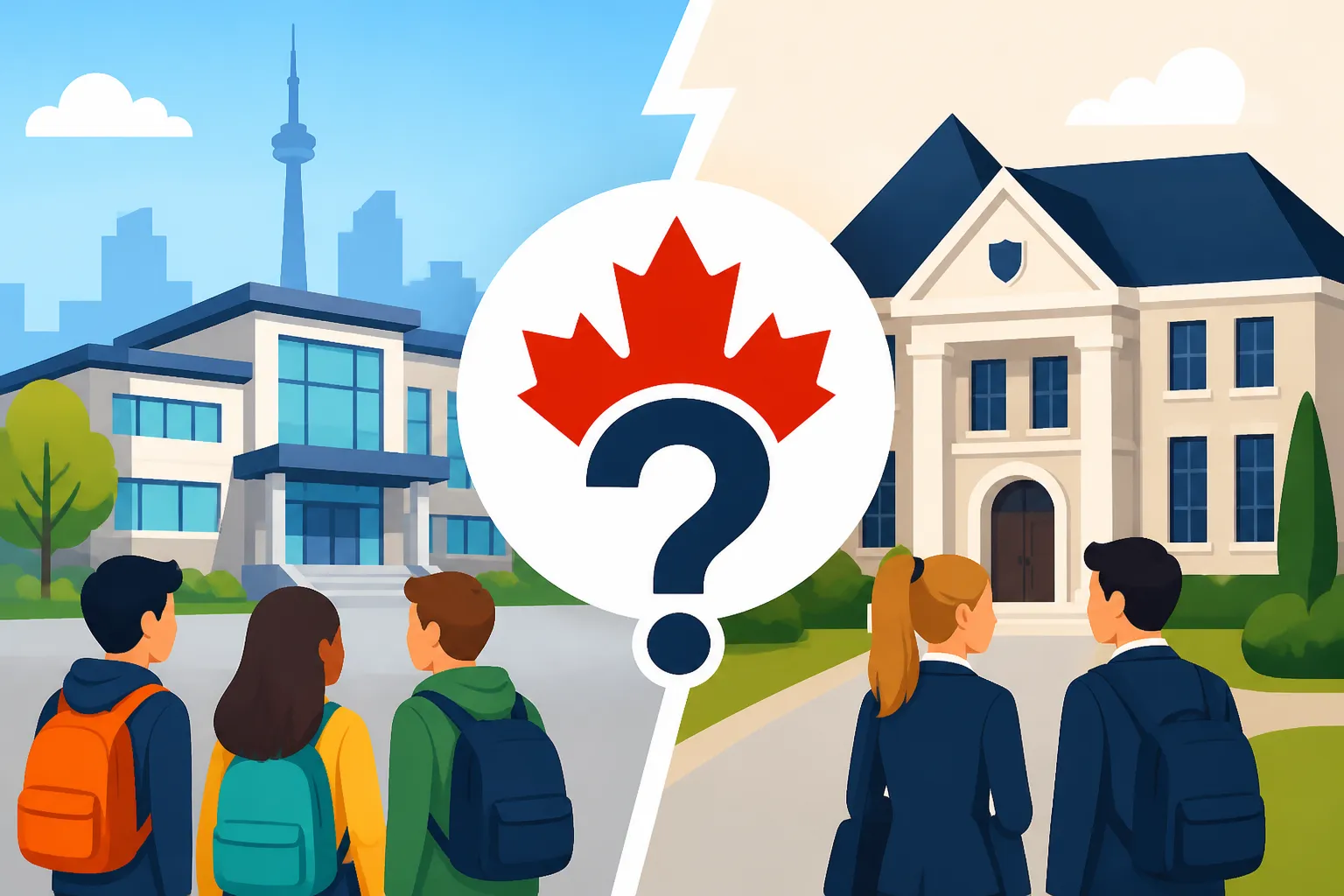
Far from being a monolithic entity, Canada's private school sector is incredibly varied. You'll find everything from highly academic, university-preparatory institutions to schools with a strong focus on arts, sports, or specific vocational training. There are religious schools – Catholic, Jewish, Islamic, and Christian – that integrate faith-based learning into their curriculum. You'll also encounter international schools, often catering specifically to expat families, offering curricula like the International Baccalaureate (IB) program or following the educational systems of other countries.
In large metropolitan areas like Toronto, Vancouver, and Montreal, you’ll see a higher concentration of private schools, often with a wider range of specialties. For instance, in Toronto, you might find prestigious schools like Upper Canada College or Havergal College, known for their rigorous academics and extensive extracurriculars, alongside smaller, specialized schools focusing on Montessori, Waldorf, or special education needs. These aren't just for the elite; they serve diverse communities seeking something beyond the public offering. When you’re weighing your housing options and considering different neighbourhoods – perhaps even consulting services like Sirelo for your move – remember that school locations are often a huge factor in where you decide to settle down.
Why Newcomers Often Look to Private Schools
As an expat, your family's needs can be unique. You might be coming from an educational system vastly different from Canada's, or your children might thrive in a particular environment. It’s completely valid to explore all options, and many newcomers find that private schools offer specific advantages that align perfectly with their goals.
Tailored Curricula and Special Programs
One of the most compelling reasons families opt for private education is the ability to access tailored curricula and specialized programs. While public schools adhere to provincial standards, private institutions often have the flexibility to go beyond, offering advanced placement courses, robust arts programs, specialized sports academies, or even unique language immersion experiences. For example, some private schools offer the International Baccalaureate (IB) program, which is globally recognized and can be very appealing to families who anticipate further international moves or want a curriculum that aligns with a global perspective. Other schools might specialize in STEAM (Science, Technology, Engineering, Arts, and Mathematics) or have exceptional music and drama departments.
This customization can be incredibly beneficial for children with specific talents or learning styles. If your child is a budding athlete, an aspiring musician, or has a keen interest in a particular field, a private school might offer the dedicated resources, expert coaches, and specialized facilities that a public school, with its broader mandate, might not be able to provide. It's about finding that perfect fit where your child can truly flourish and excel in their passions, a crucial aspect often considered when newcomers plan how to Enrol Your Child in a Canadian School.
Smaller Class Sizes and Enhanced Resources
Let's be honest, smaller class sizes can make a world of difference for a child's learning experience. In many private schools, you'll find a lower student-to-teacher ratio, meaning more individualized attention, more opportunities for one-on-one interaction, and a greater ability for teachers to truly understand and cater to each student's needs. This can be especially valuable for children who are adjusting to a new country, a new language, or a new academic system.
Beyond just class size, private schools often boast enhanced resources and state-of-the-art facilities. Think modern science labs, expansive sports complexes, dedicated performing arts studios, and cutting-edge technology integration. These resources are funded through tuition and donations, allowing for investments that might not be possible in the public system. This can lead to richer educational experiences, more extracurricular opportunities, and a generally more engaging and stimulating learning environment. As you dive into researching potential schools, you'll be spending a lot of time online, perhaps even making calls back home or connecting with other expat parents. Ensuring you have reliable internet access and a solid mobile connection, even with an eSIM from a provider like Airalo, will be absolutely crucial for all that virtual legwork.
Specialized Learning Environments Religious, International Baccalaureate
For many newcomer families, the desire for a specific learning environment is paramount. This often includes religious instruction, which many public schools, by their very nature of being secular, cannot provide. Canada has a strong tradition of faith-based private schools, including independent Catholic, Protestant, Jewish, Islamic, and other religious institutions. These schools integrate religious teachings and values into the daily curriculum, fostering a sense of community and identity that is deeply rooted in faith.
Similarly, families from abroad often seek out schools offering internationally recognized curricula such as the International Baccalaureate (IB) Programme. These programs are designed to provide a holistic, challenging education that prepares students for university and life in a globalized world. For families who move frequently or plan for their children to attend universities outside Canada, an IB curriculum can provide a seamless transition and a standardized, high-quality academic pathway. It's a way to maintain continuity and ensure their children are well-prepared, regardless of where their future takes them. This level of specific programming is a significant differentiator from the standard provincial public curriculum, and it's a major draw for the international community.
Understanding the Cost and Accessibility of Private Education
Now, let's talk about the elephant in the room: the cost. Unlike the publicly funded system, private education in Canada comes with a price tag, and it can be substantial. For newcomers already grappling with the overall The Complete Guide to Cost of Living in Canada for Newcomers (2026), understanding these expenses and the admissions process is critical.
Breaking Down Tuition Fees and Hidden Costs
Private school tuition fees vary dramatically across Canada, depending on the province, the school's reputation, its facilities, and whether it’s a day school or a boarding school. You might be looking at anywhere from $5,000 to over $30,000 annually for day schools, and significantly more for boarding options, which can easily exceed $60,000 per year. For specific insights, looking into How Much Are Private School Fees in Toronto? can give you a local example of these costs.
But tuition is just the starting point. There are often a host of "hidden" costs that can quickly add up. These might include:
- Application Fees: A non-refundable fee just to submit an application.
- Enrolment Deposits: Often required to secure a spot once accepted.
- Uniforms: Many private schools have mandatory uniforms, which can be expensive, especially for multiple children or specific athletic gear.
- Textbooks and Supplies: While some are included, specialized materials might be extra.
- Extracurricular Activities: Fees for sports teams, music lessons, clubs, and field trips can be substantial.
- Technology Fees: For devices or software.
- Transportation: If the school doesn't offer busing or it's not convenient, you'll be responsible for getting your child there and back.
- International Student Fees: If your child is studying on a study permit rather than being a permanent resident, there might be additional international student fees.
It's crucial to request a comprehensive breakdown of all potential costs when inquiring about a school to avoid any unwelcome surprises down the line. Remember, Canada values transparency, but it's always wise to ask direct questions about the total financial commitment.
Navigating Admissions and Application Processes
Unlike public schools where admission is generally determined by your residential address, private school admissions are a competitive and multi-step process. Each school has its own criteria and timeline, so it’s important to start researching early – sometimes a year or more in advance, especially for popular institutions.
Typically, the application process involves:
- Initial Inquiry and Information Gathering: Attending open houses, virtual tours, and requesting information packages.
- Application Submission: Completing detailed application forms, providing academic records (report cards, transcripts), letters of recommendation from previous teachers, and sometimes essays from the student.
- Admissions Testing: Many schools require standardized admissions tests (e.g., SSAT in North America) or their own internal assessments to gauge academic readiness.
- Interviews: Both the prospective student and their parents will often undergo interviews with admissions staff, or even the principal, to assess fit, personality, and alignment with the school's values.
- Tours and Shadow Days: Opportunities for the student to spend a day in classes to experience the school environment.
It’s a rigorous process designed to ensure the school admits students who will thrive in its specific environment. Families relocating to Canada should be prepared to gather and translate documents from their home country and factor in the time and effort required for these applications.
Financial Aid and Scholarship Opportunities
For families who find the tuition daunting but believe a private education is the best fit, there are often financial aid and scholarship opportunities available. These are typically based on either financial need or academic merit, sometimes a combination of both.
- Financial Aid/Bursaries: Many private schools offer means-tested financial aid programs. Families apply by submitting detailed financial information, and the school assesses their need based on income, assets, and other factors. The goal is to make the school accessible to a broader range of families.
- Scholarships: These are usually merit-based, awarded to students who demonstrate exceptional academic achievement, artistic talent, athletic prowess, or leadership potential. Some scholarships may cover a portion of tuition, while others might be full scholarships.
It's vital to research each school's specific offerings, eligibility criteria, and application deadlines for financial assistance. Don't assume you won't qualify; sometimes, a partial bursary can make a significant difference. You might even find some overlap in the application process with how families apply for How to Apply for a Scholarship at a Canadian University, even though that's for post-secondary education. The principles of demonstrating need or merit often remain consistent.
| Feature | Public School System | Private School System |
|---|---|---|
| Funding Source | Provincial government taxes | Student tuition fees, donations, endowments |
| Tuition Fees (Annual) | Free for residents | Varies greatly: $5,000 – $30,000+ (day), $30,000 – $80,000+ (boarding) |
| Curriculum | Follows provincial government standards | Provincial standards + specialized programs (IB, AP, religious) |
| Class Sizes | Generally larger (25-30+ students per class) | Generally smaller (15-20 students per class is common) |
| Admissions Process | Based on residential address (catchment area) | Selective: Application, testing, interviews, recommendations |
| Special Programs | Standardized, some specialized schools/programs | Wide range: IB, AP, Montessori, Waldorf, arts, sports, religious |
| Extracurriculars | Available, but may be limited by budget/resources | Extensive, often integrated into tuition, specialized facilities |
| Resources & Facilities | Good, but varies by school/district | Often state-of-the-art: labs, sports centres, tech, arts studios |
| Teacher-Student Ratio | Higher | Lower, more individualized attention |
| Accessibility | Universal for residents | Limited by cost, selective admissions, geographic location |
How to Find the Right Private School for Your Family
Choosing a school for your child is one of the biggest decisions you'll make when moving to Canada. It’s not just about academics; it's about finding a community where your child feels safe, challenged, and happy. This is especially true for newcomers, and the process can feel overwhelming.
Researching Schools and Accreditation
Once you’ve decided to explore private education, thorough research is your best friend. Start by identifying the type of school that best suits your family's needs and values. Are you looking for academic rigour, a specific faith-based education, a focus on arts, or perhaps a learning environment with a strong international flavour like an IB school?
Begin your search online. Most private schools in Canada have comprehensive websites detailing their philosophy, curriculum, facilities, and admissions process. Look for schools that are accredited. In Canada, private schools operate under provincial regulations, and many also seek accreditation from independent bodies like Canadian Accredited Independent Schools (CAIS). CAIS accreditation, for example, signals a commitment to high standards in governance, leadership, teaching, and facilities. While not all excellent private schools are CAIS-accredited, it's a good benchmark to consider.
Remember to consider geographical location. If you’re still figuring out where to settle, research schools in areas known for being family-friendly. For example, you can delve into How to Find Family-Friendly Neighbourhoods in Toronto to match potential school locations with desirable living areas. Ultimately, whether you're trying to figure out the best city for your family's new life or just trying to navigate the logistics of getting all your belongings shipped, finding reliable information and support, perhaps even from services like Sirelo, can make all the difference.
Visiting Campuses and Speaking with Staff
Online research can only take you so far. Whenever possible, visiting the schools in person is invaluable. This gives you a chance to feel the school’s atmosphere, see the facilities firsthand, and observe student-teacher interactions. Attend open houses, sign up for guided tours, and if possible, arrange a private meeting with an admissions officer or even the principal. These interactions are crucial for understanding the school's culture and determining if it’s truly a good fit for your child.
During your visits, don't be afraid to ask plenty of questions:
- What is the school's philosophy on learning and discipline?
- What kind of support is available for students, especially those new to Canada?
- What is the average class size and teacher-to-student ratio?
- What are the qualifications and experience of the teaching staff?
- What extracurricular activities are offered, and how do students get involved?
- What is the school's approach to technology in the classroom?
- What kind of parent involvement is encouraged?
Speaking with current parents, if possible, can also provide invaluable insights into the day-to-day realities of the school. While the Canadian public school system is highly regarded, many expats find that the specific programming or smaller class sizes offered by private institutions, which often cater to a more international clientele, really resonate with their family's needs. This is where researching effectively, and staying connected with tools like Airalo, becomes invaluable. Ultimately, the right school is one where your child will thrive, feel supported, and be prepared for their future in Canada and beyond.
Disclaimer
The information provided in this guide is intended for general informational purposes only and does not constitute professional advice. While we strive to provide accurate and up-to-date content, circumstances can change rapidly. Readers should conduct their own research and consult with educational advisors, school admissions offices, and other relevant professionals for advice tailored to their specific situation.