How Much Does It Cost to Send My Child to School in Canada?
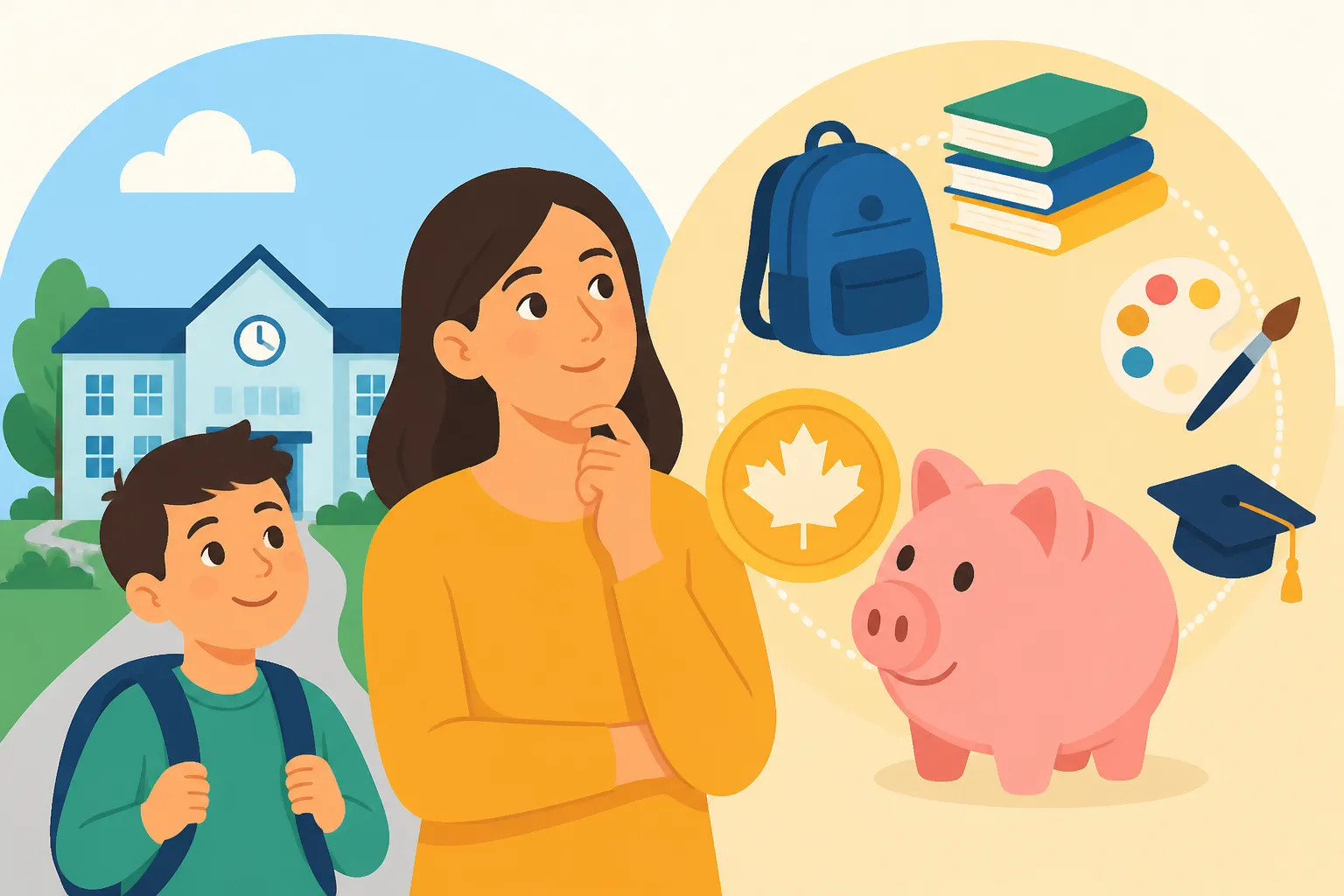
One of the biggest worries for expat parents moving to Canada isn't just navigating the immigration process or finding a place to live, it's also figuring out how to get your kids settled in school and, crucially, how much it's actually going to cost you. Let's be honest, the idea of "free" public education often comes with a hefty dose of hidden expenses that no one tells you about upfront. This guide is here to unravel those costs, whether you're considering the public system or eyeing a private school, so you can plan your budget with confidence.
Understanding Canada's Public School System and Its True Costs
When you first land in Canada, the concept of "free" public education is often touted as one of the country's major selling points, and for good reason! For most newcomers who are permanent residents or citizens, enrolling your child in a public elementary or secondary school doesn't involve tuition fees. This is a massive relief compared to many other countries where state schools come with substantial charges. You'll enroll your children in the school designated for your residential area, often managed by a school board that oversees multiple schools in a district. This system is funded primarily through provincial and municipal taxes, meaning your tax dollars contribute to it, but you don't pay a direct fee per child. It's a huge benefit, truly.
However, calling it entirely "free" is a bit of a misnomer, and this is where many expat families, myself included, have faced a rude awakening. While the core academic program is covered, there are plenty of supplementary costs that add up quickly. Think about it: every child needs school supplies, right? Then there are those "voluntary" fees that often feel anything but optional for various school activities, and let's not forget the ever-present fundraising efforts. You'll quickly realize that getting your child into a Canadian public school is just the first step; keeping them there with everything they need is another financial journey entirely.
"Free" Isn't Always Free: Hidden Fees and Supplies
Let's talk about the absolute essentials first: school supplies. Every September, stores across Canada are flooded with parents buying notebooks, pens, pencils, binders, calculators, and often specific art supplies or graphing paper. Schools typically provide a list of required items, and these lists can be surprisingly extensive. For a child in elementary school, you might spend anywhere from $50 to $150 annually on supplies, easily doubling or tripling that for high schoolers who need more specialized equipment or texts. And don't forget the backpack – a good quality one can set you back $40-$80 and needs replacing every few years.
Beyond the basic supplies, many public schools have "activity fees" or "material fees" which, while technically voluntary, are often necessary for your child to participate fully. These might cover things like agenda books, locker rentals (in high school), technology fees for access to school computers or software, or even a small fee for certain classroom projects. While these fees are usually modest, perhaps $20-$100 per year, they accumulate, especially if you have multiple children. It's crucial to budget for these extras, as they’re a standard part of the Canadian school experience, and you don’t want your child feeling left out.
Extracurricular Activities and Their Price Tags
This is where the costs can really begin to snowball. Public schools in Canada offer a fantastic range of extracurricular activities, from sports teams like soccer, basketball, and hockey, to arts clubs like band, choir, and drama, and academic clubs such as debate or robotics. While the school staff often volunteer their time to run these, many activities come with direct costs. For instance, joining a school sports team will likely require you to purchase uniforms, specific footwear (cleats, running shoes), and sometimes even specialized equipment like a hockey stick or shin pads. Transportation to away games, if not covered by the school, might also be your responsibility.
Beyond school-run activities, many Canadian children participate in community-based sports leagues or private lessons, which can be significantly more expensive. Imagine your child wants to play competitive hockey – the equipment alone can cost hundreds, if not thousands, of dollars, not to mention league registration fees, ice time, and travel. These are often seen as essential for social development and integrating into Canadian culture, but they come at a steep price. If you’re a newcomer and your children are enthusiastic about joining everything, you might want to look into organizations like Jumpstart or KidSport, which offer financial assistance for youth sports programs for eligible families.
Transportation and Lunch: Daily Expenses
Getting your child to and from school is another often-overlooked cost. In many Canadian cities and towns, school bus services are provided for students living beyond a certain distance from their designated school. However, this isn't always universal, and eligibility criteria vary by school board. If your child isn't eligible for a bus, or if you live close enough that it's considered walkable but you prefer driving, you're looking at fuel costs, or potentially public transit passes. Understanding the local public transit options, like using a Presto Card and Public Transit in Canada, could be a savvy move for older children or if you're navigating urban areas like Toronto or Vancouver.
Then there's the daily ritual of lunch. While some schools offer cafeterias or hot lunch programs, these are rarely free. Packed lunches are the norm for most Canadian students, meaning you'll be spending on groceries for sandwiches, snacks, and drinks. Over a school year, these daily expenses add up considerably. If your child buys lunch even once a week, that’s an extra $5-$10 per meal. For families on a tighter budget, planning meals and packing lunches is a significant way to control these recurring costs, but it requires time and effort. When thinking about your overall Cost of Living in Canada for Newcomers, these daily school expenses really need to be factored in.
Exploring Private and International School Tuition Fees
For some expat families, particularly those accustomed to private education in their home country or those seeking specific programs, private and international schools in Canada are a popular choice. Unlike the public system, these schools are fee-paying and often offer smaller class sizes, specialized curricula (like International Baccalaureate or Montessori), advanced facilities, and a wider array of extracurricular options. Many also cater specifically to an international student body, which can make the transition smoother for children moving from abroad. However, the financial commitment here is substantial, and it’s important to go in with eyes wide open.
The decision to choose a private school is often driven by factors like academic reputation, specific language immersion programs, religious affiliation, or simply a desire for a different educational environment. Families might also consider private options if they are on a temporary visa that doesn't grant access to "free" public education, or if they’re looking for options where they can Enrol Your Child in a Canadian School more quickly without being tied to a specific residential catchment area. But be prepared for sticker shock; the tuition fees can range from significant to truly astronomical, depending on the school and its offerings.
The Wide Range of Private School Costs
Private school tuition in Canada varies immensely. For a day school, you might be looking at anywhere from $10,000 to $30,000+ per year for elementary education, and $15,000 to $40,000+ per year for secondary school. Some elite, well-established private schools in major cities like Toronto, Vancouver, or Montreal can even exceed $50,000 annually for day students. If you're considering a boarding school, the costs can skyrocket further, easily reaching $60,000 to $80,000+ per year, as this includes accommodation, meals, and often a more intensive program.
International schools, which often follow a curriculum like the International Baccalaureate (IB) or a foreign national curriculum, tend to be on the higher end of this spectrum. For example, schools like the Toronto French School or the Vancouver Waldorf School often have tuition fees upwards of $20,000-$30,000. These schools pride themselves on a global perspective and often prepare students for universities worldwide, which is a major draw for expat families. Remember, these figures are just for tuition, and they don’t include the many other associated costs that will pop up throughout the year.
Factors Influencing Private School Fees
Several factors contribute to the hefty price tag of private education. Firstly, the reputation and academic standing of the school play a huge role. Schools with a long history of academic excellence, high university acceptance rates, or specialized programs often command higher fees. Secondly, facilities and resources are a major differentiator; private schools frequently boast state-of-the-art science labs, extensive athletic complexes, performing arts theatres, and smaller class sizes, all of which require significant investment and staffing.
Thirdly, the curriculum type impacts cost. Schools offering international programs like IB, or those with a specific pedagogical approach (e.g., Montessori, Waldorf), usually have higher fees due to specialized teacher training, accreditation, and materials. Location also matters; private schools in expensive urban centres will naturally have higher operating costs, which are passed on to families. When comparing your options, consider not just the advertised tuition but also the value you perceive in these specific offerings for your child’s educational journey. For those thinking of making a big move to Canada and are weighing these options, a moving service like Sirelo can help you compare and find reputable movers to manage the logistics, allowing you to focus on crucial decisions like schooling.
Additional Costs in Private Education
Just like public schools, private schools come with a host of additional expenses beyond tuition. Uniforms are almost always mandatory in private schools and can be a significant initial outlay, potentially $500-$1000 for a full wardrobe, plus replacement costs. Textbooks and specialized course materials, which might be included in public school funding, are often extra in private institutions. Field trips, excursions, and international travel programs (common in many private schools) can add hundreds or even thousands of dollars to your annual bill.
Extracurricular activities, while often more diverse and high-quality, also come with costs. Sports teams might have additional fees for coaching, equipment, or travel, and music or drama programs could require instrument rentals, private lessons, or costume expenses. Moreover, private schools often have development funds or capital campaigns, and while donations may be voluntary, there can be an expectation of financial contribution from families. It's essential to ask for a comprehensive breakdown of all potential fees when inquiring about a private school to avoid any unwelcome surprises.
Beyond Tuition: Other Significant Education-Related Expenses
Whether your child attends public or private school, there are broader educational expenses that every parent in Canada should budget for. These aren't tied directly to tuition or daily school operations but are crucial for a well-rounded educational experience and future planning. As an expat parent, you're not just thinking about getting through the school year, but also about setting your child up for success in the long term, which means looking ahead to post-secondary education and providing supplemental learning opportunities.
Post-Secondary Planning: Saving for University or College
Canada has an excellent post-secondary education system, but university and college tuition, especially for international students (should your child not attain PR status by then), can be very expensive. Even for Canadian citizens and permanent residents, tuition fees, living expenses, and books for a four-year degree can easily exceed $80,000-$100,000. Starting to save early is paramount. Registered Education Savings Plans (RESPs) are government-registered savings accounts designed specifically for this purpose. The Canadian government offers grants, like the Canada Education Savings Grant (CESG), which can match a portion of your contributions, essentially giving you free money for your child's future education.
It's never too early to start looking into programs like RESPs. Understanding how they work and contributing regularly can make a substantial difference in easing the financial burden of university or college down the line. Even if your child is still in elementary school, these savings grow tax-deferred, and the government grants are a powerful incentive. This foresight is a game-changer for many families, helping to demystify the long-term financial picture of education in Canada.
Technology, Tutors, and Enrichment Programs
In today's digital age, technology is an indispensable part of education. Most students need access to a reliable computer or laptop for homework, research, and online learning, especially as they get into high school. A decent laptop can cost anywhere from $500 to $1500, and you'll want to factor in internet access at home. For keeping in touch with the school, accessing online resources, or even for emergency communication, having a reliable phone and data plan is crucial. As a newcomer, looking into eSIM providers like Airalo could be a smart way to get connected quickly and affordably, ensuring you're always reachable for school updates or emergencies without the hassle of traditional SIM cards or expensive roaming.
Beyond technology, many students benefit from supplementary learning. If your child struggles in a particular subject or wants to excel, private tutoring is a common solution. Tutors can charge anywhere from $30 to $80+ per hour, and even a few hours a week can add up significantly over a school year. Enrichment programs, such as coding camps, summer academic programs, or advanced arts classes, also come with their own fees, ranging from a few hundred to several thousand dollars depending on the duration and intensity. These are often seen as investments in your child's future and can greatly enhance their academic profile.
Uniforms, Field Trips, and School Events
While we touched on uniforms for private schools, even public schools might have dress codes or specific requirements for gym class, which could necessitate buying certain athletic wear. Field trips, both local and sometimes overnight, are a common and enriching part of the Canadian school experience. These trips, whether to a local museum, an outdoor education centre, or a theatrical performance, usually require parental contributions. A day trip might cost $20-$50, while an overnight trip could be several hundred dollars.
School events like dances, proms, yearbooks, and graduation ceremonies also come with associated costs. High school graduation, for instance, often involves cap and gown rentals, photography, and a prom ticket, which can easily total a few hundred dollars. Then there are those less tangible, but still important, social expenses like birthday party gifts for classmates or contributions to class gifts for teachers. These seemingly small costs really do add up throughout the year and require careful budgeting. Planning your move well can help reduce stress and costs; consider guides like The Complete Guide to Moving to Canada: Your First 90 Days to get all your ducks in a row.
Here’s a snapshot comparing potential annual costs (excluding post-secondary savings) for a child in a mid-range Canadian city like Calgary, keeping in mind these are estimates and can vary widely:
| Category | Public School (Annual Estimate) | Private Day School (Annual Estimate) |
|---|---|---|
| Tuition/Fees | $0 – $150 (Activity fees) | $15,000 – $35,000 |
| School Supplies | $100 – $300 | $150 – $400 |
| Uniforms/Dress Code | $0 – $100 (Gym strip, specific items) | $500 – $1,000+ |
| Extracurricular Activities | $100 – $1,000+ | $300 – $2,000+ |
| Transportation | $0 – $1,000 (Bus pass, fuel) | $0 – $1,500 (Bus, school shuttle, fuel) |
| School Lunches/Snacks | $800 – $1,500 | $800 – $1,500 (or included in boarding) |
| Technology (Laptop/Internet) | $200 – $500 (Annual share) | $200 – $500 (Annual share) |
| Tutors/Enrichment | $0 – $2,000+ | $0 – $3,000+ |
| Field Trips/Events | $50 – $300 | $100 – $1,000+ |
| Total Estimated Annual Cost | $1,250 – $6,850+ | $17,050 – $46,200+ |
Note: These are general estimates and can fluctuate significantly based on individual choices, location, and the specific school.
Ultimately, sending your child to school in Canada, even through the public system, isn't truly "free." However, compared to many other countries, the foundational public education is a tremendous benefit. The key is to be aware of the myriad of extra costs that will inevitably arise, and to budget accordingly. Researching the local school board’s policies, talking to other expat parents, and planning for both the expected and unexpected expenses will put you in a much stronger position to give your child the best possible education in their new Canadian home. If you're looking for more details on specific provincial plans, you can also check out resources like Understanding the School System (Public, Catholic, Private) in Canada.
Disclaimer
The information provided in this guide is for general informational purposes only and does not constitute financial, educational, or legal advice. While we strive to keep the information up-to-date and accurate, costs, policies, and regulations in Canada are subject to change. Readers should consult with relevant educational institutions, government bodies, or financial advisors for specific, personalized advice regarding their individual circumstances.