How Do I Register a Car in Canada?
Alright, let's talk about registering a car in Canada. I know, it sounds like a simple enough task, right? You just go to an office, show some papers, and boom, you've got plates. But for those of us who've moved here from abroad, or even from another Canadian province, the reality is often a confusing maze of provincial regulations, unexpected fees, and a stack of documents you didn't even know you needed. This guide is here to help you cut through that bureaucratic fog and get your vehicle properly registered, insured, and ready for the road.
The Initial Hurdles: Understanding Provincial Differences
When you first arrive in Canada and start thinking about getting around, whether it's by buying a car or bringing your own, you quickly learn that Canada isn't just "Canada" when it comes to things like vehicle registration. It's 10 provinces and 3 territories, each with its own set of rules, agencies, and quirks. This isn't like some countries where one central system handles everything; here, the provincial government runs the show.
Provincial Variations: It's Not a One-Size-Fits-All
This is perhaps the biggest hurdle newcomers face: the sheer variation. What works in Ontario might be completely different in British Columbia or Quebec. For instance, in Ontario, you'll deal with ServiceOntario for your driver's licence and vehicle registration. Head west to British Columbia, and you'll be navigating the waters of ICBC (Insurance Corporation of British Columbia), which handles both insurance and registration in a public monopoly. In Quebec, it’s the Société de l'assurance automobile du Québec (SAAQ). Alberta has a registry agent system, where private businesses are authorized to perform government services like vehicle registration.
This means your first step always has to be figuring out which province you're in and then looking up their specific agency and requirements. Don't assume anything. If you're planning a big move across the country with your vehicle, services like Sirelo can help with the logistics of moving your belongings, but the administrative burden of vehicle registration will fall squarely on your shoulders in your new province. I remember when my friend moved from Alberta to Quebec; he thought his Alberta plates would give him a grace period. Nope! He had to go through the whole process again, including a safety inspection unique to Quebec. It was a headache he hadn't anticipated.
| Province/Territory | Primary Registration Authority | Key Distinctive Feature | Typical Proof of Residency Needed |
|---|---|---|---|
| Ontario | ServiceOntario | Requires separate private insurance, then register with ServiceOntario. | Utility bill, lease agreement, bank statement, driver's licence. |
| Quebec | SAAQ | Public insurance (basic) included with registration; can top up with private. Bilingual (French/English) services. | Lease, utility bill, pay stub, provincial health card (RAMQ). |
| British Columbia | ICBC | Public insurance and registration handled by one Crown corporation. Mandatory basic insurance. | BC Services Card, utility bill, tenancy agreement, payroll stub. |
| Alberta | Registry Agents | Privately operated registry agents handle services; requires separate private insurance. | Utility bill, bank statement, lease, driver's licence. |
| Manitoba | MPI | Public insurance and registration. Often requires vehicle safety inspection upon import. | Utility bill, lease, employment letter, provincial health card (MB Health Card). |
| Nova Scotia | Access Nova Scotia | Requires separate private insurance. Vehicle inspections are often required for out-of-province vehicles. | Utility bill, lease agreement, bank statement, property deed. |
| New Brunswick | Service New Brunswick | Requires separate private insurance. | Utility bill, lease, employment letter, driver's licence. |
| Saskatchewan | SGI | Public insurance and registration. Mandatory basic insurance. | Utility bill, lease, employment letter, SGI-issued photo ID. |
| Newfoundland & Lab. | Service NL | Requires separate private insurance. | Utility bill, lease, bank statement, driver's licence. |
| Prince Edward Isl. | Access PEI | Requires separate private insurance. | Utility bill, lease, bank statement, employment letter. |
Documents You'll Absolutely Need
Regardless of the province, certain core documents will be universally requested, and you must have them ready. If you've just landed in Canada, getting your documents in order is the first big step in any administrative process.
First up, proof of identity and legal presence in Canada. This typically means your passport, your work permit, study permit, or permanent resident card. They need to see that you're legally allowed to live here. Don't just bring one; bring two pieces of ID, often one with a photo.
Secondly, proof of residency in the specific province. This is where your utility bills, a signed lease agreement, or a provincial health card really come into play. They need to confirm you actually live there and aren't just trying to register a car for someone else. This can be tricky if you've just moved and haven't accumulated many bills yet. Sometimes a letter from an employer or school can help, but it's best to call ahead and ask.
Third, the vehicle's ownership documents. If you're importing a vehicle from outside Canada, this is where it gets complex. You'll need the original title, registration, or proof of ownership from your previous country. If you're buying a car in Canada, you'll need the "bill of sale" from the seller and the "vehicle permit" (also known as the "ownership" or "registration document") that the previous owner signed over to you. Make absolutely sure the VIN (Vehicle Identification Number) on the document matches the car itself!
Finally, any importation documents. If your vehicle is coming from outside Canada, you'll have had to go through the Canada Border Services Agency (CBSA) at the border. They'll give you forms like a Vehicle Import Form (Form 1) or a "Statement of Compliance" label. These are critical for proving your vehicle legally entered the country and meets Canadian safety standards. I still remember the stress of getting my old car through customs – so many forms, and they scrutinize every detail! It's a testament to the comprehensive guide for moving to Canada that details how important it is to prepare these documents well in advance.
Step-by-Step: Registering Your Vehicle as a Newcomer
Now that we've covered the provincial nuances and the general documents, let's walk through the actual process. It's a sequence of events, and missing a step can send you right back to square one, trust me.
Getting Your Driver's Licence First
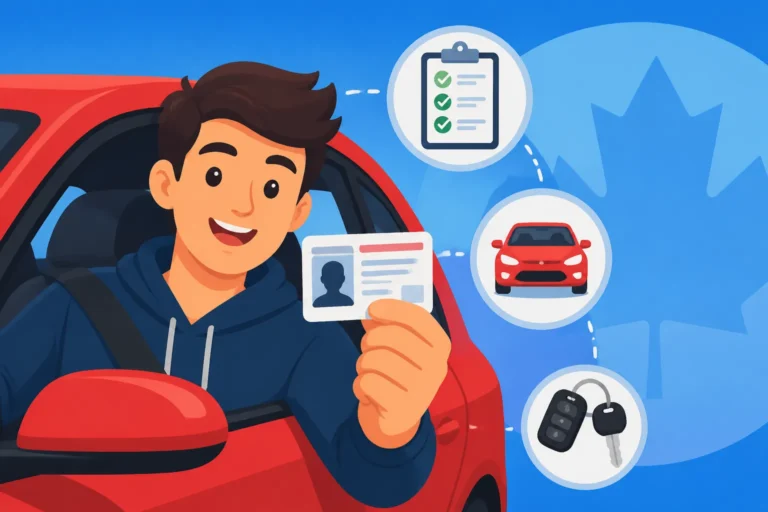
This might seem obvious, but you cannot register a car in your name without a valid driver's licence. And no, your international driver's permit or foreign licence might not cut it for long. Each province has rules about how long you can drive with a foreign licence before needing to switch to a provincial one.
For most newcomers, the process involves exchanging your foreign licence for a Canadian one, or, if your country doesn't have a reciprocal agreement, going through the full graduated licensing process (G1/G2/G). You’ll likely need to pass a knowledge test and one or more road tests. This is a crucial first step. Ensure you know how to exchange a foreign driver's licence in Canada as this can significantly impact your ability to register a vehicle and get insurance. Some provinces might allow you to begin the registration process with a valid foreign license if you've just arrived and are within the grace period (usually 60-90 days), but you'll still need to be actively pursuing your provincial licence.
Vehicle Importation and Inspections
If you're bringing your car from outside Canada, this is a big one. Even if you drive it across the border yourself, it's considered an import. You must meet the requirements of the Registrar of Imported Vehicles (RIV) program. Most vehicles less than 15 years old, or buses less than 15 years old, or trailers, need to go through this. Certain vehicles might be inadmissible. The RIV program ensures your vehicle meets Canadian safety standards.
This usually involves:
- Declaration at the Border: When you cross into Canada, you must declare your vehicle to the Canada Border Services Agency (CBSA). They'll process the necessary paperwork and charge any applicable duties and taxes.
- RIV Inspection: After clearing customs, you'll receive a Form 1 (Vehicle Import Form). You then pay the RIV fee, and within 45 days, you have to get an inspection done at a designated RIV inspection centre (often a Canadian Tire or similar shop). They'll check things like daytime running lights, bumpers, and other safety features.
- Provincial Safety Inspection: Even if your vehicle passes the RIV inspection, many provinces will require their own provincial safety inspection, especially for out-of-province or imported vehicles. This is a thorough check of the vehicle's mechanical condition. This is often the point where you find out about unexpected repairs needed to pass. My neighbour, Mark, brought his beloved truck from the US, and it needed new brakes and tires to pass the Ontario safety inspection, adding an unforeseen cost.
If you're buying a car within Canada, and it's from another province, you will almost certainly need a provincial safety inspection. If you're buying it within the same province, a safety certificate might still be required by the seller, depending on the provincial rules for private sales.
Securing Insurance – A Non-Negotiable
You absolutely cannot register a vehicle in Canada without proof of valid vehicle insurance. This isn't optional; it's the law. In provinces like British Columbia, Saskatchewan, and Manitoba, the provincial government provides basic insurance through Crown corporations (ICBC, SGI, MPI respectively). You'll typically arrange this directly with them. In other provinces, like Ontario, Alberta, and the Atlantic provinces, you'll need to purchase private insurance from a company like Intact Insurance, Aviva, or Desjardins.
Finding affordable car insurance as a newcomer can be a huge pain. Insurance companies here heavily rely on your Canadian driving history and credit score. If you don't have either, your premiums can be sky-high. My advice:
- Get quotes from multiple providers. Don't just go with the first one.
- Be prepared to provide proof of your driving history from your home country. Some insurers will give you credit for previous driving experience if you can provide official letters from your past insurance companies.
- Take a Canadian driving course. This can sometimes help reduce premiums.
- Consider a used, less powerful car. These are often cheaper to insure.
Make sure you understand your options and how to buy private health insurance as a newcomer in Canada, as the general principles of navigating insurance providers are similar.
Finally, the Registration Itself
Once you have your provincial driver's licence, your vehicle has passed all necessary inspections, and you have proof of insurance, you can finally head to the provincial vehicle registration office (e.g., ServiceOntario, ICBC, SAAQ, or a local registry agent).
Here's what you'll typically do:
- Gather all documents: Driver's licence, proof of provincial residency, proof of ownership (bill of sale and previous vehicle permit if buying in-province, or import documents and title if importing), safety inspection certificate, and proof of insurance.
- Fill out the application: There will be forms to complete, usually on-site.
- Pay the fees: Registration fees vary by province and vehicle type. You'll also pay for your licence plates and often a permit sticker that goes on your plate (though some provinces like Ontario have eliminated the sticker fee for light vehicles).
- Receive your plates and permit: You'll walk out with your new licence plates and a vehicle permit document. This permit is proof of ownership and must be kept in your car at all times when driving. It's often requested during routine traffic stops.
Remember that each province will have slight variations. For instance, in Quebec, if you are buying a used vehicle from a private seller, you pay the provincial sales tax (QST) directly at the SAAQ office when you register the vehicle, based on the estimated value of the vehicle, not necessarily the sale price on the bill of sale. This can be a nasty surprise if you got a great deal! Always check the specific provincial rules.
The Ongoing Responsibilities: Renewals and Other Considerations
Registering your car isn't a one-and-done deal. There are ongoing responsibilities and specific situations you need to be aware of.
Annual Renewals: Don't Miss Them!
Vehicle registration (and sometimes your plate sticker, if applicable) isn't permanent. You'll need to renew it periodically, usually annually or every two years. Provinces typically send out renewal reminders by mail or email, but it's ultimately your responsibility to ensure it's renewed on time. Driving with an expired registration can lead to fines, and your insurance might even be invalid in the event of an accident.
The renewal process is usually simpler than the initial registration:
- Proof of Insurance: You'll need current proof of insurance.
- Driver's Licence: A valid driver's licence.
- Pay Fees: Pay the renewal fees.
- Emissions Tests (where applicable): In some regions, like parts of Ontario in the past, vehicles needed to pass emissions tests for renewal. While Ontario has largely phased this out for light-duty vehicles, it's worth checking if your province has any specific environmental compliance requirements.
Many provinces now offer online renewal services, which can save you a trip to the office. It's often a good idea to set a calendar reminder a month before your registration expires, just in case the official reminder gets lost in the mail.
Selling Your Car or Moving Provinces
Life in Canada for an expat can involve moves, whether to a new home or even a new province. If you sell your car, you'll need to properly transfer ownership to the new buyer. This typically involves signing over the "vehicle permit" and providing a "bill of sale." The exact procedure and forms will be specific to your province, and both you and the buyer usually need to report the transaction to the provincial authority. Failing to properly transfer ownership can leave you liable for tickets or accidents involving the car even after you've sold it.
If you move to a new province, you will need to re-register your car in your new province of residence. This means going through a process similar to importing a vehicle, but from a Canadian province. You'll need a new provincial driver's licence, new insurance (if moving from a private to public insurance province, or vice-versa), and very likely a new provincial safety inspection. This is yet another instance where provincial differences come to light. The guide on understanding vehicle insurance and registration by province in Canada would be a highly relevant read for anyone considering such a move.
It's a lot to take in, I know. But by breaking it down province by province, step by step, you can navigate the Canadian vehicle registration process with a bit more confidence. Just remember to be patient, do your homework for your specific province, and always double-check your documents. You'll be cruising the Canadian roads in no time!
Disclaimer
The information provided in this article is intended for general guidance and informational purposes only, and does not constitute professional legal, financial, or immigration advice. While we strive to keep the information up to date and correct, regulations and procedures in Canada, particularly concerning provincial vehicle registration, can change frequently. Always consult with the official provincial government websites or relevant authorities for the most current and accurate information pertaining to your specific situation.