Public vs Private Healthcare in Canada: What Newcomers Need to Know
One of the most jarring shocks for newcomers to Canada is realizing that "free healthcare" isn’t a simple, all-encompassing reality. You might arrive expecting a seamless transition, only to find yourself caught in a confusing web of provincial waiting periods, out-of-pocket costs for basic medications, and a desperate search for a family doctor. This guide clarifies exactly how the public and private systems interact so you can protect your family's health and finances from day one.
Understanding the Foundation of the Canadian Healthcare System
The Canadian healthcare system is often misunderstood as a single, nationalized entity. In reality, it is a collection of thirteen provincial and territorial insurance plans, all bound by the federal Canada Health Act. This means that while the core principles remain the same across the country—portability, accessibility, and public administration—your actual experience of care will shift significantly depending on whether you land in Toronto, Vancouver, or Halifax. Experienced expats should know that the "public" part of the system is strictly for medically necessary hospital and physician services. Everything else often falls into a grey area that you need to be prepared for.
The Canada Health Act and Universal Coverage
The Canada Health Act is the legal backbone of the system, ensuring that all residents have access to "medically necessary" services without paying at the point of use. This covers things like emergency room visits, surgeries, and consultations with your primary care provider. However, the definition of "medically necessary" is narrower than many expect. It generally excludes anything that happens outside a hospital or a doctor's office, such as dental care or physical therapy. This is where the public system ends and the private market begins, often leaving newcomers surprised by a bill for an ambulance ride or a set of crutches.
When you first arrive, you’ll hear people talk about "Medicare." This isn't a single plan but a philosophy. You don't get a "Canadian Health Card"; you get a provincial one, like an OHIP card in Ontario or an MSP card in British Columbia. For a deep dive into these differences, you should read How Canada's Health System Works: Provincial Plans Explained (2027). Understanding this distinction is vital because your coverage does not automatically follow you if you move between provinces for work or study.
Provincial vs Federal Responsibilities
While the federal government sets the standards and provides some funding, the provinces are the ones actually running the show. They decide which specific procedures are covered, how many doctors are licensed, and how much funding goes to local hospitals. This decentralized approach is why you might see shorter wait times for an MRI in one province compared to another. It also means the application process for your health card varies. Some provinces allow you to apply the moment you land, while others have a strict residency requirement.
For those moving to Ontario, the transition is managed through ServiceOntario, whereas in Quebec, you’ll deal with the RAMQ. This administrative hurdle is often the first "welcome to Canada" moment of frustration for expats. If you are confused about where to start, looking into How to Apply for Your Provincial Health Card in Canada (2027) can save you weeks of back-and-forth with government offices. I personally spent my first two weeks just trying to figure out which documents counted as "proof of residency" before I could even get in the queue.
The Myth of Truly Free Healthcare
It is a common misconception that you will never open your wallet for health-related needs in Canada. While you won't get a bill for a heart bypass surgery, you will pay for your own prescription drugs, dental cleanings, and eye exams unless you have private insurance. For a family of four, these "hidden" costs can add up to thousands of dollars a year. The system is designed to keep you alive and treat acute illness, but "wellness" and "prevention" (like cleaning your teeth or getting a new pair of glasses) are largely privatized.
This gap is why many Canadians rely on employer-sponsored benefits. If you are a freelancer or are still looking for work, these costs fall entirely on you. Newcomers often neglect to budget for this, assuming their provincial card is a golden ticket. It’s better to view the public system as a safety net for catastrophes and the private system as the tool for your day-to-day health maintenance. You can find a more detailed breakdown of these out-of-pocket realities in The Cost of Healthcare in Canada: A Complete Breakdown for Newcomers (2026).
How Public Healthcare Works in Practice
Navigating the public system is an exercise in patience. Once you have your health card, you have access to the same care as any Canadian citizen, but that doesn't mean you can just walk into any specialist’s office. The system is built on a "gatekeeper" model. Your first point of contact is almost always a family doctor or a general practitioner (GP). They are the ones who decide if your knee pain warrants a specialist referral or if your skin concern needs a dermatologist.
Eligibility and the Provincial Health Card
To access public care, you must be eligible for a health card. Generally, this means you are a Permanent Resident, a Canadian citizen, or a worker on a valid permit that meets specific duration requirements. In some provinces, like Ontario or British Columbia, there used to be a mandatory three-month waiting period before your coverage kicked in. While some of these rules have been relaxed or waived during various periods, the "waiting period" anxiety remains a major concern for newcomers.
During this gap, you are essentially "uninsured" in the eyes of the province. If you fall and break your arm, the hospital will treat you, but they will send you a bill for thousands of dollars. This is why many expats choose to buy temporary private coverage like SafetyWing to bridge the gap. It provides that peace of mind during those first 90 days when you are technically in limbo. You can read more about this specific hurdle in The Newcomer Waiting Period for Provincial Health Coverage in Canada (2027).
The Role of the Family Doctor as a Gatekeeper
Finding a family doctor is perhaps the most difficult administrative task you will face. In cities like Toronto or Vancouver, the "doctor shortage" is not just a headline; it’s a daily reality. Many doctors have "closed" books, meaning they aren't taking new patients. Without a family doctor, you are forced to use walk-in clinics for non-emergencies. While these clinics are covered by your public health card, they often involve long wait times and don't provide the continuity of care that a dedicated GP offers.
When you do find a doctor, remember that they are your only path to specialist care. You cannot simply book an appointment with a cardiologist because you feel like it. You must see your GP, explain your symptoms, and have them issue a referral. This is a fundamental part of Navigating the Canadian Healthcare System: A Newcomer's Roadmap (2027). It can be frustrating if you come from a country where you can see a specialist directly, but in Canada, the GP is the steward of the public system's resources.
Specialist Care and Wait Times
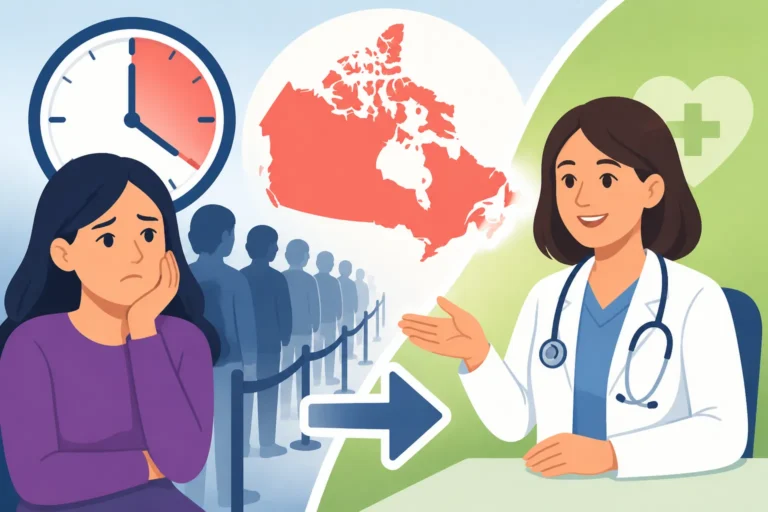
Wait times are the Achilles' heel of the Canadian public system. Because the system is "free" at the point of use, demand often exceeds supply. For elective surgeries—like a hip replacement or a cataract removal—you might wait several months or even over a year. Even for diagnostic tests like MRIs or CT scans, the wait can be significant unless your condition is deemed life-threatening. This is the trade-off for universal access: you don't pay with your credit card, but you do pay with your time.
If you are dealing with a chronic but non-emergency condition, this can be incredibly stressful. You’ll be triaged based on urgency. A person with suspected cancer will see a specialist much faster than someone with a minor sports injury. Understanding this logic helps manage your expectations. Many newcomers get angry at the front desk of a clinic, not realizing that the staff are just following a strict, province-mandated priority list. To understand how to handle these delays, check out How Long Are Wait Times to See a Specialist in Canada?.
The Hidden Costs and Gaps in Public Coverage
One of the first things you'll notice when you visit a Canadian pharmacy like Shoppers Drug Mart or Rexall is the price tag. Unless you are in a hospital bed, your medications are not covered by the public system. If your doctor prescribes an antibiotic or a daily blood pressure pill, you are responsible for the full cost. This is a major departure from systems like the UK’s NHS or various European models, and it catches many newcomers off guard.
Prescription Drugs and Out-of-Pocket Expenses
The cost of prescription drugs in Canada is some of the highest in the developed world, partly because there is no universal "pharmacare" program. Each province has some level of support for low-income residents or seniors, but for the average working-age expat, you’re on your own. A single inhaler for asthma or a month’s supply of insulin can be a significant monthly expense. This is why having a job with a good benefits package is so highly valued in Canada.
If you don't have employer benefits, you might need to look into provincial drug programs or private "extended" health insurance. For a comprehensive look at how to handle these costs, see Prescription Medications and Pharmacies in Canada: The Complete Guide. Some provinces, like Quebec, actually mandate that you have some form of drug insurance, whether public or private. It’s not just a recommendation; it’s a legal requirement to ensure you don't end up in financial ruin over a medical necessity.
Dental, Vision, and Paramedical Services
Dental care in Canada is almost entirely private. From a simple cleaning to a root canal, you will pay the dentist directly. A basic check-up and cleaning in a city like Toronto can easily cost $200 to $300. Vision care is similar; unless you have a specific medical condition or are under a certain age, your eye exams and glasses are out-of-pocket expenses. This is why many people include Understanding Dental Care Costs and the Canadian Dental Care Plan in their early research.
Beyond dental and vision, there are "paramedical" services like physiotherapy, chiropractic care, and massage therapy. While your doctor might recommend these for recovery after an accident, the public system rarely pays for them. If you’re active or have a physical job, these costs can become a regular part of your budget. I learned this the hard way after a minor back injury required ten sessions of physio—each costing $95. Without private insurance, that would have been nearly a thousand dollars out of my savings.
Why Supplementary Insurance is Not Optional
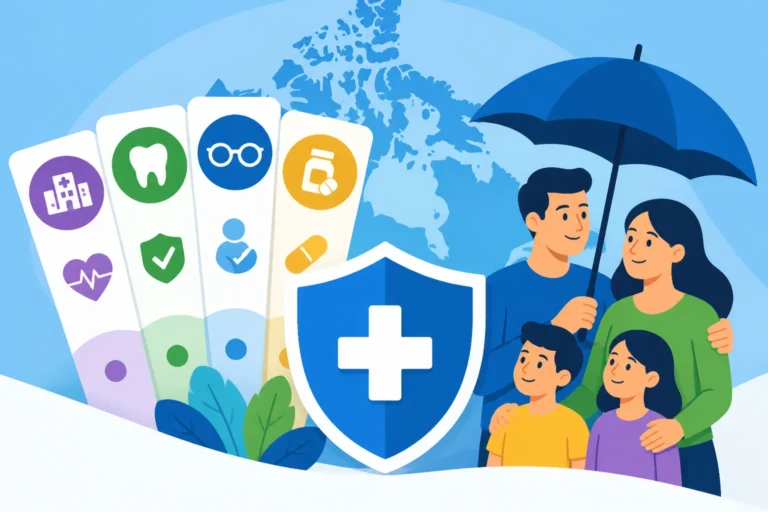
Given these gaps, supplementary insurance is practically a necessity for living a comfortable life in Canada. This type of insurance "plugs the holes" left by the public system. It covers the 20% to 100% of costs for drugs, dental work, and specialists like physiotherapists. Most professional jobs in Canada include a "benefits package" that covers these items for you and your family. If you are self-employed, you will need to purchase an individual plan.
Newcomers often ask if they can just "risk it." While you won't go bankrupt from a broken leg (thanks to the public system), a chronic condition requiring $500 a month in medication or a sudden need for major dental surgery can be devastating. That’s why Understanding Supplementary Health Insurance (Dental, Vision, Drugs) in Canada is so critical. It’s about protecting your lifestyle, not just your life.
The Role of Private Healthcare in Canada
Wait, I thought Canada didn't have private healthcare? This is a common question. While Canada does not have a "two-tier" system for medically necessary surgeries (you can't usually pay to jump the queue for a heart transplant), there is a thriving private sector for everything else. Private clinics exist for diagnostic imaging, specialized surgeries not covered by the province, and "executive health" assessments.
Private Clinics and Diagnostic Services
In some provinces, you can pay for an MRI or a CT scan at a private facility if you don't want to wait the standard three months in the public system. These clinics are perfectly legal as long as they aren't charging for services that are already being "double-billed" to the government. For example, in Quebec and British Columbia, the private market is more robust than in Ontario. A private MRI might cost between $700 and $1,200, but for some, the speed is worth the price.
However, even if you pay for a private test, you still usually need to take those results back into the public system for the actual treatment. You might find out you need surgery faster by paying for a private scan, but the surgery itself will still happen in a public hospital. This hybrid navigation is a skill most long-term expats eventually learn. For more on this, look at Public vs Private Healthcare in Canada: What Newcomers Need to Know.
Employer-Provided Health Benefits
For most Canadians, "private healthcare" really means their employer’s benefits plan. Companies like Sun Life, Manulife, and Canada Life provide group insurance that covers the gaps we discussed earlier. These plans are a vital part of your total compensation. When you are interviewing for jobs, don't just look at the salary; look at the "Health and Dental" package. Does it cover 80% or 100%? Is there a cap on mental health services?
These benefits often start after a three-month probationary period at a new job. This timing is crucial because it often aligns with the end of the provincial waiting period. If you’re lucky, your employer might even offer a "Health Spending Account," which is a pot of money you can use for any medical expense you choose. Understanding how to use these perks is covered in How to Use Private Health Insurance and Employer Benefits in Canada.
Bridging the Gap for Newcomers During the Waiting Period
What do you do if you arrive in Canada and aren't eligible for a health card yet? This is the most dangerous time for a newcomer’s finances. If you arrive as a visitor or while waiting for a work permit to be processed, you have zero public coverage. A simple trip to an emergency room for a high fever could result in a $1,000 bill just for the "facility fee," before you even see a doctor.
This is where private travel-medical insurance like SafetyWing becomes your best friend. It’s designed for nomads and expats who are in between systems. It acts as your primary insurance until your provincial health card is issued. Newcomers are advised to have at least three months of this coverage. It’s a small monthly cost compared to the astronomical price of a Canadian hospital stay without a health card. You can find more about these options in How to Get Private Health Insurance to Cover the Waiting Period in Canada.
Navigating the System by Province
Because healthcare is provincial, your "user manual" for health changes the moment you cross a provincial border. This can be deeply confusing if you’re moving from Toronto to Montreal or Vancouver. The basic "free" services remain, but the administration, the drug coverage, and the "waiting period" rules are all different.
Comparing OHIP and MSP
In Ontario, the Ontario Health Insurance Plan (OHIP) is the gold standard of public care, but it’s currently under significant strain. You apply via ServiceOntario and, once approved, you receive a green photo ID card. In British Columbia, the Medical Services Plan (MSP) is similar, but BC actually charges a monthly "Health Excellence" fee for some international residents (though the basic MSP premiums for citizens were abolished).
The culture of care is also slightly different. BC tends to have more integrated health authorities, whereas Ontario relies heavily on independent physician groups. If you're deciding where to settle, the healthcare landscape should be a factor. For a side-by-side comparison, check out Understanding the Difference Between Provincial Plans Across Canada.
Understanding RAMQ in Quebec
Quebec’s RAMQ (Régie de l'assurance maladie du Québec) is the most distinct system in the country. Quebec has a mandatory public prescription drug insurance plan for those who don't have access to a private one. This means that if you live in Montreal, you are required to have drug coverage. The paperwork is also strictly in French, though many healthcare providers in Montreal are bilingual.
RAMQ also has a different list of covered services compared to the rest of Canada. For example, Quebec has historically been more proactive in covering IVF treatments and certain types of prenatal screening. However, finding a "médecin de famille" (family doctor) in Quebec is notoriously difficult, often taking years on a centralized waiting list.
Alberta and the Atlantic Provinces
Alberta (AHCIP) often boasts some of the newest hospital facilities in the country, funded by the province’s energy wealth. They generally have a "no-waiting-period" policy for certain types of newcomers, provided you can prove you intend to stay for at least 12 months. In contrast, the Atlantic provinces (Nova Scotia, New Brunswick, PEI, and Newfoundland) are currently struggling with the most severe doctor shortages in Canada.
In provinces like Nova Scotia, it is not uncommon for 10-15% of the population to be without a family doctor. This has led to a massive rise in "collaborative care clinics" where you see a nurse practitioner instead of a GP. While the care is excellent, the path to getting it requires knowing the local system. If you are heading east, you must read How to Find and Register with a Family Doctor in Canada.
Comparing Public and Private Options
To help you visualize where your money goes and what your provincial card actually does, I’ve put together this comparison table. This is based on the general experience of an expat living in a major Canadian city.
| Service Category | Public Healthcare (Provincial Card) | Private/Supplementary Insurance | Out-of-Pocket (No Insurance) |
|---|---|---|---|
| Emergency Room Visit | Fully Covered ($0) | Not Needed | $600 – $1,500+ |
| Specialist Consultation | Covered (Referral Required) | May cover "Private" options | $200 – $500 |
| Prescription Drugs | Not Covered (Usually) | 70% – 100% Covered | Full Retail Price |
| Routine Dental Checkup | Not Covered | 80% – 100% Covered | $200 – $400 |
| Eye Exams (Adults) | Not Covered | Covered (usually every 2 years) | $80 – $150 |
| Physiotherapy | Not Covered | $500 – $1,500 annual limit | $80 – $120 per session |
| Private Hospital Room | Not Covered (Ward only) | Covered (if selected) | $200 – $400 per night |
| Ambulance Transport | Partially/Not Covered | Often 100% Covered | $45 – $500+ |
Practical Steps for Newcomers Upon Arrival
Your first week in Canada will be a whirlwind of SIN numbers, bank accounts, and finding a place to sleep. However, healthcare should be at the top of that list. Do not wait until you get sick to figure out how the system works. In many provinces, the clock on your residency requirement doesn't start until you actually submit your application.
Immediate Actions in Your First Week
As soon as you have a permanent address (even a long-term rental), go to your local health authority office. In Ontario, that’s ServiceOntario; in BC, it's Health Insurance BC. Bring your passport, your work/study permit or PR papers, and proof of address like a utility bill or a lease. If you don't have a lease yet, a bank statement with your address usually works.
While you wait for your card to arrive in the mail (which can take 2-6 weeks), you should carry a digital copy of your private insurance, like SafetyWing. If you need to visit a doctor before your provincial card is active, you will likely have to pay upfront at the clinic and then claim it back from your private provider. This is a common point of stress, but having your documents organized makes it much smoother. For a step-by-step, check How to Apply for Your Provincial Health Card in Canada (2027).
How to Find Care Without a Health Card
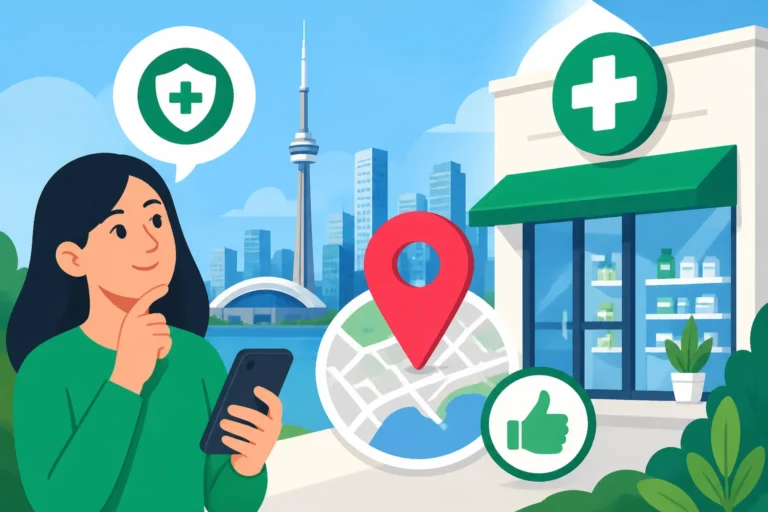
If you haven't received your health card yet but have a non-emergency issue—like a sinus infection or a minor rash—avoid the Emergency Room. ERs in Canada are for life-and-limb emergencies. For everything else, look for a "Walk-In Clinic." You can find these by searching "walk-in clinic near me" on Google Maps.
Without a health card, these clinics will charge you a "non-resident" fee, usually between $80 and $150. They will give you a receipt that you can then send to your private insurer. If you are in a major city, you can also look for "Community Health Centres" (CHCs), which sometimes provide care for uninsured newcomers on a sliding scale. This is a vital tip for anyone who finds themselves sick during The Newcomer Waiting Period for Provincial Health Coverage in Canada (2027).
Managing Emergencies and Walk-In Clinics
In a true emergency, call 911 or go to the nearest hospital. In Canada, you will never be refused emergency treatment because you can't pay. However, you will be billed later if you aren't covered by the province. Ambulance fees are also a surprise; even for residents, there is often a co-pay (around $45 in Ontario), but for non-residents, it can be $500 or more.
For non-emergencies, get used to the "Appletree" or "Cloud Care" style of clinics. You show up, give your name, and wait. Some allow you to book a spot online, which is a life-saver. If you have children, find the nearest pediatric walk-in clinic, as they often have shorter waits and specialized staff. For more emergency-specific advice, read Emergency Medical Care in Canada: What Every Newcomer Needs to Know.
Financial Planning for Your Health in Canada
The final piece of the puzzle is your budget. Many people move to Canada thinking they can save the money they used to spend on healthcare in their home country. While your "premiums" might be lower (hidden in your income taxes), your out-of-pocket costs for wellness are likely to stay the same or increase.
Budgeting for Non-Covered Services
A healthy family should budget at least $2,000 to $3,000 per year for healthcare costs not covered by the public system if they don't have employer benefits. This includes dental cleanings twice a year, an eye exam, and a few prescriptions. If you have a chronic condition, that number will be higher. Newcomers are advised to keep a "Health Emergency Fund" in a high-interest savings account.
If you are self-employed, you can buy individual plans from companies like Sun Life or Green Shield. These plans usually cost between $80 and $200 per month per person. While it seems expensive, one major dental emergency can pay for an entire year of premiums. You can research the costs in How Much Does Private Health Insurance Cost in Canada in 2026?.
Tax-Deductible Medical Expenses
The silver lining is that many of these costs are tax-deductible. The Canada Revenue Agency (CRA) allows you to claim "eligible medical expenses" on your annual tax return. This includes everything from the cost of your private insurance premiums (like SafetyWing or a domestic plan) to the cost of your dentures or prescription glasses.
To take advantage of this, you must keep every single receipt. I use a dedicated folder in my desk for "Health Receipts." When tax season rolls around in April, these deductions can significantly reduce the amount of income tax you owe, effectively giving you a "discount" on your healthcare costs. For more on how this works, see The Complete Guide to Taxes in Canada for Newcomers (2027).
Long-term Care and Disability Insurance
Finally, consider the "what ifs." Public healthcare covers your hospital stay, but it doesn't pay your rent if you are unable to work due to illness. Many employer plans include Short-Term Disability (STD) and Long-Term Disability (LTD), but the coverage is often only 60-70% of your salary. If you are the primary breadwinner, you might want to look into additional private disability insurance.
Similarly, "Long-Term Care" insurance is becoming more popular in Canada. The public system for seniors' homes and home care is heavily subsidized but often has years-long waiting lists for the best facilities. Private insurance allows you to bypass these queues later in life. It's a heavy topic for someone who just landed, but it's part of the reality of Understanding How Canada's Health System Works: Provincial Plans Explained (2026).
Disclaimer
This guide is intended for informational purposes only and does not constitute professional medical, legal, or financial advice. Healthcare laws and provincial regulations in Canada are subject to change, and you should always verify specific eligibility requirements with the relevant provincial health authority or a qualified insurance professional before making decisions.