How Much Does a Doctor Visit Cost in Canada Without Coverage?
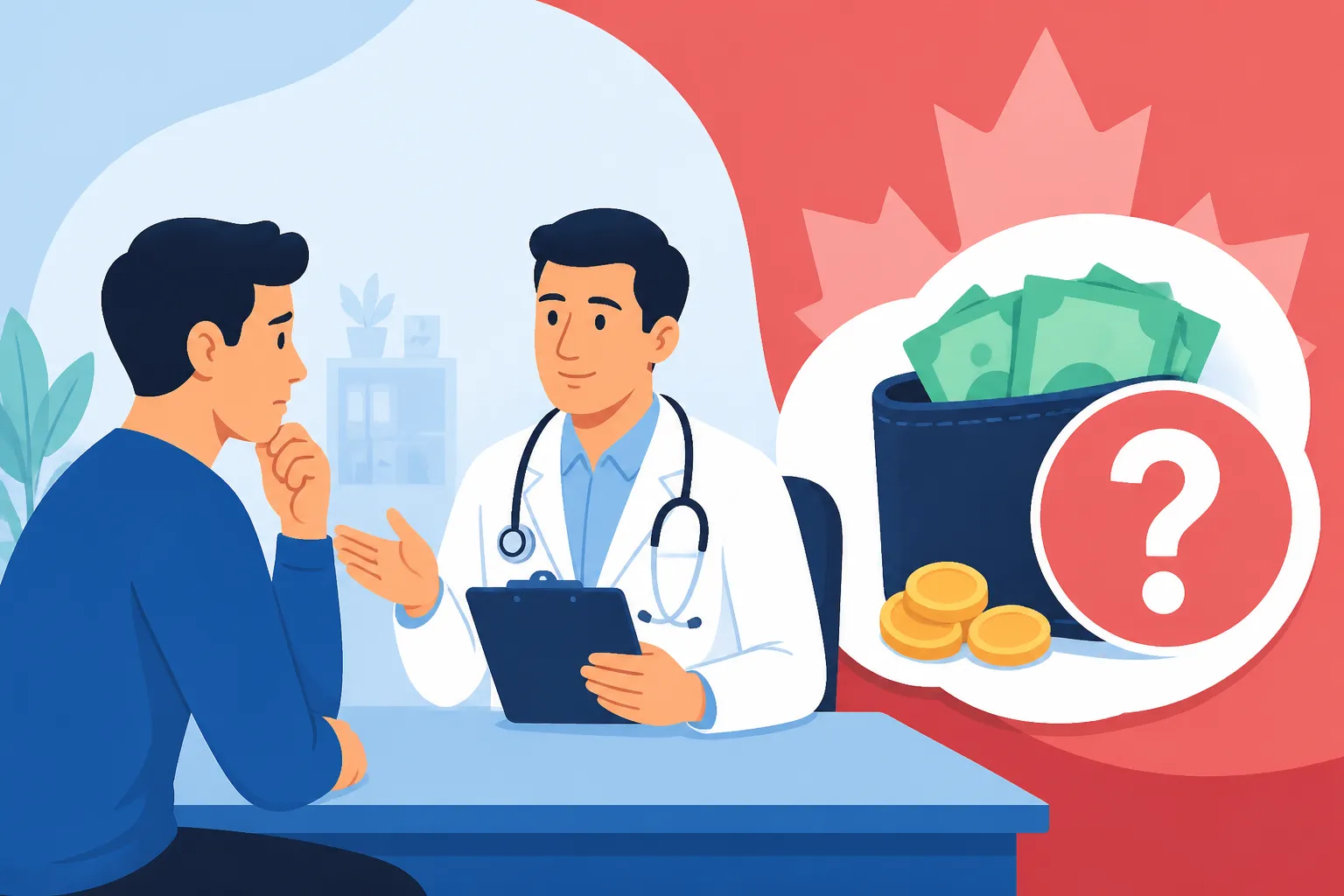
It’s a question that keeps many newcomers awake at night: "What if I get sick in Canada before my provincial health coverage kicks in, or if I’m just visiting?" The dream of universal healthcare often overshadows the crucial nuance that it’s not instantly free or available to everyone from the moment they land. The reality is, if you find yourself needing to see a doctor in Canada without provincial health coverage, you could be in for a significant financial shock. This guide is here to shed light on those costs, explain who might be affected, and offer practical advice to navigate the system without breaking the bank.
The Harsh Reality: Understanding Healthcare Costs Without Provincial Coverage
When you hear about Canada's "free" healthcare, it's important to understand that this refers to the publicly funded system, primarily for eligible residents. This system is funded through taxes, and while it covers a broad range of services, it's not a free-for-all for anyone who steps foot on Canadian soil. For those without immediate access to a provincial health plan, every interaction with the medical system, even a simple doctor's visit, can come with a hefty price tag. The sticker shock is real, and it’s a source of immense stress for many.
Who is "Without Coverage"?
The term "without coverage" can apply to a surprisingly large group of individuals in Canada, and it’s a critical distinction to grasp.
Firstly, tourists and short-term visitors fall into this category. If you're here on a visitor visa or an eTA, your home country's health insurance might offer some coverage, but Canadian healthcare providers will generally expect payment upfront or proof of robust private insurance. You're essentially treated as a private patient.
Secondly, and often most distressing for new arrivals, are permanent residents and those on long-term work or study permits during their initial waiting period. Yes, even if you’re a soon-to-be permanent resident, many provinces impose a waiting period—often up to three months—before your provincial health coverage becomes active. This period is a huge blind spot for many, leaving them vulnerable. For a deeper dive into this, check out our guide on The Newcomer Waiting Period for Provincial Health Coverage in Canada (2027). This waiting period is not just a formality; it's a period of significant financial risk if you don't plan ahead. You could be living here, working, paying taxes, but still be on the hook for medical bills.
Lastly, some temporary residents might not be eligible for provincial health coverage at all, depending on their specific immigration status or the duration of their stay. It's a complex web, and misunderstanding your eligibility can lead to unexpected and crippling costs.
Why the Sticker Shock?
So, why does a seemingly simple doctor's visit cost so much when you're paying out of pocket? It's because you're bypassing the bulk-billing system that provincial plans use. When you're uninsured, you're responsible for the full, unregulated fee that a clinic or doctor charges for their services. These fees are set by the individual practice and are designed to cover the doctor's time, clinic overheads, staff salaries, equipment, and administrative costs.
For example, a family doctor in a busy urban clinic might charge significantly more than a smaller, independent practice. There's no standardized "private patient" rate across the country. Furthermore, any tests, medications, or referrals stemming from that visit will also be your responsibility. This can quickly escalate from a single doctor's visit to a cascade of expensive charges, making the prospect of getting sick truly terrifying. You're not just paying for a prescription; you're paying for the consultation, the lab work, and potentially even the pharmacist's time for complex consultations.
How Much Can a Basic Doctor Visit Actually Cost You?
Let’s get down to the brass tacks: what kind of numbers are we talking about here? It's important to preface this by saying these are estimates, and actual costs can vary wildly depending on the province, the specific clinic, the complexity of your issue, and the time of day (some clinics charge more for after-hours visits). However, these figures should give you a realistic, if sobering, picture.
General Practitioner GP and Walk-in Clinic Fees
For a run-of-the-mill visit to a general practitioner (GP) or a walk-in clinic without provincial health coverage, you're looking at a range that can start low but quickly climb. A basic consultation for a minor ailment like a cold, flu symptoms, or a minor injury can typically cost anywhere from $80 to $250.
Let's imagine you wake up one morning with a terrible cough and a fever. You're relatively new to Toronto, haven't yet qualified for OHIP due to the waiting period, and you need to see a doctor. You head to a walk-in clinic near your apartment. The doctor assesses you, listens to your chest, and tells you it's a viral infection – no antibiotics needed, just rest and over-the-counter medication. For this 10-15 minute consultation, you might be handed a bill for $120. If they decide to do a rapid strep test or flu swab, that could be an additional $30-$50. Suddenly, your simple check-up is pushing $150 or more.
It's not just the big cities, either. Even in smaller communities across Canada, clinics are increasingly conscious of the costs associated with seeing uninsured patients, and their fees reflect that. Always ask about the fees before you see the doctor if you're concerned. While many clinics have their rates posted, it's not always upfront, especially in a moment of distress.
Specialist Referrals and Follow-Ups
Now, what happens if that cough or other ailment turns out to be more complex, requiring a specialist? If you're without provincial coverage, not only will you pay for the initial GP visit, but you’ll also bear the full cost of seeing a specialist. And these fees are significantly higher.
For instance, if your GP refers you to a dermatologist for a suspicious mole, or an orthopaedic surgeon for a nagging joint pain, you could be looking at $200 to $500 or even more for the initial consultation with the specialist. Follow-up appointments will also incur separate charges. This is where the costs can really spiral out of control. The Canadian public healthcare system manages specialist referrals through a queuing system, meaning there can be significant wait times even for covered individuals. If you’re paying privately, you might find an appointment quicker, but at a substantial financial premium.
Imagine the scenario: you visit a walk-in clinic for severe abdominal pain, paying $150 out of pocket. The doctor thinks it might be something serious and refers you to a gastroenterologist. The specialist appointment costs $350 for the initial assessment. The specialist then orders an ultrasound and blood tests. While the public system would cover these diagnostic tests (often with longer waits), as an uninsured patient, you would be charged privately for these as well, potentially hundreds of dollars more. This is why understanding The Cost of Healthcare in Canada: A Complete Breakdown for Newcomers (2026) is so vital.
Here’s a general idea of what you might encounter:
| Service Type (Without Provincial Coverage) | Estimated Cost (CAD) | Notes |
|---|---|---|
| Basic Walk-in Clinic Visit / GP | $80 – $250 | For minor ailments like colds, flu, minor injuries, prescription refills. Price varies by clinic and province. |
| Follow-up GP Visit | $60 – $180 | Generally less than initial consultation, but still charged per visit. |
| Specialist Consultation | $200 – $500+ | Initial assessment with a specialist (e.g., dermatologist, orthopaedist, gynaecologist). Referrals usually needed, even if paying privately. |
| Emergency Room Visit (non-admittance) | $600 – $1,500+ | For an ER visit without admission. This covers triage, basic assessment, and perhaps a few simple tests. Costs can be much higher if more intensive care, imaging (X-rays, CT scans), or consultations are required. See How Much Does an Emergency Room Visit Cost in Canada?. |
| Blood Tests / Lab Work | $50 – $300+ | Depends on the type and number of tests. Often done through private labs if not covered. |
| X-Ray / Basic Imaging | $100 – $400+ | For diagnostic imaging. Complex scans like MRI or CT are significantly more expensive. |
| Prescription Medications | Varies | Costs are highly variable depending on the drug, dosage, and whether a generic is available. Not covered by provincial plans or private insurance unless specified. Understanding Prescription Medications and Pharmacies in Canada: The Complete Guide is helpful. |
| Ambulance Ride | $200 – $1,000+ | Ambulance fees are generally not fully covered by provincial plans (you pay a co-pay), and without any coverage, the full cost is on you. More details in Understanding Emergency Numbers (911) and Ambulance Fees in Canada. |
Strategies to Mitigate Costs and Stay Safe
The takeaway here isn't to live in fear, but to be prepared. Canada is an incredible place, and its healthcare system, once you're fully integrated, is truly excellent. But that initial period, or if you're here as a visitor, requires proactive planning.
The Lifeline: Private Health Insurance
This cannot be stressed enough: if you are a newcomer to Canada and are subject to a provincial waiting period, or if you are visiting, purchase private health insurance. It's not just a good idea; it's absolutely essential. Think of it as your safety net. This is where options like SafetyWing can be a real lifeline. Companies like SafetyWing offer travel medical insurance that can cover you for unforeseen medical expenses, including doctor visits, hospital stays, and even emergency evacuations. It's designed to provide peace of mind for those living or traveling abroad, effectively bridging the gap until your provincial coverage begins, or serving as your primary coverage as a visitor.
When considering private health insurance, look for plans that specifically cover doctor visits, diagnostic tests, and emergency medical care. Some plans, like those from SafetyWing, are flexible and can be renewed month-to-month, which is perfect for bridging that initial waiting period. Investing a relatively small amount in a private plan can save you thousands, if not tens of thousands, of dollars should a medical emergency arise. For more details, explore our guide on How to Get Private Health Insurance to Cover the Waiting Period in Canada or Do I Need Private Health Insurance When I First Arrive in Canada?.
It’s easy to think "it won't happen to me," but accidents and illnesses don't discriminate. A bad fall, an unexpected infection, or even a serious allergic reaction can happen at any time. Having a plan like SafetyWing in place means you won’t have to hesitate to seek medical attention when you truly need it, simply because you're worried about the bill.
What to Do in an Emergency
Even with private insurance, understanding how to navigate emergencies is crucial. In a true medical emergency, like severe chest pain, major injury, or difficulty breathing, you should call 911 immediately or go to the nearest emergency department. Healthcare providers in Canada will treat you regardless of your ability to pay. However, this does not mean the services are free. You will receive a bill, and it can be astronomical.
For example, a broken leg requiring an X-ray, casting, and pain medication, could easily lead to an emergency room bill in the thousands. If you are admitted to the hospital, costs can skyrocket even further, potentially reaching tens of thousands for more complex procedures or longer stays. This is why robust private health insurance, like what SafetyWing provides, is so critical. It’s designed to cover these catastrophic events, ensuring you receive necessary care without facing financial ruin. Always carry your insurance information with you, including your policy number and the contact details for your provider, so you can present it upon arrival at the hospital. For comprehensive information on what to do, refer to Emergency Medical Care in Canada: What Every Newcomer Needs to Know.
Exploring Community Health Resources
While not always "free," some community health resources might offer lower-cost options or services specifically designed for vulnerable populations, or for needs not typically covered by provincial plans. These are less common for general doctor visits, but worth knowing about.
- Community Health Centres (CHCs): Some CHCs offer services on a sliding scale or for a nominal fee, especially for those without coverage. However, access can be limited, and they primarily serve specific communities or demographics. It's not a universal solution for uninsured doctor visits but worth researching in your local area.
- University Clinics: Medical schools or teaching hospitals sometimes have clinics where services might be offered at reduced rates, often by residents or students under supervision. These can be a mixed bag, offering quality care but sometimes with longer appointment times.
- Settlement Agencies: Many newcomer settlement agencies can provide information and referrals to local low-cost or free health resources, if they exist in your area. They are an excellent first point of contact for any challenges you might face as a newcomer.
- Telehealth Services: Some provinces offer telehealth lines that provide free medical advice over the phone. While they can't diagnose or prescribe, they can help you determine if your condition warrants an in-person visit, potentially saving you a trip (and a fee) to a walk-in clinic for something minor. This is distinct from private telehealth apps, which do charge for doctor consultations. For understanding options, check out Understanding Telehealth and Virtual Care Options in Canada.
Remember, while these options can be helpful for certain situations, they are generally not substitutes for comprehensive private health insurance, especially for serious illnesses or accidents during your uninsured period. The vast majority of general practitioner or specialist visits will still incur significant costs without a provincial health card or private insurance to back you up. Your best bet is always to secure private health insurance like SafetyWing before you arrive or as soon as possible after, to minimize financial risk.
Disclaimer
The information provided in this guide is for general informational purposes only and does not constitute medical, legal, or financial advice. Healthcare costs and policies in Canada can change, and specific eligibility criteria for provincial health coverage vary by province and individual immigration status. Always consult with relevant provincial health authorities, licensed insurance providers, and immigration consultants for advice tailored to your specific situation.