How to Handle a Medical Emergency While Travelling from Canada
The thought of a medical emergency hitting when you're far from home, especially after getting used to the Canadian healthcare system, can be genuinely terrifying. It’s a fear many expats have voiced, and it’s a valid one. You're in an unfamiliar place, often dealing with language barriers, and the idea of suddenly needing urgent medical attention without knowing how it works can turn a dream trip into a nightmare. This guide is here to walk you through exactly what you need to know and do to prepare for, and hopefully smoothly navigate, a health crisis while you're travelling outside of Canada.
The Absolute Necessity of Travel Medical Insurance
Look, I know another insurance policy isn't what you want to hear about when planning a trip. But trust me, this isn't just another form to fill out; it's your absolute lifeline when travelling from Canada. Many of us get so used to the public healthcare system here that we mistakenly think a similar safety net extends beyond our borders. It doesn't, and that's a crucial, often expensive, lesson to learn.
Why Provincial Plans Won't Cut It Abroad
Let's get this straight from the get-go: your provincial health insurance – whether it's OHIP in Ontario, MSP in British Columbia, RAMQ in Quebec, or AHCIP in Alberta – offers incredibly limited, if any, coverage once you step foot outside of Canada. It’s a common misconception, and one that could leave you with staggering medical bills. There are heartbreaking accounts of people who had to mortgage their homes to pay for an emergency surgery in the US or a prolonged hospital stay in Europe.
Imagine this: you're enjoying a beautiful hike in the Grand Canyon, you slip, and break your leg. Suddenly, you're looking at an ambulance ride, emergency room fees, X-rays, possibly surgery, and a multi-day hospital stay. In the US, for instance, an ambulance ride alone can cost thousands of dollars, and a simple overnight hospital stay can easily run into tens of thousands. Your provincial plan might cover a tiny fraction of that, perhaps a few hundred dollars per day for hospital care, which is a drop in the ocean compared to the actual costs. This stark reality often comes as a shock to Canadians who are accustomed to minimal or no out-of-pocket costs at the point of care within their home province. You might think, "Well, I'm just going for a short trip," but that's exactly when unexpected things happen. For a more detailed look at what your provincial plan does cover (and, more importantly, doesn't), you can check out our guide on Understanding What Provincial Health Plans Do and Don't Cover in Canada.
Deciphering Your Travel Insurance Options
So, with provincial plans off the table for international emergencies, what's your best bet? Comprehensive travel medical insurance. This isn't just a recommendation; it's a non-negotiable part of your travel budget. There's a wide world of options out there, and finding the right fit depends on your travel habits and personal health situation. Are you a frequent flyer who takes multiple short trips a year? A multi-trip annual plan might be more cost-effective. Planning one big adventure? A single-trip policy will cover you. Some all-inclusive policies even bundle trip cancellation, interruption, and baggage loss with medical coverage, which can offer peace of mind.
When you're looking at policies, you'll encounter terms like "deductibles," which is the amount you pay out-of-pocket before the insurance kicks in, and "policy maximums," the total amount the insurance company will pay. Be very aware of pre-existing conditions clauses; if you have a chronic illness, even something seemingly minor, you need to declare it, and ensure your policy covers it. Many policies have "stability clauses" requiring your condition to be stable for a certain period before your trip. For those who live a more nomadic lifestyle or take frequent, extended trips, you might even consider options like SafetyWing, which offers specific plans for digital nomads and remote workers, designed for continuous coverage even if you don't have a fixed return date. It’s crucial to read the fine print, ask questions, and understand exactly what you're covered for, and just as importantly, what you're not. Don't be shy about calling the insurance provider directly to clarify any doubts you might have. You can also explore options further by reading How Much Does Private Health Insurance Cost in Canada in 2026? and How to Buy Private Health Insurance as a Newcomer in Canada.
The Critical Role of Emergency Assistance Services
Here’s a feature of good travel medical insurance that often gets overlooked: the 24/7 emergency assistance services. This isn't just about getting your money back after the fact; it's about having a dedicated team on your side in the moment of crisis. Imagine you're in a country where you don't speak the language, you've fallen ill, and you have no idea which hospital to go to or if it's reputable. This is where your insurance provider's assistance line becomes invaluable.
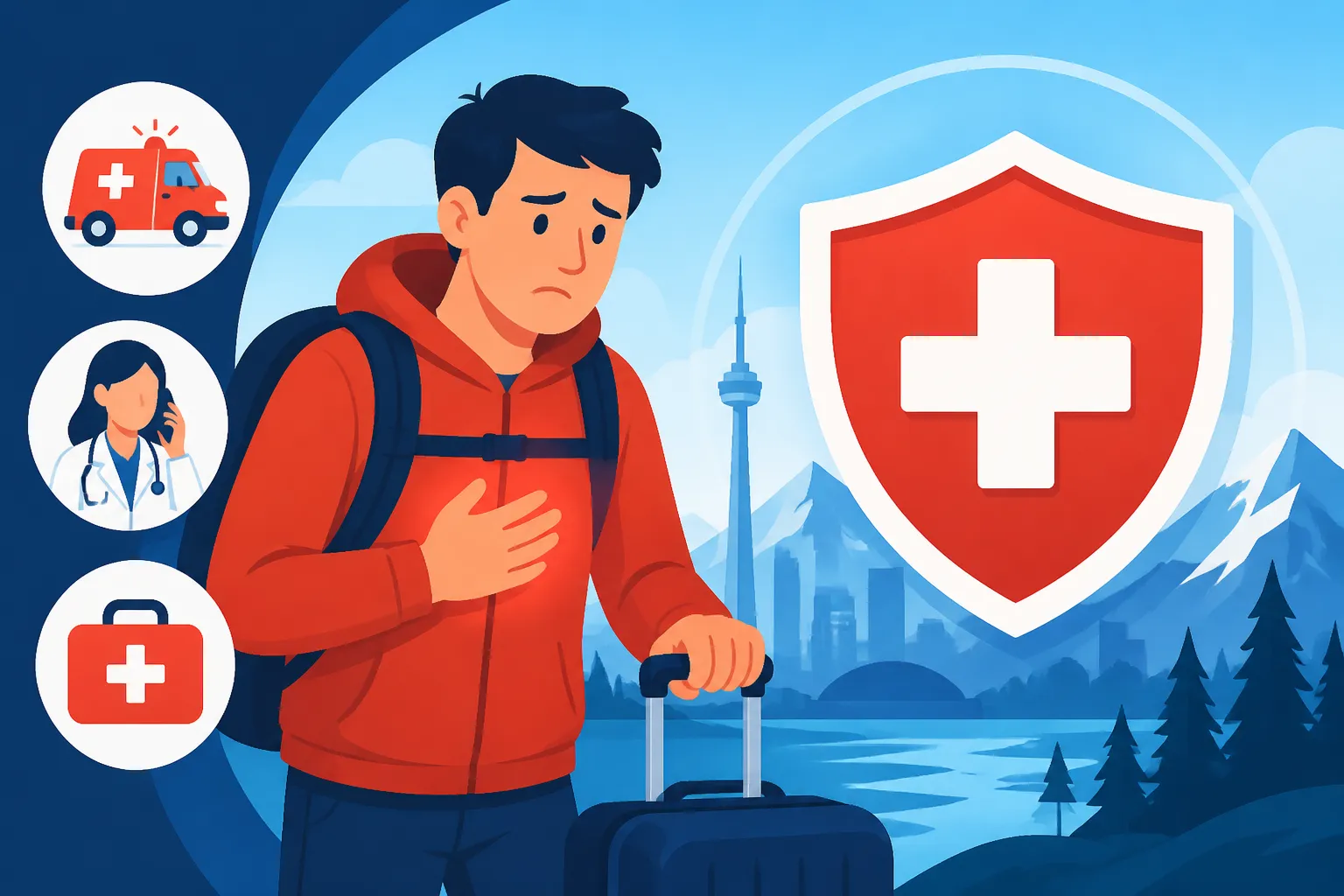
They can help you locate accredited medical facilities, arrange for necessary medical transport (like an ambulance or even an air ambulance if required), assist with translation services, and even coordinate with your family back home. Some services will even guarantee direct billing with hospitals, saving you from having to pay huge sums upfront and then wait for reimbursement. This concierge-level support is often the most critical aspect of your policy, turning a potentially chaotic and terrifying experience into something manageable. They are the ones who will liaise with the foreign healthcare system on your behalf, reducing your stress and allowing you to focus on getting better.
Pre-Departure Planning: Your Emergency Preparedness Checklist
Before you even think about packing your bags and heading out the door, there are some essential steps you need to take to arm yourself for any potential medical emergencies. Think of this as your pre-flight safety briefing for your health. Being prepared can make all the difference, not just in terms of outcome, but in reducing the sheer panic of an unexpected situation.
Assembling Your Medical "Go-Bag" Information
This isn't a physical bag, but rather a collection of vital information that you should have readily accessible, both digitally and physically. Picture this: you're incapacitated and someone else needs to act on your behalf. What information would they need? Firstly, your travel insurance policy details are paramount – policy number, emergency contact number for the assistance line, and a brief overview of your coverage. Alongside this, have copies of your passport and visa (if applicable). While your provincial health card won't help with costs, its information might be useful for identification.
Crucially, carry a list of all your current medications, including their generic names (brand names differ worldwide), dosages, and why you take them. Also, note any known allergies to medications, foods, or insect stings. Include contact information for your Canadian family doctor and any specialists you see, as well as at least two emergency contacts back home, with their full names and phone numbers. Keep physical copies in a waterproof pouch in your carry-on and a separate digital copy (e.g., in a secure cloud storage, emailed to yourself, or on a password-protected USB). This little preparation can be a lifesaver.
Researching Destination-Specific Healthcare & Risks
Knowing a bit about your destination's healthcare landscape before you go can seriously reduce stress if something happens. The universal emergency number in Canada is 911, but that’s rarely the case elsewhere. Research the local emergency numbers for police, ambulance, and fire services in every country you plan to visit. A quick search will usually give you this information. Beyond numbers, understand what common health risks exist. Are there specific vaccinations recommended or required for your destination? Are mosquito-borne illnesses prevalent? What about food and water safety?
Familiarize yourself with the general standard of medical facilities in the areas you’ll be visiting. Are there reputable hospitals or clinics nearby? Does the local healthcare system primarily operate on a private or public model? This knowledge empowers you to make informed decisions if an emergency arises. The Canadian government's travel advisories (travel.gc.ca) are an excellent resource for health and safety information specific to various countries. They often detail local medical standards, common diseases, and any specific health recommendations.
Notifying Your Canadian Healthcare Providers
It might seem like an extra step, but a quick chat with your family doctor before an international trip can be incredibly beneficial, especially if you have existing health conditions. Let them know your travel dates and destinations. This is particularly important if you require ongoing medications. You'll want to ensure you have enough refills to last your entire trip, plus a little extra buffer, in case of travel delays.
Additionally, ask your doctor for a letter outlining your medical conditions and listing your prescribed medications (again, using generic names). This letter can be invaluable when passing through customs with certain medications and can provide crucial information to foreign medical professionals if you need care. It’s also wise to ask if they have any specific health advice for your destination, such as precautions for altitude sickness, traveller’s diarrhea, or specific environmental concerns. This proactive communication with your doctor ensures continuity of care and provides an essential reference point if you need medical assistance while abroad.
When Crisis Strikes: Navigating an Emergency Abroad
No one wants to imagine this scenario, but being mentally prepared for how to react when a medical emergency actually happens while you're abroad is crucial. It’s easy to freeze up or panic, but having a clear set of actions in mind can make a world of difference.
Your Immediate Steps: Stay Calm and Act Quickly
When a medical emergency strikes, the first few moments can feel like a blur. The most critical step is to try and remain calm. Easier said than done, I know, but a clear head allows you to assess the situation and act effectively. First, ensure your immediate safety and the safety of those around you. If it's a car accident, for example, move to a safe location if possible. If someone is unconscious or severely injured, call the local emergency services immediately. Remember, this might not be 911; you would have researched this in your pre-departure planning. Clearly explain the situation, your location, and the nature of the emergency.
Once the immediate life-threatening situation is being addressed, your next crucial step is to contact your travel insurance provider’s 24/7 emergency assistance line. I can’t stress this enough. Do not just head to the nearest hospital without contacting them first, unless it's an absolute life-or-death situation where every second counts. Your insurance company will guide you to approved medical facilities, confirm your coverage, and potentially arrange for direct billing. This saves you from having to choose a clinic yourself, which can be daunting in an unfamiliar country, and it streamlines the payment process. They are your first point of contact after local emergency services, and they are there to help you navigate the system.
Communicating with Foreign Medical Professionals
One of the biggest hurdles when facing a medical emergency abroad is the language barrier. Not everyone speaks English, and even if they do, medical terminology can be complex. This is where your insurance provider’s assistance service can often step in, offering translation services over the phone or even connecting you with local interpreters. Don't be afraid to use translation apps on your phone; Google Translate or similar tools can be incredibly helpful for basic communication, though they are no substitute for a professional interpreter.
When you do get to see a doctor, provide them with all the medical information you prepared in your "go-bag." Be clear and concise about your symptoms, medical history, allergies, and current medications. Understand that medical practices and expectations can differ significantly from what you’re used to in Canada. For example, some countries might have a more direct approach, or diagnostic tests might be ordered differently. Don't hesitate to ask questions if you don't understand something. It’s your health, and you have a right to know what’s happening. Try to have a contact person, either your travel companion or someone from your insurance assistance team, present during discussions with doctors if possible, to help ensure clear communication.
Documenting Everything: Your Lifeline for Claims
This might feel like an administrative chore during a stressful time, but thorough documentation is your best friend when it comes to travel insurance claims. Keep every single piece of paper related to your medical emergency. This means receipts for doctor's visits, hospital stays, prescription medications, ambulance services, and even taxi fares to and from medical facilities. If you made international calls related to the emergency, keep records of those too.
Crucially, obtain detailed medical reports from the attending physicians and the hospital. These reports should include your diagnosis, the treatment received, and any follow-up care recommendations. Ask for English versions if available, or arrange for professional translations once you’re able. Photographs of injuries or medical documents can also be helpful. Think of it this way: the more evidence you have to support your claim, the smoother the reimbursement process will be. Without adequate documentation, your insurance company might deny your claim, leaving you responsible for the full cost. This is a common pitfall that many travellers, even seasoned ones, overlook in the heat of the moment.
Financial Realities and the Claims Process
Let’s be honest, after the immediate shock of a medical emergency, the next big worry is almost always financial. How much is this going to cost? How do I pay? Will my insurance actually cover it? Navigating these questions can add another layer of stress, but understanding the process beforehand helps.
Understanding Out-of-Pocket Expenses and Direct Billing
The cost of healthcare outside of Canada can be shockingly high, particularly in countries like the United States where medical care is predominantly private. While a robust travel insurance policy is your safeguard, you might still encounter out-of-pocket expenses. Many insurance policies, especially those with lower premiums, come with a deductible, which is the initial amount you’re responsible for paying before your coverage kicks in. You might also have co-payments for certain services. It’s essential to be aware of these amounts in your policy document.
Ideally, if you contact your insurance provider’s emergency assistance team as soon as possible, they can often arrange for direct billing with the hospital or clinic. This means the medical facility bills your insurance company directly, and you avoid having to pay a massive sum upfront. This feature, offered by many reputable providers, including SafetyWing, can be a huge relief, saving you from draining your savings or racking up credit card debt while abroad. However, direct billing isn't always possible, especially in smaller clinics or in certain countries. In these cases, you’ll have to pay for services yourself and then submit a claim for reimbursement. This is where those meticulous records and receipts become absolutely vital. Don't ever assume a hospital will deal with your insurance directly; always confirm it with your insurance provider.
Navigating the Insurance Claims Process
Once you’re out of immediate danger and possibly back home in Canada, the next step is the actual claims process. This requires patience and attention to detail. You'll need to fill out your insurance provider’s claim forms, which can often be found on their website. These forms will ask for personal details, information about the incident, and a breakdown of the medical services you received.
Along with the forms, you must submit all the documentation you diligently collected: medical reports, diagnoses, treatment summaries, and every single receipt. The more thorough and organized you are, the faster your claim is likely to be processed. Be prepared for a waiting period; insurance companies need time to review all documents and verify information. If your claim is denied, don't despair immediately. Request a clear explanation for the denial. Sometimes, it's due to missing information or a misunderstanding. Most reputable insurance companies have an appeals process, allowing you to provide additional details or clarification. Always keep copies of everything you submit, and maintain a record of all correspondence with your insurance company. For information on how to claim various health expenses through insurance once you're back home, you might find our article How to Claim Health Expenses Through Insurance in Canada helpful.
Repatriation and Emergency Medical Evacuation
These two terms are often bundled into travel medical insurance and are arguably some of the most critical, yet least understood, coverages. Emergency medical evacuation refers to the cost of transporting you from the place where you suffered a medical emergency to the nearest appropriate medical facility capable of treating your condition. For example, if you're hiking in a remote area and suffer a severe injury, the cost of a helicopter evacuation to a major city hospital would be covered.
Repatriation, on the other hand, covers the cost of transporting you back to Canada, either for further medical treatment closer to home or, in the most tragic circumstances, for the return of your remains. Imagine needing complex surgery that isn't available or isn't up to Canadian standards in the country you're visiting. Repatriation would cover the cost of a medically supervised flight back to a Canadian hospital. Without this coverage, the costs for such services can be astronomical – easily running into hundreds of thousands of dollars. It’s not a pleasant thought, but having this coverage means that no matter what happens, you or your loved ones won't be left with an impossible financial burden. Always ensure your travel insurance policy includes robust medical evacuation and repatriation benefits.
Specific Scenarios and Returning to Canada
Medical emergencies aren't always sudden, dramatic events. Sometimes they involve ongoing issues, or specific types of care. Knowing how to handle these, and what to do when you eventually return home, is part of being fully prepared.
Handling Prescription Refills and Medications Abroad
One common scenario involves needing a prescription refill or emergency medication while away from Canada. First, be aware that the legality and availability of certain medications can vary dramatically from country to country. What's an over-the-counter drug in Canada might require a prescription elsewhere, or might even be entirely banned. Always carry a letter from your Canadian doctor detailing your prescriptions, especially for controlled substances, using generic names. This helps with customs and provides legitimacy for foreign doctors.
If you need an emergency refill, contact your travel insurance provider first. They can often guide you to a reputable pharmacy or clinic where you can get your medication. They may also coordinate with your Canadian doctor to verify your prescription. Many policies will cover the cost of emergency prescription refills, but you'll usually have to pay upfront and claim reimbursement later. Be prepared for local pharmacies to perhaps not carry the exact brand you're used to, but generic equivalents are often available. It's always a good idea to pack at least a week or two extra of any critical medications, just in case of travel delays or minor incidents. For a deeper dive into how prescriptions work here, you can check out Prescription Medications and Pharmacies in Canada: The Complete Guide.
Dental Emergencies and Other Urgent Care
While catastrophic medical emergencies often dominate our fears, sometimes it’s a painful dental issue or a less severe injury that can truly disrupt a trip. Standard travel medical insurance typically covers emergency dental work due to an accidental injury (e.g., you chip a tooth in a fall), but it generally does not cover routine dental check-ups, cleanings, or pre-existing conditions like a cavity that starts aching. So, if you suddenly need a root canal because of a toothache, you might be footing a significant portion of that bill yourself, unless you have specific supplementary dental coverage.
For any urgent, but not life-threatening, medical issues – a nasty ear infection, a sprained ankle, severe food poisoning – the process is similar: contact your insurance’s emergency line first. They can direct you to walk-in clinics or general practitioners who can provide care. These are often less expensive than emergency rooms and more appropriate for non-critical conditions. Keep all receipts and medical notes, just as you would for a major incident. While they might not be life-threatening, these situations can still be very uncomfortable and expensive if not handled correctly.
Follow-Up Care Upon Return to Canada
When you eventually make it back to Canadian soil, your journey isn’t quite over, especially if your medical emergency abroad was significant. The first thing you should do is book an appointment with your Canadian family doctor. Bring back all your medical records from your time abroad – test results, doctor’s notes, discharge summaries, and any follow-up instructions. These documents are crucial for ensuring continuity of care and allowing your doctor to understand the treatment you received.
Your family doctor can then help you navigate the Canadian healthcare system for any necessary follow-up appointments with specialists, further tests, or ongoing rehabilitation. They can also ensure that any new medications prescribed abroad are appropriate for continued use in Canada. Remember, even though your provincial health plan will cover these follow-up costs here, coordinating with your Canadian providers smoothly ensures that your recovery is uninterrupted and properly managed. For those who are new to the Canadian system, our guide on Navigating the Canadian Healthcare System: A Newcomer's Roadmap (2027) can offer valuable insights on this process.
Disclaimer
This article is for general informational purposes only and does not constitute professional advice. Laws, prices and regulations vary by location and change over time. Consult a qualified professional for guidance on your specific situation.