How Do I Transfer My Visa to a New Passport in Canada?
It's a frustrating but common scenario: you've got a perfectly valid Canadian visa sticker glued into an old passport that's now expired or almost there, and a shiny new passport in your hand. Many newcomers assume it's a simple "transfer" process, a quick peel and stick or an administrative update. The reality, my friends, is often less straightforward and more typically Canadian in its administrative nuance. This guide will walk you through exactly what to do when your passport expires or is renewed, and how it impacts your Canadian visa or immigration document, making sure you're always in the clear when it comes to travelling and residing in Canada.
Understanding Canadian Visas and Passports
Let's clear up some fundamental aspects of how Canada approaches visas and passports. It's not quite the same everywhere else in the world, and knowing this difference can save you a lot of grief.
What Happens When Your Passport Expires
When your passport expires, the Canadian visa sticker inside it generally remains technically valid for the duration it was issued for, provided the passport number matches. However, the travel document itself—your passport—is no longer valid for international travel. This means you cannot use the expired passport to enter or exit any country, including Canada. You need a new, valid passport for travel. This is where the confusion often begins, because people think "my visa is valid, so I'm good," but forget the actual book it's in is not.
Imagine you're trying to fly back to Canada after a quick trip home. The airline at the check-in counter is going to look at your passport's expiry date first. If it's expired, they won't even let you board the plane, regardless of any valid visa sticker inside. This is a crucial point many expats overlook until they're stuck at an airport abroad. The general rule of thumb is that your travel document must be valid for the entire duration of your stay or at least for six months beyond your planned entry, depending on the country. For Canada, while your visa may technically be valid, your passport must also be valid.
Types of Canadian Visas and Immigration Documents
When we talk about "visas" for Canada, it can mean a few different things, and this impacts how you'll handle a new passport.
- Temporary Resident Visa (TRV): This is the physical sticker placed in your passport by an IRCC (Immigration, Refugees and Citizenship Canada) officer. It allows you to travel to Canada. Once you arrive and are admitted, an officer determines your length of stay, which might be up to six months for visitors. If you are authorized to stay longer, or issued a study or work permit, the TRV simply facilitates your entry.
- Study Permit / Work Permit: These are typically separate documents issued after you arrive in Canada, or sometimes alongside your TRV at a port of entry. They are not physical stickers in your passport, but rather separate paper documents. These permits grant you temporary resident status in Canada, allowing you to work in Canada as a newcomer or study at a Canadian university or college. If you renew your passport while holding a valid study or work permit, you simply carry your new passport and your valid permit. There's no "transfer" needed for these specific documents, as they are not affixed to your passport.
- Electronic Travel Authorization (eTA): This is an electronic travel document for visa-exempt foreign nationals who fly to or transit through Canada. It's electronically linked to your passport. If you get a new passport, you must apply for a new eTA, as the old one is tied to your previous passport number. This is a common mistake for those who thought their eTA was "forever" after their initial application. You can learn more about how to apply for a visitor visa or eTA for Canada if this applies to you.
The Canadian Approach: It's Not a "Transfer"
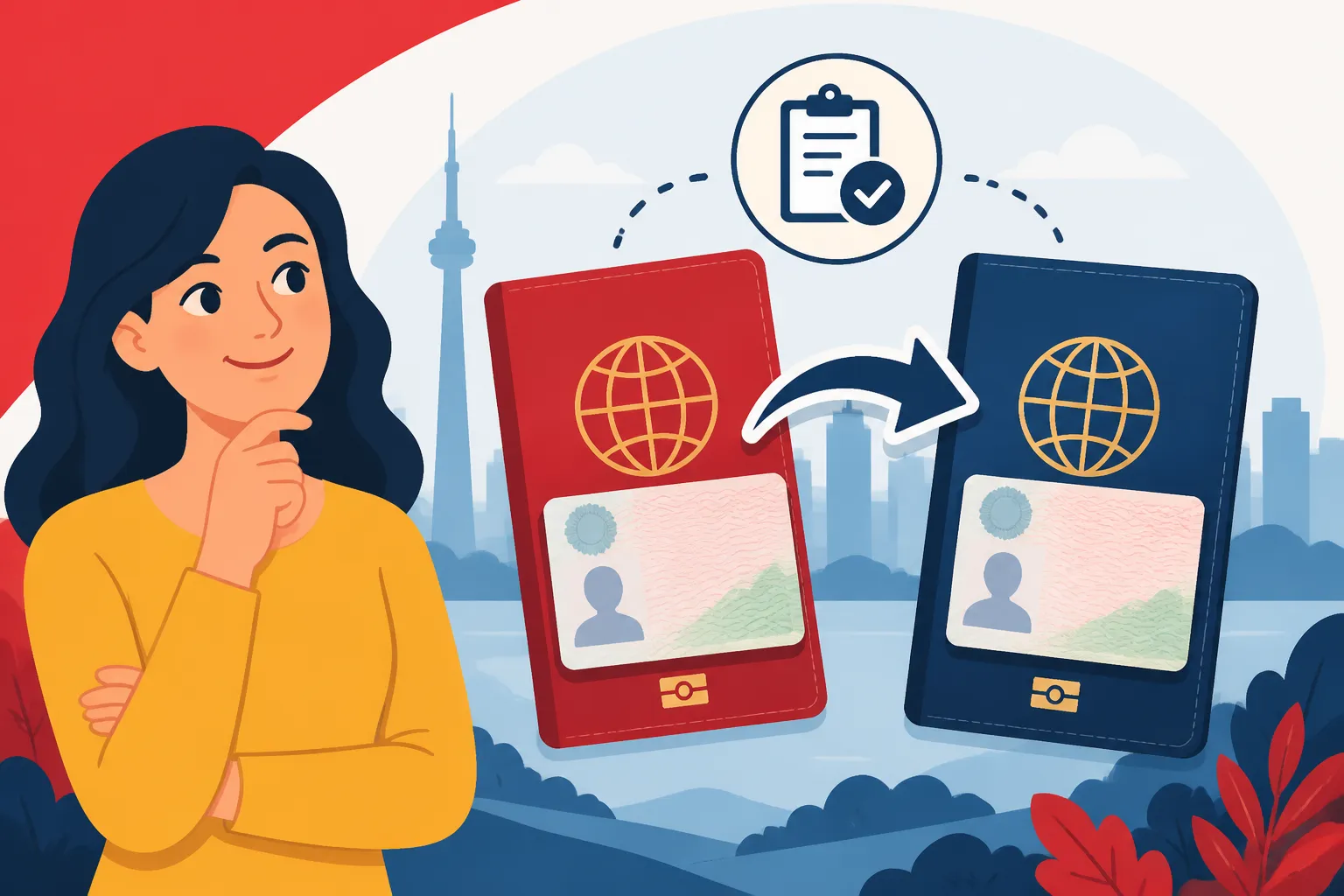
Here's the big reveal: unlike some countries where you might physically transfer a visa sticker, Canada doesn't generally "transfer" a physical visa from an old passport to a new one.
The Reality: Canadian Visas Aren't "Transferred"
For a valid Temporary Resident Visa (TRV) sticker in an expired passport, the standard guidance from IRCC is quite simple: you carry both your old passport (containing the valid visa) and your new, valid passport when you travel. The visa in the old passport is linked to the passport number it was issued with, and immigration officials will typically accept this combination. They'll verify your identity with your new passport and check the visa's validity in your old one.
This might sound a bit cumbersome, and frankly, it can be. You might worry about border agents being confused, but this is the official procedure. It's essential to ensure all information on both documents (especially your name and date of birth) is identical. Any discrepancies could raise red flags and lead to delays or even refusal of entry. So, while you might have hoped for a neat new sticker, prepare to become a two-passport traveller for a while. This applies to those who entered Canada with a TRV and received a work or study permit after entry. For those who received a counterfoil (the visa sticker) that has the same expiry as their work or study permit, the two-passport rule generally applies as long as the counterfoil is still valid.
What to Do with Your Old and New Passports
So, you've got your old, expired passport with the valid visa, and your brand-spanking-new passport. Here's your action plan:
- Always Carry Both: When travelling internationally, always carry both passports with you. Present both at airline check-in, security checkpoints, and Canadian border services. This is not optional if your visa is in the old passport.
- Verify Information: Double-check that all personal details (name, date of birth, place of birth, gender) are identical across both passports. If there are any discrepancies, you should address them with your passport issuing authority and potentially IRCC.
- Keep Them Safe: Treat both documents as equally important. Losing one means potentially losing access to your valid visa or identity document. Consider using a secure travel document holder.
- Sufficient Validity: Ensure your new passport has enough validity for your planned stay or re-entry into Canada. While your visa might be valid, a passport expiring shortly after your entry could still cause issues. Generally, it's advised to have at least six months of validity remaining on your passport.
This "two-passport" method works for many, but it's important to be vigilant. Each border agent might interpret situations slightly differently, even if the policy is clear. Being polite, prepared, and having all your documents ready for an IRCC application (should they ask for anything else) will go a long way.
When a New Visa Is Required
While carrying two passports is often the standard, there are definite scenarios where you absolutely will need to apply for a brand new Canadian visa. This is where people often get caught out, thinking the two-passport rule covers all bases.
Situations Requiring a New Visa Application
You will need to apply for a new visa if any of the following apply:
- Your Visa Has Expired: This might seem obvious, but if the validity period printed on your TRV sticker has passed, then it's no longer valid, regardless of whether it's in an expired or current passport. You will need to apply for a visitor visa or eTA for Canada again.
- Lost or Stolen Passport: If you lose your old passport with the valid visa, you've lost your visa too. There's no way to recover it from the ether. You'll need to report the loss, get a new passport, and then apply for a new TRV.
- Damaged Visa: If your visa sticker is torn, defaced, or otherwise illegible, it will be considered invalid. Again, a new application is necessary.
- Change in Personal Information: If your name, gender, or date of birth has legally changed after your visa was issued, and this change isn't reflected consistently across both passports (or your new passport has the updated info, but your visa doesn't), you might need a new visa to avoid discrepancies.
- Specific Airline or Country Requirements: Very occasionally, an airline or transit country might have a policy that causes issues with the two-passport method. While this isn't a Canadian government requirement, it can complicate your travel. If you anticipate frequent travel or layovers in countries with strict transit rules, getting a new visa might save you headaches.
- Preference for a Single Document: Some individuals simply prefer the convenience and clarity of having a single valid visa in their current passport. While not strictly required by IRCC if your old visa is still valid, you can choose to apply for a new TRV if you wish. However, remember this is a new application, not a "transfer," and it comes with processing times and fees.
- The Visa Was Single-Entry: If your TRV was a single-entry visa (meaning it allowed you only one entry into Canada), it becomes invalid as soon as you exit Canada, regardless of its printed expiry date. You'd need a new one for any subsequent entries.
Applying for a New Temporary Resident Visa (TRV)
If you find yourself in a situation where a new visa is indeed required, you'll go through the standard application process for a Temporary Resident Visa. This is typically done online through the IRCC portal.
Here's a simplified rundown of the steps:
- Determine Eligibility: Confirm you meet the requirements for a TRV. This usually involves proving you have sufficient funds, a genuine reason for your visit (or underlying study/work permit), and an intent to leave Canada at the end of your authorized stay.
- Gather Documents: Prepare all necessary supporting documents. This includes your new passport, digital photos, proof of funds, travel itinerary, and any other documents specific to your situation. If you're applying for a new TRV because your work or study permit is still valid but your old visa is not, you'll need to include copies of those valid permits. Make sure to review The Complete Visa and Immigration Guide for Moving to Canada (2027) for a comprehensive overview of requirements.
- Complete the Online Application: Fill out the TRV application form accurately on the IRCC website. This is where attention to detail is paramount.
- Pay Fees: The application will have associated processing fees.
- Biometrics (if required): Depending on your nationality and previous applications, you may need to provide biometrics (fingerprints and a photo) at a designated collection point.
- Submit and Wait: Once submitted, you'll need to wait for IRCC to process your application. Processing times can vary significantly, so don't leave this to the last minute, especially if you have upcoming travel plans. You can often check the status of your application online.
- Passport Request: If your application is approved, IRCC will send you a "passport request" letter, asking you to submit your new physical passport to a Visa Application Centre (VAC) or directly to an IRCC office (depending on your location) for the new visa sticker to be affixed. This is the moment you've been waiting for!
This process is effectively the same as your initial visa application, so familiarity with how to immigrate to Canada from abroad (2026) or your original TRV application will be helpful.
Key Considerations and Practical Advice
Navigating immigration documents can be confusing, especially when your passport situation changes. Here are some more nuanced points and practical tips.
If You Have an eTA or an Electronic Work/Study Permit
For many newcomers, their "visa" isn't a physical sticker. This is particularly true if you are from a visa-exempt country and entered Canada with an Electronic Travel Authorization (eTA), or if you applied for and received your Understanding Canadian Work Permits: LMIA and Exempt Explained (2027) or How to Get a Study Permit for Canada: The Full Guide (2027) after you were already in Canada (meaning it wasn't a counterfoil in your passport).
- eTA: As mentioned, an eTA is electronically linked to the passport you used to apply for it. If you get a new passport, the old eTA automatically becomes invalid. You must apply for a new eTA linked to your new passport before you travel to Canada. It’s a quick online process, but it’s absolutely essential.
- Electronic Work/Study Permits: If your work or study permit was issued as a paper document within Canada, or presented at the border and is not a visa sticker inside your passport, then replacing your passport generally does not require you to get a new work or study permit. You simply carry your new, valid passport along with your valid paper permit. However, it's always good practice to update your passport information with IRCC through your online account if there's a specific section for it, though this isn't always a mandatory requirement for the permit itself to remain valid. Always refer to your specific permit for any instructions on passport changes.
Travelling Internationally with Two Passports
This is where things can get a little nerve-wracking for some, but it’s a standard procedure for Canadian immigration.
- At Airline Check-in: Present both passports. The airline staff will first check your new passport for validity and then locate your Canadian visa in the old one. Be prepared for them to take a little longer to process this.
- During Transit/Layover: If you have layovers in other countries, be aware that their immigration rules might be different. Some countries might not be accustomed to the two-passport method. While it's generally accepted for transit, ensure you have sufficient time between flights in case of delays at immigration checks.
- Arriving in Canada: At the Canadian border, present both passports to the Border Services Officer. Clearly state your purpose (e.g., "I'm returning on my study permit, my visa is in my old passport"). They are accustomed to this. They will scan your new passport and manually check the visa in your old one. They will usually stamp your new passport upon entry.
This dual-document dance is manageable, but preparation is key. Make sure your other travel documents, like tickets and booking confirmations, match the name on your new passport. While dealing with logistics of travel and moving, companies like Sirelo can help with coordinating your belongings. Just ensure your personal identification aligns with your travel plans.
Lost or Stolen Passports and Visas
This is, unfortunately, a far more serious situation than simply renewing an expired passport. Losing your passport, especially one with a valid visa, can throw a real wrench in your plans.
- Report Immediately: As soon as you realize your passport is lost or stolen, report it to the local police (if abroad) and your country's embassy or consulate. Get a police report – this is vital for future applications.
- Obtain a New Passport: Your first step is to get a replacement passport from your country's diplomatic mission. This can take time, so be prepared for potential delays.
- Apply for a New Canadian Visa: Since your previous visa is inextricably linked to the lost passport, you cannot "transfer" it. You will need to apply for a brand new Temporary Resident Visa (TRV). You'll usually need to include the police report and a detailed explanation of how your passport was lost or stolen. The process will be similar to applying for a new TRV as outlined earlier. This can be stressful and involve extra costs and wait times, impacting your ability to travel.
- Consider Travel Insurance: For such emergencies, having comprehensive travel insurance like that offered by Cigna Global could be a lifesaver. While it won't replace your visa, it could cover costs associated with emergency travel documents, unplanned stays, and other unforeseen expenses due to passport loss. It's a layer of security that is widely recommended, especially for international expats.
Additional Resources and Support
The world of immigration and travel documents can be complex, and getting things wrong can have significant consequences. Don't be afraid to seek help or use official resources.
Navigating IRCC and Government Websites
The official source for all Canadian immigration information is the IRCC website. It's comprehensive, but sometimes requires careful reading to find the exact details for your unique situation.
- IRCC Website: Always start here. Look for sections related to "Temporary Resident Visas," "Study Permits," "Work Permits," and "Travel Documents." Use the search function diligently.
- "Help Centre": IRCC has a "Help Centre" which contains answers to frequently asked questions. Searching here can often yield direct answers.
- Online Account: If you have an IRCC online account, check for any options to update your personal information or passport details.
- Provincial Information: While IRCC handles federal immigration, remember that once you are in Canada, services like healthcare are provincial. For example, How to Apply for OHIP, MSP, RAMQ or AHCIP When You Arrive in Canada discusses applying for provincial health cards, which is separate from your visa status but crucial for living here.
Professional Assistance and Support Networks
Sometimes, the official guidelines just aren't clear enough for your specific circumstances, or you prefer professional guidance.
- Immigration Consultants: For complex cases, or if you're uncertain about your eligibility for a new visa, consider consulting with a Regulated Canadian Immigration Consultant (RCIC). They can provide tailored advice and help you navigate the application process. Make sure they are licensed and in good standing.
- Embassies/Consulates: Your own country's embassy or consulate in Canada can help with passport renewals and advise on travel document requirements.
- Expat Communities: Online expat forums and local newcomer groups can be a great source of anecdotal advice and support from others who have gone through similar experiences. Just remember to verify any critical information with official sources or professionals, as rules can change. Discussions in these communities often touch on topics like The Complete Guide to Canadian Visas and Immigration for Newcomers (2027) or even practicalities like Understanding the Cost and Timeline of the Immigration Process in Canada.
Staying informed and organized is your best defence against unexpected surprises when it comes to your immigration status and travel. Always err on the side of caution and ensure your documents are current and correctly managed.
Disclaimer
This article is for general informational purposes only and does not constitute professional advice. Laws, prices and regulations vary by location and change over time. Consult a qualified professional for guidance on your specific situation.