How Do I Apply for an Open Work Permit for My Spouse in Canada?
Oh, the Canadian immigration system, it's a journey, isn't it? You've worked so hard to get your own permit or status, only to realize the labyrinth begins anew when you try to bring your loved one along and ensure they have the freedom to work. It’s incredibly frustrating to feel like you’re constantly jumping through hoops. But don't you worry, this guide is here to untangle the complexities of applying for an Open Work Permit for your spouse in Canada, offering practical, step-by-step advice to help you navigate this often-confusing process.
Understanding the Open Work Permit for Spouses: What It Is and Why It Matters
Let's start by demystifying what an Open Work Permit for a spouse actually means. In Canada, an "open" work permit, unlike a "closed" one, doesn't tie your partner to a specific employer, job, or location. This is a huge deal, offering immense flexibility. Imagine the stress of having to find a job first, get an employer to go through the Labour Market Impact Assessment (LMIA) process, and then apply for a closed work permit – it's a massive hurdle that many newcomers face. The spousal open work permit, thankfully, bypasses much of that initial struggle, making it a highly sought-after option.
The "Open" Advantage: Flexibility for Your Partner
When your spouse receives an Open Work Permit, they gain the incredible freedom to work for almost any employer in Canada, in virtually any occupation, and anywhere in the country. This means they aren't bound to the employer-specific limitations that often accompany other types of work permits. Think about it: they can explore different job opportunities, change employers without needing a new permit, and even work for multiple employers if they wish. This flexibility is invaluable, especially when you're both just settling into a new country and figuring out where you fit in.
For instance, your spouse might arrive with a specific career in mind, only to find that the Canadian job market in that sector is more competitive than anticipated, or perhaps they discover a new passion after a few months here. With an open work permit, they can pivot their job search, take on temporary contracts, or even pursue self-employment without needing to re-apply for a new permit. This isn't just about finding a job; it's about building a career and feeling truly integrated into the Canadian economy. It allows for a much smoother and less stressful transition, enabling your partner to contribute financially and professionally from the get-go. This is a key aspect of Understanding LMIA-Exempt and Open Work Permits in Canada, which explains the types of permits that offer this level of freedom.
Who is Eligible for a Spousal Open Work Permit?
The eligibility for a spousal Open Work Permit hinges significantly on the status of the primary applicant – that's you! Generally, your spouse (or common-law partner) can apply for an open work permit if you, the primary applicant, are in Canada on a valid study permit or work permit, or if you are a Canadian permanent resident or citizen. There are specific criteria that need to be met, and it's not a blanket approval for every situation. Immigration, Refugees and Citizenship Canada (IRCC) outlines these conditions quite clearly, but sometimes understanding the nuances is the tricky part.
For example, if you are an international student, your study permit needs to be valid, and you usually need to be enrolled full-time at a designated learning institution (DLI) in a post-secondary program. If you're on a work permit, your job often needs to be in a skilled occupation (National Occupational Classification (NOC) TEER 0, 1, 2, or 3) or at least be valid for a certain duration. This connection to your status is crucial because the spousal open work permit is, in essence, a dependent permit. They are dependent on your ability to legally reside and, often, work or study in Canada. Make sure to carefully review the specific requirements for your situation, as these can change.
The Primary Applicant's Status: The Foundation of Your Spouse's Application
Your status in Canada is the cornerstone upon which your spouse’s Open Work Permit application rests. It's not just about you being in Canada; it's about the type of immigration status you hold and whether it qualifies your spouse for this specific type of permit. This is where many people can get tripped up, assuming that any permit will do. However, IRCC has specific criteria for the primary applicant's status to support a spousal open work permit.
Students, Workers, and Permanent Residents: Different Paths
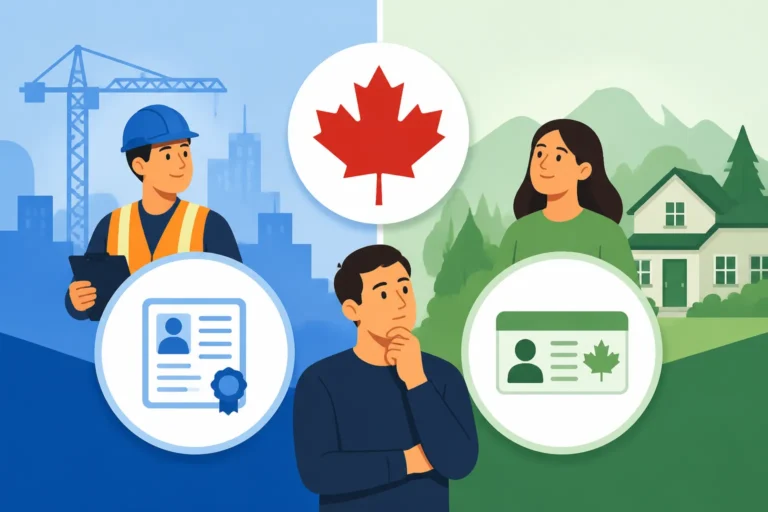
The pathways to obtaining a spousal open work permit vary significantly based on whether the primary applicant is an international student, a temporary foreign worker, or a permanent resident. Let's break down these common scenarios:
For International Students: If you are an international student, your spouse may be eligible for an open work permit if you are studying at a designated learning institution (DLI) and are enrolled in a post-secondary program that leads to a degree, diploma, or certificate. Critically, your study permit must be valid. If you're taking a short language course or a program that doesn't meet the post-secondary criteria, your spouse likely won't qualify. The government's reasoning here is that you're pursuing substantial education that implies a longer-term stay and greater integration into Canadian society. It's important to be enrolled full-time and maintain good academic standing. This also ties into the concept of The Complete Guide to Studying at a Canadian University or College (2027), where more details about eligible programs can be found.
For Temporary Foreign Workers: If you are in Canada on a work permit, your spouse's eligibility often depends on the skill level of your occupation. Generally, if your job falls under the National Occupational Classification (NOC) system's TEER 0, 1, 2, or 3 (previously NOC A, B, or 0), your spouse is typically eligible. This applies to managers, professionals, technical trades, and skilled trades. However, there are nuances. For example, some temporary foreign workers who come under specific programs or have certain LMIA-exempt work permits might also qualify, even if their NOC isn't strictly TEER 0-3. Always check the most current IRCC guidelines, as these policies can be updated. Your work permit also needs to be valid for at least six months from the date of the spouse's application for the Open Work Permit. If your work permit is expiring soon, it’s advisable to renew yours first before applying for your spouse's.
For Permanent Residents or Canadian Citizens: This is usually the most straightforward path. If you are a Canadian citizen or a permanent resident, and you have sponsored your spouse for permanent residence, your spouse can often apply for an Open Work Permit while their permanent residence application is being processed. This is known as the Spousal Sponsorship Open Work Permit. It’s a fantastic option as it allows your partner to work and contribute while waiting for the finalization of their PR status, which can sometimes take a considerable amount of time. This pathway is discussed in more detail in How to Sponsor Your Spouse or Partner for PR in Canada. The ability to work during this waiting period alleviates much of the financial and psychological strain of waiting.
Financial Proof and Relationship Authenticity
Beyond your immigration status, the IRCC wants to ensure two other vital aspects: that you, as a couple, can financially support yourselves in Canada and that your relationship is genuine. They are not just handing out permits; they want to see legitimate relationships and people who won't become a burden on the Canadian social system.
Financial Proof: While your spouse is applying for an open work permit, and not necessarily a spouse-sponsored PR application where financial guarantees are paramount, showing some level of financial stability is still important. This isn't usually as stringent as for PR applications, but having evidence that you, the primary applicant, are gainfully employed or have sufficient funds to support both of you (especially if your spouse won't find work immediately) can strengthen the application. This could include bank statements, employment letters, pay stubs, and even proof of savings. Remember, Canada wants to see that you're capable of establishing yourselves successfully.
Authenticity of Relationship: This is absolutely critical. IRCC takes relationship fraud very seriously. You must provide compelling evidence that your marriage or common-law partnership is genuine and not entered into solely for immigration purposes. This isn't just a formality; it's a deep dive into the nature of your relationship. For married couples, your marriage certificate is the starting point, but it's rarely enough on its own. For common-law partners, the requirements are even more rigorous, as you need to prove you've been cohabiting in a conjugal relationship for at least 12 continuous months.
Here’s a snapshot of the kinds of documents you’ll need to prove your relationship, beyond just a marriage certificate:
| Document Category | Specific Examples |
|---|---|
| Proof of Marriage/Partnership | Marriage certificate (for married couples), Statutory Declaration of Common-Law Union (IMM 5409) for common-law partners. |
| Evidence of Cohabitation | Joint bank accounts, utility bills in both names (hydro, internet, gas), joint lease agreements or property ownership documents, shared insurance policies (car, home), driver's licenses with the same address, government IDs showing the same address, mail addressed to both of you at the same address. |
| Evidence of Relationship History | Photos of you together (with family, friends, during trips), communication records (chat logs, call logs, emails – especially if you've been apart for periods), travel itineraries showing trips together, greeting cards or letters exchanged, social media interactions, affidavits from friends or family confirming your relationship. |
| Financial Interdependence | Joint credit cards, joint investments, shared expenses documented, evidence of financial support for each other. |
| Proof of Shared Responsibilities | Wills naming each other as beneficiaries, shared car ownership, documents showing shared responsibility for children (if applicable). |
The more evidence you can provide, the stronger your case. Don't be shy about including pictures from holidays or family gatherings, screenshots of video calls, or even old plane tickets from visits to each other. Every piece of documentation helps paint a picture of a committed and genuine relationship. This process often feels intrusive, but it’s a necessary step in the eyes of IRCC to prevent misuse of the system. Getting How to Get Your Documents Ready for an IRCC Application is a great resource that can help you organize everything.
Gathering Your Documents: No Stone Left Unturned
Preparing your application is largely about meticulous document gathering. You can't afford to be sloppy here. A missing document, or one that doesn't meet IRCC's specifications, can lead to delays or even a refusal, forcing you to start all over again. Trust me, you do not want to go through that. So, let’s talk about what you absolutely need to have ready.
Essential Documents for Both Spouses
Both the primary applicant (you) and your spouse will need to provide a set of core documents. These are foundational to any immigration application in Canada.
For Your Spouse (the applicant for the Open Work Permit):
- Valid Passport: This is non-negotiable. Ensure it's not expiring anytime soon. IRCC will not issue a work permit beyond the validity of your passport.
- Digital Photo: Needs to meet specific IRCC photo requirements (size, background, facial expression). Don't just use a selfie; get a professional one.
- Proof of Relationship: As discussed, this is paramount. Your marriage certificate (if applicable) and extensive evidence of your genuine relationship.
- Proof of Your Status in Canada (as the primary applicant): A copy of your valid study permit, work permit, or confirmation of permanent residence (COPR) if you're a PR.
- Proof of Employment/Enrollment (for the primary applicant): An employment letter, recent pay stubs (if on a work permit), or a letter of enrollment and transcripts (if on a study permit).
- Family Information Form (IMM 5707): A comprehensive form detailing your family members.
- Application for Work Permit (IMM 5710): The main application form itself.
- Consent to Share Information Form (if applicable): If you're using a representative.
- Police Certificates: Depending on where your spouse has lived for six months or more since turning 18, they may need to provide police certificates from those countries. This is an important part of the broader Understanding Medical Exams and Police Certificates for Canadian Immigration.
- Medical Exam Results: If your spouse has lived in certain designated countries for more than six months in the last year, or if they intend to work in specific occupations (e.g., healthcare, education), they might need a medical exam from an IRCC-approved panel physician. It's better to check this requirement early.
Additional considerations for your primary applicant's documents:
If you, the primary applicant, are on a work permit, ensure you have your most recent pay stubs (3-4 months) and a letter from your employer confirming your ongoing employment and salary. If you're a student, a letter from your DLI confirming your full-time enrollment, program details, and expected completion date is crucial. For permanent residents, your PR card or confirmation of your PR status (e.g., COPR) will be sufficient.
The detail in What Documents Do I Need to See a Doctor in Canada? might seem unrelated, but it's a good reminder of how essential documentation is for any service here, including immigration.
Additional Proof for Common-Law Partners
If your spouse is a common-law partner, the burden of proof for the relationship's authenticity is arguably even higher than for married couples. This is because there's no official marriage certificate to start with. IRCC defines a common-law partnership as two people who have been living together in a conjugal relationship for at least one year.
You’ll need to submit the Statutory Declaration of Common-Law Union (IMM 5409). But this form alone is just a declaration; it needs to be backed up by substantial evidence, just like for married couples. The key here is cohabitation. You must demonstrate that you've been living together continuously for at least 12 months in a relationship akin to marriage. This means sharing a household, expenses, social life, and presenting yourselves as a couple to the world.
Think about the documents that unequivocally prove you share a life:
- Joint bank accounts where both your names appear, showing regular transactions.
- Joint leases or mortgage documents, proving shared residence.
- Utility bills (electricity, gas, internet) addressed to both of you at the same address.
- Vehicle registration and insurance policies that list both partners at the same address.
- Mail addressed to both individuals at the same residential address.
- Photos of you together from different periods, especially those with family and friends who can attest to your relationship.
- Affidavits from friends or family who can confirm your common-law status.
The stronger and more varied your evidence of cohabitation and interdependence, the smoother this part of the application will go. It's about building a solid, undeniable case that your relationship is genuine and meets IRCC's definition.
Navigating the Application Process: Step-by-Step
Once you’ve got all your documents meticulously organized and scanned, it's time to actually submit the application. This is where precision and attention to detail really count. Canada offers different ways to apply, and understanding them is key.
Online vs. Paper Application: Choosing Your Method
For most open work permit applications today, the online portal is the preferred and often fastest method. Applying online is generally more efficient, allows for immediate submission, and provides you with a digital record and tracking capabilities.
Online Application: This is typically done through the IRCC secure online portal. You'll create an account, answer a series of questions that determine your eligibility, and then be provided with a personalized document checklist. You'll upload all your scanned documents, pay the fees online, and submit. The system offers immediate confirmation of submission, and you can easily check your application status later. This method also allows for real-time updates and notifications. It’s a very user-friendly system, designed to guide you through the process, but remember: the onus is still on you to ensure everything is correct and complete. For more general guidance, checking The Complete Guide to Canadian Visas and Immigration for Newcomers (2027) might provide helpful context.
Paper Application: In some cases, or if you prefer, a paper application might be an option. This usually involves downloading the application package from the IRCC website, filling out all forms manually or digitally, printing them, attaching physical photos, and mailing the entire package to the designated IRCC processing centre. While still an option, paper applications generally take longer to process, involve postage costs, and don't offer the same real-time tracking capabilities. It's also riskier as documents can get lost in transit. Before opting for paper, always double-check if it's applicable for your specific situation.
Given the complexities of moving, especially if you're managing logistical aspects like shipping belongings, using a service like Sirelo to compare and arrange international moving companies can help free up some mental bandwidth for the intricate application process. While you’re consumed by paperwork, Sirelo ensures your physical move is handled efficiently.
Submitting Your Application and Biometrics
After meticulously filling out all forms and uploading (or compiling for paper submission) your documents, the final steps are payment and submission, often followed by biometrics.
Payment: There are fees associated with the Open Work Permit application. These typically include a processing fee for the work permit itself and an open work permit holder fee. Make sure you pay the correct amounts. Incorrect payment will lead to your application being returned, causing frustrating delays. Payment is usually done online via credit or debit card through the IRCC portal if applying online.
Submission: Once fees are paid and all documents are attached, you hit "submit" (or mail your package). You'll receive a confirmation of submission, which is your proof that the application has been sent.
Biometrics: In most cases, you will receive a Biometrics Instruction Letter (BIL) shortly after submitting your application. This letter will instruct your spouse to provide their fingerprints and a photograph at a designated Service Canada location within a specific timeframe (usually 30 days). Biometrics are a mandatory part of Canada's immigration process for most temporary and permanent residence applications. It's crucial to attend this appointment as quickly as possible, as processing of your application won't proceed until your biometrics are collected. Missed appointments or delays can significantly stall your application. Ensure your spouse is aware of the nearest biometrics collection points when they receive the letter.
After Application: What Comes Next?
You’ve submitted the application, provided biometrics – now comes the agonizing wait. This part can be tough, filled with uncertainty. But knowing what to expect can help manage some of that stress.
Processing Times and Status Checks
The processing times for Open Work Permits can vary widely depending on the country of application, the specific IRCC office, and the volume of applications. It's not uncommon for processing times to fluctuate, so always check the official IRCC website for the most up-to-date estimates. What you see there is an estimate, not a guarantee.
You can monitor the status of your application online through your IRCC account. This is where you’ll see if documents have been reviewed, if a decision has been made, or if IRCC requires additional information. It’s vital to check this frequently, especially for requests for additional documents. They often come with strict deadlines, and missing them can lead to a refusal. Keeping tabs on your application is part of How Do I Check My Immigration Application Status in Canada?.
During this waiting period, life in Canada continues. It’s a good time to think about things like healthcare coverage. Even with an impending work permit, there might be a waiting period for provincial health coverage to kick in. Considering private health insurance options like Cigna Global can offer peace of mind, ensuring that your spouse is covered for unexpected medical needs until they're eligible for the provincial plan. This is especially important as The Newcomer Waiting Period for Provincial Health Coverage in Canada (2027) can be up to three months in some provinces.
Dealing with Challenges and Refusals
Sometimes, despite your best efforts, challenges arise. IRCC might request additional documents or clarification. This is usually communicated through your online account. Respond promptly and provide exactly what they ask for. Don't send more than requested, and don't take forever to respond.
In the unfortunate event of a refusal, try not to panic, but do take action. The refusal letter will typically state the reasons for the denial. This is crucial information. Common reasons for refusal include:
- Incomplete application: Missing documents, forms not filled out correctly.
- Insufficient proof of relationship: IRCC was not convinced the relationship is genuine.
- Primary applicant's status not meeting eligibility: Perhaps your work permit expires too soon, or your student program doesn't qualify.
- Inadmissibility: Previous immigration violations, criminal record, or health issues.
If your application is refused, you usually have options. You can re-apply, but only after carefully addressing the reasons for the refusal. This might involve gathering more evidence for your relationship, ensuring all forms are perfectly completed, or waiting until your own status in Canada is more secure. Sometimes, it's worth consulting an immigration lawyer or consultant to help you understand the refusal and guide you on the best path forward for a new application. Don't give up hope; many people face initial setbacks but ultimately succeed.
Disclaimer
This article is for general informational purposes only and does not constitute professional advice. Laws, prices and regulations vary by location and change over time. Consult a qualified professional for guidance on your specific situation.