How Long Does Express Entry Take in Canada?
The uncertainty of waiting for your immigration application to process can be absolutely maddening, can't it? You’ve put in all that effort, gathered countless documents, and now you’re left in limbo, constantly refreshing the IRCC website. This guide is here to shed some light on one of the most common questions on newcomers' minds: how long does the Express Entry process truly take in Canada, and what can you realistically expect from start to finish.
Demystifying the Express Entry Timeline
Let’s be honest, when you’re applying for something as life-changing as permanent residency, every day feels like a year. The "six-month processing time" often quoted by Immigration, Refugees and Citizenship Canada (IRCC) for Express Entry applications can feel more like a mythical creature than a concrete reality for many. It's not that IRCC is trying to mislead you; it's just that the journey from creating your profile to landing in Canada as a Permanent Resident is a multi-layered process, and each stage has its own variables.
Express Entry itself isn't a single immigration program but rather an online system that manages applications for three main economic immigration programs: the Federal Skilled Worker Program (FSWP), the Federal Skilled Trades Program (FSTP), and the Canadian Experience Class (CEC). Additionally, some Provincial Nominee Programs (PNPs) are "enhanced" programs that align with Express Entry, meaning a provincial nomination can give you a massive boost in your Comprehensive Ranking System (CRS) score. The sheer volume of applications, the specific program you fall under, the completeness of your documentation, and even global events can all play a part in how long your personal journey takes.
The Stages of Express Entry
To truly understand the timeline, it helps to break down the Express Entry process into its key stages. Think of it like a marathon, not a sprint, with several checkpoints along the way:
- Creating Your Express Entry Profile: This is your initial declaration of interest. You enter your credentials (education, work experience, language test results, etc.) into the IRCC system. There's no processing time here, as it's entirely up to you how quickly you complete it. You'll receive a CRS score, and your profile remains active in the pool for 12 months. Many newcomers spend weeks, if not months, perfecting this stage, especially ensuring their language tests are booked and credentials assessed. If you’re looking to boost your score, check out our guide on How to Improve Your CRS Score for Express Entry in Canada.
- Invitation to Apply (ITA): If your CRS score is above the cut-off in an Express Entry draw, you'll receive an Invitation to Apply (ITA). This is the golden ticket! Draws typically happen every two weeks, though this can vary. Once you get an ITA, the real clock starts ticking for your application submission.
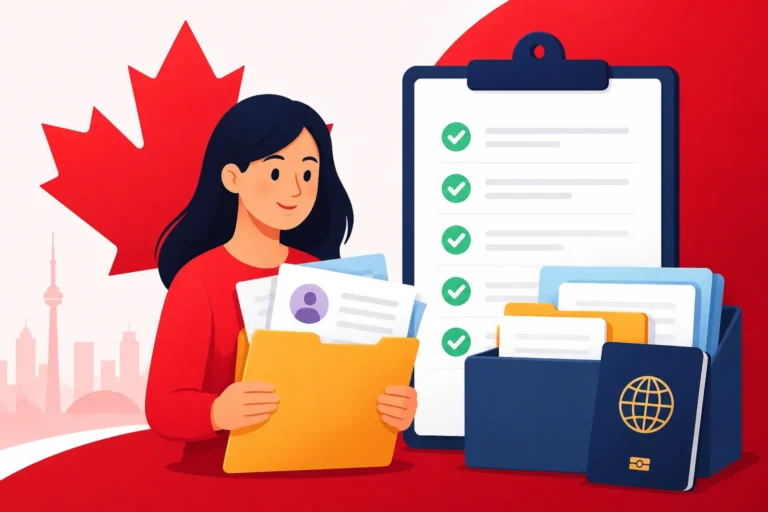
- Preparing and Submitting Your Permanent Residence (PR) Application: You have a strict 60-day window from the date of your ITA to submit a complete application with all supporting documents. This includes things like police certificates from every country you've lived in for six months or more since age 18, medical exam results, educational credential assessments (ECAs), and proof of funds. This stage requires meticulous organization. For a detailed rundown, read How to Get Your Documents Ready for an IRCC Application.
- Application Under Review (AOR) and Background Checks: Once you submit your complete application and pay the fees, you'll receive an Acknowledgment of Receipt (AOR). This is when IRCC starts processing your application. They'll conduct eligibility and admissibility reviews, which include extensive background checks (security, criminality) and verification of all the information and documents you've provided. This is often the longest and most opaque part of the process.
- Biometrics and Medical Exams: Depending on where you are located, you may be required to provide biometrics (fingerprints and photo) at a designated service point. If you haven't already completed a medical exam upfront, you'll receive instructions to do so. These usually need to be completed within 30 days of the request.
- Request for Additional Documents (if any): Sometimes, IRCC might request additional documents or clarification. Responding promptly and accurately to these requests is crucial to avoid further delays.
- Approval and Confirmation of Permanent Residence (COPR): If your application is approved, you'll receive a Confirmation of Permanent Residence (COPR) document. This is the official notification that you are now a permanent resident.
- Landing in Canada (or eCOPR for inland applicants): For applicants outside Canada, you’ll need to "land" in Canada by a specific date to finalize your PR status. For those already in Canada, an electronic COPR (eCOPR) is issued, and your PR card will be mailed to you.
Factors Influencing Processing Times
So, why does it take some people 2 months and others 12? Several variables are at play here:
- The Program You Qualify Under: Historically, Canadian Experience Class (CEC) applications often processed faster than Federal Skilled Worker (FSW) applications because applicants are usually already in Canada, perhaps on a work permit, and may have Canadian work experience, which simplifies some verification steps.
- Completeness and Accuracy of Your Application: This is HUGE. Missing documents, inconsistent information, or errors can lead to delays, requests for additional information, or even refusal. IRCC case officers have a massive workload, and anything that makes their job harder will slow down your application. Take the time to ensure everything is perfect the first time around.
- Country of Origin and Security Checks: Background and security checks can take varying amounts of time depending on your country of origin and any countries you've lived in. Some regions have more complex security verification processes than others.
- IRCC Workload and Capacity: The number of applications IRCC receives can fluctuate, and their processing capacity also changes based on government priorities, staffing, and budget. Global events, like the recent pandemic, can also cause significant backlogs.
- Complexity of Your Case: If you have a complex immigration history, criminal record issues, medical inadmissibility concerns, or require extensive security checks, your application will naturally take longer.
- Communication Speed: How quickly you respond to requests for biometrics, medical exams, or additional documents directly impacts your timeline. Don't procrastinate!
- Changes to Immigration Policy: Sometimes, policy changes can temporarily impact processing times as IRCC adapts its systems and processes.
For a broader overview of the entire journey, you might want to look at The Complete Guide to Getting Permanent Residence in Canada (2027).
Current Processing Times and Realistic Expectations
Alright, let's get down to brass tacks. While IRCC aims for a six-month processing time for 80% of Express Entry applications, the reality on the ground can be a bit different. It’s important to manage your expectations and prepare for potential variations.
Official IRCC Service Standards
IRCC regularly publishes its service standards and current processing times on its website. For Express Entry, the target is usually "6 months or less" for complete applications, after receiving the Invitation to Apply. This 6-month period starts the day they receive your complete application, not when you submit your profile.
Official IRCC Express Entry Processing Times (as of early 2026, subject to change):
| Express Entry Program | Target Processing Time | Notes |
|---|---|---|
| Federal Skilled Worker | 6 months | This is an average for 80% of applications. Can be longer for complex cases or if additional documentation is requested. |
| Canadian Experience Class | 6 months | Often slightly faster due to applicants usually having Canadian work experience, which can expedite verification. |
| Federal Skilled Trades | 6 months | Similar to FSW, but requires specific trades experience. |
| Provincial Nominee Program (Express Entry aligned) | 6 months | After nomination. This doesn't include the time it takes to get the provincial nomination itself, which can add several months to the overall timeline before you even receive an ITA in Express Entry. |
Note: These are average times for complete applications. Your individual experience may vary.
Real-World Experiences and Variations by Program
Official timelines are a good goal, but not always the gospel. Some people get their PR in four months and others wait well over a year.
For instance, the Federal Skilled Worker Program (FSWP) often serves applicants from outside Canada. This means more international background checks, more varied documentation, and sometimes, longer waits for things like police certificates from multiple countries. If you’re applying from a country with slower administrative processes, that can add weeks or months to your document gathering phase even before you hit submit.
The Canadian Experience Class (CEC), on the other hand, often processes quicker. Why? Because these applicants are typically already working in Canada, contributing to the economy, and have already established some "ties" to the country. Their Canadian work experience is easier for IRCC to verify, and their criminal and security checks often involve Canadian records, which can be more streamlined. If you’re already here on a work permit, understanding the nuances of moving from a temporary to a permanent status is key, so you might find our article on How Your Immigration Status Affects Health Coverage in Canada helpful.
Even within these programs, external factors can create bottlenecks. For example, during peak immigration periods or after IRCC adjusts its intake targets, the processing queues can swell. While the goal is six months, it’s safer to budget for anywhere between 6 to 12 months from the date of your AOR for an Express Entry application. The provincial nominee stream that feeds into Express Entry can also vary greatly, sometimes adding a few extra months to the pre-ITA stage.
How to Potentially Speed Up or Ensure a Smooth Process
While you can’t make IRCC process your application any faster (believe me, we all wish we could!), there are definitely steps you can take to prevent your application from being the one that gets delayed. Think of it as greasing the wheels of bureaucracy.
Preparing Your Documents Thoroughly
This is arguably the single most important factor within your control. An incomplete or poorly organized application is a surefire way to invite delays.
- Gather Everything Before You Get an ITA: Seriously, start collecting your police certificates, educational credential assessments (ECA), language test results, and reference letters before you even receive an ITA. Many of these documents, especially police certificates from different countries, can take weeks or even months to obtain. Having them ready means you can submit your application well within the 60-day window. Remember, for police certificates, it’s not just your home country but every country you’ve spent six months or more in since turning 18. This can be a huge hurdle, so be prepared! For specific details, you can refer to Do I Need a Police Certificate for a Canadian Visa?.
- Follow Instructions Exactly: Read every single instruction and checklist item on the IRCC website. Pay attention to file formats, naming conventions, and size limits for uploads. If they ask for a certified translation, get one. If they ask for a specific format for a work reference letter, ensure your employer provides it that way. Don't assume anything.
- Provide Clear and Consistent Information: Every piece of information in your profile and application must be consistent. Discrepancies between your resume, work letters, and personal history can raise red flags and trigger additional scrutiny.
- Upfront Medical Exam (if possible): In some cases, you can complete your immigration medical exam before you even get an ITA. This saves time later on, as the results are usually sent directly to IRCC by the panel physician. However, be aware that medical exams have an expiry date (usually 12 months), so time it right.
Monitoring Your Application and Communication
Once you've submitted, it's not a set-it-and-forget-it situation. Diligent monitoring can catch potential issues early.
- Check Your IRCC Account Regularly: Log into your IRCC online account frequently (at least weekly) after submission. This is where IRCC will communicate any requests for additional documents, biometrics instructions, or updates on your application status. Don’t rely solely on email notifications, as they can sometimes be delayed or go to spam.
- Respond Promptly to Requests: If IRCC asks for more information or clarification, respond as quickly as humanly possible, ideally within a few days, certainly not waiting until the deadline. A quick response shows diligence and keeps your application moving.
- Keep Your Information Updated: If there are any significant changes in your life – new job, marriage, birth of a child, new address – you must inform IRCC through your online account. Failure to do so can lead to serious problems, including misrepresentation.
Avoiding Common Delays
Some delays are systemic, but many are self-inflicted. Here are some pitfalls to steer clear of:
- Incomplete or Incorrect Documents: As mentioned, this is the biggest culprit. Double-check everything. Ask a trusted friend or immigration consultant to review your application before submission.
- Expired Documents: Ensure all your supporting documents (passports, language tests, police certificates, medical exams) are valid for the entire processing period. If something expires, you’ll need to provide new versions.
- Failure to Pay Fees: Make sure all applicable fees are paid correctly. Payment errors can halt your application dead in its tracks.
- Not Meeting Program Eligibility: While hopefully caught during the ITA stage, sometimes applicants misinterpret criteria. Make sure you genuinely meet the requirements for the program you've applied under (FSWP, CEC, FSTP).
- Providing False Information: This is a severe no-no. Any misrepresentation, even if accidental, can lead to your application being refused and a ban from reapplying for several years. Be honest and accurate in all disclosures.
What to Do While Waiting
The waiting period can feel like an eternity, but it's not wasted time! This is a crucial phase for preparation, both logistically and emotionally. You've sent your application, now what?
Maintaining Your Eligibility and Status
First and foremost, don't do anything that could jeopardize your application or your ability to move to Canada.
- Maintain Your Immigration Status in Canada (if applicable): If you are already in Canada on a study permit, work permit, or visitor visa, ensure your status remains valid throughout the PR processing. Do not let your temporary resident status expire. You might need to apply for an extension or a new temporary visa if your PR application is still pending. Our guide on Can I Apply for PR from Inside Canada? delves into this further.
- Keep Your Funds Intact: You declared proof of funds when you applied. These funds need to be readily available and shouldn't drop below the required amount. IRCC may ask for updated proof of funds during processing.
- Don't Change Your Contact Information Without Notifying IRCC: Keep your address, email, and phone number updated in your IRCC account. You don't want to miss a crucial communication.
- Avoid Criminal Activity: This should go without saying, but any new criminal charges or convictions can lead to refusal of your permanent residence application.
Planning Your Move and Finances
The waiting period is an excellent time to start planning the practicalities of your move to Canada.
- Research Your Destination City/Province: Where will you live? What are the job prospects like? The cost of living? Start looking into housing, schools (if you have children), and general community information. If you're pondering the best cities, The Best Places to Live in Canada for Newcomers: A Complete Guide (2027) might be a good read.
- Brush Up Your Resume and Job Search Skills: Even if you have a job offer, start understanding the Canadian job market and cultural nuances. Learn about Canadian resume formats and interview styles. Check out How to Adapt Your Resume for the Canadian Job Market.
- Financial Planning: Start saving more, understanding banking in Canada, and researching how to transfer funds internationally. Companies like Sirelo can be incredibly helpful for planning international moves, offering resources for everything from finding reliable movers to understanding customs regulations. It's never too early to start looking at international moving costs and logistics.
- Learn About the Canadian Healthcare System: Canada's healthcare system is primarily public, but there are nuances for newcomers, including waiting periods for provincial health coverage. Understanding The Newcomer Waiting Period for Provincial Health Coverage in Canada (2027) is crucial, and you'll want to plan for that initial period.
Considering Interim Solutions
Life doesn’t stop just because your PR application is pending. There might be situations where you need to consider temporary solutions.
- Temporary Work or Study Permits: If you don't have existing Canadian status and the wait is long, you might explore options for coming to Canada temporarily, such as a study permit or a temporary work permit (if you secure a job offer with an LMIA, for instance). This allows you to gain valuable Canadian experience and be physically present, which can be beneficial.
- Private Health Insurance: During the waiting period for provincial health coverage (typically up to three months after landing), you'll be responsible for your medical costs. Investing in private health insurance like Cigna Global is a wise decision to protect yourself and your family from unexpected medical emergencies. This is especially true if you or your family members have pre-existing conditions or are prone to getting sick. Even for routine visits or prescriptions, having some coverage can save you a significant amount. This kind of insurance can also cover you during the actual move and your initial weeks before your provincial plan kicks in. We have a detailed post on How to Get Private Health Insurance to Cover the Waiting Period in Canada if you want to learn more.
- Language and Skills Development: Use this time to improve your English or French language skills further, take online courses, or gain additional certifications that could enhance your employability once you land.
Ultimately, the Express Entry process requires patience, meticulous preparation, and a proactive approach. While the timelines can fluctuate, by understanding the stages, preparing thoroughly, and staying vigilant, you can navigate this journey with greater confidence.
Disclaimer
The information provided in this guide is intended for general informational purposes only and does not constitute legal, financial, or immigration advice. Immigration policies and processing times in Canada are subject to change by Immigration, Refugees and Citizenship Canada (IRCC) without notice. While we strive to provide accurate and up-to-date information, it is essential to consult official IRCC sources, a Regulated Canadian Immigration Consultant (RCIC), or a qualified immigration lawyer for advice tailored to your specific situation. We are not responsible for any actions taken based on the information presented herein.