Can I Apply for PR from Inside Canada?
One of the biggest concerns newcomers and temporary residents in Canada often grapple with is the looming question of their long-term future. You've landed, you're working or studying, you've started to build a life here, and then it hits: "Can I actually apply for permanent residence from inside Canada, or do I need to pack up and go back home just to submit my application?" This guide is here to tell you, emphatically, that for many, applying for Permanent Residence (PR) while already residing within Canada is not only possible but often a strategic and seamless path.
Navigating the "Inside Canada" Permanent Residence Maze
The idea of applying for permanent residency from inside Canada can feel like navigating a dense, bureaucratic forest. Many assume they'll have to return to their home country, which adds immense stress, expense, and uncertainty. Let's clear the air on this right away.
The Fundamental Principle: Yes, It's Possible!
It's a common misconception that all immigration applications require you to be outside Canada. For many years, various pathways have allowed eligible individuals to transition from temporary resident status (like a work permit or study permit holder) to permanent resident status without ever leaving Canadian soil. This "in-Canada" application option is a lifeline for countless individuals who have already established roots, jobs, and communities here.
Think about it: you've settled into your routine, found your favourite local coffee shop, maybe even started learning a bit of Canadian French or mastered the art of dressing for a Canadian winter. The thought of uprooting all that just for paperwork is daunting. The Canadian government understands this and has streamlined processes to allow for internal applications, recognizing the value of individuals who are already contributing to Canadian society. This approach helps retain talented individuals who have already proven their ability to adapt and thrive in Canada.
However, "possible" doesn't mean "easy" or "universal." The crucial element here is eligibility. Not every temporary resident automatically qualifies for an in-Canada PR application, and the specific pathway you take will depend on your unique circumstances, such as your work experience, education, language proficiency, and ties to a particular province. This is where understanding the different programs becomes vital, as each has its own set of criteria that must be met.
Who Is Eligible to Apply from Within Canada?
Generally speaking, individuals who are already in Canada as temporary residents – be it on a work permit, study permit, or even as a visitor in some specific, more complex scenarios – are the primary candidates for an in-Canada PR application. The key here is maintaining valid temporary resident status throughout the application process, or at least having applied for an extension of that status before it expires.
For instance, if you're holding a valid post-graduation work permit, your Canadian work experience could make you a prime candidate for the Canadian Experience Class under Express Entry. Similarly, if you're a student enrolled in a Canadian university or college, your education and potential for a post-graduation work permit can open doors to various provincial nominee programs. It's all about how your current status and experiences align with the requirements of the various permanent residency streams.
Even visitors might find a path, though it's much rarer and usually requires exceptional circumstances, often under a temporary public policy. For example, during the pandemic, Canada introduced a temporary policy allowing visitors who had a valid job offer to apply for a work permit from within Canada and then potentially transition to PR. These are exceptions, not the rule, and typically require a very specific set of conditions. The most straightforward paths are almost always for those with active study or work permits, as these statuses demonstrate a clear intent and ability to contribute to Canada.
Key Pathways for In-Canada Permanent Residence Applicants
Canada offers several avenues for individuals to transition from temporary to permanent residency. Being physically present in Canada can give you a distinct advantage for certain programs.
Express Entry: Your Most Common Route
Ah, Express Entry! For many temporary residents, this is the golden ticket. This system manages applications for three major economic immigration programs: the Federal Skilled Worker Program (FSWP), the Federal Skilled Trades Program (FSTP), and the Canadian Experience Class (CEC). If you're already in Canada, the How Express Entry Works for Permanent Residence in Canada (2027) becomes highly relevant.
The Canadian Experience Class (CEC) is particularly designed for individuals who have gained skilled work experience in Canada. This means if you've been working here on a valid work permit, racking up those Canadian work hours, you're likely building a strong case for CEC. The beauty of CEC is that it places a significant emphasis on your integration into the Canadian labour market, which you're already demonstrating by working here. You'll need to meet specific language requirements and have at least one year of full-time (or equivalent part-time) skilled work experience in Canada within the last three years. The higher your CRS Score for Express Entry in Canada in 2026?, the better your chances of receiving an Invitation to Apply (ITA) for permanent residence. This is why many temporary workers diligently track their points, knowing that every bit of Canadian experience, education, and language proficiency helps.
While FSWP is primarily for those with foreign skilled work experience, those in Canada might also qualify if their Canadian experience isn't enough for CEC but their overall profile (including foreign experience, education, and language) is strong. The FSTP is for skilled tradespeople, and again, having Canadian work experience in a trade can significantly boost your profile within the Express Entry system. Essentially, being in Canada provides you with invaluable opportunities to gain Canadian work experience and education, which are highly valued under Express Entry and can dramatically improve your chances of success.
Provincial Nominee Programs PNPs: Regional Opportunities
Beyond the federal Express Entry system, Canada's provinces and territories each have their own Provincial Nominee Programs (PNPs). These programs are designed to address specific labour market needs and demographic goals of each province. If you're living and working or studying in a particular province, you're already demonstrating a "provincial tie," which is often a key requirement for PNPs. You can find more comprehensive details in The Newcomer Guide to Provincial Nominee Programs (PNP) in Canada (2027).
Let's say you're a recent graduate from a university in British Columbia. The British Columbia Provincial Nominee Program (BC PNP) might have a stream specifically for international graduates who want to settle and work in BC. Similarly, if you've been working in an in-demand occupation in Ontario, the Ontario Immigrant Nominee Program (OINP) could have a Human Capital Priorities stream that targets candidates with work experience in the province. Being physically present and having established a life in a particular province gives you a tangible advantage when applying through their PNP. You're not just a statistic on paper; you're a person already contributing to their local economy and community.
Many PNPs also have "Expression of Interest" systems, similar to Express Entry, where provinces invite candidates from their pool who meet specific criteria. Your in-Canada status, local work experience, and connection to the province are often heavily weighted in these selections. It's worth noting that a provincial nomination grants you an additional 600 points in your Express Entry CRS score, practically guaranteeing an Invitation to Apply. This makes PNPs an incredibly powerful pathway for those already living in Canada, especially if their CRS score without a nomination isn't quite high enough for a direct Express Entry ITA.
Family Sponsorship from Within Canada
For many, family is everything, and Canada recognizes this through its family reunification programs. If you're in Canada as a spouse, common-law partner, or conjugal partner of a Canadian citizen or permanent resident, you might be able to apply for permanent residence under the "Spouse or Common-Law Partner in Canada Class." This is a hugely important pathway for those who have found love and built a life with a Canadian partner here.
One of the significant advantages of the In-Canada class for spousal sponsorship is the potential to apply for an open work permit while your permanent residence application is being processed. This means you can continue to work (or start working) legally in Canada, contributing to your family's finances and further integrating into the Canadian workforce, without having to wait for your PR to be finalized. It's a pragmatic approach that acknowledges the realities of living together as a couple while navigating the immigration system. You can learn more about this process in How to Sponsor Your Spouse or Partner for PR in Canada.
It’s crucial to understand that while your application is processing, maintaining your legal status is paramount. If you've come to Canada on a visitor visa to be with your partner, for example, you would need to ensure your visitor status is extended if your initial stay expires before your open work permit or PR is granted. The goal is to avoid falling out of status, which can complicate any immigration application, including family sponsorship.
Essential Considerations Before Applying from Inside Canada
Applying for permanent residence is a marathon, not a sprint. When you're already living in Canada, there are specific tactical considerations that come into play.
Maintaining Your Temporary Status Throughout the Process
This cannot be stressed enough: whatever your current temporary status (work permit, study permit, visitor visa), you must maintain it throughout your PR application processing. Allowing your status to expire before a new application is submitted or approved can throw a massive wrench into your plans, potentially leading to complications, delays, or even refusal of your PR application. It’s a point I've seen trip up far too many hopeful applicants over the years.
If your permit is set to expire soon and you've already applied for an extension before its expiry date, you enter what's called "maintained status" (often still referred to as "implied status"). This means you can legally continue to work or study under the conditions of your original permit until a decision is made on your extension application. For those applying for PR through certain economic programs like Express Entry, if their work permit is expiring, they may be eligible for a "bridging open work permit" (BOWP). A BOWP allows you to continue working while waiting for a final decision on your PR application, provided you meet specific criteria, such as having already received an Acknowledgement of Receipt (AOR) for your PR application and having valid status. This is a critical safety net that many in-Canada applicants rely on. More details on maintaining your legal standing can be found in Understanding How to Maintain Your Permanent Resident Status in Canada.
And let's not forget about health coverage during this waiting period. While you're on a work or study permit, you might be eligible for provincial health coverage, but there’s often a waiting period. For example, if you're asking Am I Eligible for Provincial Health Coverage on a Work Permit in Canada?, the answer is usually yes, but with that dreaded wait. The Newcomer Waiting Period for Provincial Health Coverage in Canada (2027) can be up to three months in some provinces, and during this time, or if your status is precarious, private insurance like Cigna Global can be a lifesaver. Don't risk a medical emergency without coverage while you're waiting for your PR to process and your provincial health card to come through.
Gathering Your Documents: The Paperwork Mountain
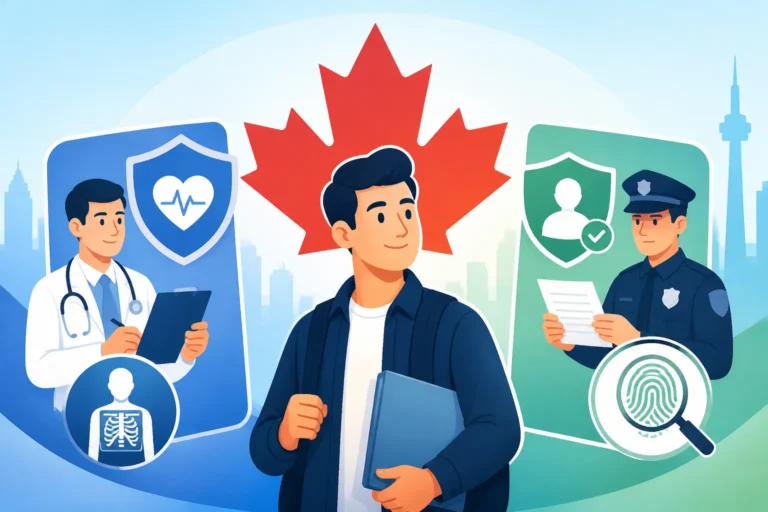
Applying for PR, whether from inside or outside Canada, involves a significant amount of documentation. The good news is that being in Canada might make some of this easier to obtain. You'll need things like your passport, birth certificate, marriage certificate (if applicable), educational credential assessments (ECAs), language test results (IELTS or CELPIP), police certificates from any country you've lived in for six months or more since age 18, and, of course, your medical exam results. Remember, medical exams for immigration purposes must be conducted by IRCC-approved panel physicians.
If you've gained Canadian work experience, you'll need detailed letters from your employers confirming your job duties, hours worked, and duration of employment. Similarly, if you've studied here, transcripts and diplomas from your Canadian institutions will be required. Every single document needs to be precise and, if not in English or French, accompanied by certified translations. The last thing you want is a delay or refusal because of a missing or improperly translated document. It can feel like climbing a mountain of paperwork, but meticulous organization is your best friend here. For a detailed rundown on what to prepare, check out How to Get Your Documents Ready for an IRCC Application.
One critical piece that people sometimes forget about is the police certificate. Even though you're in Canada, you might need police certificates from your home country and any other country where you've spent significant time. Start collecting these early, as they can sometimes take months to obtain, depending on the country.
The Waiting Game and Realistic Timelines
Once your application is submitted, the infamous "waiting game" begins. Processing times for permanent residence applications can vary wildly depending on the program, the volume of applications, and individual circumstances. While IRCC provides estimated processing times, these are just estimates, and delays are common. It's not uncommon for an application to take anywhere from several months to a couple of years.
This waiting period can be incredibly frustrating. You're in limbo, living your life but with the underlying uncertainty of your long-term status. It's vital to set realistic expectations and understand that patience is a virtue in Canadian immigration. During this time, you might wonder Understanding the Cost and Timeline of the Immigration Process in Canada. It’s important to budget not just for the application fees but also for the ongoing costs of living in Canada while you wait. Don't plan any irreversible life changes based on the shortest possible processing time. Instead, focus on maintaining your temporary status, continuing to contribute to your community, and keeping all your documents up to date.
Potential Challenges and How to Overcome Them
While applying for PR from within Canada offers numerous advantages, it's not without its specific hurdles. Being prepared for these can save you a lot of stress down the road.
Visa Runs and Travel Restrictions
One of the trickiest aspects of applying for PR from inside Canada, particularly for spousal sponsorship (In-Canada class), is travel. If you leave Canada while your application is processing, especially if you don't have a valid temporary resident visa (TRV) to re-enter or if your open work permit hasn't been issued, you could face difficulties getting back into the country. For the In-Canada spousal sponsorship class, leaving the country can, in some cases, be seen as abandoning your application, although recent policies have become more flexible.
It's generally recommended that applicants in the In-Canada spousal class avoid international travel until they receive their permanent resident status or at least have an open work permit and a valid TRV to facilitate re-entry. Always check the specific rules of your program and consult IRCC's official guidelines before making any travel plans during your application. For other programs like Express Entry, as long as you maintain valid temporary status (e.g., a work permit and a valid TRV for re-entry), travel is generally less problematic, but it's still best to be cautious. The rule of thumb: when in doubt, don't leave Canada if your application relies on your continuous presence here.
Imagine planning a quick trip home for a family emergency, only to find yourself stuck at the border because your travel documents aren't aligned with your pending PR application. It’s a nightmare scenario that’s sadly not uncommon. Careful planning and understanding the nuances of your specific application stream are paramount.
Financial Preparedness: Proving You Can Support Yourself
While being employed in Canada helps immensely, some PR programs, particularly the Federal Skilled Worker Program (FSWP) under Express Entry, require you to demonstrate that you have sufficient "settlement funds." These funds are meant to show that you can support yourself and your family upon landing in Canada, even if you already have a job. The exact amount required is updated annually and depends on the size of your family.
Even if you're exempt from settlement funds (e.g., if you have a valid job offer in Canada or are applying through CEC), you'll still need to prove financial stability. This includes showing steady employment, sufficient savings, or other assets that demonstrate you won't become a burden on the Canadian social system. You'll want bank statements, pay stubs, and potentially employment letters to prove your financial standing. This is not just about meeting a specific number; it's about painting a picture of financial self-sufficiency.
This is a common stressor, especially for those who might have depleted their savings to move to Canada in the first place. My advice has always been to be brutally honest with yourself about your finances and start saving as early as possible. Every penny counts, and demonstrating a consistent saving habit can be as important as the final sum.
Seeking Professional Help
The Canadian immigration system can be incredibly complex, with constantly evolving policies and intricate application forms. While it's absolutely possible to navigate the process yourself, many applicants, particularly those with complex cases or those feeling overwhelmed by the paperwork, choose to seek professional assistance.
Regulated Canadian Immigration Consultants (RCICs) or immigration lawyers are licensed professionals who can guide you through the process, ensure your application is complete and accurate, and represent you to IRCC. They can help you identify the best pathway for your circumstances, ensure all documents are correctly prepared, and advise you on potential pitfalls. This can be a huge relief, knowing that an expert is looking over your shoulder.
However, a word of caution: always ensure that any consultant or lawyer you engage is legitimately licensed. Canada's immigration system is unfortunately plagued by unscrupulous individuals who prey on hopeful newcomers. Always verify their credentials with the College of Immigration and Citizenship Consultants (CICC) for RCICs or their respective provincial law society for lawyers. Don't fall for promises that sound too good to be true, and never pay large sums of money to individuals who aren't properly licensed. Spending a bit extra on legitimate advice can save you from significant headaches and potential scams in the long run.
Comparing In-Canada PR Pathways
Here's a quick overview of some common pathways for applying for Permanent Residence from within Canada, highlighting key aspects:
| Pathway | Target Applicants | Key Advantage of In-Canada Application | Common Requirements | Potential Challenges |
|---|---|---|---|---|
| Express Entry (CEC) | Skilled workers with Canadian work experience | Leverages existing Canadian work experience; often faster processing. | 1 year skilled Canadian work experience, language proficiency, education. | High CRS score often needed; competition can be fierce. |
| Provincial Nominee Programs (PNP) | Skilled workers/graduates aligned with provincial needs | Strong provincial ties (work/study) often a requirement; 600 CRS points. | Varies by province (e.g., job offer, specific education, language). | Program caps; specific regional requirements; can be slower than CEC. |
| Family Sponsorship (In-Canada) | Spouses/partners of Canadian citizens/PRs | Open Work Permit available during processing; couple remains together. | Valid relationship; sponsor eligibility; proof of cohabitation. | Travel restrictions for applicant; strict proof of genuine relationship. |
| Caregiver Programs | Individuals working as caregivers in Canada | Direct pathway from temporary work to PR; valuable work experience. | Specific work experience as caregiver, language proficiency, education. | Strict work experience requirements; can be physically demanding. |
| Atlantic Immigration Program (AIP) | Skilled workers/international graduates in Atlantic provinces | Employer-driven, often with lower language/CRS requirements. | Job offer from an approved employer in an Atlantic province. | Must commit to living in one of the Atlantic provinces. |
Conclusion
So, can you apply for Permanent Residence from inside Canada? Absolutely, yes! For many, it's not just a possibility but the most logical and integrated path to becoming a permanent resident. Whether you're leveraging your invaluable Canadian work experience through Express Entry's Canadian Experience Class, aligning with the specific needs of a province via a Provincial Nominee Program, or reuniting with your partner through family sponsorship, there are legitimate and well-trodden paths available to you.
The journey isn't always simple, and it's certainly not always fast. You'll face paperwork, waiting periods, and the occasional head-scratching moment with IRCC's labyrinthine instructions. But by understanding the pathways, meticulously preparing your application, diligently maintaining your temporary status, and potentially seeking expert advice, you significantly increase your chances of successfully transitioning from a temporary resident to a full-fledged permanent resident of Canada without ever having to leave the country you've come to call home. It's a testament to your resilience and a testament to Canada's commitment to welcoming those who choose to build their lives here.
Disclaimer
The information provided in this article is for general guidance purposes only and does not constitute legal advice. Immigration policies and requirements in Canada are subject to change. It is strongly recommended to consult with a Regulated Canadian Immigration Consultant (RCIC) or an immigration lawyer for personalized advice based on your specific situation. Always refer to the official Immigration, Refugees and Citizenship Canada (IRCC) website for the most up-to-date information and regulations.