How Do I Pay My Hydro Bill Online in Canada?
Ah, the infamous Canadian hydro bill! You've just landed, you're navigating new streets, trying to understand how anything works, and then this mysterious bill arrives, threatening to cut off your power if you don't figure out its cryptic ways. Trust me, I've been there, staring at a bill filled with unfamiliar terms and wondering if my toaster would ever work again. This guide is going to walk you through exactly how to pay your hydro bill online in Canada, cutting through the confusion with real-world advice.
Decoding Your Hydro Bill: More Than Just Electricity
Before you even think about paying, you need to understand what "hydro" actually means here in Canada. Unlike some countries where "hydro" specifically refers to water, in Canada, it's often a colloquial term for electricity, especially in provinces where hydroelectric power is prevalent. Your hydro bill isn't just a simple charge for the flick of a light switch; it’s a detailed breakdown of various costs that keep your home powered.
What's in a Canadian Utility Bill?
When you get that first bill, it can be a shock. You might see names like Hydro One in Ontario, BC Hydro in British Columbia, or Hydro-Québec in Quebec. These are your main electricity providers. But the bill itself goes beyond just the electricity you consume. You'll typically find several line items:
- Electricity Charges (Consumption): This is the actual cost of the electricity you use, measured in kilowatt-hours (kWh). The rates can vary based on time-of-use (TOU), meaning electricity might be cheaper during off-peak hours (like evenings and weekends) and more expensive during peak times (like weekday mornings and afternoons). This is often a significant adjustment for newcomers who aren't used to such pricing structures.
- Delivery Charges: These cover the cost of getting electricity from power generation plants to your home. This includes maintaining poles, wires, transformers, and local distribution systems. You're paying for the infrastructure that makes reliable power possible, even if you’re barely using any electricity.
- Regulatory Charges: These are fees approved by your provincial energy board (like the Ontario Energy Board or the British Columbia Utilities Commission) to fund various programs, services, and policies. Think of them as the overhead costs of managing a complex energy grid.
- Debt Retirement Charges (Historically): While mostly phased out in some provinces like Ontario, some older bills might still reference charges related to paying off past provincial electricity system debts. It's a good example of how bills can sometimes include historical charges that might confuse you.
- Taxes: Of course, there are taxes! This usually includes the provincial sales tax (PST) or the harmonized sales tax (HST), depending on your province.
It’s crucial to understand these components because it helps you decipher why your bill is a certain amount, even if you feel you haven't used much power. For a broader overview of how all your home's bills add up, you might want to read our guide on Understanding Heating, Gas and Utility Bills in Canada.
Provincial Differences and Utility Providers
Canada is a vast country, and each province manages its utilities a little differently. What's true for Hydro One in Ontario might not be exactly the same for FortisBC or ENMAX in Alberta.
- Ontario (e.g., Hydro One, Toronto Hydro, Alectra Utilities): Ontario largely uses time-of-use billing, which means your electricity cost changes throughout the day. Getting to grips with this system can take a while, but many providers offer online dashboards to help you monitor your usage.
- British Columbia (BC Hydro, FortisBC): BC Hydro is the main electricity provider in much of the province. They also have tiered rates, where you pay a lower rate for your initial consumption and a higher rate once you exceed a certain threshold. FortisBC handles natural gas and some electricity in other parts.
- Quebec (Hydro-Québec): Quebec boasts some of the lowest electricity rates in North America, thanks to its extensive hydroelectric dams. Their billing is generally straightforward, but knowing some French can be helpful when navigating their website or calling customer service.
- Alberta (ENMAX, EPCOR, ATCO Electric): Alberta has a deregulated electricity market, meaning you can often choose your retailer, although the distribution and transmission are managed by specific utility companies like ENMAX (Calgary) or EPCOR (Edmonton). This adds another layer of complexity for newcomers trying to set up utilities.
Regardless of where you land, you’ll first need to set up your account. We've got a detailed guide to help you with that: The Newcomer Guide to Setting Up Utilities (Hydro, Gas, Internet) in Canada. Getting this sorted shortly after your move is paramount, as you don’t want to be left in the dark, literally!
Step-by-Step Guide to Paying Your Hydro Bill Online
Now that you've got a handle on what a hydro bill entails, let's dive into the main event: actually paying it online. This is by far the most convenient way to manage your utility payments once you’re settled in.
1. Setting Up Your Online Account with the Utility Provider
Your first move, before you can pay online, is to create an online account directly with your hydro provider. This usually involves finding the "My Account" or "Customer Login" section on their official website.
- Registration: You'll typically need your account number (found on your physical bill), your name, and sometimes your service address. Be prepared to create a username and a strong password. This portal is your command center for everything related to your electricity – viewing past bills, checking consumption, and, of course, making payments.
- Linking Your Account: Once registered, you'll link your specific utility account (identified by your account number) to your online profile. This confirms you're the authorized person to manage the bills for that address.
Most utility companies have fairly user-friendly interfaces, but if you're struggling, don't hesitate to call their customer service line. They often have dedicated support for new customers. When you first arrive in Canada, ensuring you have reliable mobile data to manage these initial setups is key. Services like Airalo can be incredibly helpful for getting an eSIM and internet access almost immediately upon arrival, so you're not scrambling to find Wi-Fi just to register for your hydro bill.
2. Choosing Your Online Payment Method
Once your online account is set up, you have a few primary ways to pay your hydro bill digitally.
a) Online Banking (Bill Pay Feature)
This is perhaps the most common and convenient method for many Canadians. Most major banks in Canada – like RBC, TD, Scotiabank, BMO, CIBC, or National Bank – offer a "bill pay" feature within their online banking platforms.
- Adding a Payee: Log in to your online banking. Look for a section like "Pay Bills," "Transfers & Payments," or similar. You'll need to "Add a Payee" or "Add a Bill." Search for your utility provider by name (e.g., "Hydro One," "BC Hydro," "Hydro-Québec"). Make sure you pick the correct one, as there might be similar names.
- Entering Your Account Number: Once you've selected your utility provider as a payee, you'll need to enter your utility account number. This is a critical step; if you enter it incorrectly, your payment could go to the wrong account or be rejected. Double-check, triple-check!
- Making the Payment: After the payee is set up, you can simply select them, enter the amount you wish to pay, choose which of your bank accounts to pay from, and confirm the transaction. Most banks allow you to schedule one-time payments or recurring payments.
This method is seamless and keeps all your bill payments in one place, making it easier to track your finances. If you're still deciding on your banking setup, our guide How to Choose the Best Bank for Newcomers in Canada can offer some clarity.
b) Utility Provider's Online Portal
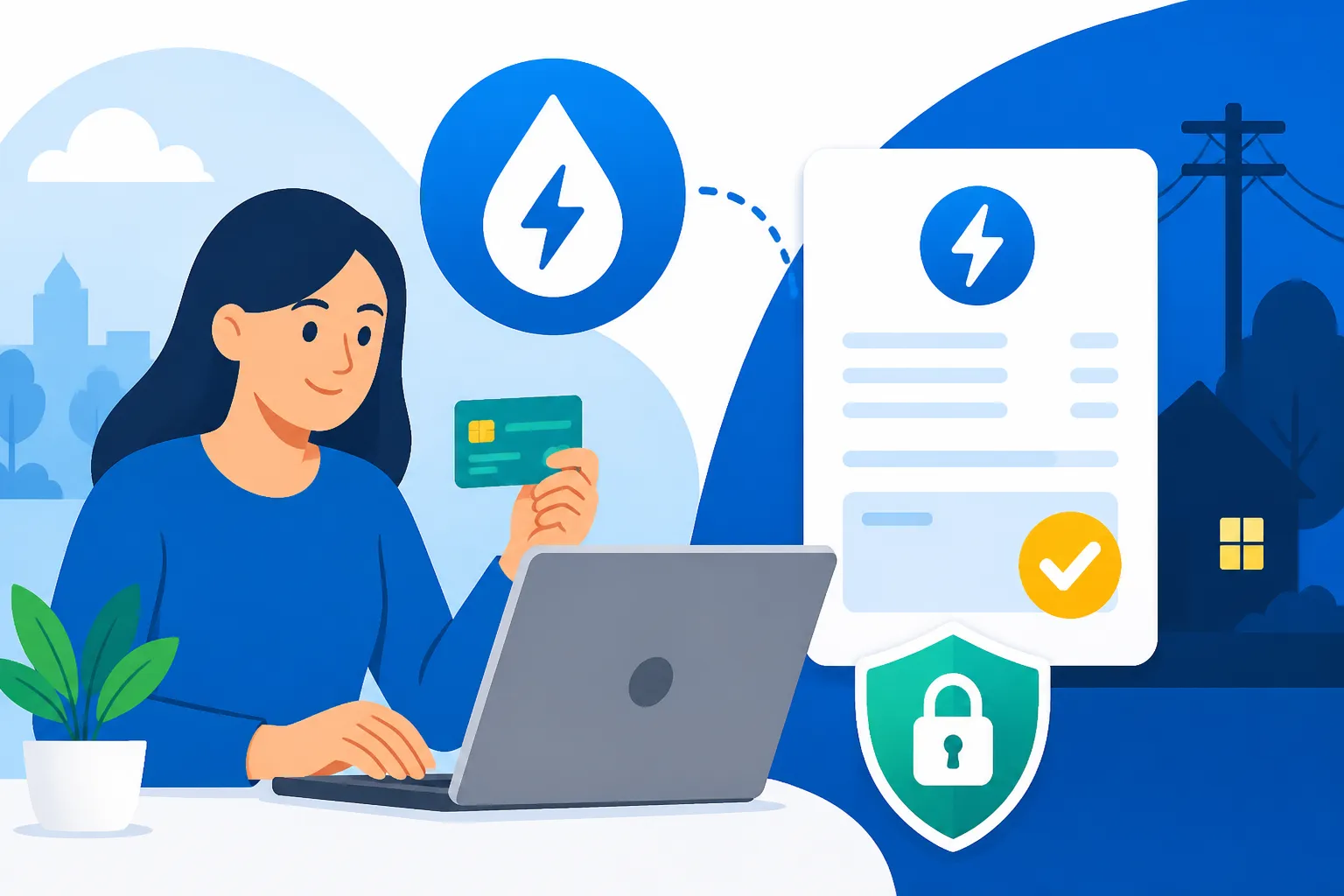
Many utility companies allow you to pay directly through their "My Account" section on their website.
- Login: Access your online account with your username and password.
- Navigate to Payment Section: Look for "Make a Payment," "Billing," or "Pay My Bill."
- Payment Options: You'll typically have options to pay via:
- Credit Card: Be aware that some providers might charge a convenience fee for credit card payments (often around 1.75% to 2.5% of the bill amount), as they pass on the processing fees.
- Debit Card (Interac Online): This option is less common for direct utility payments but might be available for some providers.
- Bank Account (Direct Debit): You might be able to enter your bank account and transit number to set up a one-time direct debit payment.
This method gives you direct control within the utility's system and can be useful if you prefer not to add your utility as a payee to your general online banking.
c) Pre-Authorized Payments (Auto-Debit)
For ultimate convenience and to avoid late fees, setting up pre-authorized payments (PAP) is a fantastic option. This means the utility company will automatically withdraw the bill amount from your bank account on the due date each month or billing cycle.
- Enrollment: You usually enroll in PAP through your utility provider's online portal or by filling out a form and sending it to them. You'll need to provide your bank account details (institution number, transit number, and account number).
- Benefits: No more remembering due dates! You'll still receive a bill (usually via email) notifying you of the amount and the withdrawal date, giving you time to review it.
- Considerations: Ensure you always have sufficient funds in your account to cover the withdrawal, as NSF (Non-Sufficient Funds) fees can be hefty from both your bank and the utility company.
This can be a real stress-reducer, especially when you're still finding your feet in Canada. To dive deeper into managing your financial transactions, check out How Do I Set Up Pre-Authorized Payments at a Canadian Bank?.
Example: Paying a Hydro One Bill Online in Ontario
Let's walk through a hypothetical for someone in Ontario dealing with Hydro One:
- Receive Bill: You get your Hydro One bill, either by mail or email, showing an account number and a due date.
- Access Online Banking: Log into your bank's online portal (e.g., Scotiabank, TD, RBC).
- Add Payee: Navigate to "Pay Bills" and select "Add a Payee." Search for "Hydro One" and select the correct entry (there might be different options for residential/business or specific regions; usually, "Hydro One Inc." is the one for residential).
- Enter Account Number: Type in your 13-digit Hydro One account number (it's often a long number on your bill, usually starting with several zeroes).
- Confirm Payee: Save Hydro One as a payee.
- Make Payment: Select Hydro One from your list of payees, enter the amount from your bill, and select the bank account you want to pay from.
- Verify & Submit: Review the details carefully and hit "Submit" or "Confirm." You'll usually get a confirmation number for your records.
It’s a similar process for BC Hydro, Hydro-Québec, or other providers, just with their specific names and account number formats. Don't forget that mastering online banking itself is a significant step for newcomers, and our guide on How to Set Up Online and Mobile Banking in Canada can be incredibly useful.
Essential Tips and Considerations for Newcomers
Paying bills online might seem straightforward, but as an expat, there are nuances in Canada that can catch you off guard. Here's what you need to keep in mind.
Understanding Payment Schedules and Due Dates
Canadian utility bills are typically issued monthly or bi-monthly. It's crucial to note the due date on your bill. Payments need to be processed and received by this date. If you pay through online banking, allow at least 2-3 business days for the payment to clear and reach the utility company. Paying on the exact due date through your bank might result in a late payment, incurring fees.
- Late Fees: Utility companies are pretty strict with late payments. Expect a penalty, usually a percentage of the overdue amount, if your payment isn't received on time. These fees can add up quickly.
- Disconnection Warnings: If you consistently miss payments or fall significantly behind, your service provider will send disconnection warnings. Ignore these at your peril! Getting reconnected involves paying all outstanding balances plus reconnection fees, which can be quite steep.
Budgeting for Hydro Costs and Seasonal Fluctuations
The cost of hydro in Canada can vary wildly depending on the season, your home's insulation, and your usage habits.
- Winter Peaks: During the harsh Canadian winters, your heating (if electric) will significantly increase your hydro bill. Electric baseboard heaters or even forced-air furnaces consume a lot of energy. Many newcomers are surprised by their first winter bill.
- Summer Peaks: Conversely, if you rely heavily on air conditioning during hot summer months, you'll see a spike then too.
- Average Costs: To get a rough idea, How Much Does Hydro Cost per Month in Canada? can provide a general estimate, but remember these are just averages. A realistic budget needs to account for these fluctuations.
- Equal Payment Plans (EPP): Many utility providers offer an Equal Payment Plan (or Budget Billing). This averages out your annual hydro costs into 12 equal monthly payments. It helps avoid those massive winter or summer bills, making budgeting much easier. At the end of the year, your account is reconciled, and any overpayment or underpayment is adjusted. This is a brilliant option for newcomers to manage their finances.
Reading Your Smart Meter and Monitoring Usage
Most of Canada has transitioned to smart meters, which digitally record your electricity consumption and transmit it directly to your utility provider.
- Online Dashboards: Your utility provider's "My Account" portal often includes an interactive dashboard where you can see your daily, hourly, or even real-time electricity usage. This is an invaluable tool for understanding when you're using the most power and what might be causing high bills.
- Conservation: By monitoring your usage, you can make informed decisions about energy conservation. Simple habits like turning off lights, unplugging electronics, and adjusting your thermostat by a degree or two can make a difference. And learning How to Survive Winter as a Newcomer in Canada will inevitably include tips on insulating your home and managing energy use.
When to Seek Help: Customer Service and Payment Assistance
Don't ever feel shy about reaching out for help if you're struggling to understand your bill or make a payment.
- Contact Customer Service: Most utility companies have robust customer service departments. Their contact information (phone number, email, or online chat) will be prominently displayed on their website and your bill. They can help with setting up accounts, clarifying charges, or resolving payment issues. Remember to have your account number handy when you call.
- Payment Arrangements: If you find yourself unable to pay a bill on time, contact your utility provider before the due date. Many offer payment arrangements or extensions, especially during difficult times. Proactive communication is always better than letting a bill go unpaid.
- Language Support: Larger utility providers, particularly in major cities, often offer services in multiple languages. Don't hesitate to ask if they have support in your preferred language.
Troubleshooting Common Online Payment Issues
Even with the best intentions, technology can sometimes throw a wrench in the works. Here are a few common issues you might encounter when paying your hydro bill online and how to resolve them.
Payment Not Showing Up on Your Account
You've paid, your bank shows the transaction, but your utility account still reflects an outstanding balance. This can be frustrating!
- Allow Processing Time: As mentioned, allow 2-3 business days for payments to process through online banking. Weekends and holidays extend this time. If you paid on a Friday, it might not show up until Tuesday or Wednesday.
- Check Bank Details: Double-check the payee name and account number you entered in your online banking. A single digit off can send your payment to the wrong place or cause it to bounce back to your bank, delayed by several days.
- Contact Your Bank: If it's been more than 3 business days and the payment hasn't appeared, contact your bank first. They can track the transaction and provide proof of payment.
- Contact Utility Provider: With proof of payment from your bank (e.g., a transaction ID or a screenshot), contact your utility provider. They can usually locate the payment and apply it correctly.
Incorrect Amount Paid
Mistakes happen! Maybe you accidentally paid too much or too little.
- Overpayment: If you overpaid, the extra amount will usually sit as a credit on your account and be applied to your next bill. You generally don't need to do anything, though you can confirm this with customer service if you're concerned.
- Underpayment: If you underpaid, the remaining balance will carry over to your next bill, and you might incur a late fee on that outstanding amount. It's best to make a separate, quick payment for the remaining balance as soon as you notice the error.
Forgotten Passwords or Account Numbers
It's easy to forget login details, especially when you're managing so many new accounts.
- Password Reset: All online portals have a "Forgot Password" or "Reset Password" link. Follow the instructions to regain access, which usually involves email verification or security questions.
- Account Number Retrieval: If you've lost your bill and forgotten your account number, you'll need to contact your utility provider's customer service. They can verify your identity using other information (like your address and name) and provide your account number. Having a reliable phone plan is essential for these kinds of calls, and services like Airalo ensure you’re always connected without hefty roaming charges.
Dealing with Disconnections
The worst-case scenario: your power gets cut off. This happens when bills are severely overdue, and all warning notices have been ignored.
- Immediate Action: If your power is disconnected, contact your utility provider immediately. You'll likely need to pay the full outstanding balance, plus a reconnection fee.
- Reconnection Time: Reconnection isn't always instant. It can take several hours, or even until the next business day, depending on when you make the payment and the provider's schedule. This is why preventing disconnection is always the best approach.
- Moving Considerations: If you're moving homes, make sure you properly close your account at your old address and open a new one at your new address to avoid unexpected bills. Services like Sirelo can help coordinate your move, but remember to personally handle utility transfers and cancellations to prevent future headaches.
Paying your hydro bill online in Canada doesn't have to be a daunting task. With a little understanding of the system and a methodical approach to setting up your accounts and payments, you'll be managing your utilities like a seasoned local in no time.
Disclaimer
Please note that while this guide provides comprehensive information based on current practices in Canada, utility policies and regulations can change. It is always recommended to check the specific details with your local utility provider and financial institution for the most accurate and up-to-date information. This content is for informational purposes only and does not constitute professional advice.