How Much Are Private School Fees in Toronto?
Oh, the age-old question that many expat parents grapple with when considering a move to this beautiful country: "Can we afford private school for our kids in Canada, especially in a city like Toronto?" It’s a completely valid concern, and trust me, you're not alone in feeling overwhelmed by the sheer thought of it. Navigating the education system here, let alone the private sector, can feel like deciphering ancient hieroglyphs after a long day of moving boxes. This guide is here to cut through the confusion, give you a realistic breakdown of private school fees in Toronto, and help you understand what you're really signing up for financially. We'll look at the numbers, the hidden costs, and even some strategies to make it work, so you can make informed decisions for your family without the unnecessary stress.
Unpacking the Real Costs of Private School in Toronto
When you first start looking into private schools in Toronto, the initial tuition figures can feel like a punch to the gut. It's not just a single number; it's a complex tapestry of fees, and understanding each thread is crucial. You're not just paying for a classroom; you're often paying for a philosophy, a network, and a distinct educational experience.
The Sticker Shock: Average Tuition Ranges
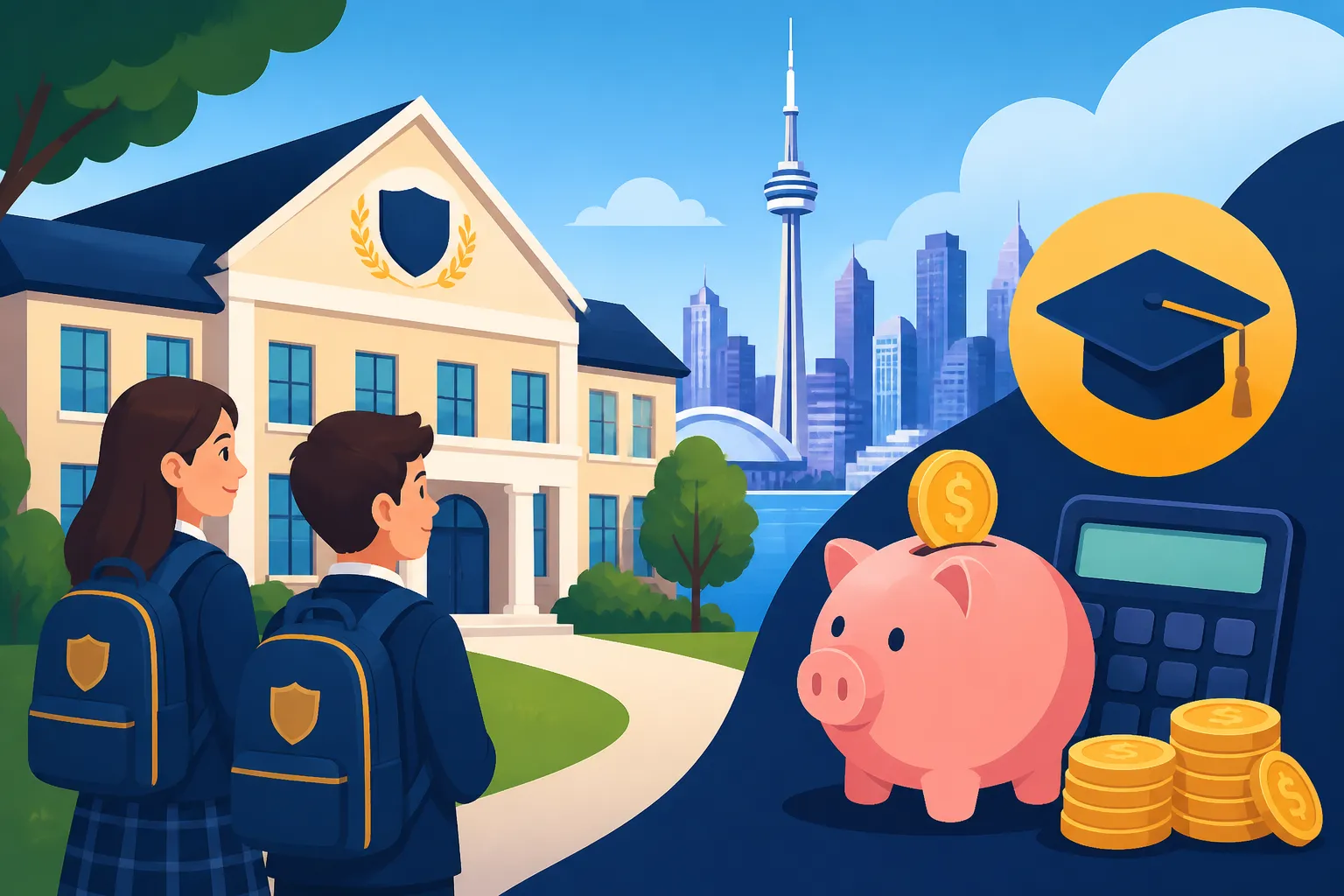
Let's not beat around the bush. Private school tuition in Toronto varies wildly, much like the vibrant neighbourhoods that make up this city. For a full-time day student, you're typically looking at a range that can start anywhere from $15,000 to upwards of $40,000 per year for kindergarten to grade 12. Yes, you read that correctly. These figures are generally for independent day schools, which are the most common type of private institution.
For instance, a junior school (ages 4-8) might be on the lower end, perhaps $15,000 to $25,000 annually. As your child progresses into middle school (ages 9-13) and especially high school (ages 14-18), those fees tend to climb, often reaching the $30,000 to $40,000+ range. Prestigious institutions with long histories and excellent reputations, like Upper Canada College or Havergal College, often sit at the very top end of this spectrum. These schools are highly sought after, and their fees reflect the demand, the extensive facilities, and the rich programming they offer. It’s a significant investment, one that many families weigh heavily against the excellent, but different, offerings of the public system. When you're making big life decisions like this, especially if you're still planning your move to Canada, getting a handle on these financial realities is paramount.
Beyond Tuition: The Hidden Fees and Expenses
Ah, the "hidden" fees. This is where many newcomers get tripped up and rightly feel frustrated. You see a tuition figure, you budget for it, and then suddenly you're presented with a list of additional charges that can add thousands more to your annual bill. It's like buying a new phone, only to find out the charger, case, and headphones are all extra – and expensive!
Let's break down some of these common extras:
- Application and Enrolment Fees: Almost every private school charges a non-refundable application fee, typically $100-$500. If your child is accepted, there's often an additional enrolment deposit, which might be a few thousand dollars, usually non-refundable and applied to the first tuition payment.
- Technology Fees: Many schools require students to have specific devices (laptops, tablets) or charge an annual technology fee to cover software licenses, IT support, and school-provided tech. This could be anywhere from $500 to $1,500 annually.
- Uniforms: Most private schools have mandatory uniforms, and purchasing a full set (including gym attire, formal wear, and winter gear) can easily run you $500 to $1,500 or more, especially if you need to buy from specific, often exclusive, suppliers. And let’s not forget growth spurts!
- Textbooks and Supplies: While some schools include basic supplies, specialized textbooks, art supplies, or scientific calculator requirements can add several hundred dollars per year.
- Extracurricular Activities: This is a big one. While many basic clubs and sports are included, specialized programs like competitive sports teams, music lessons, drama productions, or international trips often come with significant additional costs for coaching, equipment, travel, and accommodation. These can range from a few hundred to several thousand dollars depending on the activity.
- Lunch Programs: Unless your child brings a packed lunch every day, school lunch programs are an extra cost, typically $1,000-$2,000 per year, sometimes more for specialized dietary needs.
- Transportation: If the school offers bus services, that’s another annual fee, often in the range of $2,000-$5,000 depending on your distance from the school. Public transit is an option, but depending on the age of your child and the school's location, it might not be feasible or desirable.
- International Student Fees: For families who are not permanent residents or citizens, some schools may charge an additional "international student fee" on top of regular tuition. This can be substantial, sometimes an extra $5,000-$10,000 per year.
It's crucial to ask schools for a comprehensive breakdown of all potential fees during the application process. Don't be shy! This is your money, and you deserve a clear picture. For instance, some schools might include laptops in the tuition, while others charge separately. Some might have a "development fund" contribution that is technically voluntary but highly encouraged. The cumulative effect of these seemingly smaller items can genuinely push your total annual expenditure well past the advertised tuition fee, which is a common complaint I hear from expat families who didn't fully anticipate these additions.
Types of Private Schools and Their Financial Implications
Just like Toronto’s diverse population, its private school landscape offers a rich tapestry of educational philosophies and structures. Each type comes with its own financial implications, so understanding the nuances is key to finding the right fit for your family and your budget.
Day Schools vs. Boarding Schools: A Cost Comparison
The most fundamental distinction in private education, especially when it comes to cost, is between day schools and boarding schools. Most private schools in Toronto are day schools, meaning students attend during the day and return home in the evening. These are the institutions that typically fall within the $15,000 to $40,000+ tuition range we discussed earlier.
Boarding schools, on the other hand, offer accommodation, meals, and supervision for students who live on campus. While less common right within the heart of Toronto, there are excellent boarding options in the Greater Toronto Area (GTA) and across Ontario. The cost difference is significant. A boarding school can easily run you $50,000 to $70,000 per year, or even more. This higher price tag covers not only the education but also the round-the-clock care, lodging, meals, extracurricular supervision, and often a more intensive pastoral care system. For expat families, especially those who travel frequently or have children who are keen on a highly structured, immersive educational environment, boarding can be an attractive, albeit expensive, option. It’s a huge lifestyle difference, and the comprehensive nature of the fees reflects that.
Specialized Programs and Their Premium
Toronto is a hub for specialized education, and many private schools cater to specific pedagogical approaches or student needs. These specialized programs often come with a premium price tag, for good reason.
- Montessori Schools: These schools follow the Montessori method, emphasizing child-led learning, hands-on activities, and a self-paced curriculum. Fees for Montessori schools in Toronto can range from $12,000 to $25,000+ annually, varying by age group and program intensity. The specialized training for teachers and unique learning materials contribute to these costs.
- International Baccalaureate (IB) Schools: Many private schools offer the globally recognized International Baccalaureate (IB) program. This rigorous curriculum is highly respected worldwide and prepares students exceptionally well for university. Schools offering the full IB program (Primary Years, Middle Years, and Diploma Program) often have fees on the higher end, typically $25,000 to $40,000+ annually, due to the specific accreditation, teacher training, and program resources required.
- Arts-Focused or Sports Academies: For budding artists, musicians, or elite athletes, Toronto offers private schools and academies dedicated to these disciplines. These institutions provide intensive training, specialized facilities (studios, performance spaces, athletic facilities), and expert coaches/teachers. Their fees can be comparable to, or even exceed, traditional academic private schools, often $20,000 to $50,000+, depending on the level of specialization and included training.
- Faith-Based Schools: Many religious denominations operate private schools in Toronto. While some may be slightly more affordable due to subsidies from their religious communities or lower overheads, many still fall within the general private school fee range. For example, Catholic independent schools or Jewish day schools often have fees from $10,000 to $30,000+, depending on the school and its offerings. They provide education rooted in specific values and often integrate religious studies into the curriculum.
The premium for these specialized programs is often justified by the unique environment, dedicated resources, and highly trained staff they provide. It’s an investment in a particular educational pathway, and families choose them for the specific benefits they offer their children. For a deeper understanding of the broader Canadian education system, whether public or private, you might find this guide helpful: Schools and Education in Canada: A Complete Guide for Newcomer Families.
International Schools: An Investment in Global Education
For many expat families, international schools offer a familiar educational framework and a smooth transition for their children. Toronto is home to several excellent international schools, offering curricula like the British (e.g., The British School of Toronto), American, or French (e.g., Lycée Français de Toronto) systems. These schools typically cater to a highly international student body, often with transient families, and their fees reflect their unique position.
International schools in Toronto generally have some of the highest tuition fees, often ranging from $30,000 to $50,000+ per year. This higher cost is attributed to several factors:
- Global Curriculum and Accreditation: Maintaining international accreditation and offering a curriculum recognized worldwide (e.g., IB, A-Levels, AP) requires significant investment.
- Diverse Faculty: These schools often employ a diverse faculty with international experience, sometimes requiring relocation packages, which adds to operational costs.
- Multicultural Environment and Services: They often provide extensive support for students from diverse linguistic and cultural backgrounds, including English as an Additional Language (EAL) programs, and robust college counselling services focused on global university placements.
- State-of-the-Art Facilities: International schools frequently boast impressive, modern facilities, from science labs to sports complexes, designed to support their comprehensive programs.
For families planning their move to Canada, especially if they anticipate future international moves or want their children to continue a specific educational system, international schools offer continuity and a strong global network. While the financial outlay is substantial, many parents see it as an investment in a truly global education and a smoother transition for their children, who are often themselves global citizens. Planning for such significant expenses is critical, and tools or services that help with the larger relocation, like those offered by Sirelo, are excellent for getting your ducks in a row.
Strategies for Affording Private Education in Toronto
So, you've seen the numbers, and perhaps your jaw dropped a little (or a lot!). But don't despair just yet. While private school fees in Toronto are undoubtedly substantial, many families find ways to make it work. It often involves careful planning, seeking assistance, and sometimes making trade-offs in other areas of your budget.
Scholarships, Bursaries, and Financial Aid
It's a common misconception that private schools are exclusively for the ultra-wealthy. While financial means are certainly a factor, most reputable private schools in Toronto offer a range of financial assistance programs to attract diverse talent and support families who might not otherwise be able to afford the tuition. These typically come in two main forms:
- Scholarships: These are usually merit-based, awarded to students who demonstrate exceptional academic achievement, artistic talent, athletic prowess, or leadership potential. Scholarships are competitive, and often cover a portion, but sometimes a significant percentage, of the tuition. They are a recognition of a student's outstanding abilities.
- Bursaries (Financial Aid): These are needs-based, meaning they are awarded to families who can demonstrate a genuine financial need. Schools typically require a detailed application process, often using third-party assessment services (like Apple Financial Services in Canada) to objectively evaluate a family's financial situation. Bursaries can cover a wide range, from a small percentage of tuition to nearly full tuition, depending on the family's income, assets, and the school's available funds.
Tips for finding and applying for financial aid:
- Start Early: Research each school's financial aid policies well in advance of application deadlines. Funds are often limited, and early applications are generally preferred.
- Be Transparent: The financial aid application will ask for extensive details about your income, assets, debts, and expenses. Be honest and thorough; schools want to understand your true financial picture.
- Check Eligibility: Ensure your child meets the academic or talent criteria for scholarships, and that your family's income falls within the general guidelines for bursaries (though these are often flexible).
- Don't Assume: Even if you think you might not qualify, it’s always worth applying. You might be surprised. Many schools are genuinely committed to diversity and making their education accessible.
- External Opportunities: While most aid comes directly from the schools, occasionally there are external foundations or organizations that offer scholarships for private education. A quick online search for "private school scholarships Toronto" can yield some results, but school-based aid is generally the most common.
Budgeting and Long-Term Financial Planning
If private education is a priority for your family, then robust budgeting and long-term financial planning are non-negotiable. This isn't a short-term expense; it's a multi-year commitment that requires strategic saving and careful management of your overall finances.
- Comprehensive Cost Analysis: Beyond tuition, meticulously account for all the "hidden" fees we discussed. Build a spreadsheet that includes uniforms, extracurriculars, transport, and a buffer for unexpected costs. This will give you a realistic annual total.
- Sacrifices and Priorities: Be prepared to make sacrifices elsewhere. This might mean fewer international vacations, a smaller home, or less frequent dining out. It's about aligning your spending with your values. Living in a city like Toronto already presents significant cost-of-living challenges, and adding private school tuition means every dollar counts. Understanding the true cost of living in Canada, particularly in a major city, is crucial background for this kind of financial planning. The Complete Guide to Cost of Living in Canada for Newcomers (2026) offers a valuable perspective.
- Savings Vehicles: Explore savings options. In Canada, a Registered Education Savings Plan (RESP) is a popular choice for future education costs, though it’s primarily for post-secondary. Still, it encourages a savings mindset. Regular contributions to a dedicated savings account specifically for private school fees can make a huge difference.
- Financial Advisers: Consider consulting with a financial adviser who specializes in family planning and education costs. They can help you create a personalized strategy, explore investment options, and ensure you're on track.
- Review Annually: Fees can (and usually do) increase each year. Factor in a 3-5% annual increase into your long-term plan to avoid surprises.
Considering Alternatives: Public Schools and Supplementary Programs
It’s easy to get swept up in the allure of private schools, but it's essential to remember that Canada's public school system is, by and large, excellent and free for residents. Toronto's public schools, managed by boards like the Toronto District School Board (TDSB) and the Toronto Catholic District School Board (TCDSB), are highly regarded, offering diverse programs, experienced teachers, and often fantastic facilities.
- High Quality Public Education: Many public schools in desirable Toronto neighbourhoods boast strong academic records, a wide array of extracurriculars, and multicultural environments. Your child can absolutely receive a world-class education without paying a single dollar in tuition. If you're looking to enrol your child in a Canadian school, whether public or private, understanding the process is key. This guide on How to Enrol Your Child in a Canadian School can help.
- Supplementary Programs: If you choose the public school route but want to enhance your child's education in specific areas, consider supplementary programs. This could include:
- Private Tutoring: Targeted support for academic subjects.
- External Arts/Music Lessons: Specialized instruction outside of school hours.
- Sports Clubs/Leagues: Competitive or recreational sports that align with your child's interests.
- Language Classes: To maintain a home language or learn a new one.
The beauty of this approach is that you can often tailor these supplementary activities to your child's specific needs and interests, often at a fraction of the cost of private school tuition. For instance, a year of top-tier tutoring and private music lessons might cost $5,000-$10,000, which is still significantly less than even the lowest private school tuition. It allows you to invest strategically without the massive overhead. For families just starting in Canada, balancing overall expenses, even something like childcare, is part of the larger financial picture. If you have younger children, you might be interested in learning How Much Does Childcare Cost in Canada?.
Key Factors Influencing Private School Fees
Beyond the general type of school and the myriad of additional fees, there are other underlying factors that play a significant role in determining how much you'll pay for private education in Toronto. These are often related to market dynamics, reputation, and student demographics.
Location and Prestige
Just like real estate, location in Toronto often correlates with price, and private schools are no exception. Schools situated in affluent, central Toronto neighbourhoods – think areas like Forest Hill, Rosedale, or Lawrence Park – often have higher fees. These locations typically come with higher property values, which means higher operational costs for the schools, including property taxes, maintenance, and staff salaries that reflect the cost of living in these areas.
Furthermore, a school's prestige plays a huge role. Institutions with a long history, renowned alumni networks, impressive university matriculation rates, and a reputation for excellence can command premium fees. This is often a self-perpetuating cycle: high fees allow for significant investment in facilities, programs, and staff, which in turn enhances prestige and attracts more applicants, allowing for continued high fees. These schools are often seen as providing an "exclusive" education, and the price reflects that perceived value. It's not just about what's inside the classroom; it's about the entire ecosystem the school has cultivated over decades, sometimes even a century or more.
Grade Level and Enrollment
The grade level your child is entering is another significant determinant of fees. It's generally observed that:
- Junior (Elementary) School Fees: Tend to be lower than senior school fees. This is partly because the curriculum might be less specialized, and resource requirements (e.g., advanced science labs, extensive athletic facilities) are often less intense than for high school students.
- Senior (High) School Fees: Are almost invariably higher. High school education often involves more specialized subject teachers, smaller class sizes for advanced courses, more extensive laboratory work, a broader range of extracurriculars, and dedicated university counselling services. All these factors contribute to increased operational costs, which are then passed on through higher tuition.
Additionally, enrollment policies can sometimes influence costs or offer small relief. While rare, some schools might offer a slight discount for siblings enrolled concurrently, though this is by no means universal. It's worth asking during the application process. Some schools might also have different fee structures for part-time enrollment (if offered, usually for specific programs like arts or sports academies) versus full-time, though again, full-time is the standard.
Here's a quick summary table to give you a clearer picture of the typical annual fee ranges:
| School Type | Typical Annual Tuition Range (CAD) | Common Additional Costs (CAD/year) | Key Factors Influencing Cost |
|---|---|---|---|
| Independent Day School | $15,000 – $40,000+ | $1,000 – $5,000+ | Reputation, Facilities, Grade Level, Location |
| Boarding School | $50,000 – $70,000+ | $500 – $2,000+ | Accommodation, Meals, 24/7 Supervision, Program Intensity |
| Montessori/Specialized | $12,000 – $35,000+ | $500 – $3,000+ | Specialized Curriculum, Teacher Training, Unique Materials |
| International School | $30,000 – $50,000+ | $1,000 – $7,000+ (incl. int'l fees) | Global Curriculum, Diverse Faculty, Multicultural Services |
| Faith-Based School | $10,000 – $30,000+ | $500 – $2,000+ | Religious Affiliation, Community Support, Program Scope |
Note: These figures are estimates and can vary significantly. Always consult individual school websites for the most up-to-date and specific fee schedules.
Ultimately, choosing a private school in Toronto is a deeply personal decision, influenced by your family's values, your child's needs, and your financial capacity. It's a significant financial undertaking, but with careful research, planning, and an understanding of all the costs involved, it can be a realistic option for many expat families. Remember, whether you opt for public or private, the goal is to provide your children with the best possible foundation for their future, and Toronto offers incredible choices in both realms.
Disclaimer
The information provided in this guide is intended for general informational purposes only and does not constitute financial or educational advice. Private school fees and policies can change frequently. While we strive to provide accurate and up-to-date information, readers should always verify specific details directly with individual educational institutions and consult with a qualified financial advisor for personalized guidance regarding their financial situation in Canada.