What Is the Emergency Phone Number in Canada?
Let's be honest, moving to a new country like Canada is exhilarating, but it also comes with a mountain of unknowns. One of the biggest anxieties for newcomers, especially when it comes to health and safety, is knowing who to call when things go sideways. It’s not just about language barriers; it's about understanding a whole new system under pressure. This comprehensive guide is here to cut through that confusion, explaining exactly what Canada's emergency phone number is, when to use it, and what to expect when you do.
What is 911 and When to Call It
Navigating emergencies in a new country can be incredibly stressful, and Canada is no different. You might be used to a different system back home, but here, there’s one number you absolutely need to etch into your memory: 911. This isn't just a suggestion; it's the lifeline that connects you to essential services in critical situations.
The Universal Emergency Line in Canada
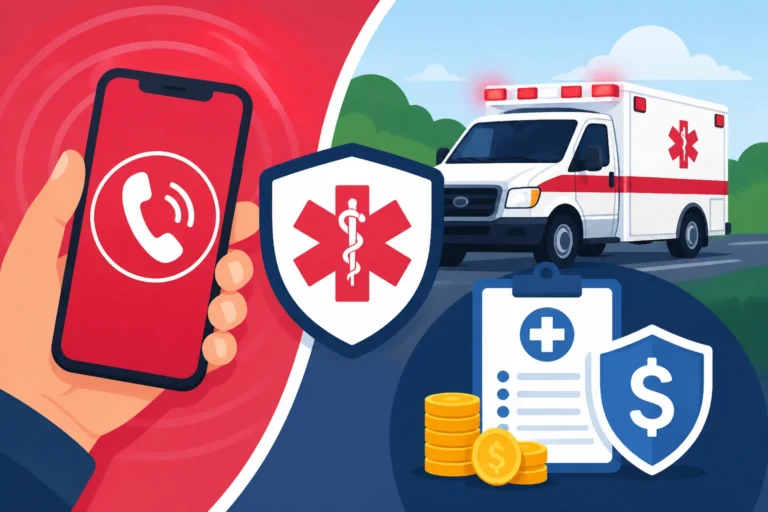
In Canada, 911 is the universal telephone number for emergencies. It's a direct line to police, fire, or ambulance services, available 24 hours a day, seven days a week, from any phone—landline or mobile—and it's absolutely free to call. When you dial 911, you're connecting with a trained dispatcher who will assess your situation and direct the appropriate emergency personnel to your location. This service is designed to handle immediate threats that require urgent intervention to protect life, property, or safety.
So, what exactly constitutes an emergency in Canada? Think about situations where time is of the essence, where waiting even a few minutes could result in serious harm or loss. This includes things like:
- Serious Medical Emergencies: Someone is unconscious, experiencing chest pain, difficulty breathing, severe bleeding, or a sudden, unexplained collapse. If you suspect a stroke or heart attack, don't hesitate.
- Fires: Any uncontrolled fire, whether it's in your home, vehicle, or a natural setting.
- Crimes in Progress: If you witness a robbery, an assault, a break-in, or any other criminal activity that is happening right now and poses an immediate threat.
- Motor Vehicle Accidents with Injuries: If there's a collision and someone is hurt, or if the accident is blocking traffic and creating a dangerous situation.
- Hazardous Situations: Things like gas leaks, downed power lines, or other dangerous environmental hazards that could harm people or property.
The key here is immediacy and severity. If you're genuinely in fear for your life, someone else's life, or property, that's when you pick up the phone and dial 911. This system is a cornerstone of How Canada's Health System Works: Provincial Plans Explained (2027) and public safety, designed to provide rapid response when it truly counts.
Knowing When NOT to Call 911
This is just as important as knowing when to call. Many newcomers, understandably, might not be fully aware of the distinction between an emergency and a non-emergency situation in Canada. Calling 911 for non-urgent matters can clog up the lines, delay response times for genuine emergencies, and put lives at risk. Emergency services are precious resources, and we all have a role in using them responsibly.
Here are clear examples of situations where you absolutely should not call 911:
- Minor Fender Benders with No Injuries: If you have a small car accident, there are no injuries, and the vehicles can be safely moved off the road, you generally exchange insurance information and contact the non-emergency police line or your insurance provider.
- Lost Wallet or Stolen Bicycle (after the fact): While these are certainly distressing, they don't pose an immediate threat to life or property. For such reports, you'd contact your local police non-emergency line.
- Asking for Directions or General Information: 911 dispatchers are not information agents. They cannot provide directions, weather forecasts, or general inquiries.
- Power Outages: Unless downed power lines are causing a hazardous situation (like sparking or blocking a road), a general power outage should be reported to your local utility company, not 911.
- Noise Complaints or Disputes with Neighbours: While annoying, these are usually municipal bylaw issues or police non-emergency matters, unless they escalate into a violent crime.
- Pet Emergencies: Unless a dangerous animal is posing an immediate threat to humans, animal emergencies are typically handled by animal control or a veterinarian.
- Locked Out of Your Car or Home: This is a common frustration, but it's not a 911 emergency. You'd call a locksmith or roadside assistance.
I remember when I first moved here, my carbon monoxide detector started chirping, and I instinctively reached for 911. Thankfully, it was just a low battery – a quick check of the manual would have saved me a moment of panic and the dispatcher a call. It's a learning curve, for sure. When in doubt, if it's not an immediate threat to life, health, or property, it's likely a non-emergency.
What to Expect When You Call 911
Making that call can be terrifying, especially if it's your first time in a high-stress situation in Canada. But knowing what to expect can help you stay a little calmer and provide the critical information needed to get help dispatched quickly.
Staying Calm and Providing Information
When you dial 911, the first thing you'll hear is a dispatcher asking, "Emergency, which service do you require?" or something similar. This is your cue to clearly state whether you need Police, Fire, or Ambulance. Don't assume they already know; be explicit.
The most crucial piece of information they need immediately is your location. This is paramount. Even if you're calling from a cell phone, don't assume they can pinpoint your exact location perfectly. While modern systems are good, they aren't infallible. Be prepared to provide:
- The exact civic address: House number, street name, city, and province.
- Cross streets or nearby landmarks: "I'm on Main Street, near the intersection of Elm Avenue, right across from the big green park."
- Apartment/unit number: If you're in a multi-unit building, specify your unit number and floor.
- Your phone number: In case you get disconnected.
After confirming your location and the service you need, the dispatcher will then ask, "What is the emergency?" This is where you concisely explain what happened. They'll guide you with questions, but try to provide key details without rambling:
- What is happening? (e.g., "My friend has collapsed and isn't breathing," "There's smoke coming from my neighbour's house," "Someone just broke into my car.")
- Who is involved? (e.g., "An elderly man," "a child," "myself and my spouse.")
- Are there any weapons involved? (For police calls.)
- Are there any injuries? If so, how many people and what kind of injuries?
- Are you in any danger?
- Any distinguishing features of suspects or vehicles? (For police calls.)
It’s completely normal to be flustered, but try to take a deep breath and answer their questions directly. The dispatchers are trained to extract information from people in distress. Don't hang up until the dispatcher tells you it's okay to do so. They might need more details, or they might need to give you instructions while emergency services are en route.
If English or French isn't your first language, don't worry. Many 911 call centres in Canada have access to interpretation services. Just state the language you need, and they will do their best to connect you with an interpreter. It might take a moment, but it's worth it to ensure clear communication.
The Dispatch Process
It's important to understand that when you call 911, you're usually speaking to a dispatcher, not directly to a police officer, firefighter, or paramedic. The dispatcher’s role is to gather all the necessary information, create an incident report, and then transmit that information to the appropriate emergency service. This might mean you answer the same questions from the dispatcher that you might later be asked by the responding officers or paramedics. It's not because they aren't listening; it's part of their protocol to ensure accuracy and readiness of the responding teams.
Once the dispatcher has the critical details, they will dispatch the nearest available units. They might keep you on the line to provide further instructions, especially for medical emergencies (like guiding you through CPR) or to update you on the status of the responding units. This process is highly coordinated to ensure the fastest possible response. Trust in their training and follow their directions. Remember, help is on the way, even if you’re still talking to the operator.
Understanding Ambulance Fees and Emergency Costs
This is where many newcomers face a rude awakening. Canada has a publicly funded healthcare system, which is fantastic, but it's not entirely "free," especially when it comes to emergency services like ambulances, and certain aspects of hospital care. This misunderstanding can lead to significant financial stress if you're not prepared.
The "Free" Myth: Ambulance Bills and Hospital Care
While core medical services provided by doctors in hospitals are largely covered by your provincial health plan (like OHIP in Ontario, MSP in British Columbia, or RAMQ in Quebec), the journey to the hospital—namely, the ambulance ride—often comes with a hefty bill. Many Canadians are surprised by this, and newcomers even more so.
Ambulance Fees: These fees vary significantly by province and sometimes even by municipality, but generally, you can expect a bill of several hundred dollars if you require an ambulance and it results in transport to a hospital. For instance, in Ontario, if you’re transported by ambulance to an emergency department and your trip is deemed medically necessary, you might still pay a portion of the fee, while the province covers the rest. If it's deemed not medically necessary or you refuse transport, the fee can be much higher. In other provinces, the rules might differ, but the principle is similar: a charge is likely.
What about the hospital itself? Once you’re in the emergency department, the doctors' services are usually covered by your provincial health insurance. However, certain "ancillary" services might not be. This could include things like crutches, some diagnostic tests if not directly ordered by an emergency physician (though this is rare in true emergencies), or a private room if you request one (and it's available).
The biggest issue for newcomers, though, is the waiting period for provincial health coverage. Depending on the province, there could be a waiting period—typically up to three months—before you become eligible for your provincial health card. If you experience an emergency during this time, you could be on the hook for the full cost of the ambulance and any hospital services, which could easily run into thousands of dollars. This is why understanding The Newcomer Waiting Period for Provincial Health Coverage in Canada (2027) is absolutely crucial. Many of the details on The Cost of Healthcare in Canada: A Complete Breakdown for Newcomers (2026) highlight these financial realities.
Private Insurance for the Gap
Given the potential costs, especially during that initial waiting period, having private health insurance is not just a good idea—it's practically a necessity for many newcomers. This is where a company like SafetyWing can be a real lifesaver. Providers such as SafetyWing offer travel medical insurance specifically designed for digital nomads, expats, and travellers, which can cover unexpected medical emergencies, including ambulance fees and hospital stays, while you're transitioning to Canada or if you're here on a visitor visa.
This kind of private coverage acts as a crucial safety net. Imagine falling ill or being in an accident shortly after arriving in Canada, only to discover you're not yet covered by a provincial plan. A private policy can step in to cover those expenses, preventing a medical emergency from becoming a financial disaster. It's a key part of your planning for Emergency Medical Care in Canada: What Every Newcomer Needs to Know.
Beyond the waiting period, private health insurance (often called supplementary insurance) can also cover things that provincial plans typically don't, such as prescription medications, dental care, vision care, physiotherapy, and even semi-private or private hospital rooms. This is important context for Public vs Private Healthcare in Canada: What Newcomers Need to Know. Many employers offer benefit plans that include these, but if you're self-employed or your employer doesn't provide comprehensive coverage, a private plan is definitely something to consider. Learning How to Get Private Health Insurance to Cover the Waiting Period in Canada and understanding How Much Does Private Health Insurance Cost in Canada in 2026? are essential steps in securing your health and financial well-being. Knowing Do I Need Private Health Insurance When I First Arrive in Canada? is really about being prepared for life's unexpected turns.
Here’s a quick comparison of emergency contacts:
| Service Category | What It's For | When to Call | Example Scenario | Estimated Cost (if applicable) |
|---|---|---|---|---|
| 911 (Emergency Services) | Immediate threat to life, health, or property. Police, Fire, Ambulance. | Actively happening serious crime, fire, medical emergency (unconscious, severe injury). | Witnessing a car crash with serious injuries, your house is on fire, someone collapses. | Ambulance fees (CAD $100-$800+, potentially higher without provincial coverage). Hospital doctor services covered by provincial plan. |
| Non-Emergency Police Line | Reporting a crime that has already occurred, non-urgent suspicious activity. | Stolen property (after the fact), vandalism, non-violent disputes, noise complaints (if police handles them). | Your car was broken into overnight; you found a suspicious package. | Free |
| Health Advice Line (e.g., 811) | Non-urgent health advice, symptoms assessment, finding local health services. | You have a persistent cough, wondering if you need to see a doctor, need advice on a child's fever. | You have flu-like symptoms and want to know if you should go to a walk-in clinic. | Free |
| 211 (Community Services) | Information on local social, community, non-emergency health services. | Need help finding food banks, housing support, mental health support groups, or employment services. | You're looking for newcomer support groups or affordable housing resources. | Free |
Non-Emergency Situations and Useful Numbers
It's common for newcomers to default to 911 for any problem, thinking it's the only number to call for help. However, as we discussed, misusing 911 ties up vital resources. Thankfully, Canada has an excellent network of non-emergency services designed to help you with situations that don't require immediate, life-or-death intervention. Being familiar with these numbers will make your life in Canada much smoother and less stressful.
When to Call Non-Emergency Police Lines
Every city and region in Canada has a non-emergency police line. These are the numbers you call when you need police assistance, but the situation isn't an immediate emergency. Think of it as calling for assistance when no one is in immediate danger, or when a crime has already happened and the perpetrators are long gone.
Examples of when to use the non-emergency line:
- Reporting a theft that has already occurred: Your bicycle was stolen from your garage overnight, or your car was broken into while you were at work.
- Vandalism: Your property has been damaged, but no one was injured or threatened.
- Suspicious but non-threatening activity: You see someone loitering around a neighbour's house, but they aren't actively breaking in or causing harm.
- Lost property: You've lost something valuable and want to report it to the police.
- Reporting a minor car accident with no injuries: After exchanging information with the other driver, you might call the non-emergency line to file a report for insurance purposes.
- Noise complaints: If a neighbour is consistently making excessive noise.
How to find these numbers: The easiest way is to search online for "[Your City Name] non-emergency police number" (e.g., "Toronto non-emergency police number"). Many large cities also have a 311 service (e.g., Toronto, Calgary, Edmonton), which acts as a central hub for municipal information and non-emergency services, including connecting you to the police non-emergency line. These lines are staffed by trained operators who can direct your call appropriately and initiate a police response if needed, but without the urgency of a 911 call.
Other Important Contacts
Beyond the police, there are other crucial numbers that can provide support and guidance for health-related and social situations. Knowing these numbers is a key part of Navigating the Canadian Healthcare System: A Newcomer's Roadmap (2027).
- Health Advice Lines (811 or similar provincial numbers): Almost every province in Canada has a dedicated health information line, usually accessible by dialing 811. For instance, Quebec has Info-Santé 811, Ontario has Telehealth Ontario (1-866-797-0000), and British Columbia has HealthLink BC (811). These services allow you to speak to a registered nurse about non-urgent health concerns, get advice on symptoms, and find health services in your area. This is a fantastic resource if you're unsure whether you need to see a doctor or if you're feeling unwell but it's not a medical emergency. They can often tell you if a walk-in clinic is appropriate, saving you a potentially unnecessary (and costly, if uninsured) trip to the emergency room. For more about this, check out Understanding the Role of Walk-In Clinics in Canada. If you are still in your waiting period for provincial coverage, these lines can also guide you on where to seek help that might be covered by your private insurance or inform you of potential costs if you have no coverage at all. Don't forget, How Much Does a Doctor Visit Cost in Canada Without Coverage? can be significant.
- 211 – Community and Social Services: This number connects you to a vast network of community, social, health, and government services across Canada. It’s perfect for finding information on things like food banks, housing support, mental health services, employment resources, and services specifically for newcomers. It’s an invaluable tool for settling into Canadian life.
- Poison Control: If you or someone you know has ingested a harmful substance, this is the number to call. Each province has its own poison control centre, and a quick online search for "[Your Province] Poison Control" will give you the direct line.
- Your Private Health Insurance Provider: If you have private insurance like SafetyWing, make sure you keep their contact information handy. While you'd call 911 for the emergency itself, you'd contact your private insurer after the immediate crisis for questions about coverage, claims, and next steps. They can clarify what's covered for ambulance fees, hospital stays, or other medical expenses that provincial plans might not fully cover. This is especially vital during Health Insurance in Canada: Provincial Plans and Private Coverage Explained.
- Utility Companies: For issues like power outages (not involving downed lines) or gas leaks (not immediate explosion risk), you'll want the direct customer service numbers for your local electricity and gas providers.
By familiarizing yourself with these various contact numbers, you'll be much better equipped to handle different situations that arise in Canada, ensuring you get the right help efficiently and effectively, without overburdening the critical 911 system.
Disclaimer
The information provided in this guide is for general informational purposes only and does not constitute professional legal, immigration, or medical advice. While we strive to provide accurate and up-to-date information, rules and regulations in Canada can change rapidly. Always consult with a qualified professional or the relevant government authorities for advice tailored to your specific situation. Reliance on any information in this guide is solely at your own risk.