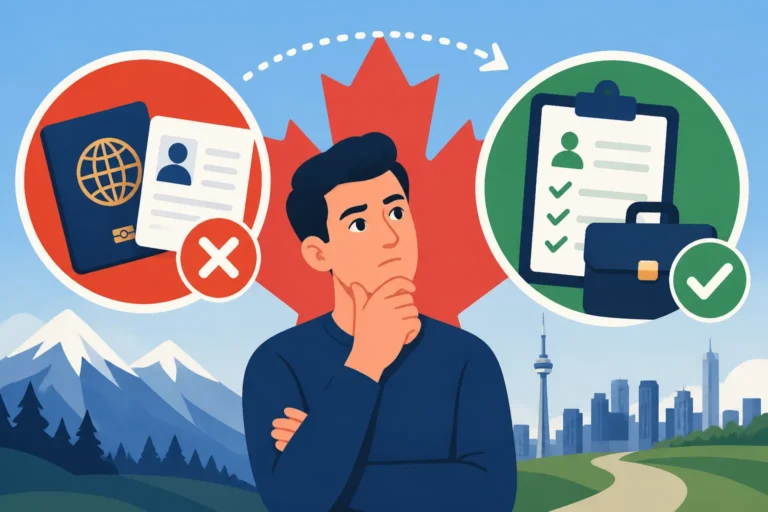
How Do I Get My Documents Ready for an Immigration Application in Canada?
Getting your immigration application ready for Canada can feel like trying to solve a colossal puzzle with a blindfold on, especially when it comes to gathering what seems like an endless stack of documents. Believe me, I've been there, sifting through old papers and chasing down certifications, feeling overwhelmed by the sheer volume and precise requirements. This comprehensive guide will walk you through the essential steps to prepare your documents, demystify the nuances of what Canada's immigration system expects, and share some hard-won expat wisdom to make this daunting process a little less intimidating for you.
Understanding the Crucial Role of Documents in Canadian Immigration
When you're applying to live, work, or study in Canada, it’s not just about filling out forms; it’s about meticulously proving every claim you make with supporting documentation. The Canadian immigration system, overseen by Immigration, Refugees and Citizenship Canada (IRCC), operates on a foundation of trust and verifiable information. Any inconsistency or missing piece can, quite literally, derail your entire application. This isn't just bureaucratic red tape; it's how Canada ensures fairness, security, and verifies that applicants meet the strict eligibility criteria for various programs.
Why Every Document Matters Seriously!
Let me tell you, every single document you submit is a piece of your personal story, backed up with official proof. IRCC caseworkers are trained to scrutinize these documents for authenticity and adherence to guidelines. For example, if you claim to have a certain level of education or work experience, they expect to see the certificates, transcripts, and detailed letters from employers that confirm it, down to the exact dates and duties performed. I once knew someone whose application was delayed for months because a simple employer reference letter missed a specific line about their employment being full-time. It seems minor, but it was a non-negotiable requirement for their particular stream. These are the kinds of precise details that can make or break your application, so it's not about providing "enough" but providing exactly what's requested.
The consequences of getting this wrong can range from inconvenient delays to outright refusal. An incomplete application might be returned, forcing you to restart the entire process, which can be heartbreaking after all that effort. More seriously, submitting fraudulent or misleading documents can lead to a ban from applying to Canada for several years, staining your immigration record permanently. This is why the "due diligence" phase of document gathering isn't just important; it's paramount to your success. It’s an investment of time and effort now that pays dividends later in a smoother application process.
The Golden Rule: Read the Official Checklists and Then Read Them Again
This might sound obvious, but you’d be surprised how many people skim the official IRCC checklists. My advice? Don't just read it; print it out, highlight it, and cross-reference it against your own documents. Each immigration program—be it Express Entry, a Provincial Nominee Program, a Study Permit, or a Work Permit—has its own specific checklist of required documents. What might be acceptable for one program could be entirely insufficient for another. For instance, the documents required for How to Apply for a Study Permit for Canada are very different from those needed for How to Apply Through a Provincial Nominee Program in Canada.
The IRCC website is your most reliable source for these checklists and detailed guides. Don't rely solely on forums or word-of-mouth, as requirements can change. The checklists often provide specific instructions on how documents should be prepared—e.g., whether they need to be certified true copies, translated by an IRCC-approved translator, or notarized. Ignoring these specific instructions is a common pitfall. Imagine you've got your birth certificate, but the checklist explicitly asks for a long-form version, and yours is short-form. That's a potential delay right there. Always assume that IRCC means exactly what they say in their instructions, and if in doubt, err on the side of providing more detail, as long as it's directly relevant to the request.
A Deep Dive into Common Document Categories
Navigating the document requirements for Canadian immigration can feel like a scavenger hunt across your entire life history. From the moment you were born to your latest work experience, almost everything needs official verification. Understanding these broad categories can help you organize your thoughts and your actual physical and digital files, making the collection process far more manageable.
Personal Identification and Civil Status Documents
These are the foundational documents that confirm who you are and your relationship status. Your passport, of course, is at the top of this list. It needs to be valid for at least six months beyond your intended stay, and you'll often need to scan every single page of it, not just the photo page. Yes, even the blank ones! This includes any pages with stamps or visas from other countries, as it paints a picture of your travel history.
Then there are your birth certificates. For many applications, IRCC prefers the "long-form" birth certificate, which includes details about your parents, not just your own name and date of birth. If your original birth certificate isn't in English or French, you'll need a certified translation. This often involves more than just getting it translated; it needs to be translated by a certified translator, and sometimes even accompanied by an affidavit from the translator. Marriage certificates, divorce decrees, and even death certificates (if you're a widow/widower) fall into this category. These documents prove your current civil status and are crucial for applications involving family members or those requiring specific marital details. Remember, your immigration status often affects other aspects of your life, such as How Your Immigration Status Affects Health Coverage in Canada, so accurate personal identification is critical across the board.
Educational and Professional Credentials
This is often where many applicants spend a significant amount of time and effort. If you're applying through a skilled worker program, your educational qualifications are a huge part of your eligibility and points score. You'll need an Educational Credential Assessment (ECA) to prove that your foreign degrees, diplomas, or certificates are equivalent to Canadian ones. Organizations like World Education Services (WES) are frequently used for this. The ECA process itself requires you to send your original academic documents—transcripts, degree certificates—directly from your educational institutions to the ECA body, which can sometimes be a slow process. Understanding How to Get Your Foreign Credentials Recognised in Canada and specifically How to Get Foreign Credentials Assessed (ECA / WES) in Canada is paramount here.
For professional credentials, prepare detailed letters from all your previous employers. These aren't just simple letters confirming you worked there; IRCC requires very specific information. This includes your job title, detailed duties performed (matching the National Occupational Classification or NOC code if applicable), the start and end dates of employment, the number of hours worked per week, your annual salary and benefits, and the name and signature of your direct supervisor or a human resources officer. It must also include the company's contact information. Generic letters or those missing these precise details are a common reason for application delays or refusals. Start gathering these well in advance, as convincing past employers to provide such specific letters can take time, especially if they are abroad.
Financial Proof and Settlement Funds
One of Canada's key requirements is that newcomers can support themselves and their families financially upon arrival. This is where proof of funds comes in, especially for economic immigration programs like Express Entry. IRCC specifies a minimum amount of money you need to have, which varies based on the size of your family unit. This amount is updated annually, so always check the latest figures on the official IRCC website. You can't just say you have the money; you have to prove it with official documents from financial institutions.
This typically means providing official letters from your bank, showing your account balance, account numbers, and the date your funds were deposited. They often require statements covering a specific period, usually the last three to six months, to show that these funds are readily available and not borrowed from another person. Investment statements, property deeds (though property itself doesn't count towards settlement funds), and proof of income from employment (if applicable) for accompanying family members can also be part of this. It’s crucial that these funds are liquid and transferable. Keep in mind that The Complete Guide to Cost of Living in Canada for Newcomers (2026) can be quite high, so having a robust financial cushion is not just an immigration requirement but practical advice. While not a direct immigration requirement, some newcomers opt for short-term health insurance from providers like Cigna Global to cover themselves during the initial waiting period for provincial health coverage, adding another layer of financial preparedness.
Medical and Police Clearance Certificates
These documents are about ensuring your safety and the safety of the Canadian public. For many immigration streams, you and all accompanying family members (even those not immigrating with you, in some cases) will need to undergo a medical examination by an IRCC-approved panel physician. You can’t just go to any doctor; it has to be one on IRCC's list. These exams check for certain communicable diseases or health conditions that could pose a risk to public health or excessive demand on Canada's health services. The results are sent directly to IRCC by the panel physician, but you'll usually get a confirmation of your exam.
Police certificates, often referred to as "clearance certificates" or "good conduct certificates," are required from every country or territory where you have lived for six months or more since the age of 18. This includes your home country and any other countries where you resided temporarily. Obtaining these can be one of the most challenging parts of the document process, especially from countries with complex or slow bureaucratic systems. Each country has its own process, and some might take weeks or even months to issue a certificate. Understanding Medical Exams and Police Certificates for Canadian Immigration provides a deeper look into this process. It's wise to start this collection process as early as possible, as delays here are very common.
Language Proficiency Results
For most economic immigration programs, demonstrating proficiency in English or French is not just a suggestion; it's a mandatory requirement and a significant factor in your Comprehensive Ranking System (CRS) score for Express Entry. You’ll need to take an approved language test, such as IELTS (General Training), CELPIP (General), TEF Canada, or TCF Canada. These tests assess your speaking, listening, reading, and writing abilities. The scores you achieve directly impact your eligibility and your ranking in the Express Entry pool.
It’s crucial to ensure your test results are still valid, as they usually have a two-year expiry date. If your results are expiring soon, or if you believe you can achieve a higher score, consider retaking the test. A higher language score can significantly boost your CRS points and improve your chances of receiving an Invitation to Apply (ITA). For instance, even a small improvement in one or two language bands can sometimes make a huge difference in your overall score. Many people dedicate serious study time to improve these scores, as it's one of the most direct ways to gain points for programs like Express Entry. For more details on how this can impact your application, check out How to Improve Your CRS Score for Express Entry in Canada.
The Nitty-Gritty of Document Preparation: Tips from an Expat
Okay, so you've got your pile of documents. Now comes the task of making them IRCC-ready. This isn't just about scanning them; it's about making sure they meet the precise technical and legal specifications that the Canadian government requires. This is where attention to detail really matters, and overlooking a small instruction can have big consequences.
Translations, Certifications, and Notarizations
This is a recurring headache for many expats, myself included. If any of your documents are not in English or French, they must be translated. But it's not enough to just get a friend who speaks the language to do it. IRCC requires that translations be done by a "certified translator." This typically means a translator who is a member in good standing of a professional translation association in Canada or abroad. The translation usually needs to be accompanied by an affidavit from the translator and a certified copy of the original document. Sometimes, if the original document is unavailable, a statutory declaration or affidavit from someone who knows you can attest to the accuracy of a copy. It’s always best to check the specific guidelines for your program, as requirements can vary slightly. Don't risk having your application returned because of an uncertified translation!
Certification and notarization are also key. A "certified true copy" means a photocopy of an original document that has been signed and dated by an authorized person (like a lawyer, notary public, or commissioner of oaths) to confirm that it's a true copy of the original. This is often required for documents like passports, birth certificates, and educational credentials. Notarization, on the other hand, usually involves a notary public witnessing a signature on a document and affixing their seal. While the terms are sometimes used interchangeably, their legal implications and requirements by IRCC can differ. When in doubt, always go for the most robust form of authentication required by IRCC – if they say certified true copy, don't just send a photocopy.
Scanning, Naming, and Uploading Your Files
Once your physical documents are gathered, translated, and certified, they need to be digitized. IRCC uses an online portal for most applications, and there are strict rules about how these digital documents should be submitted. Firstly, nearly all documents need to be in PDF format. Why PDF? Because it's universally readable and preserves formatting. Secondly, there are file size limits for each upload slot, usually around 2-4 MB. If your scan is too large, you'll need to compress it without sacrificing readability.
A crucial tip: name your files logically and clearly. For instance, instead of "Doc1.pdf," use "Passport_JohnDoe.pdf," "MarriageCertificate_JohnJaneDoe.pdf," or "EmployerReference_CompanyA.pdf." This makes it easier for the IRCC officer reviewing your application to quickly identify each document. Make sure your scans are clear, legible, and in color where possible. Blurry, dark, or incomplete scans can lead to requests for re-submission, adding unnecessary delays. When preparing for a big move, remember that companies like Sirelo specialize in international relocations and sometimes even offer resources or tips on how to manage important paperwork related to moving logistics, though not directly for immigration applications.
The Role of Third-Party Assistance
Many newcomers wonder whether to seek professional help with their immigration application. While you absolutely can manage the process yourself, for complex cases or if you're feeling overwhelmed, a Regulated Canadian Immigration Consultant (RCIC) or an immigration lawyer can be invaluable. These professionals are authorized by IRCC to represent clients and can offer expertise in navigating the intricate system. They can help you understand the specific requirements for your chosen program, review your documents for accuracy and completeness, and prepare a robust application package.
However, choosing the right professional is critical. Be wary of unauthorized consultants or "ghost consultants" who promise guaranteed results or charge exorbitant fees. Always verify their credentials with the College of Immigration and Citizenship Consultants (CICC) for RCICs or the provincial law society for lawyers. While their services come at a cost, it can be a worthwhile investment for peace of mind and to avoid costly mistakes. They can also keep you updated on changes to immigration policies, which are frequent. Understanding the Cost and Timeline of the Immigration Process in Canada can help you budget for professional fees and other related expenses. Even if you use a consultant, the responsibility for providing accurate and truthful documents ultimately rests with you. This process is deeply personal, and a good consultant will guide you, not do all the work for you. It's all part of the journey of Understanding How to Immigrate to Canada from Abroad (2027).
Managing Your Document Journey and What to Expect Next
The process of gathering and preparing documents isn't a one-time event; it's an ongoing journey that extends beyond just hitting the "submit" button. Effective organization and a proactive approach to potential issues will save you a lot of stress down the line. Think of it as preparing for the marathon, not just the sprint.
Organizing for the Long Haul Physical and Digital
My biggest piece of advice here is to create a master checklist and keep both physical and digital copies of absolutely everything. For physical documents, invest in a sturdy binder with dividers. Label each section clearly (e.g., "Passports," "Birth Certificates," "Education," "Work Experience," "Financial Proof"). Store original documents securely, and only send certified true copies when requested. Imagine a scenario where IRCC asks for a specific document again months after you’ve submitted your application – having it organized and easily accessible will be a huge relief.
Digitally, create a dedicated folder on your computer and categorize sub-folders in the same way. Back up this folder to a cloud service (like Google Drive, Dropbox, or OneDrive) and an external hard drive. Technology fails, and losing your meticulously prepared digital files would be a nightmare. Having these backups ensures redundancy and peace of mind. As you prepare for The Complete Guide to Moving to Canada: Your First 90 Days (2027), this organized system will also be incredibly helpful for other administrative tasks like setting up bank accounts or applying for a health card.
Dealing with Missing or Unavailable Documents
Life happens, and sometimes, despite your best efforts, you might not be able to obtain a specific document. Perhaps a government agency in your home country no longer issues a particular type of certificate, or an old employer's company has closed down. In such cases, do not just leave the section blank or ignore the requirement. This is where a "Letter of Explanation" becomes your best friend.
Write a clear, concise letter explaining why you cannot provide the requested document. Detail the steps you took to try and obtain it (e.g., "I contacted X office on Y date, but they informed me that Z document is no longer issued"). If possible, provide alternative evidence. For example, if you can't get an employer reference letter, can you provide a statutory declaration from a colleague or a client, along with pay stubs, tax documents, or employment contracts? These alternatives, while not ideal, demonstrate your good faith and efforts. Being transparent and proactive in explaining any gaps is far better than letting IRCC discover them on their own. Remember, maintaining your Understanding How to Maintain Your Permanent Resident Status in Canada status in the future will also rely on keeping accurate records, much like applying for your initial status or even your Understanding Permanent Resident Status and the PR Card in Canada.
Here's a quick reference table for common document requirements:
| Document Category | Examples | Key Requirement Tips | Common Pitfalls |
|---|---|---|---|
| Personal Identification | Passport, Birth Certificate, IDs | Valid, long-form (for birth certs), clear scans | Expired passport, short-form birth cert, blurry scans |
| Civil Status | Marriage/Divorce Certificates | Certified translations if not in ENG/FRA | Missing specific details, uncertified translations |
| Education | Degrees, Diplomas, Transcripts | ECA report for foreign credentials, official transcripts | No ECA, informal transcripts, missing detailed marks |
| Work Experience | Employer Letters, Pay Stubs, CV | Specific format, detailed duties, contact info | Generic letters, missing start/end dates, no supervisor info |
| Financial Proof | Bank Statements, Investment Portfolios | Bank letter, 3-6 months history, liquid funds | Borrowed funds, unclear source, insufficient balance |
| Police Certificates | Certificates from relevant countries | From every country lived in >6 months since age 18 | Delays in obtaining, missing countries, expired certs |
| Medical Exams | Panel Physician Confirmation | Only IRCC-approved doctors, valid results | Unapproved clinic, expired exam results |
| Language Proficiency | IELTS/CELPIP/TEF/TCF scores | Valid scores (within 2 years), minimum thresholds | Expired results, submitting wrong test type |
Disclaimer
Please remember that I am an expat blogger sharing personal experiences and general advice. While I strive to provide accurate and up-to-date information, immigration laws and policies in Canada can change rapidly. This content is for informational purposes only and should not be considered legal advice. Always consult with an authorized Regulated Canadian Immigration Consultant (RCIC) or an immigration lawyer for personalized advice regarding your specific situation. For the most current and official information, always refer to the Immigration, Refugees and Citizenship Canada (IRCC) website.