How to Get Physiotherapy and Rehabilitation Covered in Canada
Most newcomers arrive in Canada under the impression that the famous "free healthcare" system covers everything from a common cold to major surgery. It is a rude awakening when you limp into a community clinic with a sports injury or chronic back pain only to be told that a single session of physiotherapy will cost you $100 or more out of pocket. This guide explains the complex reality of how to get physiotherapy and rehabilitation covered in Canada, ensuring you don't drain your savings while trying to get back on your feet.
Understanding the Myth of Free Physiotherapy in Canada
When you first receive your provincial health card, it feels like a golden ticket. However, the Canada Health Act specifically mandates coverage for "medically necessary" hospital and physician services. Physiotherapy often falls into a grey area known as "extended" or "supplementary" health. While the surgery to fix your torn ACL is covered by the government, the months of rehabilitation required to actually walk again often are not. This distinction is one of the most common frustrations for expats who expected a fully socialized system.
The Provincial Gap: Why OHIP, MSP, and AHCIP Often Fall Short
Each province manages its own health budget, which leads to a fragmented landscape of coverage. For instance, in Ontario, OHIP generally only covers physiotherapy if you are under 19, over 65, or have recently been discharged from a hospital after a major surgery. Even then, you must visit a specifically designated "OHIP-funded" clinic, which often have waitlists stretching several months. If you are a 30-year-old worker with chronic back pain, the provincial plan usually offers zero coverage for community-based clinics.
In British Columbia, the MSP provides limited coverage for "supplementary benefits," but this is strictly means-tested. Only those with very low incomes qualify for a small subsidy—usually around $23 per visit for a limited number of sessions—which still leaves a significant balance for the patient to pay. Understanding the How Canada's Health System Works: Provincial Plans Explained (2027) is vital because what works in Vancouver might not apply in Toronto or Montreal. You have to be prepared for the fact that your health card is not a blank check for rehab.
The reality of these gaps means that many foreigners find themselves in a "coverage void." You are healthy enough to be out of the hospital, but not wealthy enough to easily afford three sessions of physio a week. This is why many veteran expats suggest that Understanding the Difference Between Provincial Plans Across Canada should be one of your first priorities upon landing. Each province has its own quirks, and the definition of "rehabilitation" can vary wildly depending on which side of a provincial border you stand on.
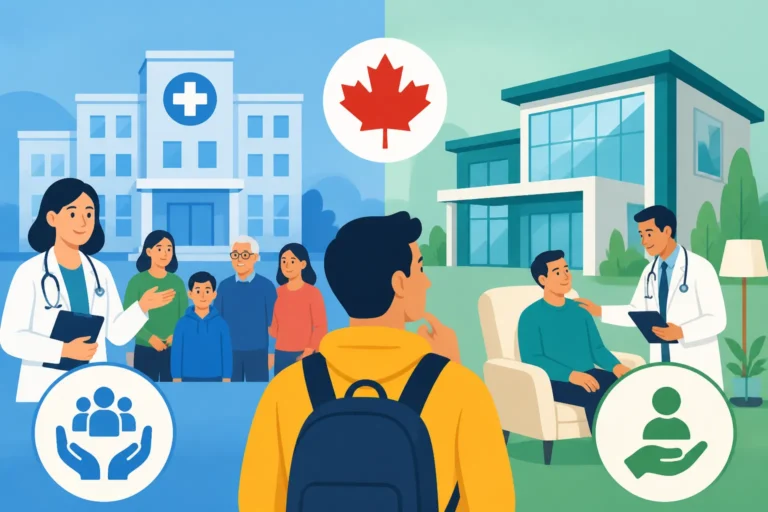
Hospital-Based vs. Community Clinics: Where the Coverage Changes
There is a massive difference between receiving physiotherapy while you are an inpatient in a hospital and seeking care at a clinic in a shopping plaza. If you are recovering from a stroke or a major car accident inside a Canadian hospital, the rehabilitation services provided by staff therapists are typically covered 100% by your provincial plan. The government views this as part of your acute care. The moment you are discharged and told to "follow up with a local physiotherapist," the financial burden usually shifts to you.
Community clinics are almost exclusively private businesses. Even though the therapists are regulated health professionals, they operate like a dentist or an optometrist. They set their own rates, and they expect payment at the time of service. Some clinics might have a small contract with the provincial government to see a handful of "public" patients, but these slots are rare and highly sought after. Most expats will find themselves in the private stream by default.
This transition from hospital care to community care is where many people fall through the cracks. Many newcomers skip their necessary rehab because they didn’t realize the hospital wouldn't be paying for the external clinic. This is a dangerous path to take, as improper healing can lead to long-term disability. It is much better to look into How to Apply for Your Provincial Health Card in Canada (2027) early and then immediately investigate your supplemental options to bridge this specific gap.
The Public System's Eligibility Hurdles: Age, Income, and Injury Type
Eligibility for public physiotherapy is often a moving target. In many provinces, the government prioritizes those who are most vulnerable or those whose lack of rehab would result in a return to the hospital. For example, if you are receiving social assistance or disability benefits, you might have access to a specialized pool of funding for rehabilitation. For the average working expat, however, these programs are often out of reach.
The type of injury also dictates the funding stream. A simple repetitive strain injury from sitting at a desk is rarely covered by the public system. Conversely, if your injury is the result of a catastrophic event, there may be "rehabilitative care" programs through regional health authorities. These programs are highly clinical and require a referral from a specialist, not just a general practitioner. Navigating these hurdles requires a lot of paperwork and even more patience.
If you are a newcomer still in your first few months, you might be facing the Understanding the Three-Month Waiting Period for Health Coverage in Canada. During this time, you have no public coverage at all. If you get injured during this window, you are responsible for every cent of your medical costs, including rehab. This is why having a robust private plan is not just a suggestion; it is a financial necessity for anyone moving to Canada.
Navigating Employer-Sponsored Extended Health Benefits
The vast majority of Canadians and residents cover their physiotherapy costs through "Extended Health Care" (EHC) plans provided by their employers. These are private insurance policies that sit on top of the public system. When you are interviewing for a job in Canada, the "benefits package" is often just as important as the salary, specifically because it covers things like drugs, dental, and, of course, physiotherapy.
Deciphering Your Benefits Booklet: Caps, Co-pays, and Deductibles
Once you are hired, you’ll receive a benefits booklet that looks like a dense legal manual. You need to look for the "Paramedical Services" section. Most Canadian employer plans have a "cap" on physiotherapy. This might be a dollar amount (e.g., $500 per year) or a percentage (e.g., 80% coverage up to a certain limit). It is rare to find a plan that offers unlimited physiotherapy, so you have to budget your sessions carefully.
You should also check if there is a "per-visit" maximum. Some insurers will only pay up to $50 per session, even if the clinic charges $110. This leaves you with a "co-pay" or "out-of-pocket" expense for the remainder. Additionally, some plans have an annual deductible—an amount you must pay yourself before the insurance kicks in. Understanding these Understanding Supplemental Health Insurance (Dental, Vision, Drugs) in Canada nuances is the difference between a free recovery and an expensive one.
It is advisable that newcomers ask their HR department for a "Summary of Benefits" before they even sign their employment contract. If you have a pre-existing condition that requires regular physical therapy, a plan with a $300 annual cap is going to be functionally useless for you. You want to see a plan that covers at least $1,000 in paramedical services if you anticipate needing significant rehabilitation.
Coordination of Benefits: Using Two Plans to Cover 100%
If you are married or in a common-law relationship and both you and your partner have employer benefits, you can "coordinate" them. This is a legal way to get up to 100% of your physiotherapy covered. You first submit the claim to your own insurance provider. Once they pay their portion (say, 80%), you take the "Explanation of Benefits" statement they provide and submit it to your partner’s insurance. They will then often cover the remaining 20%.
This process can be a bit of an administrative headache, but it is incredibly effective for expensive rehabilitation. Most modern insurance companies in Canada use a system called "Telus Health" which allows clinics to bill both insurers directly at the front desk. This means you don't have to pay anything upfront. Always ask your clinic if they offer "Direct Billing"—it is a life-saver for your cash flow.
Be aware that there is a specific order for coordination. You must always use your own employer’s plan first. If you have children, their "primary" insurer is usually the parent whose birthday falls earlier in the calendar year. It sounds like a strange rule, but the Canadian insurance industry follows it strictly. Learning these small details can significantly reduce the How Much Does Physiotherapy Cost per Session in Canada? burden on your household budget.
The Referral Requirement: Do You Need a Doctor's Note?
While you can technically walk into a physiotherapy clinic in Canada without a doctor’s referral (it is a "direct access" profession), your insurance company might have different ideas. Many older or more conservative "Extended Health" plans still require a physician's referral before they will reimburse you. If you go to five sessions and then try to claim them, only to find out you needed a doctor's note dated before your first session, you will be out of luck.
Always call your insurance provider or check the online portal before your first appointment. If a referral is required, you will need to book a visit with a family doctor or visit a walk-in clinic. You can simply explain that you have an injury and need a note for physiotherapy for insurance purposes. If you are taking time off work for this, you might also need to ask How Do I Get a Doctor's Note for Sick Leave in Canada? at the same time to keep your employer satisfied.
In recent years, many major Canadian insurers like Sun Life, Manulife, and Canada Life have started dropping the referral requirement to ease the burden on the primary care system. However, don't assume your plan has followed suit. A five-minute phone call to your insurer can save you hundreds of dollars in denied claims.
Private Insurance for Newcomers and the Self-Employed
If you are a freelancer, a digital nomad, or a newcomer waiting for your provincial health card, you don't have the luxury of employer-sponsored benefits. In this scenario, you are essentially "flying blind" in the Canadian medical system. You need to proactively seek out private coverage that specifically includes paramedical services like physiotherapy and rehabilitation.
Bridging the Gap: Why Newcomers Need Coverage During the Waiting Period
Moving to Canada involves a lot of physical labor—lifting heavy suitcases, assembling IKEA furniture, and walking miles exploring new neighborhoods. It is ironically the time you are most likely to tweak your back or strain a knee, yet it is also the time when you are least likely to have government coverage. The How to Get Private Health Insurance to Cover the Waiting Period in Canada is a critical step in any relocation plan.
Without this bridge insurance, a single trip to the ER and subsequent rehab could cost you thousands. Private newcomer plans are designed to cover emergencies and the acute phase of an injury. While they might not cover 20 sessions of "wellness" physio, they will usually cover the rehabilitation necessary to get you mobile again after an accident. It’s about risk management. You aren't just buying insurance; you're protecting your "New Life in Canada" fund from being wiped out by a single slip on the ice.
Choosing a Plan for Freelancers: Individual vs. Family Coverage
For those who plan to be self-employed long-term in Canada, purchasing an individual "Health and Dental" plan is a standard business expense. Companies like Blue Cross or GMS offer plans specifically for individuals. These plans allow you to "add on" physiotherapy coverage. When evaluating these, look closely at the "Rehabilitation" section. Some plans will cover a set amount for physiotherapy but won't cover things like occupational therapy or speech therapy, which might be necessary for more complex recovery.
SafetyWing is a popular choice for many international arrivals and digital nomads because it offers flexibility that traditional Canadian insurers sometimes lack. For those who are in Canada on a temporary basis or moving between provinces, SafetyWing provides a safety net that can help manage the costs of unexpected medical needs, including some forms of rehabilitative care. It is especially useful for those who haven't yet settled into a permanent role with a Canadian employer but still need a reliable level of protection.
When you are self-employed, every dollar counts. You have to weigh the monthly premium against the likelihood of needing the service. If you are an active person who hikes, skis, or plays sports, the physiotherapy benefit alone often pays for the plan's annual cost. Think of it as a pre-paid subscription to your own health.
SafetyWing and its Role for Nomads or Those Transitioning Into Canada
For those living a more nomadic lifestyle—perhaps you're on a Working Holiday Visa or you're a remote worker spending six months in Banff—traditional Canadian provincial plans might not even apply to you. SafetyWing offers a "Nomad Insurance" product that is globally portable, including coverage within Canada. This is incredibly helpful because it treats you as a global citizen rather than someone tied to a specific provincial bureaucracy.
It is often suggested that SafetyWing is the "stress-reducer" for the first 90 days. Instead of worrying about whether you qualify for the local health card yet, you have a policy in your pocket that handles the big stuff. If you're doing a cross-country road trip and need a physiotherapist in a different province every week, having a global policy simplifies the paperwork immensely.
Furthermore, SafetyWing's interface and claims process are often more modern and user-friendly than the archaic paper-based systems used by some older Canadian insurance firms. For a tech-savvy expat, being able to manage everything from a smartphone is a significant advantage when you're already overwhelmed by the logistics of moving to a new country.
Public Programs and Specialized Funding Streams
In some specific cases, the funding for your physiotherapy doesn't come from the health system or your employer at all. Canada has several specialized "third-party" funding streams that take over the costs of rehabilitation if your injury falls into a certain category. These are often the best-funded programs because they are designed to get you back to work or back on the road as quickly as possible.
Workers' Compensation (WSIB/WCB): Coverage for Workplace Injuries
If you are injured while at work—whether it’s a fall on a construction site or carpal tunnel from an office job—your medical care is covered by your province’s workers' compensation board (e.g., WSIB in Ontario, WCB in Alberta). These organizations are independent of the provincial health ministry and have their own massive budgets for rehabilitation. If your claim is approved, they will pay for 100% of your physiotherapy sessions, and they often pay a higher rate to the clinic to ensure you get "priority" care.
The catch is that you must report the injury to your employer immediately and see a doctor who will fill out a specific "Form 8" or its equivalent. You cannot simply go to a physiotherapist and ask them to bill the WSIB later. The "paper trail" is everything. If you try to hide an injury and it gets worse, it becomes much harder to get the board to pay for your rehab. Always be honest about where and how the injury happened.
WSIB-funded programs are often "Functional Restoration" programs. They aren't just about reducing pain; they are about getting you fit enough to perform your job duties again. This might include "work hardening" sessions where you simulate your job tasks under the supervision of a therapist. It is intense, but it is one of the most comprehensive forms of rehabilitation available in Canada.
Motor Vehicle Accident (MVA) Insurance: The Role of Car Insurance in Rehab
If you are involved in a car accident in Canada, your car insurance company is actually your primary healthcare payer for rehabilitation, not the government. This is a surprise to many! In provinces with "No-Fault" insurance, your own insurer provides a pool of money called "Accident Benefits." This can range from $3,500 for minor injuries (like whiplash) to over $1,000,000 for catastrophic injuries.
When you go to a physiotherapy clinic after a car accident, you give them your insurance claim number. The clinic then submits a "Treatment Plan" (usually an OCF-18 in Ontario) to your car insurance company. Once the insurer approves it, the clinic bills them directly. This is why the How Much Does It Cost to Run a Car in Canada per Month? calculation should always include a decent insurance policy—it’s your health insurance on wheels.
It is important to note that you are often required to use up your employer’s "Extended Health" benefits first before the car insurance kicks in. This is called the "prioritization of benefits." It can be annoying to exhaust your $500 work limit on a car accident injury, but it is a standard legal requirement in most provinces.
Pediatric and Seniors' Programs: Age-Specific Physiotherapy Funding
As mentioned earlier, children and seniors are the "protected classes" in the Canadian public health system. Most provinces have specific funding for "Community Physiotherapy Clinics" that cater only to these age groups. If you have a child with a developmental delay or an elderly parent who has had a fall, you should ask your family doctor for a referral to a "government-funded community clinic."
These clinics are different from the private ones. You won't see a price list on the wall because the government pays the clinic a flat fee per patient. The downside is the wait. Because this care is "free" at the point of use, the queues can be long. If your child needs immediate care for a broken leg, you might still choose to use your private insurance at a private clinic rather than waiting three months for a government-funded slot.
For seniors, there are also "Home Care" programs (like Home and Community Care Support Services in Ontario). If an elderly person cannot physically leave their home to get to a clinic, the government will send a physiotherapist to their house for a limited number of sessions. This is an incredible service, but it is strictly for those who are "homebound." If you can walk to the grocery store, you likely won't qualify for home-based rehab.
Comparative Breakdown: Costs and Coverage Options
To help you visualize where you might fit into this system, the table below outlines the typical costs and coverage scenarios for a standard 45-minute physiotherapy session in a major Canadian city like Toronto or Vancouver.
| Coverage Type | Typical Patient Cost | Pros | Cons |
|---|---|---|---|
| Provincial (Public) | $0 | No cost at point of service. | Strict eligibility; long waitlists. |
| Employer (EHC) | $10 – $40 | Direct billing; choice of clinic. | Annual caps (usually $500-$1000). |
| WSIB / WCB | $0 | Fully covered; includes return-to-work focus. | Only for workplace injuries; lots of paperwork. |
| MVA (Car Insurance) | $0 | Highly funded for serious accidents. | Complex claims process; requires car insurance. |
| Private / Self-Pay | $95 – $130 | Instant access; best quality of care. | Very expensive for long-term rehab. |
| SafetyWing (Nomad) | Varies (deductible) | Global portability; covers emergencies. | Not intended for long-term chronic maintenance. |
Practical Tips for Maximizing Your Rehab Budget
Even with insurance, you want to be smart about how you spend your rehabilitation dollars. Physiotherapy is a collaborative process, and there are ways to get better results with fewer paid sessions.
Direct Access vs. Specialist Referrals: Saving Time and Money
In Canada, physiotherapists are primary health care providers. You do not need to see a doctor first to start treatment. If you wake up with a stiff neck, you can book a physio appointment for that afternoon. This saves you the time (and potential cost of a day off work) spent sitting in a walk-in clinic waiting for a doctor just to tell you what you already know: you need physio.
However, as discussed, always check your insurance policy first. If you don't need a referral for insurance, go straight to the expert—the physiotherapist. They have more training in musculoskeletal issues than most general practitioners anyway. By starting treatment 48 hours earlier, you might prevent a minor strain from becoming a major issue that requires ten extra sessions.
If you find that you aren't making progress after 4-6 sessions, that is when you should go back to your doctor. You might need an X-ray or an MRI to rule out a more serious issue. In the Canadian system, your doctor is the "gatekeeper" for high-level diagnostics. If you need a referral to a surgeon or a chronic pain specialist, you should also look into How Do I Access Mental Health Support in Canada? as chronic pain and mental health are often deeply linked.
University Teaching Clinics: High-Quality Care at a Lower Price Point
If you are a student or simply living on a tight budget without insurance, look for a university that has a Physical Therapy program (like U of T, UBC, or McGill). These universities often run "Teaching Clinics" where senior students provide care under the very close supervision of licensed professors.
The sessions at these clinics are often half the price of a standard private clinic. The downside is that the sessions take longer because the students are very thorough and must check in with their supervisors. However, the quality of care is often exceptional because you are being treated according to the very latest scientific research. It is one of the best-kept "expat secrets" for affordable healthcare in Canada.
Home-Based Exercises and Telehealth: Reducing the Number of In-Person Sessions
A good physiotherapist in Canada will not try to keep you coming back forever. Their goal is to give you the tools to heal yourself. One of the best ways to save money is to be a "compliant" patient. If your therapist gives you three exercises to do at home, do them religiously. If you do your homework, you might only need to see the therapist once every two weeks for a "check-in" rather than twice a week for manual therapy.
Additionally, many clinics now offer "Telehealth" appointments. These are conducted over video and are usually cheaper than in-person visits. They are perfect for follow-up appointments where the therapist just needs to see how your movement is progressing and update your exercise program. It saves you the travel time and the parking fees, which are often overlooked costs of rehabilitation.
Ultimately, getting physiotherapy covered in Canada is about being an active participant in your own care. Between navigating provincial rules, employer benefits, and private options like SafetyWing, you have a variety of tools at your disposal. Use them wisely, and you'll find that the road to recovery doesn't have to be a financial dead end.
Disclaimer
The information provided in this guide is for educational and informational purposes only and does not constitute professional medical or legal advice. Health insurance policies, provincial regulations, and clinical costs in Canada are subject to change. Always consult with a licensed insurance provider or a healthcare professional regarding your specific situation.