Can I Change from a Study Permit to a Work Permit in Canada?
Oh, the classic student dilemma! You've successfully navigated the Canadian academic system, possibly even braved a few winters, and now you’re looking at that study permit and thinking, "Okay, what's next? Can I actually stay and work here?" It's a question that weighs heavily on so many international students, and believe me, you're not alone in feeling a mix of excitement and absolute bewilderment. The good news is, yes, in most cases, you absolutely can transition from a study permit to a work permit in Canada. This guide is going to walk you through the primary pathways and crucial steps to make that happen, helping you avoid common pitfalls and keep your Canadian dream alive.
From Study to Work: Understanding Your Transition Options
The journey from being an international student to a working professional in Canada isn't always a straight line, but it's a well-trodden path with clear options. Many newcomers arrive with the hope of not just gaining an education but also building a new life here, and Canada's immigration system is designed to support that ambition, especially for those who contribute to the economy with their skills. It's about knowing which doors are open to you and how to walk through them correctly.
Working While Studying in Canada
First, let's briefly touch on what you were likely doing while you held your study permit. Most international students in Canada are eligible to work part-time during their academic sessions and full-time during scheduled breaks. This isn't just a way to earn some extra cash; it's often your first taste of the Canadian workplace culture and can even start building that coveted "Canadian work experience" that will be so valuable later on.
The conditions for working while studying are usually printed right on your study permit or in the official letter from Immigration, Refugees and Citizenship Canada (IRCC). Generally, if you're a full-time student enrolled at a Designated Learning Institution (DLI) and your program is at least six months long and leads to a degree, diploma, or certificate, you could work up to 20 hours per week during regular sessions. During official school breaks, like summer holidays or winter break, you could usually work full-time. Missing these details or working more than allowed could jeopardize your future applications, so always double-check your specific permit conditions.
The Urgency of Planning Your Next Steps
As your study permit's expiry date looms, panic can start to set in. You might be juggling final exams, job applications, and the anxiety of maintaining your legal status in Canada. It's a lot, and it's completely normal to feel overwhelmed. However, proactive planning is your best friend here. Waiting until the last minute can lead to unnecessary stress, potential delays, or even loss of your legal status.
One of the most critical aspects of this transition is understanding "implied status," which we'll dive into deeper later. But in short, it's what protects your right to stay and potentially work in Canada while IRCC processes your new application, provided you apply before your current permit expires. Knowing your options, gathering your documents, and applying well in advance of that expiry date will save you a world of heartache. It’s also wise to consider how you’ll manage your finances and even your relocation logistics with companies like Sirelo, especially if a new job means moving to a different city.
The Post-Graduation Work Permit (PGWP): Your Main Path
For the vast majority of international students who wish to stay and work in Canada after graduation, the Post-Graduation Work Permit (PGWP) is the golden ticket. It's an open work permit, meaning you don't need a specific job offer to apply, and it allows you to work for almost any employer in Canada. This flexibility is what makes it so incredibly valuable for recent graduates looking to gain Canadian work experience.
Who Is Eligible for a PGWP?
The eligibility criteria for the PGWP are fairly straightforward, but they are strict. You must have:
- Graduated from an eligible Designated Learning Institution (DLI): Not all DLIs make you eligible for a PGWP. You need to ensure your school and program are on the list of institutions whose graduates are eligible for the PGWP. This is something you should confirm before you even start your studies in Canada, but if you're here now, double-check!
- Completed a program of study in Canada: This program must have been at least eight months long and led to a degree, diploma, or certificate. Shorter programs generally won't qualify you.
- Maintained full-time student status: For the majority of your studies, you must have been a full-time student. There are exceptions for authorized leaves or the final academic session, but generally, full-time enrollment is key.
- Received written confirmation of program completion: Your school needs to provide you with official documentation, such as a transcript or a letter of completion, confirming you've met all the requirements for graduation.
- Applied within 180 days of receiving your final grades: This deadline is crucial. Missing it means you lose your eligibility for the PGWP. The 180 days start from the date your final grades are issued, not your graduation ceremony.
Let's imagine you're Sarah, who just finished her two-year Marketing Management diploma at a college in Vancouver. She maintained her full-time student status, and her college is a DLI. Once she gets her official transcript and completion letter, she has 180 days to submit her PGWP application. If she waits too long, even by a day, she's out of luck. This pressure can be intense, so tracking those dates is paramount.
Applying for Your PGWP: A Step-by-Step Guide
The PGWP application process is primarily done online through the IRCC portal. Here’s a general rundown of what you’ll need and how to approach it:
-
Gather Your Documents:
- Proof of graduation: Official transcript and a letter from your institution confirming successful completion of your program.
- A valid passport (or travel document) and copies of any previous visas or permits.
- Digital photo meeting IRCC specifications.
- Proof of financial support (though this is less emphasized for PGWP than for study permits, it's good to be prepared).
- The application fee.
-
Create or Log In to Your IRCC Online Account: This is where you'll fill out the application form and upload all your supporting documents. Be meticulous in filling out the forms; any errors can lead to delays or refusal.
-
Pay the Fees: There are usually two fees: the work permit processing fee and the open work permit holder fee. Make sure you pay both! As of early 2024, the total for these typically comes to CAD $255.
-
Submit Your Application: Once everything is complete and uploaded, hit that submit button! The moment your application is successfully submitted, you will typically be under "implied status," allowing you to continue working full-time (if you were eligible to work full-time on your study permit) while you await a decision, as long as you applied before your study permit expired. This is a massive relief for many, allowing you to bridge the gap without interruption to your employment.
Understanding the Length of Your PGWP
The duration of your PGWP isn't arbitrary; it's directly linked to the length of your study program in Canada. This is a critical detail, as it impacts how much Canadian work experience you can accumulate, which, in turn, influences your eligibility for permanent residency programs later on.
- If your program was less than 8 months: You are generally not eligible for a PGWP.
- If your program was at least 8 months but less than 2 years: Your PGWP will typically be valid for a period equal to the length of your study program. For example, a 10-month program would grant you a 10-month PGWP.
- If your program was 2 years or longer: You're usually looking at a three-year PGWP, which is the maximum length. This is highly desirable as it gives you ample time to gain significant Canadian work experience.
- If you completed multiple programs: There's a special rule. If you completed more than one program from an eligible DLI within two years, and each program was at least eight months long, you might be able to get a PGWP that combines the lengths of your programs. For instance, two one-year programs could potentially net you a three-year PGWP.
This length calculation is vital. A longer PGWP offers more opportunities to build a career, establish professional networks, and qualify for programs like the Canadian Experience Class under Express Entry. Understanding these nuances from the outset can help you plan your educational and career trajectory more effectively.
Beyond the PGWP: Other Work Permit Avenues
While the PGWP is the most common and often the easiest route for international graduates, it's not the only way to transition from a study permit to a work permit. There are situations where a PGWP might not be an option (e.g., if you weren't eligible) or where other permits might be more appropriate. It's good to be aware of these alternative pathways, even if they involve a bit more complexity.
Employer-Specific Work Permits
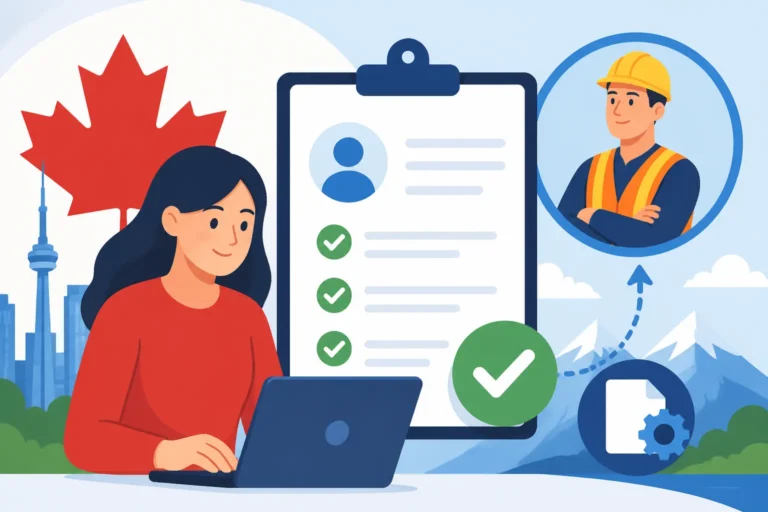
An employer-specific work permit, as the name suggests, ties you to a particular employer, for a specific job, and in a specific location. Unlike the PGWP, you can't just work anywhere with this type of permit; it requires a job offer before you apply.
The most common pathway for an employer-specific work permit involves a Labour Market Impact Assessment (LMIA). An LMIA is a document that an employer in Canada may need to get before hiring a foreign worker. It confirms that there is a need for a foreign worker to fill the job and that no Canadian citizen or permanent resident is available to do the job. Getting an LMIA is a significant hurdle, as it's a process for the employer, not the employee, and it can be time-consuming and expensive. Many employers would rather avoid it if possible.
However, there are also LMIA-exempt work permits. These apply to specific situations, such as certain international agreements (like NAFTA/USMCA), intra-company transfers, or jobs that provide "significant benefit" to Canada. If you receive a job offer that falls under one of these exemptions, you could apply for an employer-specific work permit without the employer needing an LMIA. This is often an attractive option for both employers and foreign workers, but finding such a job can be challenging.
Open Work Permits for Spouses and Common-Law Partners
This is an interesting route, especially for those who came to Canada as part of a couple. If your spouse or common-law partner holds a valid study permit or work permit, and that permit meets certain conditions, you might be eligible for an open work permit. For example, if your partner is currently studying at a DLI in a degree-granting program, or if they have their own PGWP, you might be able to apply for an open work permit as their accompanying spouse.
This particular pathway is designed to support family unity and allows the spouse or partner to work for any employer in Canada. It means that while one partner is gaining Canadian work experience through their PGWP, the other can also be working and contributing to the family's finances and their own professional development. The reverse can also be true: if you, as a student, have a spouse who meets certain criteria (for instance, they hold a skilled job in Canada), you might be able to get an open work permit through their status. It's a bit like a mutual support system for newcomers, making it easier for families to establish themselves.
Bridging Open Work Permits: For Future Permanent Residents
For international students who have already taken the plunge and applied for permanent residence (PR) in Canada, but are still waiting for a decision on their application, the Bridging Open Work Permit (BOWP) can be a lifesaver. This permit allows you to continue working legally in Canada while you wait for your PR application to be finalized.
To be eligible for a BOWP, you generally need to have:
- An active PR application under an eligible economic immigration program (like Express Entry's Federal Skilled Worker Program, Canadian Experience Class, or Provincial Nominee Program).
- A valid work permit that is set to expire within four months, or your current permit has already expired but you are still on implied status.
- Submitted your BOWP application online.
The BOWP is a crucial safety net. Without it, many applicants would face a period of unemployment or have to leave Canada while their PR application is processed, which can take a significant amount of time. It ensures continuity of employment and income, alleviating a lot of stress during an already anxious waiting period.
Crucial Tips for a Smooth Transition
Making the leap from student to worker status can feel like navigating a maze, but with careful planning and attention to detail, you can make the transition much smoother. There are several key areas where you absolutely cannot afford to cut corners.
Maintaining Legal Status: The Importance of Implied Status
This is perhaps the single most critical piece of advice for any international student looking to extend their stay in Canada. You must apply for your new permit (be it a PGWP or another type of work permit) before your current study permit expires. If you do this, you automatically fall under what’s known as "implied status" or "maintained status."
What does this mean for you? It means that even if your study permit expires while your new work permit application is still being processed by IRCC, you retain your legal status in Canada. Not only that, but you can also continue working under the same conditions as your previous permit until a decision is made on your new application. For example, if you were eligible to work full-time on your study permit during a scheduled break, and you submit your PGWP application before your study permit expires, you can continue working full-time. If you apply for a new study permit, you can continue studying. If you apply for a work permit, you can continue to work as per the conditions of your previous permit until you hear back.
However, if your study permit expires before you apply for a new permit, you've lost your legal status. At that point, you’d have to apply for restoration of status, which is more complicated, costly, and you cannot work or study until your status is restored, if it is approved at all. It's an absolute headache that is best avoided by being proactive.
Navigating Health Insurance During Your Transition
Another area often overlooked is health insurance. As an international student, you likely had some form of health coverage, either through your provincial health plan (if you qualified after a waiting period) or through a private plan mandated by your educational institution. When you transition from a study permit to a work permit, your existing coverage might change or even cease.
Many provincial health plans, like OHIP in Ontario or MSP in British Columbia, have specific eligibility criteria tied to your immigration status. If your study permit expires and you are on implied status awaiting a work permit, you might temporarily lose provincial health coverage or face a new waiting period once your work permit is issued. This gap can leave you vulnerable to significant medical expenses.
It’s crucial to look into private health insurance options to bridge any potential gaps. Companies like Cigna Global offer comprehensive plans that can cover you during this transitional phase, ensuring you’re not caught off guard by an unexpected illness or injury. Always review your provincial health plan’s eligibility requirements and consider purchasing a short-term private policy to ensure continuous coverage. You don't want to be in Canada, legally working, but uninsured.
Planning Your Move and Future PR Pathway
Once you have your work permit in hand, whether it's a PGWP or an employer-specific one, you're officially on the path to gaining valuable Canadian work experience. This experience is the bedrock for many permanent residency applications. Programs like the Canadian Experience Class (CEC) under Express Entry, and various Provincial Nominee Programs (PNPs), heavily favour individuals with Canadian work experience.
You should view your work permit not just as a means to earn a living but as a strategic step towards permanent residency. Keep meticulous records of your employment: pay stubs, letters of employment, job descriptions, and any other documentation that proves your work experience. This will be invaluable when you eventually apply for PR.
If your new job requires you to move cities or provinces, remember to plan your logistics carefully. Services like Sirelo can help with shipping your belongings, and researching the cost of living in your new location will be essential. Understanding your options for permanent residence, such as through How Express Entry Works for Permanent Residence in Canada (2027) or The Newcomer Guide to Provincial Nominee Programs (PNP) in Canada (2027), should be your next big goal. Also, it’s beneficial to know The Cost of Healthcare in Canada: A Complete Breakdown for Newcomers (2026) for your new locale. Don't forget to learn How to Apply for Your Provincial Health Card in Canada (2027) once your work permit is approved and you're settled. You'll also want to look into How to Apply for a Social Insurance Number (SIN) in Canada if yours needs updating or you don't have one yet. And, of course, Navigating the Canadian Healthcare System: A Newcomer's Roadmap (2027) is always a good resource.
Comparison of PGWP vs. Employer-Specific Work Permit
Here's a quick overview of the key differences between the Post-Graduation Work Permit (PGWP) and an Employer-Specific Work Permit (ESWP):
| Feature | Post-Graduation Work Permit (PGWP) | Employer-Specific Work Permit (ESWP) |
|---|---|---|
| Type of Permit | Open Work Permit | Closed/Specific Work Permit |
| Job Offer Required? | No | Yes, a valid job offer is mandatory |
| LMIA Required? | No | Often required (unless LMIA-exempt category applies) |
| Eligibility Basis | Graduation from an eligible Canadian DLI program | Specific job offer from a Canadian employer |
| Flexibility | High – can work for almost any employer | Low – restricted to the named employer, job, and location |
| Maximum Length | Up to 3 years (based on program length) | Varies, typically tied to job contract or LMIA validity |
| Pathway for PR | Excellent for Canadian Experience Class, many PNPs | Can also lead to PR, often through Express Entry or PNPs if skilled |
| Application Complexity | Relatively straightforward (student applies) | More complex, often involving the employer (LMIA if applicable) |
Understanding these distinctions will help you choose the right path and manage your expectations for your post-study life in Canada.
This journey, from studying in Canada to securing a work permit, is a testament to your resilience and commitment. It’s a path that can feel overwhelming, with paperwork, deadlines, and the sheer volume of information. But remember, countless people have walked this path before you, and with proper planning, diligence, and a bit of help from guides like this one, you too can successfully transition and build your future in Canada.
Disclaimer
The information provided in this guide is intended for general informational purposes only and does not constitute legal advice. Immigration policies and regulations in Canada are complex and subject to change. While we strive to provide accurate and up-to-date information, it is essential to consult with an authorized immigration consultant or lawyer for advice specific to your individual situation. Always refer to the official website of Immigration, Refugees and Citizenship Canada (IRCC) for the most current and authoritative information.