How to Move from a Work Permit to Permanent Residence in Canada
Navigating the Canadian immigration system can often feel like trying to solve a Rubik's Cube blindfolded, especially when you've already made the leap and are living here on a work permit. Many of you arrive with the dream of making Canada your permanent home, and the journey from temporary worker to permanent resident is a common, yet often perplexing, path. This guide is here to demystify that transition, offering a clear, empathetic roadmap based on real-life experiences.
Understanding Your Starting Point: Work Permits in Canada
Alright, let's talk about those initial work permits. It's a fantastic first step, truly, a testament to your skills and Canada's willingness to welcome talent. But what often feels like a simple document can actually have significant implications for your long-term goal of becoming a permanent resident.
Types of Work Permits and Their Implications for PR
Not all work permits are created equal when it comes to paving the way for permanent residency. This is crucial to understand from day one, even before you land in Canada.
First, you've got your closed work permits. These are tied to a specific employer and a specific job. Think of it like this: your permit says you can work for "Maple Leaf Corp" as a "Senior Software Engineer" in "Toronto." If you quit that job or get laid off, your ability to work legally in Canada ends, and you're suddenly scrambling. For PR purposes, the good news is that if your closed work permit was issued based on a Labour Market Impact Assessment (LMIA), that LMIA itself can be a huge bonus. An approved LMIA often indicates that a Canadian employer couldn't find a Canadian citizen or permanent resident to do the job, which gives you extra points in certain immigration programs. However, the rigidity of a closed permit can be a hurdle if your employer isn't supportive of your PR journey, or if you simply don't like the job and want to seek better opportunities. Remember, your employer often holds a lot of cards with a closed work permit.
Then there are open work permits. Ah, the freedom! These permits aren't tied to any specific employer, meaning you can work for anyone in almost any occupation (with a few exceptions like adult entertainment or non-compliant employers). This flexibility is incredibly valuable. Spouses of skilled workers, international graduates with a Post-Graduation Work Permit (PGWP), and certain permanent residence applicants might hold an open work permit. If you're on a Post-Graduation Work Permit (PGWP), for instance, you have the liberty to explore different job opportunities, build diverse Canadian work experience, and even change employers if the first one isn't a good fit. This freedom allows you to strategize your career path to meet the requirements of programs like the Canadian Experience Class (CEC) without the constraints of a specific employer. For those on a closed work permit, it's worth exploring if you might be eligible for an Understanding LMIA-Exempt and Open Work Permits in Canada in the future, as it offers much more flexibility for your PR application.
Key Considerations While on a Work Permit
Being on a work permit isn't just about showing up to work and cashing a paycheck. It’s about building a foundation for your future in Canada. There are strategic steps you should be taking from the moment you arrive.
Maintaining your status is paramount. This sounds obvious, but you'd be surprised how many people let their work permits expire without realizing the severe consequences. Always be aware of your permit's expiry date and initiate renewal processes well in advance if you plan to extend your stay or switch to a new status. Allowing your status to lapse can seriously jeopardize your eligibility for permanent residence, potentially leading to a removal order from Canada. It’s a stressful situation nobody wants to be in.
Accumulating Canadian work experience is perhaps the single most important factor for many PR pathways. The Canadian Experience Class (CEC), a popular stream within Express Entry, heavily relies on this. To qualify for CEC, you generally need at least one year of skilled, full-time (or equivalent part-time) work experience in Canada, in a National Occupational Classification (NOC) TEER category 0, 1, 2, or 3. So, while you're working on your permit, ensure your job duties align with one of these skilled categories. If you're unsure, now is the time to double-check your job description against the NOC system. Every month of qualified Canadian work experience adds value to your profile. Think of it as collecting points for your future. For a comprehensive overview of employment, you might want to look at The Complete Guide to Working in Canada as a Newcomer (2027).
Language proficiency is another non-negotiable. Even if you're working in an English or French-speaking environment, you must take an approved language test (IELTS General Training or CELPIP General for English; TEF Canada or TCF Canada for French) and achieve specific scores. Don't assume your everyday conversational skills are enough. These tests are designed to assess your proficiency across reading, writing, listening, and speaking, and they are critical for Express Entry and many Provincial Nominee Programs (PNPs). Starting to prepare for these tests early, even if your English or French is already good, will ensure you get the best possible scores.
Finally, your educational credentials. If you haven't already, get your foreign educational credentials assessed by an approved organization like World Education Services (WES) for an Educational Credential Assessment (ECA). This report will verify that your foreign degree, diploma, or certificate is valid and equivalent to a Canadian one. This is a mandatory step for Express Entry and adds significant points to your profile. If you have the opportunity, pursuing further education in Canada can also be a massive advantage, not just for the credential itself, but for the additional points and potential eligibility for a Post-Graduation Work Permit.
Common Pathways to Permanent Residence from a Work Permit
You've got your work permit, you're gaining experience, and you're thinking about the next big step: permanent residence. The good news is, your time as a temporary worker in Canada is often the perfect springboard. Two main pathways stand out for work permit holders: Express Entry and Provincial Nominee Programs.
Express Entry: Federal Skilled Worker Program (FSWP) & Canadian Experience Class (CEC)
Express Entry is probably the most well-known system for skilled workers looking to immigrate to Canada. It's not an immigration program itself, but rather a system that manages applications for three federal economic immigration programs: the Federal Skilled Worker Program (FSWP), the Federal Skilled Trades Program (FSTP), and the Canadian Experience Class (CEC). As a work permit holder, you'll primarily be looking at FSWP and, more likely, CEC.
The Canadian Experience Class (CEC) is a golden ticket for many who've been working in Canada. It's specifically designed for individuals who have gained skilled Canadian work experience and wish to become permanent residents. The beauty of CEC is that it places significant value on your Canadian experience, recognizing that you've already integrated into the Canadian workforce and society. To be eligible, you generally need at least one year of full-time (or equivalent part-time) skilled work experience in Canada within the last three years before applying. Your job needs to be in a National Occupational Classification (NOC) TEER category 0, 1, 2, or 3. Beyond the work experience, you’ll need to meet minimum language requirements, which vary depending on your NOC TEER category. The process begins with creating an online Express Entry profile, where you input all your details – age, education, work experience, language test results. Then, the system assigns you a Comprehensive Ranking System (CRS) score. The higher your score, the better your chances of receiving an Invitation to Apply (ITA) for permanent residence. Knowing How to Create an Express Entry Profile in Canada is your first practical step.
While CEC is often the primary target, the Federal Skilled Worker Program (FSWP) can still be relevant, especially if you have significant foreign skilled work experience in addition to your Canadian experience, or if your Canadian work experience doesn't quite meet CEC requirements yet. FSWP has its own set of eligibility criteria, including a minimum points score based on factors like age, education, language proficiency, work experience, and arranged employment (a valid job offer in Canada). If you have Canadian work experience, it definitely helps boost your FSWP score as well. The key here is to see which program you qualify for and which gives you the higher CRS score. You need to keep a close eye on your Understanding the Comprehensive Ranking System (CRS) Score in Canada to ensure you remain competitive.
Provincial Nominee Programs (PNPs)
If Express Entry seems a bit out of reach due to a lower CRS score, or if you're simply looking for another viable path, then Provincial Nominee Programs (PNPs) are your best friend. These programs allow Canada's provinces and territories to nominate individuals who wish to immigrate to their specific region and who can contribute to their local economy.
Each province has its own unique PNP streams, designed to address their specific labour market and demographic needs. For example, some provinces might prioritize tech workers, while others might focus on tradespeople or healthcare professionals. As a work permit holder already living and working in a particular province, you often have a significant advantage. Many PNP streams specifically target international graduates or skilled workers who are already working in the province. For instance, Ontario has its Human Capital Priorities stream, which often selects candidates from the Express Entry pool with specific work experience, and also its Employer Job Offer streams. British Columbia has its Skills Immigration stream, where candidates with a job offer from an employer in B.C. can apply. The Atlantic provinces (Nova Scotia, New Brunswick, Prince Edward Island, Newfoundland and Labrador) have the Atlantic Immigration Program, which is another employer-driven program.
What's great about PNPs is that a provincial nomination automatically grants you an additional 600 points towards your Express Entry CRS score. That's a game-changer! An extra 600 points virtually guarantees you an Invitation to Apply in a subsequent Express Entry draw. Many PNPs also operate outside the Express Entry system, allowing you to apply directly to the province first. The challenge is that PNP streams can open and close quickly, have specific eligibility criteria that change, and often require a strong connection to the province (e.g., current employment, a job offer, or previous education). You'll want to thoroughly research the specific province you're in or wish to move to and understand their streams. Learning How to Apply Through a Provincial Nominee Program in Canada is a crucial step in this process. Keep an eye on the provincial immigration websites for updates.
Maximizing Your Chances: Boosting Your CRS Score and PNP Eligibility
Okay, you're on a work permit, you're generating Canadian experience, and you've got your sights set on permanent residency. Now, how do you make sure you're not just eligible, but truly competitive? It's all about strategically boosting your profile.
Enhancing Your Human Capital Factors
This is where you can actively improve your standing. "Human capital" refers to your personal attributes that make you a valuable asset to Canada's economy.
Language Proficiency: I can't stress this enough: your language test scores are hugely important. A strong score in English or French can make or break your Express Entry profile. If you took an IELTS or CELPIP test early in your journey and just scraped by the minimum, consider re-taking it. Improving your Canadian Language Benchmark (CLB) level, even by a single point in each skill (reading, writing, listening, speaking), can lead to a significant jump in your CRS score. For example, moving from CLB 7 to CLB 8 can add quite a few points, and going from CLB 9 (often considered "initial advanced" proficiency) will give you the maximum points for language. Many of us expats find our language skills improve naturally after a year or two of living here, so capitalize on that by aiming for a higher score on your next test. These tests are not just about communication; they're a direct measure the government uses.
Higher Education and Canadian Credentials: Your education plays a big role. If you only have a bachelor's degree, pursuing a master's degree, or even a one-year graduate certificate from a Canadian institution, can add substantial points. Not only does it increase your overall education level points, but a Canadian credential also grants you additional points in Express Entry and makes you highly desirable for many PNP streams. Imagine being on a Post-Graduation Work Permit, having just completed a Master's program in Canada – your CRS score would be significantly higher than someone with just a foreign bachelor's. This is a common path for many international students who successfully transition to permanent residency.
More Canadian Work Experience: This is perhaps the most direct way to boost your profile if you're already on a work permit. Every additional year of skilled Canadian work experience adds more points to your CRS score, up to a certain maximum. For the Canadian Experience Class (CEC), you need at least one year. But having two or three years of Canadian experience can significantly increase your CRS score and make you more competitive, especially if you haven't been able to boost other factors. Plus, many provincial programs look favourably upon extensive in-province work experience. It shows your commitment to the local economy and your ability to adapt.
Strategic Moves: Job Offers, Spousal Factors, and Education
Beyond just improving your core qualifications, there are strategic actions you can take to make your application shine.
Securing a Valid Job Offer: An eligible job offer can provide an additional 50 or 200 CRS points, depending on the National Occupational Classification (NOC) TEER category. For example, a job offer in a TEER 0 occupation can net you 200 points. This isn't just any job offer; it typically needs to be from a Canadian employer, be full-time, non-seasonal, for at least one year after you become a permanent resident, and often requires an LMIA (Labour Market Impact Assessment) to be considered valid for Express Entry points. However, certain LMIA-exempt job offers (like those under international agreements or specific federal-provincial agreements) can also qualify. This is why networking, excelling in your current role, and actively job searching if your current employer isn't supportive of an LMIA is so important. A strong job offer can be the missing piece of your PR puzzle.
Leveraging Your Spouse or Common-Law Partner: If you're moving to Canada with your spouse or common-law partner, their qualifications can also contribute to your overall CRS score. Factors like their education level, language proficiency, and Canadian work experience can add extra points. Encourage your partner to take a language test, get their credentials assessed, and seek skilled employment while on their own work permit (if applicable). Every little bit helps. This is a team effort, and combining your strengths can significantly increase your household's chances of receiving an ITA. For instance, if your partner has strong English skills and a post-secondary degree, they can contribute valuable points to your application.
Canadian Education: As mentioned before, if you've studied in Canada for at least eight months and received a post-secondary credential, you get additional points under Express Entry. This includes college diplomas, bachelor's degrees, and graduate degrees. If you’re considering further education, choosing a Canadian institution can offer a dual benefit: career advancement and a significant boost to your PR application. It’s a substantial investment, but often one that pays off in the long run for your immigration goals. All these strategic considerations are key to understanding How to Improve Your CRS Score for Express Entry in Canada.
The Application Process: From Work Permit to PR Card
Once you've done the groundwork, boosted your profile, and received that coveted Invitation to Apply (ITA) through Express Entry or a Provincial Nomination, the real paperwork begins. This stage requires meticulous attention to detail and a clear understanding of the requirements.
Gathering Documents and Submitting Your Application
Receiving an ITA is exhilarating, but it's not the finish line—it's the starting gun for a sprint. You'll typically have 60 days to prepare and submit your complete permanent residence application. This timeframe can feel tight, especially with all the documentation required.
First, you'll need to gather all your personal documents: birth certificates, marriage certificates, passports, national identity cards, and travel documents. Ensure all passports are valid and won't expire during processing. You'll also need up-to-date language test results (IELTS, CELPIP, TEF, TCF) and your Educational Credential Assessment (ECA) report for foreign degrees. If you obtained a Canadian education, you'll need transcripts and diplomas.
Your work experience will need to be thoroughly documented. This means obtaining detailed reference letters from all your previous and current employers (both in Canada and abroad) that specify your job duties, hours worked per week, and period of employment. These letters must be on company letterhead, signed by a supervisor or HR, and include contact information. Pay close attention to how these duties align with the NOC codes you claimed in your Express Entry profile. Discrepancies here are a common reason for refusal. You’ll also need pay stubs, employment contracts, and tax documents (like your T4s if you've been working in Canada). For freelancers and self-employed individuals, it's a bit more complex, requiring invoices, client contracts, and business registration documents.
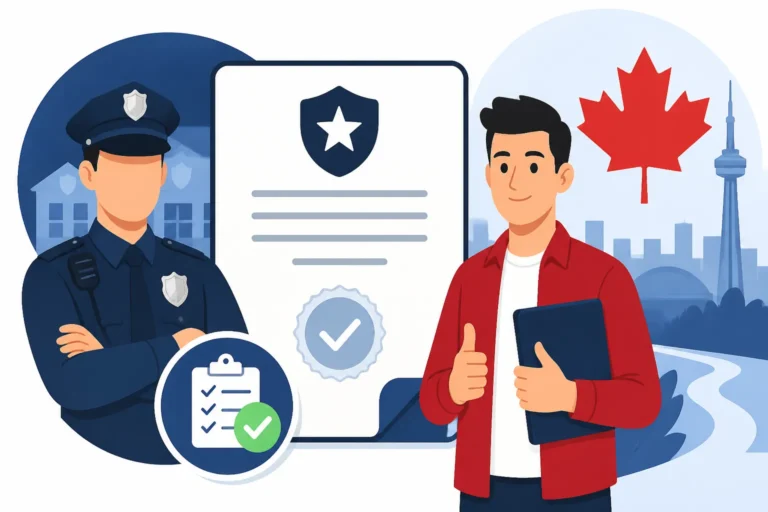
Police certificates are another critical component, required from every country or territory where you've lived for six months or more since the age of 18. This includes your home country, any countries where you studied or worked, and of course, Canada (though the Canadian one is usually obtained by IRCC directly once you submit). The process for obtaining these varies greatly by country and can sometimes take a long time, so it's wise to start this process even before you get an ITA.
Finally, you and all accompanying family members will need to undergo a medical examination by a panel physician approved by Immigration, Refugees and Citizenship Canada (IRCC). This is a standard health check to ensure you don't pose a public health risk or place excessive demand on Canada's health services. You can only get this done by an IRCC-approved doctor, and they will submit the results directly to IRCC. For a full breakdown of requirements, checking out How to Get Your Documents Ready for an IRCC Application and Understanding Medical Exams and Police Certificates for Canadian Immigration will be incredibly helpful.
Once all documents are gathered and meticulously organized, you'll upload them to the IRCC online portal. Double-check everything for accuracy and completeness. One small error or missing document can lead to delays or even a refusal. Then, you pay the processing fees and hit "submit." It's a moment of both relief and nervous anticipation!
Navigating Processing Times and Maintaining Status
After submitting your application, you enter the waiting game. Processing times can vary significantly based on the program, the volume of applications, and your country of origin. IRCC provides estimated processing times on its website, but these are just estimates. It’s common for the actual process to take longer than initially stated.
During this waiting period, maintaining your legal status in Canada is absolutely critical. If your work permit is set to expire while your permanent residence application is still being processed, you can apply for an extension or a new work permit. If you apply for a new work permit before your current one expires, you may be eligible for "implied status" (also known as "maintained status"). This means you can continue to work under the same conditions as your expiring permit until a decision is made on your new work permit application. However, if your permanent residence application is paused or refused, your implied status would eventually end. It's a complex area, so ensure you understand your options and timelines.
If you had a closed work permit and are applying for PR, you might want to look into an open work permit for PR applicants (sometimes called a Bridging Open Work Permit or BOWP) if you meet the specific criteria. This type of permit offers much-needed flexibility during the long wait for your PR decision. It allows you to change employers or roles without affecting your immigration application. The aim is to ensure you remain legally working and living in Canada throughout the entire PR process, which can sometimes stretch for a year or more. This is also a good time to remember that your How Your Immigration Status Affects Health Coverage in Canada might be impacted during transition periods, so ensure you have adequate private coverage like that offered by Cigna Global if there are gaps in provincial coverage.
Life After Approval: What to Expect as a New Permanent Resident
The day you get that "Permanent Residence Granted" notification in your IRCC account is simply unforgettable. It's the culmination of hard work, patience, and often, a bit of stress. But what happens next?
Receiving Your PR Confirmation and Landing in Canada
When your permanent residence application is approved, you'll receive a Confirmation of Permanent Residence (COPR) document. This is your official confirmation that you've been approved. It will include important details about you and your family members who are also becoming permanent residents.
For those already in Canada, the next step is often referred to as "landing" or "completing your landing." In many cases, this is now a straightforward process that can be done online through a Permanent Resident Portal. You'll confirm your address, upload a photo for your PR card, and electronically sign a declaration. Sometimes, IRCC might still require an in-person interview at a Canadian port of entry or an IRCC office, but the online process is becoming more common. During this "landing" process, an immigration officer will verify your identity, confirm that there have been no significant changes in your admissibility since your application was submitted (e.g., no new criminal convictions or serious health issues), and officially grant you permanent resident status. This is the moment you officially become a permanent resident of Canada.
If you are outside Canada when your PR is approved, you will receive instructions on how to travel to Canada and complete your landing at a port of entry. You'll present your COPR and passport to a Border Services Officer who will then formalize your status. It’s important to travel before your COPR expires. For newcomers moving to Canada, planning the physical move can be daunting. Companies like Sirelo specialize in helping expats with international removals, which can ease the stress of bringing all your belongings to your new permanent home.
The PR Card, Rights, Responsibilities, and Future Steps
Once you've officially landed, your journey as a permanent resident truly begins. One of the first things you'll want to get is your Permanent Resident Card, or PR card.
Your PR card is proof of your permanent resident status in Canada. It's essential for travel, as it's required if you want to re-enter Canada by commercial vehicle (plane, train, bus, boat). You'll typically receive your PR card by mail a few weeks after your landing process is complete. If you need to travel urgently before receiving it, you might need to apply for a Permanent Resident Travel Document (PRTD) from outside Canada to re-enter. Keep your COPR safe, as it serves as official proof of your status until your card arrives. You can learn more about Understanding Permanent Resident Status and the PR Card in Canada to ensure you're fully prepared.
As a permanent resident, you gain most of the same rights and responsibilities as Canadian citizens. You can live, work, and study anywhere in Canada. You're covered by provincial healthcare plans (though some provinces still have a waiting period for new residents). You're protected under Canadian law and the Canadian Charter of Rights and Freedoms. You can start a business, own property, and access social services.
However, there are a few key differences. You cannot vote or run for political office, and you cannot hold certain high-security jobs. You also have a residency obligation: you must be physically present in Canada for at least 730 days (two years) out of every five-year period to maintain your PR status. Failing to meet this can lead to the loss of your status.
The ultimate goal for many permanent residents is Canadian citizenship. After living in Canada for a certain number of years as a permanent resident and meeting other criteria, you can apply to become a Canadian citizen. This typically requires being physically present in Canada for at least 1,095 days (three years) during the five years immediately before applying, among other requirements like language proficiency and passing a citizenship test. It's the final step in truly making Canada your forever home. For those looking ahead, understanding Canadian Citizenship: How to Apply After Permanent Residence (2027) is the next big milestone.
Disclaimer
The information provided in this guide is intended for general informational purposes only and does not constitute legal advice. Immigration laws and policies in Canada are complex and subject to change without notice. While every effort has been made to ensure the accuracy and timeliness of the information, it should not be relied upon as a substitute for professional legal advice from a regulated Canadian immigration consultant or lawyer. Always consult with a qualified professional for advice tailored to your specific situation.