How Do I Get a Driver’s Licence in Canada?
Arriving in Canada often feels like a whirlwind of new experiences, and while public transit in major cities can be excellent, the reality is that a driver's licence is often a crucial piece of independence, especially if you plan to explore beyond the urban cores or live in smaller communities. The process, like many things for newcomers, can seem a bit opaque and fragmented, but don't fret! This guide is here to break down exactly how you can get your Canadian driver's licence, whether you're exchanging one from your home country or starting completely from scratch.
Understanding the Canadian Driver's Licence System
Before you even think about getting behind the wheel, it's vital to grasp that Canada's driver's licence system isn't a single, unified entity. Each province and territory manages its own rules, regulations, and licensing bodies. This means what applies in Ontario might be different in British Columbia or Quebec. This decentralization is often a source of initial confusion for many expats, so let’s unpack it.
Provincial Variations: A Confusing Landscape
While the overarching goal of road safety is the same across the country, the paths to achieving a driver's licence vary significantly. For instance, Ontario's system is overseen by the Ministry of Transportation (MTO), British Columbia has ICBC (Insurance Corporation of British Columbia), and Quebec operates through the SAAQ (Société de l'assurance automobile du Québec). Each of these bodies has unique requirements for knowledge tests, road tests, and even the types of documents they accept.
These provincial differences extend to things like graduated licensing programs (GLP), which are designed to give new drivers progressively more experience under less restrictive conditions. Most provinces use a multi-stage system, often starting with a learner's permit (like Ontario's G1 or BC's Learner's Licence), moving to an intermediate stage with more privileges but still some restrictions (G2 in Ontario, Novice in BC), and finally to a full, unrestricted licence. The waiting periods between these stages can be substantial, often 8-12 months for each step, which can be frustrating if you’re eager to drive. It's truly a testament to Canadian patience!
Exchange vs. New Application: Your Starting Point
For newcomers, the very first step is figuring out if you can exchange your existing foreign driver's licence for a Canadian one, or if you’ll have to go through the full graduated licensing process. This largely depends on two factors: where your original licence was issued and how much driving experience you have.
Some countries have reciprocal agreements with Canadian provinces, meaning if you hold a full, valid licence from one of these recognized countries, you might be able to simply exchange it for a Canadian one after a vision test and possibly a written knowledge test. This is by far the easiest route, and it saves you from the lengthy waiting periods and multiple road tests of the GLP. However, even if your country has an agreement, you'll still need to provide an official translation of your foreign licence if it's not in English or French. Make sure these translations are certified, as not just any translation will do.
If your home country isn't on a recognized list, or if you don't have enough driving experience, you'll likely have to start from scratch, which means entering the graduated licensing program at the first stage. This can be a bit of a shock, especially if you've been driving for decades in your home country, but it’s a non-negotiable step to ensure you understand Canadian road laws and driving conditions. You’ll also want to understand the ins and outs of vehicle insurance once you do get your licence, as that’s a whole other ball game.
The Step-by-Step Process for Newcomers
Getting your driver's licence in Canada, whether by exchange or starting fresh, involves a series of specific steps. It’s a bureaucracy, yes, but a manageable one if you know what to expect.
Exchanging Your Foreign Licence: The "Easier" Path
Let's assume you're lucky enough to come from a country with a reciprocal agreement. This path, while simpler, still requires precision.
First, you'll need to confirm your eligibility. Each province has a list of countries whose licences are recognized. For example, Ontario recognizes licences from countries like the US, UK, Australia, Japan, and many European nations. You must hold a full driver's licence (not a provisional or learner's) from these countries.
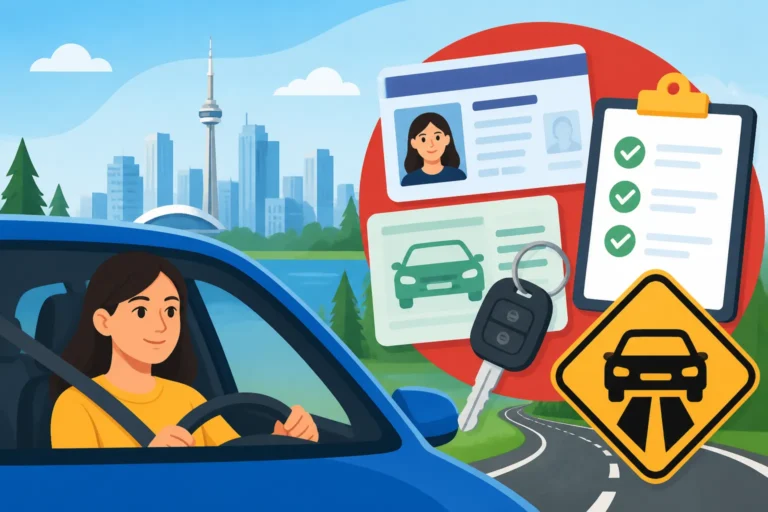
Next, gather your documents. This is where many newcomers hit a snag. You’ll absolutely need:
- Proof of identity: This could be your passport, Canadian permanent resident card, or work permit.
- Proof of Canadian residency: Utility bills, a bank statement, or a rental agreement often work.
- Your original, valid foreign driver's licence: It must not be expired.
- An official translation: If your licence isn't in English or French, you'll need a certified translation. Don't skip this; a simple notarized translation often isn't enough; it usually needs to be done by a provincially approved translator.
- Proof of driving history: This is crucial. If you want to bypass portions of the graduated licensing program, you need to prove at least two years of driving experience within the last three years. This usually comes in the form of a letter from your home country's licensing body or insurance company. This letter needs to be on official letterhead, stamped, and dated. For newcomers, securing this document before you even move to Canada is a huge time-saver.
Once you have everything, you'll typically visit a licensing office (e.g., ServiceOntario, ICBC Driver Licensing Office, SAAQ office). You'll undergo a vision test, and in some provinces, even for exchanges, you might need to pass a written knowledge test on Canadian road rules. While less common for direct exchanges, it’s always best to be prepared for this possibility.
If all goes well, you surrender your foreign licence and walk out with a temporary Canadian paper licence, with your plastic card arriving in the mail a few weeks later. This temporary licence is valid for driving immediately. Understanding the three-month waiting period for health coverage in Canada might feel like a hassle, but the driver's licence process, if you're exchanging, can actually be one of the faster administrative hurdles you clear.
Starting Fresh: Graduated Licensing Program (GLP)
If your foreign licence isn't exchangeable, or you don't have enough verifiable driving experience, you'll enter the GLP. This is a multi-stage process designed to ensure new drivers gain experience safely. Let's look at a common example, like Ontario's system.
- G1 (Learner's Permit): This is the first step. You'll need to be at least 16, pass a written knowledge test (on road rules and signs), and a vision test. With a G1, you can drive only when accompanied by a fully licensed driver (with at least four years of experience and a clean record) in the front passenger seat. There are also restrictions on driving on certain high-speed roads and during specific hours. The minimum waiting period for the next stage is typically 12 months, or 8 months if you complete an approved driver education course.
- G2 (Intermediate Licence): After meeting the waiting period and passing a basic road test (G2 road test), you get your G2. This grants you more independence – you can drive without an accompanying driver, on all roads, and at any time (with some minor restrictions on passengers if you’re under a certain age or driving late at night). The minimum waiting period for the full G licence is usually another 12 months.
- G (Full Licence): This is the final stage. You'll need to pass a more advanced road test (G road test), which assesses your driving skills in various conditions, including highway driving. Once you pass, you have a full, unrestricted driver's licence.
Each province has its own equivalent system – British Columbia has its Learner's (L), Novice (N), and Full stages, for example. The waiting periods and specific restrictions vary, so always check your target province's motor vehicle licensing body for the exact details. This is an excellent time to get a local SIM card or use an eSIM service like Airalo, so you can easily access these government websites on the go and check details while you're out and about.
Gathering Your Documents: The Bureaucratic Gauntlet
Regardless of whether you're exchanging or starting fresh, proper documentation is paramount. Canadian bureaucracy can be quite particular, and missing one piece of paper can send you home to start over.
Beyond the specific documents for licence exchange or proof of age/residency mentioned above, be prepared with:
- Originals, not copies: Always bring the original documents. Photocopies are generally not accepted unless specifically requested and certified.
- Multiple proofs of residency: Sometimes one isn't enough. Having a bank statement and a utility bill can save you a second trip.
- Immigration documents: Your permanent resident card, work permit, or study permit is essential to prove your legal status in Canada. Without it, you won't get a licence. Your immigration status affects health coverage in Canada, and it certainly affects your ability to get a driver's licence.
- Social Insurance Number (SIN): While not always required for the licence itself, it's often requested for general identification purposes or if there's any financial aspect involved. Remember, you'll need to apply for a SIN in Canada early in your settlement process.
It might feel like a lot, but meticulously preparing your documents beforehand will save you immense frustration and wasted time.
Navigating Road Tests and Learning Canadian Rules
Passing your road test in Canada is more than just knowing how to drive; it's about understanding and demonstrating adherence to Canadian specific road rules and expectations. Even seasoned drivers from abroad can struggle if they don't prepare properly.
Preparing for Your Knowledge and Road Tests
For the knowledge test, whether it’s for a G1/L licence or potentially for an exchange, your provincial driver’s handbook is your bible. Seriously, read it cover to cover, then read it again. Most provinces offer online practice tests, which are invaluable for getting a feel for the types of questions asked. Don't rely solely on your past driving knowledge; Canadian road signs and rules have nuances you might not expect.
When it comes to the road test, this is where professional instruction can make all the difference. Even if you're an experienced driver, hiring a driving instructor for a few lessons can be a game-changer. They can specifically teach you the Canadian way of doing things, correct any bad habits you might have picked up, and prepare you for what examiners look for. They’ll also teach you skills like four-way stops, parallel parking (which is often a mandatory component), and lane changes, all executed to Canadian standards. Remember, the goal isn't just to pass; it's to drive safely and confidently on Canadian roads. You can find many reputable driving schools in major cities across Canada that specialize in helping newcomers.
Unique Canadian Road Rules and Winter Driving
Beyond the basics, there are some unique aspects of Canadian driving that you absolutely must understand.
- Right Turn on Red: In most of Canada (with the exception of some areas in Quebec, particularly Montreal), you can turn right on a red light after coming to a complete stop, unless a sign explicitly prohibits it. This isn't universal globally, so pay attention.
- School Zones and Crosswalks: Speed limits in school zones are strictly enforced, especially during school hours. Pedestrian crosswalks often give pedestrians absolute right-of-way, and failing to stop can lead to hefty fines and demerit points.
- Winter Driving: If you’re moving to any part of Canada that experiences winter, this isn’t just a "tip"—it’s a survival skill. You must learn how to drive in snow and ice. This includes understanding the necessity of winter tires (mandatory in Quebec, highly recommended everywhere else), how to brake on slippery surfaces, maintaining safe following distances, and being aware of black ice. No amount of prior driving experience will fully prepare you for a Canadian winter without specific training or experience. You'll likely need to purchase winter tires for your car.
- Yielding and Merging: Understanding when to yield to oncoming traffic, especially at unprotected left turns, and how to safely merge onto highways, is critical.
- Emergency Vehicles: You must pull over to the right side of the road and stop when an emergency vehicle with flashing lights or sirens approaches.
A good driving school will cover these topics extensively. Take them seriously – they are for your safety and the safety of others.
What to Expect on Test Day
On the day of your road test, ensure you bring the correct documents: your learner's permit, identification, and the necessary fees. Your vehicle must be in good working order, with working lights, signals, brakes, and proper tires. The examiner will do a quick check of your vehicle before you even start.
During the test, remain calm, check your mirrors constantly, and exaggerate your head movements when checking blind spots (called "head checks") so the examiner can clearly see you're doing them. Follow all instructions precisely, and if you're unsure, don't hesitate to ask for clarification. Common reasons for failing include speeding, not checking blind spots, improper lane changes, and unsafe turns. A major part of the test is demonstrating that you are a predictable and safe driver who understands and follows the rules of the road, not just how to manipulate the vehicle.
Important Considerations After Getting Your Licence
Congratulations, you've got your Canadian driver's licence! But the journey isn't over yet. There are a few more critical steps and considerations to ensure you're driving legally and safely.
Vehicle Insurance: A Must-Have, Not a Luxury
This is often one of the biggest shocks for newcomers. Car insurance in Canada is mandatory, expensive, and can be particularly high for new drivers or those with no prior Canadian driving history, even if you’ve been driving for decades elsewhere. Each province has its own system; for example, British Columbia has public auto insurance through ICBC, while Ontario relies on a competitive private insurance market.
Your driving history from your home country can sometimes help reduce your premiums, but you’ll need official, translated proof from your previous insurers. Even then, many Canadian insurers will still consider you a higher risk without Canadian driving experience. This is one of the reasons why the overall cost of living in Canada for newcomers can be higher than expected. It’s absolutely vital to shop around. Don't just go with the first quote. Reach out to multiple insurance brokers and companies to compare rates. Desjardins, Aviva, Intact, and TD Insurance are some of the larger players you might encounter. They all have different algorithms for assessing risk and offering premiums, so take your time to find the best fit.
Registering and Plating Your Vehicle: The Other Half of Driving Legally
Once you have your licence and insurance, the next step is to register your vehicle and get licence plates. If you're buying a car, this process usually happens shortly after the purchase. You'll need proof of ownership (bill of sale), proof of insurance, and your driver's licence. The vehicle will also need to pass a safety inspection to be registered.
If you're importing a vehicle from your home country, the process is significantly more complex, involving customs, federal import regulations, and provincial inspections. For many newcomers, especially if you're just getting settled in your first 90 days, it's often easier and more practical to sell your old vehicle and buy a Canadian-compliant one here. If you are planning a big move and thinking of bringing a lot of items, services like Sirelo can help with the logistics of moving your possessions, but they generally don't handle vehicle import specifics.
You'll get a vehicle permit (sometimes called a "green slip" in Ontario) and licence plates. Keep your vehicle permit and proof of insurance in your car at all times. They are legally required, and police can ask to see them. This process is distinct from getting your driver's licence but equally important for driving legally.
Staying Connected on the Road
Having a reliable mobile phone and data plan isn't just for emergencies; it's practically essential for modern driving. GPS navigation apps like Google Maps or Waze are invaluable, especially when you're still learning Canadian routes and road layouts. Furthermore, some provinces are moving towards digital proof of insurance, which would require a functional phone to display.
Before you even get your Canadian phone plan sorted, remember that an eSIM service like Airalo can provide immediate data connectivity as soon as you land, allowing you to navigate public transit, search for driving schools, or even coordinate with family and friends. This can be a real lifesaver when you're fresh off the plane and trying to get your bearings.
Here’s a quick overview of some provincial driver’s licence requirements for exchanging a foreign licence (always verify current regulations for your specific province):
| Province/Territory | Recognized Countries for Exchange | Typical Documents Required | Grace Period (after arrival) | Written Test Required? | Road Test Required? |
|---|---|---|---|---|---|
| Ontario | US, UK, Australia, France, Germany, Japan, South Korea, etc. | Original foreign licence, proof of experience, ID, residency | 60 days | Sometimes | Sometimes |
| British Columbia | US, Australia, Austria, France, Germany, Japan, UK, etc. | Original foreign licence, driving history, ID, residency | 90 days | Yes (usually) | Sometimes |
| Quebec | US, France, Germany, Japan, UK, Belgium, etc. | Original foreign licence, driving record, ID, residency | 6 months | Yes (usually) | Yes (usually) |
| Alberta | US, Australia, Austria, Belgium, France, Germany, Japan, etc. | Original foreign licence, driving abstract, ID, residency | 90 days | No | No |
| Nova Scotia | US, Australia, Austria, Germany, UK, etc. | Original foreign licence, driving abstract, ID, residency | 90 days | No | No |
Note: This table provides a general overview. Specific requirements can change, and exceptions may apply. Always consult the official provincial motor vehicle authority website for the most up-to-date information.
Getting your driver's licence in Canada is a significant step towards integration and independence. While the process can seem daunting with its provincial variations and bureaucratic hurdles, remember that millions of newcomers have successfully navigated it. With careful preparation, patience, and a willingness to learn the Canadian way of the road, you’ll be driving confidently in no time!
Disclaimer
The information provided in this guide is intended for general informational purposes only and does not constitute legal or professional advice. Driving licence requirements, processes, and associated costs are subject to change and vary by province and territory in Canada. Newcomers are strongly advised to consult the official websites of the relevant provincial or territorial motor vehicle licensing bodies (e.g., MTO in Ontario, SAAQ in Quebec, ICBC in British Columbia) or to seek advice from qualified professionals for the most current and accurate information pertaining to their specific situation.