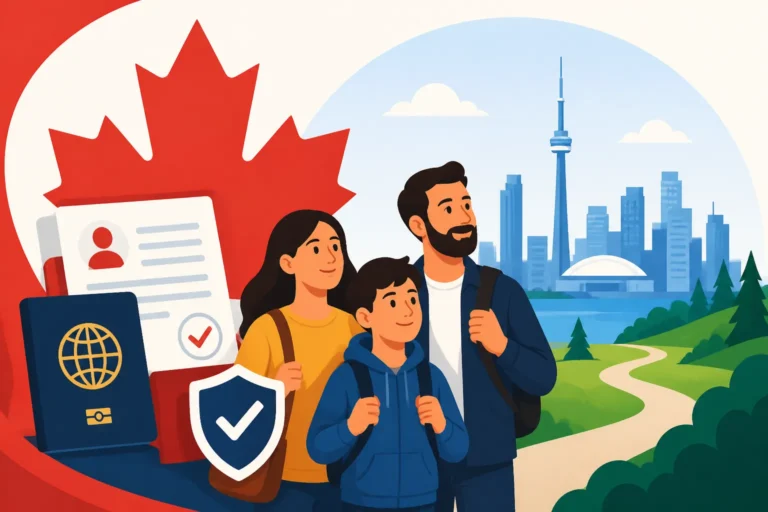
What Documents Are Needed for Spousal Sponsorship in Canada?
Ah, the joys and bewildering intricacies of Canadian immigration! If you’re like most expats, the thought of sponsoring your loved one to join you here in Canada is both incredibly exciting and, let’s be honest, a little bit terrifying when you look at the sheer mountain of paperwork involved. You dream of building your life together, but the reality of gathering documents can feel like navigating a maze blindfolded. Trust me, I’ve been there – the late nights spent cross-referencing checklists, the sudden panic over a missing signature. This guide is here to cut through that fog, giving you a clear, empathetic breakdown of exactly what documents you’ll need for spousal sponsorship in Canada, helping you reunite with your partner sooner rather than later.
Understanding the Landscape of Spousal Sponsorship in Canada
Before we dive into the nitty-gritty of individual documents, it’s crucial to understand the two main streams of spousal sponsorship: Inland and Outland. This choice impacts certain aspects of your application and, importantly, your partner’s ability to work or study in Canada while their application is being processed. It can feel like a big decision right at the start, but knowing the difference will help you prepare more effectively.
Inland vs. Outland Sponsorship: Which Path Is Right for You?
Choosing between inland and outland sponsorship is one of the first big decisions you and your partner will make. Both pathways lead to the same goal: permanent residency for your spouse, but they have distinct differences in how they're processed and what they allow during processing.
Outland Sponsorship is typically used when the sponsored spouse (your partner) lives outside of Canada, or if they are in Canada but prefer to have the option to leave and re-enter the country during the processing period. With an outland application, the primary processing office is usually outside Canada, often in your partner's home country or a regional visa office. The biggest advantage here is flexibility; your partner is not constrained by Canada's borders while waiting. However, if they want to visit you in Canada during this time, they'll need a valid visitor visa or an eTA, and there’s always a risk, albeit small, that a border agent might question their intent if they have a pending PR application. Processing times for outland can sometimes be faster depending on the visa office, but that’s not a guarantee. This route is often less stressful for those who need to maintain ties or jobs outside Canada during the waiting period. If your partner is living abroad, you'll definitely want to explore Understanding How to Immigrate to Canada from Abroad (2027) for broader context.
Inland Sponsorship is for partners who are already living with you in Canada. For this stream, your partner must have valid temporary resident status (as a visitor, worker, or student) in Canada throughout the application process. A significant benefit of inland sponsorship is the possibility for your partner to apply for an open work permit while their application is being processed, allowing them to work for any employer in Canada. This can be a huge relief, both financially and for their sense of independence. However, the downside is that if your partner leaves Canada while their inland application is still being processed, and is subsequently denied re-entry, their sponsorship application might be cancelled. This risk means many couples using the inland route choose not to travel outside Canada until permanent residency is granted. The processing times for inland applications can sometimes be longer than outland, but the ability to work and stay together in Canada makes it a popular choice for many. For a deeper dive into the overall process, check out our guide on How to Sponsor Your Spouse or Partner for PR in Canada.
Gathering Your Documents: The Sponsor's Checklist (That's You!)
As the sponsor, you are making a legal commitment to support your partner financially for a period of three years. This means the Canadian government wants to be absolutely sure you are eligible and capable of fulfilling this responsibility. They’ll be scrutinizing your identity, your Canadian status, and your financial standing. This isn't about judging your personal worth, but ensuring the system works as intended.
Proof of Your Canadian Status and Identity
First things first, you need to prove who you are and that you’re legally allowed to sponsor someone. This seems straightforward, but missing a detail here can cause frustrating delays.
- Proof of Canadian Citizenship or Permanent Residency:
- If you're a Canadian Citizen: A copy of your Canadian birth certificate, Canadian citizenship certificate (both sides), or your Canadian passport. Make sure these are clear and legible.
- If you're a Permanent Resident: A copy of your Permanent Resident (PR) card (both sides) or your Confirmation of Permanent Residence (COPR) document. It's crucial that your PR card is valid. If it's expired or close to expiring, you might want to look into How Do I Renew My PR Card in Canada? to avoid issues.
- Other Identification Documents: You’ll need copies of other identification to support your application, such as your driver's license or other government-issued ID.
- Photos: Two recent passport-style photos meeting IRCC specifications. These are very particular about size, background, and head positioning, so don't just grab a selfie! Go to a professional photographer who knows Canadian immigration photo requirements.
Demonstrating Financial Capacity and Residency
While spousal sponsorship doesn't have an income requirement like some other immigration programs (like Express Entry), you still need to prove you are living in Canada and can support your partner. This is a crucial part of your undertaking.
- Proof of Canadian Residency:
- Option C Printout or Notice of Assessment (NOA) from the Canada Revenue Agency (CRA) for the most recent tax year. This demonstrates you are filing taxes as a resident in Canada. If you're a newcomer, figuring out the Canadian tax system can be a steep learning curve, so check out The Complete Guide to Taxes in Canada for Newcomers (2027).
- Employment letters, pay stubs, bank statements showing Canadian transactions, utility bills in your name, lease agreements, or property deeds. These collectively paint a picture of your life and financial activity in Canada.
- Proof of Funds (Not always required, but helpful):
- While there isn't a strict Low Income Cut-Off (LICO) for spousal sponsorship, providing bank statements or employment letters showing stable income can strengthen your application by demonstrating your ability to support your partner without resorting to social assistance. It adds a layer of reassurance to IRCC that you are indeed capable of fulfilling your commitment.
- Social Insurance Number (SIN): You'll need to provide your SIN as part of the application. If you haven't applied for one yet, or need a refresher, our guide on How to Apply for a Social Insurance Number (SIN) in Canada is a great resource.
Gathering Your Documents: The Sponsored Person's Checklist (Your Partner!)
Now, let's switch gears to the documents your partner needs. These documents verify their identity, eligibility, and ensure they meet Canada's health and security requirements. Again, attention to detail here is paramount.
Identity and Civil Status Verification
These documents are the foundation of your partner's identity and their legal status to be sponsored.
- Identity Documents:
- Passport: A copy of their valid passport, including all pages with stamps, visas, or markings. This is fundamental. Ensure it is not nearing expiry.
- Birth Certificate: A copy of their original birth certificate. If it's not in English or French, you'll need a certified translation.
- National Identity Documents: Copies of any national identity cards issued by their home country.
- Proof of Relationship to Sponsor:
- Marriage Certificate: If you are married, a copy of your official marriage certificate. This is critical for married couples.
- Common-Law Relationship Proof: If you are common-law partners, you'll need extensive proof of your cohabitation for at least one year. This includes joint bank accounts, utility bills addressed to both of you at the same address, rental agreements or property deeds in both names, and official documents showing the same address (e.g., driver's licenses).
- Proof of Conjugal Relationship: This category is for exceptional circumstances where marriage or common-law is not possible due to legal barriers, but the relationship is genuine and marriage-like. This is complex and requires significant documentation of the genuine nature and challenges of the relationship.
- Photos: Two recent passport-style photos meeting IRCC specifications, just like the sponsor’s photos.
Health, Security, and Background Checks
Canada is a safe country, and part of maintaining that safety and its robust healthcare system involves thorough checks on all immigrants.
- Police Certificates: Your partner will need to obtain police certificates from every country or territory where they have lived for six months or more in a row since turning 18. This can be one of the trickiest parts, as requirements vary wildly by country. Start this early! For more details, consult Understanding Medical Exams and Police Certificates for Canadian Immigration.
- Medical Examination: Your partner will be required to undergo a medical examination by an IRCC-approved panel physician. This is a non-negotiable part of the process, ensuring they don't pose a public health risk or place excessive demand on Canada's health services. The panel physician will submit the results directly to IRCC. Remember that the cost for this exam is generally out-of-pocket. If you're looking for ways to cover this or other medical needs during the waiting period, private health insurance from providers like Cigna Global could be a helpful option, offering peace of mind.
The Heart of Your Application: Proving a Genuine Relationship
This is arguably the most critical part of your spousal sponsorship application. IRCC wants to ensure your relationship is genuine and not simply entered into for immigration purposes. They are looking for concrete evidence that you and your partner have built a life together, or are actively building one. This is where your story, backed by solid proof, truly shines.
Types of Evidence to Showcase Your Connection
It’s about showing, not just telling, your love story and commitment. Think of it as painting a picture for the immigration officer.
- Communication Records:
- Text messages, emails, chat logs: Screenshots of your conversations, highlighting the frequency and intimacy of your communication over time. Don't just send thousands of messages; curate the ones that show daily life, emotional support, and future planning.
- Call records/phone bills: Evidence of long-distance calls.
- Social media interactions: Screenshots of comments, tags, and shared posts that demonstrate public recognition of your relationship.
- Photographs and Videos:
- Photos of you together: Include pictures from various occasions, over time, with friends and family. Show your life together – holidays, celebrations, everyday moments. Label them with dates and locations.
- Wedding photos (if applicable): A selection of photos from your marriage ceremony and celebrations.
- Video clips: Short videos that show you interacting naturally.
- Travel Documents:
- Flight tickets, boarding passes, visa stamps: Proof of visits you’ve made to each other's countries. This is incredibly important for long-distance relationships.
- Hotel bookings, itineraries: Documentation of trips you’ve taken together.
- Joint Financial and Legal Documents (if applicable):
- Joint bank accounts: Statements showing regular transactions.
- Joint credit cards: If you share one.
- Joint rental agreements or property ownership: Demonstrating you share a home.
- Joint utility bills: Gas, electricity, internet bills in both names.
- Joint insurance policies: Life insurance, health insurance, etc., where one partner is the beneficiary of the other. For instance, if you've already considered supplementary coverage from someone like Cigna Global, and listed your partner as a beneficiary, that counts!
- Wills or powers of attorney: Documents where you have named each other.
- Letters of Support:
- Letters from friends and family: These should be from people who genuinely know your relationship, detailing how long they’ve known you as a couple, and their observations about your genuine bond. They should be signed and dated with contact information.
- Statements from the sponsor and sponsored person: Write detailed personal statements (often called IMM 5532 and IMM 5533) describing your relationship's history, how you met, key milestones, challenges, and your plans for the future together. Be honest, heartfelt, and specific.
Common Pitfalls and How to Avoid Them
The most common reason for sponsorship refusal is IRCC not being convinced the relationship is genuine. They are looking for inconsistencies or a lack of sufficient proof.
- Insufficient Proof: Don't be shy about providing evidence. More is generally better, as long as it's relevant and organized. Compile a robust package of documents.
- Inconsistencies: Ensure your story and the documents align. For example, if you say you met in 2020 but your photos start in 2023, be prepared to explain the gap.
- Missing Translations: Any document not in English or French must be accompanied by a certified translation and an affidavit from the translator. This is non-negotiable and a common oversight.
- Expired Documents: Double-check all passports, visas, and ID cards to ensure they are valid for the entire processing period or at the time of submission.
- Unclear Copies: Make sure all scanned or photocopied documents are perfectly legible. Poor quality copies can lead to requests for further information and delays.
- Not Addressing Previous Relationships: If either of you has been previously married or in a common-law relationship, you must provide proof of divorce or separation (e.g., divorce certificate, death certificate of former spouse). This is absolutely critical.
- Not Organizing Your Application: A well-organized application makes an immigration officer's job easier and reduces the chances of misinterpretations or overlooked documents. Use dividers, labels, and follow IRCC's document checklist precisely. This is where services like Sirelo for moving logistics and planning can't help directly, but the mindset of meticulous organization they champion for relocation applies perfectly to immigration documents.
Remember, this entire process is a marathon, not a sprint. It takes patience, persistence, and a whole lot of love. Our comprehensive guide on Family Sponsorship in Canada: Spouse, Children and Parents Explained (2027) offers broader insights into family-class sponsorships. For managing the overall process and ensuring you have everything in order, consider looking at How to Get Your Documents Ready for an IRCC Application to streamline your efforts. And if you're wondering about the big picture, The Complete Guide to Canadian Visas and Immigration for Newcomers (2027) provides even more context.
Here’s a quick summary table of the core document categories:
| Document Category | Sponsor (You!) | Sponsored Person (Your Partner!) | Notes |
|---|---|---|---|
| Proof of Status | Canadian Passport, Birth Cert, Citizenship Cert, PR Card/COPR | Valid Passport | Must be clear copies, valid, and for all countries lived in (for police certs). |
| Civil Status | N/A | Birth Certificate, National IDs | Certified translations required if not English/French. |
| Relationship Proof | N/A | Marriage Certificate (if married), Extensive Common-Law Proof, Relationship statements | This is your story! Photos, communication, joint documents, statements from friends/family are key. |
| Financial/Residency Proof | Option C Printout/NOA, employment letter, bank statements, utility bills, lease | N/A (unless joint with sponsor) | Demonstrates sponsor's ability to fulfill undertaking. While there's no strict income requirement, financial stability helps. |
| Health & Security | N/A | Police Certificates, Medical Exam Confirmation | Obtain police certs from all countries lived in since 18 for 6+ months. Medical exam results submitted directly by panel physician. Private insurance like Cigna Global can help cover costs. |
| Photos | Two passport-style photos | Two passport-style photos | Must meet IRCC specifications (size, background, head position). |
| Forms | Various IRCC forms (e.g., IMM 1344, IMM 5532) | Various IRCC forms (e.g., IMM 0008, IMM 5533) | Complete accurately, sign where required. Refer to official IRCC checklist. |
Ultimately, getting these documents ready is a testament to your commitment to each other. It’s a demanding process, but the outcome—building your life together in Canada—is absolutely worth every single piece of paper, every certified translation, and every anxious wait. You've got this!
Disclaimer
Please remember that I am an expat blogger, not an immigration lawyer or consultant. The information provided in this guide is for general informational purposes only and does not constitute legal advice. Immigration policies and requirements for Canada can change frequently. It is always recommended to consult the official Immigration, Refugees and Citizenship Canada (IRCC) website or a Regulated Canadian Immigration Consultant (RCIC) or lawyer for the most accurate, up-to-date, and personalized advice regarding your specific situation.