How Do I Get a Driver’s Licence with My Work Permit in Canada?
Oh, the Canadian driver's licence! If you're here on a work permit, trying to navigate the waters of getting your official papers in order, this one can feel like climbing Mount Everest after a transatlantic flight. Trust me, many of us have been there, juggling new jobs, finding a place to live, and then realizing we also need to figure out how to legally drive on these roads. It's not just about getting from A to B; it’s about establishing your independence and feeling truly settled. This comprehensive guide is going to walk you through the ins and outs of obtaining a driver's licence in Canada as a work permit holder, covering everything from provincial nuances to crucial documentation.
Understanding Your Eligibility and Initial Steps
First things first, let's talk about what makes you eligible and the initial hurdles you'll face. Canada’s a big country, and while some things are federally managed, driver's licensing falls squarely under provincial and territorial jurisdiction. This means what works in Ontario might be slightly different in British Columbia or Quebec. It’s not always a straightforward process, but armed with the right information, you can get there.
Provincial Differences: It's Not One-Size-Fits-All
This is perhaps the biggest "aha!" moment for many newcomers. Unlike some countries with a national driving authority, Canada delegates this responsibility to its provinces and territories. So, if you're working in Toronto, you'll be dealing with Ontario's Ministry of Transportation (MTO). If you're in Vancouver, it's ICBC (Insurance Corporation of British Columbia). In Alberta, it's through authorized registries, and in Quebec, it's the Société de l'assurance automobile du Québec (SAAQ).
Each province has its own set of rules regarding how long your foreign licence is valid, which countries' licences they recognize for direct exchange, and what steps you need to take. For example, Ontario has reciprocal agreements with several countries like the U.S., U.K., Australia, France, Germany, and others, allowing for a direct exchange of a full, valid driver's licence without needing to take written or road tests, provided you have sufficient driving experience. British Columbia, on the other hand, also has a list of recognized countries but might require a knowledge test even for an exchange if your experience is limited, and they have stricter rules about bringing proof of your driving history.
This means your first, crucial step is to identify the specific requirements for the province where you hold your work permit and reside. Don't assume. A quick search for "[Your Province] driver's licence for new residents" will be your best friend here. It’s a bit of an administrative dance, but knowing which dance floor you’re on makes all the difference. For a broader perspective on settling in, you might find it helpful to look into something like The Complete Guide to Moving to Canada: Your First 90 Days (2027) – it covers many of these initial challenges.
Essential Documents You'll Need to Gather
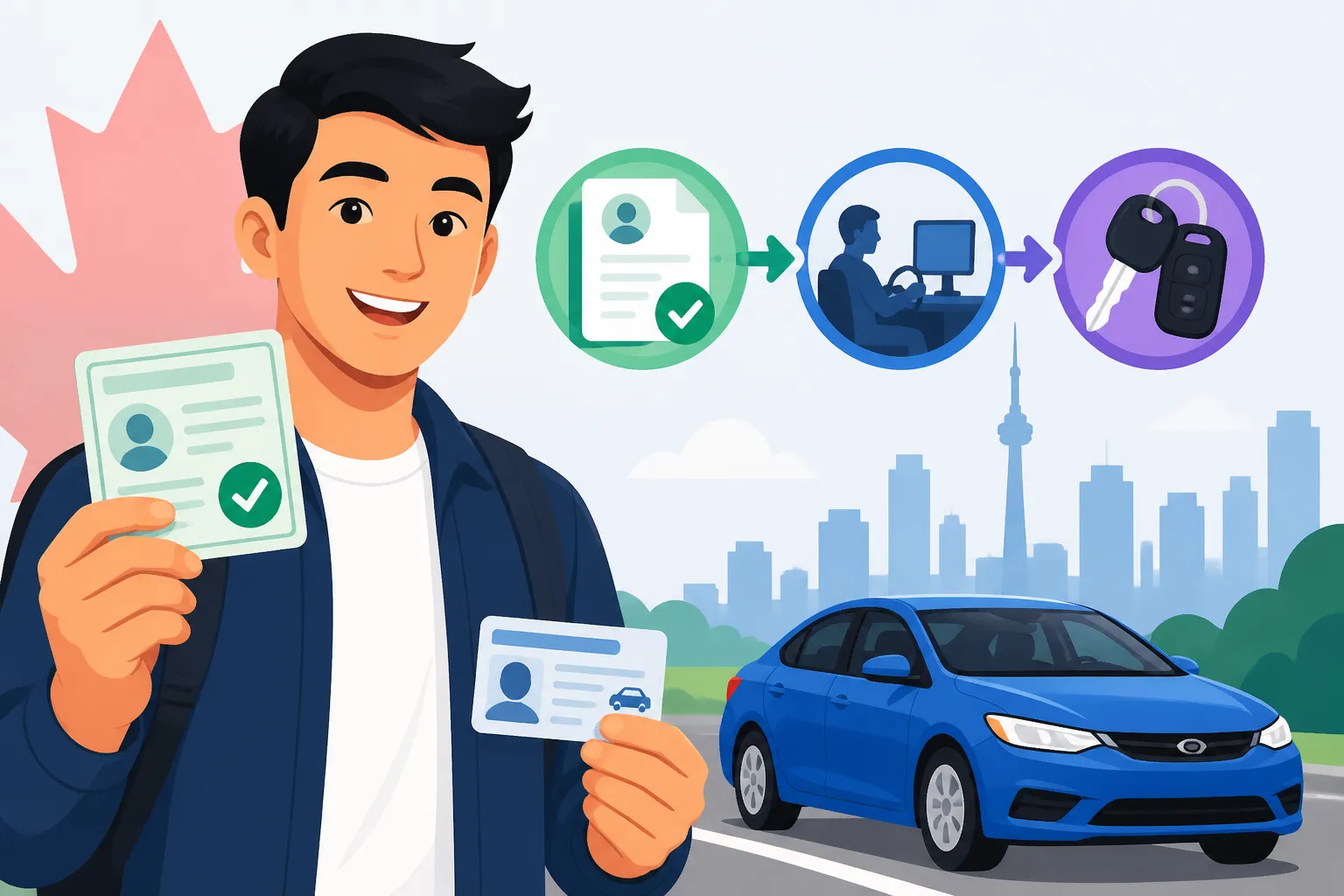
Regardless of your province, there's a common thread of documentation you'll need. This is where the paper chase begins, and believe me, it often feels like you need a document to get a document!
- Your Valid Work Permit: This is your golden ticket. It proves your legal status in Canada and that you're permitted to reside and work here. The expiry date on your work permit will often dictate the expiry date of your temporary Canadian driver's licence, even if your driving experience would qualify you for a full licence.
- Proof of Identity: Your passport is usually the primary document, but you might also need a secondary ID like a permanent resident card (if you've progressed to that stage) or a Canadian bank card with your signature.
- Proof of Residency: This can be tricky when you first arrive. They need to know you actually live in the province. Think utility bills (hydro, internet, gas), a signed rental agreement, or even a bank statement showing your local address. If you're still waiting for these to materialize, some provinces might accept a letter from your employer or even mail from an official institution like a bank. This is often where newcomers hit a snag, as setting up accounts and utilities can take time. For advice on these essential services, check out How to Set Up Utilities (Hydro, Gas, Internet) in Canada or Banking in Canada: A Complete Guide for Newcomers (2027).
- Your Foreign Driver's Licence: If you have one, bring it! It must be current and valid. If it's expired, it typically won't be accepted for an exchange.
- Proof of Driving History/Experience: This is incredibly important for determining if you can exchange your licence and what class of licence you’ll get. This usually means an official letter from the licensing authority in your home country, detailing the date you obtained your first licence, its expiry, and any demerit points or suspensions. This letter often needs to be recent (e.g., within 3-6 months).
- Official Translation (if needed): If your foreign licence or driving history document isn't in English or French (depending on the province), you’ll need an official translation from a certified translator. Do not try to translate it yourself; it won’t be accepted.
Always check the specific website for your provincial licensing body for the most up-to-date and complete list of acceptable documents. Over-preparing is always better than being turned away after a long wait. When you're managing all the paperwork for your move, a service like Sirelo can be really helpful for keeping things organized, especially when you're dealing with documents that need to travel with you or be specifically prepared for your new life in Canada.
The Process: Exchanging Your Foreign Licence or Starting Fresh
Once you have your ducks in a row with the paperwork, it’s time to understand the actual process. Depending on your home country's reciprocal agreements with your Canadian province and your driving experience, you’ll either be able to exchange your licence or you’ll need to start from scratch.
The Foreign Licence Exchange Advantage (If Applicable)
If you're lucky enough to hail from a country that has a reciprocal agreement with your Canadian province, you might be able to simply exchange your existing licence. This is the smoothest path and can save you a significant amount of time, money, and stress.
Here’s a general idea of how it works:
- Visit a Driver Examination Centre or Registry: You’ll need to physically go to the provincial licensing office. Expect lines, especially in major cities like Toronto or Vancouver.
- Present Your Documents: Hand over all your carefully gathered documents: work permit, passport, proof of residency, your foreign licence, and your official driving history letter. The staff will verify everything.
- Vision Test: Almost universally, you’ll need to pass a basic vision test. This usually involves reading a chart and demonstrating peripheral vision. If you wear glasses or contacts, make sure to bring them.
- Pay the Fees: There will be a fee for the exchange and for the new licence itself. These fees vary by province.
- Temporary Licence and Photo: If everything checks out, they'll issue you a temporary paper licence on the spot. You'll also get your photo taken for your permanent plastic card, which will be mailed to you later (usually within a few weeks).
The biggest "advantage" here is often the waiver of written knowledge tests and road tests. However, even with reciprocal agreements, the amount of verifiable driving experience you have will dictate the class of Canadian licence you receive. For instance, if you've only had your foreign licence for a year, you might be issued an equivalent of a G2 (intermediate) licence in Ontario, rather than a full G (unrestricted) licence, even if your home country's licence was considered "full." This is where that official driving history letter becomes paramount.
Starting the Graduated Licensing Program
For those whose foreign licence isn't recognized for direct exchange, or if you don't have enough verifiable driving experience, you'll need to enter Canada's graduated licensing program. This is the same system new teenage drivers go through and it’s designed to gradually introduce drivers to more complex driving situations as they gain experience.
Here’s a general overview of the stages, using Ontario’s system as a common example:
- Stage 1: Knowledge Test (G1/Learner's Permit): This is where everyone begins if they can't exchange. You'll study the provincial driver's handbook (available online and often in print at the centres) and take a written test on road rules and signs. Once you pass, you get a learner’s permit (G1 in Ontario, Class 7L in BC). This permit comes with significant restrictions, such as needing to drive with a fully licensed driver, zero alcohol/drug tolerance, and no driving on certain major highways.
- Stage 2: First Road Test (G2/Novice Licence): After a minimum waiting period (e.g., 12 months in Ontario, or 8 months if you take an approved driving course), you can take your first road test. This test assesses basic driving skills in less complex environments. Passing this moves you to an intermediate licence (G2 in Ontario, Class 7N in BC), which has fewer restrictions than the learner's permit but still some limitations (like passenger limits for young drivers, or curfews).
- Stage 3: Second Road Test (G/Full Licence): After another waiting period with your intermediate licence (e.g., 12 months with a G2 in Ontario), you can take a final, more comprehensive road test, often involving highway driving. Successfully passing this awards you a full, unrestricted driver’s licence (G in Ontario, Class 5 in BC/Alberta).
It's a lengthy process, often taking several years to complete the entire graduated system. This can be a real point of frustration for experienced drivers from non-reciprocal countries, but it’s the system Canada has in place for road safety. If you’re coming from a country with a different licensing structure, understanding How to Get Your Foreign Credentials Recognised in Canada in general can prepare you for these kinds of adjustments.
Common Challenges and Pro Tips for Work Permit Holders
Even with all the information, navigating the driver's licence process on a work permit can throw a few curveballs your way. From proving your address to understanding insurance, there are specific challenges unique to newcomers.
Proving Residency and Address
As I mentioned earlier, this is a common hurdle. When you first arrive, you might be staying in temporary accommodation, or your name might not yet be on utility bills. Canadian licensing authorities are strict about proving your current residential address within their province.
Pro Tips:
- Bank Statements: Once you've opened a bank account (which you should do immediately upon arrival—see Banking in Canada: A Complete Guide for Newcomers (2027)), your bank statements are excellent proof of address. Ensure they are mailed to your physical residence.
- Rental Agreement: If you have a formal lease, that's usually accepted.
- Employer Letter: Some provinces or individual service centres might accept a letter from your Canadian employer, on company letterhead, stating your full name and residential address. It’s always worth checking with the specific service centre first.
- Government Mail: Any official mail from a Canadian government agency (like your SIN letter, or a tax document) is typically strong proof.
- Mobile Phone Bill: A recent bill from a Canadian mobile provider often works too, as long as it's mailed to your address.
The key is to have at least two different pieces of documentation with your name and current residential address. This can take some strategic planning in your first few weeks.
Dealing with Licence Translations and International Driving Permits (IDP)
If your foreign licence isn't in English or French, you'll definitely need an official translation. Don't skimp on this; it must be done by a certified translator. The provincial licensing body will usually have a list of approved translators or agencies they work with. Getting this done beforehand can save you a trip.
An International Driving Permit (IDP) is another item many newcomers bring. While useful, it’s often misunderstood.
- It's NOT a Licence: An IDP is merely a translation of your home country's driver's licence. It's only valid when presented alongside your original, valid foreign driver's licence. It doesn't replace it.
- Temporary Solution: An IDP allows you to drive legally in Canada for a limited period, typically anywhere from 60 days to 3 months, depending on the province, from the date you enter Canada. It’s a temporary privilege, not a long-term solution.
- Get it BEFORE You Arrive: You must obtain an IDP from your home country before you travel to Canada. You cannot get one once you're already here.
Many work permit holders assume an IDP will cover them for the duration of their permit, but this is a dangerous misconception. Always clarify your province's specific rules regarding foreign licence validity and IDPs. Beyond the initial grace period, you must obtain a Canadian driver’s licence to continue driving legally.
Navigating Insurance and Vehicle Ownership
Once you have your shiny new Canadian driver's licence, your next major hurdle if you plan to drive your own car is vehicle insurance. This is a topic that often blindsides newcomers. Canada has some of the highest car insurance rates globally, and as a new driver (or new to the Canadian system), you’ll likely face significantly higher premiums.
- No Canadian Driving History = High Rates: Even if you've been driving for decades in your home country, insurance companies in Canada might treat you like a brand new driver if you can't provide verifiable proof of your driving history and claims-free record from an acceptable foreign insurer. This often means a letter from your previous insurance company, translated and detailing your history.
- Get Quotes Early: Start getting insurance quotes even before you buy a car. The cost can be a real shocker. Companies like Aviva, TD Insurance, and Intact Financial are major players, but there are many brokers who can shop around for you.
- Registering Your Vehicle: Once you buy a car, you'll need to register it in your name at the provincial vehicle registry, and you'll need valid insurance before you can get your licence plates. This process is usually straightforward once you have your driver's licence. More details can be found in guides like How to Buy a Car as a Newcomer in Canada and Understanding Vehicle Insurance and Registration by Province in Canada.
The interplay between your immigration status, driver's licence, and insurance is complex. Planning ahead and gathering all necessary documentation from your home country (driving history, insurance letters) will put you in a much stronger position. Think about securing your personal health needs too, with providers such as Cigna Global, which offers comprehensive expat health insurance plans that might offer peace of mind during your transition, even if separate from car insurance.
Here's a quick comparison of general driver's licence acquisition methods for work permit holders in a few key provinces:
| Feature/Province | Ontario (MTO) | British Columbia (ICBC) | Alberta (Registry Agent) | Quebec (SAAQ) |
|---|---|---|---|---|
| Foreign Licence Exchange | Yes, with recognized countries (e.g., US, UK, G7). Full exchange with 2+ years experience. | Yes, with recognized countries (e.g., US, UK, Australia). Road test may be required if less than 2 years. | Yes, with recognized countries (e.g., US, UK, Japan). Full exchange with 2+ years experience. | Yes, with recognized countries (e.g., France, Japan). Typically requires knowledge test. |
| Proof of Experience | Official letter from home licensing body. | Official letter from home licensing body or insurance. | Official letter from home licensing body. | Official letter from home licensing body. |
| Knowledge Test Required for Exchange | Generally no, if fully reciprocal. | Often yes, if less than 2 years of experience. | Generally no, if fully reciprocal. | Yes, often for recognized countries, always for others. |
| Road Test Required for Exchange | Generally no, if fully reciprocal with 2+ years experience. | Often yes, if less than 2 years of experience. | Generally no, if fully reciprocal with 2+ years experience. | No, if fully reciprocal and passed knowledge test. |
| Graduated Licensing | Yes (G1, G2, G). | Yes (Class 7L, Class 7N, Class 5). | Yes (Class 7, Class 5 GDL, Class 5 Full). | Yes (Learner's, Probationary, Full). |
| Initial Validity of Foreign Licence (with IDP) | 60 days | 90 days | Up to 1 year | 6 months |
| Key Documents | Work Permit, Passport, Proof of Residency, Foreign Licence, Driving History. | Work Permit, Passport, Proof of Residency, Foreign Licence, Driving History. | Work Permit, Passport, Proof of Residency, Foreign Licence, Driving History. | Work Permit, Passport, Proof of Residency, Foreign Licence, Driving History. |
This table provides a snapshot, but remember to verify details directly with the provincial authority that applies to you. The nuances can be significant, and rules can change. Getting your driver's licence is a critical step in feeling at home and mobile in Canada. It might seem daunting at first, but with careful preparation and persistence, you'll be navigating Canadian roads in no time! For more on your general status as a newcomer, you can also read articles like Understanding How to Immigrate to Canada from Abroad (2027) or The Complete Guide to Working in Canada as a Newcomer (2027).
Disclaimer
Please note that the information provided in this guide is for general informational purposes only and is subject to change. Driver's licence regulations and requirements are determined by individual provinces and territories in Canada and can be updated at any time. It is crucial to consult the official website of the specific provincial or territorial licensing authority where you reside for the most accurate and up-to-date information regarding eligibility, required documents, and application procedures. This article does not constitute legal or official advice.