Can I Get Canadian Citizenship Through Marriage?
Many newcomers arrive in Canada hoping that marrying a Canadian citizen will fast-track their path to citizenship. While marriage is absolutely a significant step and can be a fantastic way to build a life here, it's crucial to understand that it doesn't automatically grant you Canadian citizenship. The road to becoming a full-fledged Canadian citizen, even when married to one, involves several distinct stages and strict requirements. This guide will walk you through the realistic steps, common misconceptions, and detailed criteria you'll need to meet on your journey.
The Truth About Marriage and Canadian Citizenship
Let's cut right to the chase: marrying a Canadian citizen does not automatically make you a Canadian citizen. This is a common misconception, perhaps fueled by practices in other countries. Canada has a very specific, multi-stage process for anyone looking to become a citizen, and marriage simply helps you get your foot in the door to the first crucial stage: permanent residency.
Marriage vs. Sponsorship vs. Citizenship: Clarifying the Path
Think of it this way: your marriage to a Canadian citizen is the key that unlocks the first gate on your immigration journey. That gate leads to the process of becoming a Permanent Resident (PR) of Canada through spousal sponsorship. It is only after you have successfully become a Permanent Resident and met additional residency and other requirements that you can then apply for Canadian citizenship.
This distinction is vital. It means that simply tying the knot doesn't fast-track your citizenship application. Instead, it provides a well-defined pathway to gain permanent residency, which is a prerequisite for citizenship. Many people envision a direct line, but it’s more like a two-step program: first, attain PR status, and then, meet the requirements for citizenship. This journey takes time, patience, and meticulous adherence to Canadian immigration laws.
The Spousal Sponsorship Route to Permanent Residency
If you're married to a Canadian citizen (or a Permanent Resident), they can sponsor you to become a Permanent Resident yourself. This is known as "spousal sponsorship." The Canadian government, through Immigration, Refugees and Citizenship Canada (IRCC), offers a pathway for Canadian citizens and permanent residents to sponsor their spouses, common-law partners, or conjugal partners to live with them in Canada. The core principle here is that the relationship must be genuine and not entered into primarily for immigration purposes.
The sponsor must be at least 18 years old, be a Canadian citizen or permanent resident living in Canada (or intending to return to Canada once the sponsored person becomes a PR), and be able to support their sponsored spouse financially. This financial support ensures that the sponsored person will not need to rely on social assistance from the government. There are no minimum income requirements for spousal sponsorship, unlike some other family sponsorship categories, but the sponsor must demonstrate that they can meet the basic needs of their family.
You can apply for spousal sponsorship either from outside Canada (outland sponsorship) or from inside Canada (inland sponsorship). Outland applications are generally processed faster and allow the sponsored spouse to travel in and out of Canada while their application is being processed. Inland applications allow the sponsored spouse to apply for an open work permit, enabling them to work while waiting for a decision on their PR application, but they should generally remain in Canada. For a detailed breakdown of this process, you can refer to our guide on How to Sponsor Your Spouse or Partner for PR in Canada.
When you're preparing for this significant move, especially if you're coming from another country, don't forget the practicalities. Organizing your belongings and shipping them across borders can be a logistical challenge. Services like Sirelo can be incredibly helpful in finding reliable international moving companies to ease the burden of your relocation to Canada.
Eligibility Requirements for Canadian Citizenship
Once you've successfully navigated the spousal sponsorship process and landed as a Permanent Resident, you're on the path to citizenship. However, there are several key requirements you'll need to meet before you can even apply.
Becoming a Permanent Resident First
This is the non-negotiable first step. You cannot apply for Canadian citizenship directly from a temporary status (like a visitor, student, or work permit holder), even if you are married to a Canadian citizen. Your status must first be converted to that of a Permanent Resident. The spousal sponsorship application will lead to this. Once approved, you'll go through a "landing" process, after which you'll be officially a PR and will eventually receive your Permanent Resident Card. This card is your official proof of status and is essential for most government services and for proving your right to live in Canada. For more information on what this means, consider reading Understanding Permanent Resident Status and the PR Card in Canada.
As a new Permanent Resident, there might be a waiting period before you're fully eligible for provincial health coverage. During this transitional phase, especially if you have pre-existing conditions or simply want peace of mind, having private health insurance from a provider like Cigna Global can be a wise choice to ensure you're covered for unexpected medical needs.
Residency Requirements: Time is of the Essence
The most significant requirement for citizenship after becoming a PR is the physical presence test. To be eligible to apply for Canadian citizenship, you must have been physically present in Canada for at least 1,095 days (three years) during the five years immediately before the date you sign your application. This is a strict calculation, and IRCC uses a residency calculator tool to help applicants determine their eligibility.
Here's where it gets a little nuanced:
- Time as a Permanent Resident: Every day you spend physically in Canada as a Permanent Resident counts as one full day towards the 1,095-day requirement.
- Time as a Temporary Resident: If you spent time in Canada as a temporary resident (e.g., on a work permit, study permit, or visitor status) before becoming a Permanent Resident, a portion of that time can count. Specifically, each day you spent in Canada as a temporary resident or protected person counts as half a day, up to a maximum of 365 days of credit towards your 1,095-day requirement.
This means if you were in Canada for two years on a work permit before becoming a PR, you could potentially count one year (365 days) of that time towards your citizenship residency requirement. However, this credit still needs to be combined with sufficient time as a Permanent Resident to reach the total 1,095 days. You absolutely need to keep meticulous records of your travel history and days spent in Canada. Any mistakes in calculation can lead to significant delays or even refusal of your application. For an in-depth look at this, check out Understanding the Residency Requirement for Canadian Citizenship.
Language and Knowledge Tests
Unless you are under 18 or 55 years of age or older, you will need to prove your proficiency in one of Canada's official languages (English or French) and pass a citizenship test.
- Language Proficiency: You must demonstrate that you have adequate knowledge of English or French to understand and be understood in everyday conversations. This is typically assessed at a Canadian Language Benchmark (CLB) or Niveaux de compétence linguistique canadiens (NCLC) Level 4 or higher. Acceptable proof often includes official language test results from designated agencies (like IELTS or CELPIP for English, or TEF or TCF for French) or evidence of completing secondary or post-secondary education in English or French. The specific requirements can change, so always check the IRCC website for the latest acceptable forms of proof.
- Knowledge of Canada: You'll also need to pass a citizenship test that assesses your knowledge of Canada. This test covers a range of topics, including Canada's history, geography, economy, government, laws, and the rights and responsibilities of Canadian citizenship. The official study guide, "Discover Canada: The Rights and Responsibilities of Citizenship," is available from IRCC and is your go-to resource for preparing for this test. It's not a trivial test; you'll need to genuinely study and understand the material. For detailed information on the application process, including test preparation, refer to How to Apply for Canadian Citizenship by Grant.
Navigating the Application Process and Potential Hurdles
Applying for Canadian citizenship is a significant undertaking that requires careful attention to detail. Once you've met the PR and residency requirements, the application itself needs to be robust and accurate.
Gathering Your Documents and Application Tips
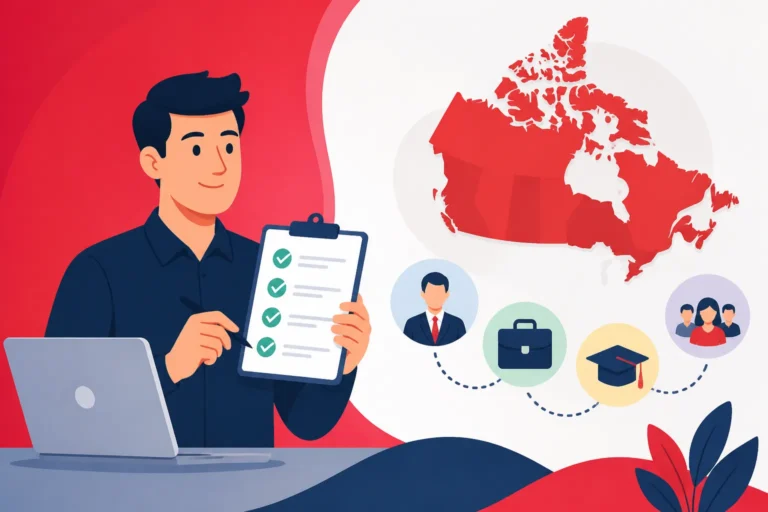
The citizenship application package is comprehensive, and gathering all the necessary documents can feel like a marathon. Beyond your Permanent Resident card and travel documents, you’ll typically need:
- Proof of physical presence: This often involves your passport stamps, travel history, and results from IRCC's online physical presence calculator.
- Language proficiency proof: As mentioned, official test results or educational transcripts.
- Tax filings: Evidence that you've filed your income taxes for at least three of the five years preceding your application.
- Identity documents: Birth certificate, driver's license, etc.
- Police certificates: Depending on your history and countries of residence.
The key to a smooth application is accuracy and completeness. Missing a single document or providing incorrect information can lead to significant delays, requests for further information, or even the outright refusal of your application. Always double-check every form and ensure all supporting documents are provided in the correct format. It's highly recommended to consult the official IRCC website directly for the most up-to-date checklist and instructions. If you're wondering about the specifics of document preparation for any IRCC application, our guide How to Get Your Documents Ready for an IRCC Application can be a valuable resource.
Dealing with Delays and Complexities
The reality of immigration processes in Canada, as in many countries, is that they can be lengthy. Processing times for citizenship applications vary and can be frustratingly long. Factors that can influence how long your application takes include:
- Volume of applications: High demand can naturally lead to longer wait times.
- Complexity of your case: If you have extensive travel history, criminal records (even minor ones), or gaps in your documentation, your application may require more scrutiny and thus more time.
- External factors: Global events or policy changes can impact processing capacities.
It's common for applicants to feel anxious during this waiting period. While it's tempting to constantly check in, remember that IRCC has online tools to check your application status. Frequent inquiries without significant reason can sometimes add to administrative burdens. The best approach is to submit a complete and accurate application from the start, then monitor your status periodically. Be prepared for potential interviews, requests for additional documents, or language/citizenship test scheduling. Understanding the general timelines and costs can help manage expectations; see Understanding the Cost and Timeline of the Immigration Process in Canada for more.
The Importance of a Genuine Relationship
While a genuine marriage doesn't directly grant citizenship, it's absolutely paramount for the initial spousal sponsorship application to gain Permanent Resident status. IRCC is vigilant in preventing "marriage fraud," where individuals enter into a marriage solely for immigration purposes. If IRCC determines your relationship is not genuine, your sponsorship application will be refused, halting your path to PR status and, consequently, citizenship.
To prove a genuine relationship, you'll need to provide substantial evidence. This could include:
- Joint financial documents: Bank accounts, credit cards, utility bills in both names.
- Shared living arrangements: Lease agreements, mortgage documents, property deeds, driver's licenses showing the same address.
- Photographs: Pictures of you together over time, with family and friends, at events, showing the progression of your relationship.
- Correspondence: Emails, texts, social media interactions that demonstrate ongoing communication.
- Testimonies: Letters from friends and family who can attest to the genuineness of your relationship.
The more comprehensive and varied your evidence, the stronger your case. Remember, it's not just about being legally married; it's about proving that you share a life and are genuinely committed to each other. For a detailed list of what IRCC looks for, our article What Documents Are Needed for Spousal Sponsorship in Canada? provides excellent guidance.
Life as a Canadian Citizen: Rights and Responsibilities
Once you've cleared all the hurdles and taken the Oath of Citizenship, you become a Canadian citizen. This is more than just a piece of paper; it comes with a host of new rights and responsibilities that fundamentally change your standing in Canada and on the global stage.
What Citizenship Means for You
Becoming a Canadian citizen brings with it a profound sense of belonging and a range of concrete benefits:
- Right to Vote and Run for Office: You gain the democratic right to cast your ballot in federal, provincial, and municipal elections, and the opportunity to stand for election yourself.
- Canadian Passport: You can apply for a Canadian passport, one of the most respected travel documents globally, allowing for visa-free travel to many countries and offering consular protection abroad.
- No Risk of Losing Status: Unlike Permanent Residents, who must meet residency obligations to maintain their PR status, Canadian citizens cannot lose their status unless it was obtained fraudulently or through renunciation. This provides unparalleled security and peace of mind.
- Access to All Canadian Opportunities: Full eligibility for certain jobs (especially in the federal public service or those requiring high-level security clearances) that might be restricted to citizens.
- Ease of Travel: Moving in and out of Canada becomes much simpler, without the need to show your PR card at entry or worry about maintaining residency days.
For many, achieving Canadian citizenship marks the culmination of a long journey, symbolizing full integration into Canadian society. It's a moment of immense pride and a gateway to fully participating in all aspects of Canadian life. You can explore the full scope of this achievement in Canadian Citizenship: How to Apply After Permanent Residence (2027).
Practical Considerations After Gaining Citizenship
Even after the big ceremony, there are a few practical steps and considerations for your new status:
- Applying for a Canadian Passport: This is often the first thing new citizens do. It’s an essential document for international travel and a proud symbol of your new nationality. You'll no longer need to travel with your former country's passport or worry about visa requirements for Canada.
- No More PR Card Renewals: You can say goodbye to the process of renewing your Permanent Resident card every five years. Your citizenship is for life.
- Updating Records: While not always strictly necessary, it's a good idea to update your status with any relevant institutions, such as your bank, employer, or provincial health services, though most major services already recognize you as a permanent resident.
- Embracing New Freedoms: The biggest change is often the sense of security and freedom. You can travel abroad for extended periods without concern for your immigration status. You can participate in political discourse, engage in community building, and truly feel at home in Canada without any lingering "immigrant" labels in the legal sense. This full integration is what many newcomers strive for, and it empowers you to contribute to Canada in a deeper way.
| Feature | Permanent Resident (PR) | Canadian Citizen |
|---|---|---|
| Right to Live | Indefinitely, subject to residency obligations | Indefinitely, without residency obligations |
| Right to Vote | No | Yes (Federal, Provincial, Municipal) |
| Passport | Passport of country of origin | Canadian Passport |
| Residency Loss | Possible if residency obligations not met | Only through renunciation or fraudulent acquisition |
| Government Jobs | Limited access to certain positions | Full access, including high-security roles |
| Deportation | Possible for serious criminal offenses | Not deportable (unless citizenship was fraudulently obtained) |
| Travel | Requires PR Card to re-enter Canada; visa-free travel based on country of origin passport | Canadian passport for easy re-entry and extensive visa-free travel |
Disclaimer
The information provided in this guide is intended for general informational purposes only and does not constitute legal advice. Immigration laws and regulations in Canada are complex and subject to change. While we strive to keep our content accurate and up-to-date, it's crucial to consult with an authorized immigration representative (such as an immigration lawyer or a Regulated Canadian Immigration Consultant) or directly with Immigration, Refugees and Citizenship Canada (IRCC) for advice tailored to your specific situation. Always refer to the official IRCC website for the most current forms, instructions, and policies.