What Documents Do I Need to Open a Bank Account in Canada?
One of the first, and often most baffling, tasks newcomers face in Canada is trying to open a simple bank account. It feels like you need a Canadian bank account to get a Canadian ID, but you need a Canadian ID to open a bank account – a truly frustrating chicken-and-egg situation! Don't worry, you're not alone in feeling this bureaucratic tangle. This comprehensive guide will walk you through exactly which documents Canadian banks typically require, how to prepare them, and what to do if you're missing some pieces of the puzzle, so you can get your finances sorted without a headache.
The Initial Hurdle: Why Banks Seem So Picky with Documents
When you first arrive, it can feel like Canadian financial institutions are deliberately trying to make your life harder with their endless requests for documentation. You might be thinking, "Don't they know I'm new here? How am I supposed to have all this stuff?" And honestly, it’s a completely valid frustration. Most other countries have a more straightforward process. However, there’s a method to the madness, even if it feels like a maze.
Canadian banks, much like financial institutions worldwide, operate under strict "Know Your Customer" (KYC) regulations. These rules are designed to prevent financial crimes like money laundering, terrorist financing, and identity theft. Essentially, the bank needs to be absolutely certain of who you are and that you’re not using their services for illicit activities. This means they need multiple, reliable pieces of identification and proof of your legal presence in Canada. Without these stringent checks, Canada's financial system would be vulnerable, and you wouldn't want your hard-earned money tied up in a compromised system anyway, right? So, while it’s a pain, understand it’s about security for everyone, including you. It also helps the banks adhere to reporting requirements set by the Financial Transactions and Reports Analysis Centre of Canada (FINTRAC), which is the national financial intelligence agency.
Essential Documents for Opening Your First Canadian Bank Account
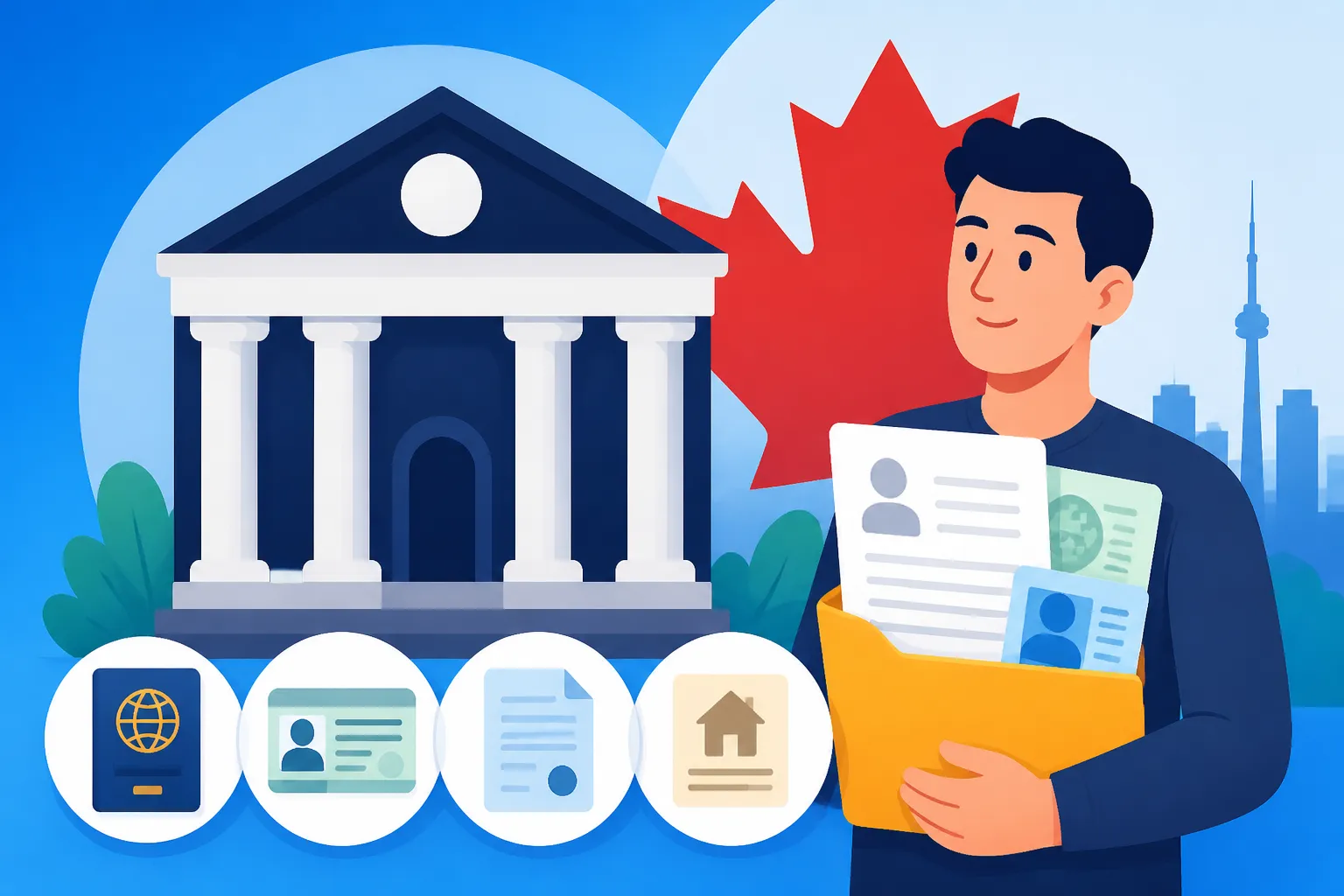
When you walk into a bank branch, armed with what feels like your entire life's paperwork, the staff are looking for specific types of documents to fulfil their identity verification requirements. Generally, they need at least two pieces of identification, one of which must be from a primary list, and another from a secondary list, along with proof of your residential address in Canada. These documents must be original, valid, and unexpired. No copies, no photos on your phone – they need to see the real deal.
Primary ID: The Cornerstone of Your Identity Verification
This is the big one. Your primary identification document is the most crucial piece of information you’ll provide. It usually needs to include your name, date of birth, and a photo, and it explicitly confirms your legal status to reside in Canada. Without a valid primary ID, you’ll hit a brick wall right away.
For most newcomers, this will be your passport, along with your valid Canadian immigration document. If you’re a Permanent Resident, your Permanent Resident Card is usually the gold standard. For those on temporary visas, your Study Permit or Work Permit, in conjunction with your passport, is essential. Remember, these permits explicitly state your legal right to be in Canada, which is what the banks are looking for. For instance, if you've just landed in Toronto on a work permit, you'll present your foreign passport and your official Canadian work permit to the bank teller. They will scrutinize these documents carefully, often taking photocopies for their records. This is a critical step in processes like How to Open a Bank Account at a Canadian Bank as a Newcomer.
Secondary ID: Confirming Who You Are
Once you’ve got your primary ID sorted, the bank will ask for a secondary piece of identification. This document supports your primary ID and often helps confirm other details, such as your signature or a different address. The key here is that it needs to be different from your primary ID and ideally contain another identifier like a signature.
Common secondary IDs include a Canadian provincial driver's license, if you've already managed to obtain one. Even a temporary driver’s license or an interim paper license from ServiceOntario or your provincial equivalent can often work. A provincial photo ID card (like an Ontario Photo Card), a major credit card (even one from your home country, as long as it has your name and signature), or a debit card from a foreign financial institution can also be accepted. Some banks might even accept a foreign driver's license, though it's less common as a standalone secondary ID if it doesn't meet specific criteria or isn't accompanied by a translation if not in English or French. The bank staff are trained to look for specific combinations, so bringing a few options is always a good idea. Don't be surprised if they ask for your signature on both IDs to compare them.
Proof of Address: Where You Lay Your Head
This is where many newcomers often get tripped up, especially those who have just arrived and are staying in temporary accommodation or with friends. Banks need to verify that you have a physical residential address in Canada. A P.O. Box is typically not sufficient for this purpose. They want to know you’re genuinely residing in the country.
Accepted documents for proof of address usually include utility bills (hydro, gas, internet, or phone bills), a signed lease agreement for an apartment or house, or a property tax statement if you’ve already managed to buy a place. A letter from an employer, school, or even the Canadian government (like an official letter from IRCC) that clearly shows your name and Canadian address can also sometimes work. If you're staying with a host family or friends, a letter from them, along with a copy of their utility bill showing that address, might be accepted by some banks, though this is less common and depends heavily on the bank and branch. For example, if you're in Vancouver and staying with your cousin, a formal letter from them stating you reside at their address, along with a recent BC Hydro bill in their name, could be your best bet. Remember, even setting up your mobile phone plan often requires a residential address, highlighting the interconnectedness of these initial steps, much like when you're sorting out The Newcomer Guide to Setting Up Utilities (Hydro, Gas, Internet) in Canada.
Beyond the Basics: Other Documents That Might Help or Be Required
While the primary ID, secondary ID, and proof of address are the holy trinity of documents, there are a few other pieces of paper that could be requested or prove beneficial during your banking journey in Canada. These often serve to streamline the process, verify your financial identity, or address specific situations.
Proof of Immigration Status: Showing Your Right to Be Here
We touched on this with primary ID, but it's worth reiterating. Banks are very particular about your legal right to reside in Canada. Your Confirmation of Permanent Residence (COPR), if you're a new Permanent Resident, or your valid study/work permit, are absolutely critical. These aren't just for immigration officials; banks use them to assess your eligibility for various services and to understand the duration of your stay.
Some banking products, like certain credit cards or mortgages, might have eligibility tied to your immigration status or the expected length of your residency. For instance, a bank might offer a specialized newcomer credit card based on the assumption you'll be here for the long term, which they deduce from your immigration status. This verification of your status is a foundational step in establishing your financial footprint here, similar to How Your Immigration Status Affects Health Coverage in Canada determines your healthcare access.
Social Insurance Number (SIN): More Than Just for Taxes
Your Social Insurance Number (SIN) is a 9-digit number that the Canadian government uses to identify you for tax and benefit purposes. While you don't always need it to open a basic bank account, you will absolutely need it if you want to open any account that earns interest, such as a savings account or a Guaranteed Investment Certificate (GIC). The bank needs your SIN to report any interest income you earn to the Canada Revenue Agency (CRA) for tax purposes.
It’s generally a good idea to have your SIN ready when you go to the bank, even if they don't explicitly ask for it for a basic chequing account. Having it means you can set up interest-bearing accounts without a second trip. Applying for your SIN is one of the very first things you should do after arriving, and you can learn all about it in How to Apply for a Social Insurance Number (SIN) in Canada. When you're managing your finances in Canada, understanding how your SIN is used, especially for tax reporting, becomes crucial. This is where resources like Taxes for Expats can really help clarify your obligations, ensuring you're compliant with both Canadian and your home country's tax laws.
Foreign Tax Information: For Your Global Financial Footprint
You might be surprised when your Canadian bank asks for your foreign tax identification number or information about your tax residency outside of Canada. This isn't because they're being nosy; it's due to international agreements like the Foreign Account Tax Compliance Act (FATCA) for U.S. persons and the Common Reporting Standard (CRS) for residents of other participating countries. These agreements require Canadian financial institutions to report information about accounts held by foreign tax residents to their respective tax authorities.
So, if you’re a tax resident of another country while living in Canada, the bank has a legal obligation to collect this information from you. For example, if you're an American living in Canada, the bank will ask for your U.S. Social Security Number. Don't be alarmed; this is standard procedure to ensure global tax compliance. Understanding your tax residency status is vital, and you can delve deeper into this complex topic with guides like Tax Residency in Canada: A Definitive Guide for Newcomers (2027). Navigating these international tax complexities can be daunting, and services like Taxes for Expats specialize in helping people manage their cross-border tax obligations efficiently.
Proof of Funds or Financial History: If You're Starting Big
For most basic chequing accounts, banks won't demand proof of funds, but it can be very helpful, especially if you plan to deposit a large sum of money immediately or want to establish a more substantial financial relationship right off the bat. Bringing a bank statement from your home country, showing a healthy balance, or proof of a wire transfer that's about to arrive, can build confidence with the bank.
If you’re bringing a significant amount of money into Canada, having documentation of its origin can also be beneficial, both for the bank and for customs. While not always a strict requirement for opening a basic account, it can smooth the process if you’re planning on more complex banking needs, like applying for a secured credit card or even a small loan later on. Many newcomers use services like Wise to transfer their savings to Canada, and having confirmation of such a transfer can serve as a good indicator of your financial standing. For a deeper understanding of how to manage your money across borders, check out How to Transfer Money Into and Out of Canada as a Newcomer.
Here’s a quick overview of the most common documents and their purposes:
| Document Type | Purpose | Examples | Essential? | Notes |
|---|---|---|---|---|
| Primary ID | Confirms identity, photo, date of birth, and legal status in Canada. | Passport + Study/Work Permit, Permanent Resident (PR) Card, Confirmation of PR (COPR) | Absolutely Yes | Must be valid and unexpired. Often considered the most critical piece. |
| Secondary ID | Supports primary ID, often includes signature or another photo. | Canadian Driver's License, Provincial Photo ID Card, Foreign Driver's License, Major Credit Card (even foreign), Foreign Debit Card | Yes | Must be different from your primary ID. Some foreign IDs might require translation. |
| Proof of Address | Verifies your residential address in Canada. | Utility Bill (hydro, gas, internet, phone), Signed Lease Agreement, Government Letter (IRCC), Employer Letter | Yes | A P.O. Box is generally not accepted. If staying with someone, a letter from them + their utility bill might work, depending on the bank. |
| Social Insurance Number (SIN) | Required for tax reporting on interest-bearing accounts; generally good to have. | SIN Confirmation Letter/Card | For Interest Accounts | Not strictly mandatory for basic chequing accounts, but highly recommended to have for future banking needs and tax purposes. |
| Foreign Tax Info | Compliance with international tax reporting (FATCA, CRS). | Foreign Tax Identification Number (e.g., U.S. SSN) | If Applicable | Banks are legally required to collect this from foreign tax residents. Important for those with international financial ties, something Taxes for Expats can help you understand. |
| Proof of Funds | Demonstrates financial capacity; useful for large deposits or establishing credit relationships. | Foreign Bank Statements, Wire Transfer Confirmation | Recommended | Not usually required for basic account opening, but can expedite processes for higher-tier services or initial large deposits. Services like Wise can provide transfer confirmations. |
Navigating the Process and Choosing the Right Bank
You've got your documents sorted – now what? The next step is choosing a bank and walking through their doors. This can still feel intimidating, but being prepared makes a world of difference.
Bank Choices and Newcomer Packages
Canada has several major banks that are well-versed in dealing with newcomers, and they often have special packages designed specifically for you. The "Big Five" banks are CIBC, RBC (Royal Bank of Canada), Scotiabank, TD (Toronto-Dominion Bank), and BMO (Bank of Montreal). You'll find branches for these institutions in virtually every city and town across Canada, from Halifax to Victoria. Many of them offer "newcomer banking packages" that often include perks like no monthly fees for the first year, a free basic credit card (sometimes secured), or even preferential rates on certain products.
It's absolutely worth doing a bit of research online or calling ahead to compare what each bank offers before you commit. Some banks, like RBC, have dedicated newcomer specialists who can guide you through the process in various languages. Scotiabank is also known for its strong international presence and newcomer-friendly services. These tailored services can make a huge difference in how smoothly your account opening goes. For a detailed comparison, you might want to look at How to Choose the Best Bank for Newcomers in Canada. Don't be shy to ask about these specific packages when you visit a branch; they are there to attract new immigrants!
Common Pitfalls and How to Avoid Them
Even with the right documents, things can sometimes go sideways. The most common pitfall for newcomers is showing up with expired documents or photocopies instead of originals. Remember, banks will not accept anything but the original, valid, unexpired documents. Another frequent issue is inconsistencies in names across different IDs (e.g., a middle name present on one but not another). Ensure all your documents match your legal name exactly as it appears on your passport and immigration papers.
Address issues are also incredibly common. If your temporary address is causing problems, try to get an official letter from your employer or school (if applicable) that clearly states your residential address. If you're coming with family, ensure all family members needing accounts also have their primary and secondary IDs ready. Sometimes, a specific bank branch might have a stricter interpretation of policies than another, so if you're denied at one, it's not a bad idea to try a different branch of the same bank, or even a different bank altogether. Persistence is key!
What to Do If You Don't Have All the "Standard" Documents
Let's face it, sometimes life throws a curveball, and you just don't have that perfect set of documents. Perhaps you arrived on a short-term visa without an immediate work or study permit, or you genuinely haven't secured a long-term lease yet. Don't despair. Canadian banking regulations, particularly from the Financial Consumer Agency of Canada (FCAC), actually mandate that banks offer basic accounts to nearly anyone, even those without a full suite of traditional documents, as long as they can verify their identity.
If you find yourself in this situation, your best bet is to speak directly with a bank representative, ideally a manager or a newcomer specialist, rather than just a frontline teller. Explain your specific circumstances clearly. Banks do have alternative methods of identification under certain conditions, such as relying on a reputable third party (like an employer or a professional body) to vouch for your identity, or accepting a wider range of less common documents. For instance, an international student ID from a recognized Canadian educational institution, combined with your passport, might work. The key is to demonstrate to the bank that you are who you say you are, and that you have a legitimate need for a bank account. While it might take a bit more legwork and a bit of explaining your story, a basic bank account is a right for most residents in Canada.
Disclaimer
The information provided in this article is intended for general guidance only and does not constitute financial, legal, or immigration advice. While we strive to provide accurate and up-to-date information, rules and regulations in Canada can change rapidly. Always consult with a qualified professional or the relevant Canadian government websites (such as IRCC or FINTRAC) for the most current and specific advice pertaining to your individual circumstances.