How Do I Apply for the Atlantic Immigration Program in Canada?
Coming to Canada, especially with dreams of settling down outside the bustling metropolises, can feel like navigating a complex maze. Many newcomers envision a life beyond Toronto or Vancouver, but figuring out how to get there can be truly baffling. If you've been eyeing the East Coast, specifically the beautiful Atlantic provinces, and wondering how to make that dream a reality, you're in the right place. This guide will meticulously break down the Atlantic Immigration Program (AIP), giving you the step-by-step lowdown on how to apply and what to expect on this unique immigration pathway.
What Exactly is the Atlantic Immigration Program (AIP)?
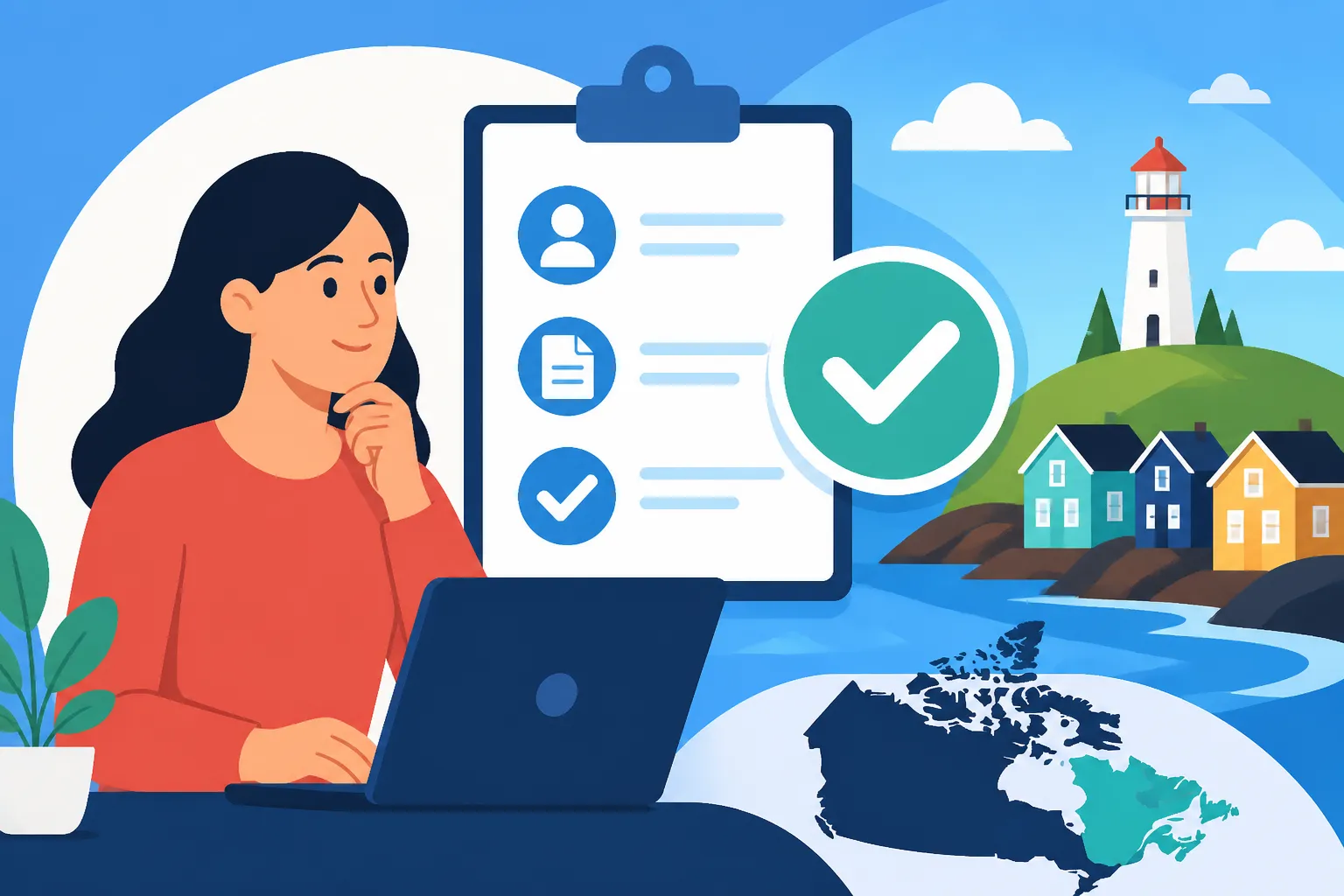
Let's cut to the chase: the Atlantic Immigration Program (AIP) isn't just another government initiative; it's a lifeline for those of us who want to build a life in a different part of Canada, away from the usual suspects. It's a permanent residence program specifically designed to help employers in Canada's four Atlantic provinces hire foreign skilled workers and international graduates who want to settle there.
A Lifeline for Regional Immigration
The idea behind the AIP is brilliantly simple yet profoundly impactful: to fill labour market gaps and drive economic growth in Atlantic Canada by attracting and retaining newcomers. This means that if you've got skills that are in demand in Nova Scotia, New Brunswick, Prince Edward Island, or Newfoundland and Labrador, and you're genuinely committed to living there, this program could be your golden ticket. It's a testament to the Canadian government's commitment to supporting regional development and spreading the benefits of immigration across the country, not just concentrating them in a few major cities. For many, it offers a more direct and often less competitive route to permanent residency compared to some other federal programs, especially if you have a job offer lined up.
The Four Atlantic Provinces
When we talk about Atlantic Canada, we're talking about four distinct, vibrant provinces, each with its own unique charm and economic opportunities. These are:
- Nova Scotia: Known for its stunning coastline, vibrant arts scene, and the charming city of Halifax, Nova Scotia has a growing tech sector, healthcare needs, and a strong tourism industry. It’s a place where you can truly immerse yourself in maritime culture.
- New Brunswick: The only officially bilingual province, New Brunswick offers a blend of natural beauty, quaint towns, and a welcoming atmosphere. Key industries include IT, advanced manufacturing, and forestry, providing diverse job prospects for newcomers.
- Prince Edward Island (PEI): Canada's smallest province is famous for its red-sand beaches, delicious seafood, and Anne of Green Gables. While smaller, it has a thriving agriculture, tourism, and aquaculture sector, and a tight-knit community feel.
- Newfoundland and Labrador: This province offers a rugged, breathtaking landscape and a rich, distinct culture. With opportunities in oil and gas, mining, fisheries, and tech, it's a place for those who appreciate natural grandeur and a strong sense of community.
Each of these provinces is actively seeking new residents to contribute to their communities and economies, making the AIP a focused and effective pathway if you're drawn to Canada's East Coast.
Am I Even Eligible? Understanding the Criteria
This is where the rubber meets the road, isn't it? Eligibility criteria can be intimidating, but let's break down what you absolutely need to have in place to even consider the Atlantic Immigration Program. It's not just about wanting to move; it's about meeting specific requirements that demonstrate your capacity to settle and contribute.
Job Offer is Key
Unlike some other immigration streams where you might submit an Expression of Interest without a job offer, the AIP absolutely requires a valid job offer from a designated employer in one of the four Atlantic provinces. This is perhaps the most critical piece of the puzzle. A "designated employer" isn't just any company; they have to be specifically approved by the provincial government to participate in the AIP. This designation means they understand the program's requirements and are committed to supporting your settlement in the region.
The job offer itself must be:
- Full-time and non-seasonal: No temporary gigs or contract roles that might dry up.
- For an indeterminate period: Meaning it has no end date, which offers job security.
- Not self-employed: You must be an employee.
- At a skill level matching your experience: This is assessed using Canada's National Occupational Classification (NOC) system. For example, if you're applying under the high-skilled stream, your job offer must be in a NOC TEER 0, 1, 2, or 3 occupation. For the intermediate-skilled stream, it must be in a NOC TEER 4 or 5 occupation. This job offer from a designated employer is the foundation of your entire application, so finding one is your absolute first priority. Without it, you cannot proceed. This is often the most challenging hurdle for many prospective immigrants, as it requires active job searching and networking from abroad, or once you've arrived on a temporary visa.
Work Experience, Education, and Language
Beyond the job offer, you need to meet specific criteria related to your professional background, academic achievements, and language proficiency. These elements are assessed to ensure you have the skills and adaptability to thrive in the Canadian workforce and integrate into society.
-
Work Experience: This varies by stream.
- Atlantic High-Skilled Program: You'll typically need at least one year of full-time (1,560 hours total or 30 hours per week) paid work experience in a NOC TEER 0, 1, 2, or 3 occupation within the last five years. The experience doesn't have to be continuous, but it must be in a specific occupation.
- Atlantic Intermediate-Skilled Program: For this stream, you generally need one year of full-time paid work experience in a NOC TEER 4 or 5 occupation within the last five years.
- Atlantic International Graduate Program: This stream is a bit different. If you've graduated from a recognized public post-secondary institution in one of the Atlantic provinces, you don't need work experience, provided you meet other criteria, like living in the province for at least 16 months in the last two years before graduating. This is a huge benefit for international students who want to stay and build a life there.
Your foreign credentials will need to be assessed through an Educational Credential Assessment (ECA) to prove they are equivalent to Canadian standards. This is a crucial step, so make sure to get this done early. If you're wondering How to Get Your Foreign Credentials Recognised in Canada, there are designated organizations like WES that can help with this.
-
Education: For the High-Skilled and Intermediate-Skilled streams, you generally need to have completed at least a Canadian high school diploma or an equivalent foreign credential, verified by an ECA. For the International Graduate stream, you must have a degree, diploma, or certificate from a publicly funded institution in an Atlantic province.
-
Language Proficiency: This is non-negotiable. You'll need to demonstrate your ability in English or French by taking an approved language test like IELTS (General Training), CELPIP (General), or TEF Canada/TCF Canada. The minimum Canadian Language Benchmark (CLB) or Niveaux de compétence linguistique canadiens (NCLC) levels required are usually CLB 4 for the Intermediate-Skilled Program and CLB 5 for the High-Skilled and International Graduate Programs. These scores are vital for showing you can communicate effectively in your new community and workplace.
Settlement Funds
Beyond showing you can earn a living, the Canadian government wants to ensure you can support yourself and your family once you arrive, at least until you get your first paycheque. This is where "settlement funds" come in. You'll need to prove you have enough money to support yourself and any family members coming with you to Canada.
The amount required is updated annually and depends on the size of your family. These funds cannot be borrowed from another person, and you must have access to them once you arrive. However, if you are already working in Canada with a valid work permit, you generally do not need to show proof of funds. This is a practical consideration to help ease your transition and ensure you don't face undue financial stress right after moving. It's a common requirement for many immigration programs, designed to give newcomers a stable start.
Here's a quick look at the settlement fund requirements (as of early 2024, amounts are subject to change, so always check the official IRCC website):
| Number of Family Members | Funds Required (CAD) |
|---|---|
| 1 | $3,894 |
| 2 | $4,857 |
| 3 | $5,975 |
| 4 | $7,249 |
| 5 | $8,206 |
| 6 | $9,268 |
| 7 or more | $10,330 |
Note: These amounts are illustrative and should always be verified against the official IRCC website for the most current figures.
Navigating the Application Process: Step-by-Step
Alright, you meet the criteria – fantastic! Now comes the actual application. This isn't a single, straightforward form; it's a multi-stage process that involves both provincial and federal governments. Taking it one step at a time is key to avoiding overwhelm.
The Designated Employer Hunt
This is, by far, the most critical and often the most challenging first step. As we discussed, a valid job offer from a designated employer is non-negotiable for the AIP. This means you can't just apply for any job; it must be with an employer who has gone through the process to be recognized by their respective Atlantic provincial government as eligible to participate in the AIP.
So, how do you find these elusive employers?
- Provincial Immigration Websites: Each Atlantic province maintains a list of designated employers. Start there! These lists are your best friend.
- Job Boards Focused on Atlantic Canada: While generic job boards like LinkedIn and Indeed are useful, try to target those specifically advertising positions in Nova Scotia, New Brunswick, PEI, and Newfoundland and Labrador. Filter your searches for roles that align with your NOC code and skills. Remember, you're looking for jobs that can potentially lead to an AIP application. You might find it helpful to consult The Newcomer Guide to Finding a Job in Canada for broader strategies.
- Networking: This is Canada, and networking is huge. Leverage online professional networks, connect with people already working in your field in Atlantic Canada, and attend virtual job fairs. Sometimes, it's about who you know, or who can introduce you to a designated employer.
- Be Patient and Persistent: This step can take time. Designated employers are also taking a chance on you and committing to a settlement plan. They need to be confident you're a good fit and genuinely interested in settling in their community long-term. Don't get discouraged if your first few applications don't pan out.
Getting Your Endorsement
Once you've secured that golden job offer from a designated employer, the next crucial step is getting a provincial endorsement. This is essentially the province saying, "Yes, we support this applicant, and they have a job offer that aligns with our economic needs and settlement goals."
Here's how it generally works:
- Settlement Plan: Your employer must connect you with a designated settlement service provider organization in the province where you'll be living. Together, you'll work on a settlement plan that outlines your needs and connects you to resources to help you integrate into your new community. This plan is crucial for your long-term success and is a unique feature of the AIP. It helps address many of the initial struggles newcomers face, from finding housing to enrolling children in school.
- Endorsement Application: Your designated employer then submits an endorsement application on your behalf to the provincial government. This application confirms the job offer, your qualifications, and the settlement plan.
- Certificate of Endorsement: If the province approves the endorsement, they will issue a Certificate of Endorsement to you and your employer. This certificate is absolutely vital for your federal permanent residence application. Without it, your federal application won't even be processed. This provincial vetting ensures that the program is truly serving the local needs and that you are genuinely committed to the region.
Federal Application to IRCC
With your Certificate of Endorsement in hand, you're ready for the final, big step: applying for permanent residence to Immigration, Refugees and Citizenship Canada (IRCC). This is the federal stage, where all your documents are submitted for final approval.
Here's what you'll need to do:
- Gather Documents: You'll need an extensive list of documents, including your Certificate of Endorsement, personal identification, work experience letters, educational credentials (ECAs), language test results, settlement funds proof (if applicable), police certificates, medical exam results, and forms specific to the permanent residence application. This can feel overwhelming, but being organized is key. Ensure all documents are translated if not in English or French, and certified as required.
- Complete Application Forms: Fill out all the necessary IRCC forms accurately and completely. Any errors or omissions can lead to delays or even refusal.
- Pay Fees: There are processing fees for the application, as well as the Right of Permanent Residence Fee (RPRF).
- Submit Application: Submit your complete application package to IRCC. This is typically done online.
- Biometrics: After submitting, you'll likely receive an instruction letter to provide your biometrics (fingerprints and photo) at a designated service point.
- Medical Exams and Police Certificates: As part of the federal application, you and any accompanying family members will need to undergo a medical examination by an IRCC-approved panel physician. You'll also need to obtain police certificates from any country you've lived in for six months or more since the age of 18. These are standard procedures to ensure health and security requirements are met.
This stage is primarily administrative, but precision and thoroughness are paramount. It's the culmination of all your hard work and planning. Remember, this is a separate application from the provincial endorsement, and both steps must be successfully completed.
After Applying: What to Expect and How to Prepare
So, you've submitted your application. Now what? The waiting game begins, which can be the most nerve-wracking part for many. But even during this wait, there are crucial steps you can take to prepare for your exciting new chapter in Canada.
Processing Times and Patience
Let's be realistic: Canadian immigration processing times can vary significantly. They depend on the volume of applications, the complexity of your case, and whether IRCC requests additional information. While the AIP is designed to be a streamlined process, it's still an intricate federal application. You can check the estimated processing times on the IRCC website, but always factor in potential delays.
During this period, it's common to feel anxious. My advice, as someone who's been there, is to cultivate patience. Resist the urge to constantly check your application status. Focus on things you can control – like continuing to learn about your chosen province, connecting with settlement services, and refining your plans. Many applicants also apply for a temporary work permit while their permanent residence application is being processed, especially if they are already in Canada or want to start working sooner. This can bridge the gap and allow you to earn income while waiting. Understanding How to Move from a Work Permit to Permanent Residence in Canada might offer additional peace of mind.
Preparing for Your Move
Once you receive your Confirmation of Permanent Residence (COPR) and your permanent resident visa (if applicable), it's time for the exciting logistics of moving! This is a huge undertaking, especially when moving across countries. You'll need to think about shipping your belongings, finding temporary accommodation, and eventually securing a long-term home.
- Shipping Your Belongings: Decide what to bring and what to leave behind. Research international moving companies that specialize in moves to Canada. Companies like Sirelo can be a great resource for comparing quotes from different moving services, helping you find the most efficient and cost-effective way to get your household goods from your current location to your new home in Atlantic Canada. They offer a platform to simplify the process, which is invaluable when you're already juggling so many other tasks. For a broader perspective on what to expect, check out The Complete Guide to Moving to Canada: Your First 90 Days.
- Temporary Accommodation: Before you arrive, arrange for short-term accommodation. This could be an Airbnb, a hotel, or a temporary rental. It gives you a base from which to search for more permanent housing.
- Long-Term Housing: Start researching rental markets or even home-buying options in your specific town or city in Atlantic Canada. Rental costs and availability can vary even within the provinces, so knowing what to expect is crucial.
- Financial Planning: Ensure your finances are in order. Understand banking in Canada and how to transfer your funds. You'll need to Open a Bank Account at a Canadian Bank as a Newcomer soon after arriving.
Healthcare and Essential Services
One of the biggest concerns for newcomers is healthcare. Canada's public healthcare system is fantastic, but there's almost always a waiting period for provincial health coverage for new permanent residents. This "waiting period" can be up to three months, depending on the province you settle in.
- Interim Private Health Insurance: This is absolutely critical. You do not want to be caught without coverage during this waiting period. Imagine an unexpected accident or illness; medical bills without coverage can be financially devastating. This is where private health insurance comes in. Companies like Cigna Global offer comprehensive private health insurance plans that can cover you during this crucial initial period, providing peace of mind until your provincial plan kicks in. Seriously, do not skip this step. It's a small investment for huge security. You can also explore How to Get Private Health Insurance to Cover the Waiting Period in Canada for more details.
- Applying for Your Health Card: As soon as you are eligible, apply for your provincial health card. This is your key to accessing the public healthcare system. Each province has its own application process, but generally, you'll need proof of identity and residency. Learn more about How to Apply for Your Provincial Health Card in Canada. For a deeper dive into the system, read The Complete Guide to Healthcare in Canada for Newcomers (2027).
- Other Essential Services: Don't forget to apply for your Social Insurance Number (SIN), which you'll need for working and accessing government benefits. Set up utilities like electricity, gas, and internet for your new home. Your settlement service provider, as part of your AIP settlement plan, will be an invaluable resource to guide you through these initial steps and connect you with local services.
The Atlantic Immigration Program is a fantastic opportunity for many to start a new life in Canada's beautiful East Coast. It demands careful planning, a bit of legwork to secure that job offer, and a healthy dose of patience, but the rewards of building a life in a welcoming community can be immeasurable. Take it step by step, lean on the resources available, and you'll be well on your way.
Disclaimer
Please note that immigration policies and program requirements are subject to change by Immigration, Refugees and Citizenship Canada (IRCC) and provincial governments. This guide provides general information based on current knowledge and should not be considered legal advice. Always consult the official IRCC website and relevant provincial immigration websites, or a Regulated Canadian Immigration Consultant (RCIC) or lawyer, for the most up-to-date and accurate information regarding your specific situation.