How to Renew Your PR Card or Maintain Status in Canada
Navigating Canadian immigration can feel like a maze, and keeping your Permanent Resident status active often brings a unique blend of anxiety and confusion. Many expats worry about losing their precious PR status or find themselves scrambling when their PR card is about to expire, especially when life plans shift. This guide is here to walk you through everything you need to know about renewing your PR card and, crucially, how to maintain your permanent resident status in Canada, even when circumstances make it tricky.
The Cornerstone of Your Life in Canada: Understanding Your PR Card
When you first land in Canada as a permanent resident, you're filled with hope, excitement, and probably a stack of documents. Among those, your Permanent Resident (PR) card is truly a cornerstone of your new life here. It's not just a fancy piece of plastic; it's tangible proof of your status and your ticket to re-entry into this beautiful country. Without a valid PR card, travel can become an absolute nightmare, and you might even face issues proving your status for other services.
What Exactly is a PR Card?
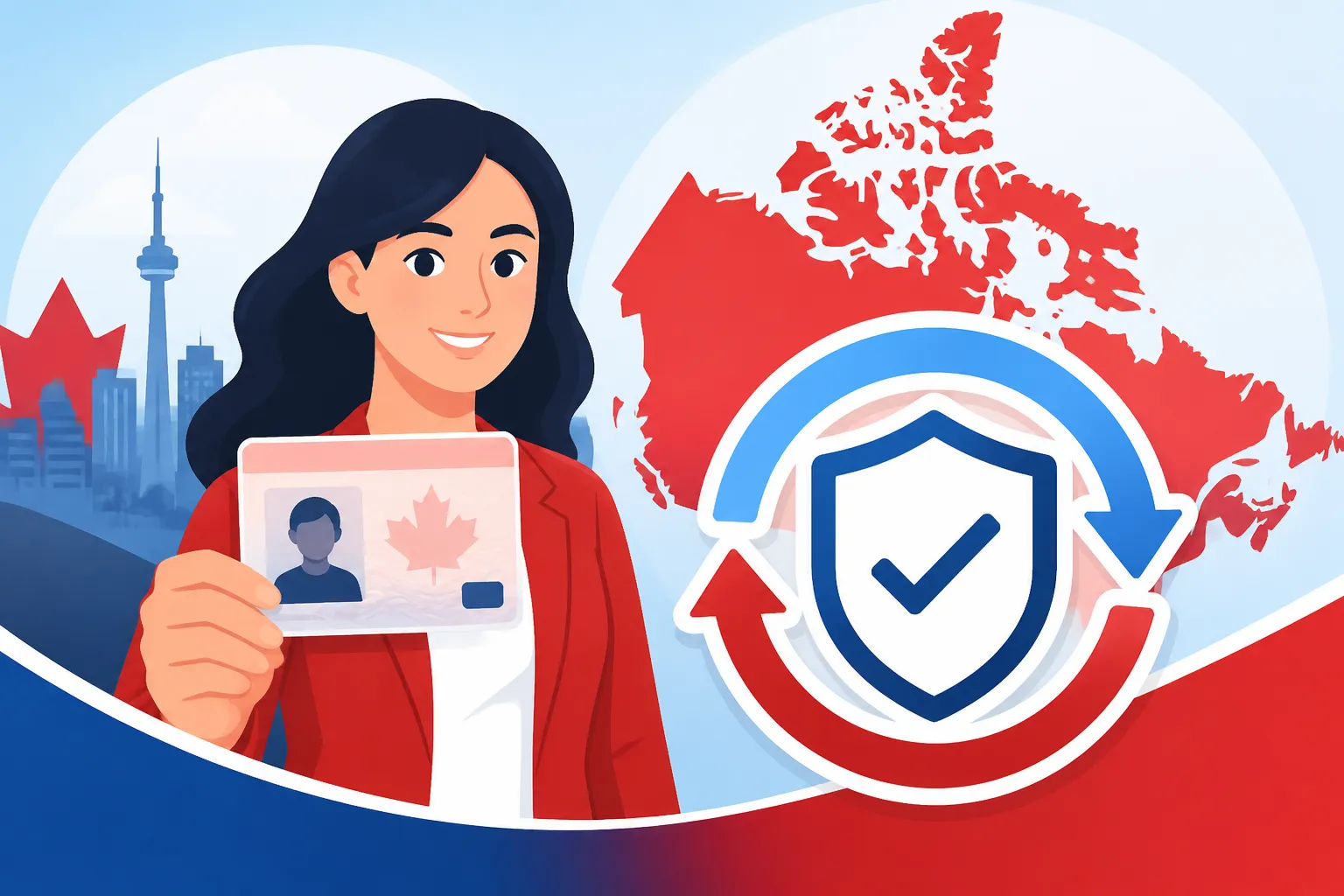
Think of your PR card as your official ID for your permanent residency in Canada. It's a secure document, similar to a driver's license or a national ID card in other countries, that contains your photo, name, unique client identifier (UCI), and information about your permanent resident status. This card is issued by Immigration, Refugees and Citizenship Canada (IRCC) and typically has a validity period of five years. While it proves your right to live, work, and study anywhere in Canada, its most critical function becomes apparent when you need to travel.
If you’re travelling outside Canada, whether it’s a quick trip to the US or a longer visit to your home country, you absolutely need a valid PR card to return to Canada by commercial carrier – that's air, bus, train, or boat. Imagine the stress of arriving at the airport, ready to board your flight back home to Canada, only to be told your PR card expired last month! It's a situation that sends shivers down the spine of any expat, and unfortunately, it happens more often than you'd think. This card is proof to airlines and border officials that you have the right to enter, even if you’re a citizen of a visa-exempt country.
Who Absolutely Needs a Valid PR Card?
Every single permanent resident in Canada needs a valid PR card if they plan to travel outside of the country. This isn't just a suggestion; it's a non-negotiable requirement for re-entry by commercial vehicle. If you're planning to stay put within Canada for the foreseeable future, an expired PR card might not seem like an immediate crisis. However, it's still good practice to keep it current. You might need it to prove your status for certain government services, apply for a mortgage, or even just as an additional piece of identification.
Newcomers often ask, "Do I need a new LMIA to switch employers in Canada?" or "What is the difference between a work permit and permanent residence in Canada?" The PR card clearly distinguishes you from temporary residents. If you're looking to transition from a work permit to permanent residence in Canada, obtaining your first PR card is a significant milestone. It marks your official status change and opens up a world of new possibilities, including the eventual pathway to Canadian citizenship. Even if you're not planning international travel, having a valid PR card can simplify various administrative processes within Canada and serves as official documentation of your residency status.
The Dreaded 730-Day Rule: Unpacking Your Residency Obligation
Ah, the residency obligation. For many permanent residents, this is the most confusing and often anxiety-inducing part of maintaining status in Canada. It’s the rule that dictates how much time you actually need to spend in Canada to keep your PR status. It’s not just a suggestion from IRCC; it's a legal requirement, and understanding it thoroughly is key to a stress-free life as a permanent resident.
Calculating Your Days in Canada: The Strict Math
The general rule is straightforward on paper: you must be physically present in Canada for at least 730 days within every five-year period. This doesn't mean 730 consecutive days, nor does it mean you can just pop in for a visit every now and then. It's a rolling five-year period. What does "rolling" mean? It means that for any given day, you need to look back five years and ensure that you've accumulated at least 730 days of physical presence in Canada.
Let's imagine you became a permanent resident on January 1, 2021. By January 1, 2026, you must have been physically present in Canada for at least 730 days. But then on January 2, 2026, the five-year period "rolls" forward, and you now need to ensure you've met the 730-day requirement for the period between January 2, 2021, and January 2, 2026. This continuous calculation can be baffling, especially if your travel patterns are irregular. It’s not enough to simply meet the obligation when your PR card needs renewal; you must continuously meet it.
Many people fall into the trap of thinking they just need to "make up" days closer to their renewal date. While you can certainly aim to fulfil the obligation, if you haven't been in Canada for a significant portion of the earlier part of your five-year window, it can become incredibly difficult to accumulate enough days later on without disrupting your life entirely. This is why it’s so important to track your time meticulously from day one.
What Counts Towards Your Residency Obligation?
The IRCC isn't just counting any time you've spent on Canadian soil. There are specific criteria for what counts towards your 730-day residency obligation. Generally, days you are physically present in Canada definitely count. But what about absences? This is where it gets interesting and sometimes complex.
Here’s a breakdown of what generally counts:
- Days you are physically present in Canada: This is the most obvious one. Any day you spend within Canada’s borders counts towards your 730 days.
- Days spent abroad accompanying a Canadian citizen: If you are accompanying a Canadian citizen spouse, common-law partner, or in the case of a child, a Canadian citizen parent, those days spent outside Canada can count. This is a common scenario for many expat families where one spouse becomes a citizen first.
- Days spent abroad employed by a Canadian business or public service: If you are employed on a full-time basis by a Canadian business or the public service of Canada or a province, and your work requires you to be outside Canada, those days also count. This is a huge relief for professionals whose jobs require international travel or temporary postings abroad. The business must be incorporated in Canada and have a continuous presence in Canada, and you must be working for it in a position other than as a representative or agent.
- Days spent abroad accompanying a permanent resident who is meeting the obligation through employment: If you are accompanying your spouse, common-law partner, or parent (if you are a child) who is themselves a permanent resident and is meeting their residency obligation by working for a Canadian business or public service abroad, those days can count for you too. This provision helps keep families together while still satisfying the residency rules.
It's crucial to understand the nuances of these exceptions. For instance, "accompanying" means you must be with the Canadian citizen or qualifying permanent resident. Simply visiting them while they are abroad often won't suffice. Furthermore, you need solid documentation to prove these situations. This could include employment letters, pay stubs, passport stamps, flight tickets, and even utility bills to show shared residency. This is where keeping detailed records, as discussed in What Are the Annual Requirements to Keep My PR Status in Canada?, really saves you headaches down the line.
The Importance of Documentation
The Canadian government is thorough, and when it comes to immigration matters, they demand proof. Relying on memory or vague timelines simply won't cut it when you're trying to demonstrate you've met your residency obligation. Think of it from their perspective: they need to verify your claims.
For every day you claim to be in Canada, or every day you claim an exception applies, you should have supporting documents. This includes:
- Passports and travel history: Every entry and exit stamp is critical. If your passport doesn't have stamps (e.g., land border crossings with the US), you'll need other proof.
- Entry/exit records from IRCC: While IRCC has access to this data, it's always good practice to keep your own records and compare them.
- Airline tickets, boarding passes, train tickets, bus tickets: Any commercial travel documents are valuable.
- Proof of residence in Canada: Utility bills (hydro, gas, internet), rental agreements, mortgage statements, property deeds, driver's licenses, and provincial health cards all show you maintain a home here.
- Employment records: Letters from your Canadian employer stating your work outside Canada, pay stubs, tax documents (T4s).
- Proof of relationship: Marriage certificates, birth certificates, common-law declarations to prove you are accompanying a spouse or parent.
- School records: If you have children, their school enrolment can also demonstrate your family's presence.
Without this meticulous documentation, you're essentially asking IRCC to take your word for it, which they are unlikely to do for such a critical requirement. It can feel like a mountain of paperwork, but believe me, it’s worth the effort when your PR status is on the line. Being proactive and organized is your best defence against potential complications. This level of detail is critical for ensuring you How to Get Your Documents Ready for an IRCC Application.
Step-by-Step: Renewing Your Permanent Resident Card
So, your PR card is nearing its expiry date, or perhaps it’s already expired. Don't panic! This is a routine process for thousands of permanent residents every year. However, it's not something you want to leave until the last minute. The key is to be prepared, gather your documents, and submit a complete and accurate application.
Eligibility for PR Card Renewal
Before you even think about filling out forms, you need to ensure you're actually eligible to renew your PR card. The primary requirement, as you've probably guessed, is that you must meet your residency obligation. This means you need to have been physically present in Canada for at least 730 days in the five-year period immediately before your application. If you haven't met this, you'll need to explain why and demonstrate that an exception applies.
Beyond the residency obligation, there are a few other points to consider:
- You must be a permanent resident: This sounds obvious, but you can't renew a PR card if you've lost your status.
- You must be physically in Canada to apply: You cannot apply for a PR card renewal from outside Canada. This is a common point of confusion and frustration for those who realize their card is expiring while they are abroad. If you're outside Canada with an expired PR card, you’ll likely need to apply for a Permanent Resident Travel Document (PRTD) to return to Canada. Once you are back on Canadian soil, you can then apply for a new PR card.
- Your existing PR card is expired, or will expire in less than nine months: While you technically can apply before the nine-month window, IRCC often advises waiting until you are closer to the expiry date to ensure your new card has the maximum validity. If your card is lost, stolen, or damaged, you can apply immediately regardless of the expiry date.
If you know you haven't met the 730-day requirement, the situation becomes more complex. You'll need to include a detailed explanation of why you didn't meet it and outline any "humanitarian and compassionate" (H&C) considerations that might apply. This is where seeking advice can be incredibly valuable, as it's not a simple checklist item.
The Application Process: Gathering Your Mountain of Documents
Renewing your PR card involves submitting an application package to IRCC. The official form is called the "Application for a Permanent Resident Card (IMM 5444)." You can download this form and the accompanying guide from the IRCC website. This guide is your bible throughout the process; read it carefully, line by line.
Here’s a general overview of the documents you’ll typically need:
- Application Form (IMM 5444): Completed, signed, and dated. Ensure all sections are filled accurately.
- Statutory Declaration (IMM 5451): If your PR card was lost, stolen, destroyed, or never received, you'll need this.
- Photocopy of your current or expired PR Card: Both sides, clear and legible.
- Photocopy of your valid passport(s): All pages, especially those with your photo, personal information, issue and expiry dates, and any stamps or visas. If you've had multiple passports in the five-year period, include them all.
- Proof of residency (the 730 days!): This is the big one.
- Travel history: Include a detailed list of all absences from Canada in the last five years, specifying dates and reasons. Support this with passport stamps, flight itineraries, etc.
- Canadian income tax assessments: Your T4s, Notices of Assessment (NOA) from the Canada Revenue Agency (CRA) for the past five taxation years. These are crucial proof of your continuous presence and tax residency.
- Proof of employment in Canada: Employment letters, pay stubs.
- Proof of enrolment in Canadian schools: For yourself or your children.
- Canadian utility bills, rental agreements, mortgage documents: Anything that shows you maintained a principal residence in Canada.
- Two recent identical passport-style photos: Follow IRCC's strict photo specifications. This includes details like head size, background colour, and facial expression. It's often best to go to a professional photographer who is familiar with Canadian immigration photo requirements.
- Proof of payment: The application fee must be paid online.
This list isn't exhaustive, as individual circumstances might require additional documents. For instance, if you're claiming an exemption to the residency obligation, you'll need extensive proof to support that claim – marriage certificates and your spouse's Canadian citizenship certificate if you accompanied a Canadian citizen, or detailed employment letters if you worked for a Canadian business abroad. The good news is that for many, gathering these documents is straightforward, especially if you've been diligently keeping records. Think of it as a significant administrative hurdle, but one you can certainly clear with organization.
After You Apply: What to Expect and Common Pitfalls
Once you've meticulously prepared your application package and sent it off to IRCC, the waiting game begins. The processing times for PR card renewals can vary significantly based on demand, your specific case, and whether your application is complete. You can check the estimated processing times on the IRCC website, but always factor in a buffer.
What to expect:
- Acknowledgement of Receipt: You'll typically receive an email confirming that IRCC has received your application.
- Request for Additional Documents: It’s not uncommon for IRCC to request more information or documents if something is unclear or missing from your initial submission. Respond promptly and thoroughly.
- Decision: Eventually, you’ll receive a notification about the decision. If approved, you’ll be invited to pick up your new PR card or have it mailed to you, depending on your location and IRCC’s current procedures.
Common Pitfalls:
- Incomplete application: This is the number one reason for delays or outright refusal. Double-check everything against the official checklist. Any missing signature, date, or piece of evidence can send your application back.
- Not meeting the residency obligation: If you genuinely haven’t met the 730 days, and you don’t have compelling H&C reasons or a valid exception, your application might be refused. This can lead to a Loss of Permanent Resident Status.
- Expired PR card while abroad: As mentioned, you cannot apply for renewal from outside Canada. If your card expires while you're away, you'll need a PRTD. This usually involves an application at a Canadian visa office abroad.
- Incorrect photos: Believe it or not, photo specification rules are strict. Get it wrong, and your application will be returned.
- Changes in contact information: If you move or change your phone number/email after applying, inform IRCC immediately to avoid missing important communications.
It’s easy to get frustrated with the bureaucracy, but a little patience and a lot of precision go a long way. Understanding the cost and timeline of the immigration process in Canada helps set realistic expectations.
| Key Aspect | Details |
|---|---|
| Residency Obligation | At least 730 days of physical presence in Canada within every five-year period. This is a rolling period. |
| Valid Exemptions | Days spent accompanying a Canadian citizen spouse/parent abroad; days spent abroad employed by a Canadian business/public service; days spent accompanying a PR spouse/parent who is meeting their obligation via Canadian employment abroad. |
| Eligibility for Renewal | Must be a permanent resident, physically present in Canada to apply, and current PR card is expired or expiring within 9 months. |
| Required Documents | Completed IMM 5444 form, photocopy of current/expired PR card, valid passport(s) copies, detailed travel history, Canadian tax assessments (NOA/T4), proof of Canadian residence (bills, leases), 2 passport-style photos, fee payment. Additional documents for exemptions. |
| Application Location | Mail your complete application to the IRCC processing centre in Sydney, Nova Scotia. Specific address details are in the official guide. |
| Processing Time | Varies. Check the official IRCC website for current estimated processing times. Plan well in advance. |
| Key Pitfalls | Incomplete applications, not meeting residency obligation without valid explanation, applying from outside Canada with an expired PR card, incorrect photos, failure to update contact information. |
| Result of Refusal | Potential loss of Permanent Resident status. Right to appeal the decision. |
When Life Takes You Abroad: Special Considerations for Your PR Status
Life happens, and sometimes, you find yourself needing or wanting to spend extended periods outside of Canada. This can be for family reasons, work opportunities, or even just a long-term travel adventure. While Canada encourages its permanent residents to be part of the Canadian fabric, it also understands that expats often have global lives. The key is knowing the rules and planning ahead to ensure your permanent resident status remains secure.
Exemptions to the Residency Obligation: When the Rules Bend
As we touched upon earlier, the 730-day rule isn't entirely rigid. There are specific, legally defined circumstances where your time spent outside Canada can still count towards your residency obligation. These aren't loopholes, but rather built-in provisions designed to accommodate certain situations without penalizing permanent residents.
-
Accompanying a Canadian citizen spouse, common-law partner, or parent: This is a big one. If your spouse or common-law partner is a Canadian citizen, and you accompany them abroad, those days spent outside Canada are credited towards your 730-day obligation. Similarly, if you are a child (under 19, or older if still dependent on your parent), and you accompany your Canadian citizen parent, those days count. The emphasis here is on "accompanying," meaning you must be with them, not just visiting. This allows Canadian families to live abroad without the PR spouse losing their status.
-
Working for a Canadian business or public service abroad: If your Canadian employer sends you outside the country for work, those days can count. This applies to employees of a Canadian business (incorporated in Canada, with a continuous presence here) or the public service (federal or provincial). This is incredibly beneficial for professionals in fields like international development, diplomacy, or global corporations. You'll need solid documentation from your employer to prove the nature of your employment and that your duties required you to be outside Canada.
-
Accompanying a permanent resident who is meeting their obligation through employment abroad: This is a fantastic provision that truly supports family unity. If your spouse, common-law partner, or parent (if you are a child) is a permanent resident who is meeting their residency obligation by working for a Canadian business or public service abroad, your time accompanying them also counts towards your residency obligation. This means a family can go abroad for one parent's qualifying work assignment, and both the PR spouse and PR children can maintain their status.
These exemptions are not automatic. You need to clearly demonstrate to IRCC that you meet the criteria for these exceptions, usually by providing extensive documentation as part of your PR card renewal application. Don't assume anything; provide proof for every claim. For those planning a significant move or extended absence, considering private health insurance through providers like Cigna Global can be a wise decision, especially if provincial coverage might lapse during a longer period abroad. This ensures you’re covered for medical emergencies wherever you are.
Long Absences from Canada: Planning Your Return
If you've spent a significant amount of time outside Canada and your PR card is nearing expiry, planning your return is paramount. The biggest hurdle, if your card is expired and you're outside Canada, is getting back in. You cannot board a commercial flight, bus, train, or boat to Canada without a valid PR card or a Permanent Resident Travel Document (PRTD).
Applying for a PRTD while abroad is a separate process, often handled through Canadian visa offices or consulates. It's designed for permanent residents who are outside Canada without a valid PR card but believe they still meet their residency obligation. The application process for a PRTD is similar to a PR card renewal in terms of the documents needed to prove your residency obligation. This can be a stressful and time-consuming process, so it's always best to avoid it if possible by renewing your PR card before you leave Canada, or at least ensuring you return while it's still valid.
If you are planning to return to Canada to re-establish your presence and fulfill your residency obligation, logistical support can make a huge difference. Companies like Sirelo, for example, specialize in international moves, helping expats coordinate everything from shipping household goods to understanding customs regulations. This kind of service can alleviate a lot of the stress involved in packing up your life abroad and setting it up anew in Canada, allowing you to focus on settling back in and reaffirming your ties to the country.
Maintaining Status While Supporting Canadian Interests Abroad
Some permanent residents find themselves in unique situations where their work directly supports Canadian interests, even when performed outside the country. This includes diplomats, staff of the Canadian Armed Forces, or employees of other federal or provincial government bodies working at Canadian missions abroad.
For these individuals, their time spent outside Canada while serving in these capacities is explicitly counted towards their residency obligation. This is a recognition of their contribution and ensures that those serving Canada internationally do not inadvertently lose their permanent resident status. If you find yourself in such a role, ensure you maintain thorough records of your employment and assignments, as you will need to present this evidence when applying for a PR card renewal. This clause is a testament to how Canada values the contributions of its residents, even when their duties take them beyond its borders.
What Happens If You Lose Your PR Status or Let Your Card Expire?
This is where the rubber meets the road. Many permanent residents have anxieties about this very scenario, and it's understandable. The thought of losing the status you worked so hard to achieve can be terrifying. It's crucial to understand the implications of an expired PR card versus actually losing your permanent resident status, and what steps, if any, you can take.
Consequences of an Expired PR Card
First, let's clear up a common misconception: an expired PR card does not automatically mean you've lost your permanent resident status. Your status is separate from the physical card. The card is simply proof of your status.
The most immediate and significant consequence of an expired PR card is related to travel. If you are outside Canada with an expired PR card, you cannot use it to return to Canada via commercial carrier (e.g., plane, bus, train, boat). As discussed, you would need to apply for a Permanent Resident Travel Document (PRTD) at a Canadian visa office abroad to be allowed back into the country. This can cause significant delays and stress.
If you are already inside Canada, an expired PR card generally won't prevent you from accessing most services, as you can often use other forms of ID (like your provincial health card or driver's license) and your Confirmation of Permanent Residence document. However, some employers or institutions might ask for a valid PR card as proof of your right to work or reside in Canada. It's certainly easier to have a current card for all administrative purposes.
While an expired card doesn't revoke your status, it can be an indicator that you might not be meeting your residency obligation. If an IRCC officer suspects this, they might question you at the border or when you apply for renewal. This leads us to the more serious consequence.
Reclaiming Your Status: The Application to Remain
The real problem arises if you have genuinely failed to meet your residency obligation (the 730 days within a five-year rolling period) and don't qualify for any exemptions. In such cases, IRCC can determine that you have lost your permanent resident status. This is a very serious matter.
If an IRCC officer believes you have not met your residency obligation, they can issue a "Residency Obligation Report." This report indicates their intention to issue a decision that you have ceased to be a permanent resident. You have the right to appeal this decision to the Immigration Appeal Division (IAD) of the Immigration and Refugee Board of Canada. This is a formal legal process, and it's highly advisable to seek legal counsel if you find yourself in this situation.
During the appeal, you would present your case, including any humanitarian and compassionate grounds that might justify allowing you to retain your PR status despite not meeting the technical residency requirements. These grounds are broadly interpreted and can include factors like the best interests of any children involved, establishment in Canada, hardship if removed, and ties to Canada. This is where Can I Keep My PR If I Leave Canada for a Few Months? becomes a critical consideration.
If your appeal is unsuccessful, or if you choose not to appeal, you will officially lose your permanent resident status. At that point, you would generally be required to leave Canada, unless you have another valid status (e.g., visitor, worker, student). To return to Canada as a permanent resident, you would typically need to re-apply for permanent residence from scratch, which is a lengthy and complex process, often requiring you to start from your home country. This emphasizes the importance of proactively maintaining your status and addressing any potential issues before they escalate.
Proactive Steps: Ensuring Your PR Status Remains Intact
Maintaining your Permanent Resident status in Canada doesn't have to be a source of constant stress. By taking some proactive steps and staying organized, you can navigate the requirements with much greater ease. Think of it as investing a little time now to save yourself a lot of headache later.
Keeping Meticulous Records
This cannot be stressed enough: documentation is your best friend. From the moment you land as a permanent resident, start a dedicated "PR Status" file, either physical or digital. Every time you travel, every time you pay a bill, every time you receive an official document, consider if it's relevant to proving your presence in Canada or your exemption from the residency obligation.
Here's a list of documents you should keep track of:
- Your Passports: Keep old passports, as they contain crucial entry/exit stamps.
- Travel Records: Retain flight tickets, boarding passes, train tickets, bus tickets, and even records of land border crossings.
- Canadian Tax Documents: Your annual Notices of Assessment (NOA) from the CRA, T4 slips (if employed), and records of self-employment income are vital.
- Proof of Canadian Residence: Utility bills (hydro, gas, internet, phone), rental agreements, mortgage statements, property tax assessments.
- Employment Records: Letters from Canadian employers, pay stubs, records of employment (ROE).
- School Records: Enrolment letters or transcripts for yourself or your children in Canadian schools.
- Proof of Relationships: Marriage certificates, birth certificates if you are relying on accompanying a Canadian citizen spouse or parent.
- Any Official Correspondence with IRCC: Keep everything!
Consider using a spreadsheet to log your dates of entry and exit from Canada. This will allow you to quickly calculate your cumulative days and identify any potential shortfalls long before your PR card needs renewal. This diligence is not just for your PR card; it's also essential if you eventually plan to How to Apply for Canadian Citizenship by Grant.
Seeking Professional Advice
While this guide aims to be comprehensive, every individual's situation is unique. If your circumstances are complex – perhaps you've spent significant time outside Canada, you're relying on one of the residency obligation exemptions, or you're concerned about meeting the 730-day rule – it is highly advisable to seek professional legal advice.
Consulting with a Regulated Canadian Immigration Consultant (RCIC) or an immigration lawyer can provide you with personalized guidance based on your specific travel history, employment situation, and family circumstances. They can help you:
- Accurately calculate your residency days and assess if you meet the obligation.
- Identify if you qualify for any exemptions and what specific documentation you'll need to prove it.
- Prepare a strong application package, ensuring all forms are correctly filled out and all necessary supporting documents are included.
- Represent you in an appeal to the Immigration Appeal Division if IRCC issues a decision that you have ceased to be a permanent resident.
Don't wait until you're in trouble to get help. A proactive consultation can often prevent serious issues down the road and provide immense peace of mind. For intricate questions about How Your Immigration Status Affects Health Coverage in Canada, or if you're navigating complex family sponsorship issues, their expertise is invaluable.
Staying Informed with IRCC Updates
Immigration policies and procedures are not static. IRCC regularly updates its forms, guides, and even the criteria for various applications. It's your responsibility as a permanent resident to stay informed about any changes that might affect your status.
- Regularly check the IRCC website: Make it a habit to visit the official IRCC website (Canada.ca/Immigration) for the most up-to-date information, forms, and processing times.
- Subscribe to IRCC newsletters or alerts: If available, signing up for official communications can keep you in the loop about significant policy changes.
- Follow reputable immigration news sources: Many reliable news outlets and immigration consultancies publish summaries and analyses of IRCC updates.
Understanding how to renew your PR card or maintain status in Canada is a crucial part of your journey as an expat. By being meticulous with your records, understanding the nuances of the residency obligation, planning ahead for any absences, and knowing when to seek professional help, you can ensure your hard-earned permanent resident status remains secure.
Disclaimer
The information provided in this article is intended for general guidance and informational purposes only, and does not constitute legal or professional advice. Immigration laws and policies in Canada are complex and subject to change. While we strive to provide accurate and up-to-date information, individual circumstances vary greatly. Therefore, you should consult with a Regulated Canadian Immigration Consultant (RCIC) or an immigration lawyer for advice tailored to your specific situation before making any decisions related to your permanent resident status or PR card renewal.