Understanding LMIA-Exempt and Open Work Permits in Canada
Navigating the labyrinth of Canadian immigration can feel like trying to decipher an ancient map, especially when it comes to work permits. Many newcomers arrive with the notion that every job requires an elaborate Labour Market Impact Assessment (LMIA), a process that can be daunting for both prospective employees and employers. This guide is here to untangle that complexity, focusing specifically on two of the most sought-after work permit pathways for those looking to work in Canada: LMIA-exempt work permits and open work permits. We'll break down who qualifies, what these permits entail, and how you can make the most of them on your Canadian journey.
The Foundation: Understanding Canada's Work Permit Landscape
When you first start looking into working in Canada, the sheer volume of information can be overwhelming. You hear terms like LMIA, closed work permits, open work permits, and it’s easy to feel lost before you even begin. Let's start by laying a clear foundation so you understand where LMIA-exempt and open work permits fit into the grand scheme of things.
What is a Work Permit Anyway?
At its core, a Canadian work permit is an authorization issued by Immigration, Refugees and Citizenship Canada (IRCC) that allows foreign nationals to work legally in the country for a specified period. It's not the same as a visa, though sometimes the work permit is issued alongside a temporary resident visa, or you might need an Electronic Travel Authorization (eTA) to enter Canada if you’re from a visa-exempt country. Think of the work permit as your official green light to roll up your sleeves and get to work.
The crucial detail here is that a work permit usually has conditions attached. These conditions dictate things like the specific employer you can work for, the type of work you can do, and the location. This is where the distinction between "closed" and "open" work permits becomes incredibly important, and it often ties back to the LMIA. For a deeper dive into the general process, check out How a Work Permit and the LMIA Process Work in Canada.
The LMIA: A Quick Overview
Before we jump into what's "exempt," it's helpful to briefly understand what an LMIA is. A Labour Market Impact Assessment (LMIA) is a document that Canadian employers may need to obtain before hiring a foreign worker. Essentially, it confirms that there is a need for a foreign worker to fill a job, and that no Canadian citizen or permanent resident is available to do the job. Service Canada, a branch of Employment and Social Development Canada (ESDC), issues LMIAs. This process is designed to protect the Canadian labour market and ensure foreign workers are only brought in when truly necessary.
The LMIA process can be lengthy, costly for employers, and quite stressful for prospective workers because it adds a significant hurdle. It often involves advertising the job, demonstrating recruitment efforts, and meeting specific wage requirements. Because of these complexities, both employers and foreign workers often prefer pathways that don't require an LMIA, which brings us to our main topic: LMIA-exempt work permits.
Diving Deep into LMIA-Exempt Work Permits: The "No LMIA Needed" Magic
Imagine the relief when you discover you might not need your prospective employer to jump through all those LMIA hoops! That's the beauty of LMIA-exempt work permits. These permits fall under the International Mobility Program (IMP), which allows employers to hire foreign workers without an LMIA because their employment brings broad economic, social, or cultural benefits to Canada, or because of reciprocal agreements.
This isn't just about making things easier; it's about recognizing the value certain foreign workers bring to Canada without needing to test the labour market. These categories are crucial for many newcomers who might have specific skills, come from partner countries, or are joining family members already in Canada. It's a game-changer for many.
Who Qualifies for LMIA-Exempt Permits?
The list of LMIA-exempt categories is quite extensive, but they generally fall into several key groups based on the benefit they provide to Canada or existing international agreements. Here are some of the most common and impactful categories:
- International Agreements: Canada has various free trade agreements, like the Canada-United States-Mexico Agreement (CUSMA, formerly NAFTA), the Canada-European Union Comprehensive Economic and Trade Agreement (CETA), and the General Agreement on Trade in Services (GATS). These agreements often include provisions for business visitors, professionals, intra-company transferees, and investors to work in Canada without an LMIA, streamlining cross-border commerce and skill transfer. For example, a software engineer from the US might qualify under CUSMA.
- Canadian Interests: This broad category covers situations where the foreign national's work provides significant economic, social, or cultural benefits to Canada. This can include highly skilled workers, academics, researchers, and even certain artists or performers. For instance, if you're a renowned specialist in a field critical to Canadian innovation, you might qualify under this stream.
- Reciprocal Employment: These programs are based on international agreements that allow Canadians to work abroad and foreign nationals to work in Canada. The most well-known example is the International Experience Canada (IEC) program, which includes the Working Holiday, Young Professionals, and International Co-op (Internship) categories. These are incredibly popular for young people wanting to experience Canada.
- Spouses and Common-Law Partners: This is a big one for family reunification! If your spouse or common-law partner is already in Canada on certain types of work permits or study permits, you might be eligible for an open work permit, which is inherently LMIA-exempt. We'll delve deeper into this shortly.
- Post-Graduation Work Permit (PGWP) Holders: International students who graduate from eligible Canadian institutions can apply for a PGWP, which is an open work permit and is LMIA-exempt. This pathway is a cornerstone for many who wish to transition from studying to working and eventually gaining permanent residency. You can find more details here: Understanding the Post-Graduation Work Permit (PGWP) in Canada.
- Bridging Open Work Permit (BOWP) Holders: For those already in Canada with valid temporary status and who have applied for permanent residence under specific economic immigration programs (like Express Entry), a BOWP allows them to continue working while their PR application is being processed. This is another LMIA-exempt open work permit.
Each of these categories has its own specific eligibility criteria, and it's essential to meticulously review the requirements for the specific stream you're applying under. Don't assume you fit a category without checking the details, because IRCC is very strict about compliance.
Key Benefits and Why They're So Sought After
The advantages of an LMIA-exempt work permit are clear and compelling. First and foremost, it significantly reduces the administrative burden and processing time for employers. They don't have to go through the often lengthy and complex process of proving no Canadian can do the job. This makes foreign workers who qualify for LMIA-exempt permits much more attractive hires.
For the applicant, it often means a faster path to starting work in Canada. The lack of an LMIA requirement usually translates to quicker application processing times. Furthermore, many LMIA-exempt categories, particularly those leading to open work permits (which we'll cover next), offer incredible flexibility that a traditional LMIA-based "closed" work permit simply doesn't. This flexibility can be a lifesaver when you're settling into a new country and figuring out your long-term career path. It empowers you to explore different job opportunities or change employers without needing a new LMIA, giving you more control over your professional journey here.
Open Work Permits: The Freedom to Roam (Professionally)
Now, let's talk about the superstar of flexibility in Canadian immigration: the open work permit. While all open work permits are LMIA-exempt, not all LMIA-exempt permits are open. Confused yet? Don't worry, it's simpler than it sounds. An LMIA-exempt work permit might still be employer-specific (meaning you can only work for a particular employer), but an open work permit is exactly what it sounds like—it's open.
This freedom is incredibly valuable for newcomers who need time to find their footing in the Canadian job market, or whose circumstances require them to switch jobs or employers. It removes a massive layer of stress and allows for organic career development.
What Makes an Open Work Permit "Open"?
An open work permit allows you to work for almost any employer in Canada, in almost any occupation. The exceptions are usually employers who are listed as ineligible on IRCC's list due to non-compliance with immigration rules, or occupations that require a medical exam if you haven't had one (like jobs in health services or working with children). This level of freedom is a significant advantage, especially when you're just getting started. Imagine arriving in Toronto, perhaps using a reliable moving service like Sirelo to get your belongings settled, and then having the freedom to explore job opportunities across different companies and sectors, without being tied to a single employer. This dramatically eases the pressure of finding the "perfect" job before you even land.
Contrast this with a "closed" or employer-specific work permit, which typically states the name of your employer, the duration of your employment, and often the location. If you have a closed work permit and want to change jobs, you generally need to apply for a new work permit, which can be a lengthy process. With an open work permit, if you decide a particular job isn't the right fit, or a better opportunity comes along, you can simply move on, provided you continue to meet the general conditions of your permit.
Common Paths to an Open Work Permit
So, how does one get their hands on one of these coveted open work permits? There are several well-established pathways:
- Post-Graduation Work Permit (PGWP): This is arguably the most common route to an open work permit. International students who graduate from eligible Designated Learning Institutions (DLIs) in Canada can apply for a PGWP. The length of the permit depends on the length of your study program, up to a maximum of three years. This permit is an essential step for many international students who aim for Canadian permanent residence, as it allows them to gain valuable Canadian work experience. Without it, transitioning from student to worker, and then potentially to permanent resident, would be significantly harder.
- Spousal Open Work Permit: This pathway offers incredible support for families. If your spouse or common-law partner is a foreign national holding a study permit or a work permit in certain skilled occupations (NOC TEER 0, 1, 2, or 3), you may be eligible for an open work permit. This means if one partner comes to Canada for work or study, the other can join them and also work, contributing to the household income and their own career development. This is a huge relief for many couples moving to Canada. For more information on this, see How to Apply for an Open Work Permit for My Spouse in Canada.
- Bridging Open Work Permit (BOWP): As mentioned earlier, if you're already in Canada, have valid temporary status, and have submitted an application for permanent residence under an eligible economic immigration program (like Federal Skilled Worker, Canadian Experience Class, Provincial Nominee Program, etc.), you might qualify for a BOWP. This permit "bridges" the gap between your expiring temporary status and the final decision on your PR application, preventing you from having to leave Canada or stop working. It’s a vital safety net for many.
- International Experience Canada (IEC): While some IEC streams like Young Professionals might be employer-specific, the most popular stream, Working Holiday, grants participants an open work permit. This allows young people from eligible countries to travel and work anywhere in Canada for a specified period, typically up to two years. It's a fantastic way to gain Canadian experience and explore the country.
- Vulnerable Workers Open Work Permit: In specific situations, if a foreign worker in Canada (even on a closed work permit) experiences abuse or is at risk of abuse in the context of their employment, they may apply for a vulnerable worker open work permit. This provides a crucial lifeline, allowing them to leave the abusive situation without losing their legal right to work in Canada.
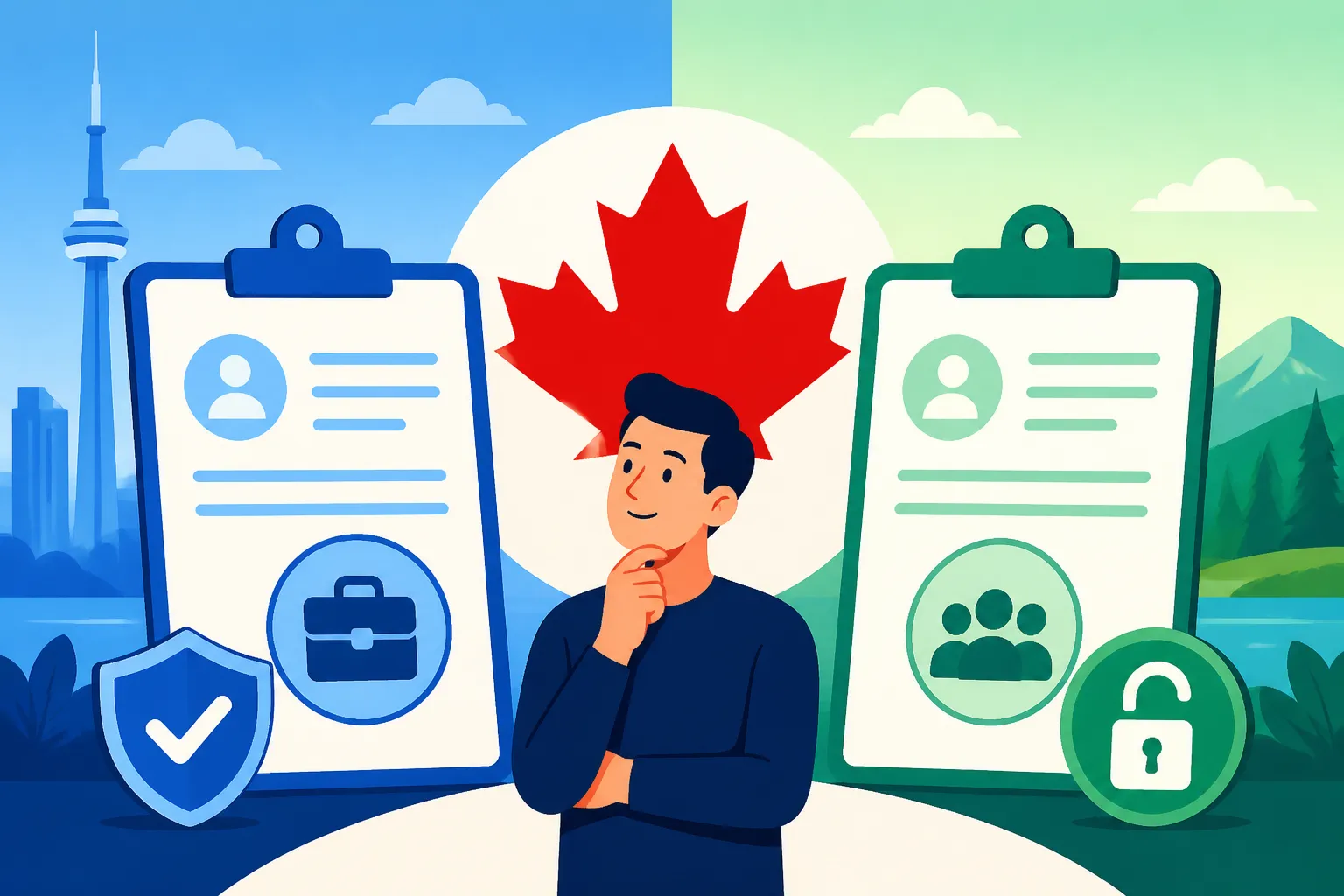
This table below summarizes the key differences between general LMIA-Exempt work permits and Open Work Permits, highlighting their unique features and benefits:
| Feature | LMIA-Exempt Work Permit (General) | Open Work Permit (Specific Type of LMIA-Exempt) |
|---|---|---|
| LMIA Requirement | Not required | Not required (all Open Work Permits are LMIA-Exempt) |
| Employer Specificity | Can be employer-specific (e.g., CUSMA professional at specific company) or open (e.g., PGWP) | Always not employer-specific; allows work for almost any employer |
| Job Offer Required | Usually required for employer-specific LMIA-exempt permits | Often required for initial eligibility (e.g., study for PGWP), but not for the permit itself |
| Flexibility | Varies; can be limited if employer-specific | High; ability to change jobs/employers without a new permit |
| Primary Purpose | Fills specific skilled labour needs, leverages international agreements, or benefits Canada | Provides flexibility for certain groups (graduates, spouses, PR applicants, youth) |
| Common Examples | CUSMA professionals, Intra-Company Transferees, International Experience Canada (Young Professionals), Significant Benefit | Post-Graduation Work Permit (PGWP), Spousal Open Work Permit, Bridging Open Work Permit (BOWP), International Experience Canada (Working Holiday) |
| Path to PR | Often contributes to Canadian work experience, which is valuable for Express Entry/PNP | Provides direct means to gain Canadian work experience for PR pathways |
Navigating the Application Process: Tips and Traps
Applying for any immigration document can feel like a test of patience and precision. While LMIA-exempt and open work permits streamline some aspects of the process, it's by no means a walk in the park. Getting your application right the first time can save you months of waiting and countless headaches.
General Application Steps for Both Types
The general process for applying for either an LMIA-exempt or an open work permit typically follows these steps:
- Determine Eligibility: This is the absolute first step. Carefully review the IRCC website to confirm you meet the specific criteria for the permit you're applying for. For example, if you're looking for a How to Buy Private Health Insurance as a Newcomer in Canada and also need to apply for a spousal open work permit, ensure your partner's status and occupation qualify you.
- Gather Documents: Collect all necessary supporting documents. This often includes your passport, immigration documents, marriage certificate (if applicable for spousal permits), educational transcripts, proof of financial support, and any specific forms required by IRCC. Be thorough – missing even one document can cause significant delays.
- Complete the Application Form: Fill out the correct application form (usually online through your IRCC secure account) accurately and completely. Double-check every field.
- Pay Fees: Work permit applications come with processing fees. Ensure you pay the correct amount online.
- Biometrics (if required): Depending on your nationality and where you are applying from, you may need to provide biometrics (fingerprints and a photo) at a designated service point. You'll receive instructions on how and where to do this after submitting your application.
- Submit Application: Submit your application online. Keep a copy of everything you've submitted.
- Wait for Decision: This is often the hardest part. Processing times vary significantly depending on the type of permit, the volume of applications, and the office processing your file. You can check estimated processing times on the IRCC website.
Remember, the IRCC portal is your best friend here. Create an account, take your time with each section, and upload clear, legible copies of all your documents. For a general overview of getting your paperwork in order, refer to How to Get Your Documents Ready for an IRCC Application.
Essential Documents and Common Pitfalls
Having helped countless expats navigate these waters, I can tell you that common pitfalls usually revolve around documentation. Here's what you absolutely need to nail:
- Valid Passport: Ensure your passport is valid for at least the duration of the work permit you're seeking. If it's expiring soon, renew it before applying.
- Proof of Identity and Civil Status: Birth certificates, national identity documents, marriage certificates (for spousal permits) are crucial. For example, if you're applying for a Spousal Open Work Permit in Quebec, you'll definitely need your marriage certificate.
- Offer of Employment (if applicable): Even for some LMIA-exempt permits, you’ll need a job offer and the employer will need to submit an "Offer of Employment to a Foreign National Exempt from an LMIA" through the IRCC Employer Portal and pay an employer compliance fee. This is common for categories like CUSMA or significant benefit permits. For open work permits, you don't need a specific job offer, but you will need to demonstrate the underlying eligibility (e.g., proof of graduation for a PGWP).
- Educational Documents: For PGWP applicants, transcripts and a letter of completion from your Canadian DLI are essential.
- Financial Proof: Demonstrate that you have enough funds to support yourself and your family upon arrival and during your stay, especially if you're not yet working.
- Medical Exam & Police Certificates: Depending on your country of origin, the length of your stay, and your intended occupation, you may need a medical examination and police certificates. Get these done proactively if you suspect they'll be required.
Common Pitfalls:
- Incomplete Applications: This is the number one reason for delays or refusals. IRCC agents don't chase missing documents; they simply return your application or refuse it.
- Incorrect Information: Any discrepancies between your application form and your supporting documents can raise red flags. Be honest and accurate.
- Outdated Information: Always use the latest forms and check the most current eligibility criteria on the IRCC website. Regulations can change!
- Not Paying the Correct Fees: There's a processing fee and often an open work permit holder fee. Make sure both are paid.
- Lack of Clarity/Legibility: Ensure all scanned documents are clear, readable, and in the correct file format.
My advice? Take your time. Read everything twice. Have a friend or a trusted advisor (if you’re using one) review your application before submission. These applications are too important to rush.
Life with an LMIA-Exempt or Open Work Permit in Canada
Receiving your work permit is a monumental step, but it's just the beginning of your journey. Once you have it, understanding what life is like, how to make the most of your permit, and how to plan for the future is key. Canada offers a welcoming environment, but there are practicalities to settle into.
Working and Living: What to Expect
With an LMIA-exempt or open work permit in hand, you're ready to integrate into Canadian society. Here's what you can expect:
- Access to Employment: For open work permit holders, the job search becomes significantly easier. You're not restricted to one employer, allowing you to explore various sectors and roles. This is particularly beneficial in diverse cities like Vancouver or Montreal, where job markets vary. For LMIA-exempt closed work permit holders, you'll be starting with your specified employer, but remember, the Canadian work experience you gain is invaluable for future immigration steps. You might even find yourself leveraging resources like Understanding Indeed, LinkedIn and Job Boards in Canada.
- Social Insurance Number (SIN): One of your first stops should be Service Canada to apply for your Social Insurance Number (SIN). This nine-digit number is essential for working in Canada, paying taxes, and accessing government benefits. You cannot get paid without it!
- Healthcare: As a temporary resident, your access to provincial healthcare can vary. Most provinces, like Ontario with OHIP or British Columbia with MSP, have a waiting period for new residents, typically up to three months. During this time, it's absolutely crucial to have private health insurance. Companies like Cigna Global offer comprehensive plans that can cover you during this initial period, ensuring you're not caught off guard by unexpected medical expenses. Even after provincial coverage kicks in, many opt for supplementary private insurance for things not covered, like dental care or prescription drugs. For more details, refer to The Newcomer Waiting Period for Provincial Health Coverage in Canada (2027).
- Banking and Finances: You'll need to open a Canadian bank account to receive your salary and manage your finances. Many banks offer newcomer packages, and it's worth exploring options from major banks like RBC, TD, or Scotiabank. Understanding how to manage your money, including transferring funds from abroad, is also important. Read How to Transfer Money Into and Out of Canada as a Newcomer for helpful tips.
- Cost of Living: Canada's cost of living can be high, especially in major urban centers. Your work permit allows you to earn income, but it's wise to budget carefully, considering rent, groceries, transportation, and other expenses. Research the typical costs in your specific city, such as How Much Does It Cost to Rent an Apartment in Toronto in 2026?.
Remember, your work permit isn't just a piece of paper; it's your ticket to building a new life and career in Canada. Embrace the opportunities it offers, and don't be afraid to ask questions or seek support from local newcomer services.
Extending and Transitioning Your Status
Life in Canada often leads to a desire for long-term stay, and your LMIA-exempt or open work permit can be a fantastic stepping stone to permanent residence.
- Extending Your Work Permit: If your current work permit is nearing its expiration date, and you still meet the eligibility criteria for an LMIA-exempt or open work permit (or a different type), you can apply for an extension. It's critical to apply before your current permit expires. If you apply before expiration, you benefit from "maintained status" (formerly implied status), which means you can continue working under the same conditions until a decision is made on your extension application.
- Transitioning to Permanent Residence: Many LMIA-exempt and open work permit holders leverage the Canadian work experience they gain to qualify for permanent residence programs. The Canadian Experience Class (CEC), part of the Express Entry system, highly values Canadian work experience. Provincial Nominee Programs (PNPs) also often have streams specifically for individuals with Canadian work experience or those working in high-demand occupations within the province. Your work permit gives you the invaluable opportunity to accumulate this experience. To understand how your work permit can lead to PR, check out How to Move from a Work Permit to Permanent Residence in Canada.
- Applying for a Bridging Open Work Permit (BOWP): If you've applied for permanent residence through Express Entry or a PNP, and your current work permit is set to expire, a BOWP can literally bridge the gap, allowing you to continue working while you wait for your PR decision. This is a critical option for many and prevents disruptions to employment.
- Employer Support for PR: While your open work permit gives you flexibility, a supportive employer who understands immigration pathways can be a huge asset if you decide to pursue permanent residence. They might be willing to provide a job offer that strengthens your Express Entry profile or supports a provincial nomination.
The journey from a temporary worker to a permanent resident is a common and achievable one for many in Canada. Your LMIA-exempt or open work permit is often the key that unlocks that path, providing you with the necessary work experience and allowing you to adapt to Canadian life. Plan ahead, understand your options, and you'll be well on your way.
Disclaimer
The information provided in this guide is for general informational purposes only and does not constitute legal or professional advice. Immigration policies and regulations in Canada are subject to change. Always consult with a regulated Canadian immigration consultant (RCIC) or a qualified immigration lawyer for advice tailored to your specific situation.