How Much Is the Down Payment for a House in Canada?
Ah, the Canadian housing market! It's a topic that can bring a mix of excitement, hope, and, let's be honest, a fair bit of sticker shock and confusion for newcomers. You've heard about the dream of owning a home here, but then the reality hits: how much cash do you actually need upfront? This guide is here to unravel the mystery of down payments for a house in Canada, breaking down the numbers, the rules, and some practical tips to help you navigate this significant step.
The Basics: What Exactly is a Down Payment in Canada?
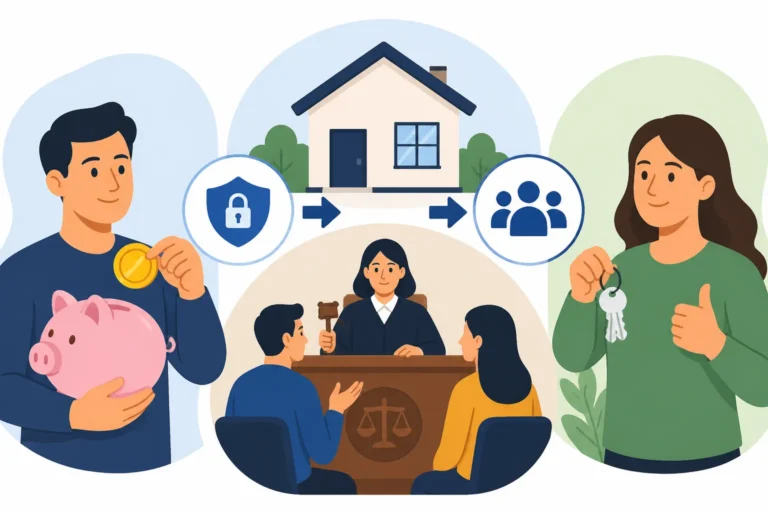
When you’re looking at homes in Canada, you'll often hear the term "down payment" thrown around. But what is it, really? It’s your initial, lump-sum cash contribution towards the purchase price of your home. Think of it as your personal stake in the property, the portion you’re paying directly out of your pocket, rather than borrowing from a lender. This isn't part of your mortgage; it's what you pay before the mortgage even kicks in.
More Than Just a Number: The Initial Investment
For many of us who've moved here, especially from countries with different housing systems, the concept of a substantial down payment can be daunting. It's not just a percentage; it's a significant financial commitment. For example, if you're eyeing a home for $500,000, even a 5% down payment means shelling out $25,000 upfront. This isn't pocket change, and it represents weeks, months, or even years of dedicated saving. It shows the lender, and yourself, that you're serious about this investment. It’s the bedrock upon which your homeownership journey is built.
Why It Matters: Skin in the Game and Lender Confidence
Your down payment is more than just a large sum of money; it's a critical signal to mortgage lenders. From their perspective, the more "skin you have in the game" – meaning the larger your down payment – the less risk they take on. If you've invested a significant portion of your own money, you're statistically less likely to default on your mortgage payments. This is why a larger down payment can often lead to more favourable mortgage terms, like lower interest rates or more flexible conditions.
For you, the homebuyer, it's also about building equity from day one. Equity is the portion of your home that you actually own, free and clear of debt. A bigger down payment means you start with more equity, reducing the overall amount you need to borrow and, consequently, the total interest you’ll pay over the life of your mortgage. It can provide a real sense of financial security, knowing you have a solid foundation in your new home.
Navigating Minimum Down Payment Requirements
This is where things can get a little tricky, and it's one of the first hurdles many newcomers face when trying to understand buying a home in Canada. The minimum down payment isn't a flat rate; it depends directly on the purchase price of the home you're looking to buy. It’s designed to ensure buyers have a vested interest, while still allowing for some flexibility in entering the market.
The Standard Rules: Purchase Price Tiers
Canada has a tiered system for minimum down payments, which can feel a bit like a math puzzle at first. Here’s how it generally breaks down:
- For homes priced up to $500,000: The absolute minimum down payment you'll need is 5% of the purchase price. So, a $450,000 home requires $22,500 down.
- For homes priced between $500,000 and $999,999: This is where it gets interesting. You'll need 5% on the first $500,000, and then 10% on the portion of the purchase price that is above $500,000.
- Let's say you're buying a home for $700,000. Your down payment would be:
- 5% of $500,000 = $25,000
- 10% of the remaining $200,000 ($700,000 – $500,000) = $20,000
- Total down payment = $25,000 + $20,000 = $45,000
- Let's say you're buying a home for $700,000. Your down payment would be:
- For homes priced at $1,000,000 or more: This one is simpler, but a much bigger number. You'll need a minimum of 20% of the entire purchase price. This means if you're buying a $1.2 million home, your down payment will be $240,000. There's no mortgage default insurance available for homes over $1 million, which leads us to our next point.
It's crucial to understand these tiers, as they dictate the baseline cash you need. Many newcomers are often surprised by the 5%/10% split, especially in competitive markets like Toronto or Vancouver where homes quickly exceed the $500,000 mark. If you’re a newcomer looking to buy, it’s highly recommended to work with a mortgage broker who can clearly explain these calculations based on your specific financial situation and the local market. For a broader understanding of property ownership, you might want to read our guide on Understanding Property Ownership and the Foreign Buyer Ban in Canada (2026).
The Mortgage Default Insurance Factor
If your down payment is less than 20% of the home's purchase price (which is often the case for many first-time homebuyers, including newcomers), you'll be required to purchase mortgage default insurance. This isn't insurance for you; it protects the lender in case you default on your mortgage. In Canada, this insurance is provided by companies like Canada Mortgage and Housing Corporation (CMHC), Sagen (formerly Genworth Canada), and Canada Guaranty.
The cost of this insurance is typically added to your mortgage principal, meaning you pay interest on it over the life of your loan. The premium usually ranges from 0.6% to 4.5% of your mortgage amount, depending on the size of your down payment (a smaller down payment means a higher premium). While it might seem like an extra cost, this insurance is what allows lenders to offer mortgages with less than a 20% down payment, effectively making homeownership accessible to more people. Without it, you’d always need that hefty 20% upfront.
Here’s a quick overview of how the premium typically works (note these are illustrative and can change):
| Loan-to-Value Ratio (LTV) | Down Payment Percentage | CMHC Insurance Premium |
|---|---|---|
| Up to 95% | 5% – 9.99% | 4.00% |
| Up to 90% | 10% – 14.99% | 3.10% |
| Up to 85% | 15% – 19.99% | 2.80% |
| Less than 80% | 20% or more | No insurance required |
Note: These rates are subject to change and depend on the specific insurer. Check with your lender for the most current information.
This insurance is an important consideration in your total home-buying budget, as it adds to your overall debt. It's one of those crucial details that often gets overlooked in the initial excitement of house hunting.
Different Property Types, Different Rules?
For most newcomers buying their primary residence, whether it's a single-family home, a townhouse, or a condo, the down payment rules generally follow the same tiers mentioned above. The key is that the property must be for personal occupancy.
However, if you're thinking about purchasing an investment property, a secondary residence, or a multi-unit dwelling that isn't primarily owner-occupied, the minimum down payment requirements often change. For instance, investment properties typically require a minimum of 20% down, and sometimes even more, as lenders view them as higher risk. The purpose of the property can significantly influence the lending criteria. For the scope of this guide, we're focusing on purchasing a home for yourself and your family to live in, where the standard rules apply.
Strategies for Saving Your Down Payment in Canada
Saving for a down payment in Canada, especially in the current housing market, can feel like climbing Mount Everest. But don't despair! There are dedicated financial vehicles and practical strategies that can make that summit more attainable. Moving abroad takes discipline and a clear plan.
Dedicated Savings Accounts: FHSA and RRSP HBP
Canada offers specific tools designed to help first-time homebuyers save. These are powerful and can significantly boost your down payment fund.
1. The First Home Savings Account (FHSA):
This is a relatively new kid on the block, launched in 2023, and it's a game-changer. The FHSA combines the best features of an RRSP (tax-deductible contributions) and a TFSA (tax-free withdrawals for a qualified home purchase).
- How it works: You can contribute up to $8,000 per year, with a lifetime contribution limit of $40,000. These contributions are tax-deductible, meaning they reduce your taxable income for the year you contribute them, potentially leading to a larger tax refund. Even better, any investment growth within the FHSA is tax-free, and when you withdraw funds to buy your first home, those withdrawals are also tax-free.
- Eligibility: To open an FHSA, you must be a Canadian resident, at least 18 years old (or the age of majority in your province/territory), and a first-time home buyer. A "first-time home buyer" generally means you haven't lived in a home that you or your spouse/common-law partner owned in the calendar year the account is opened or in the preceding four calendar years.
- Why it's amazing: This account offers a triple tax advantage: contributions are deductible, investment income is tax-free, and qualified withdrawals are tax-free. It's arguably the most powerful tool currently available for saving for a down payment. If you're eligible, open one as soon as possible, even if you can only contribute a small amount initially, to start accumulating contribution room.
2. The RRSP Home Buyer's Plan (HBP):
This program allows you to withdraw funds from your Registered Retirement Savings Plan (RRSP) to buy or build your first home, without having to pay tax on those withdrawals immediately.
- How it works: You can withdraw up to $35,000 from your RRSP (or $70,000 for a couple) tax-free to use as a down payment. You then have up to 15 years to repay the funds back into your RRSP, starting two years after the withdrawal. Each year, you need to repay at least 1/15th of the amount withdrawn. If you don't repay, that portion becomes taxable income for that year.
- Eligibility: Similar to the FHSA, you generally need to be a first-time home buyer. You also need to be a Canadian resident and have the intention to occupy the home within one year.
- Why it's useful: The HBP can be a fantastic way to leverage your existing retirement savings for a down payment, especially if you've been diligently contributing to an RRSP. It gives you access to a significant chunk of change that might otherwise be locked away. However, remember it's a loan to yourself; you do need to repay it, so factor that into your future financial planning. For more on these types of accounts, check out Understanding RRSPs, TFSAs and Retirement Savings in Canada.
Beyond the Accounts: Practical Saving Tips
While those registered accounts are crucial, good old-fashioned budgeting and smart financial habits are just as vital.
- Aggressive Budgeting and Tracking: This might sound obvious, but it's often the hardest part. Really dig into your expenses. Where can you cut back? Do you need that daily latte, or can you make coffee at home? Are there subscription services you can cancel? Tools like Mint or YNAB (You Need a Budget) can be incredibly helpful for tracking every dollar. Set a specific savings goal for your down payment and treat it like a non-negotiable monthly expense.
- Side Hustles and Extra Income: Many Canadians are turning to side gigs to boost their savings. Whether it's freelancing, driving for a ride-share service, tutoring, or selling crafts online, any extra income that goes directly into your down payment fund can accelerate your progress.
- Gift Funds: If you're fortunate enough to have family willing to help, gift funds can be a legitimate source for a down payment. However, there are rules. Lenders will require a "gift letter" stating that the money is a true gift, not a loan, and that it doesn't need to be repaid. This ensures that the gift won't impact your ability to repay your mortgage. Make sure any funds received are properly documented to avoid headaches later.
- Tax Refunds and Bonuses: Treat any unexpected windfalls, like tax refunds (you can learn about How Much Income Tax Will I Pay in Canada in 2026?) or work bonuses, as down payment boosters. Resist the urge to spend them and funnel them straight into your FHSA or dedicated savings account.
- Review Your Spending Habits: As expats, we often carry certain spending habits from our home countries. Take a critical look at how your expenses align with Canadian norms. Perhaps you’re spending too much on certain things that could be done more affordably here. Every dollar saved is a dollar closer to your goal.
The Bigger Picture: Down Payment's Impact on Your Homeownership Journey
Beyond just getting your foot in the door, the size of your down payment has a ripple effect on your entire homeownership experience. It's not just about the initial cash; it influences your long-term financial health and peace of mind.
Mortgage Costs and Interest Rates
One of the most immediate and significant impacts of your down payment is on your mortgage. A larger down payment means you're borrowing less money. Simple math dictates that less principal means less interest paid over the life of the loan. This can literally save you tens of thousands of dollars over 25 years.
Furthermore, lenders often offer better interest rates to borrowers who put down 20% or more. Why? Because you're no longer considered a "high-ratio" mortgage and don't require mortgage default insurance. This removes a layer of risk for the lender, and they pass those savings on to you in the form of a lower rate. Even a small reduction in your interest rate can translate into significant monthly savings, making your mortgage payments more manageable and freeing up cash for other important things like building an emergency fund or saving for retirement. Learning How to Get a Mortgage to Buy a Home in Canada will delve deeper into these mechanics.
Let's look at an example for a $600,000 home with a 25-year amortization and a 5.5% interest rate:
| Down Payment | Down Payment Amount | Mortgage Amount | Monthly Payment (approx.) | Total Interest Paid (approx.) |
|---|---|---|---|---|
| 5% | $30,000 | $570,000 | $3,485 (with CMHC) | $475,500 |
| 10% | $60,000 | $540,000 | $3,285 (with CMHC) | $445,500 |
| 20% | $120,000 | $480,000 | $2,925 (no CMHC) | $397,500 |
This table is illustrative and does not include property taxes, home insurance, or potential variations in interest rates based on down payment size, which could make the 20% down payment even more financially advantageous.
As you can see, the difference in monthly payments and total interest paid can be substantial. This is why saving that extra 10% or 15% to reach the 20% threshold is a major goal for many Canadian homebuyers.
Building Equity Faster
Equity is a powerful thing. It's the difference between your home's current market value and what you still owe on your mortgage. When you make a larger down payment, you automatically start with more equity. This isn't just a number on paper; it's a tangible asset that grows over time.
- Financial Cushion: More equity means you have a larger financial cushion should property values decline or if you need to access funds in an emergency (through a home equity line of credit, for example).
- Flexibility: A significant equity stake gives you more flexibility down the line. If you decide to sell, a higher equity means more cash in your pocket. If you want to refinance, you'll likely have more options and better terms.
- Wealth Building: For many Canadians, their home is their largest asset and a primary means of building wealth. Starting with a solid equity position sets you on a stronger path to financial growth and stability in Canada.
The Psychological Relief
Let's be real, moving to a new country and navigating its financial systems is inherently stressful. Adding the pressure of a massive debt load can be overwhelming. A larger down payment, by reducing your mortgage amount and potentially lowering your monthly payments, offers a significant psychological benefit.
- Reduced Stress: Knowing your monthly housing costs are lower, and you owe less to the bank, can dramatically reduce financial stress. This frees up mental space to focus on settling into your new community, career, and life in Canada.
- Greater Confidence: It instills a sense of confidence and control over your finances. You feel more secure in your new home, knowing you have a stronger foundation and are less susceptible to economic fluctuations.
- Empowerment: As a newcomer, every step towards financial independence in Canada is empowering. Achieving a substantial down payment is a major milestone that proves your capability and commitment to building a life here.
Don't Forget the Extras: Beyond the Down Payment
Now that you understand the down payment, it’s vital to realize that buying a home isn’t just about that one large chunk of cash. There are numerous other costs, often called "closing costs," that can sneak up on you if you’re not prepared. Many newcomers, myself included, have been caught off guard by these additional expenses. When you're budgeting for the total cost of living in Canada, these need to be factored in. For a comprehensive overview, you might find our article The Complete Guide to Cost of Living in Canada for Newcomers (2026) very helpful.
Closing Costs: The Hidden Expenses
Closing costs are the one-time fees and charges you pay on the "closing day" – the day you officially take possession of your new home. These typically range from 1.5% to 4% of the purchase price, and they can add up quickly.
- Land Transfer Tax (LTT): This is one of the biggest closing costs and varies significantly by province, and even by city (e.g., Toronto has its own municipal LTT in addition to the provincial one). For instance, in Ontario, the provincial LTT can be thousands of dollars on a moderately priced home. If you're buying in Toronto, you'll pay double that amount due to the municipal LTT. This is not a small sum, and it needs to be budgeted for. We have a detailed guide on Understanding Land Transfer Tax When Buying Property in Canada that's worth a read.
- Legal Fees and Disbursements: You'll need a lawyer to handle the legal aspects of the home purchase, including reviewing the purchase agreement, conducting title searches, and preparing the mortgage documents. Legal fees typically range from $1,000 to $2,000, plus disbursements (minor expenses like photocopies, couriers, etc.).
- Appraisal Fee: Your lender will usually require an appraisal of the property to ensure its value is in line with the purchase price. This protects them from lending more than the home is worth. This fee can range from $300 to $500.
- Home Inspection Fee: While not mandatory, a home inspection is highly recommended. A professional inspector will examine the property's condition and identify any potential issues, saving you from costly surprises down the road. This can cost anywhere from $300 to $600.
- Mortgage Broker Fee (if applicable): While many mortgage brokers are paid by the lender, some may charge a fee, especially for complex cases. Always clarify this upfront.
- Title Insurance: This protects you and your lender from title defects, such as errors in public records, unknown liens, or survey discrepancies. It's usually a one-time fee of a few hundred dollars.
- Adjustments: These are costs that the seller has already paid for a period beyond the closing date, and you, as the buyer, will need to reimburse them. This often includes property taxes, utility bills, or condo fees. For example, if the seller paid property taxes for the entire year, and you close halfway through, you'll owe them for the remaining six months.
- Property Tax and Utility Holdbacks: Sometimes, lenders might require you to pre-pay a portion of your property taxes or utilities to ensure these crucial bills are covered.
- Moving Costs: And of course, once you own the place, you have to move in! This can range from renting a truck yourself to hiring professional movers. When moving locally, a company like Sirelo might be a good option for finding reputable movers, but remember that the costs vary widely based on how much stuff you have and how far you're moving.
Always ask your lawyer for a detailed breakdown of estimated closing costs well in advance of your closing date so there are no surprises.
Government Incentives and Rebates
The Canadian government, and some provincial governments, offer various programs to help first-time homebuyers. These can provide some much-needed relief from the financial burden.
- First-Time Home Buyer Incentive (FHBI): This is a shared-equity mortgage program where the government contributes a percentage (5% or 10%) of the home's purchase price to your down payment. In return, the government takes an equivalent stake in the home's equity. You don't pay interest on this incentive, but you repay it when you sell the home or after 25 years, whichever comes first, based on the home's fair market value at that time. This can be a great way to boost your purchasing power, but understanding the equity-sharing aspect is crucial.
- GST/HST New Housing Rebate: If you purchase a newly constructed home from a builder, you might be eligible for a rebate on a portion of the GST/HST paid on the purchase price.
- Provincial First-Time Home Buyer Rebates: Many provinces offer rebates on their Land Transfer Tax for first-time homebuyers. For example, in Ontario, eligible first-time buyers can receive a rebate of up to $4,000 on the provincial Land Transfer Tax. In British Columbia, there's a property transfer tax exemption for eligible first-time homebuyers on homes up to a certain value. It's essential to research the specific programs available in the province where you plan to buy.
These incentives can significantly reduce your upfront costs or increase your affordability, so make sure to explore all options you might be eligible for. Your mortgage broker or real estate agent can often provide guidance on these programs. For a deeper dive into the overall process of buying a home, our guide How to Buy a Home in Canada as a Newcomer: The Full Guide (2027) is an invaluable resource.
Navigating the down payment landscape in Canada can feel like a marathon, but with careful planning, understanding the rules, and leveraging the available resources, your dream of homeownership here is absolutely achievable. Don't be afraid to ask for help, whether it's from a trusted mortgage broker, a real estate agent, or a financial advisor. They are there to guide you through the complexities.
Disclaimer
The information provided in this article is for general guidance only and does not constitute financial, legal, or professional advice. Housing market conditions, regulations, and government programs in Canada are subject to change. It is highly recommended to consult with qualified professionals, such as a mortgage broker, real estate agent, and lawyer, for advice tailored to your specific situation before making any financial decisions related to purchasing a home in Canada.