Can I Get Fibre Internet Anywhere in Canada?
Let's be real, when you're moving to Canada, especially from a country with super-fast internet everywhere, you probably just assume that fibre optic internet is, well, everywhere. You might envision lightning-fast speeds no matter where you settle, perfect for streaming, working remotely, and staying connected with loved ones back home. But Canada, with its vast and varied landscape, presents a different reality. This guide is going to walk you through the ins and outs of fibre internet availability across the country, helping you understand where you can expect blazing speeds and what your reliable options are if pure fibre isn't quite at your doorstep.
Understanding Canada's Vast Internet Landscape
Canada is enormous, the second-largest country in the world by land area. This sheer size, combined with a relatively dispersed population outside of major urban centres, makes universal infrastructure development a significant challenge. It's not like simply running cables across a small European country or a densely packed state.
The Myth of Universal Fibre
When I first moved here, I certainly had an expectation of seamless, high-speed connectivity. After all, it's a developed nation, right? The reality is, while Canada is pushing hard for better connectivity, rolling out fibre optic cables across thousands of kilometres of diverse terrain – from bustling cities to remote wilderness and even across lakes and mountains – is an ongoing, massive undertaking. So, that dream of 1 Gbps symmetrical speeds available on every single street in every single town? It's not quite there yet. This isn't to say Canada's internet is bad, far from it, but it's crucial to manage expectations based on your specific location.
Urban vs. Rural Divide
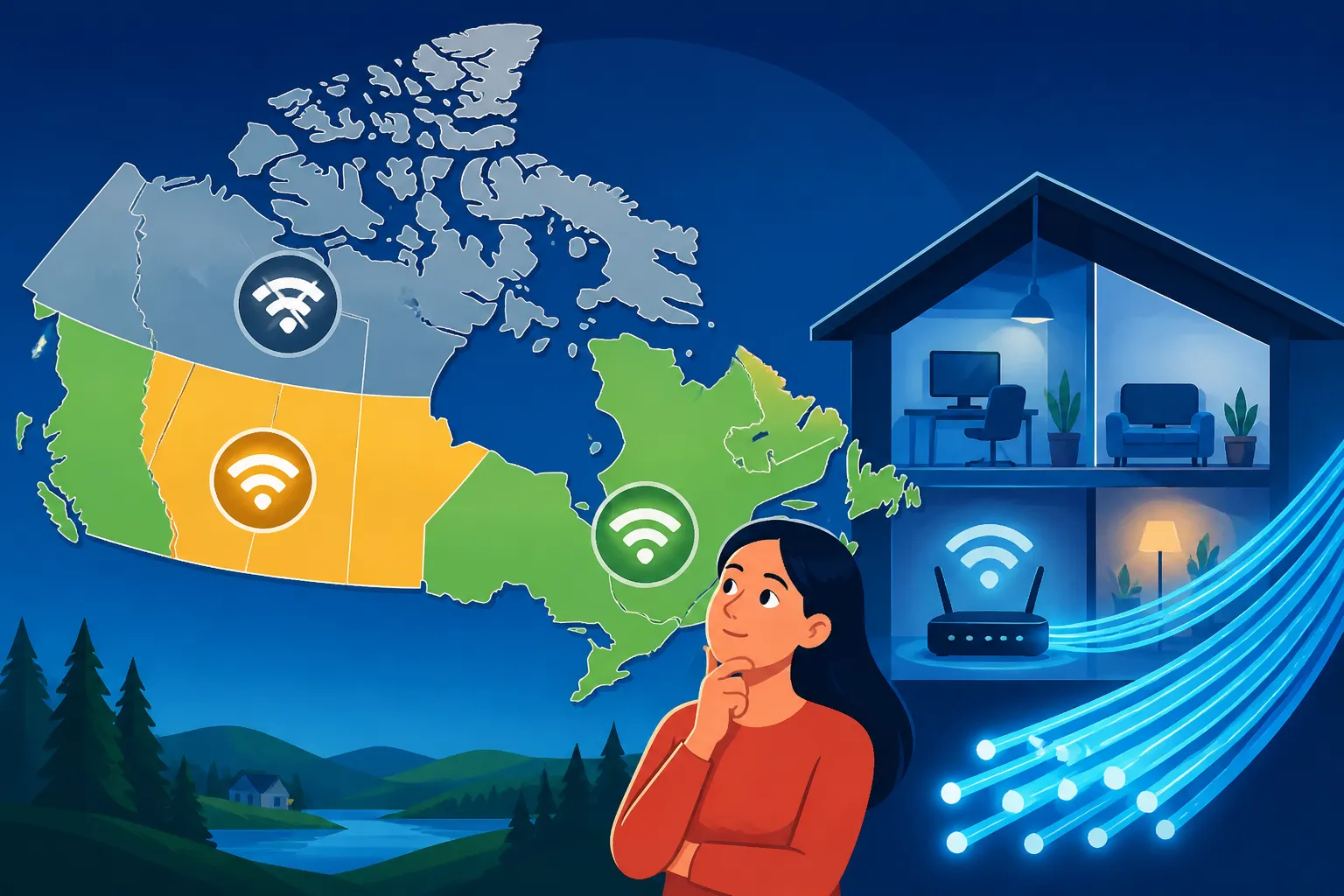
The most glaring truth about internet in Canada, especially fibre, is the stark contrast between urban and rural areas. In major cities and their immediate surrounding suburbs, fibre optic infrastructure is often well-established and competitive. Internet service providers (ISPs) have invested heavily where there's a dense population to serve, making it economically viable. You'll find multiple providers vying for your business, offering fantastic fibre-to-the-home (FTTH) options.
However, as you move further out into smaller towns, villages, or truly rural communities, the availability of fibre drops off dramatically. These areas often rely on older infrastructure like DSL (digital subscriber line) or fixed wireless, which, while functional, simply can't compete with the speeds and reliability of fibre. For newcomers thinking about a quieter life outside the urban hustle, this is a really important consideration. What kind of internet speed you can get will profoundly impact everything from your work-from-home capabilities to your family's entertainment. It’s a classic Canadian paradox: breathtaking nature, but maybe not the best Netflix connection.
Where Fibre Internet is Most Prevalent in Canada
Don't despair! Fibre internet is very much a reality for a huge number of Canadians, particularly if you're settling in a well-populated area. Knowing where it's likely to be available can help guide your housing decisions.
Major Metropolitan Hubs
If you're heading to one of Canada's bustling metropolises, you're in luck. Cities like Toronto, Vancouver, Montreal, Calgary, Edmonton, Ottawa, and Halifax boast extensive fibre optic networks. Here, you'll often have a choice between several major providers, each offering competitive fibre plans. For instance, in Ontario and Quebec, you'll find Bell Canada pushing their "Fibe" network heavily, often competing directly with Rogers' robust cable internet infrastructure which also offers very high speeds, sometimes gigabit speeds over coaxial cable that are often marketed similarly to fibre. Out west, Telus and Shaw are the big players, with Telus expanding its fibre network rapidly in British Columbia and Alberta, while Shaw often uses a high-speed coaxial cable network.
In these cities, it's not uncommon to find packages offering speeds from 500 Mbps up to 1.5 Gbps or even 3 Gbps, with symmetrical upload and download speeds, which is a huge benefit for anyone doing video calls, uploading large files, or gaming. When you're looking for an apartment to rent in Canada, especially in a city, checking internet availability is as important as checking the water pressure.
Newer Developments and Suburbs
Another hotspot for fibre internet is in newly constructed residential developments and modern suburban communities. When developers build new homes or entire subdivisions, it's often more cost-effective and future-proof to lay fibre optic cables from the outset rather than relying on older technologies. This means that even if a community isn't in the absolute core of a major city, if it's a rapidly growing area with a lot of new housing, you stand a very good chance of having fibre available.
So, if you're looking into buying a home in Canada, particularly in an expanding suburb, inquire about the internet infrastructure during your house hunt. Real estate agents often highlight "fibre internet available" as a selling point, and for good reason. It dramatically enhances the quality of life and the resale value of a property in the digital age.
How to Check for Fibre Internet in Your Specific Area
Before you commit to a place, or even if you've already found a perfect spot, it’s critical to verify the internet options. Don’t just assume!
Online Availability Checkers
The easiest and most reliable way to check for fibre internet at a specific address is to use the online availability checkers provided by the major internet service providers.
- Bell Canada: Go to their website, navigate to their internet plans, and there will typically be a field to enter your postal code or full address. This will tell you what services, including their "Fibe" (fibre) options, are available.
- Rogers: Similar to Bell, Rogers offers an address checker on their site, particularly useful for residents in Ontario and parts of Atlantic Canada. They focus on their Ignite Internet plans, which often reach gigabit speeds over a hybrid fibre-coaxial network.
- Telus: For Western Canada, Telus's website is your go-to. They are actively expanding their "PureFibre" network and their checker will clearly indicate if fibre-to-the-home is available.
- Shaw: Also prominent in Western Canada, Shaw provides an address lookup tool for their internet services.
These tools are usually quite accurate. It’s not uncommon for fibre to be available on one side of the street but not the other, or to hit a hard stop at a municipal boundary. Don't be surprised if your dream apartment building on Main Street has fibre, but the charming, slightly older house just two blocks away doesn't.
Talking to Landlords or Property Managers
If you're renting, your landlord or property manager can be an invaluable source of information. They often know exactly which internet providers serve the building and what type of infrastructure is in place. They might even have existing relationships with providers, sometimes offering bundled deals or preferred rates. When I was looking for my first rental, I always made sure to ask, "What internet providers are available here, and do they offer fibre?" It saves a lot of headaches later on. Remember, access to reliable internet is crucial for getting settled, whether it's to apply for your provincial health card in Canada or to research how to apply for a Social Insurance Number (SIN) in Canada.
Asking Local Residents
There’s nothing quite like local knowledge. If you're moving to a specific neighbourhood or smaller town, don't hesitate to ask people who already live there. Local community groups on social media (Facebook groups are particularly popular for this in Canada), neighbourhood forums, or even just chatting with prospective neighbours can give you the real lowdown. They'll tell you which providers are reliable, which to avoid, and the true picture of fibre availability far more candidly than any sales brochure. Sometimes, the information you get from someone who actually uses the service in your exact location is the most valuable.
Alternatives When Fibre Isn't Available
So, you've checked, and fibre-to-the-home isn't an option where you want to live. Take a deep breath! It's not the end of the world. Canada has several other robust internet technologies that can still offer excellent connectivity.
High-Speed Cable Internet
In many urban and suburban areas, even if pure fibre (FTTH) isn't directly wired into your home, you'll likely have access to high-speed cable internet. This service uses a hybrid fibre-coaxial (HFC) network, meaning fibre optic cables run to your neighbourhood, and then coaxial cables bring the connection the "last mile" into your home.
Cable internet is often incredibly fast, offering speeds comparable to entry-level and mid-tier fibre plans, frequently up to 1 Gbps download speeds. The main difference is that upload speeds might not be symmetrical (i.e., uploads are slower than downloads) and performance can sometimes be affected by network congestion during peak hours, as you're sharing bandwidth with your neighbours. However, for most users – streaming, browsing, standard video calls – cable internet provides a fantastic experience. Rogers and Shaw are the primary cable internet providers in their respective regions of Canada.
DSL and Fixed Wireless
Moving further out, particularly in smaller towns and rural settings, you might encounter DSL or fixed wireless internet. DSL uses existing telephone lines, which means its speed is highly dependent on your distance from the telephone company's central office. It's generally slower than cable or fibre, but it's widely available where phone lines exist. It's perfectly fine for basic browsing and email, but you might struggle with multiple heavy users or consistent high-definition streaming.
Fixed wireless, on the other hand, delivers internet over airwaves from a central tower to an antenna at your home. It’s a popular solution for semi-rural areas where laying cables is cost-prohibitive. Speeds vary greatly depending on the provider, your distance from the tower, and line-of-sight, but it can offer a decent connection. Both DSL and fixed wireless are typically offered by smaller, regional providers or by major players like Bell and Telus in areas where their fibre hasn't reached.
Satellite Internet (Starlink)
For those truly off the beaten path, living in very remote areas where even fixed wireless struggles, satellite internet has long been the only option. Traditionally, this meant slower speeds and high latency (delay). However, Starlink, owned by SpaceX, has been a game-changer. Starlink uses a constellation of low Earth orbit satellites, which dramatically reduces latency and offers much higher speeds compared to traditional geostationary satellite internet.
While it's significantly more expensive to set up (requiring a hardware purchase) and often has higher monthly fees than terrestrial options, Starlink provides high-speed internet to places that were previously cut off. If you're considering a cabin in the Rockies or a farm on the Prairies, Starlink might be your best bet for a modern internet experience. Just be aware of the upfront costs and remember that availability can sometimes be location-dependent even for satellite services.
Mobile Hotspots and eSIMs
Finally, for temporary needs, backup internet, or if you're truly nomadic, mobile hotspots and eSIMs are incredibly useful. Your smartphone can act as a hotspot, sharing its cellular data connection with other devices. This is great for occasional work on the go or when your home internet unexpectedly goes down.
For newcomers, especially during those initial weeks or months when you're still getting settled and your permanent internet isn't set up, an eSIM can be a lifesaver. Companies like Airalo offer convenient eSIM data plans for Canada that you can activate instantly on compatible phones. This means you have data as soon as you land, allowing you to navigate, communicate, and start setting up essentials without hunting for a physical SIM card or worrying about Wi-Fi. It’s an excellent bridge solution while you figure out your long-term internet setup or apply for your permanent phone plan. Setting up utilities (hydro, gas, internet) in Canada can take time, so having mobile data is essential.
Navigating the Providers and Plans
Once you know what technology is available in your area, the next step is choosing a provider and plan. This can feel overwhelming with all the options!
Major National and Regional Players
Canada's internet market is dominated by a few major players, primarily Bell, Rogers, Telus, and Shaw.
- Bell is strong in Ontario, Quebec, and Atlantic Canada, known for its "Fibe" (fibre) and DSL services.
- Rogers is prominent in Ontario and Atlantic Canada, primarily offering high-speed cable internet.
- Telus covers British Columbia, Alberta, and some parts of Quebec, pushing its "PureFibre" network.
- Shaw is a major presence in Western Canada (BC, Alberta, Saskatchewan, Manitoba) with its cable internet offerings.
These giants own most of the infrastructure. They generally offer a wide range of speeds, often bundled with TV and home phone services. While their prices can be higher, they also tend to have more robust customer service departments and extensive network coverage. You'll definitely want to compare their offerings based on your specific address.
Smaller Resellers and Independent ISPs
Don't overlook the smaller players! Canada also has a vibrant ecosystem of independent ISPs and resellers. These companies often operate by leasing access to the networks of the larger providers (Bell, Rogers, Telus, Shaw) but offer their own pricing, customer service, and sometimes unique plans. Think of companies like TekSavvy, Fido, Virgin Plus, Oxio, and Start.ca.
These independent providers can often offer more competitive prices, especially for mid-range speeds, and sometimes boast highly-rated customer service. It's always worth checking if a smaller ISP serves your area, as they can represent significant savings. Just make sure you understand if they are using fibre, cable, or DSL infrastructure, as that will dictate the potential speeds. Knowing about understanding the cost of living in Canada for newcomers makes these savings even more attractive!
Contract Terms and Installation
When signing up for internet in Canada, pay close attention to the contract terms. Many providers offer promotional pricing for the first 12 or 24 months, after which the price increases significantly. Be sure to ask about the regular price once the promotion ends.
Installation can vary. If fibre is already wired directly into your home, it might be a quick self-installation or a short technician visit. If new lines need to be run, or if you're in an older building without current fibre access, it could require a longer appointment with a technician. Always confirm the installation timeline and any associated fees before committing. Also, inquire about equipment rental fees for modems and routers, as these can add to your monthly bill.
Here's a quick comparison of common internet types in Canada:
| Internet Type | Typical Speeds (Download/Upload) | Availability | Pros | Cons |
|---|---|---|---|---|
| Fibre Optic (FTTH) | 100 Mbps to 3 Gbps+ (Symmetrical speeds common) | Major cities, newer developments, some suburbs | Fastest, most reliable, symmetrical speeds | Limited coverage in rural areas, potentially higher cost, might not be available in older buildings |
| Cable Internet | 50 Mbps to 1.5 Gbps (Download faster than upload) | Major cities, suburbs, many smaller towns | Very fast download speeds, widely available in populated areas | Upload speeds often slower, can experience congestion at peak times (less common with modern tech) |
| DSL | 10 Mbps to 100 Mbps (Highly location dependent) | Widely available where phone lines exist | Good for basic use, generally affordable | Slower speeds, performance drops with distance from central office |
| Fixed Wireless | 25 Mbps to 100 Mbps (Variable) | Semi-rural, underserved communities | Bridges gap where wired internet isn't feasible | Requires line-of-sight to tower, weather can affect performance, variable speeds |
| Satellite (Starlink) | 50 Mbps to 250 Mbps+ (High speeds, lower latency than old satellite) | Very remote, rural areas | Broad coverage for extremely isolated locations | High upfront hardware cost, higher monthly fees, occasional drops |
| Mobile Hotspot/eSIM | Varies by cellular network (e.g., 4G LTE, 5G) | Wherever cellular network coverage exists | Portable, instant access, great for temporary needs | Data caps, can be expensive for heavy use, not a true home internet replacement |
Ultimately, getting connected is one of the first and most vital steps when you arrive in Canada. Whether it's pure fibre or a robust alternative, you'll find a way to stay online. Just do your homework for your specific address, and you'll be browsing, streaming, and video-calling in no time! For more tips on setting up your new life, you might also want to read our guide on how to set up Internet and Cable in Canada.
Disclaimer
The information provided in this guide is intended for general informational purposes only and does not constitute professional advice. While we strive to keep the information up-to-date and accurate, internet service availability, speeds, and pricing can change rapidly and vary significantly by location and provider in Canada. We recommend consulting directly with internet service providers for the most current and specific details regarding services at your desired address.