How Do I Set Up a Mobile Phone Plan in Canada?
Stepping off the plane in Canada, one of the first things you realize – often after the initial rush of excitement or the slight panic of a new place – is that your phone is suddenly a very expensive brick. Staying connected, finding your way around, and simply letting loved ones know you’ve arrived safely relies heavily on a working mobile phone, and the Canadian system can feel like a whole new universe. This guide is here to walk you through the labyrinthine process of setting up a mobile phone plan in Canada, covering everything from understanding the major players to navigating the often-tricky world of contracts and compatibility, so you can call, text, and surf with confidence.
Understanding Canada's Mobile Landscape: It's Not Always What You Expect
When you first arrive in Canada, you might be surprised by the mobile phone market. It's often different from what you're used to, particularly regarding pricing and choice. It can be a real culture shock, especially if you're coming from a country with fierce competition and lower prices.
The Big Three and the Challengers
Canada's mobile market is largely dominated by what we affectionately call "the Big Three": Bell, Rogers, and Telus. These are the giants, the ones with the extensive networks covering vast stretches of this enormous country. They own the infrastructure, and for the most part, if you want reliable service in both urban hubs and more remote areas, you'll be on one of their networks.
The catch? Their plans can be eye-wateringly expensive, especially for the amount of data you get. This is a common lament among newcomers and long-time residents alike. You'll often find yourself paying more for less data compared to many other developed nations. Why is this? A combination of factors, including Canada's huge geographic area requiring massive infrastructure investment, and a less competitive market than some might prefer.
However, the landscape isn't entirely monolithic. The Big Three also own what are known as "flanker brands" or "sub-brands." These include Fido (owned by Rogers), Virgin Plus (owned by Bell), and Koodo (owned by Telus). These brands often offer slightly more competitive pricing for similar services, usually running on the exact same network infrastructure as their parent company, just with fewer perks or different customer service models. Then you have independent players like Freedom Mobile (primarily in urban centres of Ontario, Alberta, and British Columbia, with limited national roaming) and Public Mobile (Telus's prepaid digital-first brand), which can offer even more aggressive pricing, but sometimes with trade-offs like smaller coverage areas or strictly online support. These can be great options for those sticking to major cities, but it’s crucial to check their coverage maps for your specific needs, especially if you plan on travelling outside of urban zones.
The network coverage itself is a big deal in Canada. This isn't a small island nation; it's the second-largest country by land area in the world. So, while you might get blazing-fast 5G in downtown Toronto, a road trip through rural Manitoba could leave you with no signal at all. Always look at the coverage maps provided by the carriers for the areas you'll frequent. These are usually quite detailed and can save you a lot of frustration down the line.
Prepaid vs. Postpaid: Navigating Your Options
When it comes to how you pay for your service, you'll primarily choose between prepaid and postpaid plans. This choice is particularly significant for newcomers, and it often boils down to a single, sometimes frustrating, factor: credit history.
Postpaid Plans (Contract Plans):
These are the standard monthly plans where you commit to a contract, usually for one or two years. You get a bill at the end of the month for your usage. The major advantage here is that you can often get a new phone "on subsidy," meaning the cost of the phone is spread out over your contract period, making it seem more affordable upfront. Postpaid plans also tend to offer more data, better roaming options, and occasionally access to the fastest network speeds. However, to qualify for a postpaid plan, especially one that includes a new phone, carriers will almost always perform a credit check.
And here's where the newcomer frustration often kicks in: if you've just arrived in Canada, you probably don't have a Canadian credit history. This can make it incredibly difficult to get approved for a postpaid plan, or you might be asked for a substantial security deposit (sometimes several hundred dollars) which is held by the carrier for a year or more. It feels like a Catch-22 – you need a phone plan to function, but you can't get one without a credit history that you haven't had a chance to build yet!
Prepaid Plans (Pay-As-You-Go):
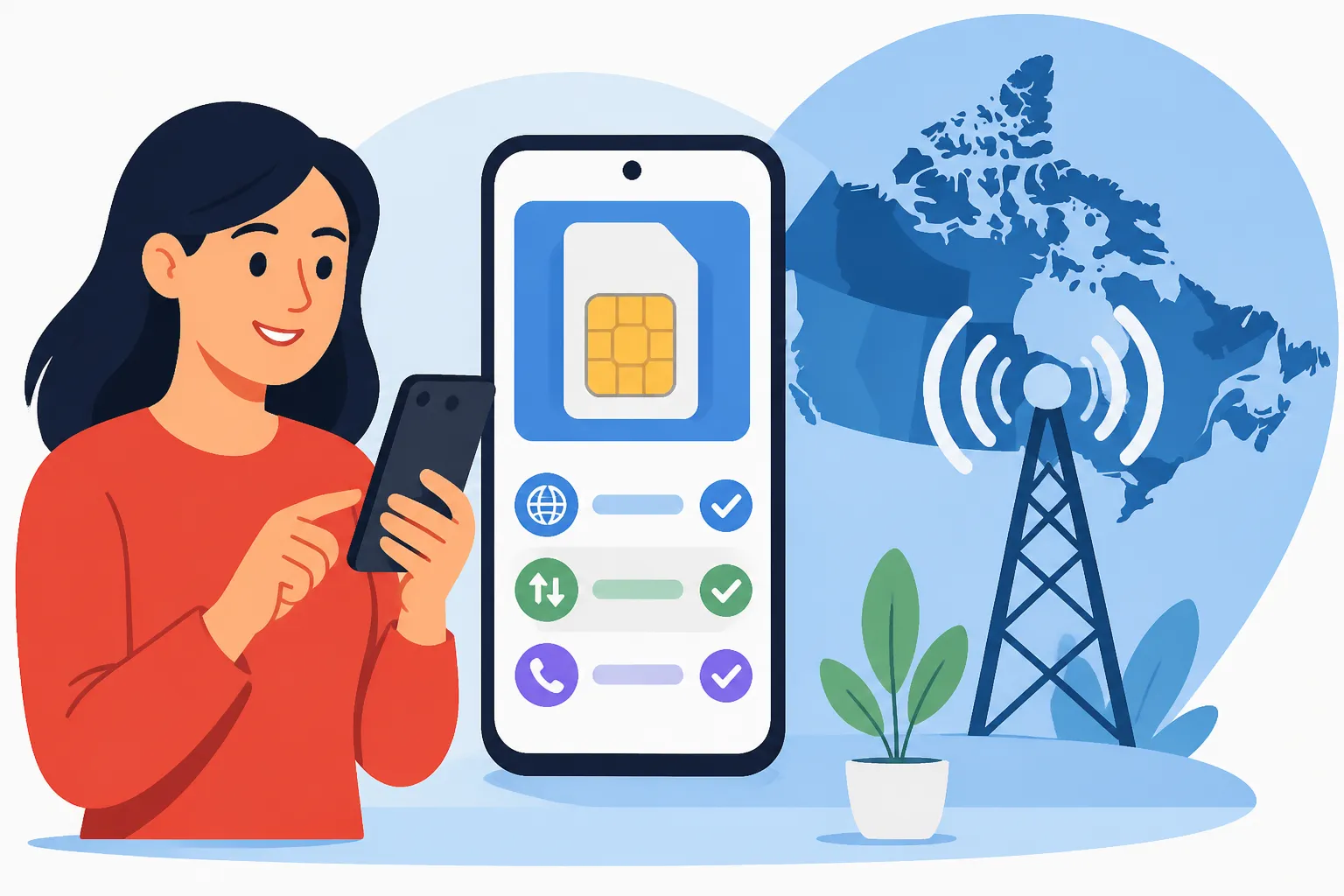
Prepaid plans involve paying for your service before you use it. You buy a SIM card and then load it with credits or a specific monthly plan. The biggest advantage for newcomers is that there's usually no credit check involved. You just need to show some identification to purchase the SIM card. This makes prepaid plans an excellent starting point for many immigrants and temporary residents.
While they used to be quite basic, many prepaid plans now offer competitive data packages, unlimited talk, and text within Canada. The downside can be that the per-gigabyte cost of data might be slightly higher, and you won't typically be able to get a subsidized phone. If you're someone who is only in Canada for a short while, or you're just getting started and building your credit, a prepaid plan is often the most straightforward and stress-free option. It buys you time to How to Build a Credit Score as a Newcomer in Canada before committing to a long-term postpaid plan.
Getting Your Phone and Plan Set Up as a Newcomer
Once you understand the basics of the Canadian mobile market, the next step is actually getting yourself connected. This involves a bit of paperwork, some smart choices about your usage, and ensuring your existing phone plays nice with Canadian networks.
What Documents You'll Need (and Why)
The documentation required will largely depend on whether you're opting for a prepaid or postpaid plan, but generally, you'll need to prove your identity and, in some cases, your ability to pay.
For prepaid plans, the requirements are usually quite minimal. You'll typically need:
- One piece of valid government-issued photo identification: This could be your passport, Canadian permanent resident card, or a provincial driver's license once you've obtained it.
- Sometimes, they might ask for proof of address, but it's less common for prepaid services.
For postpaid plans, because of the credit check involved, the requirements are more stringent and directly tied to your Canadian identity and financial standing:
- Two pieces of valid government-issued identification: At least one must be a photo ID. Again, passport and PR card are excellent choices. A provincial driver's license or health card (though often discouraged for ID purposes) might also be accepted.
- Proof of Canadian address: This could be a utility bill (like your hydro or gas bill once you've set up your The Newcomer Guide to Setting Up Utilities (Hydro, Gas, Internet) in Canada), a bank statement, or a rental agreement.
- Social Insurance Number (SIN): While not always mandatory to set up the account, providing your SIN will allow the carrier to perform a credit check. If you don't provide it, or don't have a Canadian credit history, be prepared for a security deposit. It’s a good idea to have your How to Apply for a Social Insurance Number (SIN) in Canada ready for various administrative tasks.
It's important to understand why they ask for these documents. For postpaid plans, the SIN allows them to access your credit file to assess your risk. If you have no credit history (which is very common for newcomers), they have no way to predict if you'll pay your bills on time. This is why security deposits are so prevalent. They're basically an insurance policy for the carrier. Don't be offended; it's standard practice, albeit an annoying one for those of us just trying to get established.
Choosing the Right Plan: Data, Talk, Text
This is where you need to be honest with yourself about your usage habits. Canadian data plans can be expensive, so understanding what you truly need is key to avoiding bill shock.
Data Usage:
This is often the most expensive component of a mobile plan. Are you a heavy streamer, constantly watching YouTube or Netflix on the go? Or do you primarily use Wi-Fi at home and work, only needing data for maps, messaging, and occasional browsing?
- Low user (0-5 GB): If you're mostly on Wi-Fi, a smaller data plan might suffice.
- Medium user (5-20 GB): This is common for many who stream music, check social media regularly, and use maps.
- Heavy user (20+ GB or "unlimited"): If you rely heavily on mobile data, you'll want a larger plan. Be aware that many Canadian "unlimited" plans aren't truly unlimited at high speeds. They usually provide a certain amount of high-speed data (e.g., 20 GB, 50 GB) and then throttle your speeds to a much slower rate (e.g., 256 kbps) for the rest of the billing cycle. This throttled speed is enough for basic messaging and email, but not for streaming or heavy browsing. Always read the fine print!
Talk and Text:
Most Canadian plans, even basic prepaid ones, now offer unlimited nationwide talk and text. "Nationwide" means calls and texts to any number within Canada. If you're not planning on making international calls often, this is usually sufficient.
Nationwide vs. Provincial Plans:
Some smaller, more affordable plans (often from flanker brands) might be restricted to "provincial" coverage, meaning calls and data are primarily for use within a specific province. If you frequently travel between provinces, ensure your plan has nationwide coverage, or you'll incur roaming charges. This is particularly important in a country as large as Canada, where a drive to a neighbouring province for a weekend trip is quite common.
International Calling and Roaming:
If you need to call family and friends back home regularly, look for plans that include international minutes or add-ons. Otherwise, use apps like WhatsApp, Messenger, or Skype over data. For international roaming when you travel outside Canada, or if you're just arriving and need immediate connectivity, consider an eSIM. Services like Airalo allow you to purchase a local data plan for Canada before you even land, ensuring you have internet access from the moment your plane touches down. This can be a lifesaver for navigating airports, ordering rides, and letting your family know you're safe. It's a great temporary solution for those first few days or weeks.
Practical Steps to Activation and Beyond
You’ve got your documents, you know your usage habits, now let's get you connected. The process is fairly straightforward, but a few insider tips can smooth the way.
Where to Buy: Online, In-Store, or Kiosks
You have a few avenues for purchasing your mobile plan, each with its own advantages and disadvantages:
- In-Store (Carrier Stores): This is often the best option for newcomers, especially for postpaid plans. Visiting a Bell, Rogers, Telus, Fido, Koodo, or Virgin Plus store allows you to speak directly with a representative. They can explain plan options in detail, answer your questions, help with the credit check process (and discuss security deposit alternatives if needed), and activate your SIM card on the spot. You can also get help setting up your phone. While you might face a bit of a wait, the face-to-face interaction can be invaluable when you're dealing with a new system.
- In-Store (Third-Party Retailers): Big box electronics stores like Best Buy, Staples, or even department stores like Walmart and The Mobile Shop (found in Loblaws grocery stores) often have kiosks or sections dedicated to mobile phone plans. These retailers usually carry plans from multiple carriers, which can be great for comparison shopping. However, the staff might not be as deeply specialized in newcomer challenges as dedicated carrier store employees.
- Online: Many carriers allow you to sign up for plans online and have a SIM card mailed to you. This is convenient if you already know exactly what you want and prefer to avoid sales pressure. However, it's generally not recommended for newcomers needing a postpaid plan due to the credit check complexities. For prepaid plans, though, buying online can be very efficient.
- Kiosks: In shopping malls, you'll often find small kiosks specifically selling mobile plans. These are similar to third-party retailers, offering plans from various providers. They can be quick for prepaid activations.
My advice? Start with a visit to a carrier store or one of their flanker brand stores. Even if you don't buy there, gathering information and understanding your options directly from the source is helpful. Then, you can compare with offers you might see online or at other retailers.
Unlocking Your Phone and Compatibility Checks
Before you even think about buying a Canadian SIM card, make sure your existing phone is ready for the change. This is a crucial step that many newcomers overlook.
Unlocked Phone:
In Canada, it is illegal for carriers to sell locked phones since December 2017. This means any phone purchased in Canada after that date should be unlocked. However, if you're bringing a phone from another country, it's highly likely it could be locked to your previous provider. An unlocked phone means it can accept any SIM card from any carrier. If your phone is locked, it simply won't work with a Canadian SIM, no matter how great your plan is. Contact your previous carrier before you leave your home country to request an unlock. They are usually legally obligated to unlock it for you, often for free, once your contract is fulfilled.
Compatibility Checks (Frequency Bands):
Even if your phone is unlocked, it needs to be compatible with the specific radio frequency bands used by Canadian carriers. This is a bit technical, but essential. Canadian carriers primarily use LTE (4G) bands 4, 7, 13, and 66. For 5G, bands n78 and n66 are common. If your phone doesn't support these bands, you might get limited or no signal, even in areas with good coverage.
- How to check: Look up your phone's model number online and find its specifications, specifically the supported LTE and 5G bands. Then, compare these to the bands used by Canadian carriers (a quick search for "Canadian mobile network bands" will give you the latest info). Most modern smartphones from the last 3-5 years, especially global models, tend to be compatible, but older or regional-specific phones might struggle. If you're planning a big move, services like Sirelo can help you plan other logistical aspects of your relocation, making sure you have all your ducks in a row. They don’t just help with mobile phones but other moving services too.
If your phone isn't compatible, don't despair! You can often find affordable unlocked phones or used devices through online marketplaces or electronics stores in Canada.
Managing Your Plan and Billing
Once you're set up, managing your account is generally quite easy.
- Online Portals and Apps: All major Canadian carriers have robust online portals and dedicated mobile apps (for iOS and Android). These are your best friends for managing your account. You can check your data usage, view and pay bills, change plans, add features, and access customer support directly through these platforms. Getting familiar with the app early on will save you a lot of time and hassle.
- Billing Cycles and Payment Methods: Mobile phone bills are typically issued monthly. You'll usually have about 2-3 weeks to pay before it's considered late. Most carriers offer various payment methods:
- Pre-authorized debit/credit card: This is the most common and convenient way to pay, where the bill is automatically deducted from your bank account or credit card each month.
- Online banking: You can add your carrier as a "payee" in your Canadian online bank account and make manual payments. This is similar to paying a utility bill. Remember, many Canadians use services like Understanding Interac e-Transfer and Local Payments in Canada for everyday transactions.
- In-store: You can pay your bill in person at a carrier store or some third-party retailers.
- Credit Card: Using a Canadian credit card can also help you How to Build a Credit Score as a Newcomer in Canada over time.
For prepaid plans, you'll need to remember to top up your account or renew your monthly plan on time to avoid service interruption. Many prepaid services also offer auto-renew options, which can be very convenient.
Here's a quick comparison of some popular mobile options in Canada:
| Provider Category | Example Brands | Network | Typical Price Range (Monthly) | Newcomer Friendly? | Notes |
|---|---|---|---|---|---|
| Big Three | Bell, Rogers, Telus | Extensive National | CA$70 – CA$120+ (with phone) | Less so initially due to credit checks | Premium services, widespread coverage, often bundled with home internet/TV. |
| Flanker Brands | Fido, Koodo, Virgin Plus | Same as Big Three | CA$40 – CA$70 (SIM-only) | Good, often waive security deposits for newcomers or offer specific plans. | Run on major networks, slightly lower prices, good balance of features. |
| Budget/Independent | Freedom Mobile, Public Mobile, Chatr | Varies (Freedom has own, others use Big Three) | CA$25 – CA$50 (SIM-only) | Very good, often prepaid, no credit check required. | Best for urban users or those on a tight budget. Check coverage carefully. |
| eSIM (for arrival) | Airalo | Uses local networks | Varies by data pack | Excellent for immediate connectivity upon arrival. | Data-only, temporary solution, ideal for first few days. |
Common Pitfalls and Smart Tips for Newcomers
Navigating a new country’s services always comes with a unique set of challenges. Here are some specific hurdles you might face with mobile phone plans in Canada and how to overcome them.
The Credit History Conundrum
We've touched on this already, but it's such a significant point for newcomers that it bears repeating and elaborating. Canadian carriers, like many other service providers here, rely heavily on credit scores to assess risk. If you have no Canadian credit history, you're essentially an unknown entity to them.
Solutions and Strategies:
- Start with Prepaid: This is hands-down the easiest and most common solution. You pay upfront, so there's no credit risk for the carrier. Use a prepaid plan for your first 6-12 months while you focus on establishing your financial footprint in Canada. It will get you connected immediately, which is vital for everything from job hunting to setting up other services.
- Newcomer Plans: Some carriers and their flanker brands occasionally offer specific "newcomer" or "credit-light" plans. These might have slightly different terms or require a smaller security deposit. It’s worth asking if they have such options when you visit a store. Sometimes, they might ask for a slightly larger upfront payment for your first few months of service instead of a large security deposit.
- Security Deposits: If you absolutely need a postpaid plan right away (perhaps because you need a new phone), be prepared to pay a security deposit. This can range from CA$100 to CA$500 or more, and it’s usually held for 12-24 months and then refunded to you (often as a credit on your bill) if you’ve paid all your bills on time. While it’s a pain to part with that cash, it’s a common path for many.
- Build Your Credit: As soon as you can, start working on your credit history. This involves getting a Canadian credit card (perhaps a secured one initially) and consistently paying all your bills (rent, utilities, credit card) on time. Over time, as your credit score improves, you’ll find it much easier to qualify for postpaid plans without a deposit. You can find more detailed guidance on this in posts like How to Build a Credit Score as a Newcomer in Canada.
Hidden Fees and Contract Traps
Canadian mobile plans can sometimes feel like they have more hidden fees than a treasure map has 'X' marks. This isn't unique to Canada, but it's certainly prevalent.
- Activation Fees: Most carriers charge an activation fee (sometimes called a setup fee) when you sign up for a new plan, especially postpaid. This can be anywhere from CA$35 to CA$60. Some promotions might waive this fee, so always ask.
- Overage Charges: While many plans offer "unlimited" talk and text, data overage charges can be steep if you exceed your high-speed limit on a non-throttled plan. Ensure you understand your data allowance and how additional data is charged. Check your usage regularly through your carrier's app.
- Cancellation Fees: If you sign a two-year contract (especially one with a subsidized phone) and decide to cancel early, you will almost certainly face a cancellation fee. This fee is usually calculated based on the remaining value of the phone subsidy and/or a fixed penalty. It can be substantial. This is another reason why starting with a prepaid, no-contract plan is often safer for newcomers until your living situation and job are stable.
- Reading the Fine Print: This sounds obvious, but always read the terms and conditions. Don't just skim. Pay attention to data limits, speed throttling, any extra fees for voicemail or call display (though these are often included now), and cancellation policies. If you don't understand something, ask the sales representative to explain it in plain language. If you're planning your move, consider using a service like Sirelo which can help you compare moving companies and get quotes, ensuring you're prepared for all aspects of your relocation to Canada. This comprehensive approach ensures fewer surprises on arrival.
International Considerations and Staying Connected
For many expats, maintaining connections with home is paramount. Canadian phone plans have specific implications for international communication.
- International Calling from Canada: As mentioned, most standard Canadian plans include unlimited calls within Canada, but international calls are extra. The cost per minute can vary wildly depending on the country. For regular international calls, consider adding an international calling feature to your plan, or simply rely on VoIP apps like WhatsApp, FaceTime Audio, Google Meet, or Zoom over Wi-Fi or your data plan.
- Initial Connectivity Upon Arrival: Before you even get a Canadian SIM, how do you stay connected?
- Wi-Fi: Airports, cafes, and many public spaces offer free Wi-Fi, which is great for initial communication.
- International Roaming: Your existing phone plan from home might offer international roaming, but it’s often prohibitively expensive in Canada. Check your home plan's rates carefully – you might find yourself with a bill equivalent to a small car payment after just a few days.
- eSIM Solutions: This is where services like Airalo truly shine. An eSIM is a digital SIM card embedded in your phone. With Airalo, you can buy a data package for Canada before you leave home. This means you activate it as soon as you land, and your phone instantly has data connectivity. You can then use apps for calling and messaging, allowing you to easily book an Uber, navigate to your accommodation, or search for directions without scrambling for a physical SIM card. It’s a fantastic short-term solution for those crucial first days or weeks.
Remember, moving to a new country like Canada involves a lot of moving parts. Thinking ahead about your mobile connectivity, just like you would about your The Complete Guide to Moving to Canada: Your First 90 Days (2027) or setting up your How to Set Up Internet and Cable in Canada, will make your transition much smoother and less stressful. Don't underestimate the power of simply being able to Google something when you're feeling lost or overwhelmed!
Disclaimer
Please note that the information provided in this guide is for general informational purposes only and is subject to change. Mobile plan offerings, pricing, and regulations in Canada can vary by province and provider, and they are frequently updated. While we strive to keep this information as current as possible, it is essential to verify all details directly with your chosen mobile service provider before making any commitments. Always consult the official websites or speak with customer service representatives for the most accurate and up-to-date information regarding plans, terms, and conditions.