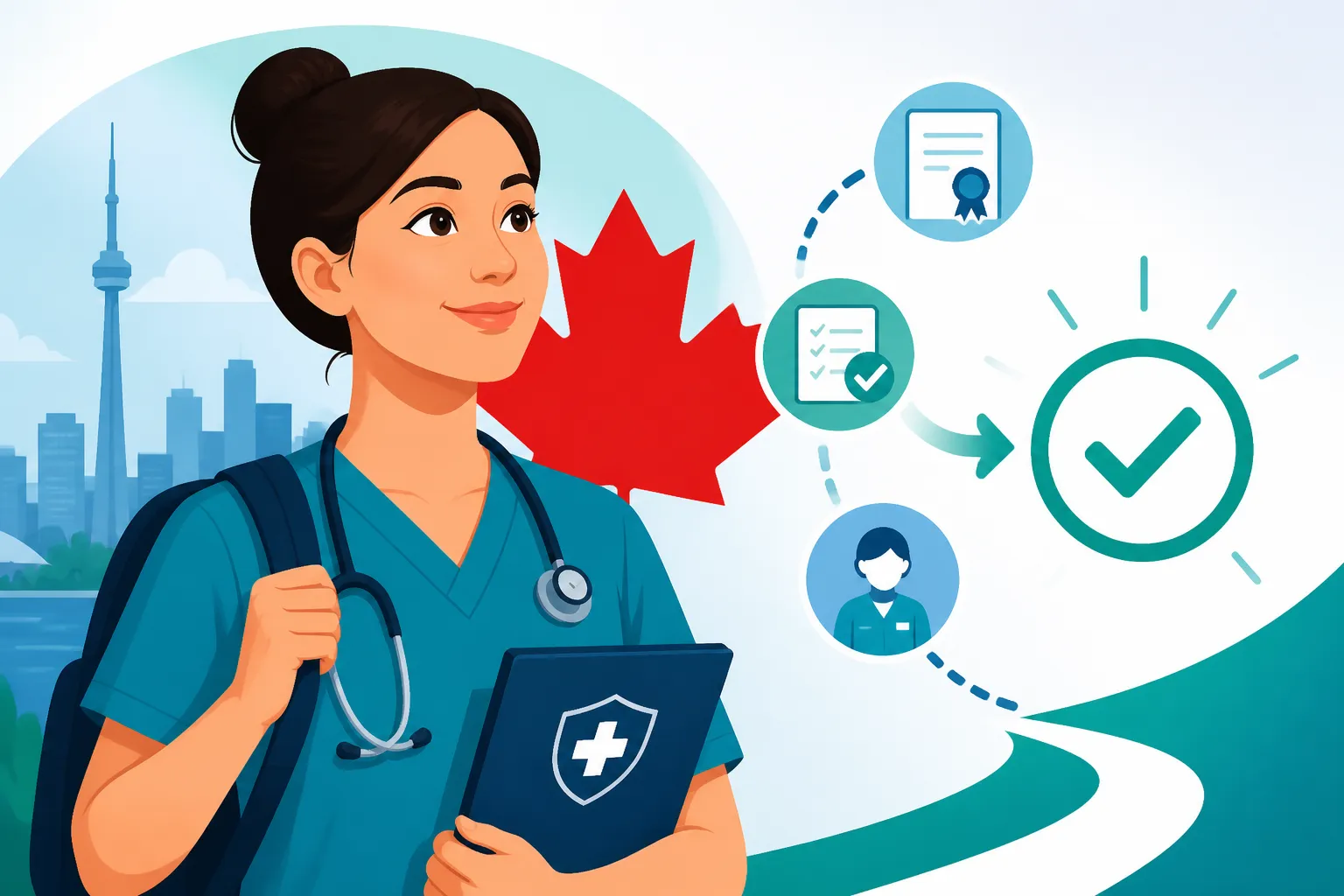
How Do I Get My Nursing Credentials Recognised in Canada?
Oh, the journey to get your nursing credentials recognized in Canada. If you're an internationally educated nurse (IEN), you're not just looking for a new job; you're navigating a labyrinth of paperwork, assessments, and regulations that can feel utterly overwhelming and, quite frankly, unfair at times. I've seen countless skilled professionals, from doctors to engineers, struggle with credential recognition here, and nurses often face one of the most rigorous paths. This guide is here to walk you through every twist and turn, providing a realistic roadmap and some much-needed empathy for what you're about to undertake.
The Initial Hurdles: Why Canadian Nursing Credential Recognition Feels Like a Marathon
When you've dedicated years to your profession, honed your skills, and provided compassionate care in your home country, arriving in Canada only to be told your qualifications aren't immediately valid can be a deeply frustrating experience. It's not a reflection on your abilities, but rather a reflection of Canada's highly regulated professional landscape and its unique healthcare system.
Understanding the Regulated Profession Landscape
Nursing isn't just a job in Canada; it's a regulated profession, meaning you can't simply start working with your foreign qualifications. Each province and territory has its own regulatory body that sets the standards for who can practice nursing within its borders. This is a crucial distinction that often catches newcomers off guard. You might think, "I'm a registered nurse, surely that's universal?" But in Canada, the titles and scopes of practice (Registered Nurse – RN, Licensed Practical Nurse – LPN, Registered Psychiatric Nurse – RPN, Nurse Practitioner – NP) are very specific and provincially controlled.
For instance, the College of Nurses of Ontario (CNO) regulates nursing in Ontario, while the British Columbia College of Nurses and Midwives (BCCNM) does the same in British Columbia. These bodies are responsible for ensuring public safety by making sure every nurse practicing in their jurisdiction meets rigorous educational, ethical, and professional standards. This means that even if you're an RN from another province, moving to Quebec, for example, will require you to go through the Ordre des infirmières et infirmiers du Québec (OIIQ) process to practice there. It's not enough to be a great nurse; you have to prove it to each specific province you wish to work in.
The National Nursing Assessment Service NNAS – Your First Major Step
For most internationally educated nurses (IENs), the very first, and often most daunting, hurdle is the National Nursing Assessment Service (NNAS). This organization was created to streamline the initial assessment of your foreign credentials for all Canadian provinces and territories except Quebec and the territories (though Quebec's process is similar). Think of NNAS as the gatekeeper, the first major screening process before your application even gets to a provincial regulator.
NNAS requires you to submit a comprehensive application, which includes detailed academic transcripts, professional licensing information, and proof of your employment as a nurse. They also require identity verification documents, which can be surprisingly tricky to obtain if you've recently moved. The entire point of NNAS is to compare your education and professional experience against Canadian nursing standards. They want to see how your training aligns with what a Canadian-educated nurse would have. This process can take a significant amount of time – often several months, sometimes longer if there are issues with document collection – and involves substantial fees. It's a test of patience as much as it is a documentation exercise. Many newcomers feel like they're starting over, and in a way, with NNAS, you are.
Navigating the NNAS Application Process Step-by-Step
Alright, let's roll up our sleeves and get into the nitty-gritty of the NNAS application. This stage is where many IENs hit their first wall, simply due to the sheer volume and complexity of required documents. But trust me, once you understand the system, it becomes a bit more manageable, even if it remains a chore.
Gathering Your Mountain of Documents
This is where the real work begins, and it's less about your nursing skills and more about your organizational prowess. NNAS requires a stack of documents from various sources to build your profile. Here’s a breakdown of what you’ll typically need:
- Academic Transcripts: You’ll need official transcripts from all the nursing programs you've ever attended. These must be sent directly from your educational institutions to NNAS, sealed and official. This can be a major headache if your institution is slow, closed, or charges exorbitant fees.
- Professional Licensure/Registration: Every nursing license you’ve ever held, in every country, must be verified. This means your regulatory bodies abroad need to send verification directly to NNAS. Again, direct communication is key, and chasing these documents from overseas can be a full-time job.
- Employment Verification: You'll need verification of your nursing employment directly from your employers. This isn't just a letter; it often requires a specific form filled out by your employer detailing your roles, responsibilities, and hours worked. Trying to get this from past employers, especially if it’s been years, can be a monumental task.
- Identity Verification: Proof of identity documents, often requiring notarized copies of passports, birth certificates, or other government-issued IDs.
- Language Proficiency: Unless you completed your nursing education in English or French within certain countries (like the US, UK, Australia, etc.), you will almost certainly need to pass a recognized language test. The two main ones for nursing are IELTS (International English Language Testing System) Academic or CELBAN (Canadian English Language Benchmark Assessment for Nurses). These tests are designed specifically for healthcare professionals and are rigorous. If you're finding your language skills need a boost, platforms like iTalki can be incredibly helpful for one-on-one tutoring focused on professional and medical English or French. Improving your communication skills here is not just for the exam, but essential for success in the Canadian healthcare setting.
The biggest challenge with these documents is often getting them sent directly from the source to NNAS. NNAS will not accept documents sent by you, the applicant. This "third-party verification" rule is strict and can cause significant delays if your previous institutions or employers aren't familiar with the process or are slow to respond. It’s important to communicate clearly with them and follow up regularly.
The NNAS Assessment Report and What Comes Next
After you've submitted all your documents (and patiently waited while NNAS processes them), you'll finally receive an NNAS Advisory Report. This report is a crucial document, but it's important to understand what it is and what it isn't.
The NNAS report provides a comparison of your education and experience against Canadian standards. It will indicate if your credentials are "comparable," "somewhat comparable," or "not comparable" to a Canadian-educated nurse. It also identifies any "gaps" in your education or practice that the regulatory bodies might require you to address. For instance, it might suggest you lack sufficient clinical hours in a particular area, or that your curriculum didn't cover specific aspects of Canadian healthcare, like pharmacology or mental health.
What the NNAS report isn't is a license to practice. This is a common misconception. The report is merely an assessment that NNAS sends to the provincial nursing regulatory body (or bodies, if you apply to multiple provinces) that you selected during your application. Your provincial regulatory body then uses this report, along with their own additional requirements, to make the final decision on your licensure. So, while NNAS is a huge step, it's really just the first leg of your marathon toward becoming a licensed nurse in Canada. You've cleared one hurdle, but now you have to face the provincial ones.
| Stage of Recognition | Purpose | Key Requirements/Steps | Estimated Timeline |
|---|---|---|---|
| NNAS Application | Initial assessment of foreign education/experience vs. Canadian standards | Create online profile, gather/submit academic, professional, identity documents (direct from source), language proficiency test results. | 6-18 months (highly variable) |
| NNAS Report Review | NNAS reviews documents and generates an Advisory Report | NNAS staff analyze submitted information, compare against Canadian framework. | 1-3 months (after all documents received) |
| Provincial Regulatory Body Application | Final assessment and pathway determination for licensure | Submit NNAS report, complete provincial application, jurisprudence exam, criminal record check, potential bridging program, NCLEX/CPNRE exam. | 3 months to several years (depending on gaps) |
| Licensure | Granting of official license to practice nursing in the province | Successful completion of all requirements, passing of exams, payment of fees. | Immediate (after all above steps complete) |
Provincial Licensure: The Final Frontier
Once you have your NNAS report, you're ready to tackle the final, and often most challenging, phase: applying directly to the provincial regulatory body where you intend to practice. This is where the rubber meets the road, and where you'll discover exactly what's needed to bridge any gaps identified by NNAS.
Applying to Your Chosen Provincial Regulatory Body
Each provincial regulatory body, like the College of Nurses of Ontario (CNO) or the College of Registered Nurses of British Columbia (CRNBC), has its own application process that runs parallel to, or follows, the NNAS assessment. After NNAS sends your report, you will then need to formally apply to your chosen provincial college. This often involves paying a new set of application fees, completing specific provincial forms, and undergoing additional checks.
You'll need to specify what category of nurse you're applying for: Registered Nurse (RN), Registered Practical Nurse (RPN) in Ontario (or Licensed Practical Nurse – LPN in other provinces), or Nurse Practitioner (NP). The requirements, and subsequent assessments, will differ significantly based on your chosen stream. For RNs, for example, the regulatory body will review your NNAS report and look for things like evidence of recent practice, specific clinical hours in areas deemed critical in Canada, and often, an online jurisprudence exam that tests your knowledge of the laws and ethics of nursing in that particular province. You’ll also need to complete a criminal record check, which is standard procedure for anyone working in healthcare in Canada. This provincial review is often the step where IENs discover they need to complete further education or a bridging program.
Tackling Bridging Programs and Examinations
This is often the part that feels like a gut punch for many IENs. After years of experience and education, being told you need to go back to school can be disheartening. However, bridging programs are specifically designed to address those identified "gaps" in your education or clinical experience to bring you up to Canadian standards. These programs, offered by colleges and universities across Canada, vary in length and intensity, from a few months to two years, depending on the number and type of gaps you need to fill. They can be quite competitive to get into and, unfortunately, come with their own tuition fees, which can add to the significant financial burden you might already be facing. Understanding what provincial health plans do and don't cover in Canada is important here, as these educational costs are not medical.
Once you’ve addressed any educational gaps, the final hurdle for most RNs is passing the NCLEX-RN (National Council Licensure Examination for Registered Nurses). This is the same exam Canadian-educated nurses take to get their initial license. For LPNs/RPNs, it's typically the CPNRE (Canadian Practical Nurse Registration Examination) or RPNCE in Ontario. These are comprehensive, competency-based exams that require extensive preparation. Many IENs invest in review courses, study guides, and practice tests to feel confident going into the exam. The good news is that passing this exam is the definitive proof that you meet the national entry-to-practice competencies required to be a licensed nurse in Canada.
Overcoming Common Roadblocks and Finding Support
The path to nursing licensure in Canada is undeniably arduous, filled with administrative hoops, financial strains, and emotional challenges. But you are not alone in this journey. Understanding these common roadblocks and knowing where to find support can make a world of difference.
Financial Burdens and Language Barriers
Let's not sugarcoat it: the financial outlay for credential recognition is significant. Between NNAS application fees, document verification costs, certified translation services, language proficiency tests, potentially bridging program tuition, and examination fees, the costs can quickly add up to thousands of dollars. This is often compounded by the fact that you might not be able to work in your profession while going through this process, leading to lost income. It's a heavy burden, and many newcomers have to budget very carefully or rely on savings to get through it. When you consider the broader The Complete Guide to Cost of Living in Canada for Newcomers (2026), these professional costs are a significant addition.
Then there's the language barrier, even for those proficient in English or French. The medical terminology, the nuances of patient communication, and the specific academic language required for exams can be daunting. As mentioned earlier, dedicated language preparation, perhaps through online tutors on platforms like iTalki, can be invaluable. Don't underestimate the importance of mastering not just conversational language, but professional and academic fluency. Furthermore, understanding the Canadian workplace culture: a complete guide for newcomers will help you integrate more smoothly once you're licensed.
Seeking Guidance and Professional Help
It’s crucial to remember that you don't have to navigate this alone. Many newcomer-serving organizations across Canada offer support specifically for IENs. They can provide guidance on the application process, help with document collection, offer exam preparation resources, and connect you with bridging programs. For example, organizations like CARE Centre for Internationally Educated Nurses in Ontario or similar provincial programs are specifically tailored to assist IENs.
Networking with other internationally educated nurses who have successfully gone through the process can also provide invaluable insights and moral support. Forums and social media groups dedicated to IENs in Canada are fantastic places to ask questions, share experiences, and find mentors. While these groups can't provide official advice, the shared experience is incredibly validating.
The Canadian Nurses Association (CNA) is the national professional voice for nurses, and while they don't regulate licensure, they offer resources and advocate for policies that support IEN integration. You can also explore options to How to Get Your Foreign Credentials Recognised in Canada more generally to see how nursing fits into the broader picture of professional integration.
Ultimately, your journey will require immense perseverance and resilience. But with the right information, resources, and a strong support system, you absolutely can achieve your goal of practicing nursing in Canada. Don't forget that once you do get your license, you'll also need to know How to Apply for Your Provincial Health Card in Canada (2027) and How to Apply for a Social Insurance Number (SIN) in Canada to fully integrate professionally. And as you start earning, don't forget the nuances of the Canadian tax system; resources like Taxes for Expats can be helpful when navigating income and deductions as a new professional in Canada, especially if you have foreign income or assets to declare.
Disclaimer
The information provided in this guide is for general informational purposes only and does not constitute professional legal, immigration, or financial advice. While we strive to keep the content accurate and up-to-date, regulations and requirements for nursing credential recognition in Canada can change frequently and vary by province and territory. We strongly recommend consulting with the official National Nursing Assessment Service (NNAS) and the specific provincial nursing regulatory body you intend to apply to for the most current and authoritative information. Always seek advice from qualified professionals for any personal circumstances.