How Do I Get a Mortgage to Buy a Home in Canada?
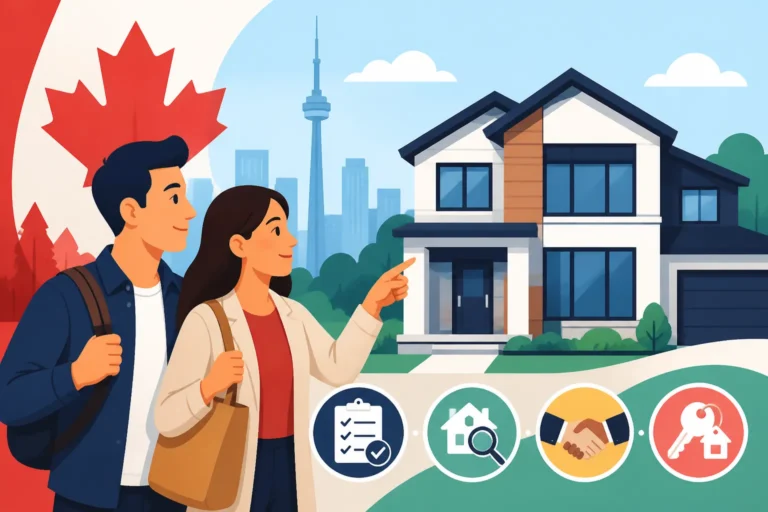
Moving to Canada, you've probably heard all about its welcoming nature and beautiful landscapes. But when it comes to the nitty-gritty of settling down, especially buying a home, it can feel like you’ve hit a bureaucratic brick wall. Securing a mortgage as a newcomer isn't just about finding a good interest rate; it's about navigating a completely different financial system, often without the established credit history that Canadian lenders expect. This guide is here to walk you through every step of getting a mortgage to buy a home in Canada, from understanding the basics to specialized programs designed for people just like you.
Understanding the Canadian Mortgage Landscape for Newcomers
Let’s be honest, the Canadian housing market can be a beast. And for newcomers, it often feels like you're playing a game with rules you don't quite know yet. Don’t worry, you’re not alone in feeling this way. The biggest hurdles usually revolve around something called "credit history" and the sheer size of the "down payment."
The Initial Hurdles: Credit History and Down Payments
When you walk into a Canadian bank, one of the first things they’ll want to see is your credit score and history. This is where many newcomers hit a snag. In Canada, your credit history is a detailed record of how you've managed debt over time – how consistently you pay your bills, how much credit you use, and how long you've had credit accounts. The problem? If you’ve just arrived, your fantastic credit rating from your home country often means absolutely nothing here. You're starting from scratch, and it can be incredibly frustrating to be treated as a financial unknown, despite a lifetime of responsible money management back home.
Most Canadian lenders rely heavily on this local credit history to assess your risk as a borrower. Without it, they have very little to go on, which makes them hesitant. This often translates into stricter requirements or needing to look at specialized programs.
Then there’s the down payment. In Canada, the minimum down payment for a home under $500,000 is 5% of the purchase price. For homes between $500,000 and $1,000,000, it's 5% on the first $500,000 and 10% on the portion above $500,000. For homes over $1,000,000, you need a minimum 20% down payment. If your down payment is less than 20%, you'll also be required to pay for mortgage loan insurance (from CMHC, Sagen, or Canada Guaranty), which protects the lender in case you default. For newcomers, especially those without an established credit history or who haven't worked in Canada for long, lenders often require a larger down payment – sometimes 10%, 15%, or even 20% – even for homes under $1,000,000. This is their way of mitigating the perceived risk. It's a tough pill to swallow, especially when you've already shelled out so much to relocate.
It’s also important to remember the Understanding Property Ownership and the Foreign Buyer Ban in Canada (2026) which, while it has exemptions, can add another layer of complexity depending on your specific immigration status. Don't assume anything; always check the latest regulations or consult with a real estate professional.
Key Players in the Mortgage Game: Lenders and Brokers
When you’re ready to start looking for a mortgage, you generally have two main avenues: directly approaching a bank or working with a mortgage broker. Both have their merits, especially for newcomers.
Directly with a Bank (Traditional Lenders):
Canada is dominated by its "Big Five" banks: RBC, TD, Scotiabank, CIBC, and BMO. These are often the first stop for many people.
- Pros: They offer a full suite of banking services, and if you already have your bank accounts, credit cards, and other financial products with them, there might be a sense of familiarity and convenience. Some of these banks, like Scotiabank and RBC, have specific "newcomer" mortgage programs that can be very helpful (we'll dive into those later). They are large, stable institutions, which offers peace of mind.
- Cons: You're essentially limited to the products and rates offered by that single institution. You might not get the absolute best rate on the market, and if their specific newcomer program doesn't fit your unique situation, they might not be able to offer much flexibility. The process can also feel a bit impersonal, like you're just another number.
Working with a Mortgage Broker:
A mortgage broker acts as an intermediary between you and various lenders. They don't lend money themselves; instead, they shop around on your behalf to find the best mortgage product and rate that suits your needs.
- Pros: This is often a fantastic option for newcomers. Brokers have access to a wide range of lenders, including the big banks, smaller financial institutions, and even some alternative lenders that you might not know about. They can often find more flexible solutions for those with limited Canadian credit history. They also do most of the legwork for you, making the process less daunting. Their services are usually free to you, as they are paid by the lender.
- Cons: While most brokers are excellent, finding a truly good, ethical, and experienced broker who understands the intricacies of newcomer situations is key. Always ask for references and ensure they're licensed. Also, while they offer many options, they might not have every single product from every single lender, so it's good to do a little research yourself too.
No matter which route you choose, start by opening a Canadian bank account if you haven't already. This is a fundamental step, and you can learn all about it in The Newcomer Guide to Opening a Bank Account in Canada. Having your finances rooted in Canada will make every other step much smoother.
Essential Steps to Secure Your Canadian Mortgage
Alright, so you understand the landscape. Now, let’s get down to brass tacks: what do you actually do to get that mortgage? It's a multi-step process, but breaking it down makes it manageable.
Building Your Financial Foundation: Credit and Savings
This is arguably the most crucial step for newcomers. Without a solid foundation, getting a mortgage will be an uphill battle.
Building Canadian Credit History:
As mentioned, your foreign credit history typically doesn't transfer. So, you need to start building a Canadian one, and fast.
- Get a Secured Credit Card or Newcomer Credit Card: Many banks offer these. A secured card requires you to put down a deposit, which becomes your credit limit. This minimizes risk for the bank, allowing you to prove your payment reliability. Look for newcomer packages from major banks like CIBC, RBC, or Scotiabank; they often include credit cards with lower requirements.
- Pay Bills on Time, Every Time: This includes your mobile phone bill, utility bills, rent (if reported), and credit card bills. Payment history is the biggest factor in your credit score. If you're using a mobile eSIM service like Airalo for your initial connectivity, ensure any recurring charges are tied to a credit card you're actively building credit with and pay promptly.
- Apply for a Small Loan: A small loan, even for something you could otherwise pay cash for, can help. Paying it back diligently shows lenders you can handle debt.
- Don't Overuse Credit: Try to keep your credit utilization (how much credit you use versus your total available credit) below 30%.
- Be Patient: Building a strong credit score takes time – typically 6 months to a year for a measurable impact. You can track your progress by learning How to Build a Credit Score as a Newcomer in Canada.
Saving for a Down Payment:
This needs to be a significant focus. The larger your down payment, the less you need to borrow, and the more appealing you become to lenders.
- Separate Savings Account: Set up a dedicated savings account. If you’re eyeing a first home, explore options like the First Home Savings Account (FHSA), which allows eligible first-time home buyers to save for a down payment tax-free, similar to a TFSA, but contributions are also tax-deductible. While new, it’s a powerful tool if you qualify. You can learn about other savings vehicles in Understanding RRSPs, TFSAs and Retirement Savings in Canada.
- Proof of Funds: Lenders will require documentation proving where your down payment came from, especially if a portion is from abroad. Be prepared to show bank statements from Canadian and potentially foreign accounts, gift letters (if someone gave you money), or sale documents from assets. This is to prevent money laundering.
Remember, the How Much Is the Down Payment for a House in Canada? article can provide more specific details on this crucial element.
Documents You'll Absolutely Need
Gathering your documents proactively will save you a world of headaches. Think of it as assembling your "financial passport."
Here’s a breakdown of what you'll typically need:
- Proof of Identity: Valid passport, Permanent Resident (PR) card, or other immigration documents (e.g., work permit).
- Social Insurance Number (SIN): Your unique nine-digit number for taxes and government programs.
- Proof of Employment and Income:
- Letter of employment stating your position, salary, start date, and whether it's permanent or contract.
- Recent pay stubs (typically 2-3 months).
- T4 slips or Notices of Assessment (NOA) if you’ve filed taxes in Canada. If self-employed, two years of tax returns (T1 Generals) will be required, often with a higher down payment expectation.
- Banking Information:
- Canadian bank statements (3-6 months) showing your income deposits and regular spending.
- Statements from foreign bank accounts, especially if you’re bringing a large portion of your down payment from overseas.
- Credit History:
- Your Canadian credit report (you can get a free copy from Equifax or TransUnion).
- Letters of reference from foreign banks or credit card companies, detailing your good standing and credit limits, which might be considered by some lenders under specific newcomer programs, though this is not a guarantee.
- Proof of Down Payment: Bank statements showing the funds are in your Canadian account, gift letters, sale agreements for property sold abroad, etc.
- Other Potential Documents: If you’re buying with a partner, they’ll need all the same documents. If you have existing debts (car loan, student loan), documentation for those.
It can feel overwhelming, but having all these organized will make you look professional and serious to any lender. Many of these overlap with What Documents Do I Need to Buy a House in Canada?, so cross-reference that guide too!
Getting Pre-Approved and What It Means
Getting "pre-approved" for a mortgage is a critical step, especially for first-time buyers and newcomers. It's essentially a commitment from a lender (conditional on a property appraisal and final checks) that they will lend you a certain amount of money at a specific interest rate for a defined period.
Why Pre-Approval is Crucial:
- Budget Clarity: It tells you exactly how much you can afford, which saves you from falling in love with a house that’s out of your price range. This is especially important when considering The Complete Guide to Cost of Living in Canada for Newcomers (2026) – you don't want your mortgage payment to eat up your entire budget.
- Serious Buyer Status: Real estate agents and sellers take you more seriously. In a competitive market, a pre-approval letter can give you an edge over other buyers who haven't done their homework.
- Rate Hold: Most pre-approvals come with a rate hold, meaning the interest rate quoted is locked in for typically 90-120 days. If rates go up during that period, you get the lower rate; if they go down, you usually get the even lower rate. It protects you from market fluctuations.
The Pre-Approval Process:
During pre-approval, the lender will thoroughly assess your financial situation. This includes:
- Income Verification: They'll check your employment letters and pay stubs to confirm your steady income.
- Credit Check: They’ll pull your Canadian credit report to assess your creditworthiness. This is where building that credit history earlier comes in handy.
- Debt-to-Income Ratio: They'll calculate how much of your income goes towards debt payments (including your potential new mortgage). Lenders usually look for a maximum of 32% Gross Debt Service (GDS) and 40% Total Debt Service (TDS).
- Down Payment Verification: They’ll want to see proof that you have the down payment funds available and verify their source.
Be prepared for detailed questions. The more transparent and organized you are with your documents, the smoother this process will be. Don't be afraid to ask questions yourself – this is your financial future!
Navigating Mortgage Options and Specialized Programs
Once you’re financially prepped, it’s time to look at the actual mortgage products. Canada offers various types, and thankfully, there are specific programs tailored to ease the path for newcomers.
Understanding Mortgage Types: Fixed vs. Variable
This is one of the biggest decisions you'll make when signing your mortgage agreement. Both have pros and cons, and the "best" choice depends on your risk tolerance, financial stability, and market outlook.
Fixed-Rate Mortgage:
With a fixed-rate mortgage, your interest rate remains the same for the entire term of your mortgage (e.g., 5 years).
- Pros: Predictability and stability. Your mortgage payment (principal and interest) stays the same, making budgeting much easier. This can be very appealing for newcomers who are already managing many new financial variables. You're protected if interest rates rise.
- Cons: You might pay a slightly higher interest rate initially compared to variable rates. If interest rates drop significantly, you won't benefit from the lower rates unless you break your mortgage (which can incur penalties).
- Ideal for: Those who prioritize budgeting stability, are risk-averse, or expect interest rates to rise.
Variable-Rate Mortgage:
A variable-rate mortgage has an interest rate that fluctuates with the prime rate set by the Bank of Canada.
- Pros: Often offers lower initial interest rates compared to fixed rates. If interest rates fall, more of your payment goes towards the principal, or your payment could decrease (depending on whether it's an adjustable-rate or variable-rate with fixed payments).
- Cons: Unpredictability. Your payments could increase if rates rise, impacting your monthly budget. This can add stress if you're not comfortable with fluctuating expenses.
- Ideal for: Those who are comfortable with risk, have some financial buffer to absorb payment increases, or believe interest rates will remain stable or fall.
Here’s a quick comparison to help you visualize:
| Feature | Fixed-Rate Mortgage | Variable-Rate Mortgage |
|---|---|---|
| Interest Rate | Stays the same for the term | Fluctuates with the prime rate |
| Payment Amount | Consistent and predictable | Can change, potentially increasing or decreasing |
| Budgeting | Easier, stable monthly expenses | More challenging if payments fluctuate, requires buffer |
| Risk Exposure | Low interest rate risk (protected from increases) | High interest rate risk (exposed to increases) |
| Initial Rate | Often slightly higher | Often lower |
| Market Trend | Good when rates are expected to rise | Good when rates are expected to fall or remain stable |
Newcomer Mortgage Programs and Alternatives
Recognizing the unique challenges faced by newcomers, many Canadian banks and institutions have introduced specialized mortgage programs. These are designed to ease some of the stricter requirements, particularly around Canadian credit history.
Major Bank Newcomer Programs:
- Scotiabank StartRight Mortgage Program: This program is quite popular. It offers mortgages to permanent residents and non-permanent residents (those with a valid work permit) with less than three years in Canada. They often waive the requirement for a Canadian credit history if you have a letter of reference from your home country bank and meet other criteria. A minimum down payment of 10% is usually required, and you must have steady employment.
- RBC Newcomer Mortgage: Similar to Scotiabank, RBC offers tailored solutions for newcomers, often accepting international credit history and allowing a lower Canadian credit score. They generally require permanent residency or a valid work permit and a minimum down payment, which can sometimes be 10% with strong income and employment history.
- CIBC, TD, BMO: These banks also have programs or flexible approaches for newcomers, often requiring a slightly higher down payment (e.g., 10-20%) and focusing on strong income, steady employment, and proof of sufficient funds. They may consider foreign credit reports or letters of reference from foreign banks more readily than for a standard mortgage.
These programs are invaluable because they acknowledge that a lack of Canadian credit isn't a reflection of your financial responsibility. However, they are still banks, and they have stringent criteria. Always speak directly with a mortgage specialist from these banks or a broker who is familiar with their newcomer offerings.
Alternative Lenders:
If traditional banks, even with their newcomer programs, aren't an option, you might look into alternative lenders. These could include credit unions or private mortgage lenders.
- Credit Unions: Often more flexible and community-focused than large banks. They might have more tailored solutions and be willing to look at your individual circumstances more holistically, including non-traditional forms of income or credit.
- Private Mortgage Lenders: These are usually a last resort as they charge significantly higher interest rates and fees. They cater to individuals who cannot qualify for a mortgage through traditional or alternative lenders due to poor credit, non-standard income, or unique property types. While they offer flexibility, the cost is substantial, and they should only be considered if absolutely necessary and with a clear exit strategy.
Before you make any big decisions about lenders, remember the overall process of moving to Canada involves many steps, from banking to setting up your home. Services like Sirelo, which help with finding international moving companies, can simplify the logistics of your move, freeing you up to focus on financial planning.
The Closing Process and Beyond
So, you've got your pre-approval, found your dream home, and your offer has been accepted! Congratulations! But the journey isn't quite over. There are still a few crucial steps before you get the keys, and then the ongoing responsibilities of homeownership.
The Final Stages: Appraisal, Legal, and Closing Costs
This part of the process can be a bit of a whirlwind with various professionals involved.
The Appraisal:
Once you have an accepted offer, your lender will typically arrange for a professional appraiser to evaluate the property. The appraiser's job is to provide an independent estimate of the home's market value.
- Why it Matters: The lender needs to ensure that the home is worth at least the amount you're borrowing. If the appraisal comes in significantly lower than your offer price, the lender might only approve a mortgage based on the appraised value, meaning you’d have to cover the difference out of pocket or renegotiate with the seller. This step protects both you and the lender.
The Legal Work:
You'll need a real estate lawyer to handle the legal transfer of property ownership and to register your mortgage.
- What they do: Your lawyer will conduct a title search to ensure there are no existing liens or claims against the property, review the purchase agreement, prepare all necessary closing documents, register the title in your name, and ensure funds are transferred correctly. They are your legal safeguard throughout this complex transaction. Don't skimp on a good lawyer – it's worth every penny.
Closing Costs:
This is where many first-time buyers, especially newcomers, get caught off guard. Beyond your down payment, there are significant additional costs you’ll need to cover on or before your closing date. These can range from 1.5% to 4% of the purchase price, sometimes more.
- Land Transfer Tax: This is a provincial (and sometimes municipal, like in Toronto) tax you pay when you purchase property. It can be a substantial amount. For instance, Understanding Land Transfer Tax When Buying Property in Canada details how this works and can be quite an eye-opener.
- Legal Fees: Expect to pay $1,500 – $2,500 (or more, depending on complexity) for your lawyer's services, plus disbursements (costs incurred by the lawyer on your behalf, such as title searches, couriers, etc.).
- Mortgage Loan Insurance (if applicable): If your down payment is less than 20%, this cost is typically added to your mortgage principal, but you still pay for it.
- Property Tax Adjustments: You'll reimburse the seller for any property taxes they've paid for a period extending beyond the closing date.
- Home Inspection: Highly recommended, though not legally required, this costs $400 – $800 and helps uncover any hidden issues with the home.
- Appraisal Fee: Sometimes the lender covers this, but sometimes it's passed on to you ($300 – $500).
- Utility Hook-up Fees: When you set up utilities like hydro and gas, there might be activation fees. More on this in How to Set Up Utilities (Hydro, Gas, Internet) in Canada.
- Home Insurance: You'll need to have property insurance in place by closing, covering fire, theft, and other damages. This is a mandatory requirement for your mortgage.
It’s crucial to budget for these closing costs alongside your down payment. A good rule of thumb is to have an extra 1.5% to 4% of the purchase price saved specifically for these expenses.
Post-Mortgage Life: Payments and Maintenance
Once you’ve successfully closed and moved in, the real work of homeownership begins.
Mortgage Payments:
You'll typically choose a payment frequency: monthly, bi-weekly, or weekly. Bi-weekly accelerated payments are popular because they result in 26 half-payments a year (or 13 full payments), meaning you make one extra monthly payment each year, which can significantly reduce your amortization period and total interest paid over the life of the mortgage. Set up automatic payments to avoid missing a due date and damaging that hard-earned Canadian credit score.
Property Taxes:
These are ongoing taxes paid to your municipality based on the assessed value of your home. You can often choose to pay them monthly, quarterly, or annually. Sometimes, your lender will collect an amount with your mortgage payment and pay the property taxes on your behalf.
Home Insurance:
As mentioned, this is mandatory. Shop around for competitive rates and ensure your policy provides adequate coverage for your specific property and location.
Maintenance and Unexpected Costs:
Unlike renting (where The Complete Guide to Renting an Apartment in Canada (2027) explains tenant responsibilities), as a homeowner, you're responsible for everything. Budget for regular maintenance – furnace checks, roof repairs, lawn care, snow removal, and general upkeep. Major repairs, like a new roof or furnace, can cost thousands. It’s wise to have an emergency fund specifically for home repairs.
Owning a home in Canada as a newcomer is a significant achievement and a wonderful way to plant roots. It's a journey filled with learning curves, but with careful planning, diligent savings, and understanding the process, you can absolutely make it happen. Welcome home!
Disclaimer
The information provided in this guide is for general informational purposes only and does not constitute financial, legal, or professional advice. Mortgage rules, interest rates, and government programs in Canada are subject to change without notice. Newcomers should always consult with a qualified mortgage broker, financial advisor, and real estate lawyer to discuss their specific situation and eligibility before making any financial commitments.